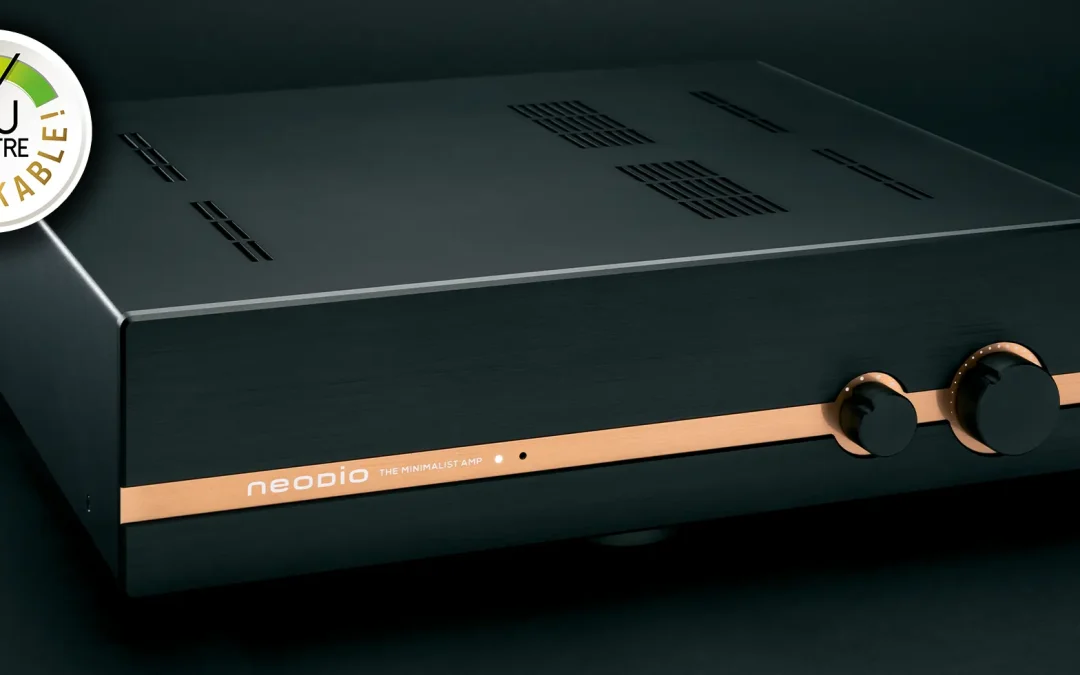
With the Neodio TMA, which stands for ‘The Minimalist Amplifier’, Neodio wants to extend its anti-obsolescence message by offering an amp designed and built to last and to be easily repaired. As its name suggests, it only offers basic functions, but do we really need anything else?
During the interview he gave us a few months ago, Stéphane Even made no secret of his desire to move towards more rational consumption, mindful of natural resources and based on sustainable products.
The TMA integrated amplifier is therefore the first electronic product to be part of his ‘Blue Program’, which aims to offer products that are still high-performance but more affordable, and even more sustainable.
In the development of the TMA, every effort has been made to ensure the best durability of the product. It comes with a 10-year warranty for the first owner and has been designed to be easily repairable and potentially upgradeable in the future.
To achieve this, the designer simplified everything that could be simplified and went back to the essence of what an amplifier should be: a machine that is faithful to the music and able to satisfy its owner for many years.
Consequently, anything that was not absolutely essential to these specifications has been purely and simply eliminated. The TMA has no remote control or display; just a switch, a source selector and a volume control.
These cosmetic savings have made it possible to focus on the quality of design and manufacture. It draws on 20 years of cumulative experience in the development of amplifiers, digital sources, cables and accessories. Nevertheless, it took three years to develop the TMA. Because behind its apparent simplicity, many essential details have been developed in terms of electronics, mechanics and cabling.
The quality of the manufacturing relies on French and European subcontractors selected for the care they take in their work. The mechanical parts, the electronic card, the assembly and the packaging are all made in France. The transformer is made in Spain.
The chassis, mechanically welded for rigidity, has a non-conductive 6 mm PMMA rear panel. This provides mechanical decoupling and reduces electrical coupling between the various connectors (mains – HP – inputs). The chassis rests on three machined Delrin feet, another important detail. The two rotary knobs are machined from solid aluminium. On the scales, the TMA weighs in at a respectable 14 kg.
The TMA uses a classic three-stage architecture with a high level of negative feedback. Negative feedback is a very effective technique, provided that attention is paid to the practical details of its implementation.
The output is entrusted to special MOS transistors for audio with high current capacity (16 A). The driver stages are powered separately from the power supply and incorporate shunt-type regulation. The layout has been designed with the utmost care to avoid electromagnetic coupling. The components used were selected following numerous listening tests and based on experience gained with the brand’s CD players. The TMA also has overload and short-circuit protection, which has the advantage of protecting both the amplifier and the speakers.
The power supply uses a 300 VA toroidal transformer with low noise and low losses, followed by several rectifier bridges and a capacitive filter totalling 44,000 uF, a very comfortable value for a 2 x 80 W amplifier. It uses only Vishay 105°C capacitors.
The layout of the printed circuit board is deliberately ‘airy’ to make it easy to read and to allow for easier repairs in the future. According to the brand, an experienced technician should be able to repair this amplifier in 30 years, even without the electronic diagram.
The choice was made to use components that guarantee the best sound quality and good durability, as evidenced by the RCA inputs with high-quality insulated and gold-plated plugs, the high-current capacity, low-mass nickel-plated speaker terminals and the speaker wiring made with the new Neodio Fractal 8 wire (eight strands of twisted copper insulated in a pseudo-random manner and covered with cotton).
The set-up
It’s hard to make something simpler and more direct than this new amplifier. In the box, you will find only it! No remote control, because it requires circuits that could degrade the sound and incidentally increase the price of the device. No power cord either, because at this level of quality, the manufacturer believes that you should certainly have a high-quality one. If this is not the case, he will direct you to one of his two models PC2, P5 or P70, which are not too expensive. There is no phono input either, as there are plenty of these on the market, of excellent quality, even at very affordable prices. For the connectors, you will only find RCA and female banana plugs, but of unquestionable quality. On the other hand, the device is delivered with excellent quality Andelle Rain support feet, which will give it excellent stability and good insulation from external vibrations. So to summarise: less, but better!
The sound
Stéphane Even’s creations are interesting because his research scope is generally broader than average. This means that he is keen to explore all the components of an audio device. He ventures down sometimes very surprising paths deserted by his competitors. That is why this device sounds particularly satisfying. The first few minutes are enough to form a fairly comprehensive opinion of its behaviour. And the future will show that it will evolve relatively little thereafter. That is to say that the TMA is an easy amp that gives itself up easily and provides intuitive and liberated sound reproduction. In its company, most musical messages are savoured with relish. Whether you listen to vinyl, high-resolution digital audio files or compact discs, you will always enjoy it. Its power of seduction is expressed first and foremost in a full and relatively dense sound balance. The timbres have a beautiful thickness and a natural colour. Nothing particularly demonstrative or attention-seeking, but a real personality linked to a quality resolving power. The TMA is precise, both in its careful handling of small signals and its respect for their nuances, but above all in its ability to reproduce energy flows very well. In fact, this is its greatest quality in our view: an innate ability to never convey a smooth and monotonous message. On the contrary, the records pass with a very wide variety of intensity. TMA does not seek to make something systematically beautiful. On the other hand, it is very good at offering us an in-depth vision of each recording, highlighting its own characteristics. This means that we never get bored in its company. It does justice to the variety of your record collection, offering a unique and singular perspective on each of your records. We appreciated its ability to easily power a large number of speakers, even in a large room. We also liked its very good bass quality, which is deep, taut and muscular. Finally, like all good amplifiers, it manages to recreate a very beautiful three-dimensional space that fills the listening room with conviction.
Notre conclusion
We greatly appreciated the approach of the designer of Neodio. The anti-obsolescence, timeless and totally repairable aspect is very appealing. The Neodio TMA is an excellent integrated amplifier offered at a very reasonable price considering its performance. It is carefully constructed in France, and that too must be emphasised. We don’t know if it is the best amplifier offered by Neodio since its creation, but what we can tell you is that it is our favourite!
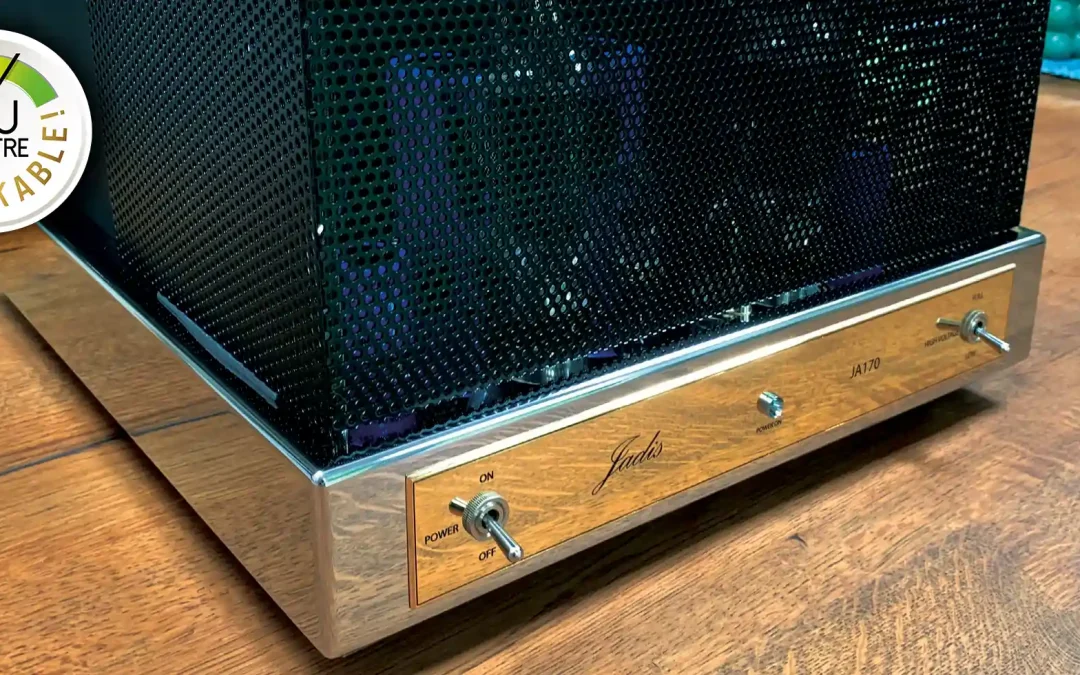
To celebrate its fortieth anniversary, Jadis has decided to reissue some of its most iconic products, such as the JPL and JA30. But the Carcassonne-based manufacturer has also released some brand new powerhouses, the JA170, which in turn adopt the new square chassis that we love so much. This duo provides a pleasure in sound reproduction, warmth and inimitable musicality that should not fail to seduce far beyond the brand’s unconditional fans.
The JA170s feature the new, very successful square look that Jadis introduced with the I70 and I300 integrated amps. The same care has been taken in the design and production of the case, which features nameplates to enhance its elegance. These power amplifiers are no exception to the rule of stainless steel casing and 24-carat gold plating, this
‘Jadis Touch’ for which the brand is also renowned, combining classicism and elegance.
Although these amplifiers take their name from the tubes that make up their power stages, it is interesting to note that Jadis operates these tubes under conditions that preserve a more than comfortable safety margin. This means that the JA170 blocks are always able to meet the challenge of reproducing certain works with the greatest of ease. The heart of each JA170 is therefore centred around a dual push-pull of Tung-Sol KT170 tetrodes. These are latest-generation tubes that combine power and quality. Furthermore, in order not to lose any subtlety of the sound message, Jadis has chosen to make these push-pulls work in pure class A.
It should be noted that it is one of the few manufacturers to use this type of configuration. The vast majority of others are content with class AB or even B operation. However, while full class A undeniably offers significant gains in terms of finesse and subtlety, it has the disadvantage of making the tubes work with a relatively high quiescent current. This high current also flows through the primary of the output transformer. It is therefore essential that it can withstand this high quiescent current while maintaining the primary inductance required to ensure a satisfactory response at the lowest frequencies. Ago therefore had to design transformers specifically for working in these conditions. These transformers are mounted in barrels and damped with resin, eliminating any risk of parasitic vibrations within the windings.
In total, no fewer than six tubes are used to meet the requirements of the JA170 audio circuit. In addition to the four KT170 beam-driven tetrodes that equip the dual output push-pull, a high-gain ECC83 double triode and a medium-gain ECC82 double triode are used to manage them. These gain and driver stages have a classic configuration, similar to the manufacturer’s other push-pull designs.
The JA170 is powered by a specific transformer with multiple secondary windings to match the specific structure of these blocks. It separates the power supply for the double push-pull from that of the amplification and driver stages. This architecture prevents any interaction, particularly on the current-hungry transient modulation peaks. Finally, the high voltage is regulated by a transistor circuit whose heatsink can be seen on the chassis. The filament heating is also regulated and stabilised to eliminate any risk of induced noise.
Here, the layout of the exclusively analogue and unbalanced connectors has been dictated by the internal implementation of the air-wired circuits that the manufacturer has improved. The connectors grouped together on the rear panel use high-quality RCA sockets, as do the magnificent proprietary speaker terminals.
The set-up
The manufacturer from Carcassonne has always favoured unbalanced analogue connections. We therefore connected these blocks using RCA modulation cables. We were able to test them on several occasions in very different environments and with various speakers.
Each time, we were able to clearly see that the new JA170 mono blocks are capable of powering a very large number of speakers with great ease. That said, they are still very heavy. It will therefore be necessary to place them on the floor on a dedicated anti-vibration platform. The preamp will be installed near the sources in a more conventional rack.
The sound
We have been ardent fans of the Languedoc brand since its beginnings. But we have noticed a subtle evolution in its products over the years. First of all in terms of the look, as mentioned above, but also in terms of the sound. The adoption of the new KT170 tetrode certainly has something to do with it. Its particularly low distortion rate combined with true pure class A operation makes it possible to produce an amplifier capable of providing a quite exceptional sensation of presence. Available in a monophonic version, this electronics is every bit as good as the legendary JA30, 80 and above, so imperial is the sound. Its main characteristic is therefore the exceptional anchoring of the sound stage within your listening space. It is impossible to listen to these Jadis with a distracted ear, so much do they impose themselves on you. The term holographic construction has rarely had so much meaning. From your sofa, you are transfixed by a spatial reproduction that is so remarkably structured that it seems almost to be embodied. It is first and foremost the precision of the elements and their position in space that is so surprisingly realistic. You almost feel as if you could walk around the various musicians. Their positioning is unmistakeable. And then there are the proportions, which are striking in their coherence. JA170 reproduces the bodies with a rare homogeneity. Finally, it is through the fluidity of the movements that we can easily follow the musicians‘ movements on stage. All this is certainly a great show, but it is also the result of the designers’ hard work to respect the signal phase to the letter. Then let’s talk about the spectral balance so specific to the brand. It is clearly suffused with a delectable warmth and roundness, but it has gained considerably in accuracy and clarity since the early days of Jadis.
This inimitable flavour is still recognised just as quickly, this grain that is the hallmark of the brand’s creations and has forged its reputation with dense and lustrous but impeccably accurate stamps. You only have to listen to the brass, a voice or a piano to understand what the notion of presence can bring to sound production at this level. You will therefore understand that with such a high level of performance in terms of image and timbre, listening to an opera with this Jadis electronic trio is a delight. But that would be nothing without dynamic behaviour worthy of the name. And here too is a favourable terrain for our duo, which fulfils its mission without fail. This excellent energy management not only allows for a clear and comfortable listening experience on any type of message and at any modulation peak, but also guarantees excellent listening comfort over very long periods, even at high volume levels.
Our conclusion
Last spring, we were delighted to go and immerse ourselves at Jadis in order to feel the energy that emanates from this team on the spot. We had seen the very first JA170 blocks, but were sworn to secrecy, of course! Today, we are delighted to give you a preview. Because by the time you read these lines, VUmètre will be the first magazine in the world to mention them. We are constantly amazed by the creativity of the Villedubert manufacturer and the freshness of its passion. The brand’s historical references are still present in the catalogue after more than 40 years and have been able to evolve intelligently over time. But it is with these latest achievements that Jadis seems to us to be best able to reinforce its unique status as a manufacturer of tube amplifiers. Firstly because it has complete control over the R&D and manufacturing chain (the famous power supply and output transformers), but also because its vision of the subject is as profound and accomplished as ever. You will have to pay a very large sum to acquire this elite duo, but not only will you be able to keep it for life, you will also be able to pass it on. These are products which, by nature, are not subject to obsolescence and are made to succeed us.
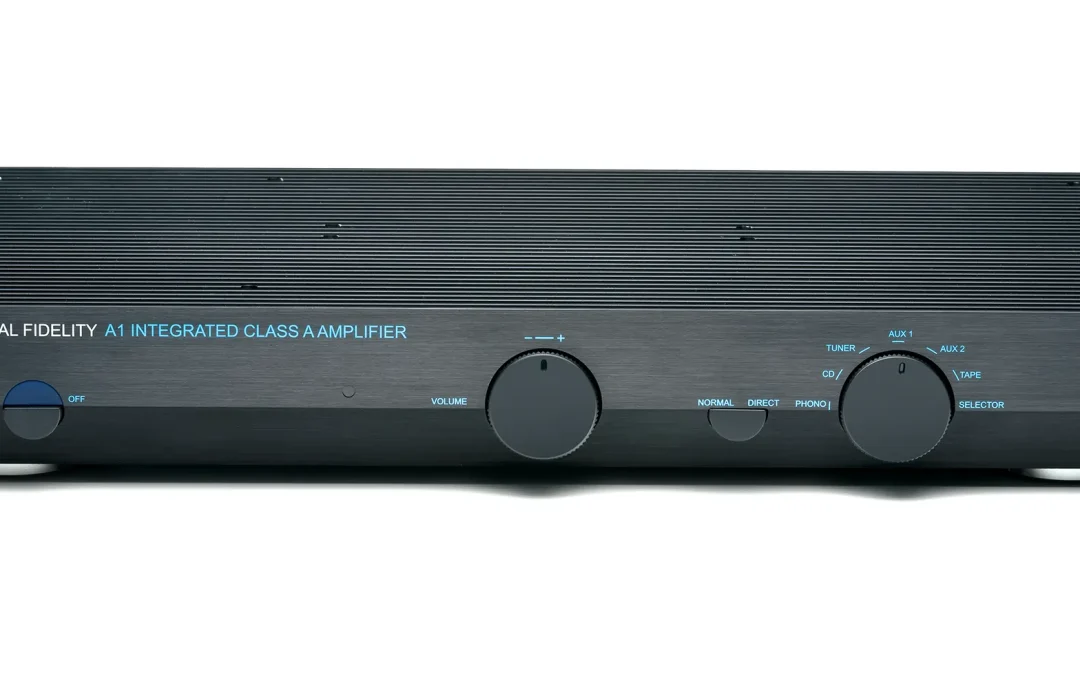
After almost 30 years, the Musical Fidelity A1 is back! This is great news for all music lovers and we must applaud the initiative of the British manufacturer Musical Fidelity for this comeback. And the other good news is that it is not a limited edition but a mass-produced item. So there will be enough for everyone.
In 1988, the arrival of this British integrated amplifier caused a great deal of ink to be spilt, particularly because its rare feature at the time was that it operated in pure class A. Needless to say, it was not something you could find on every street corner. The A1 only developed 20 W, but what watts!
At the start of the 2023 academic year, the new A1 arrives. The British manufacturer has had the intelligence to reissue it almost identically. The only visible difference is in the screen printing, the feet and the presence of a small, minimalist remote control entirely in keeping with the spirit of the device. The A1 showed that amplifiers were not limited to high power. Today, in 2023, for the first time since its initial release, here is a new version with an updated transformer, modern low-noise power supplies and components.
The Musical Fidelity A1 is therefore built around a completely discrete and symmetrical class A topology. It is capable of delivering 25 W of pure power for an 8 ohm load with a maximum output of 25 A. Although the figures may seem rather low, the ability of the output stage to power difficult speakers is a small miracle in itself, according to MF.
The amp is designed in dynamic class A, so if the class A current is exceeded, it automatically allows more. It smoothly ‘slips’ (not switches) into class B operation, temporarily allowing the additional current required.
The new A1 has been equipped with a toroidal transformer (original from 1988) with more efficient dual mono split rail windings. The amplification stages are powered by completely independent left and right power supplies for better power management and stereo imaging, and each power amplifier now has a dual power supply capability. Transformer noise and heat dissipation are reduced thanks to improved efficiency and updated components. The main power supplies are filtered for better regulation and reduced power-on surge.
The low-noise preamplifier circuit is identical to the original 1988 model and, as mentioned above, benefits greatly from the improved, fully smoothed and regulated power supplies. One of the most noticeable changes is the addition of a new direct switch in the preamplifier stage. This switch allows you to completely bypass the gain block before the volume control, which results in a gain reduction of approximately 10 dB. This feature is particularly advantageous when working with modern or high-speed digital sources, allowing you to fine-tune the range of your volume potentiometer and accommodate sensitive speakers. In addition, a significant improvement has been made to the volume potentiometer itself, which has now been replaced by a top-of-the-range model from the ALPS RK series. This high-end component guarantees superior performance and increased precision. What’s more, the potentiometer is now motorised, allowing you to adjust the volume from the comfort of your sofa using the new remote control provided.
The A1 uses a discrete current mode input stage for low-noise amplification of MC and MM cartridges. A low-noise current-to-voltage conversion stage is used for additional amplification and RIAA equalisation. Automatic input impedance matching for the selected MC input, as well as increased gain, enhance the versatility of the A1 phono stage.
The set up
This is a compact device that will take up hardly any space but, as its top cover indicates, under no circumstances should anything be placed on top of it and sufficient air must be allowed for it to be able to effectively dissipate its excess calories. Don’t be fooled by the 25 W on the technical data sheet because this small amplifier is capable of powering respectable sized column speakers. Make sure you choose neutral and transparent cabling.
The sound
In the early 1990s, audiophiles were introduced to a small integrated amplifier that was bubbling in every sense of the word. The A1 of the time was a little marvel of musicality. I can testify to that: I bought one! Warm, lively, hyper-alive, this amp was particularly appealing. Imagine our surprise this year, as we walked the aisles of High End in Munich, to come face to face with a contemporary reissue of this device! And here it is today on our shelves. The least we can say is that this device has not aged a bit, at least in its current version. It has of course benefited from the use of current components, which are much more reliable and more rigorous. So, first and foremost, there is that wonderful communicative joie de vivre. The A1 is characterised above all by its rhythmic flow. It amazes its audience with a subjective power that is much higher than the advertised 25 W.
But that, of course, is to be credited to the magic of pure class A. In fact, the timbres are of an astonishing density: the sound has substance, thickness. This is very clear on a voice, a piano or a trumpet. In the same vein, the sound stage is reproduced with a highly credible structure. What is surprising is its depth, with well-hierarchised sound levels. And it is in most of the compartments of the set that we find this notion of flesh. No, only the A1 sounds very good, but its warmth makes it completely irresistible.
Conclusion
It is impossible not to fall under the spell of this utterly charming product. The manufacturer has had the intelligence to reproduce the Musical Fidelity A1 in a way that is almost identical to the original version. Only the minimalist remote control gives it a functionality worthy of its time. The few changes are on the inside with an optimised circuit and stronger components. We warmly applaud the arrival of this device, especially as it is priced very reasonably.
In the same vein, we were thrilled by the announcement of the return of the Nait by Naim, but much less so by its price, which in our opinion is a bit excessive. Vintage is in fashion and it’s good to see it come back in a contemporary way, but let’s not overdo it. As far as we’re concerned, the A1 is a success in every respect and we salute it wholeheartedly!
Author: Laurent Thorin
Technical sheet: Musical Fidelity A1
Origin: Great Britain
Price: €1,599
Dimensions: 440 x 68.3 x 283.32 mm
Weight: 10.5 kg
Power: 25 watts per channel at 8 ohms
Voltage: 42.5 volts peak to peak
Damping factor: 150
Gain (max. volume): 32 dB (direct mode), 42 dB (normal mode)
Signal-to-noise ratio: 82 dB
Channel separation: 85 dB
Frequency response: + 0, -1dB, 10Hz to 40 kHz
Line level sensitivity: 300 mV rms nominal, 8 V rms max
Launched thanks to a crowdfunding campaign on Kickstarter in December 2020 and supported by Happy Well Tech (a subsidiary of Happy Well International Enterprise LTD), the HumminGuru Ultrasonic Vinyl Cleaner from Hong Kong aims to offer optimal vinyl record cleaning quality thanks to ultrasonic technology at a particularly affordable price. With its compact size, all-in-one design and ease of use, the HumminGuru is a particularly relevant choice in a booming competitive market.
Principle of ultrasound
Many collectors have nothing but praise for ultrasonic cleaning for its ability to thoroughly clean vinyl records. These waves of mechanical vibrations, inaudible to the human ear, with a frequency above 20 kHz, create a phenomenon of rapid compression and decompression in the water, where the water is transformed into small vapour bubbles, thus releasing a large amount of energy. This is what is known as the phenomenon of cavitation. The repeated implosions of these bubbles clean the disc deep down, breaking up residual material and releasing dirt and dust from the grooves of the disc. But in general this type of machine is notoriously expensive and rather bulky. This is where the HumminGuru hits the mark.
Set up and use
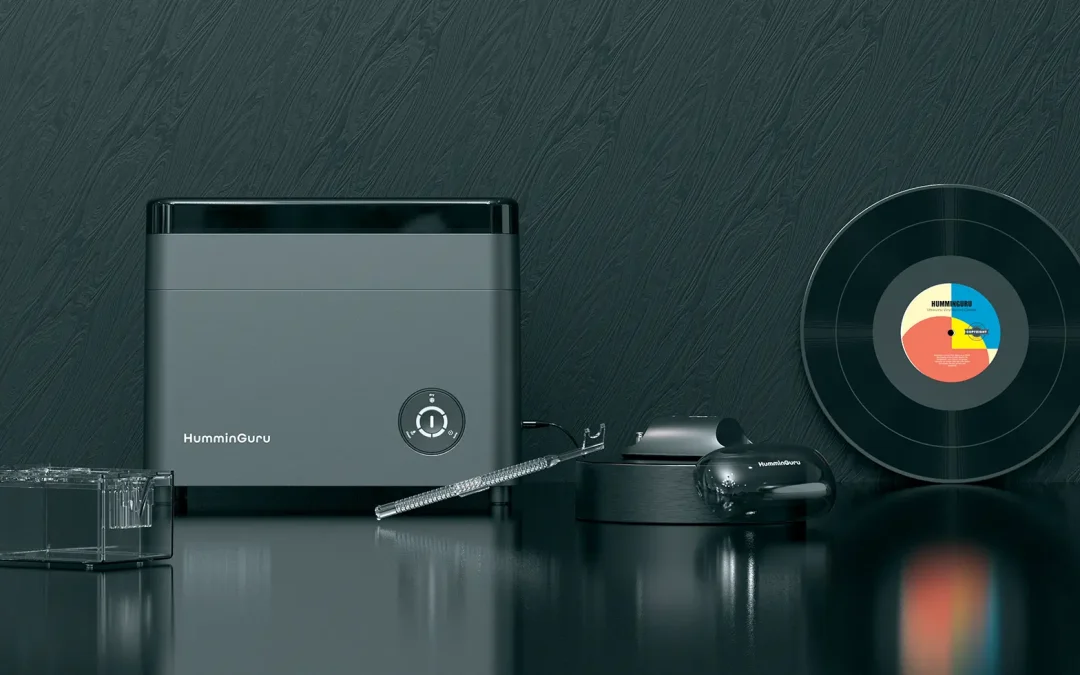
Straight out of its cardboard box, the HumminGuru attracts attention with its design. With a plastic and stainless steel chassis in an elegant grey finish, the cleaner is strikingly simple and compact, so it can be ideally stored on the vinyl shelf. A clever idea: the power cord can be stored inside the lid. The box also contains numerous replacement rollers and filters, a maintenance tool that also serves as a water level gauge, and two adapters for cleaning 7‘ and 10’ discs in the premium version. Clear and precise instructions enable the machine to be put into service in a matter of minutes. Importantly, only demineralised, deionised or distilled water is recommended for use, with the latter being preferred, as tap water can contain limescale and other impurities that can cause undesirable side effects during cleaning and leave residues in the machine’s pipes. In addition, it is strongly recommended to use a mild, non-alcoholic surfactant, such as The Small Bottle sold by the brand, for optimal cleaning and drying, allowing greater penetration of the grooves during ultrasonic cleaning and a reduction in drying time.
Use
Once the liquid has been poured according to the appropriate markers depending on the size of the disc, place it in the basin and choose either a two or five minute cleaning cycle, or a five or ten minute drying cycle; both can be combined with the auto mode. The machine then rotates the disc while stirring the water with a 40 kHz signal, thus removing dirt and dust from the vinyl grooves. A second cleaning cycle will be necessary with older discs for the result to be completely effective.
Tests
For the tests, several original and recent pressings were cleaned with the HumminGuru, and let’s get straight to the point: the results are impressive. With slightly dusty discs, as reissues often are, all clicks, pops and surface noises have disappeared, as has the static. On the more worn and often dirtier originals, the results are just as impressive. Listening to the records again after cleaning them is revealing and quite magical on some records, notably an original pressing of Pink Floyd, which restores warmth and finesse to the sound, previously buried under the dirt, as well as bringing back some sound details that were inaudible before cleaning. But let’s not forget that cleaning a vinyl record, even with ultrasound, is still no match for the scratches and signs of wear and tear caused by repeated playbacks. And while the HumminGuru strives for excellence through its prowess and ergonomics, it can’t work miracles on really damaged vinyl records.
Our conclusion
The most discerning of enthusiasts will argue that the HumminGuru lacks the power and effectiveness of higher-end ultrasonic cleaners, but in our opinion, it offers a very good alternative at a particularly attractive price. Its remarkable performance is in addition to its specific design in a single block, which combined with a low power supply and a specific chosen frequency, allows powerful cleaning of all types of discs, even the oldest. Elegant and compact as well as being fairly quiet and very easy to use, this small machine full of promise will quickly find its place with any analogue disc enthusiast. At a very attractive price, even with shipping, conversion and customs fees to be included for its purchase directly on the humminguru.com website, the brand does not yet have a distributor in France.
Author: Nicolas Chestier
Technical sheet: HumminGuru Ultrasonic Vinyl Record Cleaner
Origine : Hong Kong
Prix : 346 €/393 € avec adaptateurs 45 t et 25 cm
Dimensions : 340 x 150 x 280 mm
Poids : 3,1 kg
Fréquence ultra-son : 40 kHz
Cycle nettoyage : 2 et 5 minutes
Cycle séchage : 5 et 10 minutes avec double séchage
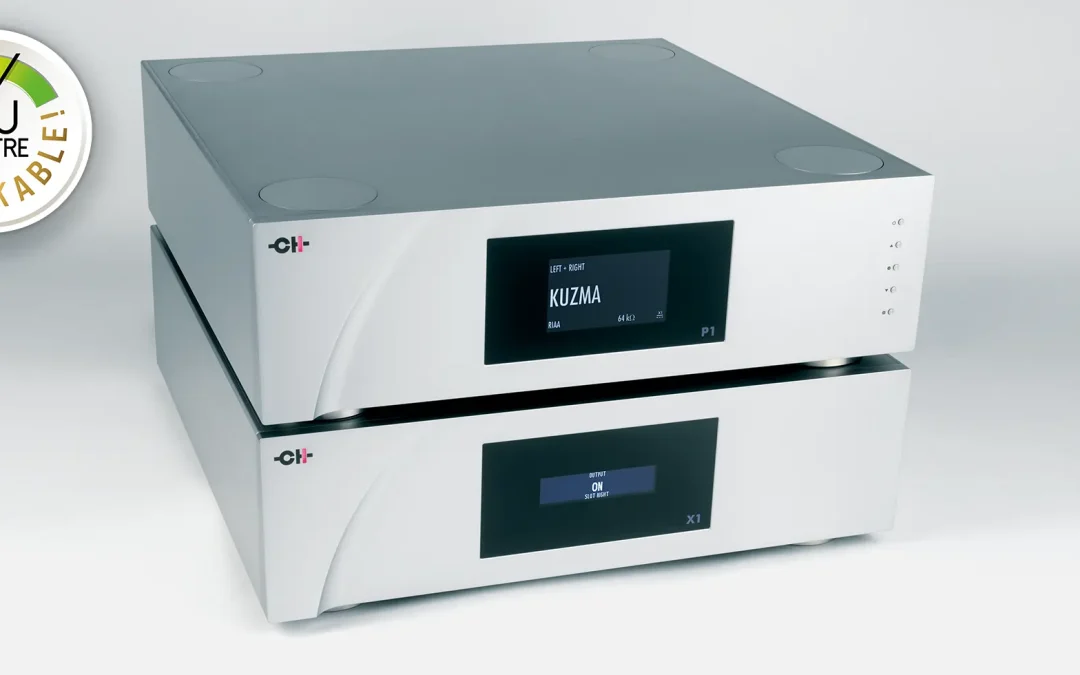
We continue our odyssey through the CH Precision catalogue with a particularly interesting link, the CH Precision P1 phono preamp which, as is usual with the Swiss manufacturer, can be upgraded with the optional X1 power supply. As always, it offers us a firework of sound. And as always, the sound quality comes at a high price, but the result is simply phenomenal. The story…
Processing the signals from a phono cartridge has always been a challenge for designers of high-quality hi-fi equipment. In addition to the very low voltages involved, which make these signals fragile and sensitive to electromagnetic interference from any source, absolute control of the noise generated by the components of the internal preamplification stages of the equipment is essential to obtain a fully satisfactory result. What’s more, each cartridge has specific characteristics which can, here again, make the result unpredictable due, among other things, to poor impedance matching or insufficient voltage gain. Finally, it should not be forgotten that, in order to reduce the ‘groove congestion’ on the disc surface, a specific correction (such as filtering) is applied to the signal before the disc is burned. Its main purpose is to reduce the bass level, since it is the bass that requires the widest meanders of the groove for its recording. However, although the most commonly used filter transfer function is RIAA equalisation, there are other variants, although these mainly only concern old recordings. To restore the full fidelity of the sound, it is therefore essential to apply the inverse correction to that used when the master disc was burned when playing the disc. Ideally, the preamplifier should be able to modulate its correction according to the origin of the disc being played.
Towards total compatibility
CH Precision has taken all of these points into account in designing its ultimate preamplifier, the CH Precision P1, which is capable of adapting perfectly to every situation. To achieve this, it can be completely reconfigured from an application that gives access to the finest settings. Of course, it accepts both moving magnet (MM) and moving coil (MC) cartridges. This involves a modification of the impedance of its inputs as well as a significant increase in its gain. It should be remembered that while an MM cartridge delivers a signal of 2 to 5 mV, an MC cartridge only delivers 0.2 to 0.4 mV. Nevertheless, the majority of quality preamplifiers have a small switch that allows you to select MM or MC mode, depending on the cartridge used. The CH Precision P1 has three phono inputs. Inputs 1 and 2 use current gain, input 3 is a more conventional voltage gain stage. Current gain is generally preferred, particularly for cartridges with very low internal impedance. In this case, the only adjustment is that of input gain. The choice is related to the dynamic range in relation to the noise level. These inputs are ideal for cartridges with very low internal impedance – less than 10 ohms, less than 5 ohms is even better…
Each input can be named individually (and the display colour selected), which is particularly useful if you are using more than one cell. For its part, the CH Precision P1 offers a type of optimisable adaptation with infinite finesse. Its voltage gain is adjustable from 35 to 70 dB with the possibility of adjustment in steps of 5 dB. Similarly, the impedance of its inputs can be set from 20 ohms to 100 kilo-ohms with more than 100 steps. This makes it possible to perfectly adapt the characteristics of this preamplifier to the requirements of the cartridge in order to use it in optimal conditions.
Configurable corrections
Finally, the P1 goes even further by offering various types of correction. While the basic version includes EQ RIAA and RIAA equalisation transfer functions, it is possible to add optional corrections such as: EMI, Columbia, Decca or Teldec. The P1 is thus able to adapt not only to the characteristics of the cartridge used, but also to the conditions under which the disc is recorded and burned. These are all features that are sure to appeal to the most demanding vinyl sound enthusiasts.
An ultra-low noise external power supply
But even the best preamplifier cannot give a satisfactory result unless it is powered by an electrical source capable of delivering stable voltages free from any kind of electromagnetic pollution. To ensure that the P1 can operate under optimal conditions, CH Precision has therefore designed a specific ultra-low noise power supply unit: the CH Precision X1. This power supply is not exclusively dedicated to the P1. It is compatible with various other items of the brand, such as the CD player, for example. Capable of simultaneously delivering up to 14 different voltages, it connects to the device to be powered via an M23-type 19-pin socket. Finally, as the products designed by CH Precision simultaneously use digital and analogue sections, the power supply unit individually manages the voltages assigned to each section. This prevents any interaction between digital flows and analogue signals.
The set up
The P1 and X1, like all CH Precision products, use a mechanical grounding system that ensures they are perfectly levelled and drains the mechanical energy generated internally. They should be placed on a rigid, flat surface such as our Centaure L furniture. If you want to install them on a hard surface such as metal or glass, it will be necessary to use the counter-spikes supplied by the manufacturer. In theory, CH Precision devices can be stacked, but it is preferable to use an individual shelf per unit.
Each P1 is delivered with a 7’ disc which is an installation aid. Using the instructions in the manual and the device screen, reading the disc allows you to obtain the optimal theoretical settings, with the gain on one side and the load impedance on the other. The settings obtained provide an excellent basis, but experienced listeners will be able to further improve performance by making adjustments through trial and error. The gain and load assistant programmes can be found in the factory settings menu. Put the right side on the record player (at 45 rpm) and follow the instructions on the screen to complete the process.
As our test P1 came with an optional equalisation card, we were able to use the eRIAA, Decca, Columbia, EMI or Teldec (DGG/Archiv) equaliser. This is a very interesting option because we realise that Decca and EMI probably continued to use their proprietary curves until the early 1970s, while DG never adopted RIAA with the exception of a few albums recorded and pressed in the United States. All settings are accessible via the front panel controls, or better yet, via the CH Control application.
The sound (CH Precision P1)
The P1 is a truly universal phono preamplifier, and all the cartridges we tested it with offered their maximum potential. This is the theoretical premise of this device, but it is also what we fully experienced in practice. Not only were we able to optimise it impeccably for each phono cartridge we tried, but we also understood how well it could make it perform at the top of its capabilities. This was true with all MM or MC cartridges. The first sensation is that of an operational silence that we have not encountered before. When properly connected and configured, the P1 is completely silent, even when the volume knob of the amplifier is at its maximum. This is quite disconcerting, because at first glance you get the impression that it is in the CD position! This silence is a major factor in the overall performance of the P1, which is consequently characterised by a Dantesque level of dynamics. The second unusual impression is that the P1 allows you to fully exploit the potential of each phono cartridge, whether it is a ‘modest’ MM or a very expensive MC. We investigated the first possibility out of pure journalistic curiosity, because we are well aware that no one on this planet will use a €500 MM with a €26,000 preamp. Nevertheless, this experiment says a lot about the P1’s ability to enhance the elements placed upstream. Ultimately, that is really what is required of it… And it is a safe bet that the owner of such a machine is not equipped with just one cartridge, but a nice collection! The same goes for records. In these conditions, happiness is a daily occurrence, because the P1 is unrivalled in satisfying all the eventualities that may arise for its lucky owner. The optional card that we will inevitably adopt allows it to conform to the EMI, Columbia, Decca and Teldec profiles. And frankly, having tried this feature, we have to admit that it gives quite astonishing results. Silence and incredible accuracy are the cardinal virtues of this very special preamp. But that’s not all. It also stands out for its exceptional dynamics management. With it, changes of rhythm and the most subtle inflections of the melodic line are detectable in no time at all. The quality of the timbres is equally eloquent. Of course, a CH Precision cannot deny its heritage, and it is in the realm of neutrality and elegance that the debate is placed. It is on a single, fragile voice or on a piano, messages on which cheating is not possible, that the P1 is most striking. Not that it is more spectacular than others, quite the contrary. What surprises us is the incredible level of purity of sound and presence that it manages to confer on the listening experience. You forget the equipment and are gripped by emotions. And always this silence…
The sound (CH Precision P1 + CH Precision X1)
We thought we had reached the top of the mountain, but with our Swiss friends, you can never be too sure. Of course, they didn’t lend us the P1 on its own, but with the optional X1 power supply. On the other hand, they had just warned us to take the time to test the P1 on its own, because once the CH Precision X1 is connected, it’s impossible to go back. Unfortunately, we can testify that this is true. When it comes to the performance of hi-fi equipment, we know very well that the power supply has a predominant influence. Outsourcing it, and above all optimising it to the maximum, allows the circuit to work in the best possible conditions. This is exactly what happens here. To be honest, the P1 remains what it is, that is to say a marvellous phono stage. But all its qualities are transcended. The signal-to-noise ratio is even more eloquent, with such a gradation of sound intensity that the spectacular side of certain musical pieces is further emphasised. The instantaneousness of its reactivity is astonishing. As a corollary of this increased dynamics, the sound is even softer. And as the reproduction is even more detailed and subtle, it obviously seems more natural. What is striking is that with the addition of the X1 power supply, you realise that you are listening even louder but with greater comfort. Last but not least, the structure of the sound image is exceptionally precise. It is also in terms of depth that we are won over by such an extension, with very clear and remarkably limpid backgrounds. Nothing is left in the shadows: every musical component drawn from the groove is magnified and exploited in accordance with the rules of the art.
Our conclusion
We are starting to develop bad habits: in particular that of regularly testing products from the Swiss brand CH Precision. As we know that we will never be able to afford them, we spend as much time as possible trying them out to savour their stratospheric level of musicality. The CH Precision P1, with or without the X1 power supply, is one of the very few phono preamps that competes for the top of the hierarchy. We are now part of a very exclusive circle of the global audio elite. The fact that you can upgrade your machine to go even further is a fantastic selling point. Of course, this product is only aimed at a minority of enthusiasts who are sufficiently committed to make such an investment, but it represents the state of the art in the field. What struck us is that during the time they were with us, these two machines monopolised our attention to such an extent that we didn’t listen to a single CD or Hi-Res file. Should we see this as a sign?
Authors: Estève Fabry and Laurent Thorin
Technical sheet: CH Precision X1 Power Supply Unit