A recent addition to the HEM universe, the Ferrum Oor and Ferrum Hypsos combo brings together a headphone amp and a dedicated power supply, respectively. It’s a classic package which, on paper, could have been lost in the sea of products we received… until, out of sheer curiosity, we decided to give it a listen. It was a surprising experience at first, but it would later become ecstatic thanks to a simple tool. revolutionary tool now on our test bench: the Hypsos, the new undisputed king of stabilised power supplies. Focus on your editor’s favourite.
If the name Ferrum Audio doesn’t ring a bell, you’ll probably be more familiar with HEM. Founded at the beginning of the century in Warsaw, Poland, the group, which specialises in the production and development of solutions dedicated to Hi-Fi brands and retailers, boasts a fine collection of brands that are as popular with our colleagues as they are with audiophiles of all stripes. Mytek is renowned for its Brooklyn series – an ultra-compact unit combining streamer, DAC, pre-amp and power block delivering 2 x 300 W (!) – but the manufacturer has also made a name for itself through its Clarus brand, which specialises in exceptional cables. This protean company is masterfully led by its director/founder, Marcin Hamerla, an engineer by profession who started out in the high-tech industry (medicine and the military) before turning to his first passion, hi-fi, with the success we all know.
A rarity these days, the brand designs and assembles each of its products in-house: from the initial plan on paper to the production of the PCBs, via the design of the enclosure in CAD. Quite a feat when you consider that the entire team is made up of less than 20 people!
It’s a feat of craftsmanship that has won over some of the biggest names in the sector, who are delighted to outsource the delicate engineering of digital circuits to a company as specialised as it is reputable. What’s more, their catalogue includes amplifiers, dedicated converters and even phonos. So HEM intends to drive the point home with its new Ferrum brand, which may be more accessible than its predecessors, but is still just as uncompromising in its design.
Ferrum Oor preamp
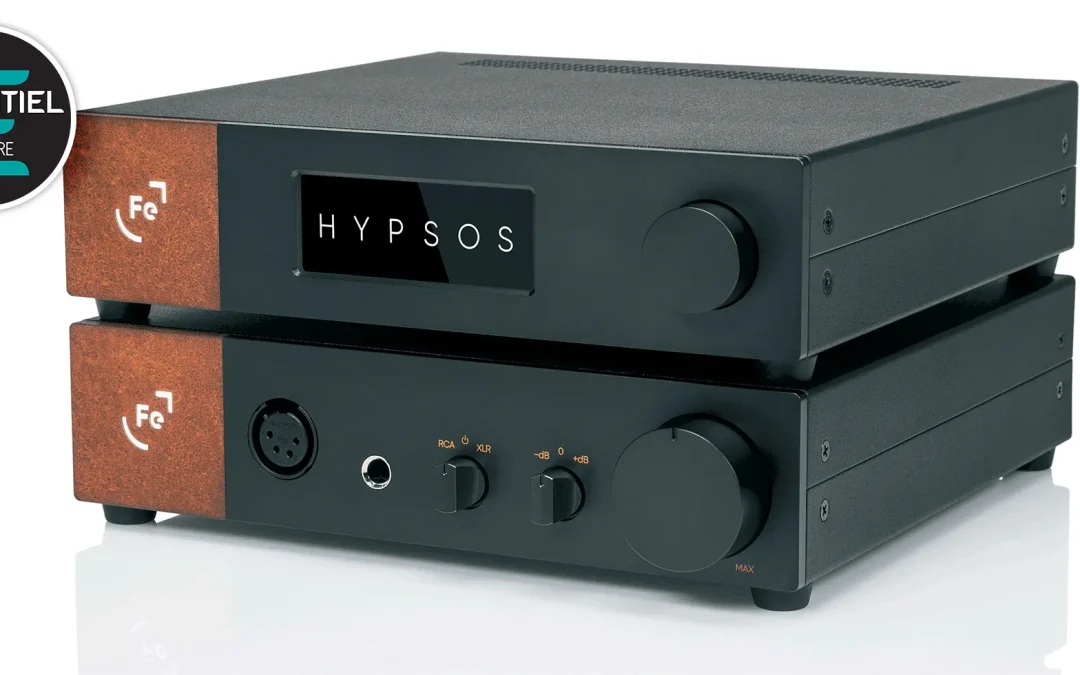
Measuring just 21.7cm wide, 20.6cm long and 5cm high, the OOR is rather compact for a model of its kind. Draped in black, the amp conceals dense electronics beneath its thick chassis, weighing in at just 2 kg on the scales. The OOR’s credentials are further underlined by the elegant seal proudly displayed on the front panel, enhanced by a striking bar with ochre reflections, reminiscent of iron and illuminated by a set of LEDs to great effect. On the front, the OOR is almost Spartan in its sobriety. A gigantic volume potentiometer, two headphone outputs, one of which is balanced, an input selector coupled with a voltage switch and a final controller for switching between different gain values.
At the rear, the amplifier makes do with the bare minimum, with two sets of XLR/RCA inputs, accompanied by the same output sockets. Finally, on the far right is a D-power socket topped by a second input (4-pin) dedicated to the Hypsos.
Developed with absolute transparency in mind, the OOR is built around an entirely analogue circuit, made up entirely of carefully selected discrete components. The promise? An ultra-powerful signal, totally free from the slightest distortion, never tiring to listen to, accompanied by a dynamic range unrivalled in this price range.
And on reading the specification sheet, Ferrum seems to have outdone itself, with the amp achieving almost insane values, nipping at the heels of rivals almost ten times more expensive, with an output level approaching 2,000 mW unbalanced, and 8,000 mW (!) balanced. A real monster!
Ferrum Hypsos power supply
Denser than the OOR, the Hypsos retains the same dimensions, but gains in weight, with the power supply weighing no less than 2.89 kg. All in all, a measured weight for this type of device, the vast majority flirting happily with the 5-7 kg mark because of the integrated battery. A first surprise, then, very quickly overshadowed by a second shock: while most power supplies are often content with a front panel devoid of any controls, Ferrum takes everyone by surprise, adding a superb LCD screen to its Hypsos. Not content with simply brightening up the monotony of the device, this screen also has the luxury of offering first-rate readability, aided by excellent brightness, stunning definition and a highly polished interface. It’s a real slap in the face, transforming the relationship we usually have with this type of accessory, which is generally as dull as it is indispensable. In purely technical terms, the Hypsos combines the best of analogue with the magic of digital. The oversized toroidal transformer, preceded by a separate filter block, is supported by four gigantic capacitors soldered onto a gigantic PCB whose finesse of execution would make the biggest brands blush. It’s an overkill that, as we’ll see later, is not to our displeasure.
In fact, the power supply will be capable of delivering a DC voltage of between 5 and 30 V, with a charge current of up to 6 Ah. The only real constraint is the total power demand, which should not exceed 80W, and fortunately the power supply is equipped with protection against overvoltage, polarity inversion and incorrect settings. But let’s not get carried away: the Ferrum Hypsos is still admirably equipped for a device of its kind. And, like the OOR, it’s particularly easy to install.
The set up
Connecting the OOR duo to a source is just like its style: simple and effective. All controls are via a single potentiometer, with just two values: RCA or XLR. So much so that, once paired with our DAC – an Auralic Vega – the only other option available is to adjust the gain, which is very useful if you want to connect a pair of in-ears or headphones that are even slightly sensitive to this bubbling block of metal. But once again, the Hypsos steals the show thanks to its extraordinary design.
Quite simply, we never imagined for a moment that we’d have so much fun using a dedicated audiophile power supply. While the uninitiated may be content to link the OOR and the Hypsos via the Ferrum Power Link (a 4-pin BNC socket), it’s thanks to the 2.5 mm DC cable that a whole new world has been opened up. And with good reason: via its control screen, it will be possible to control voltage, amperage and also polarity, in steps of 0.1! As a result, the list of compatible devices is quite simply plethoric, with Ferrum listing no less than 220 compatible systems to date (from iFi to Mcintosh, via Auralic), including hi-fi equipment alone! Better still, thanks to the Sweet Spot Tuning (SST) function, the Hypsos is capable of modulating the output voltage on the fly, allowing almost granular control of the rendering. Tested on a small SMSL DAC, then the Chord Mojo and finally our Qutest, the result was well beyond our expectations, so much so that we can’t wait to get hold of all the appropriate adapters to complete our experiments.
Last but not least, the power supply also has a Trigger in/out socket, so you can integrate it into a complete system, with or without automation functions. Amazing!
The sound of the Ferrum Oor and the Ferrum Hypsos
For the purposes of this test, our Ferrum set was connected upstream to our Auralic Vega DAC, replaced after a few days by a Chord Qutest whose resolution capacity verges on brillance. For listening, our faithful Audeze LCD-X (our reference) is still with us, accompanied by a Meze Empyrean, also capable of handling very heavy loads.
And so much the better, with the OOR revealing a fiery temperament from the very first listen, a far cry from the restraint displayed by the box’s monotone. Whether it was the Audeze or the Meze, no one put up any resistance, tamed from the very first notes by the deafening reserve of power offered by this amp. So much so, in fact, that it plays across styles and genres with almost insolent authority. From the hyper-saturated electro of Justice to the warm, suave vocals of Melody Gardot, nothing stands in its way. A pre-eminence matched by a minimal level of distortion, churning out a perfectly oiled score minute after minute. There’s no saturation or coloration on the most complex tracks, and the little OOR retains an almost military straightness that’s not to our displeasure. And while the gain control is limited to the strict minimum, we have to admit that on tracks with limited dynamics, it does its job. One important point: use balanced outputs wherever possible. Although our Auralic Vega has both RCA and XLR inputs, switching from one to the other greatly affects listening quality. The bass is tauter, the treble chiselled. The result is an indescribable sensation of the world disappearing in the face of music.
An impeccable performance, for a test bench that could have ended here… if Ferrum hadn’t extolled the capabilities of the OOR + Hypsos duo. And thankfully so!
Admirable on its own, once linked to the Hypsos, the duo borders on the superb. The almost symbiotic relationship between the two devices is revealed at the very moment the first note is played – in our case the guitar of ‘Hotel California’. The scene becomes deeper, the voices looser and each phrasing invites us to prolong the experience, curled up on our sofa.
And although the expression may seem hackneyed nowadays, it has to be said that once you’re connected to the Hypsos, a veil is lifted. The overall clarity, the finesse of the highs, the firmness of the lows, everything is magnified, the OOR distilling the finest details with disconcerting ease, easily rivalling the tenors of the genre. The sound signature becomes more natural, losing that initially rigid aspect, with a velvety, organic quality that makes you stop everything to better appreciate the work being played. An ensemble not to be missed.
Our conclusion
While it promises a lot, the Ferrum OOR never fails. A true high-end headphone amplifier, its classic design and slightly high price tag conceal an unshakeable pillar of rare versatility and almost German rigour. The perfect companion for planar headphones or a legend like the Sennheiser HD-800S, still as demanding as ever despite the years.
However, the revelation of this test was without doubt the Hypsos power supply. A veritable Swiss Army knife, it revealed not only the inner workings of the OOR, but also those of almost all our DACs. It’s hard not to succumb to the charms of this little piece of metal, offering the precision of prestige electronics and the versatility of a mini-computer.
The PF2 Signature is a new column speaker and now the brand’s flagship model. It is the result of eighteen months of development, during which every component of the speaker was re-examined. While the general philosophy of T&T remains the same, the FF2 Signature is completely new: drivers, cabinet design, filter, wiring… Each of these aspects has undergone extensive research to optimise it to an exceptional level. The goal is simple: to no longer listen by analysing the qualities of the system, however satisfying they may be, but to enjoy a direct, authentic, intense and unfiltered connection with the performance.
To discover these new speakers, we went to meet their creator, Pierre Faverieux, who gave us an insightful interview.
Why the PF2?
Pierre Faverieux: It’s a kind of ultimate testament to my expertise at this point in time. ‘PF’ stands for Pierre Faverieux and ‘2’ for the second in the series (as there may be a more compact PF1 in the future). My aim was to create THE two-way floorstanding speaker that was still compact with minimal compromise.
Was the Nel Extrême not enough?
P. V.: The PF2 Signature is a passion project, so the retail price wasn’t a constraint at the outset. The Nel Extrême, as good as it is, is the high-end version of the Nel concept. The PF2 concept is more ambitious from the outset, with higher-quality speakers, exclusive wiring, and proprietary components and technologies in the cabinet design cabinet design, research into filtering, and more. The choice of a larger woofer (+35% radiating surface, +35% efficiency) with a high-level motor allows the PF2 Signature to adapt to living spaces up to 50 m2. The price point is significantly higher; the speaker is more ambitious.
Can you tell us about the specifications?
P. V.: To make the best compact two-way column speaker to the best of my knowledge, with the aim of achieving natural sound reproduction, realism, versatility (different styles of music) and no technological/electronic signature when listening. The aim is to no longer listen to speakers or a system, but only to the music and the atmosphere that goes with it. When I started my research, I didn’t set any limits on the budget. I told myself that I was going to develop the speaker of my dreams without any restrictions and see where it took me.
What was the first element you chose?
P. V.: The pair of speakers is the basis of the project: first, the 19 cm speaker was chosen for its large radiating surface, the lightness of its moving parts, the performance of its motor and the exceptional transparency qualities also linked to the material of the membrane. Then came the choice of tweeter, which had to harmonise with the 19 cm driver (crossover at 1.7 kHz). Beryllium was chosen for its fidelity, transparency, neutrality and lack of distortion.
Did the choice of driver pair lead to the choice of other components?
P. V.: This initially determined the load volume (prototype with multiple bass reflex volume tests). Regarding the tweeter’s placement, several front panel tests were carried out, and the facets were defined to perfect the response. The 40 mm thick front panel slope optimises time alignment.
Why a laminar vent?
P. V.: The laminar vent is less flexible in terms of tuning, as an adjustable circular vent is easier to implement and allows for adjustments. However, the laminar vent was chosen because it optimises coupling with the internal volume and provides optimised time alignment. The physical constraints of the filter’s construction and installation associated with the laminar vent were taken into account from the outset of the PF2 project. The vent has a large cross-section (50 cm2) and is tuned to 36 Hz.
Regarding the cabinet itself, are there any specific features you would like to mention?
P. V.: The front tip is embedded in the thickness of the front panel, and two Hifistay Ballerino 60s provide counterpoint at the rear. Multiple plywood reinforcements are placed on the different axes of the cabinet. I have also developed a stationary wave suppression system for the midrange, which dissipates the rear energy of the driver without over-damping or muffling the sound. The low geometry of the cabinet has been designed to eliminate stationary waves in the upper bass range. The filter is placed in a closed compartment at the bottom of the speaker and is flexibly mounted on the cabinet. The filter weighs 3 kg per speaker. It was the focus of much of the development work, with research into different types of designs and correlation with numerous listening sessions. The aim is for the filter to be as unobtrusive as possible, with minimal power consumption and, above all, scrupulous adherence to timing.
Do you think that the computing and research power of a large team would produce a different result from a single researcher coordinating the entire project?
P. V.: A team undoubtedly brings greater capacity for work and testing, but part of that time is also spent on cost optimisation and optimisation for industrialisation, which are ultimately much less of a priority for a single designer. A large team has to be made profitable through high sales volumes, which means mass production constraints. A single designer will focus more on optimising the listening experience and will certainly have more creative freedom. Even if the development resources are much lower, the advantage of a single designer is that they have a comprehensive understanding of all aspects of the speaker (filtering, speakers, choice of components, connectivity, cabinet design, damping, etc.), and they can probably go further in the search for the perfect symbiosis of all these components.
These are two fundamentally different ways of working, with a result that will depend greatly on the people involved. Vision, conviction and a detailed understanding of the objective will be decisive in terms of the level of performance achieved. Finally, another difference is that a large team aims to satisfy the greatest number of people, the general public, while a single designer can afford to target a narrower niche in terms of sales volume.
How long did it take you to complete this project?
P. V.: The gestation period was eighteen months, including three months of fine-tuning under real listening conditions. Ninety percent of the development was carried out on a single speaker so as not to be distracted by the soundstage and the pleasure factor. We initially focused solely on the tonal balance of the speaker and the behaviour of the filter. Stereo listening came at the very end of the development process, with fine adjustments (bass reflex tuning, filtering, internal damping). In summary: 45% for the design of the cabinet and internal damping, 45% for the filter, and 10% for fine tuning at the very end of development during listening tests.
How did you develop the cabinet?
P. V.: The speaker is assembled on site at our premises using a press. The parts are machined on a five-axis CNC machine in the Drôme region of France. I don’t use simulation software for the design. For the load volume and tuning, I calculate a ‘theoretical’ volume and tuning, then we carry out a series of measurements on the different volume/tuning frequency combinations on a prototype cabinet to determine the combination that gives the best performance in the bass.
For the filter, we start with experiments, then fine-tune the filter iteratively through successive sessions of measurement and listening, trying to find the perfect balance while placing as few constraints as possible on the speaker. Obviously, measurement is essential for filter development, but the final subtleties are refined by listening. This explains the very high precision of the filter components, which is less than 1% on some key components.
The set-up
The PF2 Signature speakers are worth the wait. When I carried out the test, there was only one pair available. So I took a high-speed train to Valence to investigate. I took all the time I needed to listen to them with a wide variety of music at different times. These are relatively compact and easy-to-place speakers, but they require the highest quality environment to reveal their full potential.
The sound
Imagine a vast window opening onto your musical world, a perspective you’ve never experienced before. This is usually the kind of experience you get at a concert or at the High End show in Munich on an oversized system. But I just had this experience in a 40 m² room with 4 m high ceilings and a pair of compact two-way floorstanding speakers. A miracle? An auditory hallucination? None of the above, just a thorough listening session with the new T&T PF2 Signature speakers. When it comes to sound reproduction, appreciating a true three-dimensional image is one of the most abstract and least straightforward concepts to grasp. However, when the listener is confronted with a credible holographic space, the brain immediately decodes this set of data, giving the listener a feeling of completeness in their sensory experience. The true, beautiful, authentic three-dimensional image is rarely revealed to the audiophile, and when it does, the experience leaves a lasting impression on the memory of its lucky recipient.
The PF2 Signature speakers have many qualities, but it is their spatial universe that sets them apart from most electrodynamic speakers. They are in fact much closer to models such as the exquisite Diptyque DP160 km2. With just about any signal, they generate a wide and deep continuous sound wave between the left of the left speaker and the right of the right speaker, without the slightest gap, drop-out or momentary inconsistency. There is no break in the perspective of the performers on stage. Listening to opera with the PF2 Signature is a wonderful pleasure and a delightful experience that you will want to prolong for hours on end. The spatial positioning of the musicians is hyper-focused. Experience has taught us that both channels are essential for spatial reproduction. But here, we reach new heights of accuracy and, above all, consistency in movement, as we can follow the musicians’ movements with ease.
The second invaluable virtue of the PF2 Signature has to do with their clarity, and I have chosen this term deliberately because, like pure, transparent water, these speakers extend the clarity so far that the eye seems to embrace infinity and push back the boundaries. Anything that could blur the message is systematically eliminated so that the listener can enjoy the music without being disturbed by electronic noise. The extent of the electromagnetic fog in which we have been immersed since the advent of wireless networks seems ineffective in this case, as the PF2 Signature speakers appear to be immune to it. This is excellent news: the recorded music is all the more pure and exquisite.
This quest for the depth of silence has remarkable repercussions on the dynamic performance, which is quite simply one of the best in the world at any price level. This explosive dynamics makes all messages (from the simplest to the most complex) incredibly spectacular. Although the PF2 Signature speakers are very easy to drive, make sure your amplifier has a solid power supply, as the level differences at realistic volumes will be staggering. I took immense pleasure in listening to difficult tracks at high volumes, at the risk of scaring Pierre Faverieux, who has seen it all. Don’t panic: I didn’t break anything!
Our conclusion
It was with great pleasure that we spent a long time enjoying these new PF2 Signature speakers, which have proven to be fantastic acoustic speakers. The sound they deliver is inversely proportional to their relatively compact size. Similarly, their simple appearance belies the harmonic richness and fantastic expressiveness they are capable of delivering. These are speakers of immense quality that do credit to French electroacoustics. They have absolutely no reason to shy away from extremely reputable international competition whose reputation has spread far beyond national borders. However, in this price range, we cannot recommend highly enough that you include the PF2 Signature in your list of potential choices. They deserve it hands down.
Author: Laurent Thorin
Technical sheet: T&T PF2 Signature
Origin: France
Price: €34,300
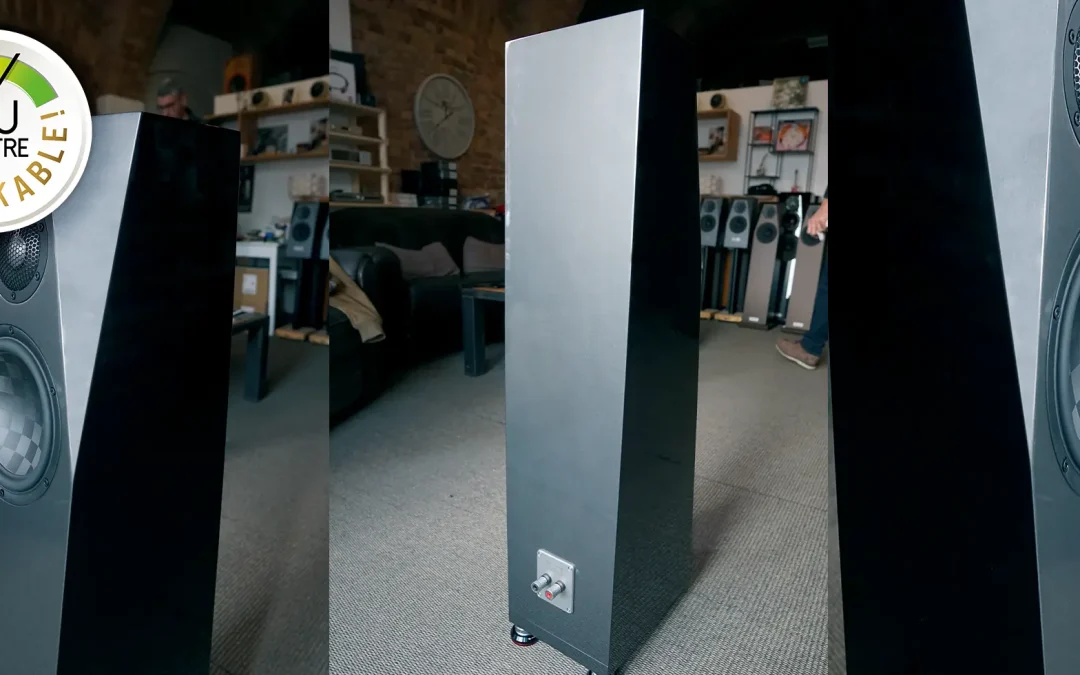
Dimensions: 1045 with feet, x 230 x 326 mm
Weight: 30 kg
Impedance: 8 ohms linearized
Load: 25 l, tuned to 36 Hz, laminar vent under the cabinet
Sensitivity: 86 dB (2.8 V/1 m)
Frequency response at -3 sdB: 40 Hz – 25 kHz on axis
A little gem from Tourcoing, the Octavio Amp is determined to make its mark on the digital audio landscape. After a successful stream, the brand is back with an integrated amplifier simply called the Amp, a supercharged version of their network player, which incorporates many of its features. This all-in-one device is packed with great ideas and offers a refreshing and fun take on the connected amplifier, which is sure to pique our curiosity!
Like the streamer, Octavio has opted for simplicity here. The no-frills design is reminiscent of the Sonos Amp, the benchmark in this category, which Octavio’s Amp draws heavily on for inspiration.
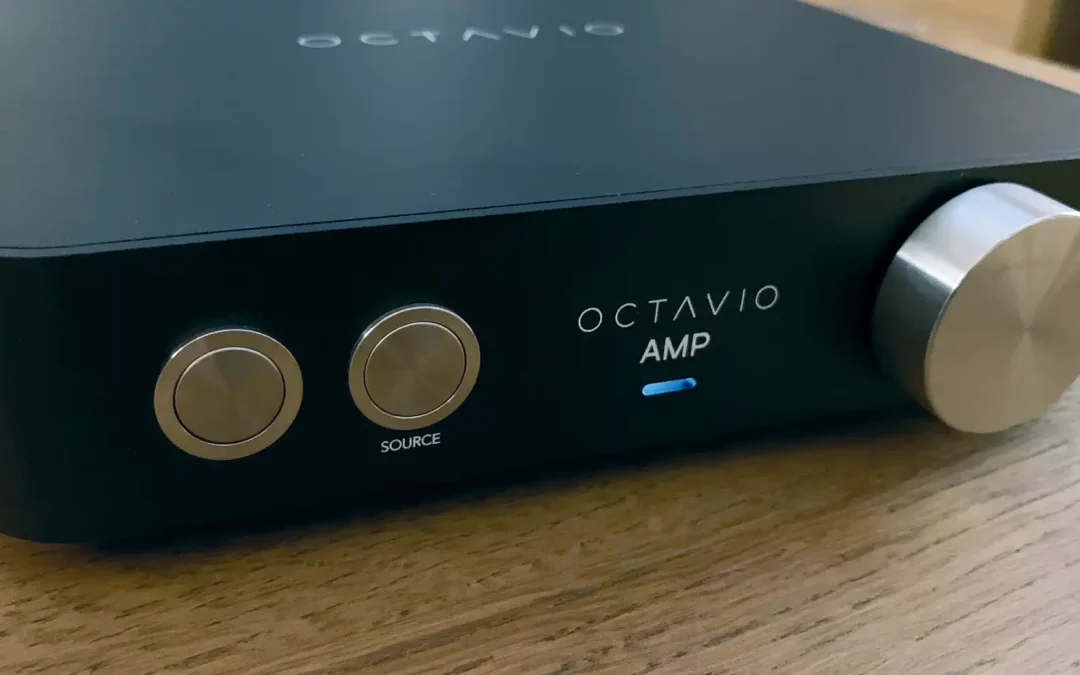
Its dark recycled plastic chassis, with two chrome buttons on the front – source and on/off – is complemented by a large volume knob and a control panel reduced to its simplest form, with the brand preferring to move all the buttons to the dedicated app. This app, called Virtuose, is one of the best of its kind thanks to its simplicity, clarity and versatility!
At the rear, the advanced connectivity contrasts with its apparent simplicity: dual analogue inputs (RCA), optical input (Toslink), subwoofer output (Cinch), plus an RJ45 port and a USB-A port for connecting a hard drive or USB stick. When it comes to network connections, Octavio has once again teamed up with Linkplay, the market leader, which has equipped the Amp with its latest chipsets: an Allwinner R328 DSP, supported by a quad-core ARM Cortex TM-A7 processor clocked at 1.2 GHz – already a solid combination – complemented by an AMPAK AP6256 chip, responsible for Wi-Fi/Bluetooth functionality.
As for the audio circuit, Octavio has moved upmarket and replaced the old Texas Instruments PCM5102A with a PCM1798. This digital-to-analogue converter may be old, but it has proven itself thanks to its high dynamic range, 24-bit/192 kHz and I2S compatibility, which is perfectly suited to this application. A particularly interesting package on paper, then, which we can’t wait to install.
The set-up
The Octavio Amp is very compact and not lacking in charm. A parallelepiped with rounded edges that is as wide as it is deep (19 cm), its height is limited to just 6 cm and its incredibly low weight make it a small marvel of integration. The secret? A remote power supply, available in 24 V or 32 V versions, which reduces the weight of the case by a third without reducing its capabilities.
When it comes to connections, again, nothing could be simpler: connect your speakers to the terminals, hook up your favourite analogue sources, then plug in the dedicated mains power supply. Octavio then guides you step by step through the Amp’s configuration, either via the myriad of dedicated videos on their website or the Virtuose app, developed for this purpose. And for those who prefer paper, the brand hasn’t forgotten the classic user manual, which is included with each device and printed on recycled paper, no less!
Once connected, the stream is controlled with your fingertips via the dedicated app, designed to aggregate all sources: Deezer, Spotify, Qobuz, Tidal, Amazon Music and even Apple Music – the Amp is compatible with Apple’s AirPlay 2 protocol. In addition, the streamer also supports Bluetooth, which is admittedly lower quality but still handy for guests.
The sound
Presented as a bridge between the old and new worlds, the Octavio Amp does not disappoint, quite the contrary. Connected to our pair of KEF LS50 Meta speakers, the little amp is full of charm and even manages to deliver some real moments of brilliance on relatively complex tracks such as Infraliminal by RezzMau5. Of course, given the legendary rigidity of our ‘little’ KEFs, we naturally replaced the original 24 V module with the much more appropriate 32 V block, which is much better suited to low frequencies, pushing the output power to 2 x 60 W instead of the original 2 x 35 W.
Once this is done, whether in terms of overall airiness, clarity of reproduction or simply output level, the Amp proves to be excellent, with a slight predominance of vocals over the rest of the spectrum, which is not unwelcome. This is a very pleasant surprise given its modest price, even if, logically, it cannot compete in this respect with its high-end counterparts, led by the Sonos Amp and BlueSound Powernode.
Nevertheless, let’s not deny ourselves the pleasure: the Amp delivers a very fine performance here. The high end remains crystal clear at all volume levels, taking full advantage of the high output offered by the Burr-Brown DAC, and while the bass is rather timid on the KEFs, when paired with the new JBL L52s, the combo regains its warmth thanks to much better low-midrange support – a privilege of 4-ohm speakers. This is a real treat for older systems, which are often at a disadvantage in this area, even when paired with a modern source.
So much so that, as we listened to it more and more, the Octavio gradually found its way into each of our systems. Behind the LS50s, of course, but also connected to the JBLs and even behind our B&Ws, which are renowned for their selectivity. And while AirPlay 2/Spotify compatibility remains the height of simplicity, it is with Qobuz that our little amp really spreads its wings: finer, clearer, more natural. The step up in quality is immediately noticeable, and our traditional test tracks (including Tim Bernades’ “Falta”) suddenly come to life, freed from their bottleneck.
Our conclusion
Versatile, efficient and fun, the Octavio Amp is a solid alternative to the big names in the genre, for any music lover looking for a connected amplifier that is as compact as it is powerful. Perfectly in tune with the times, particularly with its commitment to sustainability and its short French supply chain, the player completes a fledgling but highly intelligent range aimed at audiophiles with a penchant for technology.
Freshly arrived in our region, Feliks Audio is one of those gems that we have been following closely. A Polish firm, as discreet as it is serious, whose quality creations have been able to put all listeners in tune. A brand that has never had the chance to feature in our columns… until now, with the arrival of the latest model: the aptly named Euforia Evo, billed as the benchmark for home headphone amps.
Founded in 1999 in Lubliniec, Poland, Feliks Audio is, as usual, the work of an enthusiast. That of Lukasz Feliks, eponymous creator, passionate about sound and more specifically amplification – with tubes, moreover. A hobby that first served his designs, then those of his friends, quickly followed by enthusiasts, all as seduced as they were impressed by his high-fidelity headphone amps.
Unique creations with rustic charm, combining cutting-edge technique and age-old technology, for a result worthy of the greatest houses. A combination that will hit the mark, with Feliks Audio first gaining critical acclaim before acquiring a real reputation among the audiophile community.
This was followed by almost organic growth, fuelled by constant demand, supported by an ever more voracious market, perpetually in search of the best amplifier/headphone system (your editor’s guilty pleasure). This success enabled the timid workshop of the early days to achieve the status of a manufacturer, with Lukasz and his team making it a point of honour to maintain production lines in Poland, where the company is based.
But it was at the end of 2017 that the team achieved recognition with the release of the first Euforia. A tube headphone amplifier, successor to the Espressivo and Elise, which propelled Feliks to the forefront and inscribed the name of this company in the pantheon of major brands. In 2019, the brand even released a 20th anniversary version, soberly titled Euforia Anniversary, followed a few months later by the Envy – the epitome of the range – but it wasn’t until 2022 that we finally saw a true successor: the Euforia Evo.
Presentation
A clear aesthetic success, with the Evo Feliks Audio treats us to an OTL (no output transformer) amplifier in a neoclassical style, retaining the brand’s signature codes while adding a touch of modernity.
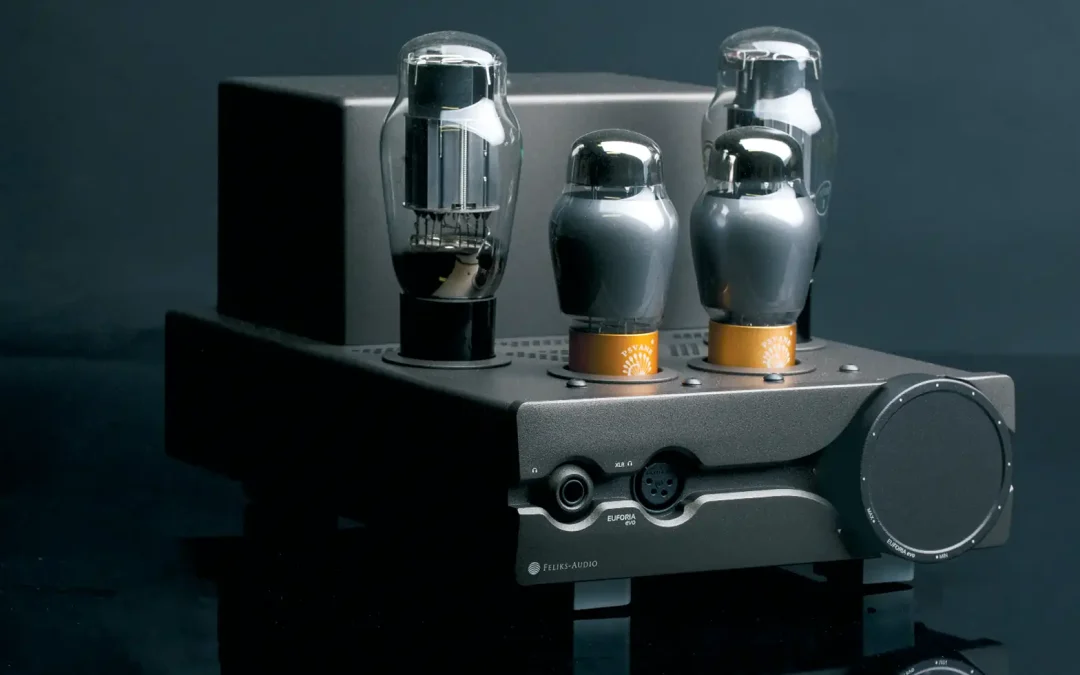
Updated, the front panel has become more refined, swapping the antique central potentiometer for a much more imposing controller, now nestled on the right of the front panel. A majestic cylinder, with a logo to boot, offering a much better grip for precise volume control. In the mirror, on the left insert, we find the traditional 6.35 mm jack output, this time accompanied by a balanced output, in 4-pin XLR format, which will delight demanding headphone owners.
At the back, the Euforia is very classic: an RCA line input, coupled with a line output also in RCA format, supplemented by an IEC C14 power port, almost eclipsing the tiny cross-feed switch discreetly housed on the far left of the backplate. A traditional design, therefore, supported by a two-part construction. The amp consists of a solid aluminium base with the amplifier tubes on the first half, and on the second half a solid rectangular block concealing the PCB.
Because it is under its thick layer of aluminium that the Euforia Evo hides its finest assets. An internal circuit combining the best of analogue: ClarityCap capacitors with CopperConnect, Neotech UP-OCC internal wiring sheathed in Teflon and point-to-point soldering, entirely hand-made by Lukasz and his team.
Finally, there is the highlight of the system: the tubes. Overlooking the whole, the quartet is made up of two power tubes – 6N13S Russian lamps known as New Old Stock – and two PsVane CV131 MK2 Gold preamplifier tubes with, as their name suggests, a gold base for the most beautiful effect.
The little something extra? An assembly with almost no visible screws, from which no screws are visible, reinforcing the sense of prestige that our amp exudes.
The set-up
Reduced to its simplest form, the Euforia Evo’s connectivity makes it particularly easy to install. Supplied with the bare minimum – a power cable and its tubes, the protective grille being sold separately – all you have to do is install the tubes according to the diagram provided, connect it to a source via its line input, then connect the power supply and start it up.
As usual, it will take a long time to start up, as the cathodes need to warm up, but once it’s done, all that’s left is to connect the headphones. Note that it will even be possible to connect a power amplifier to it, via the pre-amplified line output! A feature that we obviously took advantage of.
The sound
Wearing our venerable Sennheiser HD800S and complemented by an Auralic DAC, Feliks’ little block impresses, surpassing our traditional Cayin HA-1A MK2 and even approaching the Studio 6 from ALO Audio, our master standard.
The Euforia gracefully distils the most subtle nuances, while retaining that very special tube tessitura, a perfect balance of rigour and warmth. Taut bass, chiselled treble, deep mids, all enhanced by a wide soundstage. This is even more striking in stereo where, in addition to the clear gain in power, there is a better definition of the voices and a more pronounced staging of the planes, with each effect suddenly seeming closer, almost palpable.
This blend of elegance and refinement is emphasised by our Sennheiser, which is particularly at ease with our amp. Accurate timbres, open soundstage, powerful impact, nothing is lacking, and whether it’s the polyphonic electro of Infected Mushroom or the chant of Stacey Kent, the combo draws us in, never letting us go.
Melodious but never syrupy, powerful without being aggressive, our amp liberates the voices, makes the strings vibrate and, note after note, breaks down the wall of doubt. A feat that is confirmed the more you listen to it, the synergy of the hits combined with the topology of the circuit delivering an excellent result at any volume level.
But more than the power, it is the acutance of the rendering that is truly captivating, often blurring the line between tubes and transistors, betrayed only by its relative weakness on our orthodynamic headphones.
Because yes, while it proves brilliant, even dazzling, on our high-impedance headphones – Sennheiser and Focal in particular – the Euforia Evo is a little less at ease on our planar models. A real challenge at this level!
And even if the subrogation of the Auralic DAC by a Chord Hugo 2 reduces the pitfall, it is difficult here to see it as a replacement for our SAEQ Audio PDA-1B, which is much more at home on Audeze and Meze. Fortunately, on our Celestee, the Evo quickly regains its splendour, once again placing the bell tower at the centre of the village.
Finally, for the more curious, Feliks also offers a cross-feed function, simulating the natural crosstalk of a traditional hi-fi system, on headphones. Usually superfluous but here really convincing, it widens the soundstage without blurring the message, for a more natural result, on almost all the headphones tested.
Our conclusion
The Euforia Evo is as elegant as it is competent, delivering a top-flight performance once it has been warmed up, once the right headphones are connected. More complete, more powerful and ever more efficient, it almost makes you forget its price, the only real drawback. A top-of-the-range headphone amplifier that deserves to be on the shortlist of any good audiophile, completed by a solid living room DAC and high-impedance headphones for a successful trio.
Author: Haja Randrianarison
Technical sheet: Feliks Audio Euforia Evo
Origin: Poland
Price: €2,699
Dimensions: 313 x 203 x 193 mm (with LED tubes)
Weight: 7 kg
Input impedance: 100 kilo-ohms
Output power: 250 mW
Frequency response: 8 Hz – 80 kHz +/-3 dB (300 ohms)
Inputs: RCA (line-in)
Outputs: 6.35 mm jack/4-pin XLR/RCA (line-out)
Tubes supplied: 2 x PsVane CV-181 Mk2 Gold (6SN7) + 2 x 6N13S (NOS) (6AS7G)
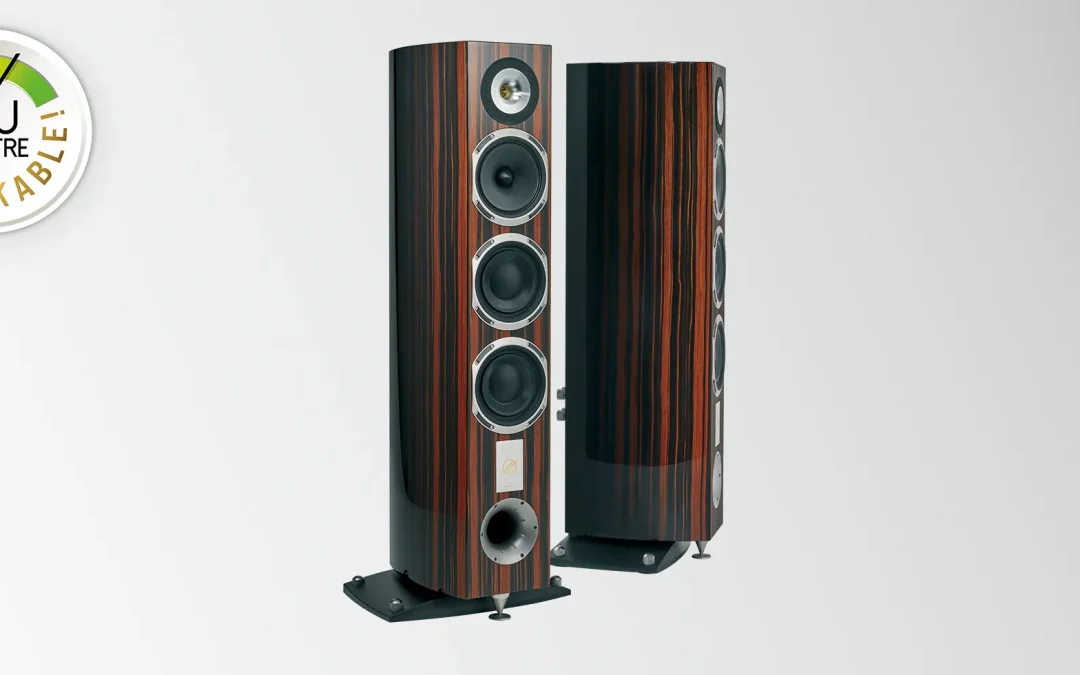
To celebrate its 40th anniversary, Triangle has decided to reissue its most prestigious speakers, while also giving them the benefit of the latest technological developments. The Triangle Magellan Cello 40th is one of the lucky ones to have been chosen for this update, which is far from insignificant. In this new version, it aims to offer performance on a par with that of its predecessor, the Magellan Grand Concert, while retaining a footprint similar to that of many living room column speakers.
One major development concerns the tweeter of the Magellan Cello 40th. A determining factor in the temperament of Triangle speakers and the brand’s true DNA, it now uses a composite dome made of magnesium alloy. This new material has an excellent mass/rigidity ratio. The dome is ultra-lightweight and responds to the slightest movement of the voice coil without deformation or the appearance of surface undulation. Its good mechanical behaviour allows it to maintain a particularly low level of distortion in the treble.
For an impeccable response in the extreme treble In addition, the very low mass that this dome gives to the mobile assembly gives this new tweeter remarkable behaviour in the most extreme frequencies. As proof, it climbs safely up to 30 kHz. The Magellan Cello 40th is thus capable of meeting the reproduction requirements of the most up-to-date high-res audio streams.
Finally, as with many of the brand’s products, the tweeter has a horn-like mouthpiece. This design gives it a behaviour halfway between a compression chamber system and a conventional dome configuration. To counterbalance this effect and eliminate any harshness in the treble, while preserving the slight brilliance so dear to the brand, a very tapered phase plug is placed in front of the dome, inside the horn. It also has the effect of opening up the dispersion angle of the treble and thus reducing the directivity of the speakers to provide an enlarged optimal listening area. Finally, this new tweeter uses a magnetic circuit based on a neodymium magnet. This choice has made it possible to considerably reduce its size while preserving the intensity of the magnetic field present at the level of the motor’s air gap and in which the coil is immersed. Triangle has taken advantage of this space saving to optimise the acoustic load housed behind the dome. It guarantees better elimination of the rear wave from the dome, which, once again, has the effect of reducing distortion.
The subtlety of the paper membrane for the midrange Triangle has remained faithful to the paper membrane for the midrange. Following numerous comparative tests and listening sessions, this choice clearly emerged as the one that offered the most natural midrange, particularly for voices. It should be noted that Triangle has opted for a ‘petits plis’ type peripheral suspension to give its midrange speaker great speed.
Similarly, in order to avoid the appearance of standing waves near the centre of the membrane and to promote the dispersion of the high-midrange, the core cap of this speaker has an ogive shape. Finally, the very structure of the membrane is the result of extensive research. Its profile is not simply a cone. It has a specific curvature designed to distribute the force exerted by the voice coil evenly over its entire surface. This distribution of force limits, once again, the appearance of surface undulations and, consequently, distortion or colouration of the sound message.
Two woofers with high excursion for bass The reproduction of the lower end of the spectrum is entrusted to two woofers associated with a bass-reflex load. These woofers also benefit from the latest innovations in composite materials. Their cones are made from a honeycomb glass sandwich, a material derived from the latest research in the aerospace industry. Called SVA, for Sandwich Verre Alvéolaire (honeycomb glass sandwich), this material offers the mobile crew an optimum ratio of mass, damping and rigidity. The loudspeaker thus accepts high excursions without deformation. A specificity that allows it to descend into the low-midrange with great ease.
Enhanced power handling Furthermore, to ensure that the Magellan Cello 40th can handle the most intense dynamic surges without fear and be able to deliver a sustained sound level without time limitation, the basket of these woofers, made of injected aluminium, is equipped with a heat-conducting ring. Its function is to optimise the dissipation of heat generated by the speaker motor when listening at a sustained sound level.
This ring captures the heat from the core and the yoke and then evacuates it towards the outer cover. The power handling for each speaker can thus exceed 200 W RMS. This system prevents any risk of thermal runaway and ensures better performance from the speaker. For example, a noticeable decrease in temperature of around 20°C is observed after a 100 W pink noise signal filtered at 80 Hz high-pass has been applied to the speaker for 120 minutes.
A front-ported bass-reflex load For a proper bass reproduction, it is essential to combine the woofers with an acoustic load adapted to their behaviour. Triangle has opted for a bass-reflex type load. It occupies most of the internal volume of the cabinet. Note that the highest part of this volume is dedicated to the acoustic load of the midrange speaker, which operates in a closed load. To avoid the formation of standing waves, which cause undesirable colouration of the sound message, both in the load dedicated to the midrange and at the level of the one associated with the bass, the partition wall is inclined.
This choice has the effect of eliminating the longitudinal reflections of sound waves in the acoustic loads and thus avoiding the risk of the ‘organ pipe’ effect that can occur on certain column speakers. This phenomenon tends to favour the reproduction of certain frequencies, essentially at the bottom of the spectrum, resulting in a thick and soft reproduction. This bass-reflex load is decompressed by a large frontal vent.
The set-up
Cello speakers are not the kind of product that you take out of the box, set up and they work straight away. They require careful and precise set up.
The front-facing decompression vent means you will have no trouble placing this speaker in the listening room, given the rear partition. Observe a distance of at least 20 cm. As suggested by the proprietary double terminal block, a magnificent creation of the brand, it is really important to bi-wire these speakers.
The gain in performance is quite simply decisive. Finally, don’t hesitate to use an amplifier with a good power reserve, because these lovely speakers can sing quite loudly and they need energy to power them. If you’re a bit of a tinkerer, with the help of your dealer you can even create a very clever passive bi-amplification for results that, we have no doubt, can be very eloquent.
The sound
The best of both worlds, that’s essentially what this new version of the Cello seems to offer us. On the one hand, and you will hopefully forgive this burst of nostalgia, we find what made the historical models of the Soissons brand so strong: a very beautiful speed of execution, a transparent and mineral frequency response and a very beautiful temperament. But on the other hand, we are delighted to find a very good command of the different registers, and especially the delicate transition between them. The sound spectrum is reproduced with remarkable homogeneity. Here, it is impossible to know where we are in terms of the transition between the different speakers. The filtering has been carried out with great skill to allow this cohesion between the different registers. In the same vein, the modern Triangle factory offers mature and highly controlled products. Gone are the small approximations of yesteryear, which were certainly quite romantic, even sometimes seductive, but tiresome in the long run. Here, nothing is left to chance; everything is impeccably controlled from one end of the spectrum to the other. Ultimately, this brings us into the presence of truly modern transducers, capable of delivering a very wide sound spectrum, without any attenuation. The bass is deep, taut, very precise and very vigorous. The mid-range is characteristic of the French brand, i.e. particularly open and informative. It offers a lively, nuanced and fluid rendering of all melodic lines. Finally, the treble is simply successful because it manages to reconcile a very surprising energy with a beautiful finesse. This is not always easy, and we must salute the tenacity of the developer for having achieved this explosive cocktail. The Cello also provide an attractive spatial presentation that puts the different sections of large ensembles into perspective. Combined with a strong temperament, this three-dimensional sound image manages to generate beautiful emotions in very large ensembles, such as a full symphony orchestra.
Our conclusion
It was with great pleasure that we discovered the new Triangle Magellan Cello speakers, which brilliantly celebrate the brand’s anniversary. These are successful speakers in every respect, which do credit to the Soissons factory. They offer a sound aesthetic that fits perfectly with what Triangle wants to offer its most demanding customers today: wide bandwidth, lively temperament and panoramic imaging. All this, and more, they are able to offer you, but only if they are given a great deal of care and attention in their implementation. Under these conditions, they will repay you a hundredfold, and amaze you with their ability to enhance all musical styles.