After surprising the audiophile community with its excellent turntables, the British manufacturer is now offering their logical extension, in this case a phono preamplifier. The Vertere Phono 1 is very compact, but full-featured and highly musical at an affordable price.
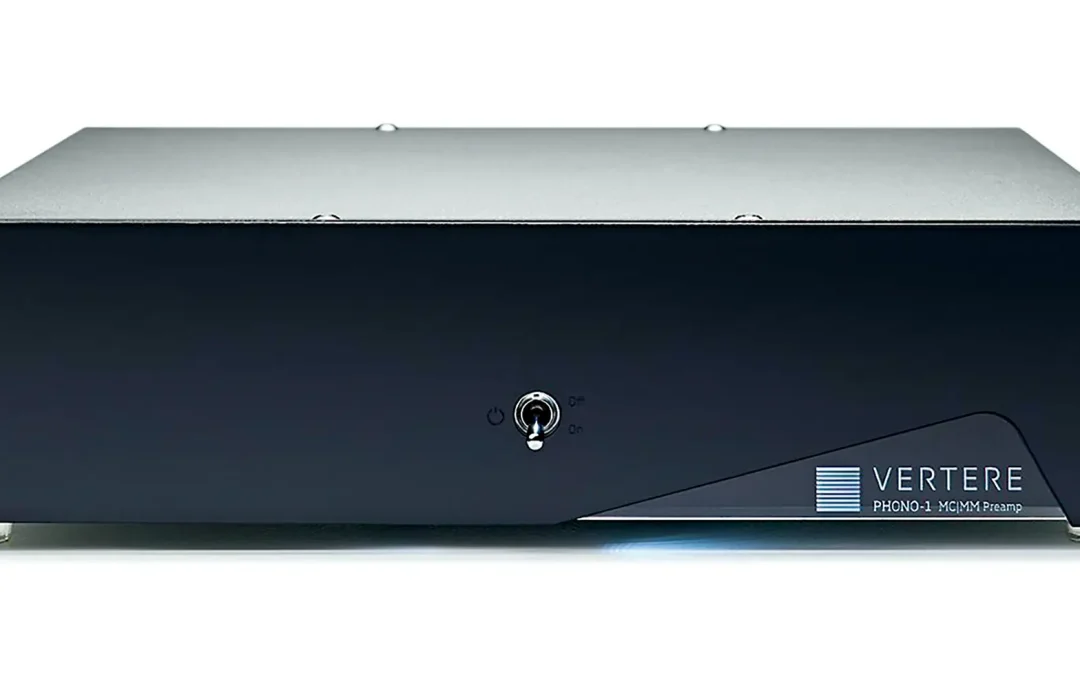
A great user of Plexiglas, Vertere has adopted a slice of it to adorn its Phono 1 with an original front panel. But apart from the purely aesthetic aspect, this material provides mechanical damping for the small case of this phono preamplifier. The rest of the case is made of aluminium. The front panel has a power switch as its only feature. The case rests on four small feet made of hard transparent polymer.
The British designer explains that designing the phono stage is difficult, because the circuit has to work with the tiny signal emanating from the cell, which is usually only a fraction of a millivolt. It has to be amplified properly a thousand times and equalised to the exact RIAA curve in order to faithfully reproduce the recorded music. The Vertere Phono 1 is designed to achieve this, even in very high quality vinyl playback systems. The compact footprint of the main circuit maximises dynamic range and delivers supreme detail resolution.
Inside, the cabinet is divided into two equal parts by a transverse partition. On the left-hand side is the power supply, based on a generous toroidal transformer encapsulated in a ribbed plastic film. Protected from radiation, it cannot pollute the fragile audio signals passing through the adjacent section.
These are implanted on high-quality gold-plated printed circuits. Vertere uses only discrete components that are bonded to the circuit tracks using a special soldering process, offering consistent, long-term optimum performance. The pure RIAA section is shielded by a small stainless steel housing.
The set up
The first part of the installation is extremely simple, since the Phono 1 has just two pairs of RCA sockets for input and output, and an IEC socket for connecting the mains cable. On the other hand, and this is excellent news, a ground selector offers the options of Hard Ground, Ground Lift or Soft Ground connection of the preamplifier and chassis, allowing optimisation of hum in the event of incompatibility with the associated amplifier.
When it comes to compatibility with different cartridges, the Vertere Phono 1 offers a multitude of settings via mini selectors located on the underside of the unit. Moving coil amplifiers can be adjusted from 78 to 1,450 ohms. Gain can be set from 45.4 to 61.4 dB. The capacitance can be adjusted from 0.22 to 1.02 uF.
For moving-magnet cells, the 47-kilo-ohm load is combined with a capacitance of 100 or 430 pF.
The sound
It’s amazing to see such a big sound emanating from such a small box. The Vertere Phono 1 gives analogue music pressed on vinyl an excellent breath of air. If we were to indulge in a little memory game, we’d almost have the impression of listening to old Naim electronics, which is totally paradoxical and ironic given the competition between the two manufacturers (Touraj and Julian) over 30 years ago. In fact, the Phono 1 offers us a wonderful ability to modulate at all levels so as to let the musicians express themselves, in the manner of a ‘live’ performance. This palette of nuances is no small part of the feeling of freedom that emanates from this electronic system, which is decidedly unlike any other. One of the great pleasures of listening to the Vertere Phono 1 is the feeling of airiness and ease it gives you, the sensation of modulation. Instead of coldly analysing the sound message, it adopts an exceptional musical perspective on interpretation. Fluid and harmonious, it offers a tonal balance at the very top end of the range, entirely expressive, which in the end seems to have little to do with its price tag. This is a device clearly designed for the eclectic music lover whose record collection outweighs the price of the system.
The high register is never overdone, transparent and perfectly in place. Without coloration, it is subtle without ever being harsh. The midrange occupies a central position, while displaying a clear presence. It demonstrates excellent homogeneity and can rely on a deep bass that is always impeccably controlled.
Our conclusion
From our own investigations, we know that this device has caused quite a stir across the Channel, in its native land. Local testers have not hesitated to compare it to products two or three times its price. It’s true that listening to the Vertere Phono 1 is totally surprising, with its absolutely sumptuous stereo image and innate sense of modulation. It’s a device that speaks almost more to the heart than to the mind, and that’s not to our displeasure. A stunning newcomer in a crowded landscape, the Vertere Phono 1 deserves your full attention. A genuinely interesting new proposition.
Author: Pierre Fontaine
Technical sheet: VERTERE Phono1
Origin: United Kingdom
Price: €1,069
Dimensions: 210 x 55 x 235 mm
Weight: 2 kg
Gain settings: 40.2 dB to 62.8 dB
Input impedance settings: 47k for MM – 78 to 47K for MC
Capacitance: 470pF for MM – 100pF to 1.02uF for MC
A year after the Tim Power 1, here comes its big sister, the Absolue Creations Tim Power 2. More ambitious, it looks almost identical. But you know what they say: the real beauty is on the inside!
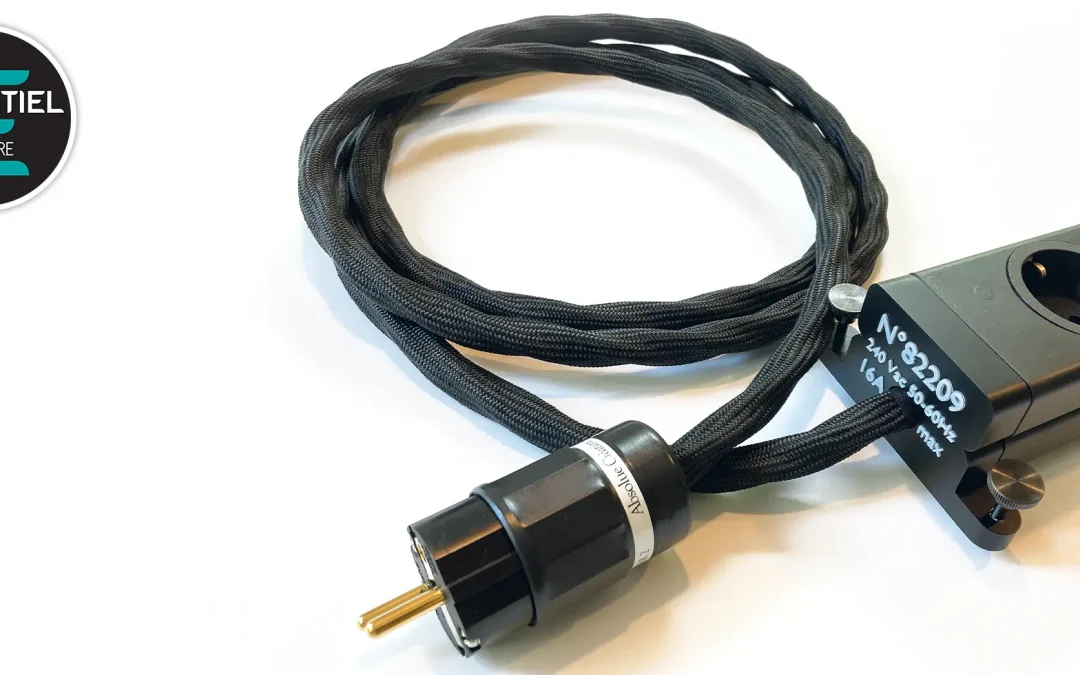
We tested the first model of the French manufacturer’s power strip just over a year ago. Now here’s its top-of-the-range model, which has the good taste to retain a very democratic price. Once again, the Normandy manufacturer’s product boasts a sober, neat design. This is a far cry from a banal assembly. At each end, an elegantly screen-printed flange also supports two threaded rods adorned with adjustment knobs. This device raises the bar above the ground and ensures its mechanical stability. The designer explains that his priority was not to eliminate vibrations, which explains why these are not real spikes but rather supports. The resin cheeks have an anti-vibration function. This is a high-density compound of industrial origin. Finally, there are resin dots on the screw of each socket to provide the Absolue Creations Tim Power 2 with additional mechanical damping.
The two flanges were made from composite material in the designer’s workshop using a 3D printer. The unique serial number allows buyers to trace their product, but also to have a legitimate feeling of belonging to this brand.
The design and craftsmanship are also evident in the profile with six Schuko sockets (a version with four sockets is also available). The sockets are connected by three long bars of pure copper plated with 24-carat gold, each covered with cotton insulation and then silicone. Each of the six sockets is fixed directly to the bars, as is the cable itself. So there are no breaks due to insertion contacts between the pins of the strip and its wall socket.
Apart from the final insulation, the cord is closely derived from the Fontainebleau model. It uses three tinned multi-strand copper conductors with a diameter of 2.5 mm2. The insulation is made of polyvinyl and flame-retardant antistatic nylon. The cables are twisted and tensioned using in-house techniques to reduce electromagnetic interference. But Absolue Créations has incorporated ARS technology into the structure, a proprietary method applied to each conductor to isolate it and prevent damage from reverse current flow. The connectors are from Furutech, and the male plug comes from the FI-E38 (G) series in a gold-plated finish.
Each terminal strip is available in a standard length of 1 m and in extra lengths of 30 cm. The 30 cm length was not chosen at random; it has a determined and reproducible influence on the behaviour of the signal in terms of propagation and phase maintenance. For this reason, the cable can only be extended in 30 cm increments.
The set up
The purpose of the decoupling system of the Absolue Creations Tim Power 2 is to raise the strip above the floor, especially where there is carpeting, which can increase static electricity. For the rest, nothing could be simpler: start plugging in the most energy-consuming appliances from the first socket, the one next to the trapped cord. Then plug in whatever consumes the least electricity.
The sound
What’s really nice about the products from this French brand is that they’re very respectful of timbre. So with this power strip, the sound is never ‘blocked’ or opaque; on the contrary, it’s radiant. What’s more, you get the distinct sensation of a wide-open sound window that lets the recorded music express itself with an excellent perspective. That, in a nutshell, is the great virtue of the Absolue Creations Tim Power 2. Unlike many competing products, we wouldn’t say that it adds anything, but rather that it prevents the loss of crucial elements that make sound reproduction so meaningful. As a result, the image appears to be totally exhaustive, not only well formed, but with realistic dimensions that extend into the room without overdoing it. Dynamics are very natural, expressed without compression or limitation, but without exaggeration either. The discs recorded without compression come through with great energy and an innate sense of rhythm. The music takes on an obvious, natural dimension. The Absolue Creations Tim-Power 2 isn’t in any way trying to impress you. On the contrary, it reveals the true nature of your recordings.
Our conclusion
The Absolue Creations Tim Power 2’s sound is entirely in keeping with its design: simple, sober and elegant. No frills, no stylistic effects, just the true sound of your records, unadorned and authentic. It’s a product at a very attractive price that will stand the test of time. In a way, a great hi-fi classic from the start. Highly recommended!
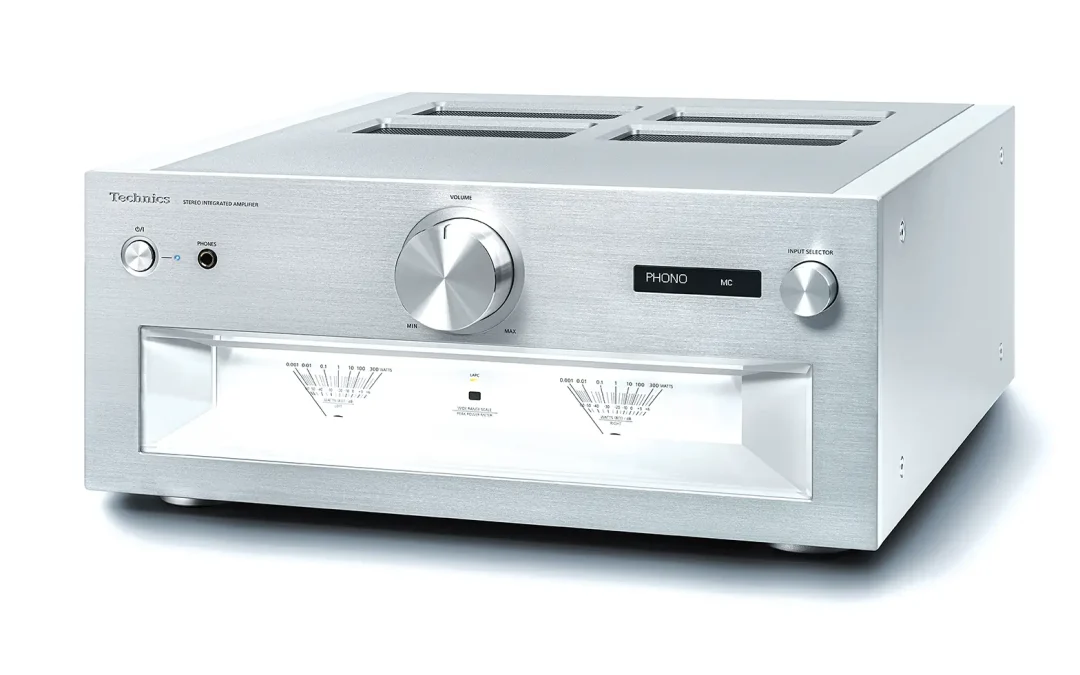
The Technics SU-R1000 is the first integrated amplifier in the R Series. It derives very closely from the preamplifier-converter and impressive power block that, a few years ago, signalled the brand’s revival. The SE-R1 launched in 2014 incorporated original new technologies such as LAPC and JENO. In the meantime, the Japanese manufacturer has put the pressure back on the analogue turntable market with a rejuvenated and expanded range. So it’s hardly surprising that this new integrated has a phono input with a panoramic spectrum.
In this highly coveted high-end niche, most amplifiers are analogue. Their technologies are considered totally established, even conservative. Conversely, digital amplifiers still have great potential for development, as the rapid technical progress of recent years has enabled high-precision signal processing.
For all these reasons, the Japanese manufacturer, which has always been particularly pragmatic, has been dedicated to developing digital amplifier technology since 2014.
With the Technics SU-R1000, it is also looking to advance its technology, in particular with the ADCT (Active Distortion Cancelling Technology) process coupled with LAPC and JENO. This switching power supply system is used to extract and precisely eliminate distortion in the power stage caused by the counter-electromotive force of the loudspeakers and voltage drops in the power supply.
To do this, it can rely on a new Advanced Speed Silent Power Supply switching power supply system made up of four independent sections. The Technics SU-R1000 uses separate power supply units for the analogue and digital circuits in the preamplifier stage. It also adopts separate power supply units for the left and right channels in the power amplification stage, which require high electrical power. With four independent power supply units, the SU-R1000 prevents power line interference between circuit blocks and achieves a high S/N ratio.
Within the amplifier’s power stage, Technics uses a low-resistance GaN (gallium nitride) FET transistor driver stage. This makes it possible to build a power amplifier in a simple push-pull configuration, reducing the signal circuit and guaranteeing excellent linearity, whatever the sound level. This reminds us of the AGD amplifiers we were able to test a few months ago. And in order to offer a complete package, the SU-R1000 is equipped with an intelligent phono equaliser, which uses specially developed digital technology to obtain a precise equalisation curve and improve the crosstalk of the cartridge and the frequency response.
The set up
The Technics SU-R1000 is an unusually quiet amplifier, both on its multiple digital inputs and on the phono input.
The intelligent phono equaliser built into the SU-R1000 offers various functions that can be activated or deactivated according to the user’s preferences. The precise equalisation curve is obtained using a hybrid analogue-digital system. The high-gain low-pass filter (LPF) performs the analogue processing, and high frequencies are boosted after A/D conversion. The crosstalk canceller measures the cell’s crosstalk characteristic using the crosstalk measurement signal recorded on the calibration register supplied with the Technics SU-R1000. It then performs an inverse correction using the on-board DSP to achieve a significant improvement in the crosstalk characteristic. Finally, response optimisation measures the frequency characteristic of the cell using a TSP (Time Stretched Pulse) signal stored on the grouped calibration record, and corrects the characteristic disturbance. It attenuates the effect of impedance matching between the cartridge and the phono equaliser.
The sound
If we stick to pragmatic and modern technical criteria, this amplifier ticks all the boxes for success: a hyper-modern power supply with four different sections and a proprietary class D amplification scheme. Of course, this technology isn’t universally acclaimed, far from it. But it must be acknowledged that it is supreme in terms of efficiency and performance. And in this respect, the new Technics is a great success. It drives loudspeakers with astonishing mastery. We connected it to various transducers, from traditional electrodynamic loudspeakers to isodynamic panels, and each time it proved to us just how unsaturable and virtually impossible to fault it was. This sense of ease is also found in the bass register, which expresses itself with a strength and precision that are truly exceptional for the price. To be quite frank, we were expecting an even more lyrical outburst in this area. But the Technics has the good taste to remain under control at all times and doesn’t go overboard. This is a device that doesn’t try to offer spectacular listening. It is extremely dynamic, of course, but never overdoes it. Nonetheless, the low octaves are explored with unexpected application. In the extreme bass, we perceive information that is particularly tenuous in loaded messages, but which emerges with striking clarity. This is one of the great charms of this instrument: its ability to bring to light what others leave in the shadows. It’s in this area of subtlety and finesse that we can see just how much the Class D has progressed over time. The sound never seems monolithic or rigid. On the contrary, it’s full of variety. The more you alternate between different musical styles, the more interesting the facets delivered by an amplifier that offers a sound experience far more subtle than its aesthetic appearance might suggest. Of course, there’s raw power (totally controlled), but above all there’s an unusual openness and lightness. The timbres are completely natural, never tainted by the slightest coloration. As a result, the Technics SU-R1000 can be played with a very wide range of partners without ever putting its own stamp on them. When you try out its converter section, you discover the same kind of qualities in terms of both spatialisation and harmonic subtlety. The same can be said of the exceptional phono input, whose versatility is astonishing. We were able to carry out tests with different cells (Nagaoka MP-150, Dynavector DV XX2, Denon DL-A110, Audio Technica ART9 X). In each case, you get a fine tuning that allows you to take full advantage of the cell.
Our conclusion
When it comes down to it, this new integrated amplifier offers a lot of quality for a relatively low price when compared to its competitors. Don’t let the bodybuilder physique of the Technics SU-R1000 fool you, this is a device that works with finesse. It’s even unsettling. Its detractors will see a lack of personality. For our part, we’re more inclined to think that it’s trying to remain as neutral as possible. Given the track record of the Japanese brand’s other electronics, this seems obvious.
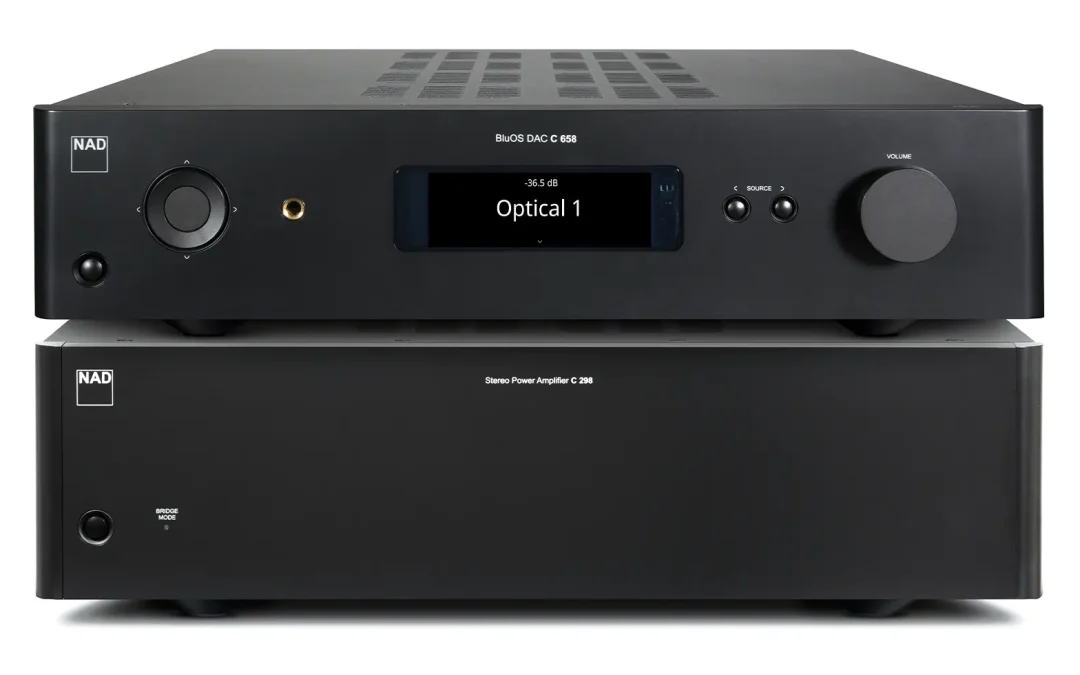
Following on from the surprising M10 and M33, NAD is now offering us a more or less equivalent performance package nestled in a completely different shell. The NAD C658 and the NAD C298 is presented in the same livery as the manufacturer’s classic range, and its performance is quite astonishing for the price on offer.
These NAD components probably foreshadow what our systems will be like in the future. While the power amplification retains a familiar format, it’s the sources that are the real upheaval. Here, there is no longer any device for reading a physical medium. Instead, a network player and a preamp called the NAD C658 replace them, putting the emphasis on dematerialised media. However, to ensure a smooth transition in our listening habits, NAD has taken care to equip it with numerous inputs so that it can also make the most of current and older sources, both digital and analogue. It also acts as a DAC and preamplifier.
Great versatility A veritable bridge between two eras, or even two worlds, the C658 plays the excellence card. This choice is tangible right from the analogue sections. For example, an unusual feature in equipment that is essentially digital, it has a Phono MM input for a vinyl turntable. Similarly, there are two analogue inputs at line level, so that it can accept the connection of older generation analogue sources.
Of course, the connectivity dedicated to digital streams is also very comprehensive. There are two optical inputs, two coaxial inputs and a USB port. The NAD C658 can therefore handle streams from a CD drive or television, for example, to deliver quality sound. Similarly, it meets the current demand for wireless links. Here again, NAD has opted for high-quality solutions. It has a latest-generation Bluetooth apt-X HD transmitter. This link enables files stored on a smartphone, for example, to be used directly under optimum conditions, including hi-res audio streams, which is not the case with basic Bluetooth. What’s more, as this link is reversible, it allows wireless headphones to be used from the C658.
BluOS compatible Finally, the NAD C658 can be connected to the home network to access streaming services on the Net, either via a wired connection using the Ethernet port on the RJ-45 socket on the rear panel, or directly via Wi-Fi. In the latter case, NAD has equipped the C658 with a dual-band wi-fi transmitter to ensure a reliable connection with a constant data rate. What’s more, equipped with BluOS hi-res audio streaming technology, it can access more than fifteen high-quality streaming services, as well as a large number of web radios. This technology is also open to multi-room use. This means that the NAD C658 can be used to broadcast music throughout the house while managing several listening zones individually, provided that there is BluOS-compatible equipment in the home.
An ESS Sabre 32-bit DAC But while accepting streams is one thing, they still need to be managed correctly. Here again, the brand has opted for quality by equipping the NAD C658 with a 32-bit ESS Sabre DAC. A component renowned for its very low jitter and exceptional dynamic range. It is natively compatible with 32-bit/192 kHz hi-res audio streams, so you can fully exploit their subtleties.
However, what’s the point of processing audio streams to perfection and reproducing them with total respect for timbre, even with quality speakers, if the room in which you’re listening has difficult acoustics. Many reproductions suffer from coloration or tonal anomalies linked to poor room acoustics. NAD has made this observation. To solve this problem and restore perfect tonal balance, the brand has equipped the NAD C658 with DIRAC Live Room Correction acoustic correction technology. A device for compensating for the acoustic anomalies of a room that is a benchmark on the market. In addition to rebalancing the system’s overall frequency response, DIRAC detects and corrects undesirable resonance phenomena. The impulse response of the loudspeakers is also quantified and the system’s response is adapted accordingly to optimise it. In short, the aim of these multiple adjustments is to ensure that the listening experience fully respects the recording conditions.
An amplifier with generous power To fully exploit the capabilities of its network player, NAD wanted to combine it with a power amplifier that also uses the latest generation technologies: the NAD C298. Based on Class D digital output stages, it is capable of delivering power of up to 2 x 185 W.
Digital amplifiers sometimes have a bad reputation in the audiophile world. They are sometimes accused of a certain aggressiveness, or even excessive brightness. Aware of these remarks, the manufacturer has equipped the NAD C298 with its HybridDigital Purifi Eigentakt technology, already used by the most high-end elements of its productions. Developed in collaboration with the Danish company Purifi, it gives the C298 exceptional dynamics combined with excellent frequency response linearity. The NAD C298’s connections are fairly conventional. Two pairs of terminals are dedicated to speaker connections, while the interconnection between the network player and the power amplifier can be made either via a conventional unbalanced cable on RCA sockets, or in balanced mode thanks to the presence of an input on XLR sockets.
Finally, for those of you who don’t want to be left without power, the NAD C298 can also be used as a mono power block. In this case, it develops power of up to 620 W at 8 ohms. In this case, of course, you’ll need to combine two C298 power units with the C658 network player for stereophonic reproduction.
The set up
It’s becoming more and more common to have to connect your sources to the network, but it’s rarer for this to be a preamplifier. At the same time, the C658 is much more than just a preamplifier. It’s also an excellent network player. If you want to keep strictly to a dematerialised configuration, you’ll essentially be using BluOS, which is probably the most successful application on the market for controlling your Qobuz, Tidal and many other subscriptions… However, if you wish, you can also connect your turntable equipped with an MM cell, or even two analogue sources, and a plethora of digital sources. As for the power block, we found it particularly unsaturated and capable of driving just about any type of loudspeaker. We carried out several tests with electrodynamic columns and isodynamic panels. In all cases, we were able to listen very loudly with impeccable control.
The sound
On paper, this set is particularly complete. It can be used as a source as well as an amplifier. And contrary to the old proverb ‘if you embrace too much, you embrace too little’, it combines universality with quality. When it comes to sources, first of all, we appreciated the C658’s flexibility. When BluOS is used, the result is excellent. The sound qualities of a Node 2i are there, with extra definition and energy on small signals. The sound is very stable, frank and nervous, and can be particularly demonstrative, but also delicate and subtle. We also tested Bluetooth aPTX with a Fiio portable music player. Here again, the C658 delivers confident, smooth and modulated streaming. Not so long ago, to get the same performance wirelessly, you had to pay three or four times as much. We’ve made significant progress in this area. We carried out cabling tests between the C658 and C298, and in the end we used a symmetrical link for all our tests. It gave us extra definition, gain and aeration of the soundstage.
As for the amplifier, we were able to measure the extent to which class D amplification has progressed in recent years. Until recently, the scenario was always the same: we were totally blown away during the first few minutes of listening, then somewhat disappointed afterwards. A bit like an unfulfilled promise. Today, the situation is very different. This NAD C298 equipped with the Purifi Eigentakt circuit delivers immense sonic satisfaction. The bandwidth is wide, allowing reproduction of a spectrum that ventures very low in the bass and rises very high in the treble. The tonal balance is not at all cartoonish, it’s completely natural. It’s even disturbing. And, of course, there’s always that quality of speaker control that’s unique to this type of amplification, and almost impossible to match. Of course, this amplifier offers a deliberately linear and neutral type of sound. There’s no trace of coloration or embellishment here, however elegant. The NAD C298 wants you to listen to the signal, just the signal, nothing but the signal. If you like your sound reproduced with a soft roundness, you won’t find much here. The warm subtleties of pure Class A won’t be there. The full-bodied midrange and gleaming treble of some American electronics are not on the agenda either. But if you appreciate purity without artifice, dynamics without any limitations, and deep, textured bass, you won’t be disappointed… Generally speaking, this NAD set provided us with long hours of uneventful listening, without the slightest question being asked. The audiophile, especially in reviewer mode, generally asks himself a multitude of questions… but I find it very reassuring that sometimes he takes a back seat and leaves room for the music lover who quietly enjoys his favourite pieces of music.
Our conclusion
Apart from a slightly utilitarian look (and even then, vintage is fashionable), there’s really nothing to criticise about this package, which does everything, and does it very well. The NAD C658 + NAD C298 package not only offers exceptional value for money, but also a level of intrinsic performance that is nothing short of exhilarating. Of course, there are more expensive, infinitely more expensive. There’s also much prettier. But when it comes to listening to music on a daily basis without any headaches, and especially with any loudspeaker, there isn’t much equivalent at this price.
Author: Unknown
Technical sheet: NAD C658 Network preamp/player
Origin: Canada
Price: €1,700
Dimensions: 435 x 100 x 405 mm
Weight: 10.1 kg
Total harmonic distortion THD (20 Hz to 20 kHz): <0.005% (output voltage 1 V)
Signal-to-noise ratio (SNR ): >110 dB (32 ohm loads; A-WTD, ref. 2 V out, unity gain)
Frequency response: ±0.3 dB (20 Hz to 20 kHz)
Channel separation: >60 dB at 1 kHz
Output impedance: 6 ohms
Technical sheet: NAD C298 power amplifier
Origin: Canada
Price: €2,000
Dimensions: 435 x 120 x 390 mm
Weight: 11.2 kg
Power: 2 x 185 W into 8 ohms – 2 x 340 W into 4 ohms
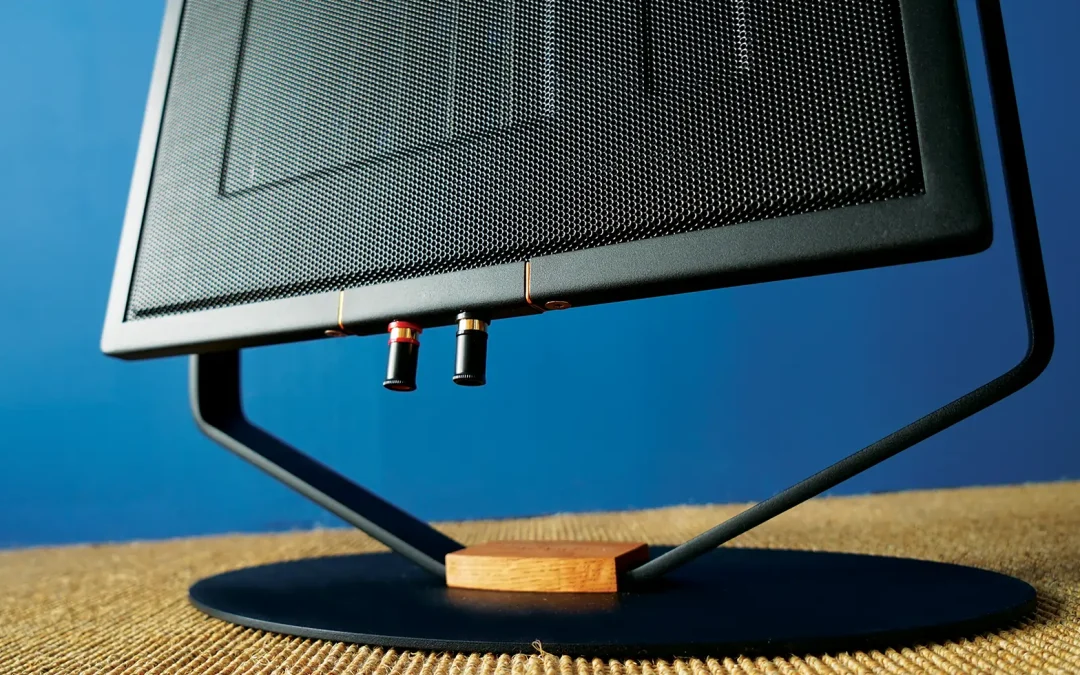
It’s a great source of pride to know that one of the best contemporary brands of isodynamic loudspeakers is French. We’ve had the pleasure of testing and living with Diptyque Audio loudspeakers, and it’s only natural that we should give you a world-exclusive preview of the new Diptyque Audio DP107 model. Although it looks a lot like it, the new arrival is not just an enhanced DP77; it goes further on all parameters, which confirms its superiority.
The story of Diptyque Audio began with the meeting of two hi-fi enthusiasts, Gilles Douziech and Éric Poix, both looking for the ultimate system capable of satisfying their demand for natural, pure sound reproduction. Gilles Douziech, a 19-year-old electronics student at the time, decided to travel across France to work with Marcel Rochet, the designer of Mulidine loudspeakers. It was an opportunity for him to live out his passion while assimilating complex notions of acoustics, particularly harmonic resonance. Added to this was the inevitable study of electronics, essential to the design of crossovers capable of working in perfect symbiosis with the loudspeakers used in a speaker. Although Gilles Douziech has always had a passion for designing loudspeakers, and has built many of his own, he has spent most of his career in medical electronics, working for some of the world’s best-known manufacturers such as Hewlett-Packard, Philips, Siemens and General Electric.
Éric Poix is a specialist in mechanics and metalwork. He also has a passion for high fidelity, and is in search of absolute purity of sound. In fact, he has never stopped developing his listening system. What’s more, his skills quickly led him to design particularly rigid and totally acoustically neutral loudspeaker stands. These skills complement those of Gilles Douziech because, as we all know, loudspeakers are based on a delicate combination of mechanics and electronics.
Diptyque Acoustique was born of the union of two experts with complementary skills. However, after exploring a number of traditional technologies, including electrodynamic, electrostatic, ribbon and even flat rigid-membrane loudspeakers, no technology seemed fully satisfactory.
It was then that isodynamic technology, also known as magnetostatic loudspeakers, emerged as the most promising. All the more so as Éric Poix’s mastery of ultra-strong structures opened up the possibility of new solutions. Among other things, the design of extremely rigid frames allows perfect membrane tension, which is essential for exceptional reproduction quality. What’s more, as the design of numerous prototypes progressed, Diptyque Audio made numerous improvements to this technology. One of the most important involves the use of powerful neodymium magnets placed on either side of the diaphragm so that the magnetic circuits it carries move within a constant field as they move. This architecture, known as Push Pull Bipolar Magnet, guarantees perfect control of the diaphragm’s movements. To maintain the acoustic neutrality of these flat loudspeakers, their frame is based on a ‘sandwich’ of MDF, glass and plastic.
‘MDF, felt and pressed sheet metal. A complex combination of materials, all selected with the greatest care, that has proved its effectiveness and the listening quality it offers these speakers.
But, more generally, this technology, although very tricky to implement, has a number of advantages. Firstly, the diffusion of a plane wave from a large surface guarantees a sensation of sound immersion without the effect of sound projection. In addition, the dipole operation of such loudspeakers recreates the spatialisation of sound necessary to recreate the behaviour of a concert hall. What’s more, the use of ultra-thin Mylar diaphragms, just 12 microns thick, guarantees a lively temperament that is devoid of drag. In the same spirit, the use of the same diaphragm throughout the entire audible spectrum preserves the coherence of the sound message. Finally, the absence of cabinetry, and therefore of acoustic load, eliminates the box effect at the origin of certain undesirable colourations.
Finally, to extend the response of isodynamic cells into the extreme treble, Diptyque has designed proprietary tweeters. These are based on a ribbon made from the same Mylar film as the main cells. Their aluminium wire coil is bathed in a powerful magnetic field produced by neodymium magnets. Their extended frequency response enables them to be perfectly linked with the isodynamic cells, as well as the use of low filters: 6 dB per octave. This smooth transition ensures that the midrange sounds impressively natural and realistic. Listening to grand pianos, for example, demonstrates this behaviour.
The set up
Putting a pair of Diptyque to work isn’t very complicated.Getting the most out of the new Diptyque Audio DP107, however, requires you to take your time and think carefully about the implications of each of your actions. First of all, we worked on the placement of the speakers in the room.We instinctively placed them in the same place as the DP77s.But the newcomers need more air to breathe, so we had to move them further forward in the room to free up space in relation to the wall.Secondly, if your seat is low enough, it’s best to leave the panel straight, i.e. parallel to the walls. This encourages dispersion and the reproduction of an extremely coherent three-dimensional space.Nevertheless, we strongly advise you to carry out some tests.Once you’ve chosen the right position, you can compare sources and amplification.The Diptyque Audio DP107 are particularly transparent, so it’s easy to see the differences between the individual components. In a relatively compact room, an excellent integrated amplifier will do the job without any problem.That’s right, despite their stature, the DP107s manage to sing admirably in a 15 m² room. Once you’ve conquered the big spaces, you’ll need to think about beefing up the amplification. At this stage, there’s nothing to worry about: the tests will give you the joy of discovery.
The sound
Listening to a pair of panels for the first time is always a unique experience, bordering on a rediscovery of sound reproduction. You suddenly experience recorded music in a completely different way. The three-dimensional space perceived has little to do with that which emanates from a pair of traditional electrodynamic loudspeakers. It’s suddenly vast, extremely airy, unusually precise, and gives you the impression of being immersed in the sound.This sensation, when experienced for the first time, is absolutely delightful because it is so special that all your reference points are turned upside down. Yes, ‘panel’ listening has its enthusiasts, its die-hards, but it also has its detractors… For our part, we like to enjoy sound reproduced in a multitude of ways, and ‘panels’ are obviously one of them. Frenchman Diptyque has made a place for himself in this rather exclusive club by sheer force of will. Now recognised among its peers, it is expanding its range with an important model that builds on the brand’s historic design, the DP77.
With the new DP107, the Montalban-based manufacturer has taken up a strategic position in a price bracket where good speakers are not in short supply. But it has the merit of originality! With this unit, Diptyque has added 30 cm to the height of its DP77, a considerable increase of almost 40% in the size of the full-range diaphragm and, consequently, a considerably larger emissive surface. The first impression is that of a much more panoramic image. The soundstage is wider, it goes without saying, but is structured with greater precision. It’s not so much the lateral extension that unfolds as the precision of the different planes in the sense of depth. This depth of field becomes superbly precise, and in any case, impossible to envisage at this price on traditional electrodynamics. In this particular case, a sound surface of almost half a square metre ‘pushes’ infinitely more air than the two or three woofers of a column of equivalent price. And if the piston work isn’t quite as important, the surface area makes up for it in no small measure.
Image is certainly the strong point of panels in general and Diptyque in particular, but it’s not the only one. In fact, a virtue that seems to us to be just as valuable is spectral homogeneity. In fact, from the extreme bass to the extreme treble, the sound is reproduced by transducers sharing the same technology, and with a crossover reduced to its simplest expression. The sensation of unity and coherence is therefore very high. The listener has the same experience as with a full-range loudspeaker. The timbres inevitably seem purer, which adds to the naturalness and credibility of the listening experience. This is very clear on vocals, but also on acoustic instruments, and striking when listening loudly to high frequencies, which come through with exceptional smoothness. In this respect, the Diptyque Audio DP107 eradicate the phenomenon of auditory fatigue, all the more so as their immersive abilities are so accomplished that you take on the content of the discs without the slightest difficulty, or the slightest temptation to ‘analyse’ rather than ‘experience’ the sound event.
Finally, the Diptyque Audio DP107, like all well-made panels, have an astonishing responsiveness made possible by the extreme lightness of the diaphragm combined with the power of the magnets. As a result, listening becomes smoother as the inertia rate drops. As a result, the sound is more modulated, less mechanical – in short, softer.
Our conclusion
We were very fond of the DP77s, but we have to admit that the DP107s outclass them in every respect. Bandwidth, melodic fluidity, image and spatialization are all up with the newcomers. Admittedly, the budget isn’t the same, but the sonic universe into which the Diptyque Audio DP107 propel us is far more seductive and beyond compare in terms of perceived value. A very good product that pays tribute to French industry when it comes to top-of-the-range audio.