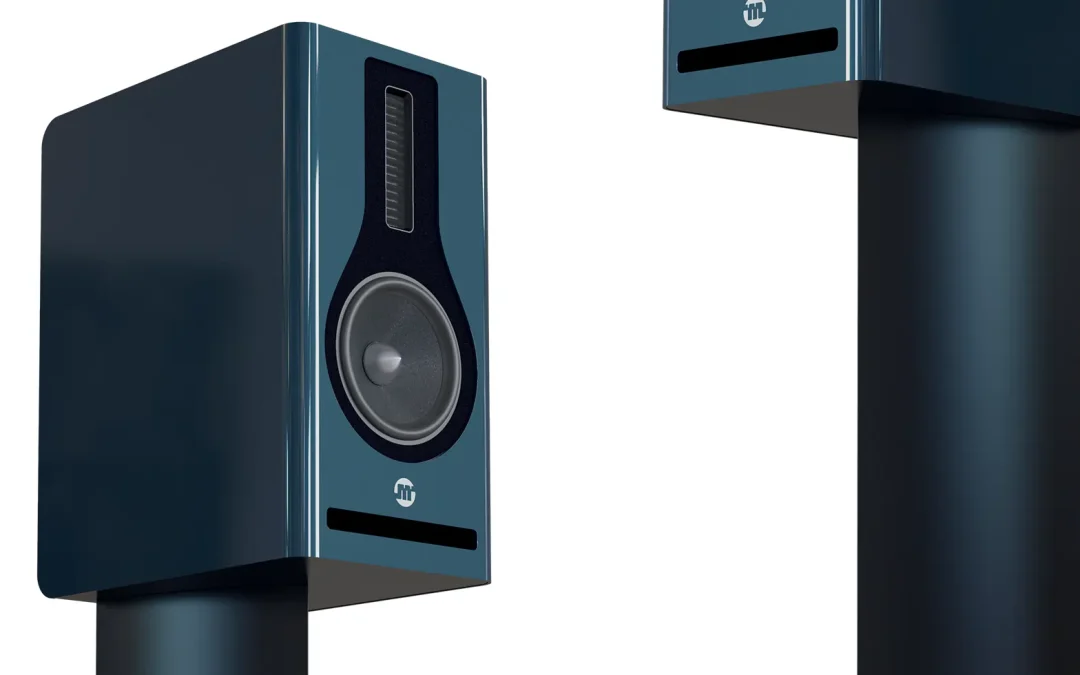
This is Studio JMR’s latest achievement, the JMR Voce Grande. While the aesthetics may distantly but vividly recall the famous Offrande, the filiation ends here. Indeed, the Voce Grande is a completely new model, designed from scratch and therefore without any reference to the past. In fact, it borrows more from Adara than from any other model in the range. That’s how ambitious it is…
The JMR Voce Grande is a fake small speaker. From a distance, you could be fooled. But as soon as you get closer, you get the impression that it’s quite imposing. Don’t be fooled by the monitor topology, which has been adopted here solely for its benefits in terms of spatial dispersion, an area in which it excels, as listening will demonstrate…
Moreover, the loudspeaker is totally integral with its specific stand, which contains all the filtering elements. This is quite practical, as it allows the connection terminals to be placed as close to the floor as possible, thus avoiding additional lengths of loudspeaker cable and, above all, an unattractive aesthetic appearance.
This two-way passive loudspeaker incorporates a device that limits the transmission of vibration energy through the use of materials of different densities (MDF-aluminum). Between these two materials, a specific polymer is inserted, fixed with a polyurethane adhesive that retains a certain elasticity to further reduce cabinet vibrations. On a purely aesthetic level, this translates into the adoption of a U-shaped folded metal sheet that forms the bulk of the carcass, i.e. the baffle and sides.
The complete mechanical decoupling of the speaker base allows the use of Teflon pads as interfaces with the floor.
The proprietary load consists of four progressively damped cavities opening onto a front laminar vent. No absorbers are used, and only certain walls are lined with viscoelastic compound or bitumen. The result is a very homogeneous and rapid group propagation time, for a very articulate, transparent and incredibly fast bass.
The AST midrange/tweeter adopts a surprisingly large 120 mm diaphragm (twice as long as that usually used on other models in the range), enabling a low cutoff frequency of 12 dB/octave at 1.2 kHz. This transducer alone covers the ear’s entire sensitivity range up to 30 kHz. The diaphragm consists of an extremely light, avionic aluminum foil on a pleated silicone backing with a Greek line running through it, surrounded by two neodymium rods exerting a very strong magnetic field. Unlike a conventional ribbon, which pushes the air in front of it, the AST pinches the air between its folds. This makes it much faster and, above all, much less fragile. Extremely high-performance, it boasts outstanding dynamic characteristics and an extremely low distortion rate. The absence of inherent resonance in the material used gives this exceptional (full-range) tweeter outstanding transparency, harmonic gradation and transient qualities.
The 180 mm woofer features a cone made of seven layers of carbon and peek (polyetheretherketone).
Its surface is then plasma-treated to give it a rough appearance. At the center of its 38 mm spool, on a fiberglass support (light and rigid), is an anti-whirling ogive turned in the aluminum mass. Its speeder is aerated with a progressive profile. This boomer features an aluminum bowl and a slow-magnetizing double ferrite magnet. Its linear displacement is very high, and its power handling is excellent, giving it a fast, low bass that’s always very articulate, with a clear sense of impact.
The two-way 12 dB/octave passive filter is centered at 1.2 kHz. It uses top-quality passive components (silver-armatured capacitors and HP1132 silver/copper cable termination, air-core coil in wide, deoxygenated pure copper foil; specific wound resistors covered by a copper tube acting as a heat sink and Faraday cage connected to the system ground). The filter is assembled by hand on an anti-vibration support and positioned outside any electromagnetic field. The components are sorted and matched with a tolerance of 1%. They are soldered directly to each other, and the internal connection is made using HP1132 silver/copper cable with a doubled cross-section.
The set up
Let’s not forget, then, that the JMR Voce Grande are speakers of a certain size, and will thrive in large spaces. Don’t confine them to a room that’s too small, or you’ll miss out on their performance. Don’t be afraid to keep them well away from side walls and rear partitions. They appreciate being installed in a free field. And if you can, don’t be afraid to place them far apart, creating a respectable distance between the two speakers. They have excellent dispersion. When it comes to amplification, you’ll need to offer both quality and quantity. A fine integrated or dedicated separated amplifier will do the trick. Final tip: the speaker cable. Of course, you can use the manufacturer’s 1132 model, but our tests showed us that you could go even further with a superior model. Whether you opt for Ul-Tim, Sonata or Aura, our French manufacturers are the best choice!
The sound
Transmission is always a difficult exercise. Even more so in a father-son relationship. And the more assertive the father’s personality, the more complicated it becomes. Jean-Claude Reynaud’s position was therefore not obvious from the outset. We won’t go back over how he subtly changed the JMR brand from the moment he took over its management. From the outset, attentive observers could see that he had made his mark with finesse but determination, proving that he was carrying on his father’s work without apeing him, or going astray. But while his achievements over the past decade or so have rightly been crowned with success, it is truly with this new Voce Grande that JCR asserts himself as a totally emancipated designer, freed from a “mission” he has long since fulfilled.
Everything about this speaker exudes freedom. You have to listen to it as part of a good system to understand how it presents recorded music with a total absence of constraint. Everything flows, everything is simple, obvious, easy. The discs follow on from one another, and there’s absolutely no need to analyze what you’re hearing, only to enjoy it. This is the absolutely cardinal quality of Voce Grande. Erudite observers of the brand have inevitably wondered about the filiation between the father’s Offrande and the son’s Voce Grande. Indeed, the latter waited a long time before tackling the “myth”. Let me tell you, these two loudspeakers have absolutely nothing in common, apart from the fact that they’re both very musical and belong in the category of “big monitors on stands”. Nevertheless, let’s be totally objective: the new one eclipses the old one in every respect.
The size of the sound spectrum reproduced is broad. It provides a wonderfully homogeneous mid/high register. There’s absolutely no break between the treble and the midrange: one is an extension of the other, and vice versa. The smoothness of this part of the spectrum is quite rare. All the more so as here, sweetness in no way rhymes with roundness or languor. To use a fashionable analogy, Voce Grande combines the qualities of both mineral and organic listening. We benefit from the aromatic persistence of a mineral terroir and the density of the juice. The result is a sensation of fullness. The bass is just as successful, as is the bass/midrange transition, although technically less easy since JCR has chosen to combine two quite different technologies that it particularly likes. The bass is surprisingly low for a loudspeaker of this size, but as usual with the Charentais, always with great tension, expressiveness, and without the slightest flattering and/or coated impression, proof that the load is impeccably controlled.
And then there’s image. Ah, the image… How many specialist reviewers have broken their teeth on this obscure concept. Until you’ve actually experienced a system capable of reproducing a true 3D image (which isn’t a frequent occurrence), it’s hard to imagine what it can do. This kind of performance is not only the prerogative of high-priced systems, but also requires careful installation. In this case, the system was very well optimized by Guillaume from CTA, thanks be to him. And it was under these circumstances that we were able to enjoy one of the finest holographic transcriptions in any price category since the start of our career. Quite simply, the speakers completely disappear as emissive objects. No matter how much you stand up and move around the room, the scene remains surprisingly stable and, above all, very well spaced out in depth. All things considered, the Voce Grande’s spatial reproduction is closer to panels than to electrodynamic loudspeakers. That’s rare enough to be worth mentioning.
Our conclusion
Alors so what, as Miles would say! Well, simply bravo. With the JMR Voce Grande, JCR has cracked the armor. As far as we’re concerned, they could simply stop there, because this speaker is a success. Not rakish or demonstrative, not in the least colorful, but endowed with a lively temperament and sharing the virtues of a chameleon, it knows how to reproduce all messages at any sound level, in a vast range of different acoustics and always with that particularly communicative lightness, finesse and energy. For us, Voce Grande is superior to Adara on a number of parameters. This may come as a shock, but that’s the way it is.
Author: Laurent Thorin
Technical sheet: JMR VOCE GRANDE
Origin: France
Price: €7,800
Dimensions (free-standing): 1100 x 280 x 390 mm
Weight: 32 kg
Power rating: 8 ohms (minimum 6.8 ohms)
Efficiency: 88.5 dB/W/m 2.83 V
Second-order passive filter: 12 dB/octave centred at 1,200 Hz
Distortion: Less than 2% from 200Hz to 18kHz at 85dB
Bandwidth: 38 Hz to 30 kHz (35 Hz at -6 dB)
Operating power: 40 to 180 W
Connection: Single wire + 3rd terminal for passive filter earthing
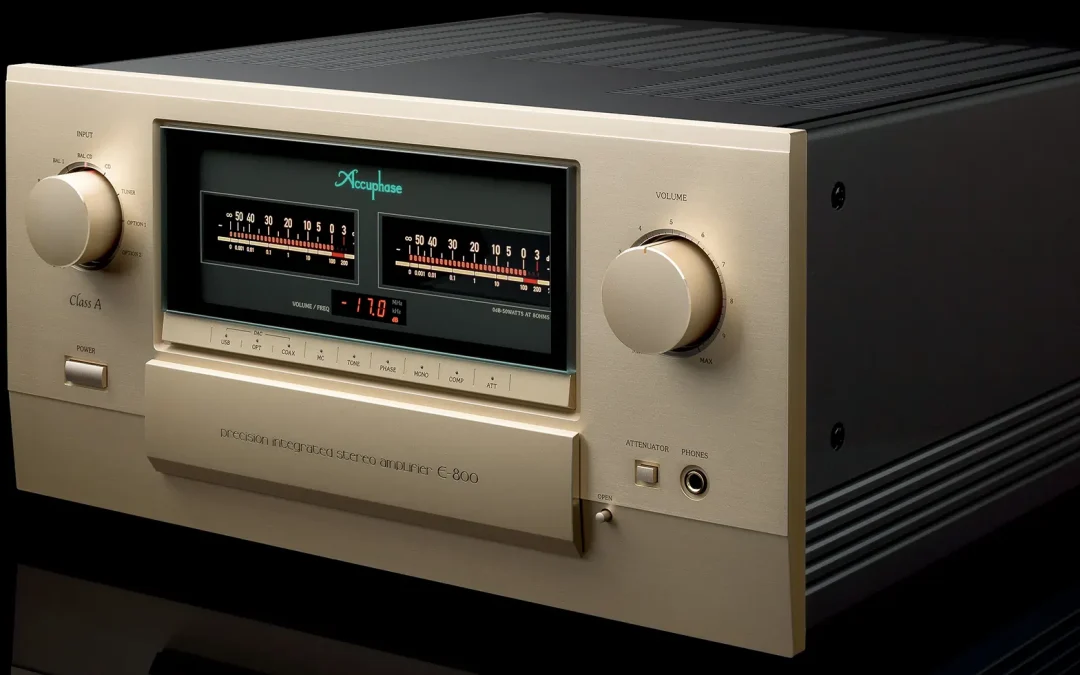
The Accuphase E800 is a masterful amplifier that tops the Japanese manufacturer’s range of integrated products. Certainly an exercise in style, this universal and versatile product is destined to work every day without ever faltering, with any loudspeaker. It’s an uncompromising achievement, whose adaptability makes it a marvel of ergonomics and handling. What’s more, it’s modular, which means it can easily become the nerve centre of a very high-end system. Musical and masterful, this is the high end favourite of this colourful autumn…
On the late morning of 1 May 2020, there was not a soul in sight in the church square of this small village in the Oise department. A deafening silence reigns supreme. However, as never before, I distinctly perceive small, furtive noises, well located in space. Usually, these are drowned out by the bustle of the villagers, the comings and goings of cars, the passing of planes (we’re not far from Roissy). At midday, the successive strikes of the twelve bells in the little church shatter the silence and startle me. With this new auditory acuity, I perceive all the subtleties of the decays of the swirling resonances that are superimposed as they escape from the bell tower’s sound-absorbing shutters (distant ancestors of acoustic lenses). This is a dazzling demonstration of the all-important concept of the signal-to-noise ratio. We cannot emphasise enough the impact of this parameter on the exact transcription of the tiniest musical nuances and on respect for true dynamics.
What does this have to do with the Accuphase E800 integrated?
This digression may seem incongruous and unrelated to the colossal Accuphase E800 integrated amplifier whose power stages work in pure class A. But think again. When we listened analytically to the E-800, for example on the track on the test CD ‘The Pulse’ – where we recorded the striking of a gigantic bell wall by an enormous wooden beam – we experienced the same auditory and… physical sensations.
The explanation lies in the exceptional performance at all sound levels (thanks to the AAVA symmetrical volume control circuits) in terms of the signal-to-noise ratio and in the current capabilities, far superior to other classes of amplification, of the power stages working in true class A. The E-800 controls the movements of the moving crew with extreme precision, right down to the lowest frequencies, without any slackness that might lead to dragging or loss of control resulting in a lack of definition.
Without going into a boring litany, the front panel has everything you’d expect from the most sophisticated preamp sections, not to mention the controls hidden behind the mechanical flip-flap. However, special mention must go to the magnificent and precise power bargraphs, the choice of numerous balanced or unbalanced sources, the very high-precision volume control and the headphone output with specific amplifiers (also remarkable when listened to).
Although purists will roll their eyes, the bass and treble controls are very well thought out to compensate for the shortcomings of many loudspeakers and come to the rescue of deficient sources. The same goes for the loudness circuit, which balances the tonal balance in the bass without bogging it down, for very low level listening.
There are :
– double’, all inputs and outputs unbalanced on Cinch and balanced on XLR (with, for the latter, a phase selection to adapt in particular to electronics of US origin),
– two sets of HP A and B outputs on colossal terminal blocks,
– two slots for optional input circuits, pluggable DAC 50 converters and AD 50 MM/MC phono preamplifiers, two inputs remarkable for their flexibility of adaptation and listening results.
Inside the very robust chassis, compartmentalised to avoid any risk of electromagnetic interference:
– in the centre, the gigantic high-efficiency toroidal transformer, fully shielded and mechanically damped, with the two 60,000 µF filter capacitors at the front;
– to the right and left, on large heat sinks that quietly dissipate the heat generated by pure class A biasing, power stages using 12 Mosfet transistors mounted in a configuration of 6 push-pull transistors in parallel. The very high bias current ensures true Class A operation without crossover distortion;
– at the rear, the input stages are in a totally symmetrical configuration.
The complex AVAA volume control circuit is mounted on the right-hand side in a shielded compartment. This latest-generation, purely analogue volume control circuit improves the signal-to-noise ratio while maintaining a perfect right/left balance with no crosstalk between channels.
It is linked to the rotary control whose mechanism is worthy of a high-precision clock. It is mounted in an aluminium block machined from solid, with the axis of rotation turning on a high-precision sliding bearing. This ensures unequalled ‘smoothness’ in its movements, an undeniable tactile pleasure. A magnificent remote control is supplied with the E-800. Its receiver circuits supply impulses to the input selector and variable voltages to the micro-motor linked to the volume control.
As usual with Accuphase, we are tempted to underline the care taken in the production, which sets new standards in the precision of assembly of the various constituent parts. As the saying goes, ‘you really get what you pay for’.
An expression that takes on its full meaning when we compare this integrated to those of certain other so-called top-of-the-range brands. It’s hardly surprising either that Accuphase electronics are so popular on the second-hand market. A point not to be overlooked, and rather reassuring in these uncertain times…
The sound
The Accuphase E800 integrated makes an indelible impression on the ear. Its stability in reproducing the stereophonic space, its timbre accuracy, its very high definition power on the small signals that are essential to the ‘musicality and emotion felt’ all reach new heights.
Listening to the E800 is never passive. It easily drives very low output systems, with complex loads and unconditional stability, as well as high output systems, without the slightest hint of aggressiveness, projection or bass restraint.
The subjective power perceived through the E-800 is out of all proportion to the advertised power of 50 W per channel. However, having measured the Accuphase A-50V power amp in its day (nearly twenty years ago), also operating in pure class A and rated at 50 W, we found 87 W on the bench, in continuous mode, without any trace of undesirable harmonics in the distortion spectra recorded at both very low and high power. When listened to, this E-800 seems to deliver a minimum of 300 W, because it never runs out of steam, even with very low output loudspeakers.
Note that the power perceived depends above all on the way in which the electronics supply their energy. The E-800 integrated, working in pure class A, delivers a power whose current component reaches an extremely high value, evenly distributed from the extreme bass to the extreme treble. This characteristic also has a direct impact on the abysmal bass, which changes everything in the impression of total immersion in the acoustics of the recording location. On numerous extracts from large organs, the E800 explores areas of the sub-bass that are totally ignored by other very high-end electronics, even though they are powerful. The Accuphase E800 never collapses; it holds the lowest notes of the organ without faltering or pumping, with uncommon smoothness and articulation, even when the other parts of the spectrum are heavily used.
The more complex the musical message, the more the E800 provides total legibility without the classic phenomena of intermodulation between instruments. Confusion is banished from its vocabulary. On large classical orchestral ensembles, each section is in its place, in a stable three-dimensional space, without any fleeting flutter, with soloists standing out perfectly.
But above all, the E-800 thrilled us with the accuracy of its timbres on voices and acoustic instruments.
It has to be said that many class AB or D electronics ‘sound’ wrong. There’s an unease about the lack of naturalness in the timbre, which isn’t necessarily noticeable on a quick first listen, but which becomes unbearable over time. This is particularly true of vocals, with a sensation of artificial sonorities that tend to harden, accentuating sibilance on syllable endings, with a veiled low midrange. However, the E-800 transcribes all the richness of the voice timbres with permanent beauty, without forcing the line or becoming disunited on the forte.
On whispered passages, the E-800, without rounding off the edges like some tube amps, lets you fully perceive the elegance of the phrasing in the pronunciation of each word, with well-placed tonal accents that are not muffled. Through the E800, the most complex choral formations ‘sing’ in the true sense of the word, with accuracy, without confusion. Great art.
We tried to push the E-800 to its limits, on accompaniment tracks or electric bass guitar solos. The E-800 delivers lightning-fast note attacks, with very pronounced pitch variations. Not only is the bassist’s specific style instantly recognisable, but so is the sound colour of the amp heads used: it’s impossible to confuse an Ampeg with a Hartke, Fender, Ashdown, etc.
The E-800 brings out the sense of rhythm, the ‘groove’ as some would say, which is lacking in a lot of very high-end electronics where you end up getting ‘bored’ (to put it politely) listening to them. The E800 shakes you up, pulls you along, invites you to tap your foot to mark the tempo, with infectious joy.
We’re not the only ones to feel this way; various listeners at our listening sessions were unanimous about the E-800’s musical bewitchment. Rarely has an electronic been so unanimously acclaimed for years!
Our conclusion
When it comes to making a choice, the E-800 truly has it all. In its majestic case, it brings together circuits that are the culmination of a real painstaking effort. For nearly fifty years, the electronics engineers at this ‘family’ firm, which has always managed to maintain its financial independence and has not been subject to the vagaries of value-seeking buyers, have also been music lovers. They know how to take their time to improve the topology of circuits, to search for components by long and tedious comparisons, bringing real advantages not only to measurements but above all to listening.
It’s certainly a big investment, but it’s worth pointing out that in addition to its captivating musicality, the E-800 is extremely flexible in use (modular inputs) and has a build quality that suggests enviable reliability. In our opinion, and we’re not kidding anyone, it’s a bargain compared to what the competition can offer in separate or integrated components, which are often twice as good value.
The E-800 restores its credentials as a true Class A product. Unless you’re completely deaf, it’s a pleasure to listen to that’s rarely equalled.
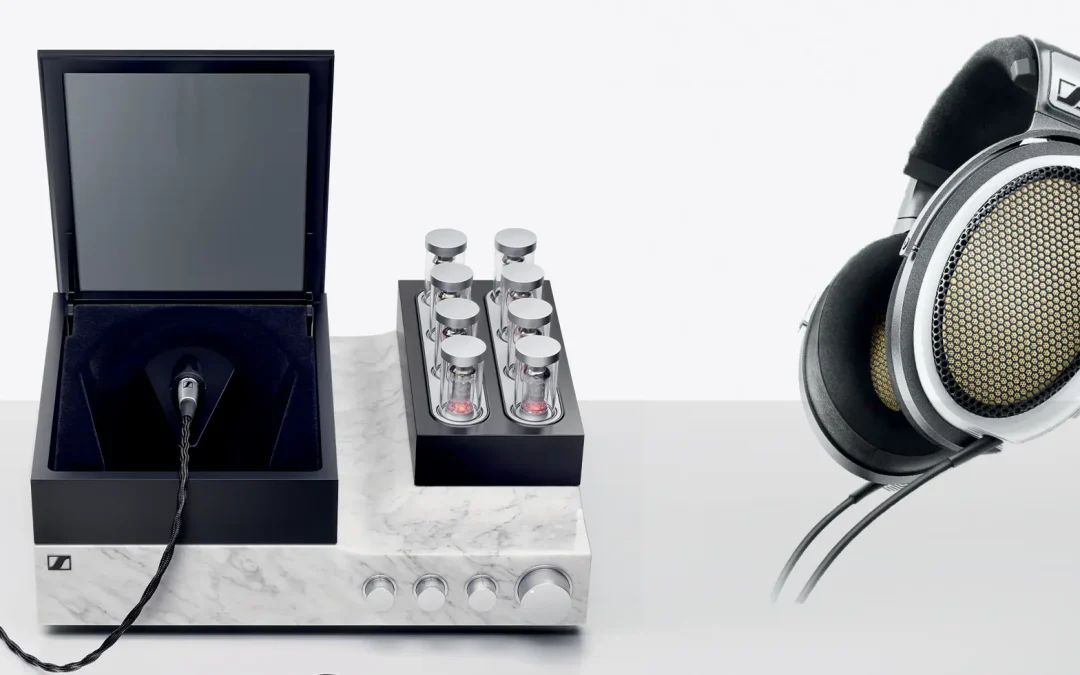
At the very beginning of the 1990s, Sennheiser, the great German manufacturer of headphones and microphones, presented the most discerning audiophile public with an exceptional pair of headphones called Orpheus. Sennheiser had pulled out all the stops for this project, and brought its entire engineering staff on board. Management had made it clear that price was not an issue. The result was an absolutely exceptional product that still inspires many enlightened enthusiasts to this day. Ladies and Gentlemen, welcome the Sennheiser HE1.
For this second generation, the German manufacturer has once again decided to play the ‘open bar’ card. Sublime right down to its finish, the system consists of electrostatic headphones and an amplifier, both made from luxurious materials. The key technical innovations of this exceptional product include a frequency response above the limits of human perception and the lowest rate of harmonic distortion ever measured for a sound reproduction system. For Sennheiser, there is no doubt that the new Orpheus is the best headphone ever.
We spent a fortnight in the company of the world’s most expensive model. After the initial moments of surprise and amazement, and having fully analysed the technological performance and mechanical challenge represented by such an achievement, we were left with one question: is the HE1 worthy of its reputation? To find out, follow the guide.
For 70 years, Sennheiser has been a pioneer in audio technology and has set the standard for excellence in the industry,’ says Daniel Sennheiser, CEO of Sennheiser. The new Orpheus is a testament to our ability to push the boundaries and reshape the future of the audio industry.
That’s more or less how the HE 1 project was born! We had to offer a worthy successor to the legendary Orpheus, a brand new model that would set a new benchmark in the market. Inevitably, the competition has not been idle for all these years. Add to this the fact that the headphone sector has been by far the most dynamic in terms of growth and creativity for over ten years, and you’ll have understood that the German giant couldn’t sit quietly on its throne.
To achieve this, Sennheiser has worked to develop innovative techniques, constantly questioning its previous acoustic approaches and meticulously selecting each material until it achieves the best result. It took the team of developers, engineers and designers almost a decade to design these superlative performance headphones.
Technological creativity
In broad terms, the technical choices were validated fairly early on. Electrostatic for the headphones, of course, but for the amplifier, it wasn’t quite so simple… In fact, in over 20 years, amplification circuits have progressed considerably. So Sennheiser decided to develop a totally original system. Its tour de force is based on an original amplifier concept, which combines the impulse signal processing quality of a tube amplifier with the low distortion rate of a state-of-the-art transistor amplifier.
The incoming signals are processed by eight tubes.
“Tube amplifiers offer better performance when it comes to processing impulse signals”, explains Axel Grell, Audiophile Product Manager at Sennheiser. “But they are sensitive to ambient noise”.
Sennheiser therefore designed a chassis made of Carrara marble, a material selected for its granularity and heterogeneous structure, which is suspended on the amplifier. The separation of the tubes and the absorption of vibrations by the marble minimise the propagation of noise. Each tube is also isolated from ambient noise by a protective silica glass tube.
The tube amplification stage is linked to a patented ultra-high impulse response amplification stage integrated directly into the headphones’ earcups. According to Sennheiser, this system guarantees 200% better performance than competing solutions. “In an electrostatic system, losses of amplification power on the cable between the headphones and the tube amplifier are common. Generally speaking, only 1/3 of the initial power is actually used to produce the sound waves,’ explains Axel Grell. We have therefore amplified the AC voltage not at the cable input but where it is really needed, i.e. directly at the gold-sputtered ceramic electrodes built into the headphones”.
This configuration considerably reduces the distance between the amplifier and the diaphragms to less than 1 cm. The rated current is therefore significantly limited, which reduces the power required for load reversal. The audio signals are transmitted symmetrically to the high-voltage amplifier built into the headphones, at a voltage of only around 5 V. This configuration guarantees extremely faithful impulse response, despite the relatively low signal power. Like the tubes in a tube amplifier, the Mos-Fet transistors in the system have a non-linear characteristic curve that prevents distortion, which is common in bipolar transistor amplifiers.
The new amplifier is in the class named Cool A by Sennheiser. This guarantees pure Class A power at all volumes in the low frequency range. In the medium and high frequency ranges, the amplifier switches from Class A to classic Class AB. However, this switch only occurs in the presence of an unusually wide range of frequencies.
“Cool Class A is a real step forward. It enables the audio signal to be reproduced without distortion or overheating of the headphone components”, says Axel Grell. “We had to carry out in-depth signal and listening analyses, as well as rigorous tests to determine the right power needed at each frequency level to achieve such a result”.
The head unit is compatible with a wide range of analogue and digital audio sources, thanks to its balanced and unbalanced inputs. It converts incoming unbalanced signals to balanced before processing them. S/PDIF (optical and coaxial) and USB interfaces allow you to connect digital audio sources, whose data will be converted into analogue signals by the ESS SABRE ES9018 chip. The chip’s eight internal DACs convert audio data into 32-bit resolution, with a sampling frequency of up to 384 kHz, or DSD signals at 2.8 MHz and 5.6 MHz into balanced analogue signals. Each stereo channel uses four DACs connected in parallel to optimise noise reduction. This configuration enables the entire frequency spectrum of cutting-edge audio sources to be reproduced without distortion. The circuitry has been optimised for the fully symmetrical design of the Orpheus.
Absolutely exceptional construction
Orpheus is made up of carefully selected materials to maximise the system’s audio quality. Some 6,000 components have been selected after rigorous evaluation for their exceptional and complementary acoustic characteristics. They all contribute to the outstanding audio quality of the new model. In particular, the combination of gold-sputtered ceramic electrodes and platinum-sputtered diaphragms gives the headphones their unrivalled acoustic performance.
“For our electrodes, we were looking for an ultra-rigid material that would minimise distortion peaks in the 3 to 4 kHz frequency range”, explains Axel Grell. The engineers opted for ceramic, a granular material that dampens vibrations much more effectively than glass, for example. But producing such electrodes is no mean feat, as ceramic is particularly difficult to engrave and drill. Sennheiser therefore used a sophisticated grinding and pulverisation process. A layer of gold was then deposited in the vapour phase to optimise electrical conductivity.
The choice of material and process for coating the membranes was equally meticulous. After a long series of tests, the team opted for platinum, also vapour-deposited. The membranes are precisely 2.4 micrometres thick, a size deemed optimal in terms of the ratio of thickness to air density, to control membrane vibrations, according to the results of the developers’ extensive tests. “The aim was not to design the thinnest possible membrane, but to identify the thickness that would give us the best result”, comments Axel Grell.
The Sennheiser team went so far as to design and manufacture the system’s eight high-performance cables themselves, using silver-plated oxygen-free copper to ensure optimum conductivity, which is essential for the quality of audio signal transmission. A sheath made of composite materials with heterogeneous structures insulates the cables from disruptive sound waves.
An unrivalled sound spectrum
With its unique transducer, the new Orpheus offers a frequency response from 8 Hz to over 100 kHz, above the limits of human perception. This amplitude nevertheless has an impact on the sound experience by ensuring that the sound transmitted by the headphones is almost completely free of distortion in the perceptible frequency range.
The system’s rate of harmonic distortion is barely 0.01% at 1 kHz and 100 dB. In other words, it reproduces the sound of the audio source with a level of fidelity and detail unrivalled on the market. Sennheiser thus achieves a degree of audio purity unrivalled by any other audio reproduction system. Even the tiniest nuances become audible. “Listening again to songs that I thought I knew perfectly, I was able to perceive details that I had never heard before”, says Axel Grell of his own experience with the new Orpheus. I was deeply moved, and I’m sure everyone who tries out or uses this unique system will be too. After all, music is about emotion.
The set up
We were lucky enough to be able to use the complete HE 1 system in our auditorium. This allowed us to get to grips with this totally out-of-the-ordinary product. We were able to use it in an environment that we know perfectly well, with reference sources and cables, statutory products that are well up to the standard of excellence of the HE 1: Linn LP 12 turntable with Linn Linto preamp, Atoll DR400se transport, Bricasti M21 streamer converter and Nagra D II digital tape recorder. We had the opportunity to listen to the HEA in good conditions both in Munich and in Paris, but nothing can replace a long listening session at home. To get the best out of the device, we installed it on a Centaure stand and connected it with an Esprit Lumina power cord. For the analogue and digital connections, we carried out various tests with references from Absolue Créations, Actinote, Esprit and JCT.
The sound
Before listening, the HE 1 is already warming up the room by putting on a show. The sight of the front-panel controls slowly emerging from the chassis, of the tubes slowly escaping from the cabinet and beginning to glow, at the same time as the plate covering the headphones swivels, all adds to the pleasure aroused by this elite product.
But let’s face it, the plumage is nothing if not matched by the ramification! Make sure you give the tubes a few minutes to reach thermal maturity, and off you go!
The first thing that strikes you is the feeling that you’re not listening to headphones. Despite weighing in at almost 600g, the headphones don’t weigh your head down and are completely invisible. This comfort guarantees long listening sessions without the slightest excessive pressure on the auricles and the sides of the skull. Listening to headphones offers a very pleasant sensation of ventilation, which, while totally different from listening to speakers, has its strong points. Here, they seem to be multiplied tenfold. The sound space reproduced is in fact of a relatively unprecedented dimension.
When you listen to an opera, you perceive not only the extremely precise dimensions of the room, but also its proportions in terms of height, width and depth. Then there’s the very strong sense of the atmosphere on stage. You can easily identify the place of each performer, the way they move, but also the individuality of each of them. It’s impossible to be penalised by confusion between two of them, because the level of focus of HE 1 is quite simply unique. Unequalled precision and fullness, of course, but also structure and homogeneity in the placement of the different sound planes. Everything is clear-cut and without the slightest approximation. In terms of timbre, there’s nothing to say, or rather: how did they do it? Firstly, the single diaphragm responsible for reproducing all frequencies from the lowest to the highest was clearly the best technical option! Not only is the spectrum reproduced immense, it’s also insanely coherent. The notion of full-range listening has never been more meaningful. It’s great to see that, but technically it’s a hell of a thing to achieve: a single membrane to cover everything is like a ring to rule them all!
The bass is unexpected for headphones: extremely deep, very tight and incredibly powerful. The sound pressure is so great that it’s worthy of certain loudspeakers. Speaking of which, the level at which you can listen with complete fluidity is rare for a system based on circumaural headphones. Across the entire frequency range, the notion of naturalness takes precedence. No register is emphasised. Each is scrupulously organised. The treble rises very high with disarming smoothness. And it’s all the more pleasing because with this model, you can quickly reach totally indecent listening levels. Of course, this isn’t at all annoying for your neighbours, but it can be dangerous for your ears if the system isn’t up to scratch.
Here, there’s nothing to worry about: the distortion simply seems to have disappeared. As long as the signal is of good quality, you can enjoy it to your heart’s content – no dross will penetrate your ear canals. We listened to various styles of music for hours on end, taking advantage of this miraculous opportunity to enjoy this outrageously expensive device at any time of the day or night. We made the most of it, and we have to admit that when we had to put it back in its big wooden case, it left us with a bitter feeling.
Is it worth the price? That’s a complicated question to answer. It’s probably one of the three or four, if not the best headphones on the market. But then, €60,000 is an obscene amount of money. It’s also likely to become an object of speculation. Let’s hope it doesn’t become a social marker. At least for the upper upper upper socio-professional category… I’m convinced that it should be possible to find an exquisite combination of very good headphones from a competing brand and a remarkable headphone amplifier for at least three or four times less. A man like Pierre Paya of Casques Headphones is a master of this kind of subtle combination. But will it be possible to achieve such a degree of operating synergy and manufacturing refinement? Hardly!
Our conclusion
Sennheiser’s aim has always been to create headphones with totally faithful reproduction. It achieved this in 1991 with the Orpheus, a model that became an icon and remains for some the best headphones in the world to this day. The HE 1 is an even more sophisticated model, which has been studied in much greater depth, and which is destined to clearly supplant its predecessor. In our opinion, it succeeds in most respects. It reproduces a wider spectrum of sound. It’s capable of playing much louder with total comfort. Finally, this is the first time we’ve heard headphones with such a low level of distortion, or none at all, if that’s even possible.
The passage of time is cruel when it comes to comparing two products designed almost thirty years apart, especially when it comes to digital technology. After all, both models incorporate a Dac. It therefore seems relatively risky to try and compare them. We had the opportunity to listen to both models. And while it’s true that the first Orpheus has an absolutely extraordinary sound signature and a particular grain in the midrange, it has to be said that its successor goes further in every respect. This in no way detracts from the merit and supremacy over more than
30 years of supremacy.
But finding a first-generation Orpheus second-hand is no mean feat. As for buying the HE1 new, the price seems totally dissuasive.
If there’s one lesson to be learned from this test, it’s that the prodigious R&D that went into creating this product is directly reflected in models that the vulgum pecus like you and me can buy, and that’s the main thing. An HD820/HDV820 set at €4,800 (all the same) is a wonderful combination.
As far as we’re concerned, whether modern beats old is a rearguard action. In terms of pure performance, it’s obvious. But nostalgia is hard-won, and we can understand why the owners of the first Orpheus don’t want to admit it. Finally, it has to be said that there’s a very slim chance that Sennheiser’s engineers, who are all little geniuses, will do less well 30 years later, and even less chance that the company’s hierarchy will accept it. All this to say that the HE1 is in contention for the title of best headphones on the planet. In any case, it’s by far the best Sennheiser ever created.
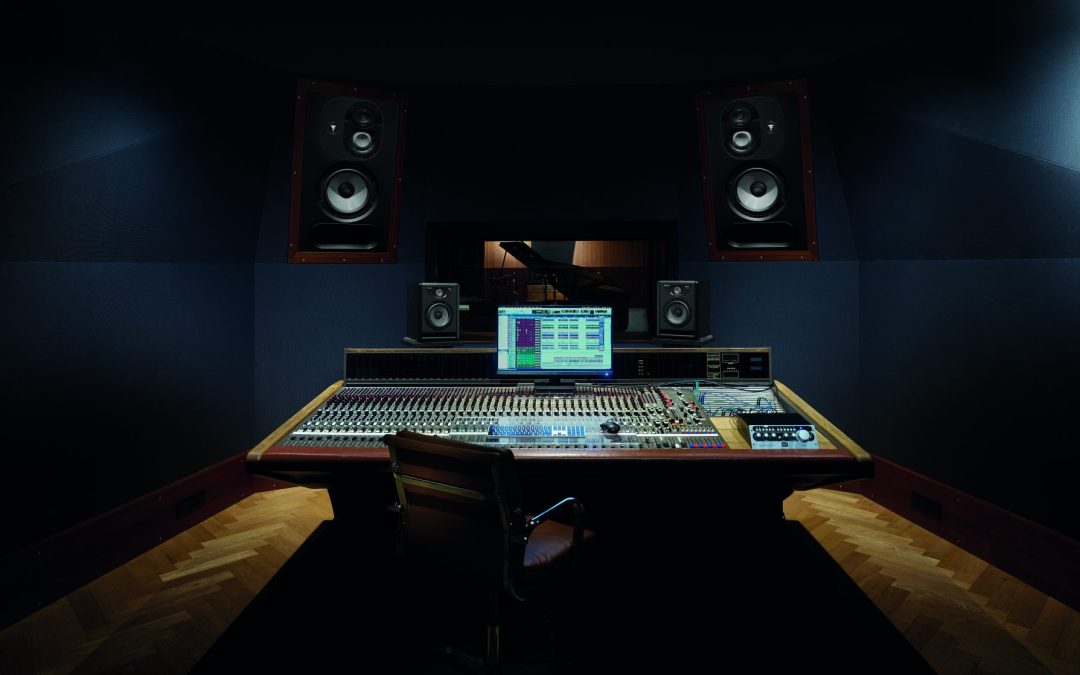
Focal unveils Utopia Main, a new range of monitoring loudspeakers for the most demanding audio professionals (producers, engineers, mixers, musicians, etc.). Innovative loudspeakers, rigorous high-end design, power, functionality: Utopia Main 112 (UM 112) and Utopia Main 212 (UM 212) are the ultimate monitors. With them, the world’s leading French brand in acoustics makes a remarkable entry into the field of main monitors.
In development since 2017, the Utopia Main range marks the most significant milestone since the creation of Focal’s professional division in 2002. It inherits more than forty years of research into transducer design and twenty years of innovation in the development of studio monitors. Every component has been meticulously designed to ensure that these 3-way (UM 112) and 3.5-way (UM 212) models revolutionise the landscape of main monitor loudspeakers. They represent a technological triumph, delivering a high level of precision in the studio (even at high SPL) and providing a revolutionary experience for recording, mixing and mastering.
Focal unveils Utopia Main, a new range of monitoring loudspeakers for the most demanding sound professionals (producers, engineers, mixers, musicians, etc.). Innovative drivers, rigorous high-end design, power, functionality: Utopia Main 112 (UM 112) and Utopia Main 212 (UM 212) are the ultimate monitors. With them, the world’s leading French brand in acoustics makes a remarkable entry into the field of main monitors.
In development since 2017, the Utopia Main range marks the most significant milestone since the creation of Focal’s professional division in 2002. It inherits more than forty years of research into transducer design and twenty years of innovation in the development of studio monitors. Every component has been meticulously designed to ensure that these 3-way (UM 112) and 3.5-way (UM 212) models revolutionise the landscape of main monitor loudspeakers. They represent a technological triumph, delivering a high level of precision in the studio (even at high SPL) and providing a revolutionary experience for recording, mixing and mastering.
After the 3-way Virtuosa Anniversary column released earlier this year and limited to 50 units, Czech manufacturer Xavian continues to develop its top-of-the-range series, this time with an imposing bookshelf. Named Medea, this two-way bass-reflex system with a large front port features a walnut cabinet with internal bitumen damping, as well as ScanSpeak Ellipticor loudspeakers and transducers, perfectly synchronized in phase.
Available with dedicated stands filled with 10 kg of sand each, the Medea are part of the XN series, designed for maximum naturalness and openness of the soundstage, with top-quality Danish drivers, ribbon inductors from the same source, equalized heat sinks with few components, and a capacitorless crossover, for perfectly accurate impulse response. The pair costs €11,990, plus €399 for the magnetic textile grilles and €3,190 for the stands.