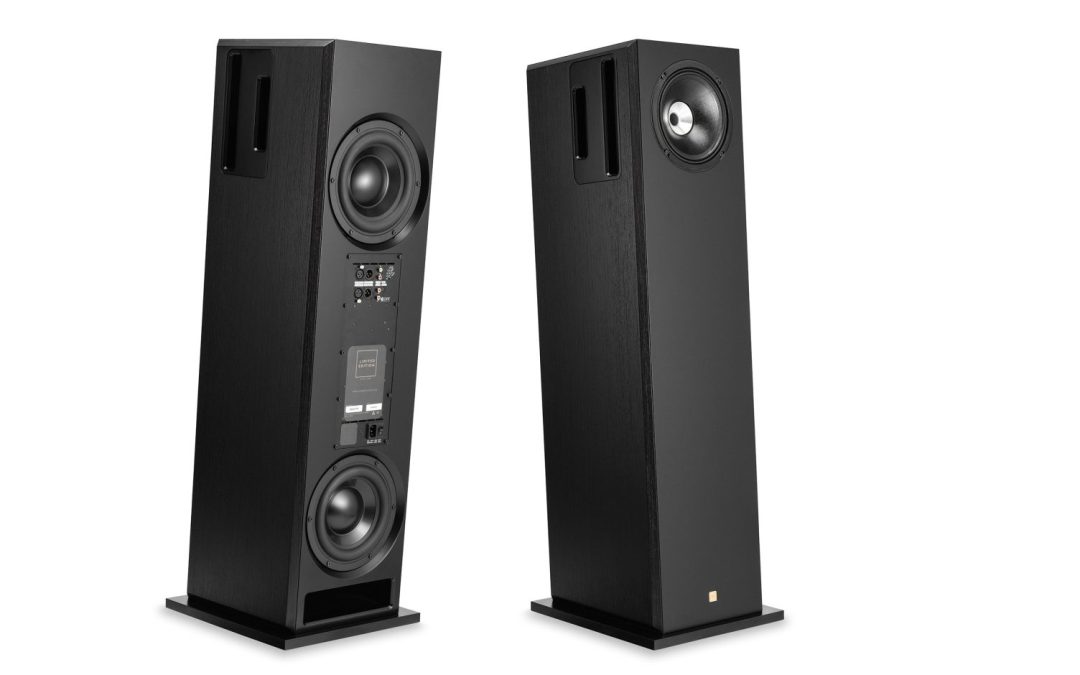
Sigberg Audio is proud to announce the upcoming release of Saranna, a true full-range floorstanding speaker that goes down to 20 Hz and is unique in many respects.
The Saranna is an active 3-way speaker with controlled directivity, offering bass down to 20 Hz and exceptional clarity in the midrange and treble. Its discreet design conceals two 8-inch rear-mounted speakers, capable of unleashing unrelenting dynamics! The excellent coaxial speaker allows Saranna to capture the delicate nuances of voices and individual instruments with realistic clarity and soundstage.
Main features:
– 8-inch coaxial full-range main driver: A single high-performance coaxial driver with powerful neodymium magnets covers almost the entire audible range, ensuring that the Saranna functions as a true point source with exceptional imaging and soundstage.
– Cardioid midrange design: The midrange chamber reduces unwanted reflections, improving clarity and soundstage. This design ensures that the rhythmic and percussive nature of the bass and low midrange is directed towards the listener, minimising room-induced noise.
– Rear-mounted 8-inch subwoofers: Strategically positioned to maintain an elegant front profile and combine with the rear wall for more space, two 8-inch speakers deliver deep bass without compromising the aesthetic appeal of the speaker.
– Designed to work in any room: Saranna can be adjusted to different rooms or positions at the touch of a button, even when placed close to the wall.
Gamme 48 for 48 gigabits/second, the data rate that Audioquest’s HDMI 48 cables of this family are capable of conveying. The brand’s interest in such data flows is based on the fact that their use will become commonplace in the relatively short term. The relentless increase in video definition will make such data rates unavoidable. Conventional 1920 x 1080 HD is still content with reasonable data rates, but the arrival of 4K and above all 8K, or even 10K, will change all that.
Sources are beginning to appear. Similarly, large screens and certain video projectors are compatible with such high definition. However, interconnecting them can only be done via high-performance cabling. There’s no mystery about it: information has to be transmitted. Indeed, many users think that in digital, the importance of cables is minor. For some, it’s either digital or it’s not, period. However, undesirable phenomena can alter the “digital message”, notably by introducing jitter. This can be due to noise, crosstalk within the cable, or even parasitic reflections at the contacts of the various plugs. At the extreme frequencies demanded by ultra-high-speed digital flows, every detail of a cable’s design and manufacture is of the utmost importance.
Recognized expertise
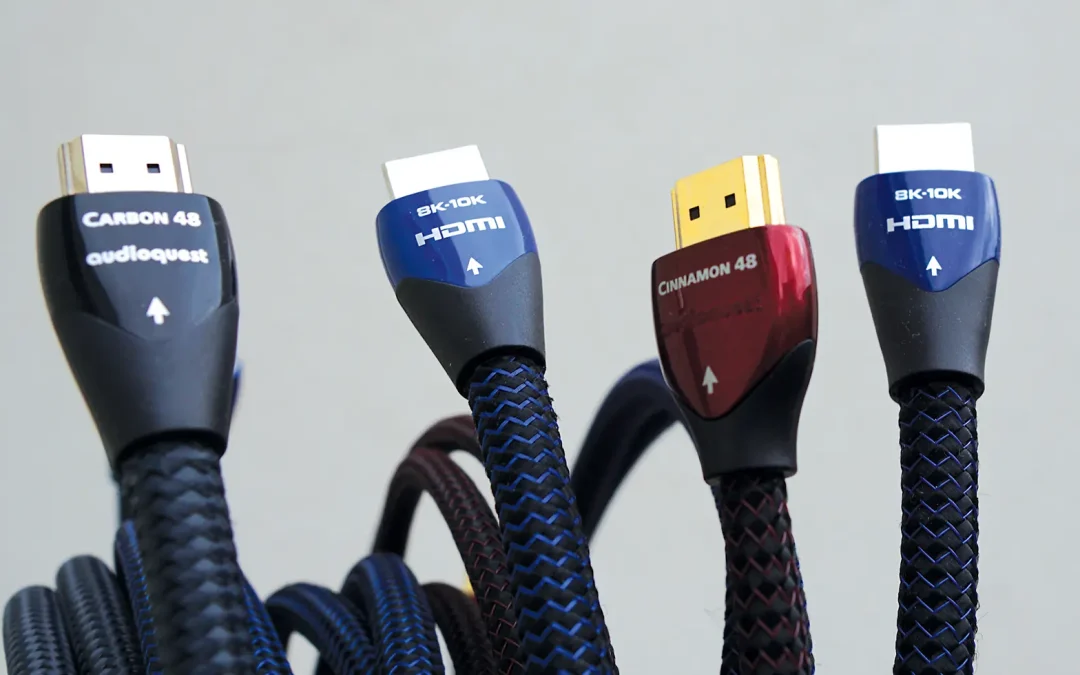
Over the past forty years, Audioquest has acquired world-renowned know-how and expertise in the field of audio and video cabling. Very early on, the American brand realized that the quality of a cable was linked not only to the conductive materials used, but also to their arrangement within the cable, the insulation and its overall sheathing. So it was only natural for the brand to look into the issues involved in interconnecting Ultra HD 4K and especially 8K video equipment. The result is a range of cables capable of handling data rates of up to 48 gigabits/second. During our tests, we selected four models representative of this new range of HDMI cables: the Cinnamon 48, the Carbon 48, the Vodka 48 and the Thunderbird 48. All these cables are available in various lengths, from 0.60 m to 3 m and even 5 m.
The Cinnamon 48
Designed around solid conductors based on silver-plated long-grain copper, the Cinnamon 48 offers optimum transmission of the highest frequencies, which, due to the pellicular effect, tend to propagate on the surface of the conductors and therefore in the layer formed by the silver plating. A metal with particularly high electrical conductivity. Similarly, the choice of solid conductors eliminates the risk of inter-strand interactions in cables based on multi-strand conductors. This careful design and manufacture means that the Cinnamon 48 can convey 4K UHD streams at up to 120 fps, or even 8K at 60 fps, under optimum conditions. Equipped with gold contacts, this cable is available in six lengths, from 0.6 m to 5 m, at prices ranging from €99 for 0.60 m to €399 for 5 m.
The Carbon 48
Taking up the essentials of its little brother, the Carbon 48 also uses solid silver-plated conductors. This time, the silver coating is more generous. The amount of silver reaches 5% of the conductor mass, compared with only 1.5% in the previous case. This further optimizes the conveying of flux at the highest flow rates. The Carbon 48 is even equipped to convey 10K flows. Last but not least, it comes with gold contacts and carbon and metal straps. This cable is available in five lengths, from 0.60 m to 3 m, at prices ranging from €169 for 0.60 m to €399 for 3 m.
The Vodka 48
Always with a view to optimizing the behavior of its cables at the most extreme frequencies, Audioquest has further increased the thickness of the silver plating on the Vodka 48.
Here, the mass of deposited silver is 10% of that of the copper conductors. The latter are, of course, still long-grain copper. In addition, this cable features reinforced shielding. This further reduces the noise that could mar the purity of the signal during transmission. Once again, this is an optimization of the technologies used in previous models. Available in three lengths, from 0.60 m to 3 m, the Vodka 48 is priced from €349 for 0.60 m to €699 for 3 m.
The Thunderbird 48
The flagship of this range, the Thunderbird 48 features an eARC link with LCG copper conductors plated with 10% pure silver. Here, it’s the audio section that also benefits from exceptional performance. Finally, to optimize the conveyance of the various signals, each conductor is associated with a noise-dissipation system. Available in three lengths, from 0.60 m to 3 m, the Thunderbird 48 starts at €639 for 0.60 m and goes up to €1,199 for 3 m.
Performance
We carried out all our tests with a Pioneer UDP LX500 BluRay player, an LG 55” screen and an Optoma video projector. Our comments mainly concern picture quality. Sound quality follows in parallel.
First rides with the Cinnamon 48, replacing our previous-generation Cinnamon. We immediately notice a difference in terms of color temperature, which appears “cooler” with the new 48 version, but is ultimately much more neutral compared to a standard colorimetric profile where tones are often a little too saturated and ultimately lack naturalness. The Cinnamon 48 is also more powerful in terms of contrast, which has the effect of reinforcing the sensation of thickness in the foreground. Even if the subjective gain in background detail is less pronounced, the improvement is nonetheless palpable. The image is sharper and, above all, more stable on dollies, which means that long cable runs can be used without risk of loss. This is indeed the case for our installation with the Optoma projector, which requires a connection of several meters.
With the Carbon 48, we enjoy a pleasant extra depth that immediately gives us a better grasp of backgrounds. In this respect, the price difference is obvious. This depth of field guarantees better individualization of most distant visual components and enhances image realism. Color quality is also very good, slightly more subtle than on the Cinnamon 48, even if the difference is not the most diabolical in this particular field. The Carbon 48 offers optimum signal stability over long lengths.
The Vodka 48 takes performance to a whole new level, thanks to an extremely precise field of view, both laterally and in terms of depth, which is quite remarkable here. Whether you’re looking in front, in the middle or behind, everything comes into focus, whether you’re looking at slow-moving images or complex, particularly dynamic messages. This absence of confusion in spatial reproduction lends fluidity and stability to the signal. Color temperature is respected, with no trace of chromatic shift. Colors are natural, with no excess or deficiency.
By switching to Thunderbird 48, we reach a kind of quintessence in reproduction, which is immediately expressed with a sensation of fluidity and contrast that speaks for itself. The image impresses with its precision, even when the master is not perfect. Accuracy is characterized in particular by a good deal of detail in dark areas. This is generally where lesser-quality HDMI cables fall short of the best. And when the film is of excellent quality, the result is a compelling reason not to zap. Such is the case with the first scene of the film Le Mans 66, where the night-time car race is reproduced not only in great detail, but also with an absence of digital noise that ensures that movements follow one another without any jerky effects. This is also evident in the Fox jingle, which plays like clockwork. Color temperature is very realistic. There’s no undesirable accentuation. The image is very sharp without appearing over-emphasized. With this cord, we urge you not to touch the settings to artificially enhance the contours. This is absolutely unnecessary.
Our conclusion
The gradation between the four references we tested is logical and well-staggered. The range effect is respected, and consumers will logically turn to the model that fits their budget. We even tested the 48-generation cables in a full HD environment, noting very good results, particularly between a standard Cinnamon and a Cinnamon 48.
If you live in a 4K environment and beyond, frankly these HDMI cables are for you. They’ll enhance your system’s performance. If you’re still in full HD – and we know a good many enthusiastic videophiles with magnificent installations that may no longer be up to today’s standards, but are nonetheless extremely high-performance, and we understand why they don’t want to change their equipment – you should give them a try, because the gain can be quite interesting. With this new 48 generation, Audioquest has done it again, allowing you to dive even deeper into the home cinema experience, with even greater naturalness, accuracy and authenticity.
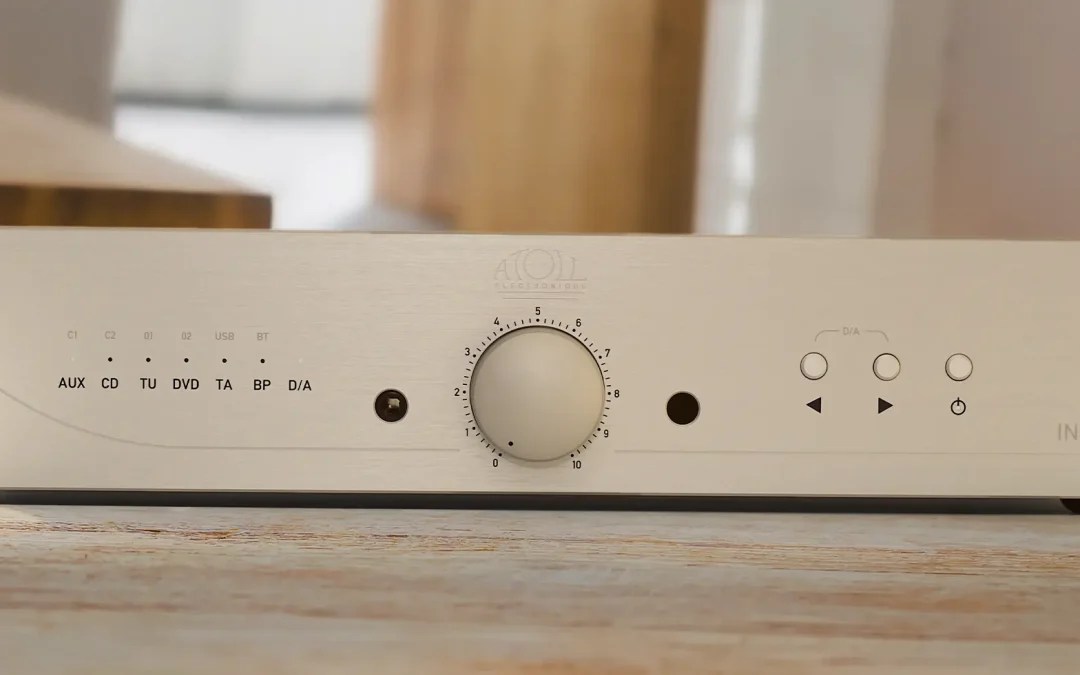
Atoll Electronique’s evolutionary integrated model is designed to support users as their expectations evolve. Since its creation by Stéphane and Emanuel Dubreuil in 1997, the ambition of French company Atoll has always been to offer audiophile-quality equipment at a contained price. For many years, Atoll has therefore concentrated on the design of integrated products whose excellent quality/price ratio has seduced many demanding enthusiasts. With the introduction of the Signature range, the brand has accentuated its policy of upgradability. As a result, users can upgrade their equipment according to their expectations and budget, while benefiting from top-quality components every time. And today, we’ll focus on the Atoll IN50 Signature.
The new Atoll IN50 Signature is the perfect illustration of this concept. At its heart is a fully analog integrated preamplifier and power amplifier. It’s worth noting that, even though these are fairly conventional structures, these sections have benefited from the most up-to-date technological attention. For example, Vishay capacitors are used in the signal path. Similarly, Nippon Chimicon capacitors are used for filtering. Output stages have also been optimized.
This evolution has also enabled the significant reduction of the feedback rate, while keeping the quiescent current at an unchanged value. The power transistors of previous generations have been replaced by complementary transistors for perfect balancing of output push-pulls. In fact, while the IN50’s schematic structure is still based on bipolar transistors on the input stages and as drivers, MosFet transistors are still responsible for power management.
On the power supply side, a generously dimensioned 170 VA toroidal transformer designed to specific specifications is responsible for supplying the energy required by these power stages. It should be pointed out that the slight increase of a few VA it provides is essentially intended to meet the (very moderate) increase in the IN50’s power requirements. These are essentially linked to the digital stages offered by the eventual evolution of the IN50, and to the motorization of its volume control potentiometer. Similarly, the capacitors in the filtering system have a total capacity of over 17,000 microfarads, guaranteeing the IN50 a substantial energy reserve. In this basic configuration, the Atoll IN50 Signature acts as a dedicated analog amplifier for line sources.
The first development is the addition of a phono preamplifier card. Indeed, even if vinyl records are becoming increasingly popular, the presence of a turntable within a system is not yet systematic. So it was only natural that Atoll should offer this card as an option. Priced at €100, it is compatible with both moving-magnet (MM) and high-end moving-coil (MC) cartridges. What’s more, in order to best adapt to the recommendations of each cell manufacturer, this preamplifier card features a gain setting offering a choice of three possible values: 40, 42 or 56 dB. An input capacitance of 100 pF can also be selected or not.
In the same spirit, and in response to current trends in digital and dematerialized sources, the IN50 can be fitted with the same card as the IN200 and IN300 amplifiers. However, Atoll has also designed a dedicated card for the IN50. Simpler, it’s also more affordable. Based on a Burr Brown PCM 1744 DAC, it handles 24-bit/192 kHz hi-res audio streams. Equipped with two optical and two coaxial inputs, which replace the IN50’s auxiliary input, this card is perfectly suited to the requirements of a home installation. The main differences between this little card and its big sister designed for the IN200 and IN300 are the disappearance of the USB port and the Bluetooth transmitter.
Finally, the main printed circuit board is housed at the bottom of the chassis, allowing the power stages to be equipped with larger heat sinks. This optimizes cooling of the power transistors during dynamic peaks. What’s more, a thermal sensor automatically reduces the amplifier’s power output if the temperature rises too high. This eliminates the risk of thermal runaway.
The set up
It doesn’t get much simpler than this sober device. But everything is there, nothing is missing for our daily use. Care should be taken to select the correct mains phase. On paper, the IN50 Signature’s power output may not be colossal, but in practice, we paired it with several loudspeakers without the slightest hint of energy deficiency. It proved itself capable of driving a large number of loudspeakers in its price range, and even more expensive ones.
The sound
The last amplifier we were able to test from the Cotentin region was the prestigious 400 series split-element set. Today, we’re listening to the small integrated Atoll IN50 Signature. In other words, we’re at opposite ends of the spectrum. But between these two extremes, the same guideline emerges, the one that presided over the creation of the Signature generation. In other words, continuity and attention to the small details that make all the difference to the listener. Atoll has become an expert in circuit optimization and fine tuning. And you can hear it immediately. Connected to our ZUs, which are not at all gentle, the IN50 reveals a presence and solidity that are uncommon for an amplifier priced at €750. From the outset, we perceive a beautiful soundstage. The image is truly three-dimensional. Not only does it blossom in depth, but it also extends laterally. Listening is not at all compacted. On the contrary, it expands far beyond the stereophonic triangle to occupy the whole space of your listening room. On one of our favorite records, with its many different-sounding tracks (NXworries Yes Lawd), you can clearly perceive a universe specific to each track. And the IN50 Signature captures this very faithfully. The feeling of proximity to the performance is very well rendered. Between the more intimate takes and the much more dense parts, the difference is obvious.
This amplifier alternates raspy tones and refined sequences with an ease unheard of at this price. True to the brand’s philosophy, it doesn’t try to stun you with spectacular effects, but it’s nonetheless surprisingly vigorous and varied enough to make you realize just how wide a world can separate two tracks on the same disc. This ability to stick to the modulation keeps it relevant and fluid at all times. Not only will you never get bored with it, but you’ll never feel like you’re listening to the same record over and over again. This is the hallmark of mature electronics designed with authenticity in mind. It’s a sensation you’d expect from more expensive amplifiers.
We experienced this excellent power of analysis not only on the line inputs, but also on the DAC and phono inputs. We were indeed spoilt for choice, as the Atoll IN50 Signature we tested was “all options”.
The digital section took over from a CD transport and enabled us to make the most of it. It also proved its worth as a digital output for an old, high-end CD player, which was given a new lease of life. As for the phono input we used with our Nagaoka MP150 cartridge, it surprised us with an extremely low noise threshold and very quiet operation. It has to be said that we were treated to the P100 module, developed entirely from discrete components. Its price/performance ratio is hard to beat.
Our conclusion
As good wine improves with age, the Atoll IN50 Signature represents the culmination of over 25 years of research, testing and improvement of a now-proven design. Although intended to be accessible to the widest possible audience, this device is nonetheless endowed with a rather aristocratic character. In any case, we can’t evoke its positioning here without legitimately asking whether it doesn’t simply represent the beginning of the high-end.
At its birth, Atoll remained perfectly within the mainstream. As it explored very high-end products, it discovered that this quest for the absolute was reflected in all its products, including the least expensive. As a result, for €1,000, the Atoll IN50 Signature “all options” can be the nerve center of a very good hi-fi system at a very reasonable price. We’re repeating ourselves here, but the Cotentin-based manufacturer has hit the nail on the head once again.
Author: Laurent Thorin
Technical sheet: ATOLL IN50 SIGNATURE
Origin: France
Price: €750
Dimensions: 440 x 90 x 300 mm
Weight: 7 kg
Rated power: 2 x 50 W at 8 ohms, 2 x 70 W at 4 ohms
Frequency response: 5 Hz to 100 kHz
Signal-to-noise ratio: > 100 dB
Inputs: 5 x analogue ‘line’ on RCA, 1 x by-pass on RCA
Outputs: 1 x monitoring on RCA, 1 x pair of gold-plated screw terminals, 1 x 3.5 mm headphone jack on front panel
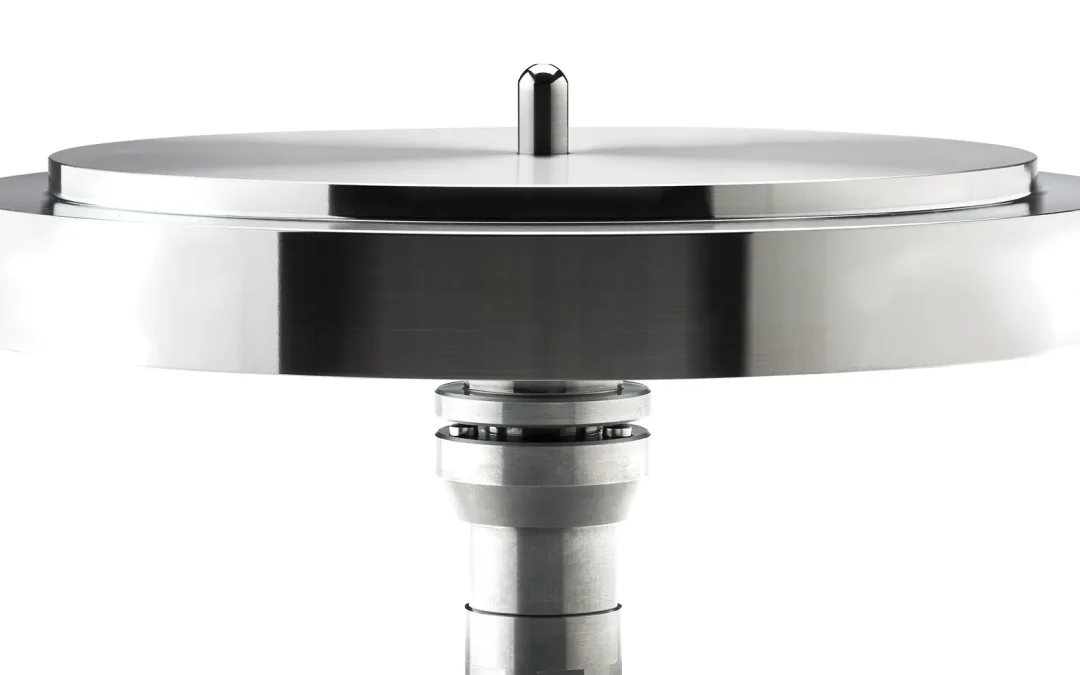
The LP12 is almost 50 years old, yet it has never looked so young. This is because its creators regularly offer adaptation kits that give it a real boost every time. The latest is the Karousel, Linn’s first bearing upgrade in 27 years. To call it an event is therefore an understatement. Of course, this kit has been compatible with all LP12s from the outset, and has been integrated into all new LP12s sold since the start of the school year. A little semantic wink: the definition of revolution is the rotation of a body around its central axis. So yes, dear readers, the Karousel is indeed a revolution… Welcome the LINN Karousel!
What made the Sondek LP12 turntable such a worldwide success was not only the fact that it was the first real turntable to make so much music, nor the fact that its creator succeeded in making the audiophile community understand that the source was paramount, it is above all that this product is still as high-performance and avant-garde as ever, almost 50 years after its creation. And if this turntable is still a benchmark, it’s simply because its creators have succeeded in making it evolve year after year, so that it retains its attraction.
If you’ve been reading VUmètre for a few years now, you’ll know perfectly well that the author of these lines has a very special relationship with the LP12; undeniably addictive… I’ve been lucky enough to own many different turntables, some excellent ones, but this one is quite special because it sings so beautifully and uniquely. I have to admit that once you’ve bought into its musicality, it’s hard to move on. And the knowledge that we can regularly improve it to explore even deeper into the grooves of our precious black wafers is an argument of the first order. Since I’ve owned mine, I’ve already changed the power supply twice, and gone through various other modifications. The innovative new Karousel bearing is, on paper, a significant improvement that has been the talk of the town long before it was heard. My “linnist” friends warned me: “A €6,000 LP12 without the LINN Karousel gets ripped off by a €3,000 Majik LP12 with Karousel.” Oufffff! What pressure!
But what exactly is the LINN Karousel?
The first task of a turntable is to turn a platter without the slightest variation in speed. Since we’re dealing with moving mechanical parts, friction control must be optimal. At the heart of rotational stability, Linn considers the bearing to be fundamental. The single-point bearing invented by founder Ivor Tiefenbrun, combined with suspended-design sound insulation, were the foundations on which Linn was built in 1973. The concept even inspired the Linn company logo.
A testament to its revolutionary design, the basic principles of the bearing have remained much the same, and Karousel is only the third evolution of this design in almost fifty years. This innovative improvement has been made possible by technological advances in materials science and machining capabilities, as well as the mechanical engineering expertise acquired over almost half a century of designing and manufacturing this turntable. Let’s not forget that, before being a renowned manufacturer of hi-fi equipment, Linn is above all a remarkable provider of mechanical engineering services. From the outset and over the years, the Scots have equipped themselves with the best machinery available in the field.
Advances in design combined with a new selection of materials in critical parts of the bearing allow smoother rotation for better sound. The pivot is better supported thanks to improved bearing tolerances, and the Diamond-Like Carbon coating deposited on the contact point reduces friction, thus improving the turntable’s “background noise” and, consequently, music reproduction.
A stronger coupling has been achieved between the platter, pivot, bearing box and subframe, thanks to the stainless steel material chosen and the new design implemented. A key element of this new design is the substantial locknut fastening, which increases rigidity over what was previously the weakest point. A stronger well and contact point compartment, combined with a smaller, stiffer shape and the new coating, improves the critical area that supports the rotation and mass of the platter. The combination of these changes leads to reduced noise for more accurate vinyl reproduction.
LINN Karousel’s reduced friction also means that it will last longer and continue to deliver incredibly accurate listening pleasure at the highest level for much longer than before.
The new locknut fastening method means faster, easier removal and replacement without the need to remove the subframe, which affects the suspension/arm configuration. What’s more, the contact point cap is now removable, enabling the critical surface of the bearing pad to be drained, cleaned and closely inspected without removing it completely from the LP12.
The set up
This update must be installed by an authorized dealer, as it requires not only expertise, but also careful attention to optimization. Your LINN Karousel specialist will be able to do an excellent job. Once the Karousel has been installed, the technician will make the final adjustments to ensure that the kit is impeccably functional. The kit includes the Karousel well/pivot assembly, the inner tray and all necessary fixings. The overall budget for installation, including all parts, is around €1,000.
The sound
We’re no strangers to upgrades offered by the Scottish manufacturer on its historic turntable. We’ve had the opportunity to do it ourselves many times, and each time we’ve seen significant gains in performance. The LINN Karousel is the first bearing upgrade in thirty years. Its reputation preceded its listening, which is surprising given the youth of this offering. We had the Karousel kit installed on our LP12 Lingo 2/Ittok/Linto, which we know perfectly well. We have to confess that the difference in sound quality is truly impressive. All the enthusiasts who were able to upgrade before us told us how impressed they were. The same goes for us.
The very first sensation that comes to mind is that the music is really there. The impression of proximity to the content of the disc is multiplied tenfold. Before the LINN Karousel, the performance was very good. With Karousel, the boundaries are considerably blurred. You really feel immersed in the musical flow. The very special character of the LP12 is fully preserved. This turntable remains above all a vehicle for musical emotion. But with the Karousel, precision is greatly enhanced at every level. The bandwidth becomes exhaustive, with a bass that’s firmer, denser and less monolithic. It contains an astonishing amount of information, which is easily perceived on a double bass.
At the other end of the spectrum, the high register is much brighter and more open. It was already a success, but here it retains this lovely brilliance, combined with greater variety. Dynamic behavior improves, mainly in the area of control. You get the feeling that nothing happens without the basic signal deviating by a millimeter. To be perfectly clear, the gap between an LP12 with or without Karousel and identical equipment is measured by listening to records you know perfectly well. On a classic of classics like Miles Davis’ “Kind of Blue”, the differences are absolutely glaring. Whether in terms of the precision of the soundstage, the ambience or the listener’s involvement in the musical flow, everything changes for the better. And we still haven’t recovered from the quality of John Coltrane’s saxophone. On that score, we were stunned. He simply seemed to walk into the room between the speakers.
We had exactly the same type of sensation with a very old vinyl of Baroque music by Johann Sebastian Bach. The cantata BWV198 conducted by Philippe Herreweghe on Harmonia Mundi revealed all its secrets. This record, recorded and pressed in 1987, offered us the height of emotion. The positioning of the performers in space, the placement of the instruments, the exquisite melodic interpretation, the sublime tonal balance – yes, of course, we’re being dithyrambic, but it has to be heard to be fully appreciated.
Our conclusion
This upgrade is a major step forward for any LP12 turntable. In fact, the Karousel is now integrated in all LP 12s sold new since the beginning of the school year. For anyone who, like me, has owned this turntable for several years, the LINN Karousel kit is absolutely essential before considering any other upgrade. When you put the €1,000 budget and the resulting improvement in sound into perspective, it’s safe to say that the Karousel is probably the best value for money upgrade Linn has offered in many, many years.
In its nearly thirty years of existence, Davis Acoustics has succeeded, year after year, in renewing itself to become a true house of excellence, today with the DAVIS Mani MK2. And if the Courbet N°7 received our praise (cf. Remarquable n°31), the announcement of a brand new pair of columns at less than €800 piqued our curiosity. Beware, Trojan horse approaching!
A forerunner, Davis was one of the first brands to use Kevlar, fiberglass and carbon in its loudspeaker design. One example is the 13KVL5A, a woofer-midrange with a woven Kevlar cone – a first when it came out. Nevertheless, it wasn’t until 1993 that the brand decided to launch its own loudspeaker, the DK200.
The story soon accelerated, and growth forced the company to move from Saint-Maur-des-Fossés to Troyes, where the Davis factory is still located. All the brand’s loudspeakers continue to be developed, assembled and produced in Aube. Truly made in France, Davis loudspeakers have won over audiophiles and top brands alike.
From Apertura and Avantgarde to Goldmund, Quellis and Jadis, many manufacturers have set their sights on Davis loudspeakers. And if not all of them display the iconic yellow cone, the attentive music lover will soon be able to distinguish, here and there, the achievements of the Trojan.
But who better to sublimate these speakers than Davis? The idea was born in the mind of Olivier Visan, the founder’s son and brand manager since 2005. At that time,
Davis unveiled the Nikita, its first loudspeaker, followed shortly afterwards by the Matisse and Vinci.
Today, building on this experience, the brand brings us the DAVIS Mani MK2. This speaker comes from the DMAX universe devoted to cinema, but not only, as we’ll see later in this review.
A direct sister to the Dhavani MK2, the DAVIS Mani MK2 keeps its topology. We find a 25 mm compression tweeter housed in a large horn, selected for its high efficiency and directivity; a 17 cm woven and damped fiberglass midrange driver, sporting the manufacturer’s typical yellow signature; a cellulose pulp bass woofer, which retains the same diameter as its neighbor, backed by a circular decompression port.
The 3-way, 3-driver design favors high efficiency, as the figures attest. Its rated power of 100 W, with peaks of 150 W, and sensitivity of 92 dB make it ideal for stereo applications, such as home cinema, when used as front speakers.
In terms of dimensions, the Mani MK2 is just 90 cm high, 20.6 cm wide and 28 cm deep. These models will easily find their place in any living room or home cinema. All the more so as the front-mounted port allows for minimal spacing, ideal for this type of installation.
The tweeter is filtered at 4,000 Hz and the woofer at 400 Hz, both with a slope of 18 dB/octave. The filtering has been meticulously designed, incorporating only a few hand-picked components to keep the price affordable, without compromising performance. Lovers of wide transients, fine impulses and good power handling will be delighted.
Last but not least, the speaker’s elegant two-tone enclosure. A satin-black central body, soberly branded with the speaker’s name at the foot, is set between two large slabs of ash or walnut wood. At its base are four decoupling spikes, enough to ensure simplified hi-fi installation.
The design of the DAVIS Mani MK2 allows it to fit in anywhere. Slim and slender, they slip effortlessly alongside a TV stand or either side of a sofa. On the other hand, you’d be better off sliding counter-tips on a parquet floor, as these will soon leave marks.
With an impedance of between 4 and 8 ohms and excellent efficiency, these speakers are equally at home with a conventional stereo integrated system or a home-cinema amplifier. We wholeheartedly applaud this desire to democratize hi-fi.
For a listening room of 20 to 30 m2, the DAVIS Mani MK2s will be perfectly at home, even with an amplifier of less than 100 W. A Rega IO or another Marantz Melody will already offer some very fine performances on a tight budget. For movie buffs, Davis recommends the addition of a Stentaure C MK2 central unit, Surround Mia 40 and a Basson 88 subwoofer.
The set up
These columns, although quite tall, have only a small footprint. The decompression vent is located at the bottom of the front panel. This makes it easy to position them correctly in the listening room. We recommend a minimum distance of 25 cm from the rear wall. To the side walls, try to keep a distance of 50 cm. We suggest that you focus the DAVIS Mani MK2 slightly to structure the stereophonic triangle. When it comes to amplification, there’s no need to worry too much about your household, as these speakers offer a very favorable output of 92 dB. That’s rare enough to be worth mentioning, especially today. They will work ideally with a small Nad D3020, and in general, with any quality integrated amplifier. Their versatility is one of their greatest weapons.
The sound
The arrival of these speakers is a breath of fresh air. Typically, this is a sound diffuser without history, playful, extrovert but without any caricature, in short, a product that does a lot of good. We started by listening to Bach cantatas, followed by a jazz trio, and continued with electronic music. In all cases, the DAVIS Mani MK2 offer a particularly pleasant and open vision of recorded music. No crate sound, no feeling of confinement, but plenty of freedom, great rhythmic capacity, and an ability to play hard while retaining the explosive character of their interpretations. To tell the truth, we wouldn’t have been able to determine the price of these speakers with a blind listen. In fact, these pretty columns already display a fine maturity. The timbres are clear, of course, as we’ve come to expect from the Trojan manufacturer, but they’re not simplified or simplistic either. They’re already well worked out, and if they lean towards clarity rather than roundness, they’re still very realistic. The three-dimensional environment is well executed, with a soundstage that’s wide and deep, well-constructed and, above all, very airy.
The dynamic behavior of these columns is, of course, their field of choice. Whether you try out a symphony orchestra or a small trio, you’ll find the same velocity qualities that make listening to your favorite records so enthusiastic.
Our conclusion
Successful in every respect, the DAVIS Mani MK2 put on a show. Well conceived and well thought-out, these speakers confirm Davis’ status as a house of French excellence. Affordable and elegant, they will satisfy both the music lover and the moviegoer looking for a model that’s a jack-of-all-trades, accessible to all. The Mani MK2 are not the seventh wonder of the world in terms of acoustics, but just a pair of particularly well thought-out, studied and manufactured columns, with quality components. Davis Acoustics has already shown us on several occasions that it is capable of being extremely strong when it comes to value for money. It continues its expertise in this field with its new, particularly successful columns.
And if we began our listening with small electronics, we continued with much more ambitious amplifiers, and take our word for it, these speakers deserve it. This is undoubtedly this winter’s excellent surprise in the field of low-cost column speakers.