While Focal has nothing left to prove in the world of hi-fi speakers, the manufacturer is also keen to make a lasting mark on the headphone scene. After a number of successful models, including the Utopia and Stellia, the brand is completing its range with a new closed-back headphone, the Focal Celestee. Our new favorite?
Founded in 1979, Focal is the perfect example of French success. From its beginnings as a simple design office (France Filières), the Saint-Etienne-based brand, which is still based in La Talaudière today, now covers all areas of hi-fi, mainly at the top end of the market.
Behind this success is a passionate duo: Jacques Mahul, engineer and technical journalist, founder of Focal JMLab in the 1980s, and the late Gérard Chrétien, editor-in-chief of L’Audiophile magazine, who joined the venture in the early 1990s. These four decades of passion have been marked by numerous successes and the introduction of many technical innovations, which have since been widely adopted in the Focal catalogue. Note, for example, the inverted dome tweeter, introduced in… 1981 and still used today on many of the brand’s loudspeakers.
Another feat is the use of pure beryllium in its tweeters, a rare metal seven times more rigid than aluminium, enabling the frequency response to be extended well beyond 20 kHz thanks to its lightness and incredible damping factor. The only problem was its price, which was ten times higher than gold, so it was reserved for the Utopia, Electra and Kanta series.
Focal’s big break came in 2011, when it bought the legendary British manufacturer Naim. This major operation strengthened the Group’s international position, and it can now boast a portfolio of prestigious brands working together to satisfy audiophiles around the world.
This long-term effort has been rewarded with the Entreprise du Patrimoine Vivant (Living Heritage Company) label, awarded by the French government to celebrate just over a quarter of a century of beautiful sound developed and produced in France.
The subject of this test, the Focal Celestee, designed and assembled in the Saint-Étienne factory, is the brand’s third closed sedentary helmet, between the Stellia and the Elegia.
Presentation of the Focal Celestee
A true masterpiece, the Celestee retains the excellent quality of assembly that Focal is renowned for. More accessible than the Stellia, both in terms of price and overall aesthetics, it benefits from the same meticulous attention to detail in terms of construction and finish.
The broad aluminium yoke, covered by a wide support band, is draped in magnificent semi-aniline leather, directly inherited from the world of luxury cars. This exceptional material is also found on the wide earcups, which are veritable cocoons for your ears.
A real success, the headphones play on contrasting colours. The helmet’s numerous copper inserts perfectly underline the new Navy Blue colour introduced with the Celestee. The same refinement extends to the speaker protection grille, cut from a solid sheet of stainless steel and then painted in the same colours as the headphones.
Behind these grilles are the famous 40mm-diameter full-range M dome drivers. Very similar in design to the Stellia, they nevertheless swap beryllium for an aluminium/magnesium alloy, much more in keeping with the Celestee’s price pretensions.
As with the Stellia, this new model continues to boast astonishing figures, with high sensitivity (105dB SPL) and a particularly low impedance for sedentary headphones (35 ohms). Let’s face it, Focal may present the Celestee as a semi-nomadic model, but its 430g (excluding cable) will soon bring you back to reality.
To top it all off, the Celestee is made entirely in France. The brand is quick to point this out, engraving the much sought-after Made in France label in brass letters.
The set up
Let’s face it, the Focal Celestee won’t be going anywhere. It’s true that you’ll be able to move around the house with the headphones on, connected to an audio player, but don’t imagine for a moment that you’ll be able to take part in the slightest sporting activity or wander the aisles of the Paris metro with these headphones as your companion.
On the plus side, thanks to its thick leather earpads and closed shells, the Celestee offers first-rate isolation, more than enough to mask the hubbub of an open space or the roar of traffic once the music has started.
Surprisingly easy to power, the Celestee made do with our FiiO M15, which was almost over-dimensioned in terms of power, with the over-ear mode proving useless in practice. The same applies to the Kann Alpha, which confines itself to low/mid modes without ever exceeding half the volume. A surprising pair of headphones, then, that we’re eager to listen to in greater depth.
The sound
From the very first listen, it’s clear that Focal didn’t look far for its Celestee. Anyone who has had the chance to put an ear to the Stellia will soon notice the many similarities in the way it sounds… much to our delight.
The tonal balance is perfectly respected, with the headphones taking advantage of their W-shaped diaphragm to deliver clean, deep bass that never spills over into the midrange or treble. And while it can’t compete with the incredible finesse of the Beryllium dome, this new aluminium/magnesium driver doesn’t fall short – quite the contrary.
Dynamic, fast and marked by particularly lively attacks, the treble runs high without ever tiring. If a slight emphasis remains in the upper midrange, it operates without any sibilance ever appearing, adjusting the message without colouring it. The engineers knew how to play with the limit without ever crossing it. This is all the more striking because the Celestee descends so low, without any trace of roundness or exaggerated fullness. The impact of the bass drums resonates with force, while the vocals take advantage of this aplomb to project themselves towards us with disconcerting naturalness.
Minute after minute, hour after hour, the headphones chime out the notes of a well-oiled score. Whether it’s the syrupy jazz of Stacey Kent, the tangy R&B of Jhené Aiko or the electro-metal of ToneBox, Celestee strikes hard, but above all strikes true. So hard, in fact, that you’ll be tempted to turn up the volume, much louder than you should.
Of course, it’s on a high-end source – in this case our FiiO M15 and Kann Alpha – that the headphones really come into their own. With an ultra-wide soundstage, transparent phrasing and a staggering dynamic range, Focal is a real eye and ear opener. Proving, if proof were needed, that what’s beautiful can also be beautiful.
Our conclusion
Magistral, the Focal Celestee reaches new heights. Incredibly musical, superbly constructed and eminently capable, these headphones are a great success. While it obviously doesn’t match the excellence of the Stellia, it does come dangerously close.
So we can fully recommend this Celestee, certainly one of the best affordable introductions to closed-back headphones.
Author: Haja Randrianarison
Technical sheet: FOCAL Celestee
Origin: France
Price: €999
Weight: 430 g
Transducers: 40 mm full-range M dome aluminium/magnesiumtransducers
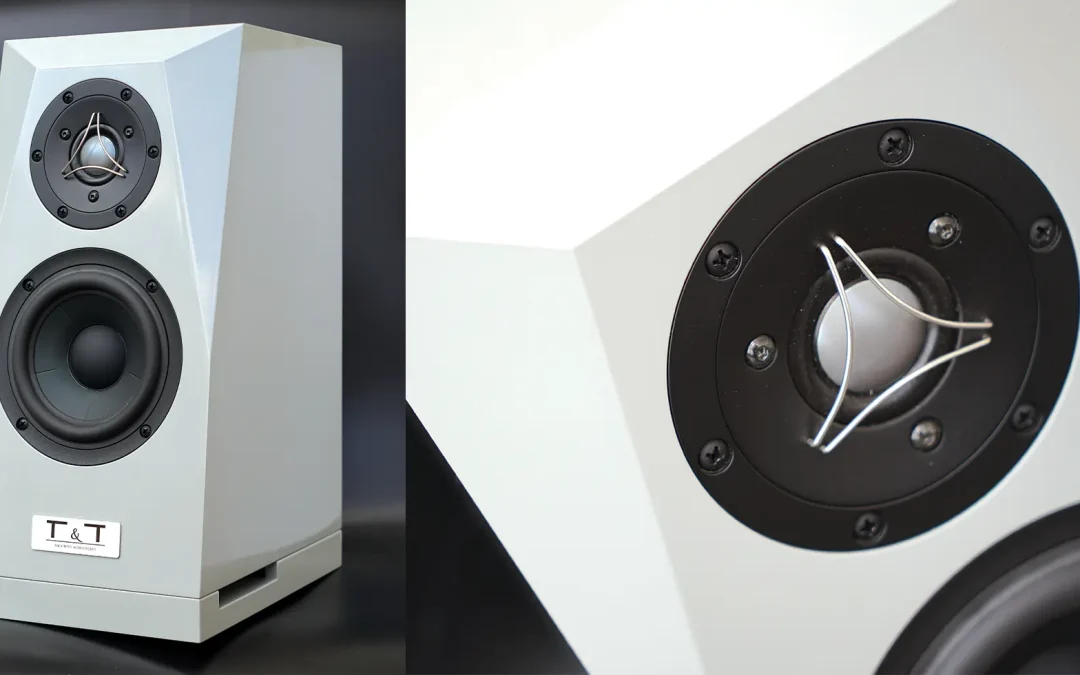
After enjoying the Joys, we now discover their extreme version, which naturally bears the same name. You’ll see that the young French manufacturer has taken particular care in the final development of this exceptional product. If you’re looking for a loudspeaker capable of reproducing fantastic performance in a small space, there’s a good chance the T&T Joy Extreme is the speaker for you. So allow us a word of humble advice: read on carefully!
Like its little sister, the T&T Joy Extreme adopts a two-way architecture with two drivers. The cabinet is built in 22 mm midrange for all walls, and 30 mm for the baffle support and base. The latter two elements are made of high-density midrange to spread resonance modes throughout the cabinet, for greater neutrality. The body is also reinforced with internal plywood partitions. Particular attention has been paid to internal damping: several types of damping material are arranged in optimized quantities to dissipate any parasitic vibration.
The T&T Joy Extreme uses a variant of bass-reflex loading. The 8-liter volume is tuned by a large-diameter port approaching 50 mm in diameter, which opens out beneath the speaker. Such a diameter allows full energy to be restored without compression effects or amplitude bumps at resonance.
The front panel is sloped to harmonize the emissive centers of the drivers and optimize the overall phase response at the listening point. Its slope breaks internal parallelism, preventing the formation of standing waves. The baffle is beveled around the tweeter to even out its response in the zone between 1 and 2 kHz. This also contributes to the regularity of the off-axis response and reduces the phenomena of wave reflection and diffraction. Our demonstration model was finished in an attractive “chalk” gloss.
The transducers are from SB Acoustics. We note the presence of a small 15 cm woofer from the NBAC series, selected for its low-frequency extension in a moderate volume, its low resonance frequency and its wide, even frequency response. Its rigid, lightweight aluminum diaphragm acts as a pure piston over the entire frequency range reproduced.
The tweeter is equipped with a 29 mm beryllium dome and a neodymium magnet. Highly motorized, with a large emissive surface area (9.6 cm2), it has a low resonance frequency (700 Hz), and remains very linear right through to the extreme treble. What’s more, it works as a piston right through to the midrange.
The exclusive internal cabling has been developed by Absolue Créations: this model has been developed for the strictest temporal respect of music, to present no perceived inertia, to suppress any oscillation phenomenon or artificial artifact, while favoring fluidity, strict respect for timbre, and respect for the tiniest details. The crossover layout is optimized for the Beryllium tweeter, with an even more regular overlap between the 15 cm and the tweeter.
The crossover is air-wired, isolated from the cabinet, and uses only air-cooled chokes, Jantzen Alumen capacitors for the midrange and tweeter, and Mundorf M Supreme resistors. The progressive torque screw terminals are from the Furutech catalog.
The set up
Needless to say, these monitors require high-quality stands. The manufacturer recommends the Tool One model from Music Tools, and we couldn’t agree more. With their welded steel structure of variable thickness, their oven-finished surface material with sound-absorbing plastic paint, Tool One are filled and tuned with the brand’s proprietary product, fillin, a specific type of granulate. And their 22 kg weight guarantees an inert foundation. When it comes to amplification, special care is taken to ensure that they can be powered without energy limitations. Powerful and subtle electronics can be put to good use. Finally, for the cabling, we used the Absolue Créations Ul-Tim model, which gave us excellent results. For placement, it’s a good idea to play with the rear baffle – as long as it’s rigid enough, of course – to control bass response and the breadth of the soundstage. The vents are cleverly placed on the sides, making the T&t Joy Extreme easier to install.
The sound
After offering us the Joy last year, the young French manufacturer T&T now presents the “turbo” version. The Extreme is indeed much more ambitious on paper, and we’ll see that in practice, the difference is considerable. We had the opportunity to talk at length with the designer, who told us that, with this Extreme version, he wanted to offer the highest-quality solution for listening in small to small rooms, in the smallest possible footprint. The Joy Extrême is the quintessence of sound reproduction for music lovers whose system needs to express itself in less than 20 m². It’s a big gamble, because in big cities, not only are square meters counted, but so is sound volume. And even though they can sing very loudly and gracefully, the Joy Extrême possess the rare virtue of being able to reproduce the content of your discs extremely exhaustively at a reasonable sound level. The breadth of the T&T Joy Extreme’s “useful” spectrum speaks for itself.
There’s not the slightest hint of frustration in the lower register. It remains utterly convincing, never becoming disunited, and provides beautiful physical sensations with infinite respect for textures. Firmness and nervousness are combined with talent. In the high-mid register, the textures are equally magnificent. Just listen to a single voice without artifice.
We passed this test without a hitch with PJ Harvey, Melody Gardot, Joyce DiDonato and Nina Simone. Even on forte, the modulation is exceptionally smooth and precise right up to the highest octaves. You’ll never hear the slightest stridency or stall. The timbre quality of this speaker is one of the finest we’ve tasted in a long time. There’s accuracy, subtlety, superb luminosity and an innate sense of homogeneity. The performance of the beryllium tweeter is certainly one of the keys to this performance. It undeniably sheds a special light on this part of the spectrum. To sublimate this tonal balance, the T&T Joy Extreme boasts a sharp resolving power. It delivers an impressive amount of information, making it much easier to perceive the sound message. The different layers of recorded music unfold infinitely more fluidly. The final act in the profession of faith of these extraordinary little loudspeakers: the construction of a remarkably realistic three-dimensional space!
Yes, putting the music in perspective is a major criterion for feeling the closeness of the recorded work. Of course, we’re well aware of the propensity of small ‘two-track’ recordings to be carefully and successfully put into perspective. The T&T Joy Extreme do not disappoint in this respect; in fact, they set themselves apart from many of their competitors by creating a scene of fantastic realism. At this stage, we’ve compared our Nel Extrême to their little sisters to find out what makes each so special. The monitors build an image that is impeccably positioned in the stereophonic triangle, with an ultra-precise spatial architecture featuring components with indisputable coordinates. Because of their wider bass range, the floorstanders ‘spread’ the image a little more, while maintaining excellent accuracy, but without the razor-sharp edge that makes the Joy Extrême so impressive.
Our conclusion
With this new version of the Joy series, T&T Joy Extreme, has further expanded its range to include six models: Joy, Joy Extreme, Nel, Nel Ultime, Nel Extrême and Nora. This rich line-up, designed for aesthetic music lovers, is the pride of French acoustics. Beyond their impressive pedigree and superlative performance, the Joy Extrême range is designed to appeal to demanding music lovers who work in intimate spaces. Tailor-made to offer the very best in sound reproduction in reasonably-sized environments, Joy Extreme deserve to be combined with the best sources, electronics and accessories on the market to form a system of remarkable sonic realism.
Author: Laurent Thorin
Technical sheet: T&T Joy Extreme
Origin: France
Price: €7,900
Dimensions: 192 x 411 x 262 mm
Weight: 11.2 kg
Sensitivity: 85.5 dB (2.8 V/1 m)
Frequency response: -3 dB : 48 Hz – 20 kHz on axis in free field
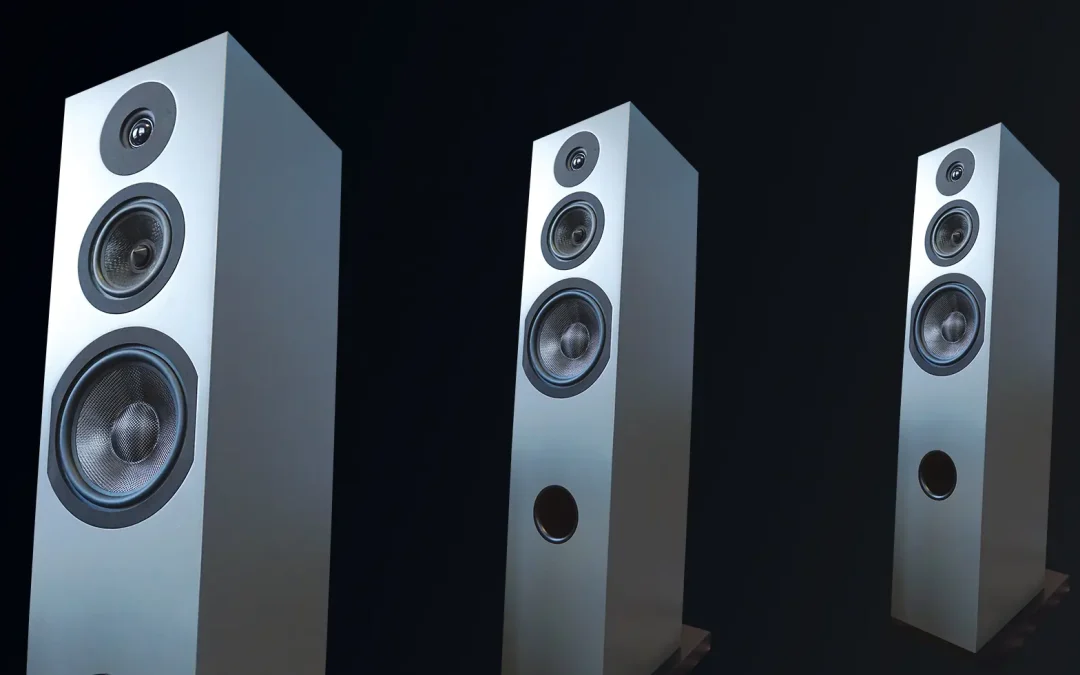
the Davis Courbet 8 is the latest addition to the Courbet collection. It’s a beautiful loudspeaker using three exceptional drivers, all three manufactured in the Davis Acoustics factory in Troyes, France. Polar parts, magnets, metal plates, assembly of the salad bowls on the magnetic motors, gluing of the membranes to the moving coils… Throughout the manufacturing process, Davis Acoustics proudly claims that its design and assembly are 100% made in France. Now that’s rare enough to be worth mentioning!
Like all its siblings, the Davis Courbet 8 has a slightly sloping profile, to ensure optimum phasing of the different loudspeakers. It is available in a satin white finish with an oak base, but also in a more classic all-black version, and in two new versions, a midnight blue to great effect, and a granite grey which is the subject of this test bench.
The bass-reflex load of the 21 cm woofer is tuned by a cylindrical front port. The formula ensures solid reproduction below 40 Hz. The woofer is fitted with a reinforced carbon fibre cone, whose favourable weight-to-rigidity ratio prevents distortion during long excursion. Carbon fibre has been used by Davis for over thirty years, and is an expensive material used by the competition on speakers that are often more expensive.
At the other end of the spectrum, for the high register, we find the new TW28CD with very low distortion and an extremely concentrated magnetic field. This innovative tweeter features a 28mm damping dome made from silk weave coated with a polymer compound. This solution makes it possible to postpone the intervention of the first fractional mode beyond 26 kHz. It is coupled to a copper and aluminium coil with very low inductance and very low mass, giving an excellent impulse response. The magnetic circuit has been optimised by the use of high quality, oversized neodymium, which improves sensitivity across the entire band. Specific pole pieces ensure perfectly parallel field lines across the entire height of the air gap, which significantly reduces distortion. The rear of the tweeter creates a double decompression chamber, one in the shape of a blind tube whose closed load volume dampens and tunes the decompression, and a second peripheral chamber that decompresses the dome suspension.
Finally, the centrepiece of the system, the midrange is no stranger, being the same model as the Olympia One Master we tested in our very first issue. The 13 KLV5 R, a driver that has made its reputation for almost thirty years and has undergone many changes along the way, is equipped with a Kevlar membrane and a latex surface treatment. This little woofer has a 25 mm voice coil and a 102 mm ferrite, a gargantuan amount for a driver measuring just 13 cm.
The crossover is wired entirely in the air, with a direct component-to-component link and no intermediate wiring or printed circuit. This old technique avoids any loss of insertion by adding an intermediate conductor. What’s more, this absence of a necessarily resistive and capacitive electrical connection (printed circuit) guarantees real cut-off slopes identical to those calculated and defined by Davis. The internal wiring and the link to the single terminal block at the rear of the loudspeaker are made from Teflon PTFE insulated cables from the HiFi Câbles et Cie catalogue.
The crossover of the Davis Courbet 8 is fairly simple for a three-way, and uses very high-end components such as Mundorf MCap Supreme capacitors in series for the tweeter, SCR capacitors in parallel and RAH chokes for the midrange. The technical trick that makes all the difference is the choke on the woofer. This is doubled (so there are two coils in parallel) to reduce the resistivity of the coil and reduce the loss of dynamics due to the crossover. Finally, the midrange is filtered at the top and bottom, so this is a true three-way speaker, not a two-and-a-half-way. The midrange is filtered at 6dB per octave in the low frequency range, a gentle slope, and at 12dB per octave in the high frequency range, at around 2,500Hz. The speaker terminals are magnificent NextGen WBTs.
The set up
Davis is constantly upgrading its flagship Courbet line. The new Davis Courbet 8 is an imposing floorstander whose slope gives it an obvious elegance. But make no mistake, it’s an illusion to think that you’ll be able to use these speakers in good conditions in a room of less than 25m². In fact, we’d recommend at least 30m². Below that, the Courbet n° 7 will be perfectly suitable. The same goes for amplification. We started out with a McIntosh MA352 amplifier which, in use, didn’t prove to be the right partner to make the latest Davis sing. It was finally thanks to the Audio
Analogue Puccini Anniversary that the Davis Courbet 8 really came into their own. So choose powerful electronics with a good power supply. We tend to repeat ourselves, but the power supply is a crucial part of the amplifier. Dynamic, modulated electronics will be appreciated. So, in a nice room, keep the No. 8s away from the corners, and keep them close to the rear wall, albeit carefully, but not more than thirty centimetres away. We carried out this test with the kind complicity of Thomas (Davis Acoustics) and Alain (Elecson). Our warmest thanks to them.
The sound
The Davis Courbet 8 are speakers that hide their game well. A number of observers tend to confine them to the category of excellent RQPs. In our opinion, this is a totally simplistic view of the Trojan brand. Of course, the Davis models offer excellent value for money. But they do much more than that; they deliver magnificent sonic sensations. So we didn’t have to wait long to realise that the new Davis Courbet 8 were genuine high-end floorstanders. They prove it first and foremost thanks to a broad spectrum worthy of what you’d expect from a loudspeaker of this price. When listening to a large symphony orchestra, the low octaves are reproduced with exceptional conviction and above all serenity. These speakers are always at ease. You can tell immediately that they don’t need to force their way through. If we dared to draw an analogy with the world of cars, we could say that they demonstrate astonishing torque. They are always serene, never overwhelmed by events, even when the sound message becomes extremely complex, both in terms of density and rhythmic follow-up. With the Davis Courbet 8, you can listen loudly in a vast room without any loss of comfort or hardening of the sound.
Here again, the choice of amplifier, source and cabling will be essential. But with the right environment, these beautiful columns do the job masterfully. Comfort means homogeneity of the bandwidth, which in turn means a power of resolution worthy of the name and an absence of distortion. On both counts, the No. 8s perform optimally. So we can enjoy an extremely varied selection of different musical styles at both low and high levels. And once the analysis of their qualities is complete, it remains to appreciate their personality. Davis, especially since it began developing its Courbet line, has confirmed that it places listening comfort at the top of its priorities. We’ve been able to confirm this for several years now.
The French manufacturer endeavours to reproduce timbres with an obvious neutrality that never loses its softness. Davis’ hallmark lies in this smoothness served by a wide sound amplitude. This is a manufacturer that thinks big, and has always produced generous columns since the beginning of the range. With its No. 8s, it has shown us that it knows perfectly well how to push back the boundaries and take a high-end approach with no limits.
Our conclusion
As time goes by, Davis is maturing its offer with a great understanding of the market. We’re very fond of the Courbet line, and we clearly fell in love with the Davis Courbet 8. Not only is this beautiful floorstanding speaker a great success, but it also confirms that the manufacturer from Troyes has what it takes to occupy the field when it comes to high-end loudspeakers. It has shown this on many occasions in the past with the Kristel and the Karla. Here, it manages to offer us a very fine sample of the qualities of a very ambitious loudspeaker at a price that is certainly high, but which remains accessible to the demanding audiophile.
Author: Laurent Thorin
Technical sheet: Davis Courbet 8
Origin: France
Price: €5,700
Dimensions: 235 x 1125 x 301 mm
Weight: 33 kg
Rated power: 150 W
Maximum power: 200 W
Efficiency: 92.5 dB
Bandwidth (+/-3 dB): 35-25,000 Hz
Impedance: 4 to 8 ohms Crossover frequency: 250-2,500 Hz
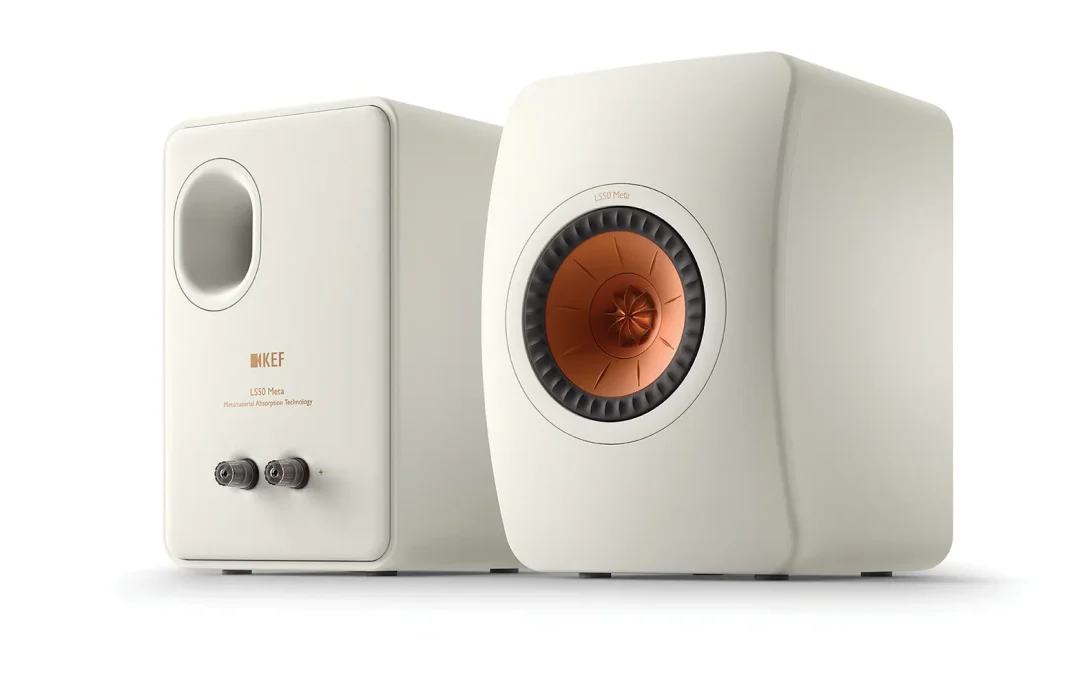
The KEF LS50 have been a great commercial success for British manufacturer KEF. But the law of the market is intractable. That’s why KEF has gone back to the drawing board to delve deeper into its familiar technology. An acoustic labyrinth is the weapon of mass destruction of undesirable high-frequency resonances that this new version, the KEF LS50 Meta, is equipped with. And you’ll see that it’s a device that makes all the difference…
For many years, KEF has built its reputation around its coaxial transducers. A configuration called ‘Uni-Q’ by the brand, where the tweeter is placed directly in the centre of the woofer in place of its core cover. This architecture offers the advantage of perfect phase coherence between the sound emitted by the tweeter and that emitted by the woofer. This is a major advantage when it comes to giving the sound image relief and precision in the spatial location of each of its sound elements.
Twelfth generation Uni-Q architecture
What’s more, KEF has continually developed its Uni-Q architecture to optimise its acoustic behaviour. While the overall structure has changed very little, it’s in the details and subtleties that the optimisations are to be found. The KEF LS50 Meta represents the twelfth generation of this system. Here, the quest for perfection concerns the reproduction of high frequencies and, more specifically, the acoustic load associated with the tweeter. Not many brands are concerned with this point. While B&W has taken a very close interest in this problem by associating a Nautilus-type load with its tweeter, as well as with other loudspeakers, to dampen the rear wave, the British manufacturer is the exception. KEF has now joined them in offering a slightly different solution.
An acoustic ‘black body’
It is based on a small labyrinth, the layout of which is reminiscent of a game of skill in which you have to move a small marble towards the centre of the structure.In our case, each ‘corridor’ of this labyrinth has a length and a layout that enables it to eliminate a group of frequencies by diffraction or phase composition. The multiplicity of patterns in this structure makes it possible to cancel the rear wave of the tweeter dome over the entire frequency range it is designed to reproduce. In short, this mini labyrinth acts like an acoustic black body over the frequency range handled by the tweeter. KEF claims that this technology, known as MAT (Material Absorption Technology) and developed in conjunction with the Acoustic Materials Group, is capable of absorbing, and therefore eliminating, 99% of unwanted sound. What’s more, this type of architecture is easy to integrate into the back of a tweeter, as it consists of a relatively thin disc. This element therefore fits easily into the back of the magnetic block of the Uni-Q structure.
Cleverly designed curves
While the use of this MAT damper is the major innovation of this Uni-Q system, the rest of its architecture, like that of the KEF LS50 Meta, remains fairly conventional. The 130mm-diameter bass driver features a cone made from an aluminium/magnesium alloy that combines high rigidity with very low mass.In addition, to further reduce the risk of surface ripples on the diaphragm, particularly during transients, the cone is stiffened by ribs.
In addition, as with any coaxial structure, the cone of the woofer also acts as a horn to give the tweeter a better spatial distribution of high frequencies. To avoid any break in surface continuity between the tweeter dome and the front baffle, KEF uses gentle curves. A first metal piece ensures the coupling between the tweeter and the centre of the woofer membrane, while the front of the LS50 Meta also adopts a sphere-shaped profile for optimum diffusion of sound waves.
Finally, to avoid any break in the curvature between the boomer diaphragm and the cabinet, KEF has banned half-roll perimeter suspensions. Instead, the brand has developed a suspension called Z-Flex, based on ribbed rubber, which gives the woofer plenty of travel without any prominent bulge. This type of suspension, which is fairly rigid, means that the LS50s need to be broken in for quite a long time before they can express themselves fully.
A tweeter that ‘climbs’ very high
The coaxial tweeter occupies the centre of the woofer diaphragm. Its large 25mm dome is made from aluminium. Very light, it gives the LS50 Meta a high frequency response extending beyond 40 kHz, which is rare enough to be worth mentioning and is fully justified when using hi-res audio files. Finally, a front waveguide plays a dual role. Firstly, it acts as a protective grille for the dome. Its second function is to optimise the dispersion of high frequencies by opening up the angle of propagation of sound waves and distributing them evenly over the entire area covered by the speakers.
Finally, the cabinetry of these latest speakers is directly derived from the previous-generation LS50s. The internal bracing for high rigidity and, of course, the curved front panel give these speakers a look that distinguishes them at first glance. The entire internal volume acts as an acoustic load for the woofer. This is decompressed by a vent on the rear panel. As is tradition with KEF, a set of foams is supplied to partially or totally obstruct the vent. This special feature allows you to modify the behaviour of the KEF LS50 Meta depending on its position in the listening room.
The set up
Commissioning the small KEF LS50 Meta does not pose any particular problems. With the vent open, they are still quite sensitive to their position in relation to walls and, especially, room corners. For them to express themselves fully, the ideal position is at least one metre from the corners of the room and at least 30 centimetres from the wall. It’s also a good idea to provide them with a quality stand that’s properly weighted and ensures that the vibrations from their cabinetry drain off properly. On the other hand, despite the name ‘library’, we strongly advise against placing them in a shelving unit and surrounding them with books, which will prevent the free circulation of air around the vent. Finally, near the corners of rooms, we preferred to use foam to conceal the vents in order to preserve the correct balance of the sound reproduction and avoid impasto in the low frequencies.
The sound
As with any coaxial system, the strong point of the small KEF LS50 Meta is their precision in terms of the spatial localisation of the various elements of the soundstage. This was underlined by our traditional listening to William Russo’s Three Pieces for Blues and Symphony Orchestra performed by the San Francisco Symphony Orchestra conducted by Seiji Ozawa. Despite the fairly pronounced reverberation in the San Francisco Opera House, each musician is perfectly located and stands out with excellent precision. The stereophonic space is thus given a breadth that gives the sound image a particularly seductive relief. The intervention of the triangle, heard during one of the work’s rare quieter and more subdued moments, is a perfect illustration of this behaviour. Not only is it perfectly positioned, slightly to the right of the centre of the sound space, but its crystalline note seems to come from the very depths of the hall, which it does.
The excellent midrange performance of this family of loudspeakers and the tonal balance they offer are also evident. Vocals, in particular, are reproduced with great warmth and presence. Listening to various tracks by Bernard Lavilliers enabled us to verify this point. The LS50 Meta always respected his vocal timbre perfectly, without the singer’s deep voice being overwhelmed by the rest of the orchestration, particularly the bass guitar. It’s worth pointing out that the small speakers hold the bass register very firmly. Despite the modest surface area of their woofers, they have a very satisfying impact and provide a good foundation for listening. They even descend into the bass range with surprising ease for such small cabinets. As far as the treble is concerned, the contribution of the MAT damping system is tangible. It provides detailed, even detailed listening, without any shiny effects. The treble remains subdued and remarkably natural, even at sustained listening levels.
Last but not least, the KEF LS50 Meta has a fine dynamic range. Despite their relatively modest output (87dB), the power they deliver is more than enough to cope with the flamboyant flights of a symphony orchestra or the drum solos of a jazz band. This was perfectly illustrated by listening to Grieg’s ‘In The Hall Of Mountain King’, among others. What’s more, we noticed that the timpani had incredible depth in the opening bars.
Our conclusion
Clearly, the arrival of the twelfth generation of the Uni-Q system is not just an announcement by KEF. It’s part of the brand’s ongoing search for optimisation, and its impact on listening is very real. It’s true that the overall behaviour of all the elements in the LS50 family is the same, but if you listen carefully, it’s clear that the reproduction gains in detail, finesse and subtlety while preserving its naturalness. A seductive behaviour that offers a new listening experience whatever the type of music.
Author: Estève Fabry
Technical sheet: KEF LS50 Meta
Origin: United Kingdom
Price: €1,199 (per pair)
Dimensions: 302 x 200 x 280.5 mm
Weight: 7.8 kg
Recommended amplifier power: 40 W to 100 W
Frequency response: 47 Hz to 45 kHz (at -6 dB)
Sensitivity: 85 dB (for 2.83 V at 1 m)
Impedance: 8 ohms (3.2 ohms minimum)
Connection frequency: 2.1 kHz
Tweeter section: 25 mm aluminium dome with MAT damper
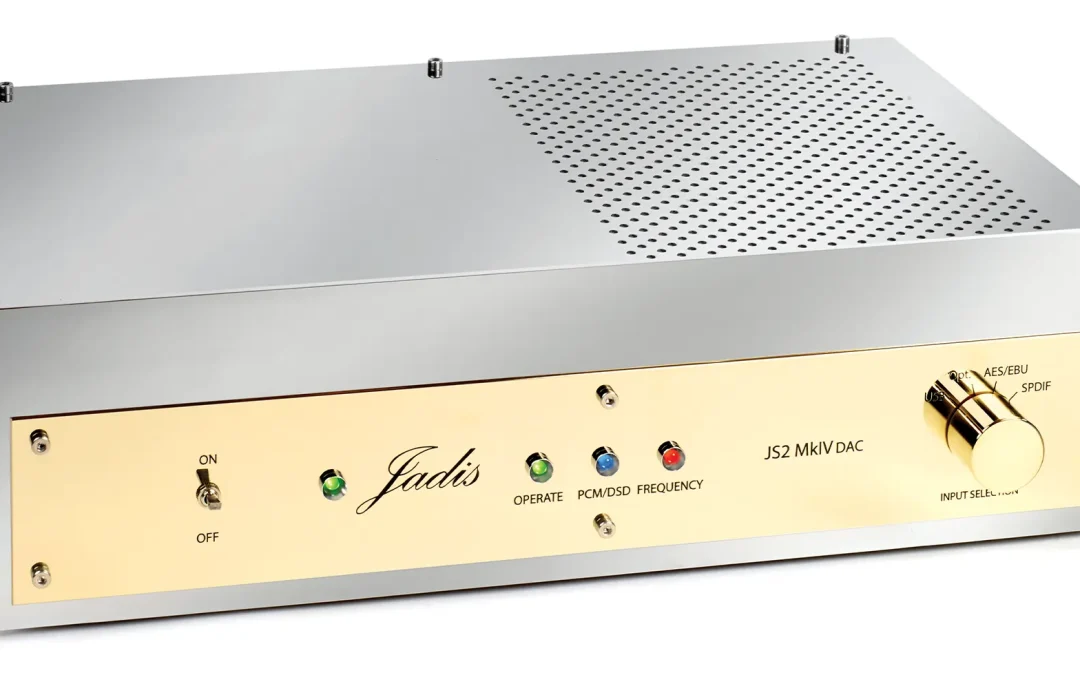
The Jadis JS2 converter is now entering its fourth generation, with the Jadis JS2 MKIV, proof of its appeal within the range, of the interest it arouses among its public, and of the validity of its genesis. In short, a well-born device that continues its career unperturbed. And this latest version seems to further widen the gap with its predecessors. The new features of the MkIV version mainly include updated digital circuitry with an optimized analog tube section and power supply. Full review below…
The more time goes by, the more the JS2 learns from its predecessor, the JS1, and imperceptibly moves closer to it. Admittedly, it remains fiercely single-chassis, which must be the first line of its specifications. Don’t be fooled by the vintage look of this converter’s case, as the non-magnetic stainless steel housing and double-sided printed circuit boards with wide copper tracks guarantee low noise and isolation from external interference.
The Southern manufacturer’s graphic charter is still in evidence, with a sublimely mirror-polished case. A front counter-plate, securely fastened with six stainless steel BTR screws, houses the silk-screen printing and control elements. A small on/off rocker on the left and a rotary selector on the right provide the essential controls. Four powerful LEDs provide information on power-up, operational status, decoding frequency and file format (PCM/DSD).
The hood is comfortably perforated to let the excess heat generated by the copious tube assembly escape. A word of advice: don’t put anything on top of this unit.
On the rear panel, space is generous, and connectivity is nicely laid out so that even when you’re using gargantuan cords, nothing will get in the way. From left to right, you’ll find the IEC receptacle for the power cord, unbalanced analog outputs on RCA connectors and balanced analog outputs on XLR connectors, then four digital inputs: USB type B, AES/EBU on XLR and S/PDIF on RCA and Toslink.
The interior offers a rigorous, elegant layout. And that’s quite an achievement, because the cabinet is as full as an egg!
The Jadis JS2 MkIV’s digital circuitry has been totally redesigned and coupled with an optimized Amanero USB digital interface, enabling input rates of up to 24 bits/384 kHz, and ensuring compatibility with a wide range of high-resolution music files, including DSD.
The actual conversion is performed by a pair of latest-generation AKM 4497 chips arranged for symmetrical processing, a technique previously tried out in the JS1. The use of a separate AKM 4497 chip for each channel completely eliminates crosstalk between channels, resulting in superior digital noise suppression.
Another feature of the Jadis JS2 MKIV is the implementation of huge analog output filters using multi-link capacitors to filter and smooth the digital output conversion. This provides optimum phase. Finally, each of the six sections of the digital part receives its own secondary power regulation, mounted directly on the PCB.
Considerable space inside the non-magnetic stainless steel chassis is devoted to the peripheral circuitry of the complementary discrete-mode analog stage. This is implemented on a high-current, double-sided phenolic PCB with copper tracks 70 μm thick. These custom-made printed circuits rival the point-to-point air-wiring that is the Carcassonne-based brand’s great specialty.
The JS2’s analog circuit has also been completely revised to provide full channel separation, using both sides of the ECC82/12AU7 double triode for each channel.
From a purely analog point of view, this fully symmetrical tube stage consists of an amplifier and a cathode follower capable of accepting any load. The reflection is identical to that of the DAC’s double chip; this avoids any crosstalk interference and allows the JS2 MkIV to drive any preamplifier effortlessly, with balanced (XLR) or unbalanced (RCA) outputs.
The power supply uses a massive EI core transformer and Schaffner mains filtering with four primary power stages: two digital and two analog.
The set up
Like all good converters, the Jadis JS2 MkIV requires long warm-up times to deliver mature performance. However, thanks to the tube output stage, this time is shorter than on a 100% transistor machine. On the other hand, tubes are sometimes prone to the microphonic effect, so you’ll need to choose a very stable stand to avoid this little inconvenience. But your Jadis dealer will be able to tell you what to do. We made our usual cable selection, and found the JS2 MkIV to be very forgiving when it came to cords. Every brand we use tends to favor a particular balance, but in this case, it’s more a matter of taste than anything else. We’ll leave the selection to you.
The sound
Even at very low output levels, the Jadis magic works perfectly. Melodic lines are extraordinarily well defined and reproduced. Listening to them has a singing quality not often found on this kind of product. There’s a very “obvious”, intuitive side to it. The general mood of the reproduction is very relaxed. At times, you almost get the impression that the modulation is slower than usual. That’s not quite what’s happening; in fact, it’s simply because time seems to flow more slowly, through a greater density of sound. This materiality imposes a new temporality. Don’t worry, your 62 minutes and 15 seconds record will be reproduced in the allotted time. However, your experience of this duration will be different. There’s a total absence of stress in the sound offered by the JS2 MkIV, a kind of obviousness in letting yourself be carried along, offering yourself to the present moment. Your senses are undeniably much more stimulated. This is due to the quality of the timbres reproduced by the JS2 MkIV, which are charming and full, but also to the quality of the sonic relief.
The stereophonic image is very different from what a fully transistorized machine can offer. The holographic effect is not a utopia in this case, but an eminently palpable reality. It’s astonishing how the listener has the sensation of being able to touch the different sound components that make up the musical message. The individualization of all sources is the key to understanding the magic of the Carcassonne builder. When a performer moves in the sound field, you’ll immediately identify them. Generally speaking, everything that moves, everything that comes and everything that goes in the musical moment is easily perceptible. In terms of atmospheric reproduction, the Jadis JS2 MkIV fears no one. It has to be said that the tube output stage does a magnificent job of putting the musicians’ evolutions and the scenic construction of each track into perspective. A wealth of information is present in the sound field. At times, this information bursts forth in rather unusual ways. But perhaps this is simply because we didn’t perceive their presence as acutely with other machines. For if the Jadis JS2 MkIV can boast one quality above all others, it would be that of being a facilitator, so much so that with it, perception of the musical message seems innate and so much more comfortable than usual. In this sense, it considerably enhances the notion of naturalness.
Our conclusion
Here’s a marvelous machine for reproducing music, all music, without reservation. The Jadis JS2 MkIV is without doubt one of the most elegant digital sources we’ve ever heard. With it, different streams never sound the same. They all acquire their unique status through a reproduction that is astonishingly embodied, very natural, particularly well realized in terms of sonic relief – in short, incredibly alive. If you’ve had enough of your various listening sessions and feel it’s time to try something new, take the time to listen to a Jadis JS2 MkIV in the right conditions. You’ll be struck by the relevance of this machine, by its absolutely unique ability to transport you to the place where the music was born with a force of conviction quite uncommon. It’s always a magical experience to spend several days with a Jadis. You can’t stay insensible to its charms…
Author: Laurent Thorin
Technical sheet: JADIS JS2 MKIV
Origin: France
Price: €8,500
Dimensions: 455 x 125 x 325 mm
Weight: 13 kg
Inputs:
SPDIF on RCA connector PCM 24 bits/192 kHz
AES/EBU on XLR connector PCM: 24 bits/192 kHz
SPDIF on Toslink connector PCM: 24 bit/192 kHz
USB type B PCM: 24 bits/192 kHz DSD: 24 bits/384 kHz
Digital compatibility: PCM 24/192 (S/PDIF RCA and AES/EBU), PCM 24/384 (USB)