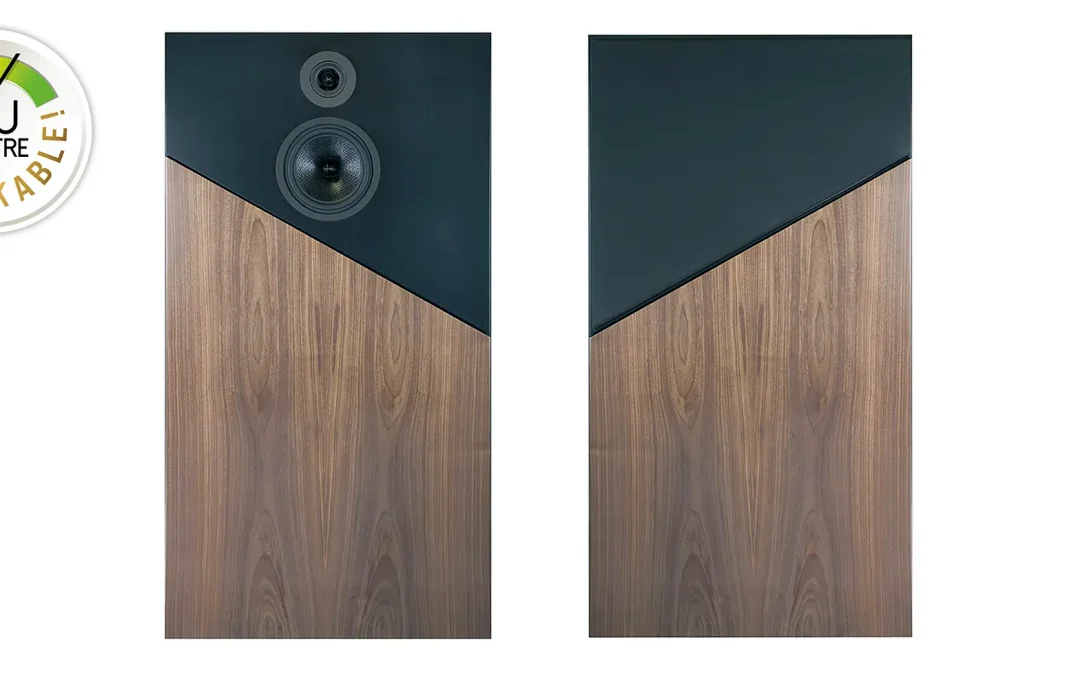
With The Wall concept, true to its long-standing reputation, Davis Acoustics presents more than just a speaker with exceptional performance. Here, the French designer and producer of equipment for the most demanding music lovers is offering a new vision of sound reproduction. The architecture of Davis The Wall aims to reconcile very high fidelity with life in a (vast) domestic interior. It’s a concept born of the realisation that, in the vast majority of cases, it’s very difficult, if not impossible, to reconcile high quality speakers with satisfactory characteristics and classic or modern interior architecture.
With The Wall, which also aims to relaunch Davis Acoustics’ Heritage range, it is truly possible to talk about “acoustic furniture”. The loudspeaker becomes an interior design element in its own right, in the same way as a bookshelf or a display case, while fully fulfilling its vocation as a tool for faithful, realistic and moving sound reproduction.
What’s more, the decorative role that Davis Acoustics has given its new loudspeakers frees them from the usual constraints associated with their positioning within the listening space. There’s no longer any question of hiding them away or relegating them to the corner of a room where they would be hard pressed to express themselves fully. With their elegant, slender monolithic appearance, they naturally find their place and become a piece of furniture that asserts the personality of the listening room, in keeping with its dual role as auditorium and living room…
Impressive seating
However, for Davis Acoustics, true to its vocation of striving for perfection in sound reproduction, it was essential to offer these loudspeakers a listening quality to match their looks. To achieve this, Davis Acoustics opted for a three-way architecture featuring four exceptional drivers. For full-bodied bass with incredible depth, The Wall speakers make use of two very long-travel woofers assembled in a push-pull load.
The two 21cm-diameter woofers with carbon diaphragms face each other: one in a closed cabinet, the other in a cabinet opened by a decompression port whose internal mouth is cut at 45°. This push-pull load naturally (mechanically) filters the whole assembly in bandpass (30 Hz to 100 Hz); all that needs to be added is a 6 dB filter at 100 Hz to ensure cut-off. Management of the midrange is entrusted to a front-mounted loudspeaker housed in the upper part of the cabinet. It works almost in full-range mode.
Note that its motor uses a TiCoNAl magnet. This material provides an intense, linear field in the motor’s air gap, in which the voice coil moves. The voice coil is therefore bathed in an intense and constant magnetic field, whatever the amplitude of its movements. This guarantees a particularly low level of distortion. It has a copper ring to linearise impedance. Its membrane is made of Kevlar. It is housed in a bass-reflex cabinet with rear port.
Realistic transparency and smoothness
A cone tweeter fitted with a glass fibre/aramid cone extends the frequency response of this midrange driver into the high frequencies. The use of a conical diaphragm rather than a traditional dome on the tweeter is one of the special features of these speakers. These technological choices guarantee remarkably balanced sound reproduction and deliver a high frequency that is very present without becoming aggressive or excessively bright.
What’s more, the midrange driver and tweeter are housed very close together. This assembly gives the midrange/treble section an operation close to that of a point source. This ensures that the sound image delivered by these loudspeakers is full-bodied and very well defined, and that each element of the soundscape is precisely located in space.
A symbiosis with the home
To make them even easier to install, these speakers are perfectly symmetrical in appearance. This means they can be assigned to either the left or right channel of the stereo system. This malleability allows you to play with the aesthetics of the installation, thanks to the black front panel with its angled cut-out.
Finally, for an impeccably elegant finish, these speakers come with a walnut-coloured genuine natural wood veneer. A choice of finish that makes each The Wall system unique. This ‘wall of sound’, as impressive for its unusual dimensions as it is seductive for its elegance, deserves to be paired with the very best electronics. It also comes with two generously-sized WBT terminals capable of accepting large cross-section cables as well as banana plugs and forks.
The set up
The Walls are wide and tall, but fairly shallow. This means they can easily be installed in a large room, as they need space, but especially if you avoid corners. On the other hand, relative proximity to the rear wall is not a problem.
With their favourable efficiency, these speakers are fairly flexible when it comes to choosing amplification. But if we can give you one piece of advice, it’s to choose a sufficiently powerful amp, because The Wall speakers express themselves loudly and convincingly, requiring commitment and energy from the electronics.
Each loudspeaker will be packed with castors, which will make it easy to remove from its box. A wooden board will be placed next to the wheels to prevent damage to the box. A spanner will also be provided for easy removal of the castors from the speaker. Finally, Teflon glides will already be screwed to the underside of the speaker. Customers wishing to use spikes will be able to use the screw thread on the wheels, but spikes will not be supplied… We were able to listen to these speakers in various environments, including at Hi-Fi 35 in Rennes, for which we would like to thank them.
The sound the Davis The Wall
High-fidelity is not immune to a certain conformism, and loudspeakers in particular. For several years now, the fashion has been for slim columns equipped with numerous small transducers. But some manufacturers don’t hesitate to break away from this trend, as shown by Davis Acoustics and its astonishing The Wall.
You could almost say that the Trojan manufacturer has taken the exact opposite approach to all the others. Its new speakers are shallow, very wide, very high, finished in traditional wood and mounted on practical (but very anti-audiophile) castors. Don’t worry, you can put spikes or cones on them. Like some of you, we looked at this anachronistic object with amazement, but that, of course, was before we listened to them. And if we had to pick out just one aspect of their sonic performance, it would be the immense amount of pleasure they gave us.
At the risk of being a little trivial, we’d say that The Wall manage to recreate an extraordinary wall of sound. The music is everywhere in the room, in a highly structured way. The sound is big, sometimes immense, coming at you according to the circumstances and specificities of each recording. It manages to remain almost intimate on a Monteverdi madrigal, or quite simply Dantesque on a piece of jazz like the exceptional Voix croisées by Didier Levallet’s quintet.
With The Wall, you’re clearly more in touch with the musical performance than the sound contingencies. It’s a complete departure from analysis and a move towards music-lovers’ considerations. The most impressive element of their performance is the way they manage to put the different components of the piece into perspective, to inhabit the sound space. They reproduce an entirely unusual level of relief.
The second instantly recognisable virtue is their masterful management of dynamics. They are capable of astonishing acceleration, without the slightest trace of compression. As a result, the sound always seems surprisingly smooth and fluid. If anything goes wrong while you’re listening to them, don’t blame them, but ask yourself some serious questions about the environment (marriage, cabling, installation…).
These are free and liberated loudspeakers. In no way do they restrict reproduction; on the contrary, they seem to relieve it. The message is delivered in a very natural way. Nothing stands in its way. With The Wall, the sound is alive, embodied, materialised at a quite different level. It’s less evanescent, more ‘full’. It’s an approach that won’t appeal to everyone. Some will call it vintage. We wouldn’t know how to describe it, except perhaps as jubilant or enjoyable. In any case, if you like thrills, you’re in for a treat.
Our conclusion
We fell in love with these speakers. They took us on a journey. To get away from our everyday lives, however excellent they may be. They are clearly on the fringes of high-end speaker production at this price level. And that’s precisely what sets them apart and makes them unique. Not only do they look different, but their sound reproduction is even more so!
Don’t stop at this first impression, go and listen to them, because you’re likely to be very surprised by their remarkable ability to transport you to the recording location. Not only do we endorse this concept, but we have to congratulate Davis Acoustics for daring to embark on such a disruptive venture. Sometimes dreams are made to come true.
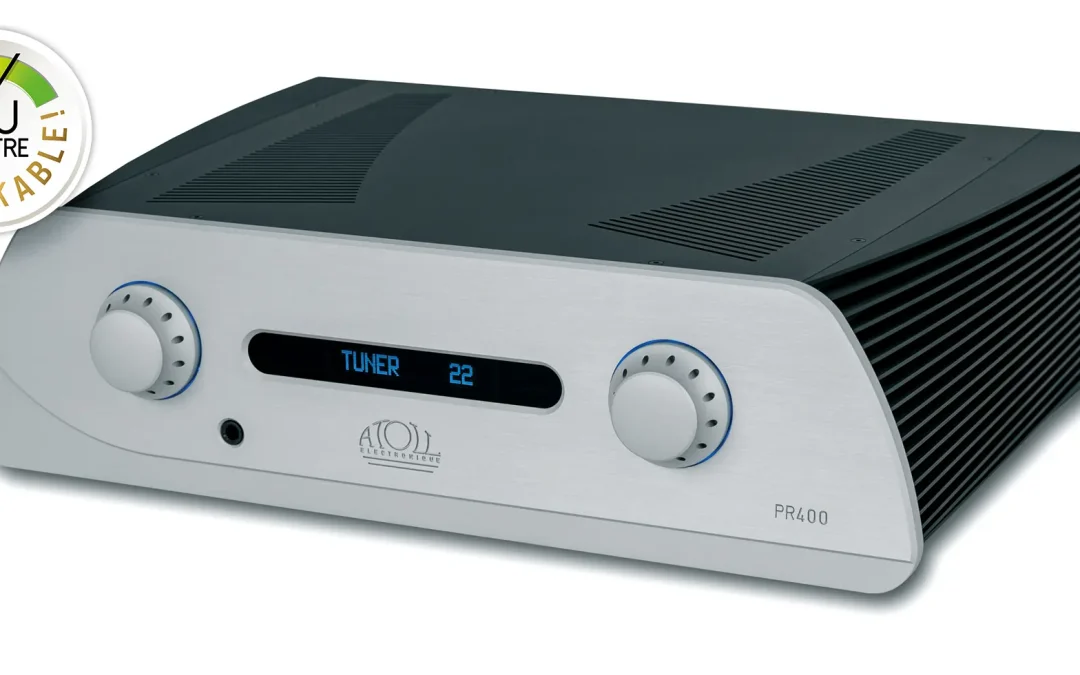
With these two top-quality components, French manufacturer Atoll is offering us the basic links in a top-level audiophile chain. This pairing features a preamplifier, the Atoll PR400 Signature, combined with a power block, the Atoll AM400 Signature.
The Atoll PR400 Signature preamplifier has been entirely designed with the purity of the signal in mind. Firstly, to ensure that the behaviour of the amplification stages is not affected by any electrical pollution of their operating voltages, the PR400 Signature power supply features filter capacitors with a combined capacity of 112,000 microfarads!
Internal shielding further protects the signal against electromagnetic radiation from external sources. They also eliminate the risk of undesirable interactions between the two channels. What’s more, the PR400 Signature uses high-quality audiophile components selected with the greatest care in the signal path. This is particularly true of the link capacitors. Here, Atoll has opted for shielded MPK capacitors.
Symmetrical architecture
For even greater finesse and subtlety, the stages of this preamplifier have a symmetrical architecture. Each channel is completely independent of the other. In short, a dual-mono design. This layout guarantees exceptional musicality combined with great respect for timbre and a particularly vast, rich and airy stereophonic space. A final crucial point, to ensure that this preamplifier preserves the slightest subtlety in the sound message, Atoll has given it a hyper-extended bandwidth, from 0.5 HFz to 780 kHz. This more than satisfies the requirements for reproducing the most accomplished Hi-Res Audio content, from the deepest bass to the most extreme treble harmonics.
A wealth of connectivity
It’s worth remembering that, again with a view to preserving the purity of the signal, this preamplifier is exclusively analogue. No digital stage is therefore likely to interfere and degrade its quality. The Atoll PR400 Signature is equipped with a particularly rich range of connectors to enable it to exploit signals from the most prestigious sources as well as the most modest. To interconnect with the most common sources, it has five line-level inputs on RCA sockets. These are conventional unbalanced inputs.
For high-quality, even professional sources, two balanced inputs on XLR sockets are also available. As always, these are preferable when using long cables or in a particularly electromagnetically polluted environment. It should be remembered that a symmetrical link protects against the parasitic interference that can be picked up by inter-link cords by routing the signal in differential mode.
Finally, we find the same type of configuration for the outputs of the PR400 Signature. It has two RCA outputs and two XLR outputs. This duplication will be appreciated by users wishing to control their speakers in bi-amplification mode.
Impressive power
The AM400 Signature power block also boasts some impressive features. Its quadruple push-pull Mos-Fet transistors enable it to deliver 2 x 160 W at 8 ohms. It even reaches 2 x 300 W at 4 ohms. What’s more, a small selector on the rear panel allows the Atoll AM400 Signature to be operated in bridged mode. This transforms it into a monophonic power unit capable of delivering 600 W into 8 ohms.
This means that two AM400 Signature power units can be combined with the PR400 Signature preamplifier to create a very high-power installation. However, in addition to the high power output of the AM400 Signature, it is also capable of handling particularly high output currents. This ability to handle very high currents is a major asset in an audiophile environment.
It allows the AM400 Signature to drive even the most rebellious loudspeakers with a grip of steel, providing them with the ideal source for expressing their personality to the full.
A generous power supply
The fact remains that, in order to manage such high power levels, the amplifier must have a power supply that matches the ambitions of its output stages. Atoll has therefore generously calibrated the power supply for its power block. It is based around a 1015 VA toroidal transformer combined with a set of chemical capacitors with a combined capacity of 111,300 microfarads.
As a result, the Atoll AM400 Signature not only has a power supply capable of meeting its energy demand requirements, both in steady state and during the most intense bursts of dynamics. To convey this impressive power from the AM400 Signature’s motherboard to its output terminals, Atoll has used special cables with very large cross-sections.
They are based on a deoxygenated pure copper core. To preserve its very low impedance at the highest frequencies and combat the consequences of the film effect, a silver plating is applied to the copper. Finally, a Teflon sheath provides insulation. Produced specifically for Atoll, these cables guarantee transmission without any loss of signal. All these details are preserved, resulting in rich, detailed sound reproduction. To avoid interactions between the two channels, the AM400 Signature has a dual-mono architecture.
Quality connectivity
Finally, the AM400 Signature is equipped with appropriate connectivity. Two XLR sockets are provided on the rear panel, so that it can be connected to the PM400 Signature pre-amplifier in balanced mode to optimise the overall signal-to-noise ratio of the installation. However, so that it is also possible to drive its power block from a more modest preamplifier, Atoll has provided unbalanced inputs on RCA sockets. An output, also on RCA sockets, makes it possible to ‘chain’ several power units or to link them to another amplifier.
The set up
While both units have a relatively compact footprint, worthy of a 19’ rack format, their weight is imposing. 15 kg for the preamp and almost 20 for the amp. So our Centaure Ls are perfectly suited to the task. Don’t neglect the stand: it plays an important role for these beautiful electronics. As far as connections are concerned, we opted from the outset for symmetrical connections. Both to each other and to connect the sources. Each time, we noticed a real gain in listening.
The electrical phase must be observed with care: it also has an influence. It is standardised, i.e. to the right. Finally, the speakers! We used the Atoll AM400 Signature with four very different pairs of speakers with diametrically opposed outputs, and in practice, this amplifier seems insensitive to load.
The sound of the Atoll PR400 and AM400
You’ll agree that nothing is simpler than qualifying sonic authenticity, which defines the purity of the musical phrase expurgated from the gangue of its support, be it vinyl, silicon or polycarbonate. The task of an amplifier is therefore both dauntingly easy and difficult: to take in a message that is exhaustive but minuscule, and to amplify it tenfold without altering it.
Over the last quarter of a century, Atoll has conscientiously endeavoured to fulfil this mission with simple, wonderfully effective and increasingly ambitious products. The proposal it is submitting to us today is quite simply the highest of its career. It comes after many years of experience in which the French manufacturer has slowly built up its expertise to become one of the leading players in our industry.
This feeling of having fully reached maturity is the first thing that emerges from listening to our Atoll PR400 & AM400 Signature duo. First and foremost, this ensemble is coherent. In fact, it takes several hours of listening to recorded music in its company to begin to identify its ‘personality’.
We’ve put this term in brackets, because we’re not sure it’s appropriate in the circumstances. It’s almost a lack of personality that we should be talking about here. The Atoll ensemble fully embraces the perfectly mastered duality of being undetectable to the ear and at the same time completely present. Undetectable, because the sound signature is virtually invisible.
But fully present, because it anchors us totally in the present time of listening by making it particularly embodied. How do you achieve the feat of forging a remarkable presence without being able to detect its style? First and foremost, by masterfully controlling the bandwidth, which is exceptionally balanced in this price range.
The spectrum reproduced is broad, but that’s the least we can do. On the other hand, it unfolds with a very successful homogeneity. More than the realism of the timbres, it’s their thickness and texture that surprise. The Atoll PR400 & AM400 Signature duo reproduce the flesh of the message with infinite delicacy. The result is a complex listening experience that’s easy to appreciate. The nuances and specificities of each melodic line are easily perceived.
Another decisive criterion is the way in which the sound architecture is transcribed. Listening to the PR400 & AM400 Signature in a vast room with large speakers makes you realise the potential of this amplification in terms of spatial reproduction. A veritable soundscape materialises with each new recording. By turns grandiose or intimate, it perfectly captures the dimensions and volumes of each recording, alternately relegating you to the role of spectator or actor, keeping you at a distance or placing you close by.
After their distinction and sense of perspective, the Atoll PR400 & AM400 Signature will win you over with their demonstration of strength. And it’s a fully mastered force that’s being expressed here. The energy reservoir of these two machines seems limitless. Some of our listening sessions were conducted at very high speed and volume. There was never a hint of dynamic decay.
On the contrary, both devices responded instantly to demand, even when it was particularly high. Whether the message was complex or not, plethoric or not, high volume or not: the two Atolls were unflappable. You almost get the impression that the more you ask of them, the more at ease they seem.
Our conclusion
With its 400 Signature series, manufacturer Atoll has established itself more than ever as a major player in separate-element amplification. We had already tested the Signature version of the 400 preamp, an excellent product, but never the amp. Now we’ve done it, and done it very well! These two products display remarkable potential and maturity.
Obviously, they work harmoniously with each other. And it’s naturally in this configuration that we prefer to use them. When you add up the price of the preamp and the amp, you’re still looking at under €10,000, which means we can offer an excellent level of performance in this price range. And the obvious bonus is that it’s possible to flange the power block in mono to add a second amplification channel, and that’s an entirely different story.
We’ll conclude by saying that this extremely interesting possibility of evolution for the consumer guarantees a particularly relevant alternative to the very top-of-the-range integrated amplifiers that are currently flourishing.
When it comes to making a choice, this is something to bear in mind.
Authors: Estève Fabry and Laurent Thorin
Technical sheet: Atoll PR400 Signature
Origin: France
Price : €4,890
Dimensions : 440 x 130 x 370 mm
Weight : 15 kg
Frequency response : 0.5 Hz to 780 kHz
Rising time : 0.4 microseconds
Total harmonic distortion : 0.004
Input impedance : 357 kilo-ohms
Input connectors : 2 x balanced on XLR, 5 x unbalanced on RCA, 1 x bypass
Output connections : 2 x balanced on XLR, 2 x unbalanced on RCA, 1 x monitoring on RCA
Technical sheet: Atoll AM400 Signature
Origin: France
Price : €4,590
Dimensions : 440 x 370 x 130 mm
Weight : 19 kg
Power: 2 x 160 W at 8 ohms (600 W in bridge mode), 2 x 300 W at 4 ohms
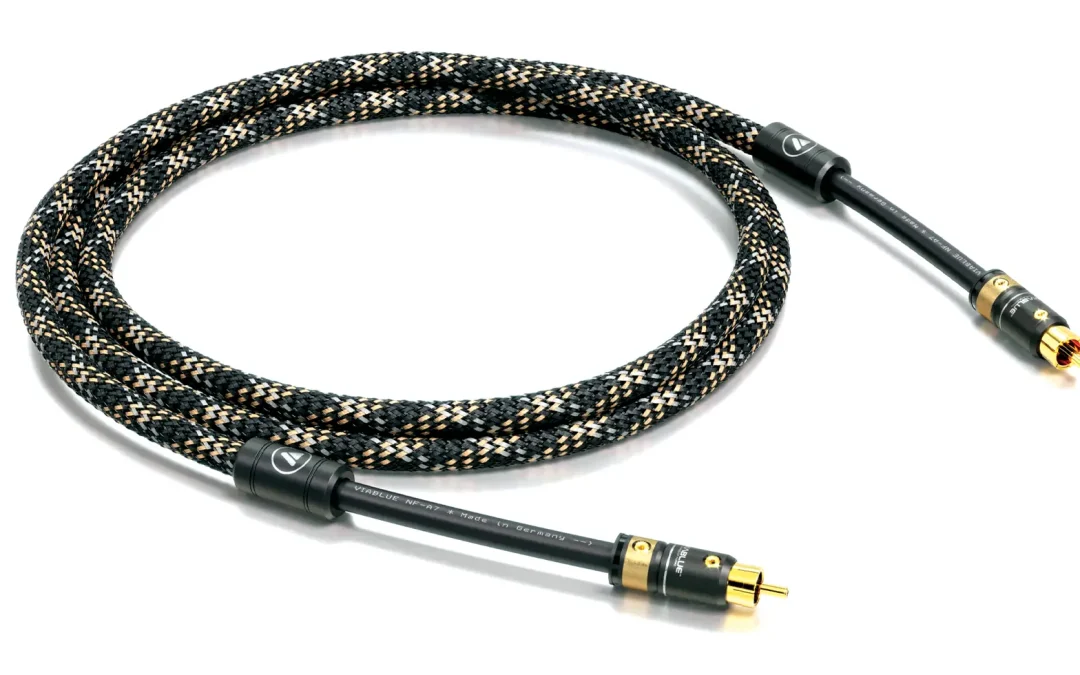
Finding a good interconnect cable is no problem. However, at under two hundred euros, it’s much rarer. We’ve unearthed this little made-in-Germany marvel at a price that has absolutely no impact on your budget. Welcome the Viablue NF-A7 RCA.
Founded in 2001, German company Viablue specialises in top-of-the-range accessories for high-fidelity systems. Based in Malsh, close to the French border, the company offers a wide range of turned-metal mechanics and high-quality cables.
We’re going to take a closer look here at the Viablue NF-A7 RCA cable. This is an unbalanced signal transfer cable. As its name suggests, and as is the norm in this field, it has RCA plugs at both ends. The purpose of this type of cable is to carry very low amplitude signals between, for example, a source and a preamplifier or to an integrated amplifier. They are also commonly used to link a preamplifier to a power block. However, these signals are fragile and sensitive to electromagnetic noise. Shielded conductors are essential for effective protection.
To guarantee total signal protection, the Viablue NF-A7 RCA cables feature triple shielding. The first layer is based on an OFC copper-based spiral shield. This is then covered by a thin PET aluminium foil. Finally, a tinned OFC copper braid reinforces the shielding. The cable core, made up of 19 strands of OFC copper, is thus perfectly protected from surrounding electromagnetic interference, whatever the frequency.
However, while protecting the signal is essential, ensuring high-quality contacts is just as vital. To this end, the plugs fitted to these cables have a mechanical design that guarantees good contact pressure and are plated with 24-carat gold.
The sound of the Viablue NF-A7 RCA
Don’t let the price fool you, because not only is this model very well made, it also works surprisingly well. The essence of recorded music is there. The spectral balance is completely realistic, with enveloping bass and highs that are gleaming but not dry. Between these two extremes, the midrange blossoms delicately with a reassuring presence.
Rhythmic tracking is successful, giving the sound a lovely dynamic feel. Whatever the type of music being played, there’s no mechanical aspect to it, and the articulation is beautifully supple. Of course, one could wish for a little more finesse, a little more resolution, and a few details here and there, but all in all, listening to the Viablue NF-A7 RCA is hardly frustrating. And frankly, at the price it’s offered at, this cable deserves nothing but praise.
Our conclusion
There’s little point in having high-quality components if their interconnection isn’t up to scratch. This is particularly true when it comes to routing low-amplitude signals. With the Viablue NF-A7 RCA, there’s no question. However, being used to cables of a certain price, we didn’t take into account the desires of audiophiles on a tight budget. With this model, the German manufacturer is going to make a lot of people happy. The essentials are already there, for an extremely worthwhile investment.
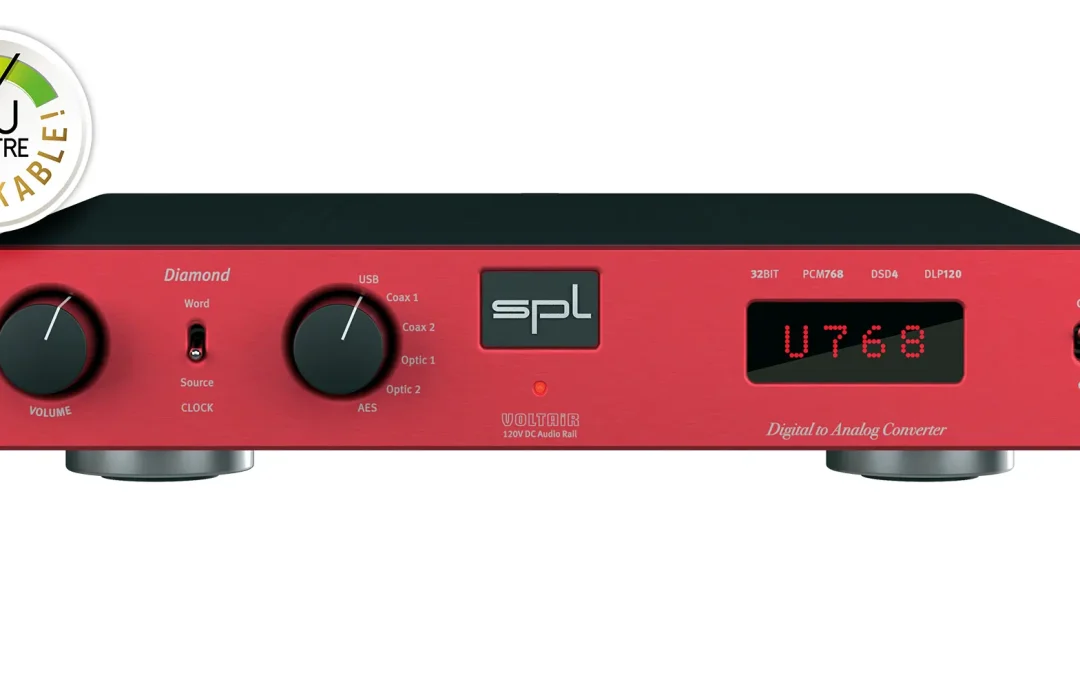
With the SPL Diamond, the hifi brand presents us with a DAC derived from its productions for the professional world. It is sure to appeal to the most demanding audiophiles who are fans of digital sources.
This new DAC uses original technological solutions, specific to the brand, to take full advantage of the subtleties offered by hi-res digital audio streams. The most striking of these innovations, which SPL considers to be its benchmark technology, is probably the one called Voltair. It is based on the obvious. In order to faithfully reproduce the most extreme dynamics, the system must be capable of going from a modest output level of a few hundred millivolts to a much higher voltage excursion.
However, most DACs only have a relatively modest voltage supply. Usually of the order of a dozen volts. This inevitably limits the dynamic output voltage. This insurmountable limit can be detrimental to the reproduction of the most intense dynamic peaks.
Voltair technology solves this problem by providing the SPL Diamond’s analogue output stages with a supply voltage of 120 V, divided into +60 V and -60 V with respect to earth. This is four times the supply voltage of operational amplifiers based on integrated circuits. This gives a very wide operating margin before the output signal is clipped due to insufficient supply voltages.
However, while the basic concept of Voltair technology may seem attractive, no integrated circuit or operational amplifier on the market is designed to operate at such high voltages.
Specific op-amps
To overcome this difficulty, SPL has developed its own operational amplifiers, the SPL 120 V Supra. As a result, 120 V technology offers Diamond exceptional specifications and sonic supremacy. On a purely technical level, it is a real asset in terms of dynamic range, signal-to-noise ratio and even safety margin for the electrical excursion of the output signal. The result is an incredible wealth of detail and a perfectly serene, controlled listening experience.
Double filtering
SPL has also worked particularly hard on the filtering of the SPL Diamond. As with any DAC, the analogue output of the digital/analogue conversion chip must be smoothed by a low-pass filter. The Diamond has two such filters. One is dedicated to sources delivering PCM audio streams and the other to DSD streams. Different cut-off frequencies are required for optimum smoothing of the artefacts inherent in digital/analogue conversion. Here again, the low-pass filters fitted to the Diamond use Voltair technology. In this way, the entire analogue signal processing chain benefits from its qualities.
A top-of-the-range chip
The heart of the SPL Diamond is built around a top-of-the-range AKM AK4490 Velvet Sound™ chip, whose reputation is well established. Produced by Asahi Kasei Electronics, this chip converts PCM audio with 32-bit resolution and a sampling rate of up to 768 kHz, equivalent to 16 times the resolution of a CD. The chip can also process DSD 256 streams.
This means the Diamond is ready to handle the most up-to-date high-definition audio streams without a care in the world. Thanks to its particularly advanced processing capabilities, it is able to fully exploit and even enhance the musicality of any recording, expressing the timbres, playing and specific temperament of each instrument. The tiniest micro-information and the slightest subtlety are faithfully reproduced so that they become perceptible, guaranteeing rich, in-depth listening.
A finely tuned clock
Again to optimise the processing of digital streams, the SPL Diamond has a particularly open clock management system. It is capable not only of synchronising to the clock associated with the source stream, but also of using an external reference clock. The Clock switch on the front panel allows you to select either the clock from the incoming stream, in the Source position, or the clock from the signal applied to the Word IN input, in the Word position. This operating mode eliminates any artefacts associated with jitter problems.
Versatile connectivity
In terms of connectivity, the Diamond is equipped with sockets compatible with the highest quality standards. In addition to the traditional coaxial and optical inputs, there is an AES/EBU socket and a USB-B port. Asynchronous, it is dedicated to connecting the DAC to a computer, for example. Its analogue outputs are also available on both RCA and XLR sockets, so you can connect the Diamond to the most advanced components, or even to professional equipment. A set of dip-switches allows these analogue outputs to be set to either a fixed or variable level, controlled by the volume potentiometer on the front panel.
In use
We’re absolute fans of this compact box, and above all of its studio ergonomics, which are representative of a utilitarian product used every day. No frills, just real functionality. The SPL Diamond has a display that constantly shows the type of digital stream being processed and its sampling frequency. There’s also a source selector, and the volume control means it can even be connected directly to power units without the need for a preamplifier. Our tests were equally conclusive with both fixed and variable outputs.
Be warned, though, that the Diamond does get quite hot in daily use. Don’t put anything on its cabinet. And beware of the mains phase: it has a major influence on the sound.
The sound of the SPL Diamond
We began our listening sessions with our basic protocol, i.e. a basic ‘black’ mains cord and the excellent and very inexpensive Viablue NF-A7 RCA interconnect cables (see our test in this issue). The result was immediately straightforward and direct. You feel more like you’re behind a console in a studio than in front of a traditional hi-fi system that tends to embellish the signal.
You feel the music, especially acoustic music, with a physical impression. The bass lines are well articulated, and the impacts are clean and powerful. There’s not the slightest damping or attempt to seduce. This very live listening experience is really enjoyable because it gets straight to the point.
After a few hours, we swapped the Viablue for Absolue Creations TIM-Essentiel, and the power cord for a Furutech G-314 Ag-15 Plus at €200, and we entered a much more subtle, but still lively, world. The feeling of control over the whole bandwidth is very pleasant. Generally speaking, this Diamond doesn’t try to captivate you with overly sophisticated listening that might seem sterile, but with fundamentally balanced and homogeneous reproduction.
The adjective that immediately springs to mind is ‘unfiltered’ in the noblest sense of the word. Here, the electronics are not superimposed on the original message. Not a hint of coloration, quite the contrary. Its avowed aim is to let you experience the vitality and neutrality that your recordings can conceal. In this respect, it’s an undeniable success. A minimalist rock ensemble is brought to life between your two speakers.
The energy of a symphony orchestra is totally unleashed without spilling over in a disorderly fashion. The voices are hyper-realistic in their softness, as well as in their sometimes rocky aspect. And who can do more can do less, which allows the SPL Diamond to be subtle and measured on a string quartet or a soprano voice. It doesn’t favour any particular musical style. On the other hand, it makes a point of never inducing the slightest coloration, even if it can sometimes be pretty and pleasing to the ear. So if you want to have a precise idea of how your records sound, this is the converter for you.
Our conclusion
We were delighted to discover this unusual converter. It’s clear that SPL has drawn its legitimacy from the recording studio, where the notions of seriousness, straightness and dynamics are not taken lightly. With it, we find the very fluid and musical side to which the AKM chip has accustomed us, and the superb dynamic behaviour of the German manufacturer’s proprietary circuits. The cocktail of the two is a real success. But what really adds to the story is the price at which the SPL Diamond is offered. At €2,500, there aren’t many on the market capable of offering such good flow control. A great discovery, then, and a brand to keep an eye on, there’s no doubt about it.
Authors: Estève Fabry and Laurent Thorin
Technical sheet: SPL Diamond
Origin: Germany
Price : €2,499
Dimensions : 278 x 57 x 300 mm
Weight : 3.15 kg
Sampling : PCM 32 bits/768 kHz
Frequency response : 4 Hz to 300 kHz
Signal-to-noise ratio : 102.3 dB
Dynamic range : 135 dB
Crosstalk: 108 dB at 1 kHz
Total harmonic distortion : 0.001001% Native DSD 256 compatible
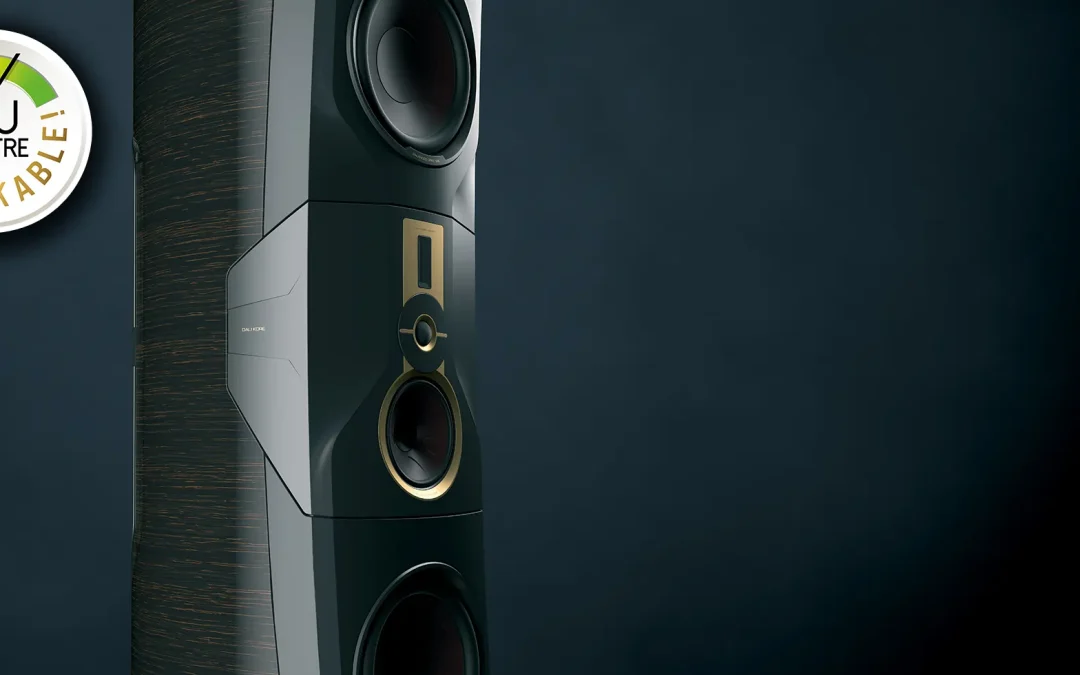
It’s been a long time since the Danish manufacturer offered us such an ambitious product at the top of its catalogue. And yet, Dali had already produced some prestigious models a long time ago, such as the Skyline series. With the Dali Kore, things have come full circle. It’s a real tour de force, an engineer’s delirium, likely to leave its mark on both our minds and our auditory systems.
Dali is presenting us with a very top-of-the-range product. This family of equipment, the brainchild of mad engineers, leaves no room for compromise and implements the most extreme technological solutions… whatever the cost.
However, while most brands have a flagship product, a technological showcase for their expertise, Dali, despite regularly producing remarkable products, has not had such an ambassador until now. What’s more, the Kore is an excellent testing ground for finely quantifying the contribution of each new technological innovation so that the brand’s other products can benefit from it. In fact, when designing the Kore, Dali’s engineers wanted to start from scratch and opt for hitherto unexplored solutions for each of its components – from the loudspeakers to the cabinetry and crossovers.
Acoustic loads adapted to each register
The general architecture of the Dali Kore remains fairly conventional. It is based on a four-way structure. However, unlike most loudspeakers, its internal volume is not made up of a single cavity dedicated to the acoustic load of the bass section. Instead, this vast internal volume is subdivided into several cavities to give each driver an optimised acoustic load. For bass reproduction, each woofer has its own acoustic load. With a volume of 72 litres, these loads are decompressed by curved tubular vents opening out at the back of the speaker behind a set of elegant grilles.
A magnetic circuit based on a new material
The woofers, for their part, have also been specifically designed for the Kore. Equipped with a 30 cm diameter membrane, they are the fruit of the most recent research. As is traditional with the brand, they are produced in-house. The massive use of wood fibre is a true Dali signature. Their motor has been completely redesigned. It is based on a new magnetic material, called SCM (Soft Magnetic Compound), of the latest generation, even more efficient than the one used in previous versions of loudspeakers.
What’s more, these new woofers feature a double voice coil with an impressive diameter. This configuration is called Balanced Drive. What’s more, in order to keep them perfectly in line with the magnetic circuit’s air gap, even at the most extreme deflections, in addition to its wide peripheral suspension, this moving element is held in place by a double speeder. These technological choices further reduce distortion in the Kore’s bass section.
Birth of the first Dali midrange
The midrange reproduction is entrusted to a 178 mm diameter driver associated with a closed load. Unlike the woofers, the midrange driver is designed to operate exclusively with very low travel. This choice offers the possibility of combining excellent efficiency with great speed. Here again, its membrane makes extensive use of wood fibre. This is the first time that Dali has designed a loudspeaker specifically for midrange reproduction. It takes over from around 400 Hz, moving into the treble section at around 4 kHz.
Dome tweeter and ribbon super-tweeter
Finally, the high-frequency reproduction monopolises two sections. The first covers the frequency range from around 2 kHz to 12 kHz. It is based on a tweeter with a very large woven silk dome. With a diameter of 35 mm, it offers wide spatial dispersion for reproduction, which greatly reduces the directivity of the Kore and significantly enlarges the optimum listening area of the installation. In addition, this large diameter gives the tweeter excellent midrange response, even in the presence of pronounced dynamics. The transition between this first section of high-frequency reproduction and that dedicated to the midrange is therefore smooth and imperceptible to the listener.
Perfect control of ribbon tweeters
To extend the Dali Kore’s frequency response beyond the 12 kHz provided by the first treble reproduction section, a ribbon tweeter takes over. It extends the Kore’s response in the extreme treble to 34 kHz. Although the behaviour of ribbon tweeters is a delicate matter to master, Dali has undeniable expertise in this field. For many years now, the brand has successfully equipped a large number of its top-of-the-range loudspeakers with this type of tweeter. Once again, this is a model specifically designed and manufactured to meet Kore’s most stringent requirements. Its magnetostatic ribbon has a surface area of 10 x 55 mm.
By extending the Kore’s frequency response far beyond the audible spectrum in the high frequencies, it offers a high degree of transparency and clarity.
Finally, even the electronic components used to create the filters associated with each section of the Dali Kore come from high-quality sources. They are selected one by one to ensure their excellence. So many points that make the Kore the technological showcase of the Danish brand.
In use
We’ve had the opportunity to listen to these great columns on three occasions in three different systems. We therefore have a fairly precise idea of how they work, and also of the type of environment that suits them best. Let’s start with the room, which we’ll choose to be spacious, because Kores need air to breathe and because their bass descends very low in a particularly controlled way, the resulting long wavelength means that the listener’s position has to be set back significantly. Consider a minimum of 50 m².
At the time of their official release, the Kore were powered by four NAD M23 blocks. Unfortunately, this was a bit short-sighted. Not that the M23s weren’t good enough (they’re excellent amps), but the Kore are much more demanding than the NADs are capable of providing. Our last listening session took place in Paris at Elecson in the company of MBL electronics.
We’d like to extend our warmest thanks to Alain and Fred for their kindness and availability. With the MBL N15 monophonic blocks and their 560 W at 4 ohms, the Kore are much more at ease and gave us a marvellous performance. However, it’s clear that they can go even further. For our personal taste, we’d go for two 9008s, if we wanted to stay with MBL.
But we could go for a few other magnificent references like the Accuphase A300, among others. Finally, a word of advice: don’t hesitate to bicable. If the designer has taken the trouble to offer this feature, it’s so that the user can benefit from it. If you don’t, it’s as if you haven’t taken the concept to its logical conclusion. The best straps on the market will never replace true bi-wiring.
The sound of the Dali Kore
Make yourself comfortable, switch off your phone and get ready for a moment of musical emotion on a grand scale. Because with Kore, life is big. It’s easy to get started. These speakers make listening to recorded music extremely easy. You sit back, relax, and you’re immediately immersed in the sound bubble. There’s no need for any prior knowledge: the pleasure is instantaneous.
Kore immediately deploys a magnificent arsenal of seduction. The bandwidth is not only very wide (which is the least we can do given the claims of this loudspeaker) but also reproduced with phenomenal homogeneity. The treble register is very smooth, never bright or artificial, even when pushed to its limits. The bass is very deep and clean. The image is immense. At this stage, what more could you ask for? This is definitely a great show.
Most of the discs come through easily and naturally. It’s when you concentrate more that you go beyond the pure sensation of pleasure to scrutinise the slightest features of this product. And that’s when you realise the impressive amount of work that Dali R&D has had to put in to achieve such a result. Because such a wide bandwidth is not achieved by lining up speakers, but by carefully determining and then developing the transducers best suited to the task.
And if this bandwidth is so masterfully fluid, so capable of making us think we’re almost listening to a full range, it’s because the crossover has been the subject of a particularly accomplished study. Of course, the dynamic behaviour is remarkable, but then again, you wouldn’t expect anything less from a product of this class. No, what is truly astonishing is the excellent resolving power of the Kore, and above all the way in which it is expressed. This speaker makes it considerably easier to understand recorded music. That’s why everything seems fluid and obvious.
It is the prerogative of the best systems to make the most complex melodies easier to understand. How to make complicated music crystal clear and hyper intelligible. By deconstructing, we make it easier for the listener to enjoy the music.
Let’s sum up: an interstellar bandwidth with a powerful and incredibly percussive physical bass, a veritable three-dimensional image that can be intimate or grandiose depending on the musical message, exemplary dynamic behaviour that is all the more impressive because it never tries to bluff you, and finally, a resolving power that, while not the best in creation, has a unique ability to make any message easy to understand and of unrivalled clarity.
The immense potential of these speakers lies not in their individual qualities, but above all in the overall homogeneity they are capable of demonstrating. They are fantastic because they are exceptionally balanced.
Our conclusion
We could go on for pages and pages, but in all sincerity, we simply advise you to listen to these speakers in the right conditions, to understand just how remarkable they are. In terms of performance stricto sensu, the Kore have nothing to fear from most of their competitors, including some much more expensive models. The biggest problem that Kore will have to face is overcoming the preconceptions of potential buyers, who tend to gravitate towards the most popular exclusive brands, when in fact, if you listen to them blindly, they can overtake them.
Dali will have to impose its name, like all the brands that make the great leap from developing mainstream products to high-end ones, such as Focal. Some audiophiles will always turn to esoteric manufacturers because they want to invest in a safe haven. And in the case of the Dali Kore, that would be a real shame. So forget your preconceived ideas and give them a chance. Because in the context of quality listening within a perfectly implemented system, they can make all the difference.
Author: Laurent Thorin
Technical sheet: DALI Kore
Origin: Denmark
Price : €80,000
Dimensions : 1,950 x 800 x 1,200 mm
Weight : 148 kg
Load : Dual 72-litre bass-reflex tuned to 22 Hz
Speakers :
1 x 10 x 25 mm ribbon tweeter,
1 x 35 mm fabric dome tweeter,
1 x 178 mm Balance Drive SMC midrange,
2 x 292 mm woofer Balance Drive SMC
Maximum sound pressure level : 118 dB SPL
Maximum power handling : 1,000 W
Sensitivity: 88 dB
Frequency response: 26 Hz to 34 kHz
Crossover frequencies: 390 Hz, 2,100 Hz and 12,000 Hz