The second model in a series of six, the ACL Cassiopée is a relatively compact speaker offering true-to-life sound reproduction. Designed without filtering and featuring an exceptional transducer, it stands out significantly in today’s electroacoustic production. Portrait of a newcomer from the South!
ACL is a young French brand created in 2017 by Thierry Boinet. It designs and handcrafts full-range speakers equipped with EMS speakers. The birch plywood cabinets all have a labyrinthine load. They are handmade in the Villeneuve-lès-Béziers workshop.
To achieve the best possible quality, ACL has opted for a signature S-shaped acoustic line corresponding to a labyrinthine structure known as a wave structure. This structure breaks up standing waves and limits feedback on the speaker membrane.
ACL has a direct relationship with consumers and invites you to discover its range of acoustic speakers in your own home, anywhere in France. This is a way of reminding you that the acoustics of your room play a major role in a successful installation. It also allows you to test ACL speakers on your own electronics.
You will be asked to contribute towards the cost of travel to and from your home, calculated from Béziers. You can also get together with other enthusiasts to organize a listening session, which reduces the cost of travel. If a sale is made, this will be deducted from the purchase price.
ACL offers six models ranging from the Hermès, a small bookshelf speaker equipped with a 10 cm driver, to the Vega, built around a 38 cm driver. Four of the six models are available with excitation drivers. Finally, two cabinets are also available for sale. They feature a front-panel on/off button with a voltage and current indicator. On the rear panel, there are six sockets with the option of a symmetrical transformer or mains filters…
The Cassiopée is a compact speaker equipped with a 13 cm EMS driver. It has a fairly narrow monitor format, stretched in both height and depth so that the acoustic load can flourish within the cabinet. The cabinet is made from a block of Finnish birch plywood that has been machined by material extraction. The sides are made from a 22 mm thick sheet of the same material, covered with a leather-like film available in a wide variety of colors.
Viewed from the side, the cabinet is rounded at the top rear to follow the profile of the folded horn. The laminar vent is also located at the rear, at the bottom. Just above it is an aluminum plate supporting two WBT NextGen terminals. Inside, of course, there are no filters or damping materials, but excellent internal copper wiring from Neotech.
On the front panel is the LB6 speaker from the EMS factory run by Catherine and Michel Fertin. This is a 13 cm speaker with a low-mass moving assembly, a cellulose pulp cone, a wooden anti-vibration cap, and a powerful symmetrical magnetic circuit equipped with flux and impedance stabilizing rings. Its highly optimized cone and suspension allow it to reach 20 kHz with impressive linearity.
THE SETUP OF THE ACL CASSIOPEE
These speakers come with matching stands that place them at the ideal height for standard use. However, you can also install them on a wall bracket if it is sufficiently stable and rigid. Please note, however, that the acoustic load vent is located at the bottom of the rear panel. You will therefore need to ensure that there is enough space to avoid exaggerating the bass response.
When it comes to pairing, many Cassiopée observers will be tempted to use tubes. We are very much in favor of this, and pairing with a Jadis Diapason, for example, or a small Luxman SQ-N150 would be perfect.
When it comes to transistors, we immediately think of Heed with the Elixir, Atoll with the IN100 Signature, or the Rogue Sphinx v3, among others. Just be aware that the Cassiopée reacts instantly to whatever you put upstream. You will therefore quickly know whether your choice of associated components is appropriate.
THE SOUND OF THE ACL CASSIOPEE
The listening experience of a full-range speaker is always special. It allows you to immerse yourself deeply in the sound performance thanks to a unique feeling of continuity in the sound. Good acousticians can create very successful filters. But while the human body is not the most accurate measuring tool in the world, it is by far the most subtle. And sometimes the ear “latches on” to the crossover frequency.
With full-range speakers, there’s no need to worry. The sound is revealed to you in its entirety without the slightest alteration. This is exactly what happens with the Cassiopée. You perceive the recorded musical message with a surprising level of purity. In this respect, listening to a record as successful as Michel Godard’s Monteverdi: A Trace of Grace is a moment of exceptional pleasure and contemplation.
The Cassiopée reproduces the slightest subtleties of the musical phrase with acuity and frankness. The modulation unfolds with unusual fluidity and cohesion. The bandwidth is not the most extensive, especially in the low frequencies, but it is remarkably consistent. And that’s not all, because there is also a beautiful depth and extension. The soundstage is wide and provides a feeling of spaciousness both in terms of the soundstage and the energy. There is a lot of life and responsiveness.
The absence of filtering promotes spontaneity, lightness, and agility in the sound flow. This overall observation also applies to Miles Davis’ charismatic Kind of Blue, Bach’s cantatas, and more broadly to all well-recorded acoustic music, which includes an impressive collection of classical, jazz, blues, and many other genres. The fact that the speaker is connected directly to the amplifier terminals, without any obstacles, gives the sound its authenticity. As a corollary to this transparency, less successful recordings, with very (too) complex messages, are exposed by the Cassiopée. They tend to highlight the imperfections in the recordings. This is a characteristic, and by no means a flaw.
OUR CONCLUSION
The Cassiopée are particularly simple speakers, each component of which has been meticulously designed to offer the best in a specific context. If you prefer natural and realistic timbres, impeccably distributed dynamics across the entire reproduced spectrum, and a wide-open soundstage, it’s a safe bet that these small ACLs will be at the top of your list.
They are uncompromising when it comes to recording quality, but they will repay you a hundredfold when the disc is well made. These are atypical speakers aimed at sincere and eclectic music lovers who have not yet found what they are looking for in the catalogs of the big-name manufacturers. In short, they are a little gem in a world that is sometimes a little too formulaic.
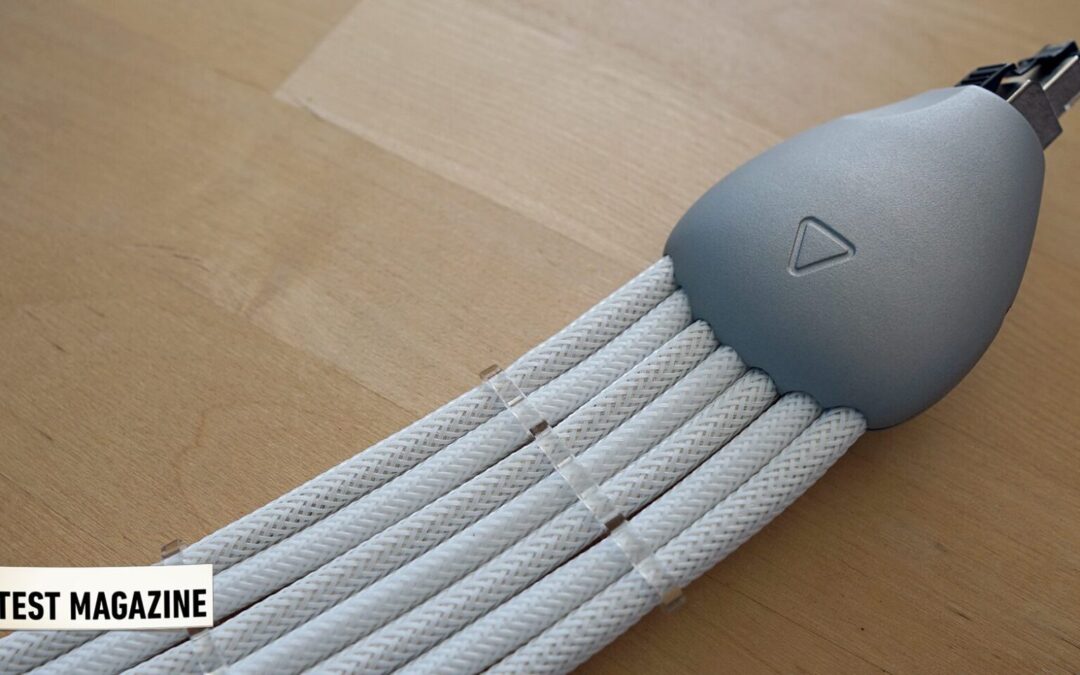
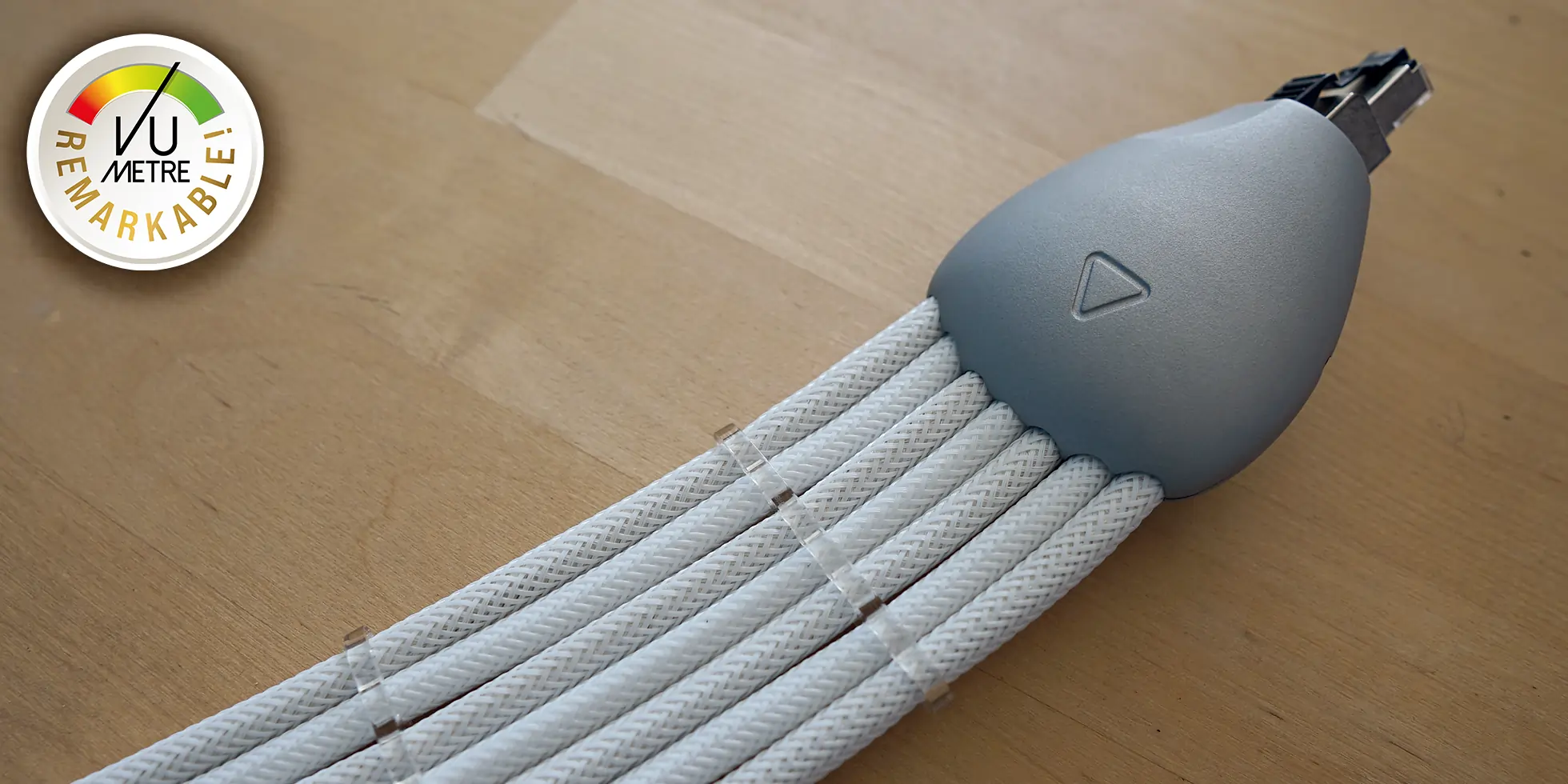
If you think that an Ethernet cable is just a conductor of «0»s and «1»s, you may bemistaken. In that case, the monumental Reiki Jundostream Reference cable will show you that it can literallytranscend your listening experience.
Network playback is far from having revealed all its secrets to us. It is essential for us to understand how far we are sometimes from the goal in terms of optimizing this very special protocol. For many years now, we have been delving deep into the heart of this mysterious discipline, and we have learned a great deal. A new chapter in this learning process has been written today thanks to a simple cable. Well, simple… not so sure.
Just by looking at it, the JundoStream Reference displays all its heart of this mysterious discipline, and we have learned a great deal. A new chapter in this learning process has been written today thanks to a simple cable. Well, simple… not so sure.
Just by looking at it, the JundoStream Reference displays all its the nature of Ethernet connections, the Reiki Audio team decided to embark on an in-depth study to understand and test the performance limits of network cables. After studying every aspect of the design, they concluded that the physical structure of network cables, whether Cat-compliant, audiophile or both, essentially limits audio performance.
All these cables are variations on the same basic architecture, i.e. four twisted pairs covered with a metal foil, adjacent to each other, with a braided shield around the four pairs that is connected to ground at both plugs. This architecture, combined with high twist rates, allows Cat 8 cables to reliably carry much more data than Cat 7, Cat 6, etc. cables because it is effective at rejecting radio frequency interference while minimizing crosstalk between pairs.
But they also achieve this by using variable twist rates to ensure that the conductors in adjacent pairs do not have regular contact points along their entire length. Only one pair can have the highest twist rate of the four, and that pair is the most effective at rejecting radio frequency interference. If we could use four twisted pairs with the same twist rate as the highest, noise rejection would be improved… but of course, the risk of crosstalk would increase…
The solution, of course, is to physically separate the twisted pairs so that they can all share the same twist rate as the highest (for noise rejection), but without the risk of crosstalk. To get as close as possible to this theoretical ideal, JundoStream consists of four twisted pairs with a twist rate higher than the Cat 8 standard. They are arranged in parallel and interspersed with three air-filled silicone spacer tubes to maintain a constant distance between the pairs.
But all this is theory. And for Reiki Audio, there was no way to verify it ‘in real life’ beyond assembling a few rudimentary prototypes. To develop the JundoStream iteratively, Reiki Audio had no choice but to take the plunge and hope that the result would deliver in practice what it promised in theory.
This meant investing a lot of time and money in the design, specification and commissioning of their own twisted pairs, in the design and commissioning of their own non-conductive acrylic cable ‘combs’ to maintain a constant distance between the pairs, and in the considerable technical challenge of designing and manufacturing a 7-in-1 plug terminating in an RJ45 connector.
Nigel Bell could not be certain, before hearing his first fully assembled cable, that all the theoretical advantages would translate into a cable that sounded even better than his RakuStream+. And yet it did! Like all Reiki Audio cables, the JundoStream Reference is assembled, tested and packaged in the brand’s workshops in central England. The JundoStream manufacturing process relies on skilled people rather than machines and is as laborious as you can imagine. It is a labour of love, and the sonic results speak for themselves.
JundoStream cables are available in white and black; delivery times are typically 1-2 weeks. Standard lengths for both are 1m, 1.5m and 2m; if you require a custom length, you will need to ask your dealer.
THE SOUND OF THE REIKI JUNDOSTREAM REFERENCE
Compared to a very good Ethernet cable that we know well, and which is already quite expensive, the JundoStream Reference immediately stood out for its impressive silence. We have all experienced significant differences in streaming performance on the same system with different cables: that feeling of going from mediocre to excellent. With the JundoStream Reference, the difference is similar, and permanent.
A good protocol becomes excellent. The signal-to-noise ratio is of course improved, offering a much better level of dynamic contrast, but that’s not all. This feeling of «full» silence is a decisive gain, as is the increase in bandwidth both upwards and downwards. Harmonic richness is the big winner with the arrival of the JundoStream Reference in the system. Voices become velvety and extremely natural in tone. Acoustic instruments also stand out with beautiful tension and much more controlled velocity in their melodic playing. The result is a more human, less mechanical listening experience. As for the image, it seems «unshackled», freed from somewhat stifling physical barriers. The sensation of entering a fully holographic universe is quite exhilarating.
OUR CONCLUSION
The JundoStream Reference is a surprising complement to the SuperSwitch and its separate power supply, which we tested in our previous issue (VUmètre #61). Together, they form a mature ecosystem with unusual transparency in terms of Ethernet connection processing. This is an essential combination for any serious network playback enthusiast, significantly enhancing the performance of your system.
Priority to hearing is the motto of Japanese designer of high-end audiophile equipment SoulNote. Prioritising ‘feel’ and musicality over raw, indisputable but cold figures has always been its guiding principle. Its SoulNote A1 integrated amplifier, which caught our attention, is no exception to this rule and benefits from the years of research and development that SoulNote has devoted to developing systems capable of fully exploiting and expressing the liveliness of a sound source.
This quest for naturalness and clarity in sound reproduction requires specific technological choices. Thus, although the A1 has purely analogue power stages operating in class AB, it has no negative feedback loops.
Similarly, SoulNote has equipped the A1 with a direct-coupled output circuit, meaning there are no capacitors. This avoids any risk of colouration or degradation of the audio signal.
Furthermore, although the A1 only boasts a relatively modest power output of 2 x 80 W into 8 ohms, its power stages are oversized compared to those found in many other amplifiers. They use dual push-pull power transistors from Sanken, 2SC2837Y for NPN and 2SA1186Y for PNP.
A quick look at the technical specifications of these components shows that each transistor is capable of handling currents of up to 10 A at a voltage of 150 V.
The A-1 is therefore capable of handling particularly high currents and thus taming even the most rebellious speakers.
In addition, SoulNote has given the A1 an unusually wide bandwidth. It ranges from 3 Hz to 300 kHz. This is quite a feat, since the vast majority of sound reproduction equipment, especially when it comes to power management, peaks at 100 kHz at best.
The A1 is therefore able to reproduce the harmonics of the most extreme high frequencies with ease, provided you have a source capable of delivering them.
But while managing high currents is one thing, the power supply to the power stages must also be capable of delivering them. This is an area where the series resistance of the filter capacitors plays an essential role. To get around this problem, SoulNote came up with the idea of using two groups of eight capacitors, each wired in parallel, instead of two single large capacitors.
This solution reduces their series resistance by a factor of eight, effectively providing particularly high current peaks.
It should be noted that the primary power source is provided by an imposing 350 VA toroidal transformer, which is also very generously calibrated. Another important point is that the A1’s wiring is also very carefully designed.
With a signal path reduced to the bare minimum, it is designed to guarantee the amplifier a particularly low signal-to-noise ratio. Similarly, the number of connectors that the signal has to pass through has also been reduced to the bare minimum.
In terms of connectivity, the A1 again offers the essentials without going overboard. In order to take full advantage of the finesse of higher quality sources, it has a balanced line-level input on an XLR connector, accompanied by three unbalanced inputs on RCA connectors to accommodate the most common sources.
Finally, the A1’s cabinet is also soberly efficient. A significant part of its design was devoted to studying its rigidity and managing unwanted vibrations. The use of decoupling spikes proved indispensable.
One of these, among others, is located directly under the large power transformer in order to dissipate any vibrations it may generate as quickly as possible.
Similarly, the A1’s imposing solid aluminium front panel contributes significantly to the overall rigidity of its cabinet.
INSTALLING THE SOUL NOTE A1
If you touch it, you’ll get hurt, as the manual for this integrated amplifier warns. The A1 rests on three particularly sharp decoupling cones. So be sure to install it on a rigid support, but with counter-spikes. The second precaution to take is to pay attention to the mains phase. Depending on the case, the difference can be significant. The A1 is capable of powering a wide range of speakers. The list of compatible devices is therefore not restrictive.
THE SOUND OF THE SOUL NOTE A1
A1 is an interesting name. Like its British namesake, the Soul Note is a real charmer with an endearing personality. You immediately feel at ease with it. And it is comfortable with many speakers. Coming from Japan and distributed in France by the same expert as its compatriot SPEC, it takes the opposite approach with the same talent.
While SPEC focuses on purity and minerality, Soul Note offers a dense and full-bodied vision of sound reproduction with a superbly measured warmth that never overdoes it.
Its credo is balance, which it handles with the mastery of a tightrope walker. You only have to see the care with which it paints a panorama, the passion with which it builds a melodic gradation. Some would say it is romantic.
We don’t dispute this description, we can understand it, but we might find it somewhat restrictive. For our part, we find him surprisingly realistic and rooted in his time. He knows how to add depth when necessary, but also how to be perfectly subtle when restraint is required. We were amazed by the maturity he displays at this price point.
Whether it’s the structure of the holographic reproduction, the way it creates an impeccable hierarchy in the playback of different melodic lines, or its ability to remain as neutral as possible when it comes to favouring timbres, the A1 remains pragmatic without ostentation, but with a cheerful and assertive character that gives it above-average appeal.
OUR CONCLUSION
This is a very interesting integrated amplifier from Japan. Its build quality and original design make it a very mature product. The youngest member of a range that is confidently rising to the top, the A1 is an amplifier that can be easily paired with sources and speakers from various sources.
Versatile, it will adapt very easily to deliver the essence of the music. Hyper-musical and always very comfortable, the A1 is a delight at every moment.
Author: Estève Fabry and Laurent Thorin
TECHNICAL SHEET: SOULNOTE A1
Origin: Japan
Price: €3,600
Dimensions: 430 x 109 x 418 mm
Weight: 10 kg
Power output: 2 x 80 W into 8 ohms, 2 x 120 W into 4 ohms
A little black box, admittedly very heavy, priced at over €6,000 can be a real eye-opener for anyone who loves sound reproduction. However, after several months of intensive and varied testing, we can testify that British manufacturer Chord Co has not gone over to the dark side… On the contrary, with the Chord Co PowerARAY Professional, it delivers the quintessence of its ARAY philosophy. And with this atypical product, we are not at the end of our surprises…
We already had the opportunity to talk about ARAY’s achievements in issue 41. The British manufacturer’s little plugs have quickly become an essential part of our arsenal in the fight against noise pollution. It has to be said that they are highly effective and still very reasonably priced. We’ve got used to what they do, and don’t question their use in the slightest. However, when Chord Co sent us an enigmatic package at the very end of last year, we were greatly intrigued. The word ‘ARAY’ was indeed present on the bodywork, but we’d clearly changed realms in terms of size and, above all, price…
So what about this mysterious black box? By its designer’s own admission, the PowerARAY Professional is a highly effective device designed to target high-frequency noise. It uses the technology developed for the now-famous SuperARAY and GroundARAY products. Like the SuperARAY and GroundARAY, it works in parallel with the power supply and at no point comes between your power supply and your equipment. This allows PowerARAY Professional to deliver consistent results across the widest range of systems and power supplies.
PowerARAY Professional consumes no electricity. It introduces a potential gradient that transforms selected high-frequency noise into heat. Internal ground, power and neutral are individually connected to dedicated SuperARAY conductors and MainsARAY noise reduction devices, providing a low impedance path to ground and lowering the noise floor of your system. All internal components are held in place by a machined matrix and are encapsulated in damping resin.
The PowerARAY Professional is available in three versions with SignatureX, SarumT or ChordMusic power cables already in the manufacturer’s catalogue. According to the manufacturer, performance goes up a notch every time you opt for a superior cable model, as it plays an important role in the device. The reason for this lies in the shielding and insulation materials used in the three different cables. Of course, all international power connectors are available.
The set up
For optimum performance, slightly loosen the screws that hold the ultra-light legs in place. These are decoupled by a suspension ring located between them and the chassis.
The PowerARAY Professional should be connected as close as possible to the power socket supplying your audio system. If you are using a double wall socket, it is advisable to connect it to the socket closest to the one supplying your equipment. If you only have a single wall socket, it can be connected directly to the power strip.
If this power strip is a Chord Company PowerHAUS M6, use the socket furthest away from the power input. For a Chord Company PowerHAUS S6, use the socket closest to the power input. If a power strip from another brand is used, the manufacturer recommends connecting it to the socket closest to the power input. Finally, keep the PowerARAY Professional away from cables and other components.
The PowerARAY Professional works immediately, but we noticed a plateau at around half an hour. What’s more, it seems to ‘settle’ over time, unless we’re the ones getting used to it!
The sound of the CHORD CO PowerARAY Professional
It’s really not easy to make a judgement on the action of an element of the audio system that plays absolutely no part in the signal path. In fact, this little black box is neither a source, nor an amplifier, nor any kind of electro-acoustic link. It’s a kind of satellite that connects to your sound reproduction system, without actually entering it. You could call it a catalyst. A strange name, you might say, and one that might initially arouse mistrust or even suspicion.
And yet, in many cases, this device makes a significant contribution to the quality of your hi-fi installation. Like a number of other optimisation devices, the PowerARAY Professional does not actually act on the signal, but on its environment. The performance of an installation is intimately linked to the tranquillity of its environment. It is impossible to consider the system without considering the listening room and the atmosphere that reigns there. And that’s really where the PowerARAY Professional makes all the difference.
When you plug it in, you immediately notice an extra smoothness. But what you mistake for softness is something else. It’s above all an absence of hardness, of any hardness. This device is a kind of HF cleaner. By tackling hyper-frequency pollution, which the human ear does not perceive but which has extremely sensitive repercussions on the rest of the spectrum, PowerARAY Professional considerably facilitates the listener’s perception of the sound reproduced. It enhances and facilitates your sound and music experience.
Above all, its range of action affects all the reproduction criteria of your installation. Firstly, there is an improvement in the perception of the spectral range, with timbres that are much more natural, varied and above all subtle. This is particularly noticeable on vocals, and especially on sibilants, which are less accentuated and much more chiselled. It’s also easy to notice on an acoustic guitar: the strings stand out more and the metallic side is very well rendered. The same goes for piano and drums.
Generally speaking, the strike is more precise and less flashy. In terms of dynamic behaviour, the PowerARAY Professional improves the ‘progressive’ aspect of acceleration. It pushes hard, but with a much more palpable continuum. It seems to reinforce the analogue side of the reproduction.
Finally, in terms of spatial placement, there is an increase in precision, which is above all linked to the absence of three-dimensional ‘fog’. Elements are much better distributed in space, and the punctuality of sources has rarely been so good. And for fans of airy listening, there’s an extremely pleasant sensation here of a volume of air well distributed around each musician. Generally speaking, we’ve left the realm of the spectacular and entered the era of realism. The system becomes less of a ‘performer’ and more of a ‘messenger’.
After our experiments on several installations, we can’t say whether the PowerARAY Professional always makes a difference to the listening experience. What we can say, however, is that the more ambitious the system, the greater the benefit. The wider the bandwidth of the system, the more noticeable the effect of the Chord Co PowerARAY Professional. In our opinion, this product really comes into its own on high-end systems capable of delivering high resolution.
Our conclusion
Don’t let its size stop you, because the Chord Co PowerARAY Professional is a great product that can enhance a very fine hi-fi system. Of course, it’s expensive. But ask yourself this simple question: in the context of an already well-optimised installation, what equivalent investment will give you as much gain? Changing the cables will change the colour of the sound but will not solve the problem of the electromagnetic pollution cloud.
PowerARAY Professional attacks the root of the problem. No other link does what it does. It’s unique in its field, and that’s why we need it. The only way to convince yourself of the benefits of this little black box is to try it out. And to get over the idea that sometimes it’s necessary to buy a link that doesn’t affect the sound of your installation but that can considerably improve it.
Two years after the excellent DAC 1, Swiss manufacturer Niedal Audio Lab is offering a new version of its flagship converter with the Merason Reuss. Far from following the latest trends, this unconventional device adopts principles that have long proven their worth in delivering timeless musicality.
The Reuss is a brand new model that replaces the old DAC 1 in the Swiss manufacturer’s range. As for the DAC 1 mk2, its performance and price have increased significantly. The Merason portfolio therefore includes three digital-to-analogue converters: the high-end DAC 1 mk2, the entry-level Frérot and, perfectly positioned between the two, the Reuss.
The Merason brand is managed by the independent Swiss company Niedal Audio Lab, which is headquartered in Worb and manufactures in Burgdorf. Owner and CEO Daniel Frauchiger has put his passion, commitment and dedication to music at the service of the company.
He is also the brand’s best ambassador and declares his enthusiasm for the Reuss: ‘It offers purist quality of the highest standard at an impressive price-performance ratio. It’s a must for all audiophiles.’
The name of the new Reuss is derived from a Swiss river and emphasises the fluidity of the sound of Merason devices! The aluminium casing is reminiscent of the aesthetics of the old DAC 1 with a considerably refined profile.
It is available in black and silver. The thick front panel is hand-polished and features only two buttons and a myriad of indicator lights. Everything is concentrated on the rear panel, which contains the various inputs and outputs. Digital streams are accepted on an RCA input, a Toslink input, an AES/EBU input and a USB Audio Class 2.0 input.
Its analogue outputs are standard unbalanced on RCA or balanced on XLR. When you lift the cover of the device, you can’t help but be struck by the space taken up by the power supply. The different sections are linear, with three transformers supplying power to the analogue and digital circuits. The switching power supply required for standby mode is completely deactivated during operation in order to rule out any possible interference.
Manufactured to the highest quality standards, the Reuss uses a six-layer printed circuit board to prevent interference. All components that are susceptible to heat are cooled directly by the chassis, ensuring thermal stability.
The components that influence the sound have been measured and selected on the basis of numerous listening tests.
This is the case for the conversion chips, a particularly well-known and proven Burr Brown PCM1794A model. Merason uses one per channel. This guarantees the highest possible dynamic range. As with all Merason devices, the Reuss’s circuit topology is completely symmetrical.
INSTALLING THE MERASON REUSS
Thanks to its slim case, the Reuss fits anywhere between two shelves, but that’s no reason not to optimise its placement. This basic-looking source is a valuable piece of equipment that deserves the best possible care. So take care with the connections, whether for modulation or the mains.
THE SOUND OF THE MERASON REUSS
With just three letters missing, the name of this product is “success”.
It’s a sign! Moreover, we confirm our excellent prognosis for Merason DACs. We really liked the DAC 1 tested in our November/December 2021 issue (VUmètre No. 38). Bucking the trend of current machines, which tend to overemphasise resolution power, these Swiss converters stand out with a smooth sound that speaks to the heart before filling the ears.
The Reuss is an even more accomplished DAC 1, which first and foremost catches our attention with its truly magnificent soundstage. It is successful in every respect, not by falling into the trap of grandiosity, but through its astonishing realism. From the very first minutes of listening, you can perceive an extremely well-constructed three-dimensional structure.
The different sound planes are perfectly articulated. What’s more, there is no confusion between the main components of the soundstage and the background. Here, we are truly in a privileged position in the centre of the orchestra. We can enjoy a completely credible panorama that changes according to the sound recordings.
Never repetitive, the Reuss takes a back seat to the message and does not play its own score. Its reproduction is very embodied, with beautifully materialised performers placed on an airy and clear chessboard. The timbres are warm without being overemphatic, and the dominant sensation is one of great naturalness. The paradox of this machine is that it delights us by plunging us back into a listening experience that is remarkably reminiscent of that of a turntable, based on digital files.
OUR CONCLUSION
This Swiss manufacturer’s output is rather limited, but always extremely relevant. We were delighted with every one of their machines that we tested. Merason offers sources that have soul, a completely unique vision of digital-to-analogue conversion that contrasts with the illusory quest for the highest resolution. With the Reuss, as with the DAC 1 before it, the emphasis is on superb holographic reproduction.
The Reuss is a timeless DAC that will still be relevant in ten years’ time, simply because it has abandoned the race for pure performance to focus on the listener’s enjoyment and the realism of the sound. In a field where the arms race is a constant, this is a breath of fresh air.