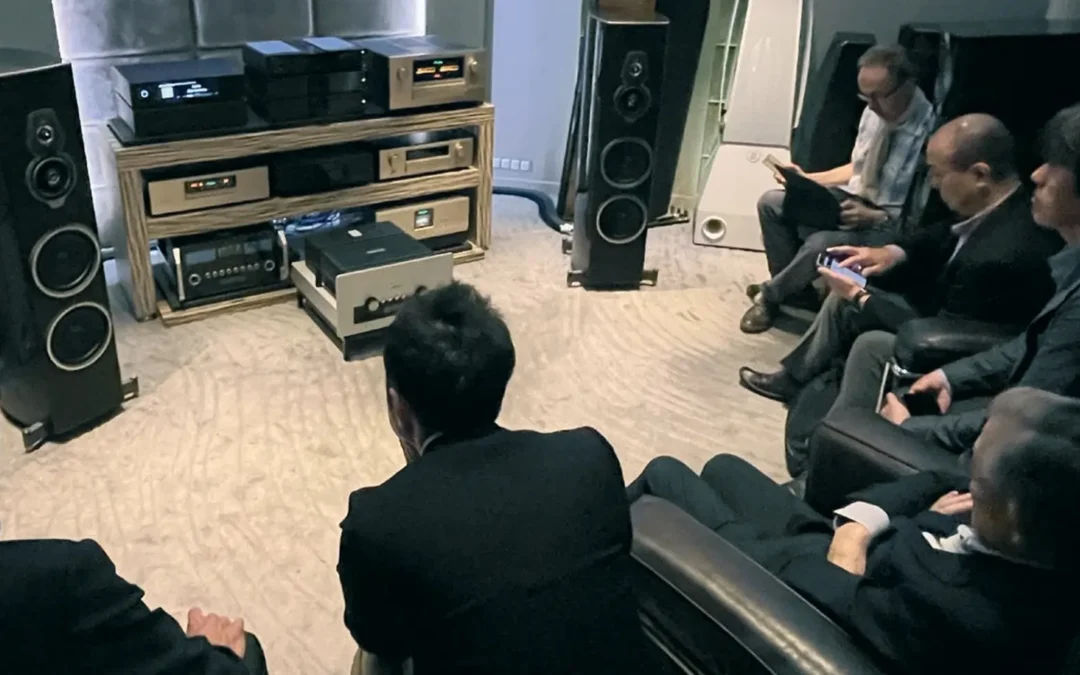
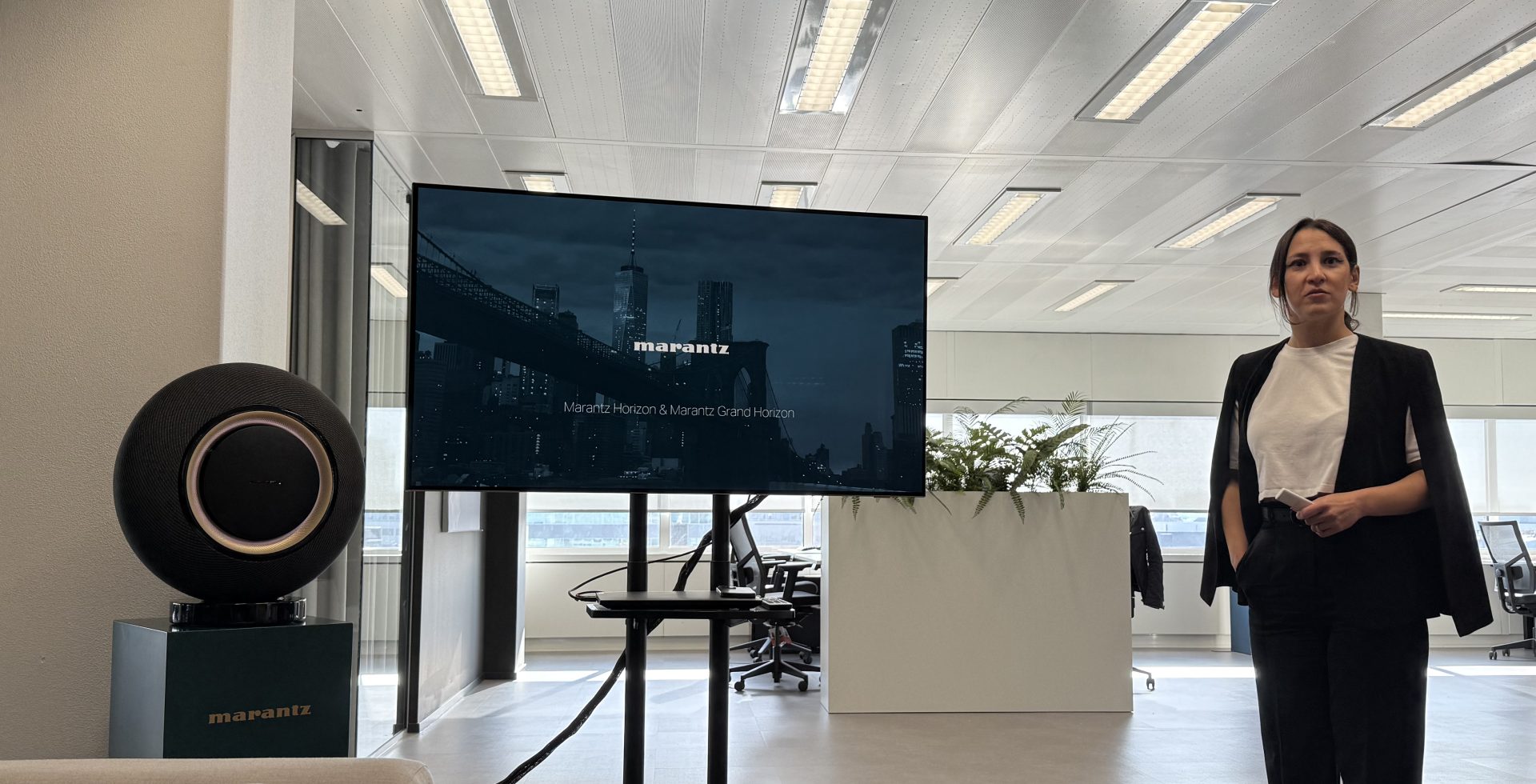
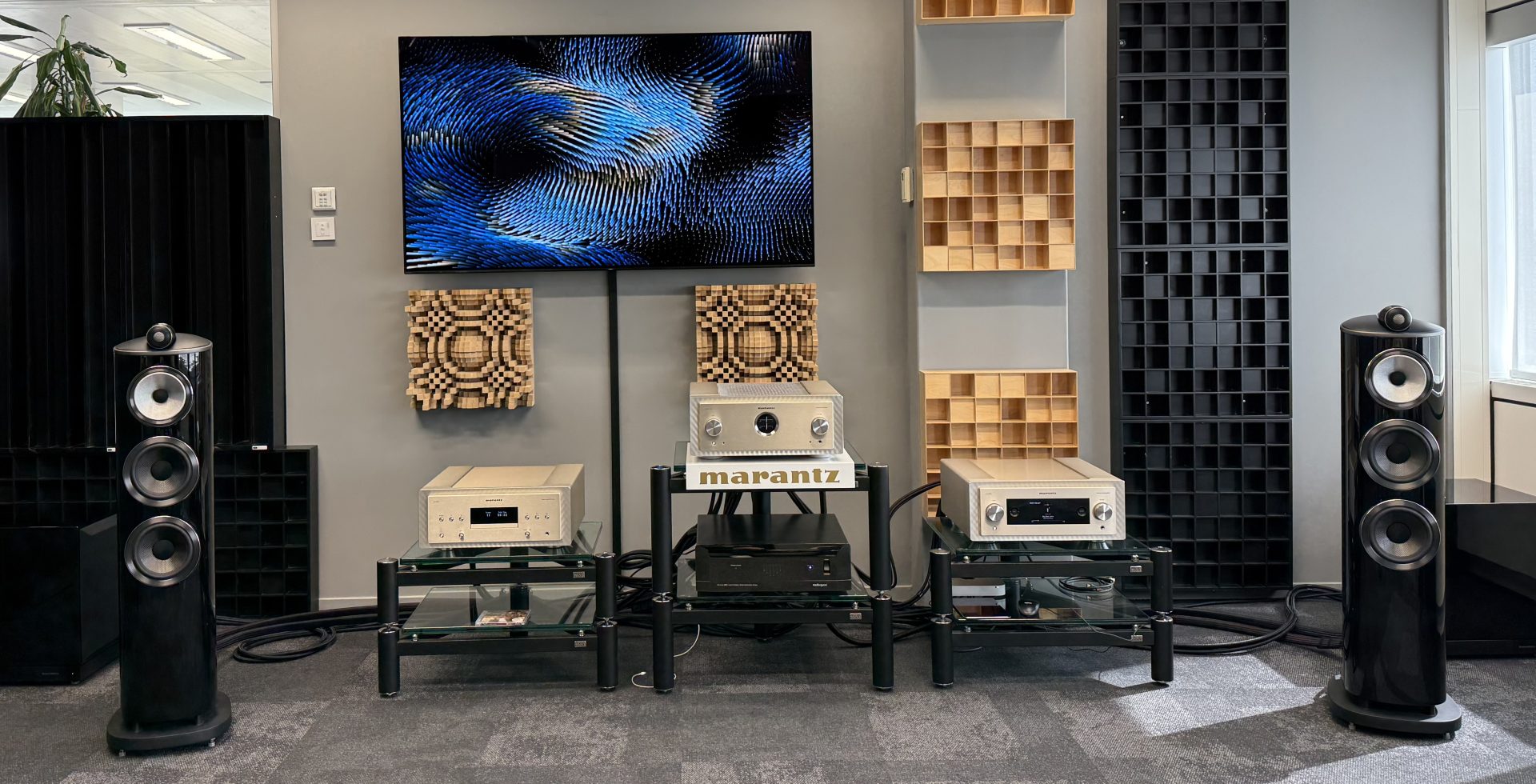
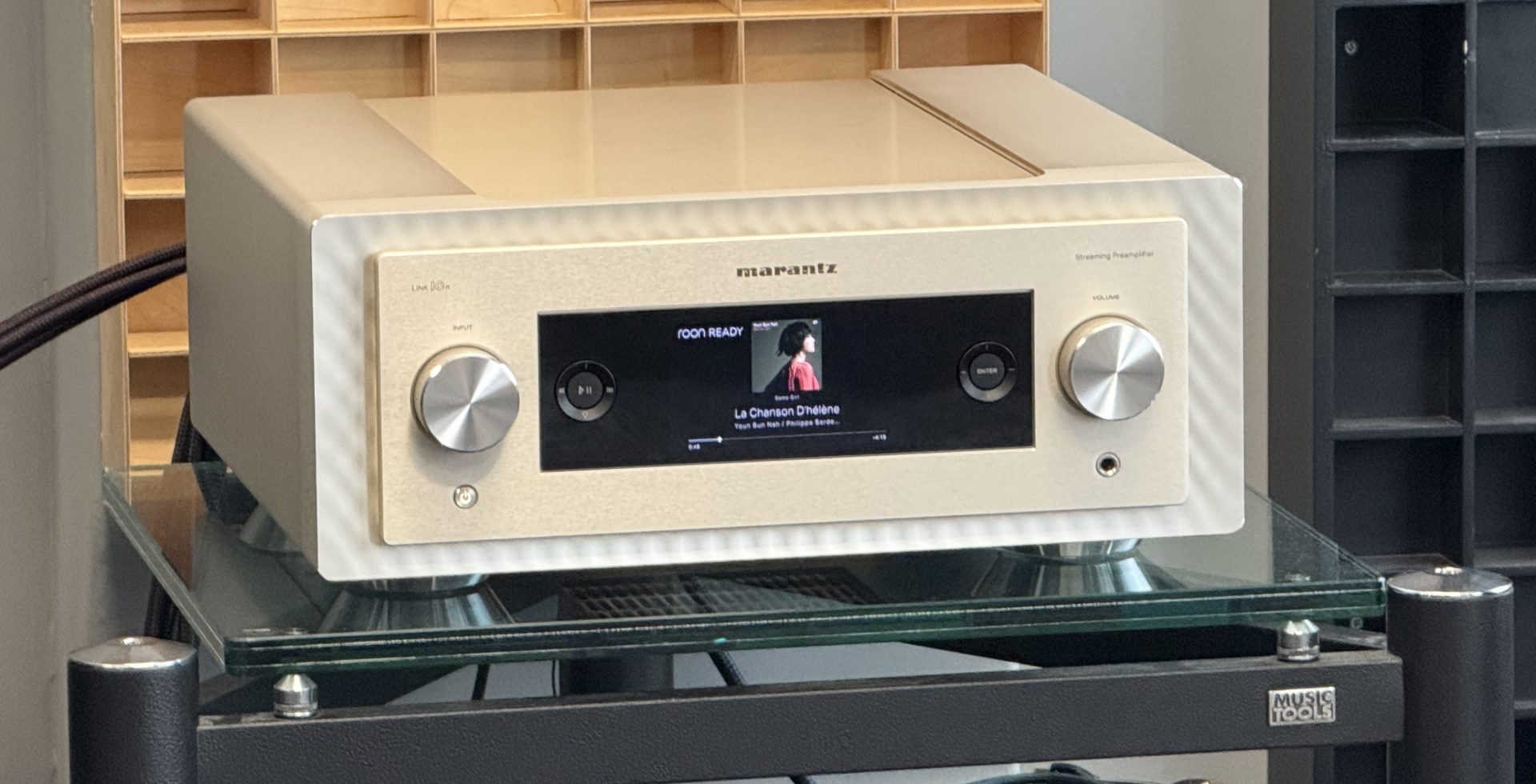
After attending the High End trade show in Munich, Accuphase’s management team headed for Paris, where they visited Music Hall, one of the most important resellers for the company in France. On this occasion, we had the privilege of meeting one of the brand’s founders, Jim S. Saito, surrounded by his team of engineers and sales staff.
Could you briefly introduce yourself to our readers?
Jim Saito: I’m one of the founders of Accuphase. I have been with the company since the very beginning. Several decades ago, there was a boom in hi-fi and many manufacturers appeared. Some of the big names remained, like Sony or Marantz, but these brands needed to sell a lot for a lot of people. For our part, we felt the need to manufacture very high-end products. So we created Kensonic and then Accuphase, and fifty years on, our philosophy is still the same.
Mark Suzuki: I’m the President of Accuphase, that I joined in 1981. As soon as I arrived, I started rethinking many products, and then designed our first CD player and converter, the DP-801 and DC-801.
Takaya Inokuma: Director of Engineering, I’m committed to the idea that we must continue to focus our production on quality and durability. We make sure that each of our products lasts as long as possible, and that if one of them breaks down, it’s as easy as possible to repair.
Tatsuki Tozuka: I’m in charge of international marketing, with a particular focus on the European market. I worked previously for Esoteric and joined Accuphase in 2009. I really like the way the company works, and I particularly appreciate the European market
Kohei Nishigawa: I’m also in charge of international marketing, but I’m more focused on the Asian and American markets. It’s very interesting for me to come to Europe to see the differences with other markets.
Let’s start with this point. How do you feel the European market differs from other markets?
T. T.: With its musical culture and hi-fi history, the European market is very stable. Europe is the cradle of classical music, and most people know very early what music is and how to listen to it. It is a very mature market, in every sense of the word.
K. N.: The Asian market is much younger, but it is growing very fast and it is much harder to keep up with. It is both very active, and at the same time sometimes based on fads that only last a few years or even a few months.
So, in Acccuphase’s wide range of amplifiers and sources, are you thinking of certain markets in particular to develop some of your products?
J. S.: We can define a global typicity in sound according to certain origins: there is an American sound, a French sound or a Japanese sound. But from that point on, we manufacture all products for all markets, the differences being then sometimes visible in the attractiveness of one reference rather than another in a given market. For example, France and Europe in general are very fond of integrated amplifiers, while other parts of the world, when they think of Accuphase, think of separate components.
Of course, you come to mind whenever the big high-fidelity brands are mentioned. How do you think about always maintaining this level for over 50 years?
T. S.: Our philosophy is always to challenge and develop our technologies to stay at the top of our game, and always improve our products. The main focus is on quality, then we think about developments, new product types or introducing certain innovations, but above all, we want to maintain quality. If a technology is very good for sound, but too unreliable to be sure that our products can cope with it for decades, we won’t integrate it.
M. S.: Not only are we careful to maintain the quality of our products at a very high level, but also that of the company and its employees.
You mentioned markets that are growing very fast, even though Accuphase has maintained almost constant production for many years. Do you intend to maintain this strategy in the future?
J. S.: We’re still manufacturing around 5,000 products a year, and the idea is to remain stable, with the main objective already given earlier: to maintain our level of quality. There would be a major risk in recruiting on a massive scale, training a lot of people and using more lines to ramp up production. Our primary objective is customer satisfaction. That’s why we are not thinking of expanding production, to ensure that our products remain reliable.
When you introduced yourself, you mentioned the ease with which you can modify parts if there is a problem. Is this also part of an ecological approach?
T. I.: The first approach was only to the quality of the products, simply to ensure that they never break down. But if they never break down, it avoids having to change and transport parts, so it becomes kind of ecological.
Today, there is a more in-depth reflection on ecology, particularly in Europe, which is becoming increasingly strict and should make us rethink the consumption of our class A amplifiers. We are thinking about new solutions, but also about maintaining class A until we find other techniques to achieve the same sound quality. Admittedly, these devices consume more power than class AB or class D amplifiers, but an amplifier remains a pleasure product that is only switched on at certain times to enjoy the music.
Analyzing your catalog, you have just released a new preamplifier called C-2300, which replaces not only the C-2150, but also the C-2450. You’ve also discontinued the DC-37 stand-alone DAC, without replacing it with an expected DC-47. Can you describe your product strategy in more detail?
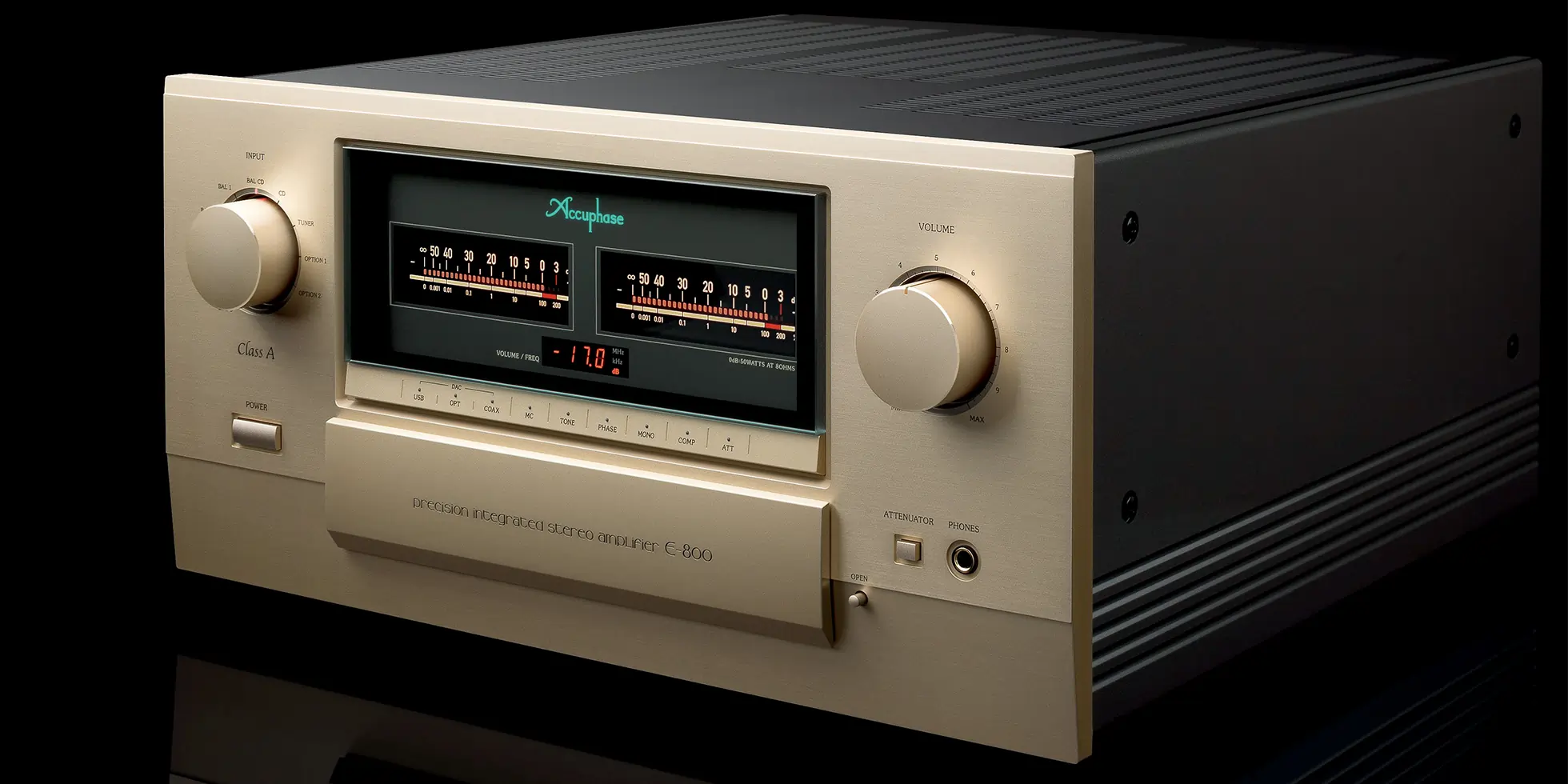
M. S.: We have six models of integrated amplifiers, including two in class A. With the recent move upmarket to the E-800 and E-5000, these integrated amplifiers are partly replacing the separate entry-level units, so we are reducing the number of models while also moving upmarket. Today, an E-800 goes further than a C-2150 preamplifier and is more powerful than an A-48 power amplifier, in addition to being in a single box, which avoids cables between devices and also limits production costs, thus improving the quality-musicality-price ratio.
As for the DAC, we had fewer and fewer requests, so after some thought, we decided not to renew the DC-37. Our DACs can now be found on DC-60 cards and in our CD and SACD players. This is what customers turn to when they want an Accuphase digital source.
This must be a recurring question, but it is becoming all the more burning because at Munich, we saw Luxman present a N-07T network transport. Do you think you will soon be entering this market, where you have been awaited for years?
T. I.: For the moment, we are not doing streamers, because things have evolved enormously in this field over the last few years, and still depend too much on chips and software that change too quickly. In our opinion, there is a latent instability in producing a streamer, as much for the product as for the control app.
Accuphase certainly has to keep an eye on this world, but if you bought our first CD player, you can still use it today and play your CDs on it, so we wouldn’t want to go back on our philosophy by offering a network player that would be obsolete in a few years’ time, or could no longer be controlled by new computers and smartphones. Nobody knows today what will still be available in five years’ time, so for the time being, we prefer that our customers acquire a network transport elsewhere if they wish, and integrate it directly on our DAC cards or on the digital inputs of our CD-SACD players.
In addition to sources and amplifiers, Accuphase manufactures sector conditioners and voice equalizers. How important is it for you to purify the entire musical environment?
T. I.: Over 20 years ago, we created our first stand-alone power supply. We are specialized in hi-fi, but we remain an electronics company. Normally, conditioners are made by cable companies, but we were not always convinced by the products, so we decided to launch our own, in order to control the whole environment around our products. Audiophiles know that the overall environment of a system is very important, so we have to offer them in-house possibilities to make music quality as reliable as possible.
How do you see the future of the hi-fi market worldwide, and in particular its analog side, where you have phono preamplifiers and a cartridge, but no vinyl turntable?
M. S.: Today, streaming is growing very fast, but if you want to enjoy your music to the full and be sure of continuing to do so in a few years’ time, we think you need to use more solid media, such as CDs and vinyl. That’s why we are continuing to make devices to meet these needs, in the belief that they won’t disappear anytime soon.
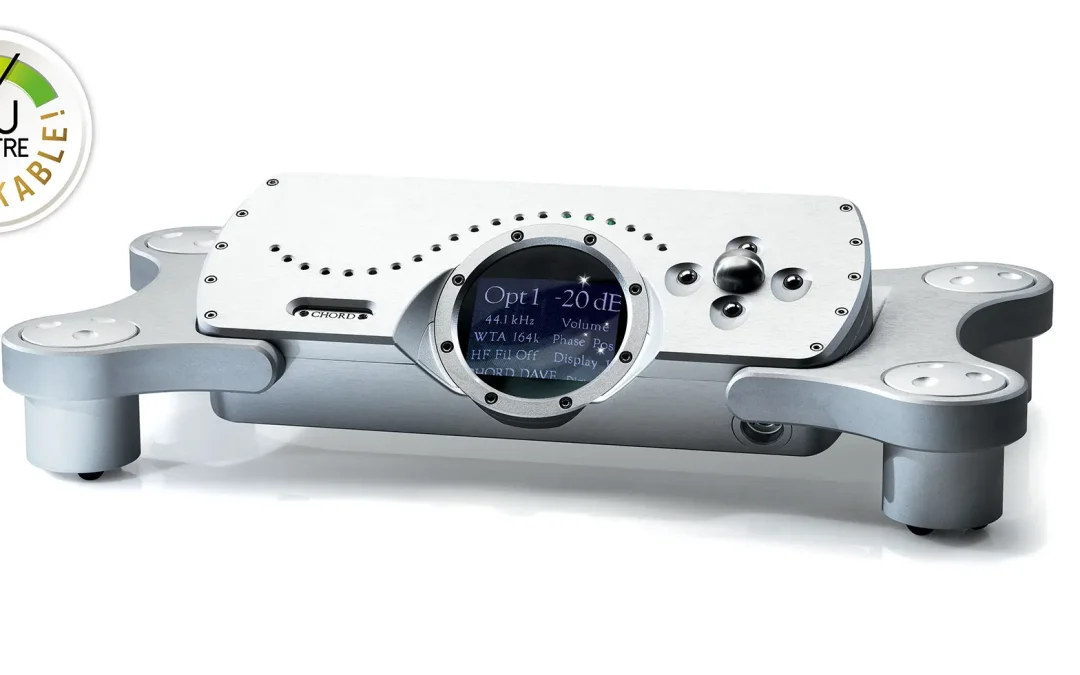
The best DAC from Chord Electronics, the Chord Dave tops the range with a look that’s still very personal, but an indisputably remarkable musical result, among the finest and most precise available. Thanks to its all-FPGA structure and extremely high-performance noise filters, it extends the soundstage as far as possible and delivers quality detail down to the tiniest levels.
Today, in almost all areas and product ranges of high-fidelity, Chord remains a manufacturer of top-of-the-range electronics whose creator John Franks’ ultimate desire is the most precise possible reproduction of the sound signal. Delegated to one engineer in particular, the DAC department has found in Rob Watts the initiator of great successes such as the Poly, the Hugo and the Mojo, although the man still has a soft spot for his most accomplished product: the Dave. An acronym for ‘Digital to Analogue Veritas in Extremis’, this very top-of-the-range DAC does not deviate from the design devolved to the entire Choral category, which still includes four devices today, since the recent disappearance of the BLU MKII CD transport. In addition to a power amplifier called Étude and a preamplifier called Prima, both of which are dominated by products from the Full Size (including the Pre 2 and Ultima 5 tested in issue no. 41) and Reference lines, a Symphonic phono preamplifier is integrated among the sources with the Dave, a digital-to-analogue converter to which digital preamplifier and headphone amp functions are added.
The Choral Stand fits all the products in the range, allowing them to be positioned vertically or stacked, and, as always at Chord, provides extra stability and improved vibratory effects, thanks to its CNC-machined construction from solid, machined, aircraft-grade aluminium, combined with small rubber elements. Available in polished nickel, matt black or silver, the feet match the converter’s choice of black or silver.
With computers ten times faster than those of the Hugo, the Dave is looking for the ultimate sound with the help of its Xilink Spartan-6 core, which enables programming of an FPGA (field-programmable gate array) with the capacity to process more than a million lines of code, at a speed much faster than that of most converter chips. Its 164,000-point WTA filtering is capable of up to 256 femtoseconds and features 166 proven core DSPs for parallel processing. The noise filter recovers high-resolution data up to 2,048 femtoseconds and converts it to 5 bits, then reprocesses it in a 20-element FPGA, which alone is more powerful than the entire network of the brand’s smallest Hugo 2 DAC. This circuit provides an extremely low noise level for the analogue output stage, as well as very high high-frequency linearity, which drastically limits distortion. A single feedback loop, implemented by two resistors and two polypropylene capacitors, provides the best possible integration of the overall signal path, while a very low-noise power supply plan delivers the purest possible current to the other components.
With its solid, machined, aircraft-grade aluminium chassis and Choral Stand feet, the Dave can be used both as a digital preamplifier and as a pure converter. All modifications are visible through the LCD display recessed inside a porthole in the centre of the unit.
On the right, in addition to a large stainless steel controller for volume control, four cross-shaped ball buttons can be gently pressed to navigate the menu and select the various parameters and inputs on offer. An HF filter can be activated, as can a number of colours on the screen and, above all, a number of sound modes, allowing you to adapt the music to your personal preferences. All these operations are also possible from the remote control, which is very simple, with four cross-shaped buttons in addition to the Menu, Mute and Sleep buttons.
At the rear, a number of connections allow the Chord to be integrated, leaving one surprise: the engineers preferred BNC coaxial to RCA coaxial. This means that you need to use an adaptor for the four inputs of this type if you only have conventional coaxial cables, which are by far the most widespread among hi-fi cable manufacturers, even though professionals and certain brands (Naim, Linn) have long preferred and sometimes still prefer BNC connections. An AES/EBU XLR input, another USB and two Toslink optical inputs are added, as well as four digital outputs, also on BNC sockets. On the far right, the IEC 10A connection is topped by a 0-1 switch to completely deactivate the DAC, which otherwise remains hot unless put to standby using the remote control.
A 6.35 headphone socket on the front further enhances the Dave’s versatility, making it almost completely self-sufficient for desktop listening, where all you have to do is plug in a computer via USB and insert your headphones to enjoy music from the highest spheres.
The set up
Provided you have a BNC cable or an adaptor, or a USB or AES cable, connecting the Dave is then child’s play, especially as it is recommended not to bring hi-fi sector cables that are too bright, but rather simpler elements that avoid any unverified additions to the curves long studied by Rob Watts. In its price range of €10,990, this converter plays in the big league and needs to be associated with a very high-end environment to express itself fully.
We tested it as a DAC and preamp on Accuphase E-600 amplifiers in situ, then cross-checked our listening at Music Hall in Paris on the enormous E-800, while as sources we used a MacBook on Audirvana Studio via USB as well as SACD and network transports from different ranges, including the Aurender N30SA at Music Hall. Two orthoplanar headphones were also used for testing.
The sound of the CHORD Dave
What can you say about a product like this when Chord Electronics talks on its website about the best DAC in the world, a somewhat presumptuous notion when you’ve heard the excellent Nagra, Esoteric, Linn or dCS converters, all based on FPGA architecture, but all still much more expensive than the Dave. If the Dave has no comparable in its brand, either in the Full Size range or in the Reference range, it’s quite simply because Rob Watts believes that, for the moment, he has reached the end of the technological possibilities available, which are themselves already much more powerful than those of the majority of DAC chips. Having reached a level that was deemed highly satisfactory during development, both in terms of measurement calculations and the resulting listening experience, Rob Watts carried out several more months of tests to check that his device could no longer be improved. He is now waiting for even more powerful calculators to try and surpass his product, which is currently a benchmark in terms of maximum distance from background noise and the perception of a black backdrop, allowing the musical image to unfold completely.
So, while competition with other inferior DACs on certain musical tracks sometimes gives only slightly favourable impressions in favour of the Dave, it proves untouchable as soon as you move on to more complex tracks. With a large opera chorus, for example, or simply Bach’s Toccata on organ by the late Simon Preston, who died on 13 May, the clarity and surgical precision of the conversion create some great moments. From the extreme treble, which is never acidified or distorted, to the bass, the depth of which is only limited by the speakers – again, tested in a very broad way thanks to the complementary listening carried out at Music Hall on Sonus Faber Amati Tradition (€30,000) and Wilson Audio SabrinaX (€24,000) – the entire spectrum is particularly stimulated by the contribution of the Dave’s conversion throughout the available dynamic range.
Listening through headphones brings the same levels of background noise reduction and pure sharpness of every detail, particularly well differentiated from each other by the luminosity of the soundstage, for which the relief of the image develops to the point of often allowing the position of musicians or instruments to be drawn out perfectly, particularly with live recordings. Once the headphones are plugged in, the outputs to the amplifier cut out automatically, to the regret of some hi-fi fans who know that the sound heard through headphones can be even better when the same music is played outside in the listening room, but for the benefit of real practicality. As well as being precise and refined, headphone listening is warmed by the quality of the amplification used..
Our conclusion
With its distinctive design, which shouldn’t prevent you from listening to it and comparing it with the larger, often classier models of its competitors, the Chord Dave demonstrates the brand’s expertise in sources and, more particularly, in digital conversion. Produced using the most modern and advanced technologies, the best DAC created by Rob Watts reveals fine, hyper-detailed sonorities, enhanced by a soundstage free of all background noise. For any digital music lover in search of the utmost purity, this product must be checked out, with the real risk of emerging as the one that brings the most benefits to the music.
Author: Vincent Guillemin
Technical sheet: CHORD Dave
Origin: United Kingdom
Price : €12 490 (2025)
Dimensions : 335 78 x 152 mm
Weight : 5 kg
Frequency response : 20 Hz – 20 kHz ; +/- 0,1 dB
Harmonic distortion (THD ) : 0.000015
Signal-to-noise ratio (THD+N): – 127.5 dB
Digital inputs:
4 x SPDIF BNC ; 1 x AES XLR ;
2 x Toslink optical; 1 x USB-B
Analogue outputs: XLR; RCA; 6’35 headphone jack
Audio formats: 44.1 kHz – 768 kHz (16 – 32 bit) and DSD64 to DSD512 native DSD + DoP
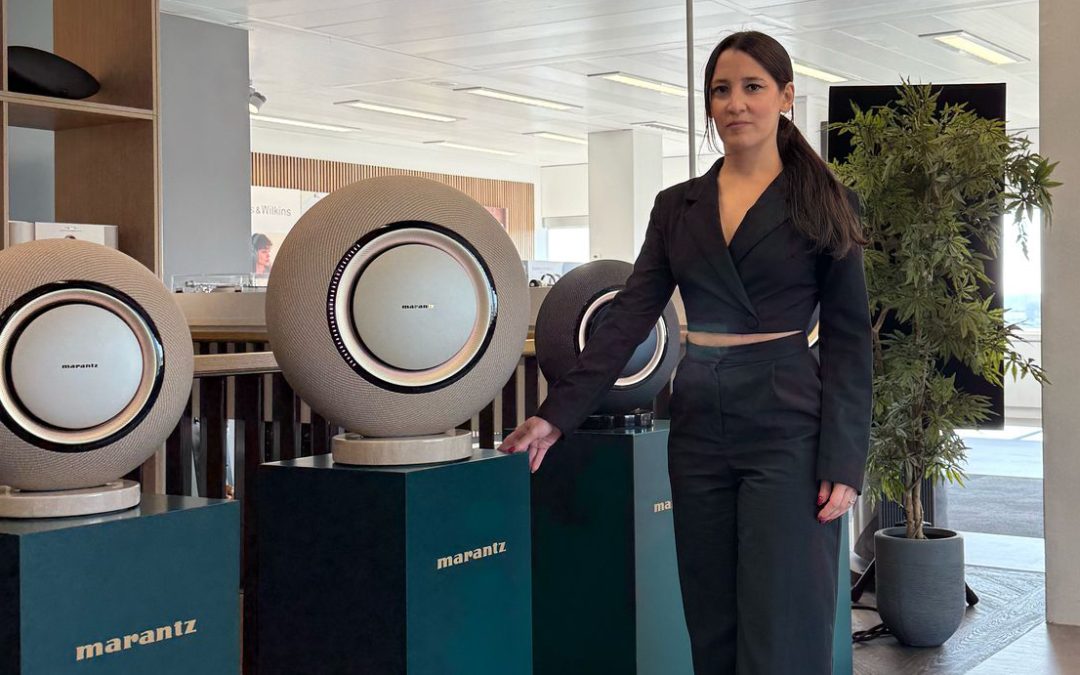
VUmeter: Hi Begüm Tomruk, you are Marantz’s new Design Director. Can you tell us more about your background and how you got into hi-fi?
Begüm Tomruk: Hi! I was born in Istanbul, where I studied industrial design, before moving to Germany for professional reasons. I started working at Grohe Spa in Düsseldorf, where I helped to redesign and revitalize the products. This gave me precise experience not only as a designer, but also in understanding the importance of brand identity, particularly in the luxury market.
As an industrial designer, you have to aim immediately for a final rendering, but with the whole production cycle in mind from the outset. As a result, sometimes a project starts and is interrupted along the way, because it presents too many constraints. Alongside this reflexive approach, I have also learned how to enhance products, notably through packaging, not only visually, but also in terms of practicality and how to take an object out of its box to enhance its value right from the start. For these reasons, it is important to also take part in launch marketing campaigns, to check that the photographs do not detract from the product, that they correspond to the desired image, and so on.
After this ten-year experience, I decided to move into audio design, which is why I joined Marantz as Industrial Design Director, in a comprehensive position that also includes the “creative direction” component, which gives me a global view of projects.
Can you tell us more about your attraction to audio and the high-fidelity sector?
First of all, music has always played a big part in my life. I have always been passionate about it, and I played the piano for a long time from a very young age, so I have a real musical ear. So designing products for something I am passionate about, which brings direct and powerful emotions, was very appealing to me. With music, there are great opportunities to tell stories, to recall memories or emotions, to create new ones.
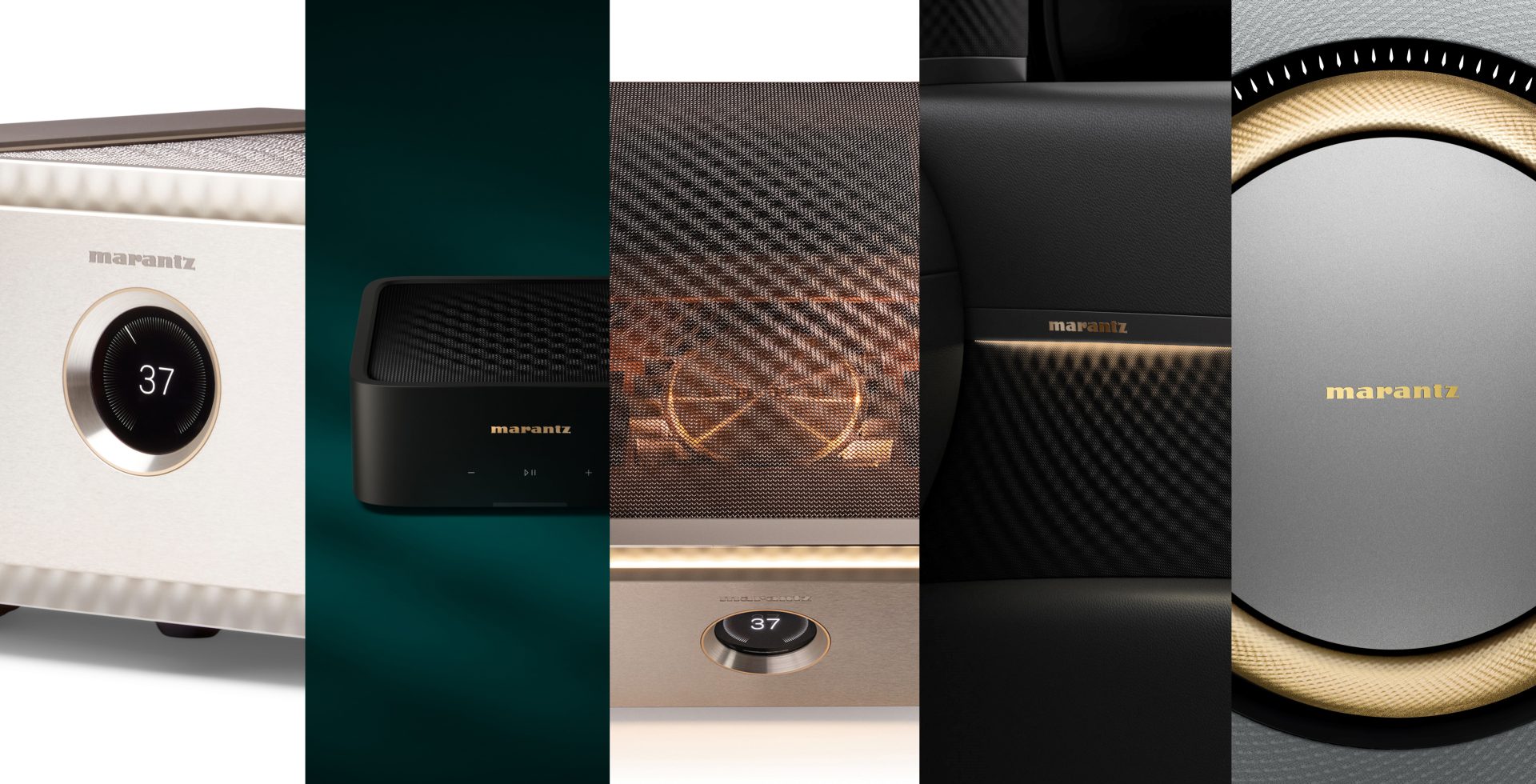
And in the development of Marantz, there was also an idea to help the brand enter new segments, to energize modern products aimed at a different audience, and even to rub shoulders with the frontier of luxury, as we are doing now with the Horizon series.
When you joined Marantz two years ago, was the Horizon project the first to be put into your hands, and were you the initiator?
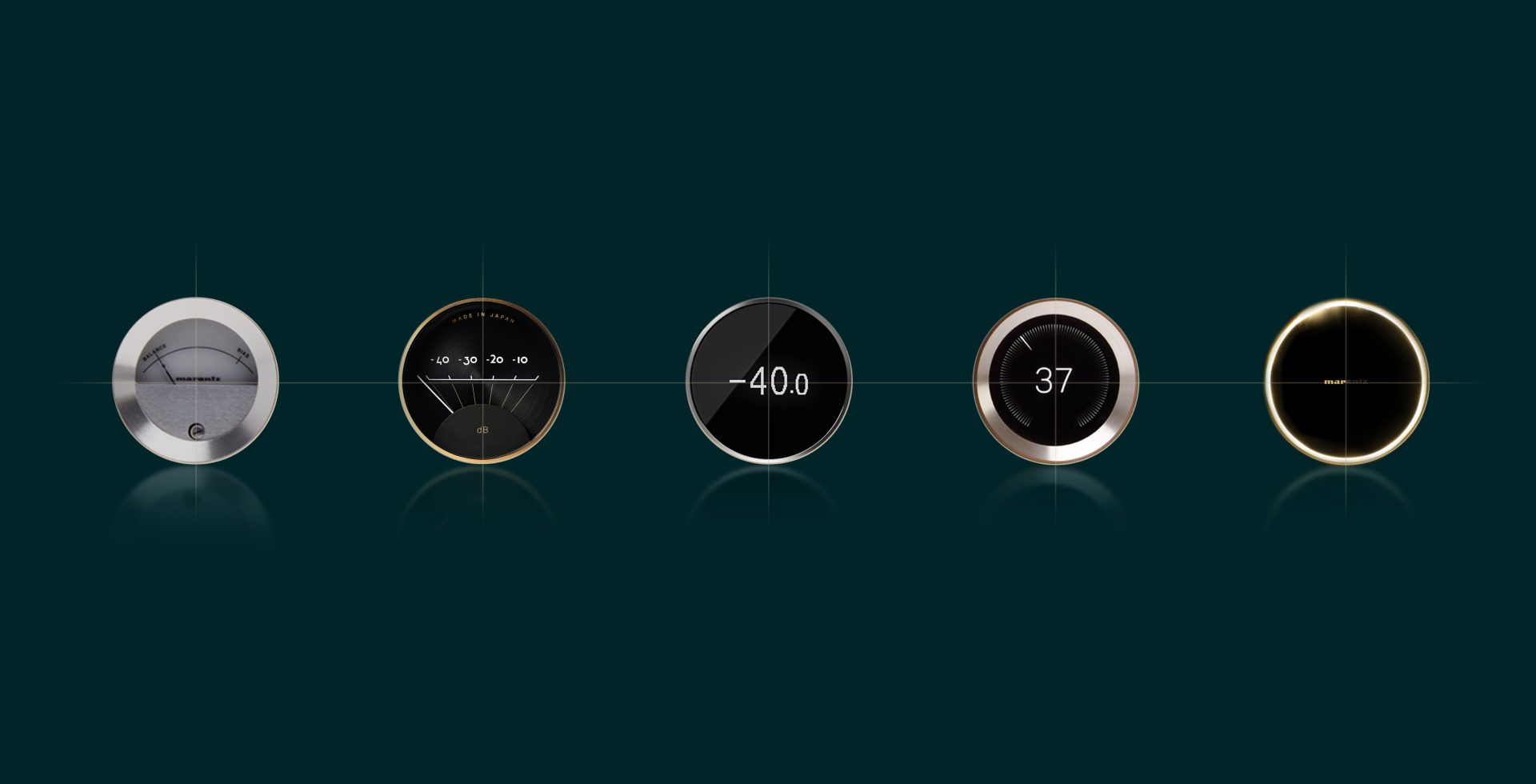
When I arrived, there were multiple redesign products on the table, but the Horizon project was indeed the first major project I had to lead, to take the brand and brand image to other spaces. I work very closely with the group’s teams, the industrial design team obviously, the packaging team too, but also with the marketing team, in order to take the company in a coherent direction, with real consistency to develop in new markets. So, on the one hand, I managed the design of certain high-end products, with the appearance of the 10 Series (VUmètre tests to come), and on the other, the creation of the Horizon range, initiated before I joined the group, but still in full development.
What influence and contribution have you had in bringing Horizon and Grand Horizon to where they are today?
As I just mentioned, the project was already underway when I arrived, but it was still based on concepts. To expand the Group’s portfolio, it was quickly decided not to develop yet another luxury range based on conventional audiophile products, since the Series 10 were already being developed in parallel, and so to use current technologies to develop a modern, connected object.
This was the starting point for the wireless loudspeaker project, with the idea of investing in new horizons, and therefore new consumers, with impressive objects that break away in design from the usual notion of hi-fi. We regularly hear that audiophiles are tending to age or even disappear, yet there is still a very strong interest in hi-fi, particularly among the younger generation. But while young people and even some more experienced listeners love good sound and great music, they want much simpler solutions than before to access it.
So the Horizon and Grand Horizon arrive today, launched by a company with a hi-fi heritage spanning over seventy years, with audiophile confidence that despite a highly innovative design, sound quality will not be sidelined.
While we still hesitate to speak of “luxury” in hi-fi, despite ever more ultimate products and prices that are now stratospheric for some, you don’t hesitate to use these terms and display this image objective?
When I joined the Group, I very quickly felt that the Marantz heritage was becoming a burden rather than a privilege. When I told my friends that I was going to work for this brand, the responses were regularly “Ah yes, my father had a Marantz amp!” or “My grandfather still uses a Marantz CD player!”.
But we have to live in the present, and we have to want most people to think of Marantz as they did thirty years ago: as a modern technology brand that people want to invest in. To achieve this, the notion of luxury is coupled with that of brand awareness and image.
Products must therefore continue to deliver what they have always delivered in terms of sound quality, but this must be accompanied by a design feel that is totally in tune with modern expectations. Changing the image of a room with an object, changing the perception of space by integrating a product like the Horizon: this was the challenge we set ourselves from the outset of the project.
How did you arrive at the Horizon and Grand Horizon?
When I arrived, the most important thing was to understand and take ownership of the project, to arrive at a product in which every detail would be controlled and thought through. For example, I rethought the look, the three final colors and the packaging. Everything was conceptualized in-house, from usability checks to the interface, via a large number of tests.
The object itself is a reinterpretation of a portal, just as all Marantz amplifiers in the past were portals to great sound quality and music. In a way, we wanted to celebrate this heritage, with an innovative shape that is highly recognizable and at the same time easily integrated into a contemporary interior.
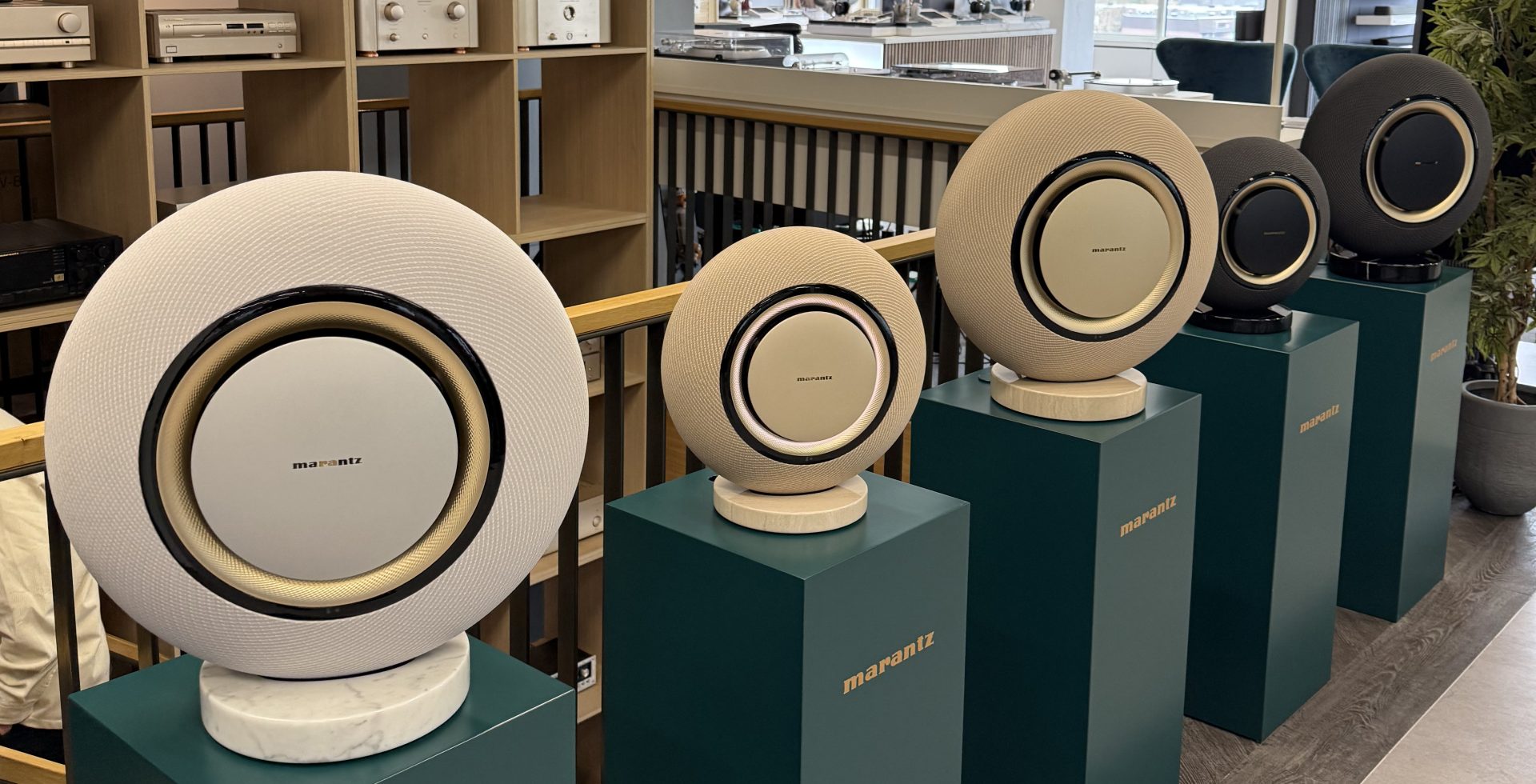
The Horizon can be used by audiophiles as a secondary system in a bedroom or kitchen, for example, as well as by luxury groups in wellness or spa environments, or suites in large hotels. It is all these audiences we had in mind during development, which is why the materials and colors were also geared to appeal to interior designers and people who value iconic designs.
Sorry for this question, but you are a woman in a world where consumers are predominantly male, not in the proportion of people who listen to music, but in the proportion of audiophiles. Do you have any ideas on how to bring women back into the purchase of audio equipment?
That’s absolutely right, the market is very gendered! For my part, I listen to music sometimes connected, but otherwise I use my own system, and when I arrive at people’s homes, I’m used to getting a feel for the rooms based on the hi-fi elements in them.
However, although I have no problem with a so-called conventional system (including all the cables that go with it…), for many younger people, and perhaps for many women too, it can seem too off-putting and therefore a barrier to purchase. I think a lot of people would like to have the possibility of listening to good music in their personal spaces, but without any complexity.
If we want to reach out to everyone, and in particular to audiences who are not familiar with hi-fi, we need to keep things simple. Women can also make a real contribution to interior design, and if we want to make a difference between men and women, men’s vision is more technological, while women’s is more based on appearance and integration into the space. That’s why I am very happy to have joined Marantz, to open up the company to new visions.
Thank you for all your answers. Could you conclude this interview by describing your hi-fi system?
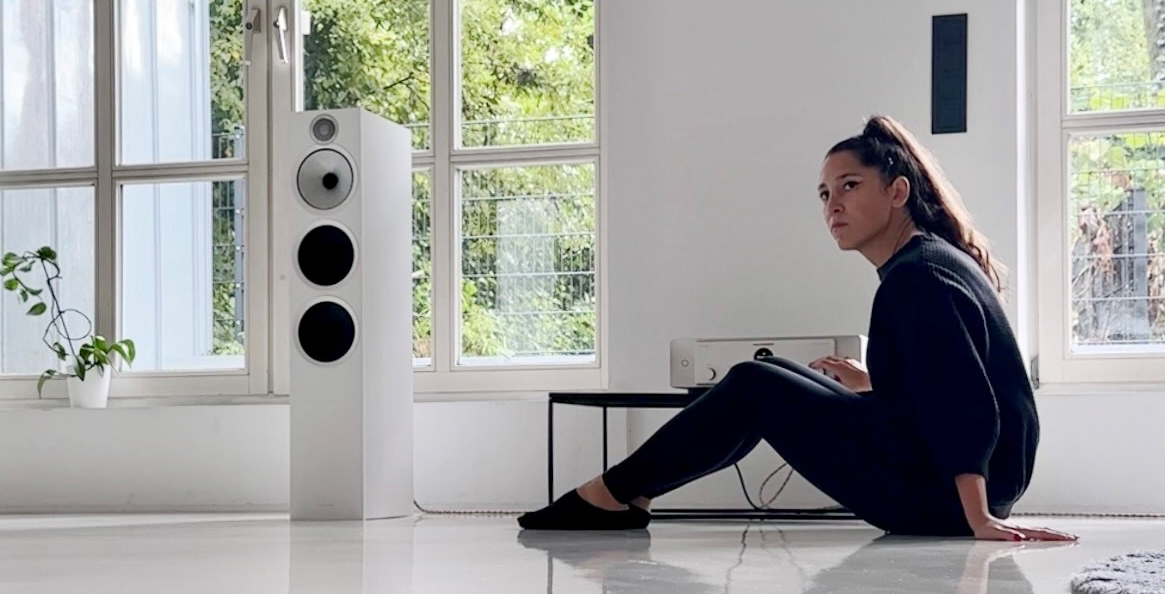
I use an old Marantz amplifier that is still in perfect working order, connected to Bowers & Wilkins 603 speakers, which I particularly like for their sound and their minimalist approach to what a floor-standing speaker can be. Everything is connected to a source I can’t tell you about yet… and when I want simplicity, I use the Grand Horizon on the other side of the room!
It took five years of research to bring Neodio’s only integrated amplifier from Bordeaux into evo mode. The changes mainly concern two points, which improve the Origine A2, already noted for its balance and purity, the hobbyhorses of a manufacturer whose specificity is to eliminate as much parasitic vibration from a system as possible. From its mixed chassis and tried and tested internal technologies, to the inevitable Neodio Origine B1 decouplers in place of feet, the Neodio Origine A2 evo wins the battle for stability against noise to deliver musical sound that’s balanced and clear across the entire spectrum.
The Neodio Origine A2 evo is, as its name suggests, a careful evolution of the previous model, Origine A2, which was presented in 2016 and has retained most of its technology in the new model. The aim of this 2022 version is simple: to challenge the existing integrated amplifier over the last five years in order to make improvements, two of which are substantial enough to justify adding the particle ‘evo’ to the original name.
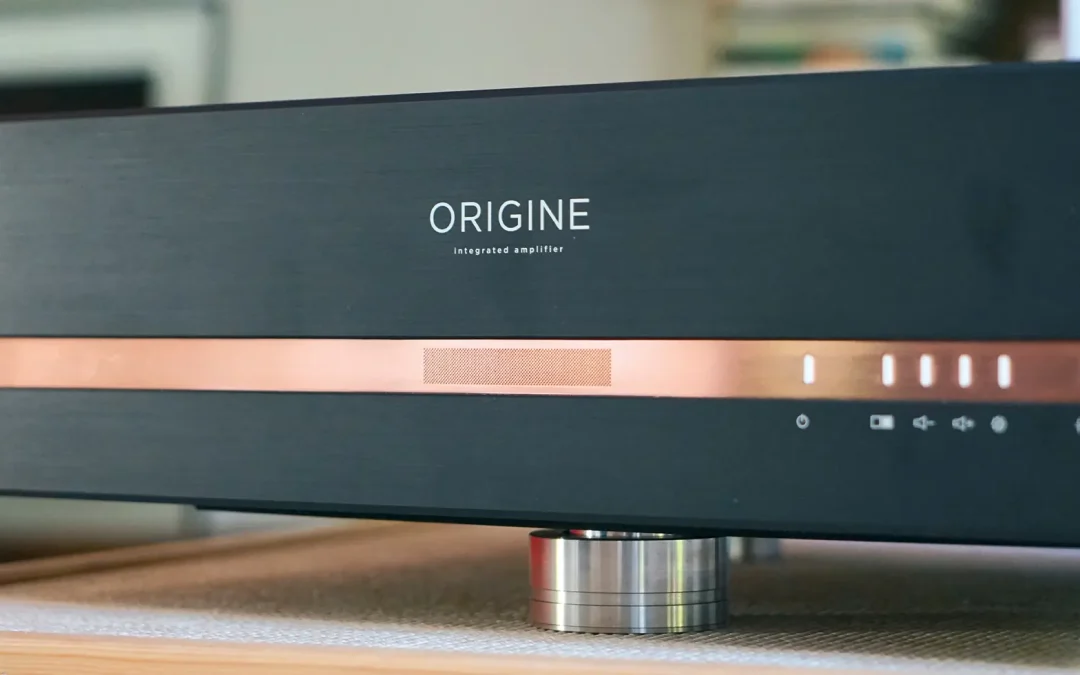
Weighing in at just 30 kg, the Neodio Origine A2 evo seeks and finds rigidity in all its forms, starting with its mounts – three well-known Origine B1s, available separately from the manufacturer’s catalogue to be placed under any source or high-fidelity device. The chassis has an outer layer of anodised aluminium, flattering to the eye, reinforced on the inside by a second layer of aluminium, separated from the first by a viscoelastic, while methacrylate resin, renowned for its rigidity and resistance to high temperatures, is used on the rear panel. Only available in black, the device is raised by a thin median strip of polished copper for a design that is almost identical to that of the Origine S2 CD player, except for the 700 white LED screen, which is now positioned in the middle rather than on the left, while the five buttons now serve as input and volume selectors, in addition to the first, slightly detached, still dedicated to standby.
At the rear, a switch placed just next to the mains socket allows the amplifier to be completely switched off, while a rectangle divided into four offers the possibility of integrating two unbalanced RCA and two balanced XLR sources, with one of its inputs able to be switched to home cinema programming so that the Neodio Origine A2 evo can be used as a simple power amplifier if so requested when the order is placed.
Further to the right, and obviously located on a completely separate printed circuit board inside, two pairs of Nextgen WBT terminals allow a pair of speakers to be connected via banana or fork plugs. All these connectors are integrated into the methacrylate plate, while anodised aluminium reclaims its rightful place on the far right of the rear panel, on the side of the unit devoted to a large heatsink, also made of aluminium.
The in-house technology does not seek to reinvent the way amplifiers are made, but combines the best known processes, including the use of a high-power toroidal transformer (1,000 VA) for the power supply, and the use of an operational amplifier to regulate the voltage. These are combined with sixteen ultra-long-life Vishay 105°C aluminium electrolytic capacitors (4700 µF), mounted on a support made of Delrin®, an acetal homopolymer created by DuPont, whose properties are once again rigidity and resistance to wide temperature variations. Among the main improvements to the evo version, new non-magnetic resistors with thin nickel-chromium layers or agglomerated carbon have been added upstream of the potentiometer, while the output stage has been redesigned around four very high-capacity (16 A) push-pull Mosfet transistors, driven by a set of bipolar transistors, with the result of better stabilising the feedback loops and therefore gaining in damping, in order to clean up the signal.
To connect the four-layer printed circuit boards, non-stretched filaments and single-strand copper cables are used, again with the constant aim of achieving Neodio’s ultimate goal: zero vibration. The amplifier comes with a remote control as standard, the same as the CD player’s, slim and well designed to allow remote control of basic functions, volume and inputs, or even CD playback for lucky owners of an Origine S1 or S2.
What’s more, perturbed by the fact that we couldn’t find certain information, such as frequency response or distortion rate, we contacted the device’s creator, Stéphane Even. He was able to completely erase our doubts that these data would not have been included because they were unfavourable: in reality, they are not indicated because this type of specification is of little interest to the engineer, who is concentrating on musical quality. Without a filter circuit, the bandwidth here could peak at 2 MHz, but it is limited to around 200 kHz, a level that is already well above the capacity of the human ear, while the THD is announced as less than 0.01%.
The set up
Just as the Origine S2 is primarily a CD player, the Neodio Origine A2 evo is primarily a stereo integrated amplifier. You can therefore ask for an option to output it via its power block only, but overall, it is used to integrate quality analogue sources to bring out the music on speakers that can be demanding, since it delivers up to 2 x 150 W at 8 ohms. Installing the amplifier is extremely simple, provided you know where to place its 30 kg mass, which is already well protected from vibration by its B1 feet.
Our loan model didn’t have a home cinema output, so we tested it exclusively on its analogue inputs, RCA and XLR, for a different sound result that’s worth mentioning. Several digital and analogue sources were added, as well as various types of cables and speakers. These studies highlighted the product’s versatility with our multiple analogue and digital sources, as well as highlighting the sound channels sought by Neodio and its creator.
The sound of the Neodio Origine A2 Evo
Initially connected to XLR, because we were listening to a competitor’s device whose superiority is obvious when used on its balanced inputs, the Origine A2 evo immediately brought out Neodio’s sonic identity: a neutral and pure sound. The listening experience is always supple, reflecting an amplifier that seeks above all to step back and allow information to pass as naturally as possible from the source to the loudspeakers. Obviously, the prerequisites for a product in this price range dictate an already highly detailed image, and this is what we find with the Origine A2 evo, which is never really at fault whatever the source used or the range of the spectrum to be processed. On the other hand, the amplifier makes no attempt to over-define or over-spread the information: it immediately offers a soundstage that is ample in both depth and width, always integrated into a global plan.
Connected asymmetrically, the result is surprising: although the soundstage closes up a little and initially gives the impression of a slight loss of depth, it quickly becomes clear that it is also more coherent and even more balanced than with a symmetrical connection. Several trials of cables (from €300 to €5,000) enabled us to verify this impression, and in the end we finished all the tests with sources integrated via the RCA connectors, because the more concentrated image benefited the naturalness of the timbres and above all the balance and directness of the attacks, which were even clearer. When listening to rock music, vocals came through with great clarity, especially when they were in the lower midrange like Nick Cave’s, while the amplifier was even more coherent when listening to jazz, blues or classical music. Obviously, the brand’s quest for purity and integrity benefits instrumental music more than electro. So it’s with a small band like Getz and Gilberto, or a Schubert trio, that you get the full benefit of the Origine A2 evo’s quality of tone and colour.
Tested on much more complex tracks, such as Verdi’s Otello in the reference Tullio Serafin version, or Mahler’s 8th Symphony by Gustavo Dudamel, magnificently recorded in Los Angeles (cf. VUmètre no. 36), the Origine A2 evo succeeded in maintaining perfect coherence, both in terms of the staging and the mix of timbres, with the line of undervoltage in the double basses at the introduction to Verdi’s opera standing out perfectly to create a permanent rumble beneath the singers and choir. On Mahler’s symphony, as later on with other symphonies without choir, or even on rock tracks from the 1960s and 1970s (The Doors, Pink Floyd), the always very airy rendering makes for supple, luminous listening. On the other hand, it doesn’t offer any extra realism, as with Melody Gardot, where the sounds of breathing or lips can be heard more distinctly with other amplifiers, whereas with the Neodio you remain exclusively attentive to the musical message.
Our conclusion
Priced at €19,900, the Neodio Origine A evo is part of an already unaffordable range for many enthusiasts, but its price makes it a rarity, and is explained by the musical qualities and quest for the absolute of the creator of the Bordeaux brand and this integrated amplifier, Stéphane Even. In the full sonority of the brand, it can be combined with a wide range of electronics to always deliver a sound full of purity, capable of making the stage bright and airy and the timbres natural. With a comfortable power output of 150 W per channel at 8 ohms, the Origine A2 evo is capable of driving a wide range of loudspeakers with fluidity and flexibility. With limited distribution, this product can be heard directly in Bordeaux or at a small selection of retailers in France.
Among the most interesting products on show at the Munich High End trade fair was the HiFi Rose RS130, a new high-end network transport whose technology stands out in particular for its ability to enter directly via fibre, for both USB and Internet connections. While we wait for the manufacturer’s USB SFP hub, we took a look at the new transport and its magnificent 15.4’ screen in USB 3.0 with an external hard drive, and of course in RJ45, to bring out all the musical purity of a network source distinguished above all by its neutrality.
The South Korean brand Rose has been making a name for itself for several years now with its network streamers and media players, as well as adding to its catalogue a highly innovative amplifier and two all-in-ones with small built-in speakers. Up until now, its most advanced product has been the RS150B network player (€4,490), already remarkable for the quality of its digital-to-analogue conversion based on the ESS 9038PRO chip and its large front-panel touch screen.
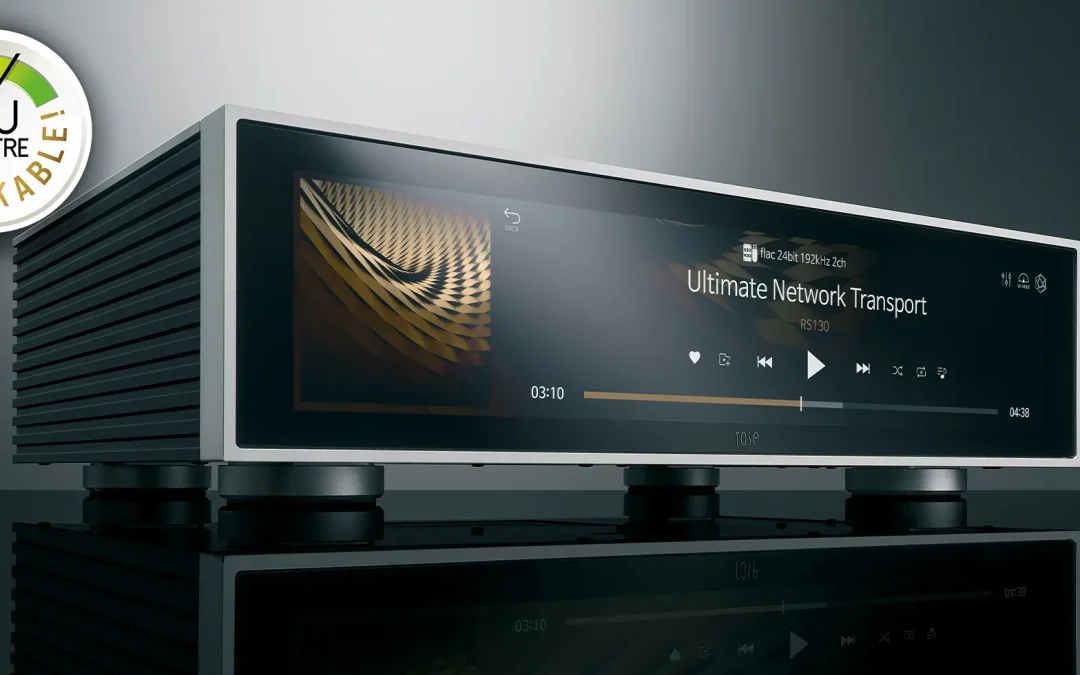
But the company is now taking things a step further with the launch of a new network transport, without DAC, called the RS130 (€4,790), featuring a superb liquid crystal touch screen with an impressive 39 cm diagonal (15.4″), whose excellent resolution can play videos at up to 60 frames per second.
The RS130 is a true transfer hub, not only for audio to a DAC, but also for video, with the ability to be connected via HDMI to a 4K screen for HD playback of content from external hard drives or RoseTube, for example. On the audio side, the new transport contains not only the native Qobuz or Tidal applications, but also AppleMusic, as well as being Spotify Connect, Roon Ready and offering DLNA for transferring music files via an application other than Rose’s own.
For the less purist, Airplay will allow you to send sound information directly from your Apple smartphone, or simply via Bluetooth, but obviously the data will not be able to reach the available power of the device, i.e. up to 32 bits/758 kHz or DSD512 file playback (22.4 MHz).
Designed as a very high-fidelity product, the RS130 is encased in an aluminium enclosure with a number of separate blocks inside, designed to keep vibrations to a minimum and to evacuate heat as efficiently as possible, notably via the very classy ventilation hole in the shape of the Rose logo inlaid on the unit’s cover. At the opposite end of the spectrum, four feet with foam underpinnings also act to limit the propagation of vibrations to and from the device.
A plethora of connections and ultra-modern components
Perfectly smooth on the front thanks to its HD IPS panel, with just four very discreet buttons on top, including the Power standby button, the RS130 network transport is also very complete on the rear panel in terms of connections. In addition to an IEC connection socket, it offers all the output possibilities for a DAC, including Toslink optical, RCA coaxial and AES/EBU, as well as a USB Audio port, in addition to the aforementioned HDMI connection and an I2S port.
For maximum stability, the RS130 can also be connected to external clocks via a 50 ohm or 75 ohm input. This can further improve synchronisation and therefore reduce jitter to extremely low levels, but in any case, the internal clock is already perfectly optimised thanks to a very advanced version of an OCXO clock from the Chinese company Jingyuan Electronics, available up to 10,000 MHz.
Another feature of the product to minimise noise is the linear power supply. To deliver the current, an encapsulated toroidal transformer custom-made for Rose is combined with a supercapacitor that acts as a storage device, like a battery, with the aim of then delivering a direct current with the greatest possible purity. With the same idea, an SSD disk caches data before reading, again to block all vibrations and other noise induced by an external hard disk or USB key, for example.
Finally, the Rose RS130 is distinguished by the appearance of two fibre ports, one for USB and the other for direct integration into the Internet network via fibre optics. Still complicated, this set-up already exists on very high-end devices like the Linn Klimax DSM, but it’s clearly the way of the future: using a fibre hub that avoids the traditional Internet box, and using USB Fibre rather than USB 3.0. What’s more, as well as working more and more on sound settings via the dedicated application, Rose’s engineers are also developing a small USB fibre hub, the RS720, scheduled for the end of the year.
The set up
Seen and heard with great interest at the High End show in Munich, where its presence in the auditorium and on static allowed us to talk to the product’s chief engineer and project manager, the RS130 then arrived in our auditoriums to be used for over a month. Compared to the streamer parts of our network players, it was integrated into the coaxial and USB DACs, and was used mainly for streamed playback, but also for files from an external hard drive.
We don’t yet have a fibre box or USB SFP hub, so for the time being we’re sticking with USB 3.0 and RJ45 connections, which are already highly optimised. The arrival of the RS720 at the end of the year will undoubtedly give us the opportunity to add to our fibre reading.
Gapless is not automatically configured, so you’ll need to look for it in the settings to enjoy continuous playback, without a break between each track, which is very important when listening to opera, for example. In playback with Audirvana Studio, this pre-setting is also possible, so we regularly used this application in comparison with Rose’s, with the further aim of checking the stability of the application in network playback against our benchmark.
The sound of the HiFi Rose RS130
We can often talk about the sonic typicity of a brand or even a region of the world, and if Japan, now extremely mature in hi-fi, makes some of the most singing products, South Korea and China seem for the moment to be seeking neutrality and the absence of coloration at all costs.
Even more than most of the top-of-the-range products recently tested from this part of Asia, the RS130 is in tune with this quest, offering a neutrality and purity that are reminiscent of certain Aurender products at even higher prices. But while neutrality implies an absence of effects, it does not mean an absence of musicality. On the contrary, the RS130 is undoubtedly the HiFi Rose’s most musical source, in that its purity can be adapted at will by the DAC it is driving.
Integrated into the conversion of our Mark Levinson 5101, the transport did not give at all the same results as with the ST300. But in all cases, it surpassed in the absence of noise and in the finesse of the textures the message given by the network parts of the two devices, integrated moreover only in coaxial, since there is no USB input.
With files on an external hard drive, we can see the same quality, even more stable than network playback, even if this is increasingly purified on our systems thanks to the various switches and high-quality Ethernet cables. To take advantage of the best files, we were also able to connect the RS130 to a B.Audio B.dpr, the Alsatian brand’s big preamplifier-converter, which can be integrated into USB for 32-bit output that’s even better than coaxial.
Once again, the impartiality of the message, combined with a digital-to-analogue conversion that also seeks to eliminate any coloration, tends to develop the finest and most defined musical rendering possible, deployed at extreme levels.
Our conclusion
Beautifully built, extremely flattering to the eye in a room and around any other hi-fi equipment, Rose’s new RS130 affirms the brand’s desire to be one of the manufacturers of tomorrow in the very high-end segment. Despite this, its price remains contained, even if its European price of €4,790 makes it more expensive than any of the South Korean manufacturer’s network players, even though it has no DAC and remains a pure transport.
In fact, the term ‘pure’ is precisely the most appropriate to define this network transport, as the quality of the data it produces offers the best that can be achieved today in terms of stability and noise suppression for a network source.
Superb thanks to its very large touch screen, the RS130 is not only a modern product, but also one for the future, since more and more hardcore listeners will soon be looking to acquire fibre Internet boxes to avoid the RJ45 connection, while others still keen on NAS or external hard drives will be adopting USB SFP, for which Rose intends to offer a solution very soon.
Author: Vincent Guillemin
Technical sheet: HiFi Rose RS130
Origin: South Korea
Price : €4,790
Dimensions : 430 x 125 x 317 mm
Weight : 12 kg
Audio inputs and outputs :
Outputs: 1 x optical; 1 x coaxial; 1 x AES/EBU; 1 x HDMI I2S
Inputs: SPF Ethernet 10/100/1000 BASE-T; 2 x USB 3.0; 1 x SATA; 1 x USB 3.0 Fibre Wifi: 802.11ac; Bluetooth: V4.2