ACCUPHASE E5000 vs E800: An Impressive Pair

ACCUPHASE E5000 vs E800: An Impressive Pair

Following our article on the brand’s new E4000 amplifier (VUmètre 46), some people asked us why choose a class A/B amplifier from this range when the famous Japanese brand has a pure class A E650 in its catalogue. So we came up with the idea of producing a comparison – to our knowledge unavailable in any other magazine at the moment – between the manufacturer’s two biggest integrated amplifiers, the Accuphase E5000, rated at 240W under 8 ohms in class A/B, and the Accuphase E800, capable of reaching 50W under 8 ohms in class A.

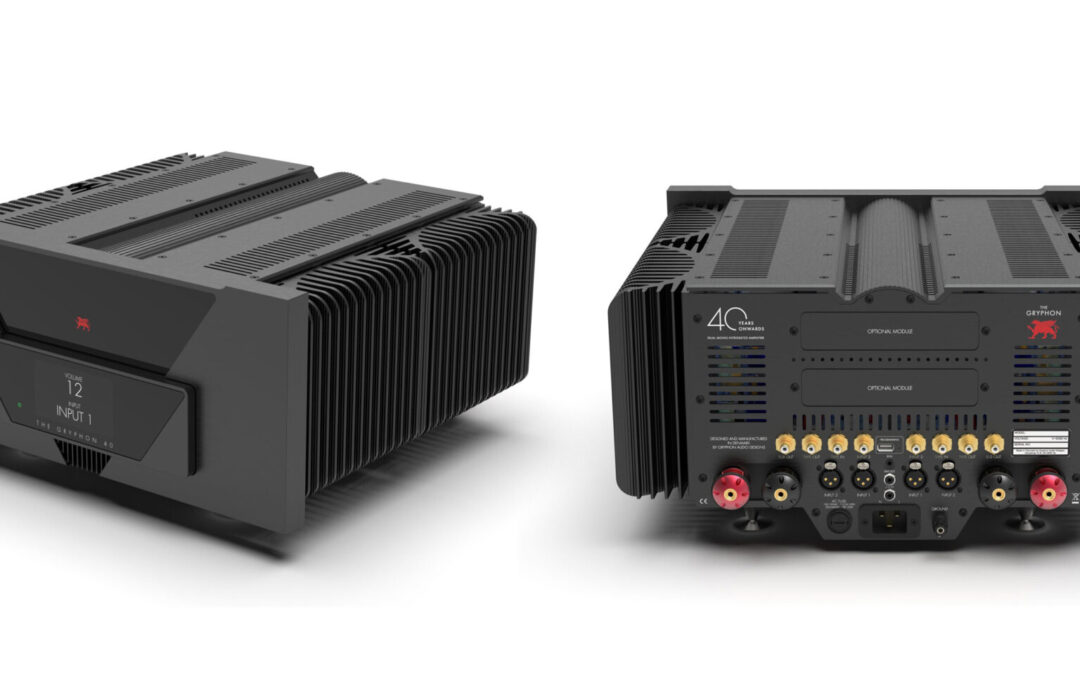
As yet unreviewed in our magazine, the E5000 and E800 are two very high-level integrateds, instantly recognisable by their champagne colour, their meters and, compared with other Accuphase models, their height. The larger of the two models, the E800 was introduced at the end of 2019 and measures 23.9 cm in height, making it slightly less well-proportioned than the smaller E650 or E4000, but giving it a massive character apt to forestall its impressive power.

At 28 mm shorter, the E5000 (21.1 cm high) looks more classy, especially as, like all the Yokohama company’s class A/B units, it has two handsome analogue needle-type meters, whereas those on class A amps are digital with LEDs.

accuphase e5000 hifi amplifier side by side comparison inside of the chassis components

Class A versus Class A/B

When you open the cover, an Accuphase is still an Accuphase, and at first glance it’s hard to tell why one is Class A and the other Class A/B. The E5000, which appeared in 2022 as one of the products to celebrate the 50th anniversary of the brand created by the Naikachi brothers and Jiro Kasuga, uses the same components and architecture as the E800, apart from a few details.

In both cases, a huge thorium transformer is placed in the centre of the device, just behind two massive filter capacitors, firmly held together by a copper plate. With a capacitance of 60,000 μF each on the E800, the capacitors offer a filtering capacity of just 40,000 μF on the E5000, while both benefit from a major improvement in the damping factor, up to 1000 on both models.

Two large heat sinks are incorporated around the chassis, on the left and right, to house the power circuits, and this is where the difference between the two devices lies. Four in number on the E4000, the bipolar push-pull transistors rated at 15 A These transistors are controlled in class A/B to develop 240 W at 8 ohms and 320 W at 4 ohms, phenomenal figures when you consider that most stereo amplifiers are in the region of 50 or 80 W.

On the E800, on the other hand, we find the class A structure of the A-48, this time with a structure defined by six parallel MOS-FET push-pull transistors of 33 A each. As a result, the power developed is no longer diluted between class A and B, but only delivered in class A to reach values of 50 W at 8 ohms and 100 W at 4 ohms, less impressive values but in reality just as enormous.

accuphase e5000 hifi amplifier rear chassis option 1 and option 2 in use with phono preamp dac-60 and ad-50

AAVA preamplification and balanced volume control

On the preamplification side, both devices benefit from the best advances made by the brand, already described recently with the E4000. We find the well-known AAVA volume management system in its symmetrical version, even more advanced on the E5000 than on the E800 because it has benefited from improvements found by engineers between 2019 and 2021.

In both cases, purely separate between the left and right channels, the Accuphase Analog Vari-gain Amplifier circuit eliminates the solution of variable relays and resistors in the signal path. This circuit is integrated into a gold-plated PCB plate, with a sequence of current-to-voltage and then voltage-to-current converters, and before that an input amplifier with current feedback. The volume knob is controlled by a DC motor when the remote control is used, firmly mounted on a large aluminium plate produced by a CNC machine.

Once again slightly reworked recently, the most recent remote control is that of the E5000, the RC-250, while the E800 has to make do with the RC-240, but the differences are minimal and if you already own an Accuphase device less than 2 years old, you can be sure that all the remotes will allow you to manage all the products in your system.

As far as inputs and outputs are concerned, as well as the sound adjustments available, everything remains identical or almost identical to all the brand’s integrated units, which means you can vary the balance, treble and bass, or choose between one or two pairs of speakers, or even bi-wire the speakers if they allow it, for the benefit of both the ductility of the amplifier and the structure of the message returned by the speakers.

At the rear, there are two card slots, with the option of integrating the DAC-60 digital-to-analogue conversion card or the brand new AC-60 phono card, presented at the end of May at the same time as the new C-2300 preamplifier. Five RCA inputs allow you to connect all the sources you want, even if we recommend that you use XLR inputs on these balanced devices, two pairs on the E5000 and three on the E800; all the inputs can be selected using the left-hand dial on the front panel.

accuphase e5000 hifi amplifier rear chassis rear view connections

The set up

A handful of shops in France stock both the E5000 and the E800, but to carry out our comparative listening of Accuphase’s finest integrateds, it seemed obvious to go to the brand’s historic dealer, Music Hall, which has the widest range of the manufacturer’s products. What’s more, it was here, in the very centre of Paris, that we had the opportunity a week earlier to meet the entire management team of the Japanese company, including its current president, Jim S. Saito.

To maximise the reliability of the source quality, we chose the best with the Accuphase transport SACD-DAC DP-1000 & DC-1000 pair, followed by the Aurender N30SA for dematerialised music. However, the real difference came with the loudspeakers, because the results were not at all the same with the Sonus Faber Olympica Nova III as with the Wilson Audio Sabrina X, admittedly twice as expensive, but also much more capable of bringing out all the sound components of the two amplifiers, without either of them ever being faulted for their power.

accuphase e800 hifi amplifier chassis top view opened with components pcb circuit

The sound

Connected first to Sonus Faber Olympica Nova III loudspeakers (€13,000) in a similar price range to the amplifiers, the E5000 and E800 express their full character in a matter of seconds, each with enormous, well-contained power and a fluidity that is just as impressive in class AB as in class A. With the E5000, the sound is a little less rounded, but the fact that it is the latest to be released and in class AB ensures that noise is reduced even further than with the class A, for an extremely dark soundstage, which frees up the speakers in particular and unleashes sounds to superb levels.

We might prefer a warmer effect from the E800, but when it comes to precision, the E5000 wins (on the margin, since both units are so good), with details that benefit particularly from the extra sharpness to compensate for a certain freedom of the loudspeakers. On more complex music such as Mozart’s Requiem (Bernstein, DG) or electro music such as Lombard Street’s ‘Play my Tune’, the extra power of the attacks favours the E5000, even if the width of the soundstage is even more remarkable with the E800 (€1,500 more expensive than its counterpart).

With a network player that’s among the best in the world, used as much as possible with its internal hard drive, still superior to Qobuz Hi Res playback, and above all connected to Wilson Audio’s Sabrina X American speakers (€27,900), all plugged into the mains on the new Accuphase PS-1250 conditioner, the musical result goes up another notch.

And here, it’s clearly in favour of the E800, because while our (bad) habit of listening to the best systems in the world leads us to seek out the purest possible scenes (again in favour of the E-5000 in this configuration), this time the E800 really takes things further in terms of realism, as well as being the most perfect in terms of timbre. Far from demeriting, the E5000 shows a rare flexibility for a class AB, very comfortable with its 320 W per channel under 4 ohms, but it remains a little tenser than the E800.

Faced with the excellent spectral balance of the Wilson Audio, the quality of detail promulgated by the Accuphase amplifiers never lets anything spill over, and we find truly splendid detailing of voices and most elements. In terms of depth, the E5000 goes a long way, but the E800 and its 100 W in class A at 4 ohms gains even more in volume and airiness, for a stage that expands, transporting us to the Jesus-Christus Kirsche with Karajan for Beethoven’s 9th Symphony (1962, DG), or in front of Nicola Benedetti for Wynton Marsalis’ Concerto in D (2019, Decca), heard more finely on this hi-fi system than live the day before at the Philharmonie de Paris!

accuphase e5000 hifi amplifier side by side comparison open chassis top view components

Our conclusion

Accuphase’s best integrated amplifiers at this level of hi-fi, the E800 and E5000 achieve sonic heights that can only be surpassed today by very high-end separate amplifier-preamplifier pairs. The E5000’s power of attack and finesse of detail and purity are very impressive, and it can compensate for all the shortcomings or accentuations of many sources and loudspeakers in its range. It also has the advantage of consuming less power and heating less, a real bonus given the ecological constraints and the summers we now experience every year. Even clearer when it comes to reducing noise, it is perfectly convincing in its range and will satisfy a large number of listeners, especially those who are looking for precision above all else.

Even livelier and rounder, the E800 uses Class A and its 50 W or 100 W power to create even more shimmer and clarity in timbre. At a slightly higher price point, it also performs even better when paired with components of twice the range, for both sources and speakers. So, if you’re prepared to pay this substantial sum with a view to keeping these devices for several decades, as there’s little risk of them becoming obsolete for many years to come, you should make the comparison! But if you want to buy with your eyes shut, then the E800 is the more attractive of the two.

Auhtor: Vincent Guillemin

Technical sheet: Accuphase E5000

  • Origin: Japan
  • Price : €13,490
  • Dimensions : 465 x 211 x 502 mm
  • Weight : 33,8 kg
  • Amplification type : Class A/B
  • Power rating :
    • 2 x 240 W at 8 ohms
    • 2 x 320 W at 4 ohms
  • Harmonic distortion (THD ): 0.05
  • Frequency response: 20 Hz to 20 kHz (+/-0.5 dB)
  • Signal-to-noise ratio (S/N ): 104 dB
  • Analogue connections:
    • Inputs: 5 x RCA; 2 x XLR; 1 x RCA Main In; 1 x XLR Main In; 2 x slots (optional)
    • Outputs: 1 x RCA Pre Out; 1 x XLR Pre Out

Technical sheet: Accuphase E800

  • Origin: Japan
  • Price : €14,990
  • Dimensions : 465 x 239 x 502 mm
  • Weight : 36 kg
  • Amplification type : Class A
  • Power rating :
    • 2 x 50 W at 8 ohms
    • 2 x 100 W at 4 ohms
  • Harmonic distortion (THD ): 0.05
  • Frequency response: 20 Hz to 20 kHz (+/-0.5 dB)
  • Signal-to-noise ratio (S/N ): 104 dB
  • Analogue connections:
    • Inputs: 5 x RCA; 3 x XLR; 1 x RCA Main In; 1 x XLR Main In; 2 x slots (optional)
    • Outputs: 1 x RCA Pre Out; 1 x XLR Pre Out
WAVAC PR-Z1 and WAVAC TA-805m: Precise and Outstanding

WAVAC PR-Z1 and WAVAC TA-805m: Precise and Outstanding

Created in 1995, the Wavac brand remains relatively discreet in Europe due to its niche positioning: that of very high-fidelity tube products. From its relatively extensive catalogue of amplifiers and preamplifiers, we now have the Wavac TA-805m pair of power monoblocks, paired with the Wavac PR-Z1 preamplifier, a pair as incredible for their musical precision as for their outstanding dynamics.

Headed since 2016 by Yasunori Matsuki, the Japanese company based in Yonezawa in Yamagata prefecture, a few kilometres from Fukushima, confidentially manufactures some of the world’s finest amplifiers and preamplifiers every month.

wavac pr-z1 hifi tube preamplifier front view golden chassis

Wavac TA-805m: a pair of monoblocks to celebrate the purchase of Tango

Opened with the MD-805m pair of power blocks, priced at €16,800, the manufacturer’s catalogue has been expanded in 2019 with an improved version, called the TA-805m, priced at €25,800. The result of Wavac’s takeover of the Tango transformer company, the new blocks take advantage of a revised assembly diagram to incorporate two of the brand’s large transformers, which mean that the two tubes around the output tube have to be reworked.

Starting with the master tube, this is, as the model name suggests, a direct-heat 805 triode tube, a very powerful reference capable of developing 50W per channel in class A. For the other two, rather than the 6Y6GT and 12AX7 of the MD-805m, the TA-805m implements a KT88 tetrode from Russia’s Gold Lion on its proprietary interstage circuit, as well as a small 12AT7. Direct or transformer coupling virtually eliminates capacitors in the signal path, with the result that there is no passing interference. Noise is further minimised by a mains input filter followed by a multi-element filter and a direct-coupled filament power supply.

In appearance, the TA-805m leaves the lamps to the fore, integrated into a chassis with a champagne-coloured 10 mm aluminium top plate. They are protected by a glass pane, which can be covered by a grille if you wish to prevent access from above and avoid getting burnt by the tubes when they are hot.

Behind this is a small metal cube and then the two imposing Tango transformers, which partly explain the weight of 28 kg per block. Each part of the TA-805m stands on its own four feet, so its use is reduced to its simplest expression: that of a pure power amplifier for loudspeakers. On the front there’s a large Power button, a triangular gain adjustment knob, and on the back a mains socket, a single RCA input and three speaker terminals, one negative and one positive at 4 ohms, the other at 8 ohms.

wavac ta-805m hifi amplifier tube side view chassis blue finish

Wavac PR-Z1: The ultimate preamplifier

Solidly protected in an aluminium chassis with 10 mm side plates and an even wider front panel, the Wavac PR-Z1 is the result of a rethink of the PR-T1 to offer a preamplifier that is a little less extreme, yet almost as perfect. The main difference with the PR-T1 is that the PR-Z1 is no longer in three, but in two chassis, because while it retains the separate TR-B1 transformer (now in its TR-B1z version), it integrates the power supply directly into its primary chassis, whereas the larger model offsets it with a PS-X2(T) case.

Also only available in champagne, as if Wavac had validated Accuphase’s precepts without question, the PR-Z1 is the perfect companion to the TA-805m blocks, which are built to the same high and ultimate quality by hand. Firmly supported on four aluminium feet, it can be easily dismantled by unscrewing its lower grille, to reveal an airy structure from which the cables are not afraid to show themselves.

Pure double-mono on the preamp side, the architecture integrates two cards on which are embedded two pairs of JJ Electronic ECC-82 tubes, protected by sheaths, while two transformers in metal blocks are dedicated to the XLR inputs and outputs. On the other side of the unit, a power supply card features large capacitors. At the rear, a central socket connects the amplifier to the separate TR-B1z transformer, then two pairs of outputs are used to connect the power units, one via an RCA terminal, the other via a balanced three-pin terminal.

The inputs offer three pairs of RCA and two XLR, optionally convertible into five pairs of RCA, perfectly separated on the left and right sides of the unit. On the front panel, a large potentiometer is located on the right, while three knobs are used to manage the balances and inputs. As an option, next to the large power button, under the green LED, a small LED can be added to enable use of a remote control, reduced to its simplest form: black and rectangular with just two buttons.

The set up

Relatively compact, the Wavac TA-805m and PR-Z1 amp-preamplifier pairing is a masterpiece that deserves to be installed on a top-of-the-range hi-fi cabinet in a room or living room dedicated mainly to music. On its own, it’s easy to use, but the fact that you get much more out of it when the tubes are hot, combined with the fragility of the tubes – a risk if you don’t want to use the grille to cover the glass – means that this 40,000-plus euro system needs to be treated with care.

When you invest in this type of product, it’s not to integrate it into a room that everyone passes through, or to connect a video screen to it, but to be faced with an ultimate music transcription system, with the same approach as when you enter a concert hall to enjoy a concert.

For our listening session, we were unable to collect the three units plus the preamplifier transformer, so we listened to them in the only place we could find them in Paris: Concert Home. Firstly on EgglestonWorks Kiva and TAD Evolution 1-TX loudspeakers, the preamplifier, which is almost new and therefore not yet perfectly broken in, has already produced an extraordinary sound. But to confirm its characteristics, we listened to it again two weeks later, this time on Eggleston Works Emma Evo and ATC SCM100 PSLT.

Each time, whether using a B.Audio source or an Auralic Altair G2.1 (very good but eight times less expensive than the pair tested), the results showed the ultimate level to which the Japanese manufacturer could bring us.

wavac pr-z1 hifi tube preamplifier rear view chassis connections inputs and outputs

The sound

With the Engström amplifiers (Lars blocks, see VUmètre no. 42; Arne amp, see VUmètre no. 46) and Jadis (I300 amp, see VUmètre no. 45), we recently put the spotlight back on a number of 300B tube-equipped devices and reminded you of the splendour of the triode in the aeration and warmth of the sound. With the Wavac TA-805m, these characteristics are undoubtedly present again, but the most striking features, this time thanks to the 805 tube, are first and foremost the power and dynamics!

As soon as we tried the first track, a Diana Krall reference, which is our usual test track, the singer took to the stage with a sublime presence, incredible naturalness and absolutely perfect note-holding. So we found all the whispering that is possible to hear, but even more refined and lively than we knew.

To get the Kiva into our ears, we had already plugged in the Accuphase E800, whose beauty and restrained power of 50 W per channel created by transistors, with work against noise and distortion at reference levels, we know. But with the Wavac, admittedly three times more expensive, the immediate impression of having won over every possible component bursts forth in a matter of seconds. The enormous dynamic range of the blocks, also 50 W per channel in pure Class A, instantly unfolds the most vivid music, from Daft Punk’s ‘Get Lucky’ to ‘Dies Irae’ from Verdi’s Requiem.

Added to this is a perfectly accurate soundstage, with no quest for anything other than realism, perfect placement of all components and instruments, and amplified width with the loudspeakers most capable of creating depth, led by ATC. Never hampered by the power of any of the associated large columns, the pair of TA-805m develop, thanks to the PR-Z1 preamplifier, timbres of the utmost realism, full of nuance and colour, with a palette of harmonics limited quite simply by our own auditory capacities.

The guitars and basses are played as if we were right next to them, superior to the sound available in most concert halls, here enveloping to give the impression of an all-encompassing image, even though it comes from just two points facing us. The breathing of the orchestras on the large symphonic masses allows the silences to be understood at ultimate levels, for example in Shostakovich’s 5th Symphony by Mravinsky (Melodiya), or in Sibelius’s 4th by Kurt Sanderling (Berlin Classic).

The hyper-expressive music benefits from a splendid foundation, always present to provide total fulfilment. The attacks are almost too blunt, visibly more brutal than on the models from the 833 triode brand, but with a tension that can’t fail to impress with every bow or timpani stroke, as well as being perfectly suited to rap, R&B and electronic music.

wavac pr-z1 hifi tube preamplifier inside of the chassis pcb circuit and components

Our conclusion

The life of a hi-fi tester brings many wonderful discoveries, sometimes for a few hundred euros, sometimes for several thousand. But when it comes to the ultimate, despite the untouchable nature of these products for a significant proportion of music lovers, we have to admit that we remain fascinated by the reproduction capabilities that humans have achieved. We’ve had these impressions recently with Linn or CH Precision sources, or with the models mentioned in this article; now they’re coming to us with Wavac amplification, a real discovery from a Japanese manufacturer as discreet as it is marvellous.

With all the constraints inherent in tubes, the first of which is waiting for the equipment to warm up, the TA-805m monophonic blocks and the associated PR-Z1 preamplifier form an impressive pair of realism and perfection, which makes it easy to understand why some people are prepared to spend the price of a nice car on a high-fidelity system. Sublime in their warmth, dynamics and purity of texture, the Wavacs offer the ultimate package for enjoying every second of music.

Author: Vincent Guillemin

Technical sheet: Wavac TA-805m

  • Origin: Japan
  • Price : €25,800 (the pair)
  • Dimensions : 260 X 280 X 460 mm
  • Weight : 28 kg
  • Analogue input: 1 x RCA
  • Power : 50 W per channel

Technical sheet: Wavac PR-Z1

  • Price : €17,900
  • Dimensions : 460 x 95 x 483 mm
  • Weight : 17 kg
  • Power consumption : 60 W
  • Signal-to-noise ratio: >95 dB
  • Frequency response: 10 Hz-80 kHz
  • Harmonic distortion (THD) : > 0.5% (5 V)
  • Intermodulation: < 0.01 % (19 kHz+20 kHz)
  • Impedance :
    • Inputs: 75 kilo-ohms (RCA & XLR)
    • Outputs: 10 kilo-ohms (RCA & XLR)
  • Analogue inputs: 3 RCA; 2 XLR (5 RCA optional)
ADVANCE PARIS A12

ADVANCE PARIS A12

The latest addition to the brand’s amplifier range, the Advance Paris A12 Classic builds on the hybrid concept of the A10 Classic to bring even more power and finesse to the brand’s signature sound. With a tube preamplification stage and transistor amplification, the A12 delivers a very comfortable 190 watts per channel into 8 ohms, and above all offers a plethora of connections to integrate into all environments and possible uses.

The largest hybrid amplifier from the brand, the Advance Paris A12 Classic sits between the impressive X-i1100 and the already powerful A10 Classic, from which it borrows most of its design. With an additional 60W of power, it peaks at 190W per channel into 8 ohms and 280W into 4 ohms.

Designed in class AB, it can be used in class A on the first few watts thanks to a High Bias switch located at the rear, which has an immediate effect. With the left and right sides managed separately on the amplification stage, the A12 Classic incorporates two vertical toroidal transformers, just behind the information management boards on the front panel. Another board handles the amplification via push-pull bipolar transistors.

On the rear panel are two large heat sinks, between a first printed circuit board for the analogue inputs and a second for managing the plethora of digital inputs, converted from digital to analogue using the Burr-Brown PCM 1796 chip already used on the manufacturer’s aforementioned devices, with signals processed up to 192 kHz at 24 bits.

Unsurprisingly, the designers at Advance Paris have taken the preamplification model from the A10 Classic and integrated two ECC81/12AT7 double triodes into the A12, which are of excellent quality thanks to the use of JJ Electronic products. It should also be noted that some components are sometimes connected by cables, but when you open the device, you will notice two high-quality secure connection bridges, the one on the left being wider than the second.

On the front panel, the two tubes are discreetly highlighted by a subtle orange light, placed in the centre between two backlit VU meters in a beautiful blue colour that is easily recognisable as the brand’s signature colour. At the bottom, three knobs are framed by a subtle white light, which is also visible on the Power button at the bottom left.

In the centre, the largest knob controls the volume, while the smaller one to its left adjusts the analogue inputs and the one on the right adjusts the digital inputs. Opposite the start button, two sockets allow you to listen to the amplifier through headphones, either via a 6.35 mm jack socket or simply via a small 3.5 mm socket next to it.

advance paris a12 classic chassis rear view and inside view, components

A PLETHORA OF CONNECTORS

Separated by a few millimetres from the metal chassis, the smooth glass plate on the front contrasts with the casing, which is then perforated to allow the components to breathe, before reaching a copper-coloured plate on which an impressive number of digital and analogue inputs and outputs are integrated.

After a mains socket and an on/off switch, there are two pairs of terminals on each side, available for two pairs of speakers or for bi-amplification. Two RCA connectors also allow you to connect subwoofers, and a pair of RCA connectors offer integration with the power amplifier section alone, alongside a Pre and a Rec Out.

Five other pairs of RCA connectors are provided to connect as many unbalanced sources, which can also be connected in balanced mode thanks to two XLR inputs – compared to just one on the A10 Classic. An XLR Pre Out output and an RCA phono input with ground and cartridge management switch (MM, low MC or high MC), impedance and gain controls complete the impressive analogue arsenal, rivalled by an almost equivalent array of digital inputs.

Located at the top, four groups offer two Trigger inputs (for turning on multiple devices at the same time), two HDMI inputs including one ARC (Audio Return Channel), two USB-A inputs including one for a USB stick, and one USB-B input to improve connectivity with a computer. A final group offers three S/PDIF coaxial inputs and three Toslink optical inputs, as well as an AES/EBU XLR input.

Last but not least, Bluetooth is not standard, but can be added via a socket to integrate a module from the brand, X-FTB01 (aptX) or X-FTB02 (aptX HD), which are even better than the WTX-500 and WTX-Microstream modules that can be connected to a pair of RCA inputs, the latter having been very useful for years due to their compatibility with most competing electronics. The very long plastic remote control is functional, as it allows you to remotely control not only the inputs and volume, but also the treble, bass and balance, as well as a CD player when paired with another Advance Paris product.

advance paris a12 classic view from front chassis knobs and tubes

INSTALLING THE ADVANCE PARIS A12

Tall and wide, the A12 Classic weighs in at a hefty 18 kg, so you need to know where to put it! With its hybrid configuration, it also gets relatively warm, so we think the ideal solution is to integrate it into an audiophile shelf, on its own on a shelf, which will also have the advantage of limiting vibrations.

Once connected to as many sources as you wish via its digital and analogue inputs, as well as to the mains and speakers, of course, simply flip the switch on the back and then press the Power button on the front. Initially red, this turns white and lights up the entire front panel of the device: the VU meters in blue; the tubes in orange; the knobs outlined in white.

The small screen on the left displays “Warm Up” while the one on the right counts down 30 seconds. Once sufficiently warmed up, the amplifier is ready for use, and the first screen shows the volume level while the other displays the selected input.

To test this complete device, we connected RCA and XLR sources, then compared its phono preamp to our Gold Note PH-10 and the Lehmann Black Cube SE II. On the digital side, we connected the DAC of the A12 Classic to the network sections of our network players via an S/PDIF input and compared the result with the network players themselves connected to the amplifier via RCA. The HDMI section was not tested, nor was Bluetooth, as we did not have an optional module. However, we were able to try out the two headphone jacks, which automatically cut the signal to the speakers when a jack is plugged in.

THE SOUND OF THE ADVANCE PARIS A12

More powerful than the A10 Classic, the A12 Classic easily drives fairly complex speakers thanks to its 190W per channel. However, it is particularly surprising in its temperament, never abrupt or overly dynamic, but rather with very smooth attacks, far from what some might expect at first glance from such a high power level. Whether using RCA or XLR connectors – the difference is not obvious –

the sound is fluid, supple and never tense, as if the tube preamplification approach invites you to seek a supple sound, calm enough to relax at home, take the time to listen to music and forget all your problems.

A jazz album from the golden years will particularly benefit from this sound, even on the A12 Classic’s phono input, tested only with a Hana EL cartridge (the brand’s entry-level MC) and which does not fault the Advance Paris’s internal card.

Admittedly, the new Lehmann goes much further in terms of breadth and clarity, but it costs almost half the price of the A12 Classic, which not only has a selection for high or low level MC cartridges in addition to handling MM cartridges, but also offers a few levels of gain and impedance adjustment! We can therefore easily forgive the more subtle rendering compared to a standalone phono preamp, and the DAC section is completely convincing compared to those of our reference players, without going as far in terms of musicality and detail.

Tested on all musical styles, the Advance Paris rarely finds itself in difficulty and never in saturation, with little constraint from a bandwidth filter available from

10 Hz to 50 kHz. However, its character makes it a personal device, with a more refined stylistic approach than its price range might suggest. In a way, its style invites it to seek what high-fidelity listeners want: naturalness rather than showiness, but neither its price positioning nor the brand’s positioning really places it in this category.

We are therefore faced with a paradox, which is that the A12 Classic could be compared directly to a Luxman or Canor amplifier, without going as far as them in terms of musicality, but far surpassing them in terms of practicality and modularity, as well as costing two to four times less. With the same quality of implementation on the internal circuits, the headphone jacks are also totally convincing, especially the 6.35 mm one, which can compete with some high-priced standalone headphone amplifiers in terms of warmth.

advance paris a12 classic rear view chassis connections inputs and ouptuts

OUR CONCLUSION

A true Swiss Army knife, the A12 Classic demonstrates at a very high level what the French brand has to offer in terms of high-end amplification. Somewhat paradoxically, this product seems to do it all, from fine musicality to impressive modularity, which means you can almost do without any other device apart from a streamer, a PC and a turntable.

It will meet all your expectations, without ever surpassing standalone components from higher ranges, but always offering convincing results in terms of warmth and finesse of sound, as well as its ability to drive high-efficiency speakers. This amplifier may not be perfect, but it costs £2,690 and delivers results that could easily place it in a range one and a half or even twice as high.

Author: Vincent Guillemin

TECHNICAL SHEET: ADVANCE PARIS A12

  • Origine : France (conception) / Taïwan (fabrication)
  • Prix : 2 690 €
  • Dimensions : 435 x 195 x 455 mm
  • Poids : 18 kg
  • TYPE D’AMPLIFICATION : Classe AB/préamplification à tubes
  • PUISSANCE NOMINALE
    • 2 x 190 W sous 8 ohms
    • 2 x 280 W sous 4 ohms
  • RÉPONSE EN FRÉQUENCE : 10 Hz à 50 kHz
  • CONNECTIONS ANALOGIQUES
    • Entrées : 5 x 2 RCA ; 2 x 2 XLR ; 1 x 2 RCA phono MM/MC ; 1 x préamp RCA
    • Sorties : 1 x 2 XLR Pre Out ; 1 x 2 RCA Pre Out ;
      1 x 2 RCA Rec Out ; 2 x 1 RCA caisson de basses ;
      1 sortie casque 6,35 & 3,5 mm
  • ENTRÉES NUMÉRIQUES : 2 HDMI (dont 1 ARC) ; 1 USB-A (pour clés et disques durs) ; 1 USB-B ; 1 AES/EBU ; 1 module Bluetooth ; 3 optiques Toslink ; 3 coaxiales S/PDIF
SILENT ANGEL BONN NX

SILENT ANGEL BONN NX

Regularly featured in our columns, particularly because we can no longer do without its Bonn N8 switch when listening to digital music, the brand takes the concept of Internet data purity even further with its new Silent Angel Bonn NX switch, which comes with an equivalent Genesis NX external clock. With dimensions and prices that speak for themselves in terms of the level of excellence sought, these two devices take network playback to absolute new heights, at the cost of an uncompromising approach to recording quality.

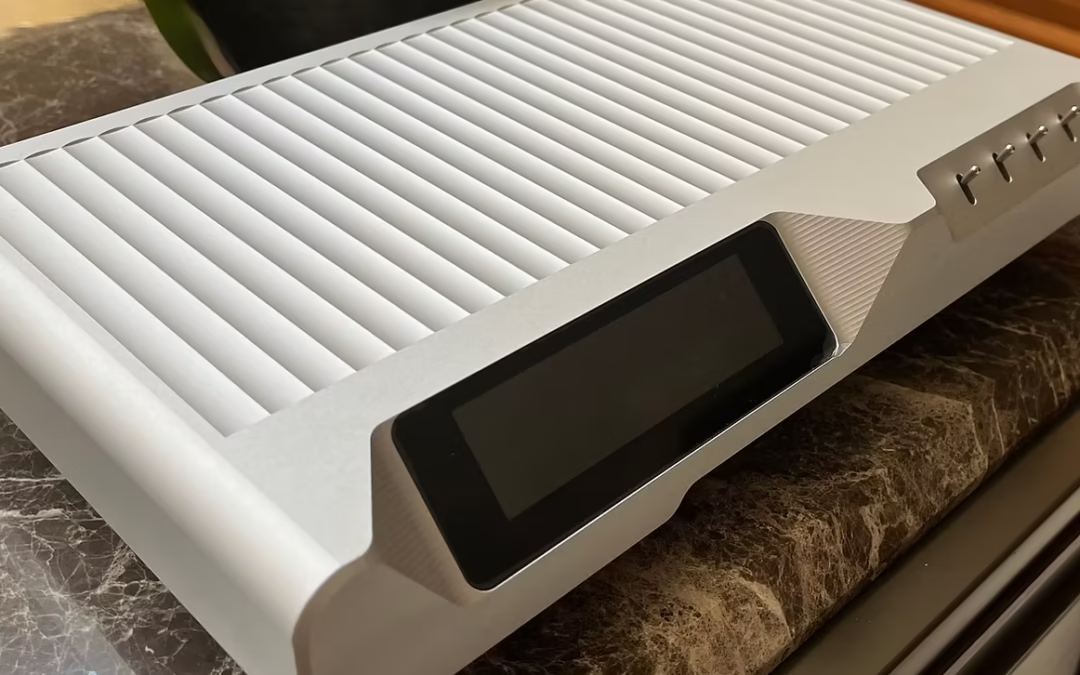
While the Bonn N8 comes in a small, discreet box that can easily be placed anywhere near your Internet box or network drive, the Bonn N8 Pro, at 17 cm long, requires a specific location, but is still nothing compared to the new Bonn NX, which weighs 6.4 kg and measures 43.9 cm long, 25 cm wide and 6.3 cm high.

This can already be combined with a Genesis GX clock of the same size, and will soon be able to be combined with an external power supply from the same range. The power supply currently offered to ensure a reliable power supply is the Forrester F2, which was designed to work with the Bonn N8 Pro. These high-end devices are also top of the range in terms of price, with the Bonn NX costing £3,499 and the separate clock costing £3,299.

silent angel bonn nx chassis rear view connections inputs and outputs

BONN NX: A NO-COMPROMISE SWITCH

Available in silver or black, the Bonn NX is made from the finest materials, as evidenced by its ultra-rigid chassis. It consists of an inner layer of galvanised steel and an outer layer of thick, high-quality aluminium alloy, designed to shield the device as much as possible from interference and noise, with particular attention paid to the effects of Foucault currents – or, more simply, external magnetic fields.

With a modern design that reflects its level of solidity, the Bonn NX has no LEDs on the front panel to avoid any internal distortion, revealing only the engraving of its name, the only noticeable difference from the Genesis NX clock. Three 6 cm stainless steel and rubber feet, arranged in a triangle under the chassis, dampen mechanical energy from the device and other sources, further reducing mechanical and electrical noise.

At the rear, eight gold-plated Gigabit Ethernet ports are spaced apart to avoid interference between them, while next to them is a stylish gold-plated earth connection terminal and two mains inputs, the first IEC 100-240 V for direct connection to the internal power supply, and the other DC 12 V/1 A for use with an external power supply, such as the aforementioned Silent Angel Forrester F2.

Above each Ethernet port is a small LED, green to indicate the data input signal and orange to indicate when the signal is output. These LEDs can be disconnected using a small switch if they are found to cause very slight interference. A second switch allows you to switch from the internal clock to an external clock.

Using the latest technologies, the Bonn NX features an ultra-precise clock and power supply circuit with two 25 MHz TCXO modules to limit jitter to 369 ps, powered by a multi-stage power circuit that eliminates crosstalk. Next to this is the power supply circuit for the switching system, a very low-noise voltage regulator consisting of Texas Instruments TPS56623x blocks. A final switching power supply circuit, combined with an exclusive AC power supply module, completes the device, with the aim of minimising all parasitic noise as much as possible.

GENESIS NX: THE ULTIMATE CLOCK

To match the Bonn NX, the Genesis GX clock uses exactly the same chassis, but consists of four completely independent TCXO (Temperature Compensation Crystal Oscillator) crystal clocks, two under 10 MHz and two under 25 MHz, the latter value alone being used in our tests, which were carried out exclusively with the brand’s switch. A Radar-Grade switching power supply module also does its job, and can be replaced by an external power supply. Even more accurate, the clock improves jitter effects, without Silent Angel elaborating on its value, which we were unable to measure given the equipment required to reach such low levels.

INSTALLING THE SILENT ANGEL BONN NX

Tested with and without a clock, the Bonn NX was connected to three of our streamers, although given its price range, we would have liked to test its qualities with the best devices on the market, including CH Precision’s DAC with C1.2 network card, which unfortunately had been returned a few weeks earlier. Connected via Audioquest Vodka and Esprit Eterna RJ45 cables to a Bouygues Ultym box and an Orange Livebox 6, the Bonn NX was successively compared to listening without a switch and to listening with the Bonn N8.

We also took advantage of the 3D-Lab Nano Power test to power the Bonn NX via its 12 V socket, then the switch and clock using a splitter. These tests were repeated with our Ferrum Hypsos, which is always connected to ensure a reliable power supply to our auditorium boxes.

THE SOUND OF THE SILENT ANGEL BONN NX

Placed between the Internet box and the network player, the Bonn NX necessarily requires the addition of a second RJ45 cable, with the better of the two always connected from the switch to the player, rather than from the box to the switch.

As soon as the Bonn NX is integrated, especially when compared to listening without a switch, the clarity of the soundstage changes completely. The sound becomes more airy, the room opens up and the message is better defined, finer and more lively.

On Keith Jarrett’s Köln Concert, the piano is more present and the live effect is better defined (the laughter and then the creaking door at the beginning). On Beethoven’s 9th (Karajan DG 1965, HD), the choir breathes more and is even more generous in the crescendos when using separate power supplies. All these advantages also bring a slight improvement in timbre, effects that were already obvious with the Bonn N8, but even more accomplished and perfect with the Bonn NX.

When adding the Genesis GX clock, the dynamics seem more limited, probably because our best streamer, the Mark Levinson 5101, is no longer quite up to the task of handling such a switch-clock combination, which is more expensive than it is.

However, the timbres are still improving, as is the placement of instruments and voices on the stage. Without the clock, the tests are just as conclusive when the switch is used on the 3D-Lab Nano Player Platinum and Atoll ST300 streamers, although upgrading to a higher-end player and DAC makes the differences even more noticeable.

The purity of the network data is unforgiving with recordings, and the tendency to inflate the microphones for slow movements in concertos (on Glenn Gould’s Sony albums, for example) or quiet passages in symphonies (Mahler’s 8th by Dudamel, DG) is immediately noticeable.

silent angel bonn nx chassis rear view top

OUR CONCLUSION

Since the arrival of the Bonn N8, the contribution of an audiophile switch has been indisputable in network playback whenever you want to use a streamer and HD files, especially if you have a Qobuz Hi-Res subscription. With the Bonn NX, Silent Angel has gone even further to take data purification to unprecedented levels.

Obviously, at £3,499 and with an optional separate clock costing £3,299, these new products are intended for very high-end systems, but now seem essential if you want to enjoy music from digital files at the highest level.

Author: Vincent Guillemin

TECHNICAL SHEET : SILENT ANGEL BONN NX

  • Origin : China

BONN NX

  • Prix : 3 499 €
  • Dimensions : 439 x 63 x 250 mm
  • Poids : 6,4 kg

ENTRÉES SECTEUR

  • IEC (AC) 100-240 V, 50/60 Hz
  • (DC) 12 V/1 A (5,5 mm x 2,5 mm)

PORTS D’ENTRÉES

  • 8 x Ethernet 1 GbE RJ45 plaqués or

GENESIS NX

  • Prix : 3 299 €
  • Dimensions : 439 x 63 x 250 mm
  • Poids : 7,4 kg

ENTRÉES SECTEUR

  • IEC (AC) 100-240 V, 50/60 Hz
  • (DC) 12 V/1 A (5,5 mm x 2,5 mm)

PORTS DE SORTIES

  • 2 x BNC 25 MHz plaqués or
  • 2 x BNC 10 MHz plaqués or
REVIVAL AUDIO Atalante 3

REVIVAL AUDIO Atalante 3

We are delighted to be presenting a product from the young Alsatian brand Revival Audio for the first time. From its catalogue of four loudspeaker models, we have selected the beautiful Revival Audio Atalante 3, little sister of the more dominant Atalante 5, for a listening pleasure shared by most of the music tested during the few weeks we were able to enjoy this model.

Created in 2021, Revival Audio is the fulfilment of a desire that its designer Daniel Emonts has had for over 30 years: to make the best loudspeaker possible at a price that is still reasonable. After many years’ experience in hi-fi, the Frenchman has decided to team up with Taiwanese Jackie Lee to put all his knowledge to good use and offer new products designed using the most advanced materials and technologies.

To complete this partnership, the two engineers have called on the Franco-Japanese designers Aki and Arnaud Cooren, whose Paris-based agency A+A has been involved in numerous collaborations with leading modern furniture brands, including Roche Bobois.

The smaller of the two Atalante models, the 3 has many qualities, starting with its deliberately retro but superbly constructed look. Its appearance is complemented by an indisputably top-of-the-range finish and construction, with no visible joints or screws on the body, except of course on the speakers. A fine laser-cut border has been used to create a demarcation between the tweeter at the top and the bass-midrange underneath, with the addition of the brand logo, also very finely crafted. Two grey magnetised covers, also separated by the border, can be placed on top, each covering one of the two drivers.

A true two-way speaker, the Atalante 3 certainly looks to the past in visual terms, and to some extent follows this style in terms of sound, but it uses the most recent and innovative technologies available. Rather than being bought from competitors, the speakers are therefore purely in-house design and benefit from many of the brand’s patents. The 28mm RASC™ tweeter is made up of nine elements, including a soft dome aluminium voice coil preceded by a small component called ARID (Anti Resonance Inner Dome).

Placed in close proximity to suppress potential standing waves and conduct almost all waves to the rear chamber, it results in 95% resonance absorption (manufacturer’s rating). The BSC (Basalt Sandwich Construction) bass driver is just as important and well thought-out, being constructed from twelve elements, with an aluminium basket and a copper ring, and above all with the visibly unprecedented contribution in high-fidelity of basalt in the design of the cone.

Found in lava flows, basalt is extremely light and more resistant than Kevlar or glass, which are often used in hi-fi. The cones are made from fabrics impregnated with this stone, with a sandwich construction that is well known for its damping properties. The ferrite magnet uses a less noble material than neodymium, but which offers very similar or even better performance in some respects, while keeping the price down.

In order to combine the two channels, a crossover is integrated on a single card, hand-assembled with capacitors and copper coils made for Revival Audio, connected by Skyline Hybrid cables from the famous Dutch manufacturer Van Den Hul; it offers a cut-off around 2.8 kHz. At the rear, a round port reinforces the bass, while two WBT terminals allow for the connection of forked or banana plugs.

revival audio atalante 3 hifi loudspeakers view fromt front and read

The set up

Available in a single colour, Atalante 3 has its own dedicated Stand 3 legs, also designed by A+A Cooren. Built on four iron columns, they are completed by a base on four spikes or rubber, depending on the floor on which you wish to place them. Delicately retro, these speakers actually blend just as easily into old furniture as they do into a modern flat, where their natural wood finish adds an ever-flattering touch to the object. Despite a rear port, distance from the wall is not a real problem when it comes to getting the most out of the bass.

With their musical approach and 87dB sensitivity, the Atalante 3s are easy enough to match, as long as you have a relatively comfortable amount of power upstream, at least 50W in class A/B and 15/20W in class A. Tube amplifiers can also be perfectly adapted to their sound, as demonstrated by a test on the Luxman SQ-N150 (although only 10 W in class A at 6 ohms) and the Jadis Diapason (15 W in class AB at 4 ohms).

As for the source, here again we’re leaning towards analogue and the pleasure of trying out our best vinyl records, particularly jazz, but a fully digital system on the source and transistor amplification also enabled us to listen to a wide range of music.

The sound of the Revival Audio Atalante 3

The name of the brand is obviously not a haphazard choice, and while Revival Audio, as we have seen, displays a visual style of the past, the sought-after sound also tends to hark back to the great moments of hi-fi. Immediately, the Atalante 3’s sound is full-bodied and balanced throughout the available bandwidth, with no desire to over-amplify the effects of brilliance or brightness that can be heard in some recent speakers.

The choice of components and the most modern technological research have made it possible to combine the sound of yesteryear with all the characteristics of today, particularly in the reduction of noise and the quality of filtering. More interestingly, the basalt bass-midrange develops lightness for the benefit of clarity of message, and a quality of timbre that is rare for a product in this price range. The Atalante 3s are highly accurate both in the upper and lower registers, and do superb justice to pure recordings such as Bis’s 14th Symphony by Shostakovich, where Nicolas Stavy’s piano benefits from well-defined nuances across the entire keyboard.

Even more captivating, the percussion, and more particularly the bells, stand out singularly, with a marked resonance time right to the very end of the wave. The vocal flesh of the great soul singers benefits just as much from the rendering, the relatively wide image not locking them into a box, but giving them plenty of room to blossom, and still allowing Nina Simone to cast a spell on us (‘I Put a Spell on You’), even though she died twenty years ago.

Less full in height, the soundstage reminds us that we are in the presence of bookshelf speakers, available to be listened to relatively loudly in a large living room, but better suited to relatively close listening in small or medium-sized rooms.

In the same way, they are particularly at ease with small ensembles, but retain their versatility in large ensembles with choirs, without blurring the information, even when these are very full. Switching to R&B also means that the bass is very stable, clean and never unpleasant, even when listening for long periods at high volume levels; here again, the grain is deliberately old-fashioned, adding a real charm to the sound.

Our conclusion

Flattering to the eye with their impeccable finish and wooden cabinet, Revival Audio’s Atalante 3s are a fine entry into the new world of this young Alsatian brand. Deliberately turned towards the past, like the grey covers that can be affixed to the front panel if you wish, these compact speakers manage to offer a sound that is both old-fashioned and at the same time perfectly modern in everything we can expect today, as much for the quality of the crossovers as for the precision of the details and the clarity of the soundstage. At €2,490, these French-assembled speakers from Daniel Emonts are a real success.

revival audio atalante 3 hifi speakers close-up front view and rear view vumetre remarkable logo on the top left corner

Author: Vincent Guillemin

Technical sheet: Revival Audio Atalante 3

  • Origin: France
  • Price : €2,490
  • Dimensions : 390 x 240 x 270 mm
  • Weight : 11 kg
  • Type : 2-way bookcase
  • Option: Stand 3 feet
  • Impedance: 4 ohms
  • Sensitivity: 87 dB/2.83 V/1 m
  • Frequency response: 44 Hz – 22 kHz ; -3 dB
  • Filter frequency: 2.8 kHz