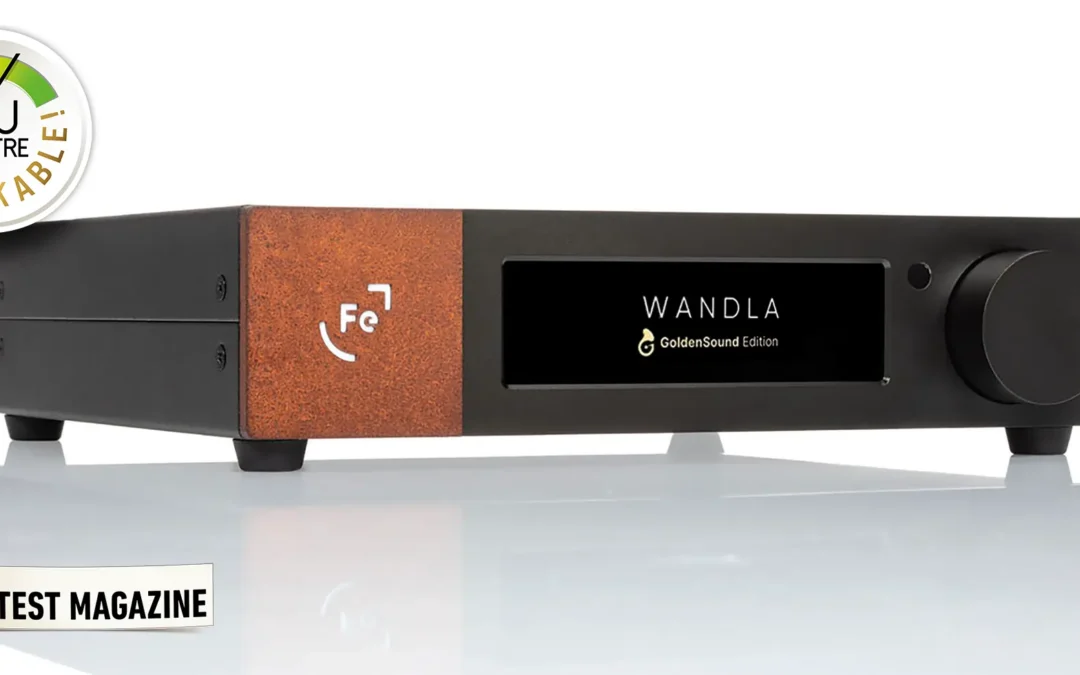
Founded in 2020 and launched with the Hypsos power supply, Ferrum Audio expanded its catalog with a DAC headphone amplifier in 2022, followed by a pure DAC the following year. Called Ferrum Wandla, this digital-to-analog converter won an EISA award in 2023, which did not prevent the Polish brand from further refining its concept with a special edition in partnership with the Internet media outlet GoldenSound. Based on the same components, this version revises and adds numerous sound settings to adjust the music as precisely as possible to the listener’s preferences and desires at any given moment.
Co-founder and partner of Mytek, Marcin Hamerla decided at the turn of the decade to develop his own products and created Ferrum Audio for this purpose, still in the suburbs of Warsaw. In 2020, the brand launched with a Hypsos power supply, followed the next year by the Oor headphone amplifier (both reviewed in our issue no. 40, in the Essentials section).
It took courage to launch a new brand on the market with only an ultra-stabilized power supply, but this actually allowed the company to create an extremely healthy foundation on which to develop more complex products later on. In 2022, the Erco took some of the Oor’s technology and added digital-to-analog conversion and a preamp, turning it into a true desktop companion, which only needs a power amplifier if you also want to connect speakers.
A year later, after we had chronicled its development during a visit to the brand’s headquarters at the end of 2022 (see report in issue 45), the pure DAC Wandla was launched, based on some of the most highly regarded chips on the market.
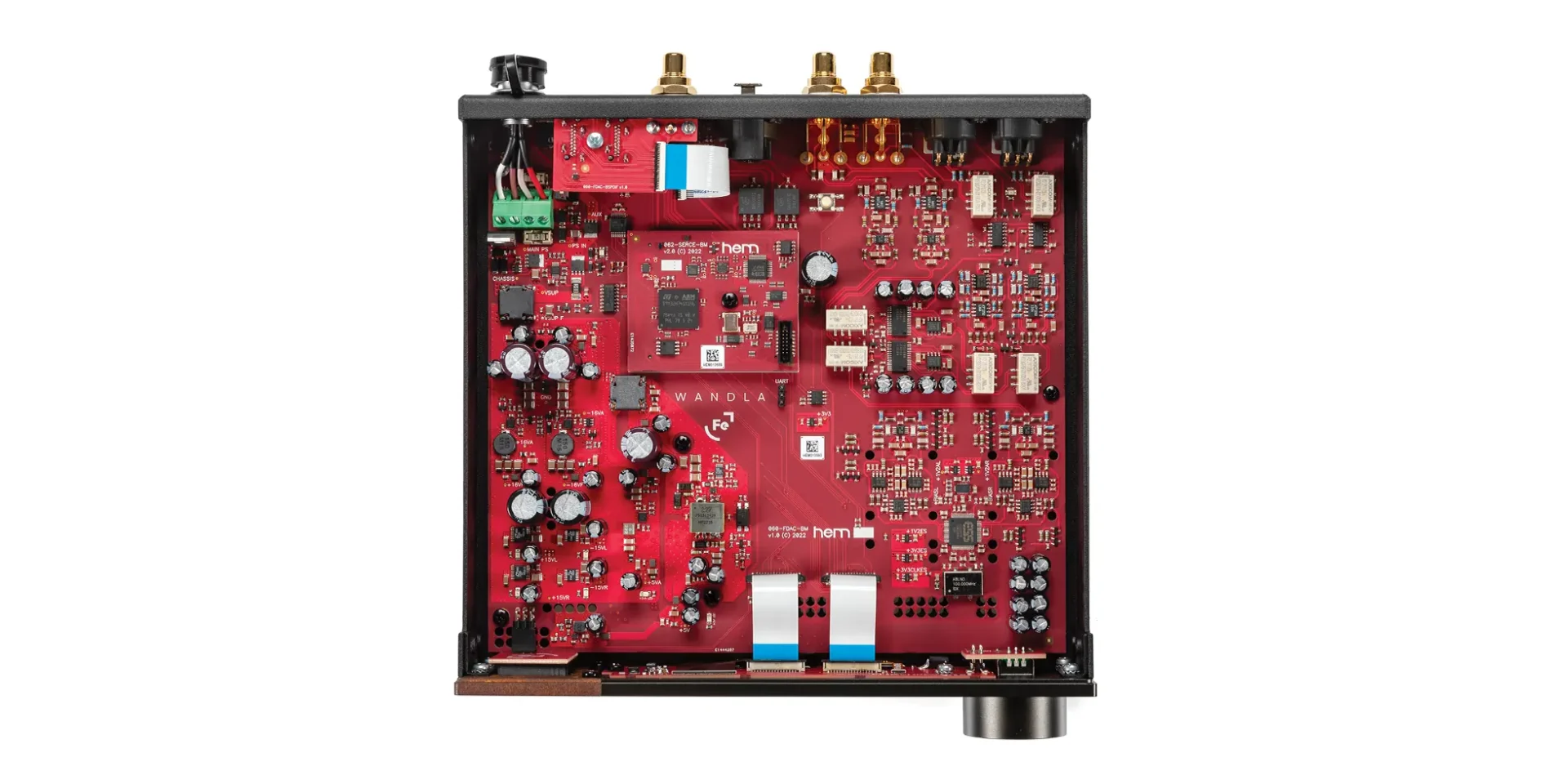
Based on an ARM processor redesigned to create a proprietary platform called SERCE, this DAC incorporates an ESS 9038PRO conversion chip that has been configured over hundreds of hours—we witnessed the development method firsthand with engineer Maksymilian Matuszak—to obtain the most perfect curves possible on the eight DACs it contains.
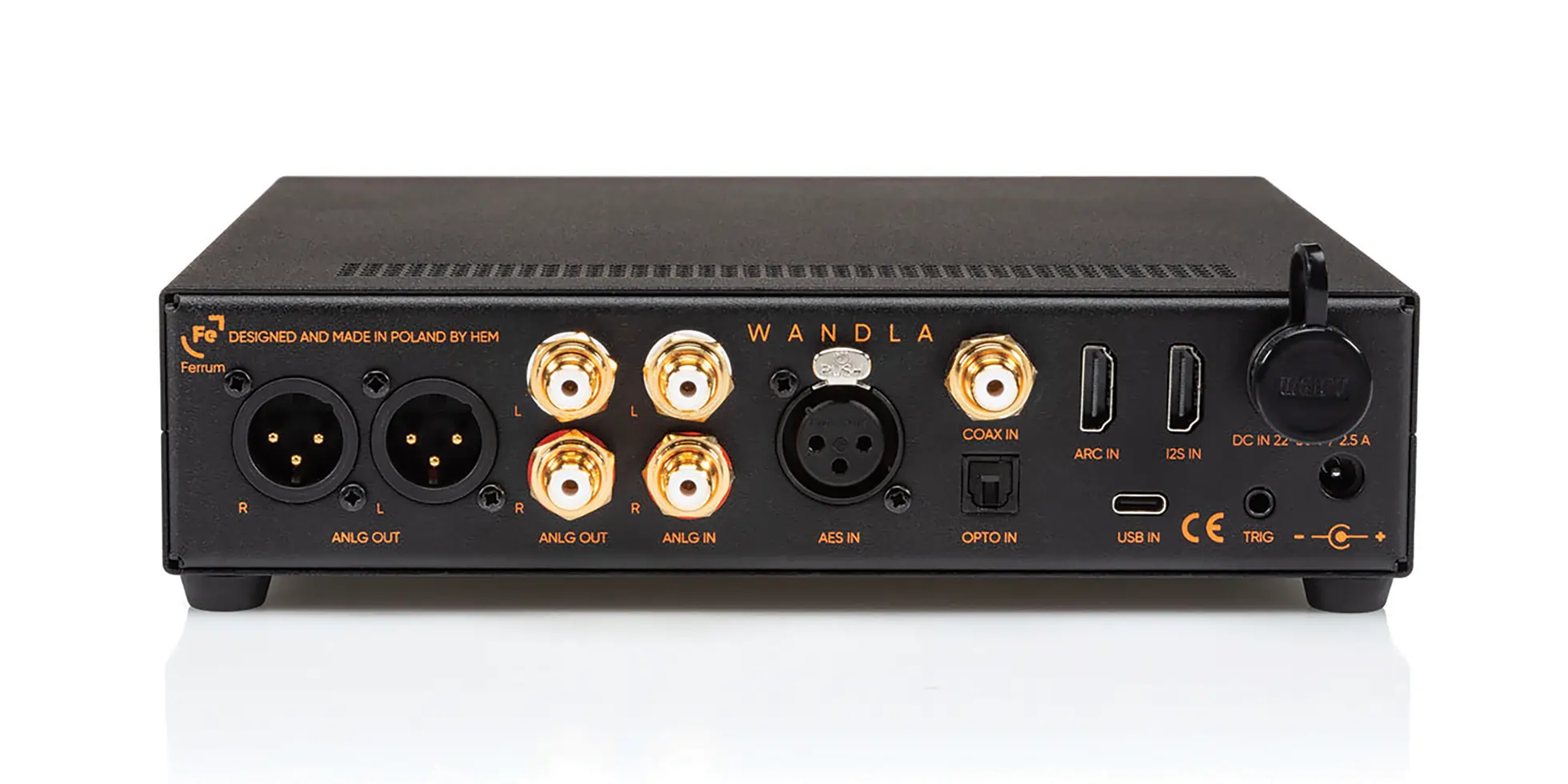
Designed to handle the densest files possible, it can decode up to 768 kHz/32-bit PCM and DSD512 files. Obviously, this requires the use of I2S or USB-C connections, but otherwise, depending on the sources you want to integrate, you can still use the RCA S/PDIF port, an ARC port, or AES, all of which are designed to handle formats up to 192 kHz/24-bit. There is also an optical connection, but it only offers a maximum rate of 96 kHz (which is already higher than most streamed files, often at 44.1 kHz if they are not Hi-Res).
With such connectivity, the Ferrum Wandla is extremely comprehensive and will remain relevant for many years to come, especially since its software can be updated very easily via the touchscreen on the front panel. Opening the top cover reveals the perfection of the circuitry, perfectly arranged on a board that fits the internal dimensions of the device.
Like all of the brand’s products, it is inserted into a rigid chassis manufactured in-house in Poland, whose compact dimensions (21 x 206 x 50 mm) allow it to be discreetly integrated into any system.
Speaking of discretion, it’s worth noting that all of the DAC’s components are discreet, and that the most disruptive parts, such as the color touchscreen on the front panel, are isolated on the board to avoid interference, while the circuit on which the Serce module is located is slightly raised. In addition to being a DAC, the Wandla is also a true preamplifier, since, like the Oor, it offers a pair of RCA terminals for connecting an additional analog source—for example, a Ferrum phono preamp, which we hope to see soon!
WANDLA & GOLDENSOUND PARTNERSHIP
Already very comprehensive and modular, the Ferrum Wandla has evolved further in 2024, thanks to a partnership with the hi-fi website https://goldensound.audio. Thanks to this version developed in-house by Paweł Gorgon, the device gains numerous parameters, all of which are immediately identifiable to the ear.
With these new settings, the Ferrum Wandla Goldensound loses the MQA function, which has already become obsolete for many, but gains much more with:
• improved digital processing margin, which raises margin levels and provides better immunity against overshoot between samples;
• spatial improvement, which further opens up the soundstage and separates elements more effectively. This mode can be adapted for listening with headphones or speakers;
• a Tube mode, which deliberately increases even-order harmonic distortion in order to seek the sounds normally produced by tube amplifiers, and in particular a warmer sound;
• Impact+ mode, which enhances the impact of the bass thanks to a custom two-band equalizer;
• Voltage adjustment, which allows you to switch from an output just below 10 Vrms to an output just below 4 Vrms, in order to better adapt to all amplifiers and thus avoid using a volume control in the signal path.
THE SETUP OF THE FERRUM WANDLA GOLDENSOUND EDITION
Received in our auditoriums with a Hypsos, the Ferrum Wandla was listened to for several weeks on three different speaker systems and two headphone systems. Very quickly, we limited the source to the Wattson Audio Emerson network transport (tested in this issue) connected via coaxial S/PDIF (Esprit Célesta G8 & Eterna G9 cables) and to a computer with HD and Hi-Res files, connected via USB-C.
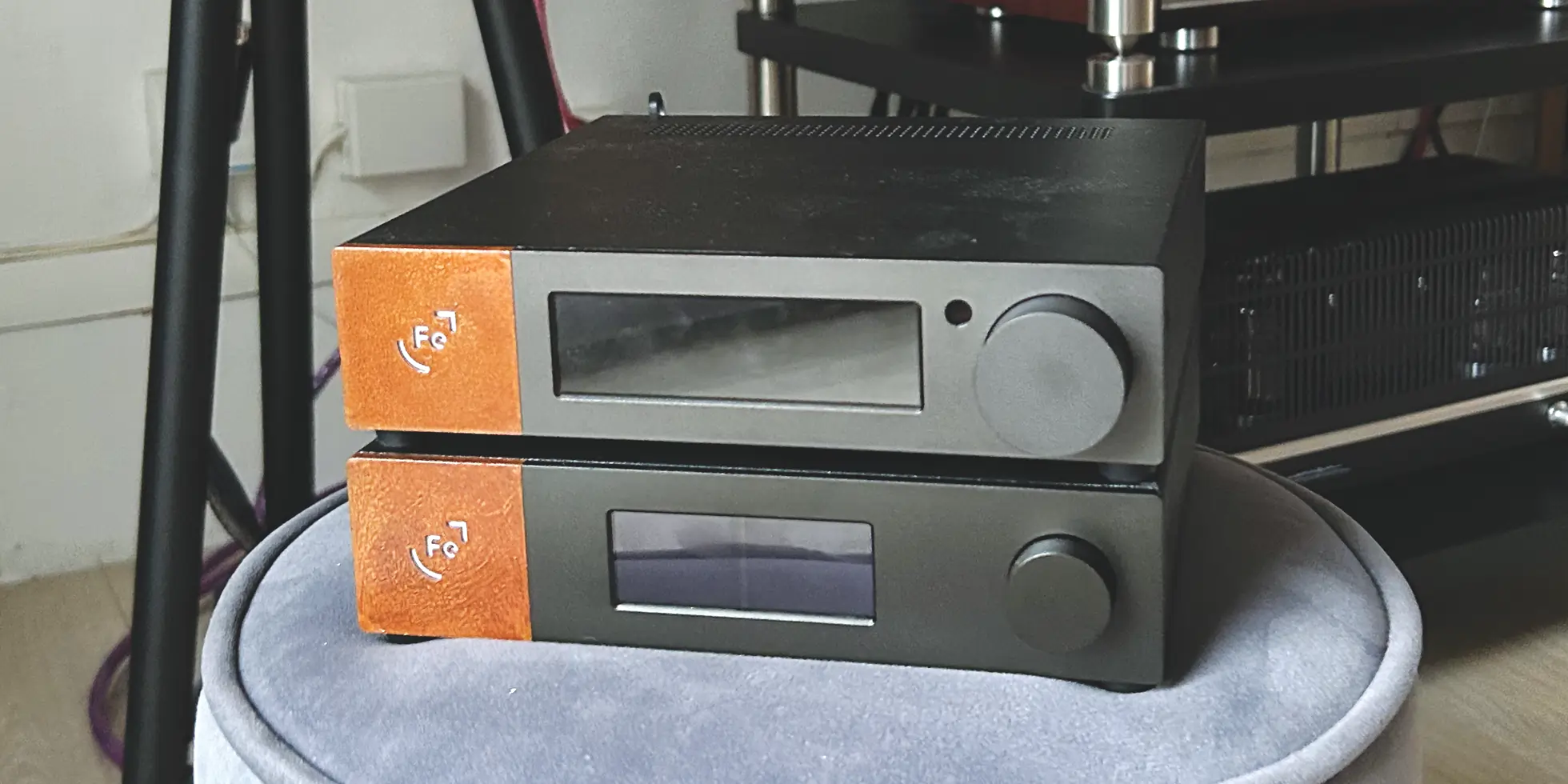
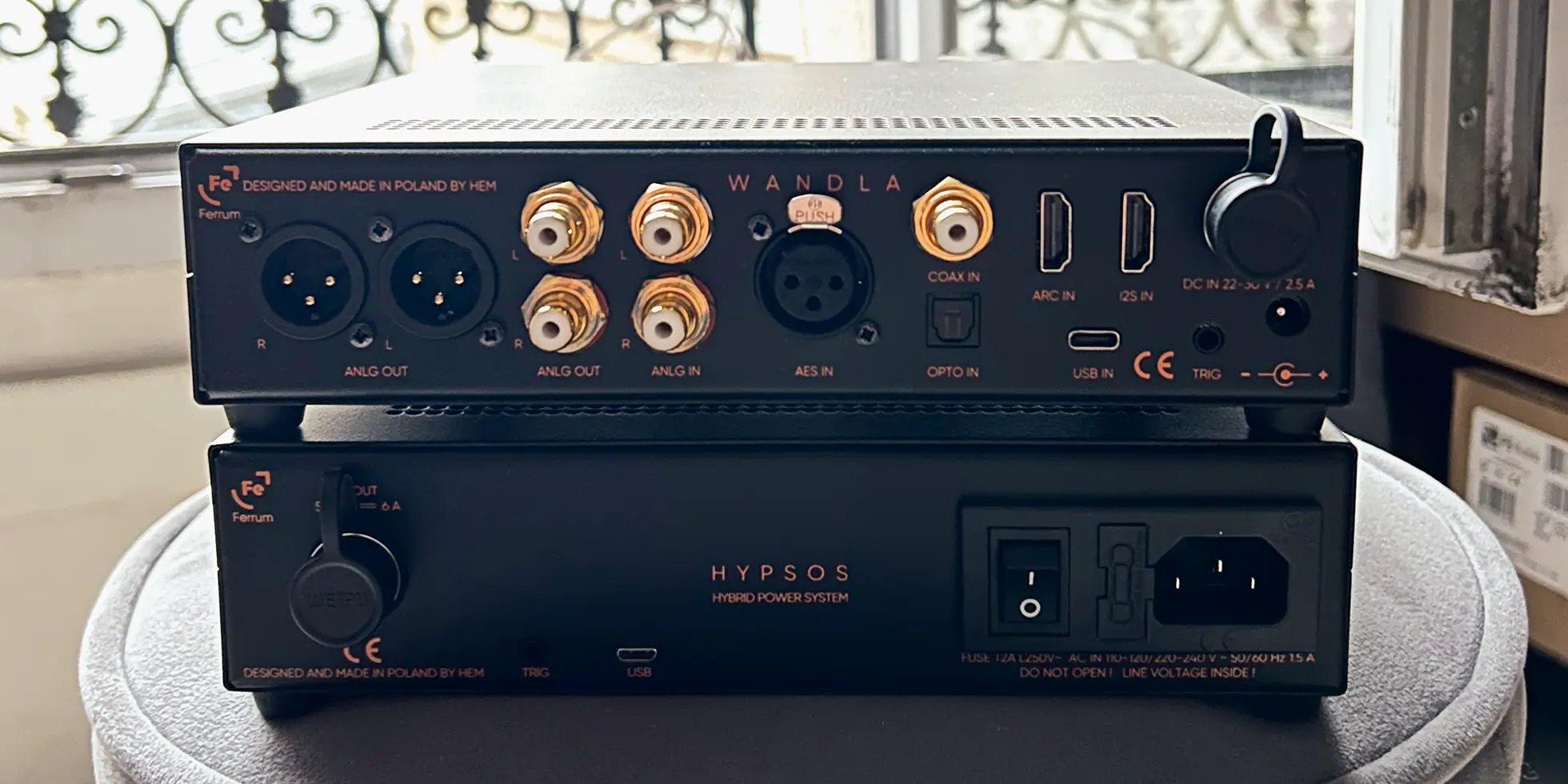
Initially listened to with the standard power supply, the Ferrum Wandla was connected to the separate Hypsos power supply for the second part of the tests, whose significant impact on the sound allowed us to better analyze the differences in the sound settings available only on the Goldensound version.
Once tested, these options proved to be sometimes interesting and at other times truly magical, depending on the systems used, such as the spatial improvement in headphone mode on the Susvara Unveiled, or the stunningly charming Tube mode with the Luxman CL-38uC/MQ-88uC amplifier-preamplifier combination.
THE SOUND OF THE FERRUM WANDLA GOLDENSOUND EDITION
In today’s world, an audiophile DAC without a streamer must be either extremely expensive, very cheap, or extremely comprehensive and powerful. Not playing in the same league as Nagra, dCS, or Eversolo, Ferrum Audio’s Wandla must necessarily stand out in the third category mentioned above.
And it would be difficult to do better in terms of connectivity, except to regret the lack of a USB-B port. In any case, USB-C allows for a much more stable connection to a computer, while the ARC and I2S sections ensure very high reliability. As for the coaxial and optical sections, they once again demonstrate the quality of the signal processing with unfailing purity, especially when using an upstream streamer.
Musically, the ESS 9038PRO chip is not immediately recognizable, so when listening, it is clear that this processor has not simply been installed and integrated according to the manufacturer’s instructions, but has been studied in depth to bring out the best in it, taking advantage of its eight DACs and extreme speed. The sound is therefore less bright and much more neutral than with other competing DACs using the same chip, far from the caricatured idea that some people still have of Sabre DACs.
This neutrality, reinforced by a source such as the Emerson, can sometimes even lack brightness or roughness, although this can be easily corrected by the numerous listening options, in particular by switching to “HQ Apodization” oversampling.
Highly accurate, the Ferrum Wandla integrates seamlessly into a high-end system or can simply be an excellent companion to the Ferrum Oor headphone amplifier. And while it benefits from being powered by the Hypsos, it truly becomes a unique machine when upgraded to the Goldensound version. Its Impact+ setting gives it real added value in the bass range, making it much more powerful for rock or hardcore music.
Similarly, Tube mode is a treat with certain systems, as the slight distortion added to match the natural distortion of the tubes brings warmth and a wonderful extra emotional depth to jazz and soul music. As for the spatial enhancement, its effect is often immediate, whether for headphones or speakers, and while it sometimes feels a bit too much with our Kennerton Thror, the result with a Hifiman Susvara is excellent, and the spatial gain for speakers really opens up our Jern speakers, while this effect is almost overdone and therefore not to be used on our small, high-efficiency Closer speakers.
OUR CONCLUSION
Very well designed to offer a plethora of digital connections and even a pair of analog RCA terminals, the Ferrum Wandla DAC-preamp seeks to compete with the big boys in terms of performance, despite its modest price tag of €2,795. It can be upgraded with the separate Hypsos power supply for €1,195, but it is now well worth choosing the Goldensound version, because although its price increases by €500 to €3,295, the added features allow it to be tailored to the sound characteristics of each piece of music and to individual preferences, often with remarkable results.
IDEAL UPGRADE: THE HYPSOS POWER SUPPLY
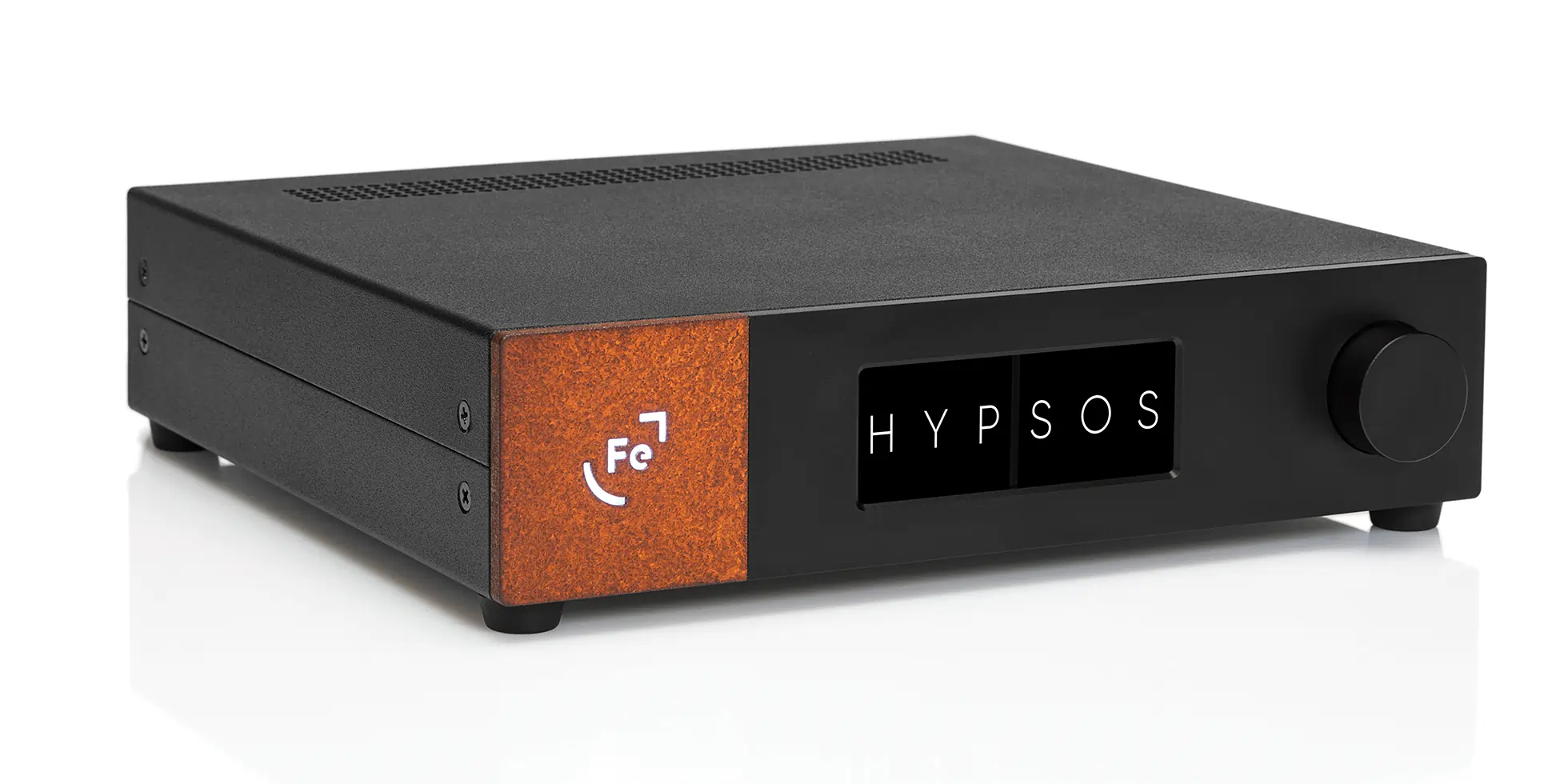
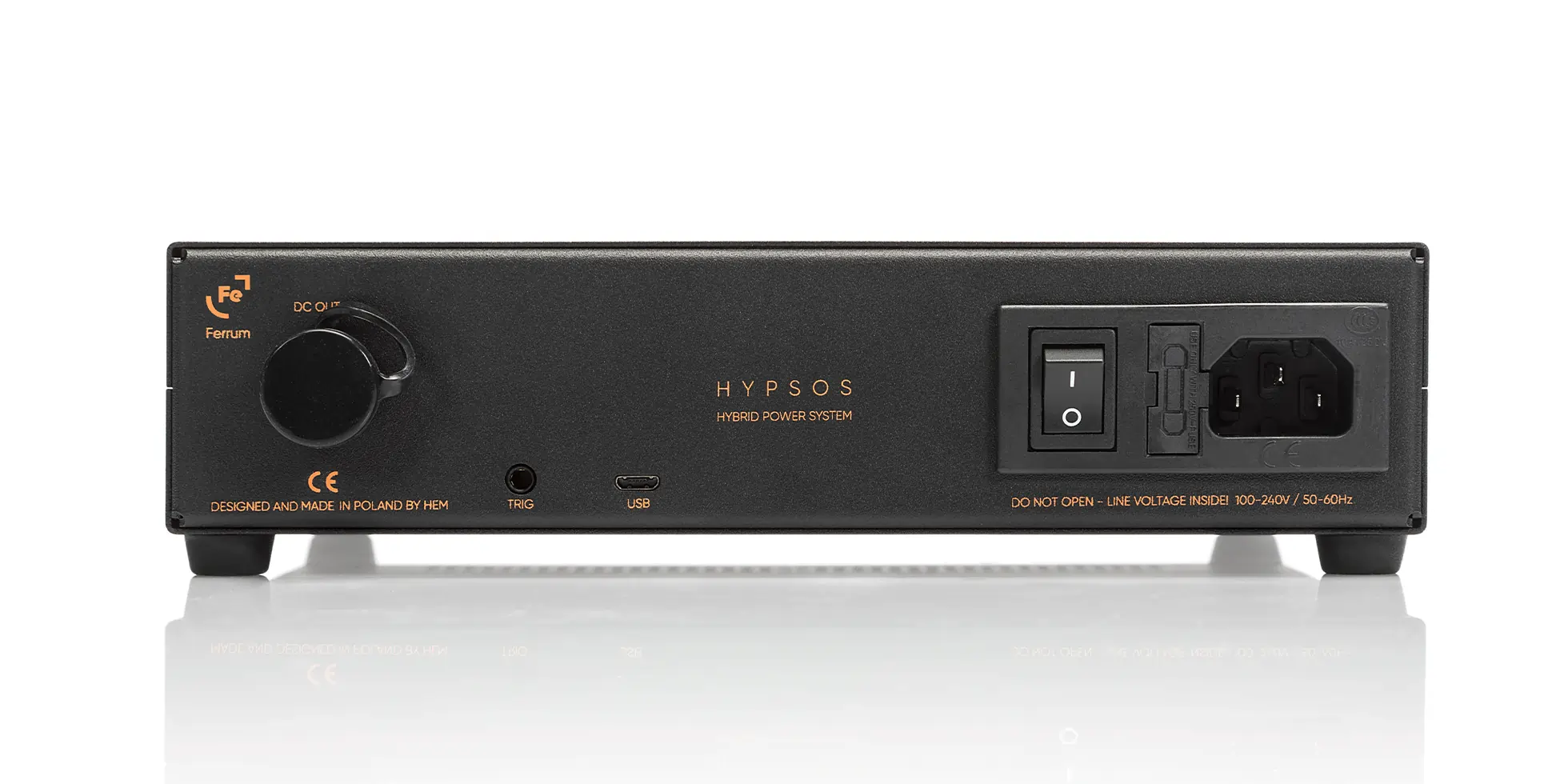
Although it has its own power supply, the Ferrum Wandla’s performance can be further improved when connected to the brand’s ultra-stabilized power supply. Already tested and reviewed in our columns, the Hypsos is used in two of our auditoriums to stabilize Internet speakers, replacing the small power supply provided by the manufacturers. Much more reliable, the network signal gains almost as much as when audiophile switches are added between the boxes and streamers.
But in addition to providing continuous service for the Internet, Hypsos is regularly used to push all tested devices with separate power supplies to their maximum potential. It also receives regular updates to automatically adapt to many devices with the utmost precision (in 0.1 V increments over a 10% range). In addition to all Ferrum products, 3D-Lab, Silent Angel, and Wattson products are now pre-configured on it, including the small Emerson, which we tested with and without during our trial for this issue.
THE SOUND
Once the Hypsos has been configured—be careful not to plug it in before changing the voltage, as this could burn out your devices—and then connected to the Emerson or, even better, the Ferrum Wandla, the sound gains in clarity and precision. While this may slightly affect the dynamics on the Emerson, there is a clear refinement of the timbres in return, while once connected not with a DIN but with a proprietary FLP (Ferrum Power Link) cable to the brand’s DAC, the Hypsos simply enhances all the musical components. Brighter, the soundstage gains depth and loses even more noise, resulting in improved timbres, texture, and contours.
Renewed in 2023 to become S3, the Bowers & Wilkins 700 Series now comprises eight models, to which three Signature versions were added in 2024. Of these eight models, no fewer than three are compact speakers, the largest of which, the Bowers & Wilkins 705 S3, stands out with its carbon dome tweeter decoupled from the cabinet. Priced at €2,990 per pair, this 800 Series seed already offers everything that characterizes the Bowers & Wilkins signature, with a racy and highly detailed sound that never overflows, even at the extremes, where this bookshelf speaker is happy to go without fear, even at very high volumes.
Revised by engineers immediately after the launch of the new 800 Series, the S3 Series of the 700 range continues to develop the technologies dear to Bowers & Wilkins across a substantial number of models, whose prices remain affordable for music lovers.
Now comprising eight speakers, the Bowers & Wilkins 700 S3 series offers three floorstanding models (702 S3, 703 S3, and 704 S3), two center channel models (HTM71 S3 and HTM72 S3), and three compact models (705 S3, 706 S3, and 707 S3).
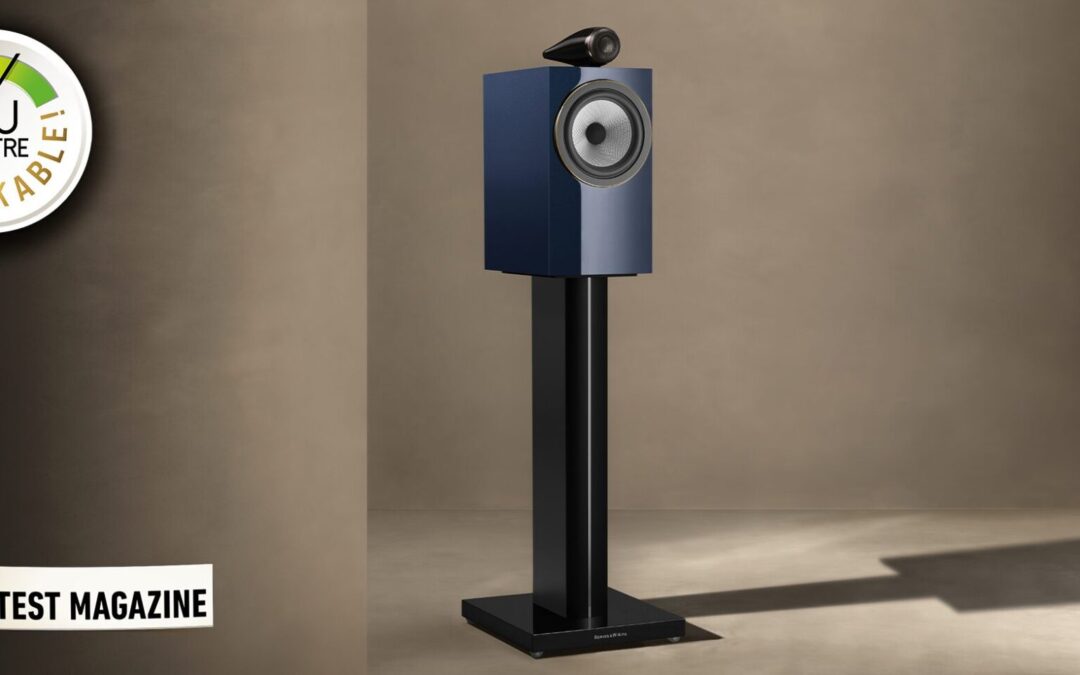
And among these, no fewer than four proudly display the tweeter cone above the main cabinet: the HTM71 S3, the 702 & 703 S3 and the 705 S3, the latter also available in a Signature version, distinguished by its blue tint and a few cosmetic and technical improvements (for an additional $1,000 per pair).
The largest of the small models, although still a two-way speaker, the Bowers & Wilkins 705 S3 features the same cabinet as the 706 S3, but while the latter incorporates the tweeter directly with the midrange driver in the cabinet, the 705 S3 stands out by adding the cone independently on top, for a final height of 68 mm (413 mm with the cone versus 345 mm without).
Highly prized even though it does not feature the Diamond technology of the 800 series, the 25 mm (1″) Solid Body Tweeter-on-Top in the 700 series has been developed specifically for this new series, with a carbon dome encapsulated in a cone cut from a solid block of aluminum weighing nearly a kilo, elongated compared to the previous generation and capable of producing high frequencies up to 47 kHz. This independent cone not only offers the advantage of better imaging and time alignment, but also serves as a heat sink for the dome.
For the rest of the sound spectrum, a 165 mm (6.5″) Continuum composite membrane handles both midrange and bass frequencies, and even incorporates B&W’s patented FST technology in the Signature version. Slightly curved, the driver is inserted into a redesigned “pod” basket and integrated with Flowport technology, developed to optimize airflow and therefore sound waves.
The cabinet, with its rigid contours to counter vibrations, has been slimmed down, while the rear panel, completely redesigned from the S2 generation, now features an even wider vent behind the bass-midrange driver and four more terminals for bi-wiring, now located in a row at the bottom of the speaker and integrated into a highly refined screw-on metal plate.
Supplied with protective grilles for the front, the new 705 S3 is available, like the rest of the range, in satin black or white, as well as in a classy mocha wood finish (at no extra cost); the Signature version comes in the midnight blue color also seen on the 800 Signature series. As for the stands, the dedicated FS-700 S3 model fits the 705 S3 as well as the other two compact speakers in the range, available in a choice of silver or black finishes, but at an additional cost of €900 on top of the price of the speakers.
THE SETUP OF THE BOWERS & WILKINS 705 S3
Listened to at Hifi 35 in Rennes, the Bowers & Wilkins 705 S3s were tested with several systems and compared to the 703 S3 floorstanding speakers. In the end, the most suitable configuration proved to be listening to them with the new Rotel RAS-5000 integrated amplifier and streamer, which costs the same as the speakers (€2,990) for a complete pair under €6,000 (not including cables, stands, and other sources).
The RS-700 S3 stands allowed us to get the most out of these compact British speakers, without having to compare them with others, as their support – particularly in the bass – won us over. Spaced about 3 m apart at the start of the test, the 705 S3s were then moved closer together, but at the expense of the soundstage, which was truly impressive in the first configuration.
We did not question the space between the speakers and the rear wall, which the manufacturer recommends be at least 50 cm, and which was more than a meter for our test, so as not to create negative waves in relation to the vent. A gap of 50 cm from the side walls is also recommended, so as not to close off the sound too much, unless you are looking for a more monitor-like listening experience.
THE SOUND OF THE BOWERS & WILKINS 705 S3
As soon as we played our first track, the 705 S3s immediately revealed their lineage and roots: this is definitely Bowers & Wilkins!
With a sound quality perfectly in line with their range—and even among the best for their price—they maintain everything across the entire spectrum, with this balance found both in the immediate response of the treble and in the crossover with the 6.5″ speaker, which is itself capable of delivering a wealth of detail with speed.
In keeping with this, the bass is also perfectly controlled, well focused and very clear, extending far down (50 Hz) compared to the size of the speakers, even at very high volumes. Pushed to their limits, the 705 S3s almost never saturate, especially in the lower range, reminding us that they are also excellent companions for home cinema, where they can be used both as rear speakers in an expensive system and as main speakers around a living room screen.
With these characteristics, whose precision and amplitude have been further improved compared to the previous generation, all the elements of B&W sound that we love but which may be less appealing to some are also back.
Precise and analytical, the treble offers a particularly comprehensive view of the high frequencies, without displaying the beautiful brilliance of the Diamond tweeters in the 800 series, but also without showing the slightest cut-off defects (the extreme treble extends beautifully) or displaying any harshness. The excellent soundstage favors width and surprises with its height, without seeking as much depth.
With this very dynamic, sophisticated sound, the Bowers & Wilkins 705 S3 offers the advantage of great concentration and a multitude of details (the pizzicati of the strings or the small percussion instruments really stand out in large orchestras), and even real tension (perfect for rock, for example), with a midrange that, at the same time, does not seek to be shimmering, favoring clarity over substance.
OUR CONCLUSION
With their stunning looks, the new Bowers & Wilkins 705 S3 speakers (in their classic version, although also available in a Signature version) once again demonstrate the quality of the group’s R&D.
Despite their cabinet height of only 34.5 cm, they open up a wide and high soundstage, rich in detail, without being trapped by difficult listening conditions or very high volumes, such as with metal, indie rock, or organ music (you feel as though you are hearing the instrument in reduced format, without any saturation or loss, as everything remains concentrated and integrated into the rendering).
Further improved with a subwoofer or center speaker (especially in a home theater setup), these largest of the three bookshelf models in the 700 S3 series are by far the most accomplished. At €2,990, with an additional €900 if you want to place them on the perfectly adjusted RS-700 S3 stands, they are a very versatile choice for listening in your living room, and can be integrated into a hi-fi or home theater system costing less than €6,000.
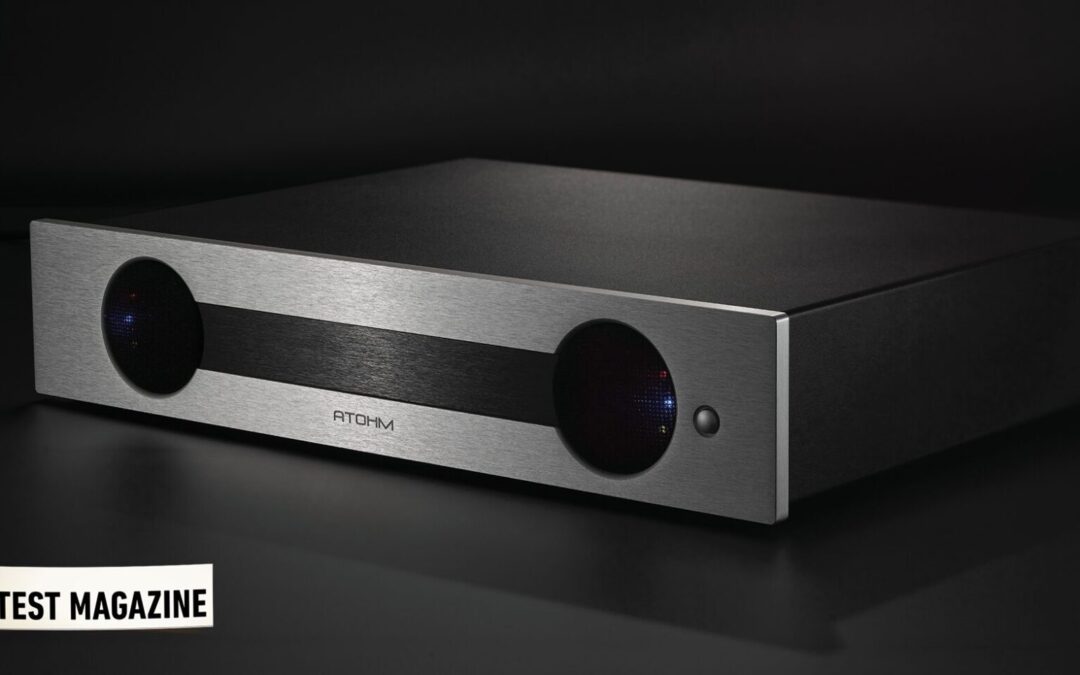
Thierry Comte, creator of the Atohm brand, recently set about developing a power amplifier, fine-tuning its settings to match his Atohm GT speakers as closely as possible. The result is the Atohm RS700 GT Edition, which delivers 350 W under 8 ohms in class D, with control via an analog-to-digital card incorporating a DSP.
Designed to work with all speakers on the market, it is even more suited to the brand’s models thanks to these exclusive settings, particularly in the lower end of the spectrum, which is extended at will thanks to X-Tend technology, under the protection of U-Guard and X-Guard, which limit bass peaks when their power could tear the speaker membranes.
It’s been a while since we last talked about Atohm, a French speaker manufacturer whose GT1 speakers we have at VUmètre, and which caused a sensation at the last Munich show with the presentation of new entry-level speakers, notably installed on the latest Sirocco speaker models to be launched very soon.
In the meantime, we return to the manufacturer’s catalog with its unique electronics, a dual-mono power amplifier with Class D stages capable of delivering up to 350 W into 8 Ω and 700 W into 4 Ω. Controlled by 96 kHz/24-bit DSP, the two amplifier boards are combined with a digital-to-analog preamplifier board that provides the finest possible control of the signal sent to the speakers. And since this is a Class D amplifier, its phenomenal damping factor exceeds 1,000 (measured by the manufacturer at 1,000 Hz/4 ohms).
The RS700 is very comprehensive and comes in several editions, including a Waterfall edition, adapted to the brand’s speakers and subwoofers, in exclusive partnership with Atohm for the speakers. For this test, however, we logically opted for the GT Edition, which is adaptable to the three speaker models in the GT range.
On the rear panel, we will quickly skip over two terminals that are unnecessary for this model (S/PDIF input and output) to focus on the speaker terminals and low-level RCA or XLR inputs, which are used to connect an analog preamplifier or simply a source with volume control.
There are also two low-level XLR outputs for those who would like to add one or two subwoofers, with a high-pass filter that can be set to 60-80 or 100 Hz with a 12 or 24 dB slope to avoid interfering with the bass frequency. Trigger jacks are also provided, which are always useful for powering up all the devices in a system at the same time.
To ensure the cards are properly cooled, all these inputs and outputs are located in the middle of the rear panel, between two very quiet 2,500 rpm fans, which are very useful when you want to listen to music at high volume for long periods of time.
On the front panel, there are circular vents on each side, and in the center of the panel, a set of knobs and switches (XLR/RCA; sub output, mute, etc.) placed in a row, the last of which allows you to bypass the X-Tend function. Once set to the correct parameters for conventional use, all these switches and vents can be covered by grilles and an aluminum strip, which are more pleasing to the eye.
DESIGNED FOR GT
So far, the Atohm RS700 GT Edition has been fairly conventional in its description of a high-quality dual-mono Class D amplifier with high-quality DSP, but it can drive any speaker model by providing real active filtering capabilities. It stands out even more when paired with Atohm GT speakers. To do this, you need to remove the cover and move the small switches inside to switch from classic mode to GT1, GT2, or GT3 mode, each of which has been finely tuned to the capabilities of the speakers.
Once GT mode is engaged, the RS700 truly shows its personality, as it adds two technologies focused on bass performance. Even in classic mode, the amplifier offers a U-Guard system that limits the amplitude and, more specifically, the clipping of signals, to ensure that they do not saturate the power stages and risk degrading the sound or damaging the speakers.
Already effective, this soft clipping is further enhanced when switching to GT mode, thanks to X-Guard technology, which constantly monitors the level of movement of the woofers to ensure that they never become too distorted. When activated, small green LEDs appear on both sides of the front panel. The third level of safety, T-Guard, constantly monitors the average energy sent to the speaker coils to prevent them from burning out. In the event of overpowering, the level is lowered by 15 dB for about 20 seconds (indicating that the sound level should be reduced for listening).
Thanks to all these precisely managed control systems, it has been possible to add a final bass extension parameter. Called X-Tend, this processing allows the frequency response of the speakers to be reduced or extended while improving group delay (it partially compensates for the bass reflex).
The GT3’s response can thus be selected from 70 Hz (-3 dB) to 30 Hz (linear) using the small knob on the front panel turned fully to the right. In this maximum position, the speaker’s range of motion is significantly greater and the X-Guard excursion control is used extensively to prevent any overflow. This function can always be canceled using the switch on the far right of the front panel, which allows you to return to the GT3’s natural response with a low cutoff at around 40Hz.
THE SETUP OF THE ATOHM RS700 GT EDITION
Adaptable to all speakers, the Atohm RS700 GT Edition was tested at the CTA store in Paris, where we had the opportunity to not only match it with the Atohm GT3 HD—even though we only have the GT1 in our auditoriums—but also to pair this power amplifier with several preamplifiers. The idea proved very convincing, because in addition to being able to check the combination with the Accuphase C-2300 preamplifier and the surprising combination with the Luxman CL-38uC tube amplifier, the most obvious match was clearly noticed in the combination with the Atoll PR400 Signature.
More consistent in response and range (to form an amplifier-preamplifier combination costing around €8,500), the Atohm amplifier was also directly connected to the Atoll ST300 Signature, used with its digital volume control, with a consistently high level of audible consistency, but with the advantage of bringing the amplifier-streamer combination down to around €6,500, with no need to add anything other than speakers. And indeed, although we initially tried several models, including the Sonus Faber Olympica Nova V, connecting the RS700 GT to the Atohm GT3-HD and setting the GT3 mode from within the device significantly improved performance.
THE SOUND OF THE ATOHM RS700 GT EDITION
Placed right next to the Accuphase C-2300 preamp in the CTA auditorium, we tried this first combination with the Atohm RS700 GT Edition, where despite a significant difference in price range (three times the price), it seemed interesting to discover how the French amplifier would perform compared to this very clear and pure Japanese product. With this pairing and the Sonus Faber speakers, we were able to appreciate the clarity of the whole and feel the great power of the amplification, which was comfortable in terms of dynamics as well as bass control.
Once we switched to the GT3 HD speakers, we noticed even greater sonic coherence, with better-defined contours, more natural timbres, and increased dynamics. And once GT3 mode was activated, we were able to adjust the dial to activate X-Tend and see how the membrane’s excursion developed, in a way that would have seemed worrying if we hadn’t known that U-Guard and X-Guard technologies were protecting us.
However, the soundstage was a little too sharp, so we decided to change the preamplification to the Atoll PR400 Signature, which gave us a more centered image in the midrange and a more consistent sound across all registers. With this new combination and a high-quality source, numerous tests allowed us to hear the gain of the X-Tend on a large symphonic ensemble, before testing several R&B tracks. With this very dynamic music, turning the volume up to very high levels initially pushed the membrane to limits that seemed difficult to reach, without ever saturating the sound.
Then we turned up the volume even further and green LEDs appeared, showing the action of the U-Guard and X-Guard to limit the movement of the speakers. At even higher volumes, red LEDs appeared, indicating soft-clipping processing, with the T-Guard kicking in to gently reduce the volume by 15 dB to prevent the speaker coils from burning out or damaging the amplifier, which was then at peak power (350 W!).
After such impressions, we were able to return to much calmer musical styles and chose jazz, without experiencing as much interest in the X-Tend here, since the bass speakers are much less stressed, but also switching – on the advice of Jean-Michel from CTA – to the Luxman
CL-38uC preamplifier. Surprisingly, given the combination of tubes with the Class D amplifier, the listening experience was once again very interesting, especially with quiet music, although less obvious than with the Atoll PR400 Signature for someone who listens to all styles of music.
OUR CONCLUSION
Very well positioned in relation to other products in its price range, the Atohm RS700 GT Edition becomes a real musical weapon when paired with speakers from the GT series, and even more so with the GT-3. Not only can it handle all types of music with powerful sound and a consistent soundstage, but it also brings out the maximum potential of the French manufacturer’s models.
Also available in a Waterfall version to best suit this brand’s models, the 350 W power amplifier under 8 ohms in class D impresses with its ability to extend the GT’s bass range, while offering all the safeguards to prevent damage. So, for all listeners interested in a versatile amplifier, and even more so for all Atohm speaker owners, the Atohm RS700 GT Edition is worth trying, especially for those who like to listen to music at high volumes!
Devialet entered the hi-fi world with a revolutionary all-in-one amplifier, then shifted its focus to a decidedly modern listening experience and a broader musical target audience, at the risk of no longer appealing to audiophiles and certain categories of music lovers, with its Devialet Phantom Ultimate. Despite this, somewhat in the manner of B&O, but still more focused on sound reproduction quality, the brand retains its importance in the audio market and deserves our attention.
So, to start with an accessible model before we take a closer look at the Astra, we turned our attention to the new Phantom Ultimate 98 dB connected speaker. But because we maintain a hi-fi approach, and in an attempt to provide a different analysis from the many articles already written about the product, we obviously requested two units. In this configuration, we were able to listen to them mainly in stereo. And surely because we are very fond of classical and operatic music, we received the Paris Opera version for these tests. Here’s what we think.
As a high-fidelity media outlet with a strong tendency to test mainly traditional products (amplifier-preamplifier pairs, turntables, CD players) and sometimes very high-end ones, it would be tempting to completely ignore all-in-one systems. However, we believe it is very important to analyze what is available in this category, especially since integrating amplification into speakers is far from contradictory—quite the contrary, in fact.
In a conservative (and highly defensible) view of the ultra-high end, the more you separate the components, the better they are isolated from each other, with the possibility of passing on the purest possible signal. But in an equally acceptable view, at least for products positioned in the mid-range and even high-end, integrating amplification into the speakers makes it possible to virtually eliminate the speaker cable and its characteristics, as well as to amplify each speaker independently within the enclosure.
Adding the source and preamplification to the same enclosure is above all an important feature in terms of ergonomics, particularly for certain audiences who no longer want to imagine a system with three separate boxes and large speakers in the middle of the room.
For all these new uses, connected speakers have become widely available over the past twenty years. For the most part, let’s be honest, with sound quality ranging from very poor to catastrophic, at least if you’re looking for something other than boomy bass and flattering or even provocative treble. So, in its own way, the French company Devialet has sought to reach this younger, more connected target audience, while maintaining sound standards that are worth mentioning here.
With the new Phantom range, now called Ultimate, there are two different models in the catalog. For specialists, these are distinguished by their sensitivity curve; for novices, by their size. The largest model, equivalent to the first one released in the previous version (2015), is now defined in its new “Ultimate 108 dB” version; while the smaller model—the one we tested—is now called “Ultimate 98 dB.” Here, this data defines the maximum sound pressure level (SPL), expressed in the well-known logarithmic unit: the decibel (dB).
MODERN & DISCREET DESIGN OBJECT
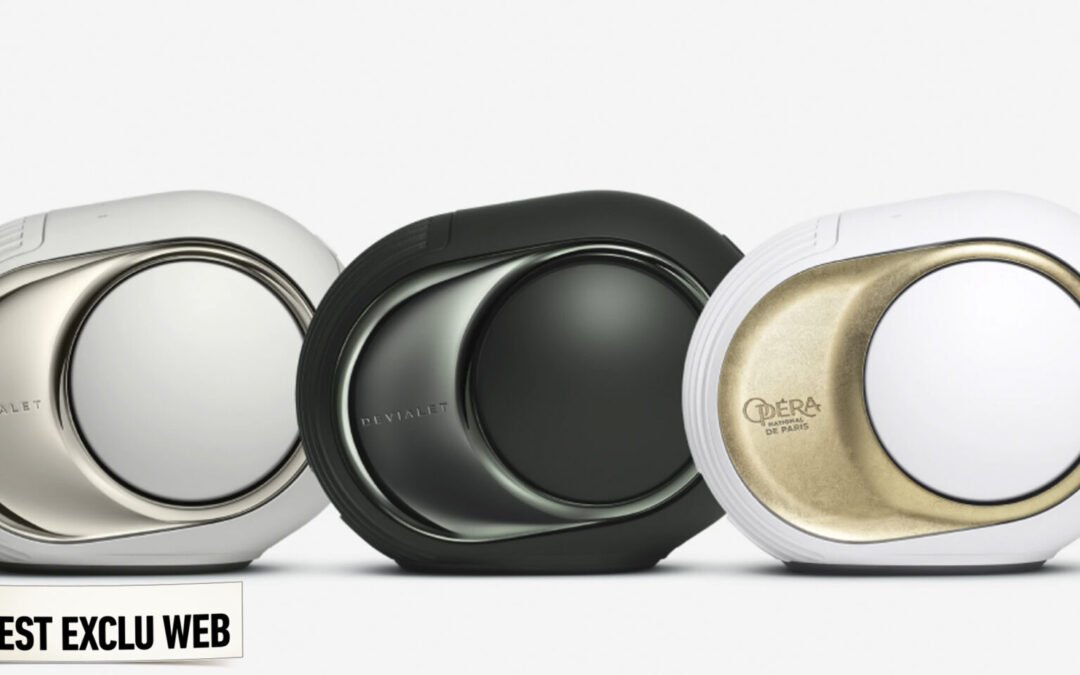
On the model we are interested in, the total depth of the chassis is only 21.9 cm, with a height of 16.8 cm and a width of 15.7 cm, making it a speaker that can be placed anywhere and can be extremely discreet. When they were first released, the Ultimate speakers were available in black (Deep Forest) or white (Light Pearl) at a price of €1,500 each, or with gold sides (Gold Leaf) for the Opéra de Paris version, at €1,800.
On the latter, the side panels no longer have a glossy mirror finish, but are carefully covered with moongold leaf by Ateliers Gohard in Paris (https://www.ateliers-gohard.com/). The Bluetooth chip is not yet the latest 5.3, which was not available at the time of development, but the one just before, 5.2, which is already very reliable, although our rigorous approach means that we still recommend improving signal quality by using Wi-Fi 5 (2.4 GHz and 5 GHz) or an RJ45 Ethernet connection (100/1,000 Mbps).
A mini-Toslink optical input can also be used, particularly for home theater applications. But most of you will probably prefer to send files directly via streaming apps, with which the Phantom Ultimate is widely compatible, whether for transfers via AirPlay, Google Cast, Spotify Connect, Tidal Connect, or even the very open UPnP. And as proof of Devialet’s clear interest in high fidelity, these speakers are also Roon Ready.
TECHNOLOGICAL FEAT
Whether or not you like the type of speaker that the Phantom Ultimate represents, you can’t help but recognize the technological value of the product and the number of patents that have gone into it, the vast majority of which are sound-related. In a heavy plastic shell (each speaker weighs 4.3 kg in total), a tiny grille cut directly into the chassis stands out on the front.
On the sides, two bass speakers stand out prominently. Synchronized by the patented HBI® (Heart Bass Implosion) system, these two side woofers descend to frequencies of 14 Hz with an impact that owes much to the temporal technology redefined internally as SAM® (Speaker Active Matching).
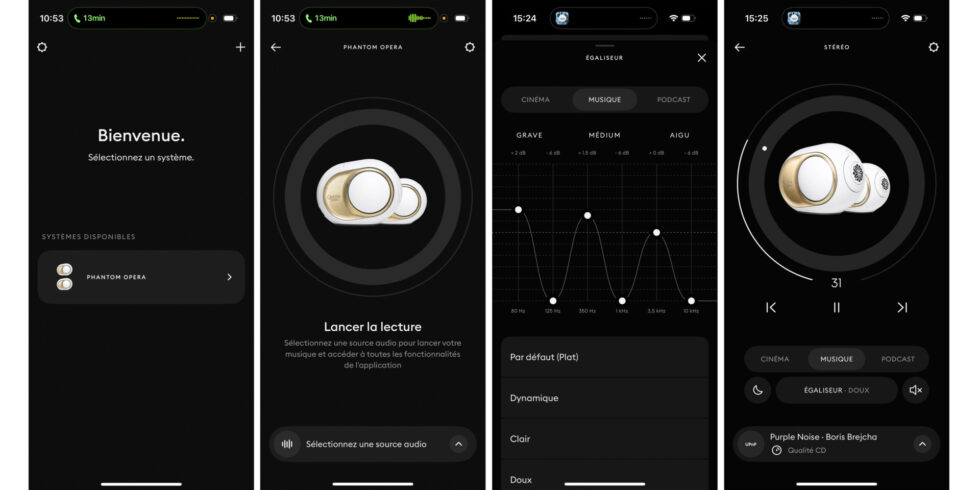
ADH® (Analog Digital Hybrid) technology links analog and digital components, with overall data processing performed by an NXP iMX8 Nano 4 x 1.5 GHz processor and the DOS3 operating system. This allows for Adaptive Volume Level (AVL™) control coupled with a six-band equalizer (see screenshots below) to fine-tune the listening experience to your own preferences. And to adapt to certain situations in just a few clicks, three modes are already pre-set: Music, Cinema, and Podcast. The second offers more powerful bass, while the last is more precise and designed for monitoring.
Numerous accessories such as a Tree stand (€199), a Gecko wall mount (€149) wall mount, and a Remote (€189) allow you to perfectly adapt the Ultimate 98 dB to your room and enjoy your digital music with sampling rates of up to 192 kHz/24 bits.
INSTALLING THE DEVIALET PHANTOM ULTIMATE 98 DB
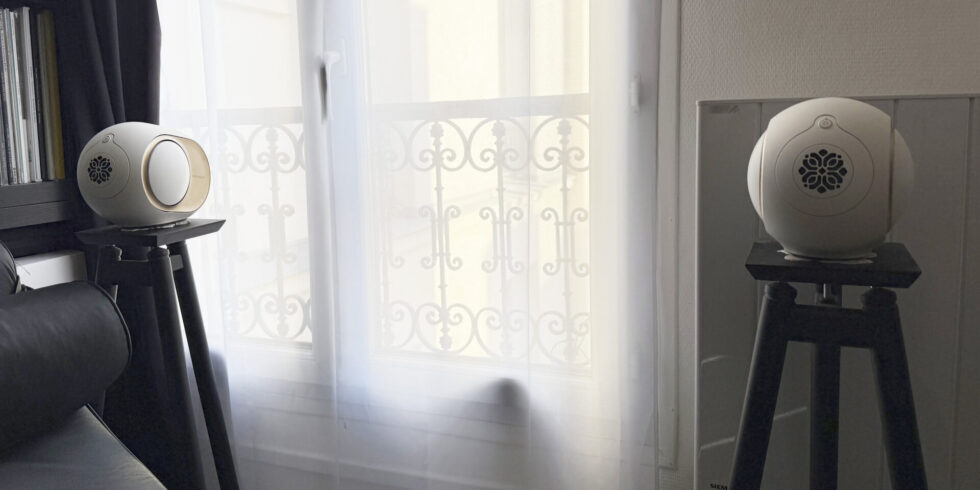
Received in their Paris Opera version, the Phantom Ultimate 98 dB speakers were listened to separately and paired to be tested mainly in stereo. Compared to a high-end system with passive speakers, they were compared to other more traditional hi-fi systems, then positioned everywhere, on a mantelpiece, near a window, in small to large rooms, offset from each other in height, etc. Without ever failing, these French active speakers were also used in a home theater context, but above all tested on all styles of music, sometimes with modified settings using the six-band equalizer. Wi-Fi was also compared to a wired connection to the box and to Bluetooth.
Designed to work on its own, this Devialet active speaker is also intended as a true music product to be used in pairs in a stereo configuration. To do this, it takes a few minutes after connecting to Wi-Fi for the two speakers to recognize each other, specifying which one will be on the left and which one on the right.
THE SOUND OF THE DEVIALET PHANTOM ULTIMATE 98 DB
Although we mostly listened to them in pairs during our tests, the Phantom Ultimate 98 dB speakers are also designed to work independently. In this case, the sound does come from a single source, but the wave management is well enough designed to give the real sensation of music that is clearly separated to each side. So, you may even be impressed by the stereo effect it produces, a far cry from the truly monophonic sound of many competing connected speakers.
Once paired, the new Phantoms stand out from their predecessors with a more refined sound, which still seeks to develop the bass, but with precision across the entire bandwidth. While some people reject the product on principle, we have to admit that we don’t dislike its seductive side at first glance.
Admittedly, the most convincing sound quality is found with modern music, particularly electronic and American rap, but the product is truly versatile, especially in stereo. Compared to a much more expensive system made up of separate components, or even a system of equivalent price with passive speakers and a more conventional amplifier, the Phantom Ultimate is less focused on flexibility and naturalness, for example compared to high-efficiency speakers or paper cones.
On the other hand, it has a dynamic range and bass management that are very difficult to find at this price point, especially when you factor in the combined investment of the source, amplifier, speakers, and cables.
Placed about 1 m apart, they deliver a very directional sound with a clarity that demonstrates the quality of the streaming module and ADH technology first, and then the DSP for overall consistency. As expected, but with more conclusive results than for many streamers, Bluetooth is not as good as Wi-Fi. On the other hand, in a good environment, once you have perfectly connected the two Phantoms to your network, Wi-Fi is almost always as stable as a wired connection, which we therefore don’t think is really necessary with these speakers.
In the frequency analysis, the treble rises high and only distorts at the very top of the spectrum at very high volumes, or occasionally with instruments such as certain trumpets, which the small Ultimate makes stand out when it needs to reproduce a maximum of extreme harmonics. Due to the precision sought, the midrange does not tend towards roundness, but rather towards a form of rectitude that does not detract from flexible listening and a particularly modulable sound thanks to the equalizer.
Unsurprisingly, however, it is the bass that interests us the most. This is particularly true of this 98 dB model, which has less volume than the Ultimate 108 dB, but no less compression or impact. In this regard, this new version of the small Phantom is impressive. Despite its size, it doesn’t need a subwoofer at all, even for listening to electronic music or watching action movies.
Of course, you can go further with a subwoofer or the higher-end model, but the small Phantoms are very compact and are not just relays to be placed at the back of a 5.1 home theater system. On the contrary, they are real performers that are completely self-sufficient, especially if you invest in a pair. With this new Ultimate version, music can be analyzed in detail and listened to at low volumes without losing any detail. And when listening at higher volumes, you’ll see how the Phantom can set the mood!
OUR CONCLUSION
Small in size, the Devialet Phantom Ultimate 98 dB is definitely not small in sound. Powerful, lively, with impressive bass, it also impresses with its precision and bandwidth. Add to that its ergonomics, since all you have to do is plug one in and connect it to the power supply and the Internet—or even just Bluetooth and a battery—to enjoy all the digital music you want.
A pair of these speakers can be compared to a full hi-fi system, simplifying the number of components and improving ergonomics. And on this point, not only do these little Phantoms benefit from all the technologies of their larger counterparts, including a six-band equalizer, but they are also sufficient to adapt to a screen and enhance the effects of action movies or even musicals.
We recommend you try them out.
Author(s): Vincent Guillemin
Technical Sheet: Devialet Phantom Ultimate 98 dB
ORIGINE : France
PRIX :
1 500 € (Light Pearl ; Deep Forest)
1 800 € (Opéra de Paris)
DIMENSIONS : 168 x 157 x 219 mm
PUISSANCE : 400 W
ENTRÉES NUMÉRIQUES : 1 x optique Toslink ; RJ45 100/1 000 Mbps ; Bluetooth 5.2 ; Wi-Fi 5
RÉPONSE EN FRÉQUENCE : 18 Hz – 25 kHz (+/- 6 dB)
SENSIBILITÉ : 98 dB (1 m)
TAUX D’ÉCHANTILLONNAGE :
Entrées : 192 kHz /24 bits
DSP : 96 kHz/32 bits
SERVICES DE STREAMING : AirPlay ; Google Cast ; Spotify Connect ; Tidal Connect ; UPnP ; Roon Ready (RAAT)
FINITIONS : Deep Forest (noir) ; Light Pearl (blanc) ; Opéra de Paris (doré)
Part of French manufacturer Esprit’s fifth range, the Esprit Eterna G9 Ethernet cable aims to deliver the same sound quality as the analog and digital cables in this series. Designed for high-fidelity systems, it develops substance and flexibility for digital music from a NAS or Internet box.
In the quest for the most perfect sound possible, the major development of Internet streaming over the last decade or so has highlighted a new problem regarding the purity of network data. For this reason, hi-fi cable manufacturers have quickly stepped in to apply solutions derived from other digital models such as USB or SPDIF to RJ45 Ethernet cables.
Based on his research and practical applications, the director of the French brand Esprit developed several versions of Ethernet, but did not validate those of the first series, the Alpha to Kappa ranges.
When we asked him about this, Richard Cesari explained that after numerous tests, the shielding and conductors of the Alpha and Beta prototypes did not contribute enough to the musical performance to justify their launch on the market, without being able to position themselves on the same price scales as mass-market category 7 or 8 products, which may be slightly inferior but are also cheaper thanks to their manufacturers’ economies of scale.
Not wanting to create models with no real benefit for the listener, whose only purpose would have been to add another product to its entry-level ranges, Esprit began to see a real benefit in Ethernet starting with the Célesta series, with even more striking results from the Eterna series onwards.
In this price range, the manufacturer can use Telegartner connectors—the best known to date—to ensure reliable connections, and apply multiple layers of shielding to protect the conductors from Wi-Fi and EMI waves, resulting in reduced noise and better tonal balance. With a symmetrical electrical structure, the Eterna cable stands out for its twisted dielectric and triple shielding in pure silver-plated copper. It is also made of superior insulators to those in the Celesta range, with an improved sheath for the G9 version compared to the previous generation.
THE SETUP OF THE ESPRIT ETERNA G9 RJ45
Retrieved from one of our auditoriums, the Eterna RJ45 cable was tested with network players ranging from the Eversolo DMP-A6 to the CH Precision I1 streaming card, as well as our Mark Levinson 5101 and Atoll ST300.
In order not to distort the initial effect for listeners wishing to invest in this type of cable, we first started with our Internet box, comparing it with a conventional cable. We then compared the Eterna to other audiophile products and connected it to our Switch Silent Angel Bonn N8, upstream and downstream, to check its overall impact on the music.
THE SOUND OF THE ESPRIT ETERNA G9 RJ45
Connected between an Internet box and a network player, the Eterna G9 Ethernet cable takes only a few seconds to show its impact on the sound. The music and timbres become more supple and nuanced, while the soundstage expands and opens up.
For the latter component, you can look for cables that are clearer and faster, but for us, and perhaps because of the musical styles we listen to most, the Esprit remains the best at this price point in terms of texture development and color quality.
Never over-colored, the Eterna G9 reduces noise even further and frees up the sound even more than the G8 version we have had for several years. For opera or rock, or even the difficult listening experience of an organ, this Ethernet cable provides extra temperament to all parts of the spectrum, developing the dynamics and therefore the depth of the bass as well as the precision of the treble.
The result is just as remarkable when positioned between the switch and the streamer, because even though the switch purifies the data by improving the jitter rate, the shielding of the last link has a significant impact on sound quality. Conversely, the placement downstream of the switch is less noticeable when compared to a Celesta, although it is still noticeable when compared to a conventional Ethernet cable.
OUR CONCLUSION
Primarily intended for use as the last link in the chain, the audiophile Ethernet cable has a real impact on sound reproduction in a system comprising a network player.
The Esprit Eterna G9 range features most of the components also found in the speakers and modulators in this series, particularly in terms of noise reduction, added substance, and improved timbres. And while the Célesta is already a first step towards high fidelity in dematerialized music, the Eterna is truly the one that improves all parameters.
Author(s): Vincent Guillemin
Technical Sheet: Esprit Eterna G9 RJ45
Origin: France
Price: Starting at €730 (1.20 m); €320 per additional meter