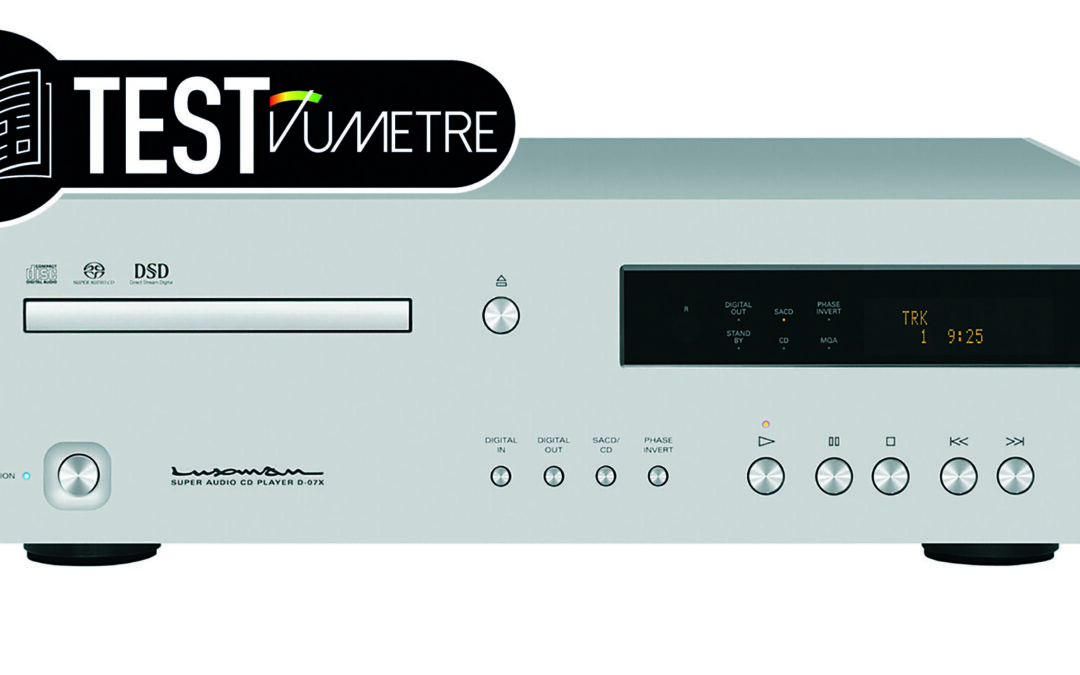
Unveiled at the Paris Audio-Video Show, the new Luxman D-07X immediately passed through our hands for its first test outside Japan. We were therefore able to spend more than ten days analysing in detail one of the very first models, the one used for MQA certification, and the brand’s second implementation of the best Rohm conversion chip, currently only available on the larger D-10X. Like the D-10X, the D-07X can read very high-quality files, in addition to offering high-class CD and, above all, SACD playback.
Still selling more than 70% of its products in Japan, Luxman develops products primarily for its domestic market. Although its engineers have finally announced a network player for 2023, the brand remains loyal to its customers for the time being, offering them a genuine range of CD/SACD/DAC players. Compared to other global markets, where consumers in China and South Korea, like those in Europe and the United States, have shifted heavily towards streaming in recent years, Japan remains very focused on CD and SACD playback, with network players mainly used to share music from personal file libraries rather than to stream content from external platforms.
This important point helps to understand why, rather than revisiting its standalone converters, the brand has chosen to first introduce a fourth CD player, which is all the more necessary as it fills the gap between the D-03X (£4,790) and the D-10X (£18,990). Less bulky than the latter, the D-07X features a similar architecture, with dual-mono Rohm BD34301EKV chips combined with a new buffer circuit made entirely of discrete components balanced by four transformers, developed to also handle bandwidth filtering outside the audible range (above 5 Hz to 20 kHz), resulting in the reproduction of an extremely pure analogue waveform.
Replacing the D-06u and D08u, the D-07X benefits from a power transformer with a capacity that is said to be 50% higher than the previous generation, in addition to new digital clocks with very low jitter and phase noise, which allow the digital signal to be refined from the input stage right through to its analogue conversion.
Located at the far left of the unit to minimise signal paths, the player section features the LxDTM-i (Luxman original Disc Transport Mechanism – improved) mechanism, an upgrade of the LxDTM, whose main improvements are increased rigidity and vibration damping. Featuring a die-cast aluminium disc platter, the mechanism is encased in a rigid box structure that reduces resonance to a level very close to that of the D-10X.
Supported by four cast iron feet, the chassis uses a shielded structure designed both to eliminate vibrations from the surface on which the player is placed and to dissipate vibrations generated by the player when in operation. The front panel features the basic functions of a player, with the addition of a monochrome display that can enlarge the information up to four times when the player is used remotely with its remote control.
Like all players, the D-07X also features a standby button, buttons to open and close the tray, start and stop playback, and pause and change tracks. In addition, there are four more discreet buttons for reversing the phase, selecting the CD or SACD option, and connecting the player directly via its ‘Digital In’ section or outputting exclusively via its ‘Digital Out’ section. Only available via coaxial and optical outputs when using the CD/SACD transport section alone, the player adds a USB input for files up to PCM 768 kHz/32-bit and DSD 22.4 MHz formats. In analogue mode, it offers balanced output via its shielded Neutrik XLR terminals and unbalanced output via gold-plated RCA terminals spaced 32 mm apart.
THE SET-UP OF THE LUXMAN D-07X
Tested using one of the very first production models, the D-07X displays Luxman’s unique identity right out of the box, in keeping with the Japanese brand’s previous models. As explained above, the continued widespread use of CDs and especially SACDs in Japan explains why the development of this product was prioritised over that of a streamer or a new standalone DAC. But while the SACD/CD playback section is still very important, this device should also be considered a converter in its own right, whose superiority is evident with the highest quality PCM and DSD files.
To carry out our tests, we connected the device to several Japanese amplifiers, Accuphase and Spec, using RCA and XLR connectors, with surprising results in the case of the asymmetrical connection. We then used the player with CDs, SHM-CDs imported from Japan and finally SACDs and hybrid SACDs, the latter allowing us to hear the enormous gain when listening to an HD file compared to AAC encoding. Similarly, we used the DAC in coaxial and USB modes, with a clear improvement in sound quality when transferring Hi-Res files via the USB input.
THE SOUND OF THE LUXMAN D-07X
A Luxman will always be a Luxman, and that’s what you feel when you listen to the D-07X! This player is very musical and never tries to be exuberant, instead allowing the music to blossom with a focus on smoothness and benchmark timbre quality. With very low residual background noise, the player is also very quiet on its turntable, allowing you to listen to headphones right next to it without hearing any unwanted noise.
Its very low output gain means that the amplifier volume has to be turned up quite high, resulting in a muted sound that is less dynamic than that of an Accuphase or our Mark Levinson, both of which use ESS chips, but softer and more fluid, seeking out nuances and colours that are particularly well revealed. In a style reminiscent of analogue sound, the D-07X delivers great detail, whose realism allows you to define the soundstage precisely without exaggerating the volume.
Listening to Scott Walker or Nick Cave, it’s a real pleasure to hear the rich voices of the crooners, as well as the clarity of the guitar strings and other accompanying instruments. The same level of detail is evident with jazz and soul singers, whose voices are warm and smooth, with highly nuanced tones.
Even more striking, listening to a SACD or Hi-Res DSD file via USB seems to lift a veil from the image, opening it up and making it even more airy, with added nuance and realism. When comparing CD and SACD formats on our Hybrid SACDs, for example Janowski’s Wagner recordings on Pentatone or the Amsterdam Concertgebouw recordings, switching to SACD shows how much more information is revealed and how well the Luxman player is suited to this type of file, with the difference between the two levels being much more obvious than on our Mark Levinson.
The same comparison produces the same effects when sending Hi-Res files via USB rather than coaxial, with USB coming out on top, bringing a lot of relief and colour to the palette, allowing you to discover, for example, what type of piano is being played and to differentiate between Gould’s recordings on Steinway and those on Yamaha.
Surprisingly, although the entire architecture of the D-07X is dual mono, the XLR output does not seem to be any better than the unbalanced output. During testing, the fact that we were able to go up to Esprit’s Eterna range with RCA even showed a better result than when listening with an Esprit Célesta XLR, whereas in many previous tests, the XLR from a lower range showed results almost equivalent to the RCA from the range above.
OUR CONCLUSION
Designed primarily for the Japanese market and its SACD consumers, the new Luxman D-07X remains an attractive device for the British market for any music lover who still enjoys CDs. Its build quality ensures long life, and its high-quality conversion, which can also be integrated via USB, makes it the ideal main source for a high-fidelity system, with the addition of a network transport or simply a computer for sharing digital files.
Smooth, nuanced and very well balanced, the D-07X comes close to the performance of the D-10X while costing £6,000 less and remaining more discreet in appearance. At £9,990, this Luxman is certainly not for everyone, but it is a purchase for life, a product in a range where there are only a few Japanese competitors left, or even more expensive products from Switzerland or Scotland.
TECHNICAL SHEET : LUXMAN D-07X
Origin: Japan
Price: £11,990
Dimensions: 440 x 132 x 410 mm
Weight: 17 kg
DIGITAL INPUTS AND OUTPUTS
DAC inputs: Coaxial, optical, USB
CD transport outputs: Coaxial, optical
ANALOG OUTPUTS
XLR; RCA
AUDIO FORMATS
CD; SACD; USB (DSD): 2.8 MHz-22.4 MHz (1 bit); USB (PCM): 44.1 kHz-768 kHz (16, 24, 32 bits)
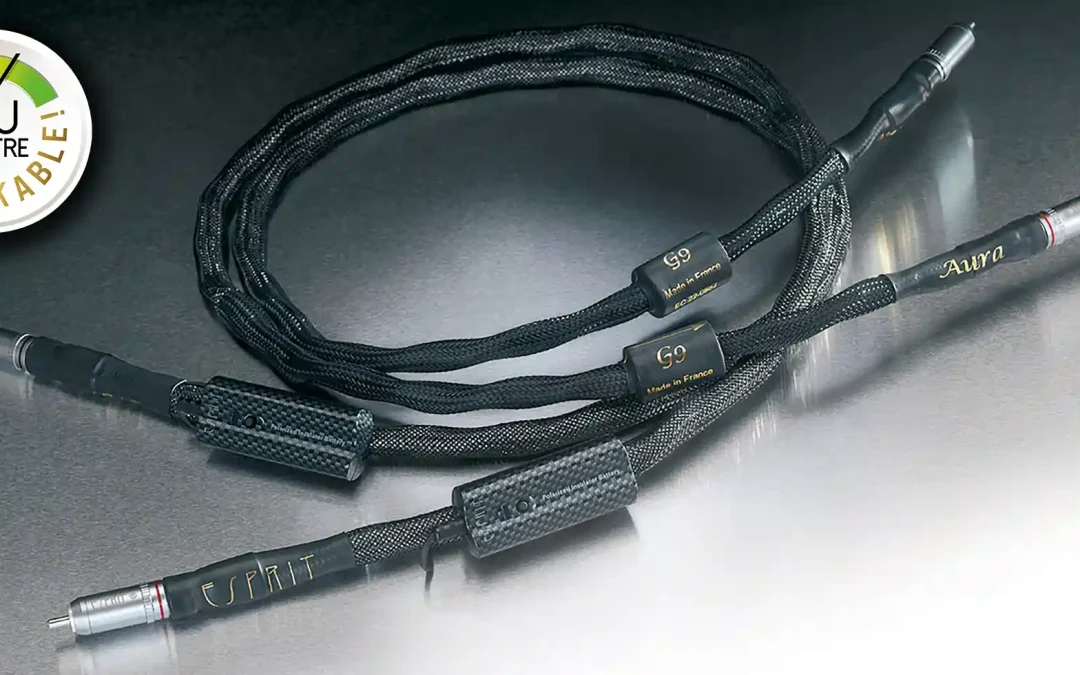
Already described with the Beta series (Vumètre 44), the 9th generation of Esprit cables continues to take listeners into the realms of ultra-high fidelity, starting with the polarised Eterna range. Above this, the Aura range further develops the substance and precision of the sound elements, adding above all an impressive notion of presence, notably with the Esprit Aura G9. Thanks to this, the music takes centre stage in the listening room, as demonstrated by the contribution of both loudspeaker cables and interconnect cables on a system.
The sixth of the ten series offered by Esprit, still run by its creator Richard Cesari, the Aura, like all the others, has recently been upgraded to G9. This generation, which makes the difference with its changes in casing, offers even greater protection against internal and external interference. Like the Beta, the RCA inerconnect cable is made up of 720 pure copper strands with a diameter of 0.08 mm, with a symmetrical electrical structure, but its dielectric part is twisted, with the advantage of better protection.
There is also triple insulation and air shielding, the latter always partial in order to use – as on the entire G9 range – all the possibilities for limiting interference and noise to increase the bandwidth, while letting the unshielded part bring out the suppleness and naturalness of the sound. The result is a superbly balanced sound.
The XLR interconnect cables, with their 0.24 mm strands, no longer benefit from triple air insulation. They do, however, benefit from polarisation, like the Aura RCAs and all cables from the Eterna range onwards. Polarisation is made possible by a battery built into the sheath in a classy casing. It creates a direct current in the shielding, which at the same time prevents parasitic phenomena such as static electricity or micro-discharges.
A small button on each case allows you to press it to see a fine blue light to check that the battery is still charged; it is advisable to change the battery every five to ten years, depending on use. With 10 micron multilayer copper/silver plating for the RCAs and silver plating on pure copper for the XLRs, the technologies of the Aura series are virtually identical to those of the Eterna or Lumina ones.
Like the Celesta and Eterna, the Aura RCA has an Esprit EH100 connector, while you have to go up to the Lumina to take advantage of the EH200. On the loudspeaker front, the game of seven technological errors can also be played out between the Aura and the Eterna, at least as far as the manufacturer is concerned. Both are made of 1,680 strands of pure copper, have insulation and partial shielding on air, polarisation and a twisted dielectric, the only notable difference being the plating, the Aura having, like the XLR, silver plating on pure copper. However, as you’ll see below, the differences between each series can be seen in a matter of seconds!
The set up
Added to mid-range and top-of-the-range systems, the Esprit Aura RCA, XLR and HP cables were compared to those of the Beta G9, Celesta G8 and Eterna G8 & G9 ranges. Already very convinced by the naturalness and substance of the Eterna G9 loudspeakers, even on compact speakers such as the Fyne Audio F500 SP or the Atohm GT1, we were able to put them directly in front of the Aura G9, then coupled with the Jern 15H.
Then, with the help of a colleague – himself a tester – a blind listening protocol was set up, with a sheet in front of the speaker stands to prevent any possibility of seeing which model was being used. Each time, the results seemed obvious to us in less than fifteen seconds, and even flagrant as soon as the music used included a lot of bass. The same protocol was then used to test the interconnect cables.
The sound of the Esprit Aura G9
Very well defined and already very well timbred with the Beta range, especially since the last generation, the sound of a system expands even further when you move up to the Esprit range. The Celesta adds more substance, while the Eterna, especially in the loudspeaker range, further reduces noise and refines the spectrum.
From the Aura range onwards, the world really changes, and this time we reach a high-fidelity level that increases tenfold not only the above-mentioned components (all improved), but above all the presence of the music. With Nick Cave or Astrud Gilberto, the voice is not only more nuanced and precise from the moment it appears: it now comes across as if the artists were face to face with us. This impression enhances the realism and atmosphere of the listening experience, as the music emerges outside the speaker cabinet.
The soundstage obviously benefits from this, as it gains in both width and depth, as well as better positioning of all the elements, such as the musicians around the aforementioned artists, all of whom gain in contour, particularly with speakers like the Davis Olympia One Master 35, tested at the same time for this issue. The sound spectrum is wider and more open in the treble, which is less acidic, but also and above all in the bass, which is tighter and much better controlled, particularly in transients.
With interconnect cables, everything increases still further, for an even more obvious result with the symmetrical cable compared to the asymmetrical one, the Aura HP-XLR pairing taking sound levels to extremely high levels, with a realism for which it seems incredible that we can go even further, despite the existence of four even higher ranges from Esprit! Between the Atoll ST300 streamer and the Sugden Masterclass HA4 headphone amp, the improvement in sound with both XLR and RCA was just as rapid, always deploying musical quality and precision, at the same time as noise and interference were reduced.
Our conclusion
With the impression of doubling the volume of the loudspeakers as each cable is added, preferably starting with those for the loudspeakers, so as not to create any bottlenecks and to optimise the fluidity of the signal at the last link in the chain, the Aura G9s enthralled us, so much so that we are considering keeping them in our test arsenal in place of the Eterna.
Conducted only with lower-priced or equivalent loudspeakers, when we know that the purchase of a pair of 3m (€4,000) loudspeaker cables is primarily intended for more expensive products, blind listening always produced clear results and perfect versatility with the four loudspeakers tested. On more coherent products (Accuphase, Mark Levinson, Kora), interconnect cables bring the same power to a system, with a slight preference for the symmetrical version (from €2,600), particularly in the presence it gives to the music!
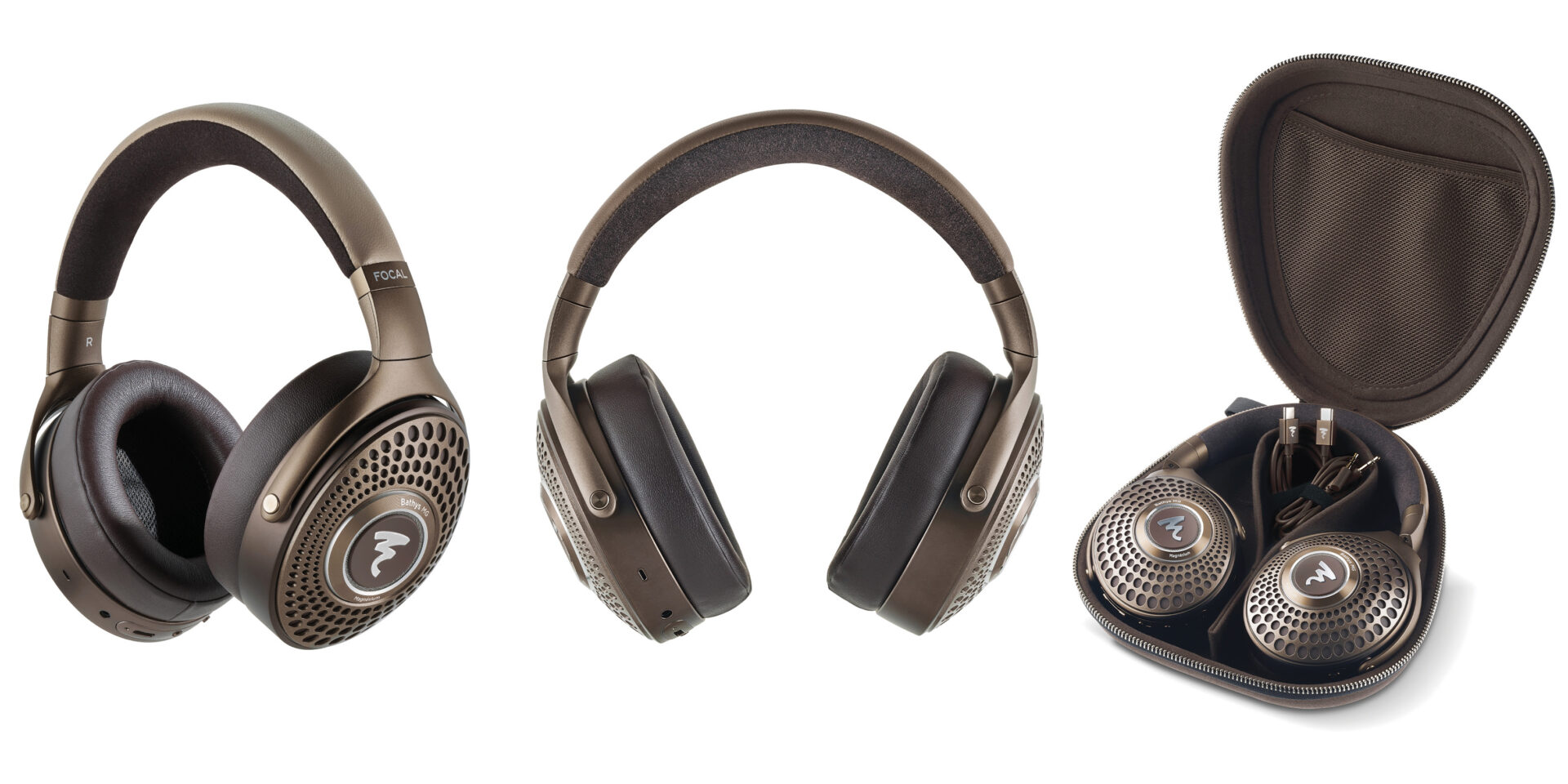
Designed with the same aluminum chassis as the Bathys, the Bathys MG further improves sound performance by incorporating the 100% magnesium membrane from the Clear MG wired headphones. With these new technologies, the new Focal is simply one of the most musical portable headphones on the market.
With a design very similar to wired hi-fi headphones of Focal, particularly the Azurys and Hadenys and the professional Lensys headphones, the Bathys is not the easiest Bluetooth headphone to wear outdoors. Relatively heavy (350 g), they are also quite imposing physically, which is why they seem more suited to a comfortable seat on a long-haul flight or in a large hotel room than on daily public transport.
In this point, the Bathys MG goes even further than the Bathys, as it improves mobile technology while still fitting into a similar frame (distinguished only by a new beige color instead of black), and is refined with a sound quality close to that of the Clear MG (1 500 €). Compared to the first model, the Bathys MG upgrades from Bluetooth 5.1 to 5.2, capable of wirelessly decoding files with HD quality superior to that of CDs. The eight microphones have also been improved and repositioned to allow for better communication during calls or video meetings. On the downside, the noise reduction technology (Active Noise Cancelling) is one of the least effective we’ve seen, designed mainly to limit bass, i.e. aircraft noise, but still very open to the outside world when used in the city, especially on a bike, and even on a train.
When it comes to sound changes, this is where the difference lies, because although the Bathys MG retains a 40 mm “M” profile diaphragm, it eliminates the very dominant aluminum of the Bathys to become pure magnesium. At the same time, the motor has been redesigned to make it even more dynamic and develop musicality that is available via Bluetooth, but also via the 3.5 mm jack included in the pack, or better still, for Hi-Res files at a sampling rate of 192 kHz/24 bits thanks to USB-C. To focus the sound, the leather-covered aluminum structure and headband greatly reduce vibrations, while the brown leather ear pads contain the sound without closing it off too much, while also providing excellent listening comfort.
THE USE Weighing 350 g and with an imposing size, the Bathys MG is as heavy as the Bathys, but ultimately, this is where its use becomes clear. Without really competing with the more portable B&W Px8 or Dali iO-12, the Focal headphones seem more suited to semi-nomadic use, capable of reproducing much of the sound of a Clear MG (which must be paired with a source and headphone amplifier) for users not at home, without having to carry anything other than a smartphone or laptop. With a battery life of around 30 hours, as claimed by the manufacturer and verified by us, the Bathys MG can logically be used outdoors or on public transport, but it really comes into its own when you can take the time to listen to music in peace and quiet in a hotel room, or for example in a friend’s garden or on long trips where you cannot take your entire hi-fi system with you.
THE SOUND Designed to be very unrestrictive in terms of sound reproduction quality, the noise cancellation (ANC) is, however, as we have seen, not very effective in very noisy environments, especially as it mainly seeks to reverse low frequencies, at the risk of letting through higher frequencies, such as children’s voices, too loudly.
However, when we received the Bathys MG at the same time as the Clear MG, which we wanted to compare it with (review to be published in VU#61), we were blown away by its ability to perform almost as well as its wired counterpart, which is more expensive and paired with our Sugden and SPL headphone amplifiers and our Atoll ST300 and Lumin T3x streamers. Although it is certainly expensive in the world of portable headphones (1 199 € / $1 299 / £999), the Bathys MG is actually an extremely musical product compared to the amount you would spend on a complete hi-fi system such as those mentioned above.
Very neutral and with very natural timbres, the sound is particularly suited to music played on real instruments, such as classical or jazz, as well as pop. The wide soundstage for a portable headphone and the total comfort of the ear pads allow you to enjoy long listening sessions without fatigue, with a significant sound amplitude effect. Although slightly less wide than the Clear MG open headphones, the Bathys MG’s soundstage unfolds freely and positions the elements all around the ear, without bringing them too much to the center of the ear cup, again for sound comfort worthy of excellent hi-fi headphones.
With electronic music or R&B, the Bathys MG favors well-controlled bass and precise treble, in both cases significantly superior to the Bathys, provided you don’t turn the volume up too high, as this may distort the high frequencies, especially when listening via Bluetooth. When connected via USB-C, it gains even more refinement with denser files, allowing the midrange to shine even more, with a range of nuances that is once again on par with many conventional headphones.
OUR CONCLUSION Among the most impressive portable headphones, the Bathys MG is above all a high-end model designed to compete with many hi-fi models by avoiding any connections or sources other than a smartphone. With improved microphones and ANC compared to the Bathys, particularly for better phone calls and calls, the Bathys MG really stands out in terms of musical quality and extended listening for those who love sound and, more specifically, dense midrange that is both neutral in tone and very well nuanced in reproduction. This makes the Bathys MG the perfect replacement for your main headphones when traveling.
TECHNICAL SHEET
ORIGIN : France PRICE : 1 199 € / $1 299 / £999 DIMENSIONS : Case: 240 x 70 x 210 mm WEIGHT : 350 g / 0.77 lb TYPE : Closed Bluetooth headphones (ANC) BATTERY : 30 hours (Bluetooth ANC) CONNECTIONS : Bluetooth 5.2 (AAC, aptX™, aptX™ Adaptive, SBC) 3.5 mm jack 1.2 m; USB-C 1.2 m FINISH : Beige, brown ear pads
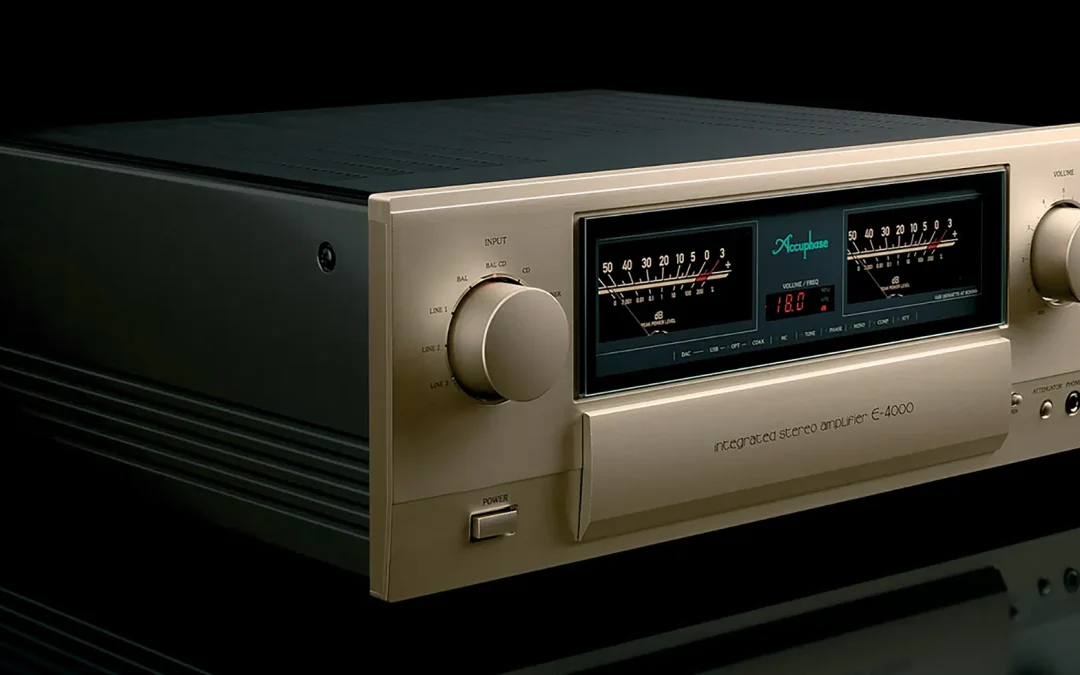
Introduced a year after the E5000 amplifier, the Accuphase E4000 replaces the E480, taking what appears to be the new digital code for the brand’s class A/B integrated amplifiers. Modified using the latest technologies, including those of the recent P7500 stereo block, the E4000 sees its noise reduced still further and its damping factor considerably increased, for unfailingly quiet operation, supported by a still very comfortable power output of 2 x 180 W at 8 ohms, available to fill almost any loudspeaker on the market.
Since its first product was launched over fifty years ago, Accuphase has never strayed from its brand identity: an inescapably champagne-coloured chassis, and since its first transistor amplifier (P300), massive front-panel meters.
The new E4000 does nothing to challenge these principles, and whereas the E480 took out the red LEDs and markers and moved them to the aluminium section, this new version returns to the previous design, with the information reintegrated inside the large glass panel, which is mainly used to display two superb vumeters. Wider and even more visible, these indicators repeat the range of the previous version, going down to -50 dB (before indicating -∞) and then across to a red line after 0 dB, the only notable difference being the addition of a 5 between the 20 and 10 on the negative side.
Underneath, the red LEDs still light up to give the same information as previous generations, such as whether you’re connected to the DAC (provided you’ve purchased the optional DAC-60 card at €1,240) or whether you’re outputting to speaker pair A or B. This management is still very ergonomic thanks to the small selectors under the hatch.
Introduced in this presentation on the E480 and E650, the selectors remain three per side with six buttons in the middle, now rectangular rather than round, for an even classier effect, boosted by the appearance, as on the E5000, of two thin gold-plated contours around the large input and volume level selection knobs.
At the rear, you could quote Verlaine’s poem, ‘I’ve seen it all again’, as nothing has changed in the organisation of inputs and outputs, or in the two slots for optional cards. These allow you to avoid obsolescence on the DAC by upgrading it with each new update, or to integrate an AD-50 phono card (MM/MC; €990).
This too is modified over the years if you don’t simply want to add a Line-10 line input (€190), in case the five already present aren’t enough. A REC line input and output complete the unit, which also has an RCA Pre Out for independent use of the pre-amplifier part, particularly in the case of bi-amplification, right next to an RCA Main In, for use only of the power amplifier. These two independent inputs and outputs are also available in XLR to maximise the fully symmetrical architecture of the device, apart from its single large toroidal transformer.
Accuphase E4000, for E480 only better
As you will have gathered, the external differences only serve to give a small facelift to a product that is already a benchmark in its range, the E480 having greatly improved in terms of dynamics compared to the E470, while the E4000 is still developing in terms of what Accuphase seeks most to eliminate: all the parasitic noise that reminds us that we are listening to a box and a recording, while the brand seeks as far as possible to recreate an effect of sound realism that is increasingly accurate generation after generation.
So it’s inside that the changes are most significant, and while the structure remains exactly the same, the transformer is placed right in the centre behind two large filter capacitors – still 40,000μF for 80V – between two large heat sinks. On top are the amplification sections, now made up of parallel quadruple push-pull transistors and discrete components, to develop the maximum power of 2 x 180 W at 8 ohms and 2 x 260 W at 4 ohms.
As a benchmark for the brand, the volume management part is still devolved to an AAVA (Accuphase Analog Vari-gain Amplifier) section in an attempt to eliminate all variable resistances in the signal path. However, this generation manages to reduce its noise level by a further 20%, thanks to the input contribution of six parallel buffer amplifiers and above all an ANCC circuit (Accuphase Noise and Distortion Cancelling Circuit), placed between the volume management and the current-to-voltage converter (I-V) in the AAVA block.
Fully parallel to independently manage the left and right channels from source integration to speaker output, the E4000 gains 33% on the damping factor, which rises from 600 to 800 to match that of the E650 (pure class A amplifier, €10,990) and approach the factor of 1,000 of the E5000 (class A/B, €13,490) and E800 (class A, €14,990).
To achieve this, the new integrated amplifier uses MOS-FET switches with a very low resistance of 1.6 mega-ohms (compared with 2.0 mega-ohms on the E480) placed just behind the speaker terminals, with the result of limiting distortion even further, since intermodulation and harmonics have already been largely taken care of upstream in the device.
The set up
Having just arrived in France, the E4000 was initially only available in a single unit, received by distributor Hamy Sound for installation at CTA in Paris, where we went with the advantage of being able to compare the Accuphase with McIntosh products, but above all with its E380, E650 and E800 brethren. The test was carried out on an ideal combination of sources: the Accuphase DP570 CD-SACD player (€10,090) – whose DAC we also used to add the 3D-Lab Nano Signature network transport – and the Mark Levinson 5101 CD-SACD network player.
Wireworld’s top-quality cabling, piloted by CTA, enabled us to link not only the aforementioned devices together, but also the ProAc K6 (€17,250), Sonus Faber Maxima Amator (€15,000), JMR Orfeo Grande (€14,800) and, because they were ready for daytime listening, the more reasonable Everest Ubik 215C V3 (€7,990 all the same).
Knowing the phono and DAC cards, we didn’t see any point in re-testing them here, nor the headphone jack (Accuphase doesn’t mention any alterations and we’re familiar with those on the E600 and E380). From that point on, we were free for a few hours to carry out all the tests available, on all the files of various qualities launched both in streaming and with a few SACDs, remarkable when played back thanks to the DP570.
The sound of the Accuphase E4000
While the E480 was truly superior to the E470, the E4000 is above all a gentle improvement on its predecessor, of which it retains all the qualities, developing some of them still further, for an even more musical result. So, while it doesn’t have the ductility of the E5000, the E4000 develops the accuracy of the timbres, which we feel are more balanced than on a McIntosh, especially in the bass range.
But above all, it stands out for its extremely low noise level, which may seem like a detail to the uninitiated, but manages to create a perfectly black soundstage of rare purity, superior to that of the E650, for which, on the other hand, we may prefer the charm and roundness of the Class A.
Sharper, the E4000 is also extremely precise, without losing its suppleness through the profusion of details, from the strings strummed on albums by the late Jeff Beck to the fine touch of pianist Gabriel Tacchino, who also died earlier this year.
With Karajan’s Alpensinfonie by Richard Strauss, the brilliance of the stage and the power of the attacks create an effect of rare magnitude in the climaxes, in addition to always placing the instruments perfectly and leaving the rumbling of the double basses, just as fluid and sublime in their glissandi, slightly in the background. Compared with the E380, the new Accuphase enhances the soundstage and realism by eliminating distortion in particular.
It takes full advantage of the best encoded files, with particularly wide and deep soundstages when listening to SACDs, without lagging behind in the more complicated recordings, which we like to listen to for their musical qualities, even if the recording is less flattering.
Above all, this integrated amplifier knows how to make itself quickly forgotten, if you want to forget it at all, thanks to its natural ability to energise all the loudspeakers tested with the same ease. Connected to the Maxima Amator, it immediately manages to deploy a deep bass at the same time as it separates all the elements of the spectrum, even more evident with the ProAc, while listening on JMR allows us to verify that it also knows how to soften, without trying to demonstrate its power, and on the contrary always contains it while delivering it with the purest simplicity.
Our conclusion
Launched just four years after the E480, the Accuphase E4000 makes no attempt to revolutionise one of the world’s most prestigious brands, and instead evolves by continually improving on the already excellent qualities of previous versions. Slightly less warm than an E650 in pure class A (€10,990) and less flexible than the E5000, whose extra power creates an even better effect of contained strength, the E4000 is perfectly placed in its range, just under the €10,000 mark, to delight owners of energy-hungry loudspeakers or those with very superior performance when you don’t hesitate to put vigorous amplification on them.
Perfectly integrated into the catalogue, it considerably improves the soundstage compared with the previous generation, while retaining the charm of needle-type meters (as opposed to digital meters on class A products) and the practicality of an Accuphase, both in terms of the number of balanced and unbalanced inputs and the possibility of connecting two pairs of speakers or integrating it into RCA or XLR to bi-amplify one of them with another amplifier from the brand. A must-listen if you want to buy a device in this budget range.
Author: Vincent Guillemin
Technical sheet: Accuphase E4000
Origin: Japan
Price : €9,290
Dimensions : 465 x 181 x 428 mm
Weight : 24.4 kg
Amplification type: Class A/B
Power rating :
2 x 180 W at 8 ohms
2 x 260 W at 4 ohms
Harmonic distortion (THD+N) : 0.05
Frequency response : 20 Hz to 20 kHz (+-0.5 dB)
Signal-to-noise ratio (S/N ): 102 dB (balanced); 109 dB (unbalanced)
Analogue connections :
Inputs: 5 x RCA; 2 x XLR; 1 x RCA Main In; 1 x XLR Main In; 2 x slots (optional)
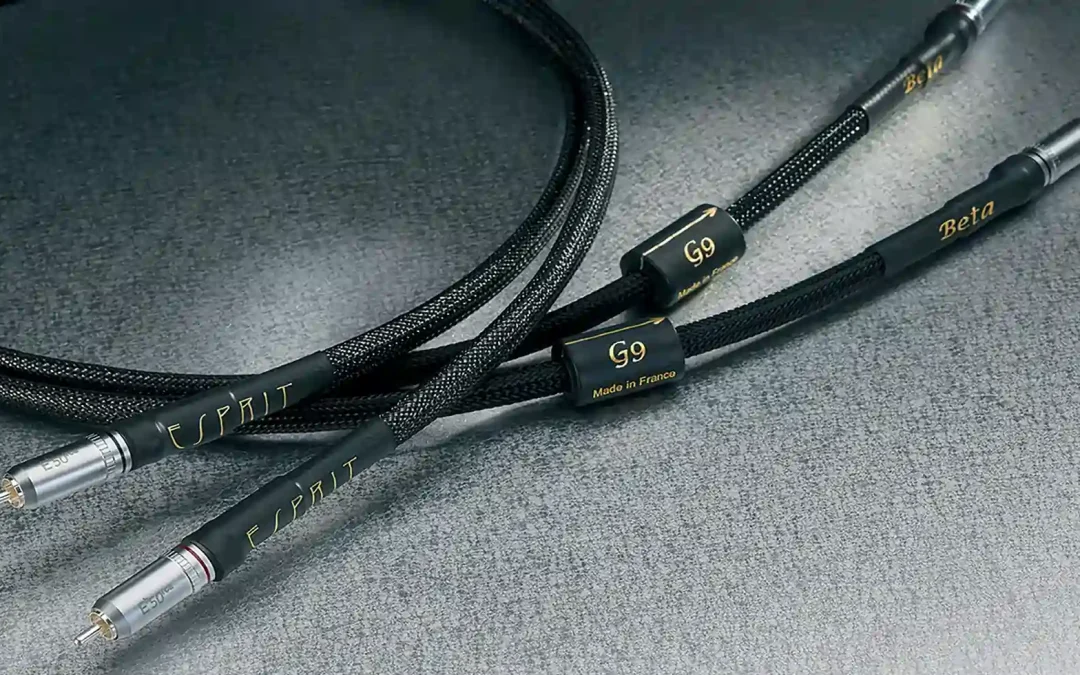
With over 20 years’ experience behind it, Richard Cesari continues to develop its Esprit cable ranges with the recent arrival of the Esprit Beta G9 series. This 9th generation is even more advanced than its predecessor, particularly in terms of noise and interference reduction, for ever more developed musicality and ever more realistic sound reproduction, as already demonstrated by the brand’s second line, called Beta.
Previously confined to the Eureka range, which many music lovers could not afford, Esprit has further developed its ranges in recent years, at the request of countries such as India, South Korea and China. The manufacturer has produced the Gaïa range, followed by the extreme L’Esprit, the ultimate model in the style of the Italian car manufacturer’s LaFerrari supercar, released in 2013.
More modest, but still affordable for many, the Beta range comes second among the ten existing models, and remains without doubt the one offering the best value for money.
Esprit Beta cables are particularly carefully designed, with an electrically symmetrical structure of 720 strands of pure 6N copper (this number defines the degree of oxidation, so here a purity at 99.9999% ). The RCA cable has a diameter of 0.08 mm, the XLR cable 0.19 mm and the loudspeaker cable 0.37 mm. Protected in an asymmetrical dielectric sheath, the conductor of this G9 generation benefits from a new assembly of insulators, as well as a shield that is no longer floating as on the G8 products, but connected on both sides while being reduced compared to the previous generation. This partial shielding provides protection against waves, keeping interference and noise to a minimum. The bandwidth, rhythmic tracking and sound concentration are thus increased, while the unshielded part maintains greater flexibility and naturalness. The result is simply the best of both worlds, with an even better balance than before.
Focusing on ten types of cable, from mains connections to jumper cables, Esprit’s initial ranges are limited to just a few models. The manufacturer doesn’t feel it has much to offer on certain entry-level cables, as the savings required to reach certain price points result in insufficient musical quality, in its view. This is why the Beta range currently comprises just four products, RCA, RCA phono, XLR and HP, as tests on mains or RJ45 cables, for example, were not deemed conclusive enough to offer these products to consumers.
In the Beta range, only the XLR cable already has a twisted dielectric – a technique widely used for the higher ranges – with a silver-plated phosphor bronze female plug and a silver-plated pure copper male plug. The RCA cable benefits from connectors developed exclusively for Esprit, with the EH50rca fitted to the first three ranges, up to and including Kappa products. It features a pure copper central pin and a brass body, plated with four copper-silver layers totalling five microns, while the loudspeaker links benefit from banana plugs or forks with a multilayer copper-silver plating of 20 microns.
The set up
Still relatively flexible, Beta cables are very easy to install, especially on 18 mm terminals, where the RCAs fit directly, whereas the ferrules have to be unscrewed to fit them on 20 mm terminals, which are often used for top-of-the-range equipment. HP cables are still light enough to be chosen with banana plugs without any problem, with forks becoming reassuring from the Aura or Lumina ranges onwards, which are considerably heavier. As with all the brand’s products, there is a direction to follow when listening. This is indicated by an arrow pointing towards the amplifier for the interconnections, and towards the speakers for the loudspeaker cables. A final word of warning: don’t neglect the break-in period of several dozen hours, because the first listening sessions produce an overly shrill high frequency and a relatively closed soundstage, which you can hear opening up hour after hour as the signal becomes more fluid.
For our tests, carried out on the Atoll SDA300 Signature and the excellent Kora TB140, to drive the Atohm GT1, Jern 15H and Fyne Audio F500SP, we initially used simple cables. Then we moved up the range by integrating Beta G9s with Celesta and Eterna G8s, using HP, RCA, then RCA and XLR on our Accuphase E-600 and our Sugden Masterclass HA-4 headphone amp.
The sound of the Esprit Beta G9
With the G8 series, Esprit succeeded in developing its name internationally to become a reference in high-fidelity, a fact largely deserved when one hears the gain in substance and detail due to the integration of certain of the brand’s cables into a Hi-Fi system. With G9, at least on the Beta range – while waiting to test even higher ranges – all the impressions of respect for timbre and development of nuances already audible before are maintained, but with an even more remarkable concentration and an even greater reduction in noise than with the previous generation.
At present, an RCA Beta G9 cable can almost be compared to a Célesta G8, which it does not surpass in terms of grain and substance, but against which it develops greater clarity and purity thanks to its new jacket and the work done on the insulators and partial shielding. Of course, we have no doubt that a Célesta G9 will go even further, but already the Beta G9 offers more realism and quality of detail than cables from inferior or competing ranges, enough to create the impression that you’ve simply changed speakers or source, so much so that the addition of volume to a system is felt from the very first second of music.
Our conclusion
The striking changes in the G9 series propel the Betas almost two ranges above the previous generation, to the level of the Célesta G8s, further refining the sound and freeing it from numerous impurities, which were already very limited. More concentrated, the gain is obvious with the speaker cables, even for ears not used to quality listening. However, the almost equally important contribution of modulation cables should not be overlooked. If we have to confine the superiority of XLR over RCA to the fact that equipment with balanced connections is often made to work better this way, it remains clear that adding a Beta G9 interconnect cable to a Hi-Fi system still amply extends the soundstage, at the same time as refining harmonic nuances.