In barely five years, the Danish brand Børresen Acoustics has designed several ranges of very high quality speakers, from the ultra-high fidelity 0 and M series to the still very high-end, although more affordable, Z and X series. From this latest series, we are testing the X3 for you today, a sumptuous speaker with three drivers and a ribbon tweeter, still at a high price, although contained at exactly €10,000. This price is justified by the sound, which is a breath of fresh air made up of superb timbres, far superior to many of its competitors. What’s more, this X3 is half the price of equivalent speakers from the Z series. It was with real pleasure that we were able to enter through the back door into the immense universe of designer Michael Børresen.
Priced at several hundred thousand euros for the M series, and six figures for the manufacturer’s 0 series when you choose the Cryo or Silver Supreme Edition versions, the creations of the Danish designer Børresen are also available at more reasonable prices. It therefore has two other series in its catalogue, the Zs, the smallest of which, the compact Z1, costs €10,000, and the Xs, consisting of three tower models, X2, X3 and X6, the number after the letter representing the number of speakers used in addition to the ribbon tweeter.
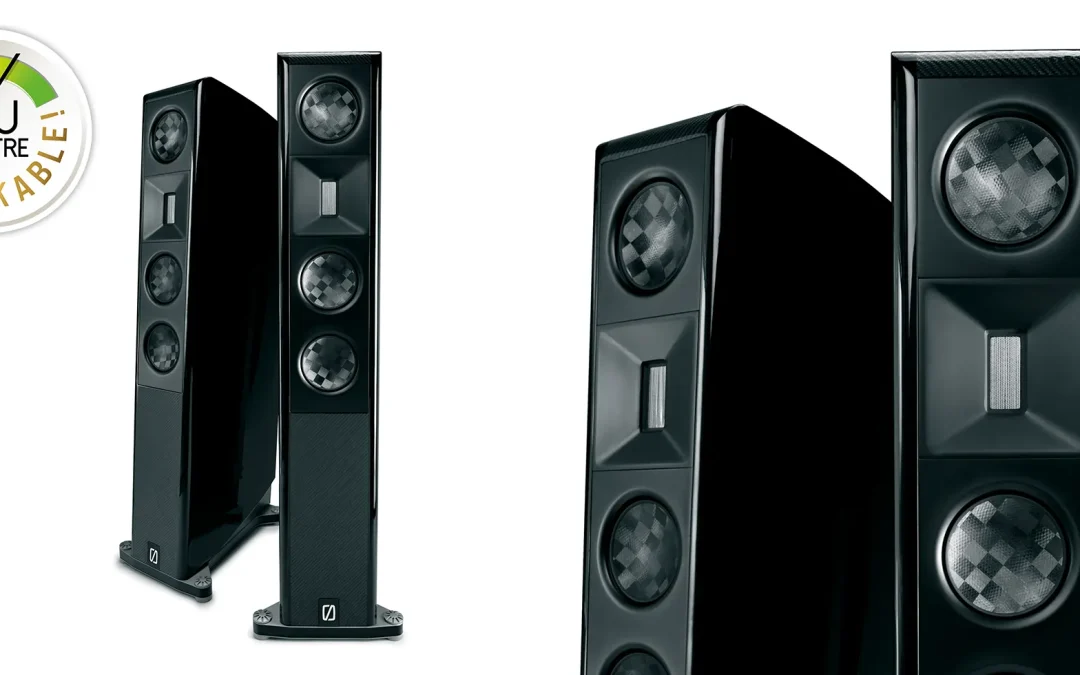
From this series, we have chosen the X3 tower speaker, undoubtedly the one with the best quality/price ratio in that it already expresses all the brand’s components, without exceeding the price of the Z1, despite its imposing size and already impeccable finish quality. Available in black or white piano lacquer, the Børresen X3 is 129 cm high and 60.7 cm deep, with a width of 34.5 cm at the base, reducing to just 22 cm at the front, tapering as the case extends towards the back to leave just a few centimetres at the end, from which no fewer than three round vents emerge at the top and four at the bottom. Reinforced by very beautiful carbon inserts, the cabinet is made in one piece from a very rigid wood composite material, designed to eliminate as many vibrations as possible as well as mechanical influences. Inside, a small pipe allows air to be ventilated and sent backwards onto the tweeter, while the midrange speaker above is partitioned off in a small space open to a second cabinet with two pipes, which evacuates the air towards the other two vents. Below, two partitions extending the full depth of the speaker separate each of the two mid-bass speakers. These internal partitions have numerous downward-facing holes that direct the air and vibrations towards a final large cabinet from which the aforementioned four low vents emerge. On the lower level of the speaker on the front, the Ø-shaped brand logo overhangs a base of two metal blades, which enclose a large wooden plate supported by four metal feet.
Manufactured on the basis of the components of the Z series, the X series crossover filter is mounted in parallel and uses three different levels of coils, which serve to minimise its self-resonance as much as possible, in addition to refining the register cuts as precisely as possible.
The planar ribbon tweeter is almost the same as the one used in the higher series, with a slightly reduced output from 94 dB to 90 dB despite a slightly shortened length, compensated by the lower mass of the components (magnet and iron) to offer a moving mass reduced to 0.01 g, due to the extreme speed of its responses from 2.5 kHz.
The equally well-designed speakers are made up of a bass-midrange element above the tweeter, which is at ear level when sitting on a conventional sofa, and two bass speakers below. For these three elements with a diameter of 11.5 cm (4.5‘’), the membrane combines, as on the Zs, three layers of laminated skins, the spacer in aramid honeycomb design sandwiched between two layers of spread carbon fibres. Both very light and very rigid, these membranes result in a significant reduction in resonance, with that of the environment providing an optimal response in the vertical direction, for a sound result of great transparency.
Last but not least, the X3 also uses the technology that made the Børresen Z-series motors so powerful, which eliminates the iron from the magnet to use a system with double copper caps on the pole rings, with the aim of accelerating the flux and flattening the inductance curve, in order to further minimise electromagnetic resonance. With all these technologies, the X3 offers an impressively transparent, wide frequency response of 35 Hz-50 kHz, for a contained sensitivity of 88 dB and an impedance of 4 ohms.
The set-up
At the risk of never wanting to leave, unless we take the X3s with us to one of our auditoriums to enjoy them for many more hours, we found ourselves limited for the occasion by time as well as by the weight of 55 kg per piece, and had to go and discover the pair of Danish speakers at one of the brand’s dealers, the Music Hall auditorium in the 8th arrondissement of Paris. Initially paired with an integrated Chord 2800 MkII, the little big Børresen proved better suited to the McIntosh 8950, although we were unable to further develop the tests with one of the many integrated or Accuphase amp-preamp pairs available in the store. Despite the amplification and the source – a McIntosh DAC on an Aurender streamer – the roundness and the richness in the bass of the American devices were completely counterbalanced by the speakers, with a tension that made us curious to pair them up next time with Danish amplifiers, for example the new Gryphon Diablo tested in parallel in this same issue.
The sound
As we have just mentioned, the tension is one of the main components of the speaker, in that it is so fast that it stretches the sound to give it great dynamics, without the slightest notion of harshness. On the contrary, whether it is the ribbon tweeter, developed on the basis of what Michael Børresen had already extensively improved when he founded Raidho, or the midrange/bass and bass speakers, everything always sounds very clear and airy, with perfect fluidity.
Superbly toned, the fast treble takes up less dominance than on the Z2 (VUmètre test no. 37; Remarkable) and integrates perfectly with the other parts of the spectrum, with a linearity in the frequency cut-off that is impossible to notice, where this is sometimes the problem when this ribbon technology is used by other manufacturers. Only at very high volume do some vibrations begin to be felt from this component, but this check is only carried out to push the limits to a totally abnormal sound volume, never reached under normal listening conditions. With the mid-range and bass, the neutral timbres and great clarity as well as the speed of the sound remain just as evident, for a very pleasant listening experience of jazz or rock music from the 1970s. With Pléïades by Xenakis performed by Les Percussions de Strasbourg, and more specifically the piece ‘Peaux’, the perfectly recreated and airy sound stage allows you to identify all types of drums and tom-toms, carried by a very taut bass rendering with each stroke of the baton. Without overdoing the precision, the sound systematically offers large breathing spaces, which we are sure could have been extended even further in a room more open than our test auditorium.
On Beethoven’s Fidelio (Bernstein live version, DG), a slight saturation of the elements in the large choral and orchestral parts first appeared, but we partially corrected it by switching from Tidal to Qobuz, as the Hi-Res file on this platform is clearly better encoded and better distributed, with the result of restoring depth to the image and allowing the soundstage to breathe more. This made us realise that an even more refined source would have allowed us to better position the elements, for example with a more neutral DAC or a Kuzma or Brinkmann turntable. Walking around the speakers also showed that they are not hyper-directional and that several people can therefore enjoy them perfectly in a large room, without needing to be right in the middle of the listening triangle. In the final audition, Kendrick Lamar and his ‘Bitch, Don’t Kill My Vibe’ highlighted the accuracy of the membranes and the ribbon, especially the high-pitched sounds and electronic percussion effects, without the bass ever seeming to get stuck in the firm subwoofer, but on the contrary feeling free to deploy all its energy.
Our conclusion
The second model from the Danish brand, starting at the bottom in terms of price, the X3s are already true Børresens, with no limits on quality in terms of either design or sound reproduction. Impressive in all registers and all musical styles, these large speakers, 30 times less expensive than the most advanced versions from the designer, have benefited from Michael Børresen’s two decades of experience, as well as the numerous models he manufactured upstream for Raidho and then for the M, 0 and Z series. Still affordable for any hi-fi enthusiast willing to devote a substantial budget to their system, the X3s offer a gateway to sound paradise with a sound typical of northern Europe, in countries where winter means spending long hours warming up without leaving the house, making the most of every minute of music.
The quality of our listening protocols led Nordost to offer to let us test a complete Heimdall 2 power cable, a Frey 2 power cable and a Qbase 8 mkIII power strip for several months. As one of our main systems already had exactly these components, along with a Qbase 8 mkII, we took advantage of these tests to review our entire installation and revise the contribution of each of the cables to our system, in addition to comparing the mkII and mkIII strips with each other, with and without the addition of decouplers (AC, BC, TC) and harmonisers (QRT Qv2). Thanks to this update, we have been able to re-identify all the reasons that led us at the time to invest in this treatment of the sector by Nordost.
Nordost Norse 2 cable series
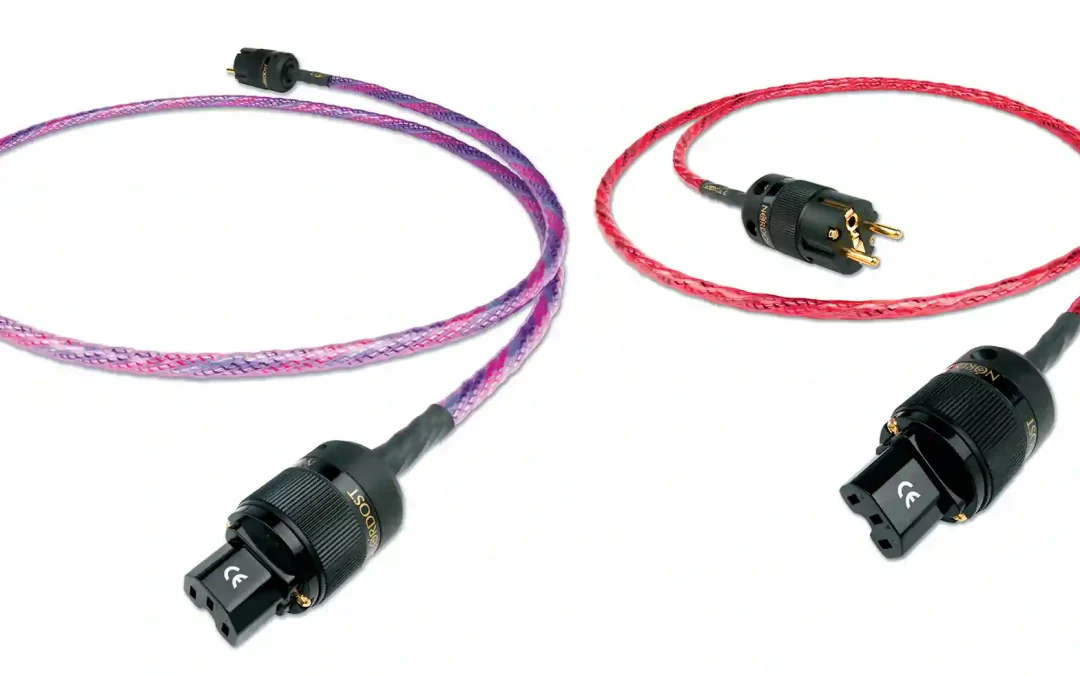
Positioned between the Leif entry-level range and the Reference and Supreme Reference ranges, Nordost’s Norse 2 range is already taking listening to a high level of fidelity, without reaching the prices of the Valhalla and Odin products. Comprising three series, the Norse 2 range starts with the Heimdall 2 products and continues with the Frey 2 and Tyr 2. Designed to meet almost every need, these cables are available in RCA and XLR, speaker, coaxial SPDIF, RJ45, USB, 4k UHD or even RCA, XLR or DIN phono turntable arm modulations. But for this issue, we have chosen to draw only the preliminary sap: that of mains cables, with Heimdall 2 cables ranging from 1 to 3 m, plus two Frey 2 cables of 2 and 3 m. Founded in 1991 with an initial focus on the medical sector, as well as audio, Nordost has used research carried out in conjunction with NASA to maximise the reliability of its cables. Now refocused on high-fidelity, the American company continues to develop numerous processing devices, with a recent shift towards Internet data via Qnet, or increasingly refined development of current harmonisation with the new QRT Qwave, QKoil and QSine. However, it is keeping in its catalogue products that have been benchmarks for over a decade, including the mains cables in its Norse 2 range. With a monofilament construction to create a virtual air dielectric, silver-plated OFC conductors and FEP (Fluorinated Ethylene Propylene) insulation, the Heimdall 2 offers ultra-fast current and voltage transfer with low impedance and strong mechanical control. The more advanced Frey 2 uses conductors with a diameter of 5 x 16 AWG, compared to 3 for Heimdall 2. Its resistance drops from 4 Ω per 1000‘’ to 2 Ω per 1000‘ – the Tyr 2 going even further to 1.33 Ω per 1000’ – for a velocity of propagation of 85%.
Nordost QBase 8 MKIII power strip
The latest addition to the power strip range, the Qbase 8 MkIII replaces the MkII after more than ten years of service. The MkII itself arrived after the first version, incorporating better sockets and offering the option of being switched to 20 A. Now laminated at both ends, where the MkII was still edged with aluminium to frame the main piece in extruded aluminium, the MkIII still exists in the QB4 or QB8 version for the USA and Europe, as well as in QB6 for the United Kingdom. Mechanically, it adds passive resistance to raise the impedance level on the seven sockets around the main one, thus forcing all the earths to centre on the latter, indicated as ‘Primary Earth’. This star-shaped process provides perfect isolation of the components while eliminating any conflicting flow between the signal and earth paths. But Qbase MkIII also innovates with its internal current transport board, as it no longer contains just one, but two well-separated ones, which separate the earth connections from the voltage and neutral lines, resulting in minimised interference and crosstalk. Optimised in width and weight, the tracks are even more effective when using a large amplifier, such as Wavac or CH Precision monoblocs.
The set-up
Already in possession of some of the components, with a Qbase 8 MkII, we first dismantled everything and reconnected all the system devices with the original cables, on a Legrand power strip. Then we gradually added the Nordost cables, first Heimdall 2, then Frey 2, and finally integrated the Qbase 8 MkII strip, which was later interchanged with the MkIII. Using an Accuphase E-600, Mark Levinson 5101 and various power supplies to make the Kuzma turntable and internet data more reliable (Forrester F1 and Ferrum Hypsos), the tests were developed on a smaller system with an Atoll ST300 source and a Luxman SQ-N150 tube amplifier. Once the sound was properly calibrated, two QRT QV2 current harmonisers (€430) and TC (€460), BC (€195) and AC (€110) decouplers were integrated, with the facility on the MkIII version of being able to remove the rubber feet and screw on a pair of QRT Stand Mounts (€150) instead, on which to attach the decouplers.
The sound
This is not the first power strip we have tested, far from it, but it had been a long time since we had dismantled the entire block to reassemble it as we went along… and rediscovered the sensations experienced several years ago, through the integration of superior elements to make the audio system’s power supply more reliable. A few days after receiving the components, during an installation in Brittany in a much purer environment than Paris, a few kilometres from the Rance tidal power station, the fact of having incorporated only the Qbase 8 mkIII into a system already had a direct impact on the concentration of sound elements and the reduction of background noise.
In Paris, where the environment is much more polluted, the integration of Heimdall 2 cables instantly increases the brightness of the sound and the contour of the musical elements, both when connected to an amplifier and to a source, the best being to use several to touch all the elements. Even on the power supply of the Kuzma turntable, as advised by Franck Kuzma himself, the result is real, with a more fluid analogue sound, simply due to the improved precision of the rotation.
With the addition of the Frey 2 on the amplifier, the difference is even more impressive, as if the speakers had changed volume, in addition to having modified their loudspeakers to better colour the timbres. All the components benefit from this, although we are still dealing with an audiophile-type musical transcription, which tends to improve the substances of the sound without making them perfectly realistic.
In order to achieve this result, the bar must be added, and while the Qbase mkIII goes even further than the mkII in reducing noise and thus darkening the soundstage for the benefit of relief and realism, the most obvious difference is when listening with and without the bar. For while our primary system has been on Nordost for more than five years and the new bar, which is simpler to isolate thanks to the Stand Mount, goes even further than the previous version, it is clearly on our second system, previously on an Oelbach audiophile power strip, that the lightening and ventilation gained by the introduction of a Qbase explode to the ear, and finally do justice to all the tracks played by eliminating all the disturbing resonance effects.
Our conclusion
Already evident in a healthy environment, adding mains cables and reproducing the protocol in a polluted environment such as Paris, by adding a power strip upstream of a system, demonstrates the importance of making the current processing of a hi-fi system more reliable, an undeniable know-how of the American brand in this field. And if the problem always arises of knowing when you should invest in a cable costing around €1,000 to power a hi-fi product, the answer with a power strip and an upstream cable is more obvious, because the improvement instantly affects all the elements of the system, rather than one product in particular. This is a real investment (Qbase mkIII at €2,600 + 2 x Heimdall 2 at a minimum of €840) that cannot reasonably be made for a system costing less than €5,000, but in view of the gain in clarity and reduction in noise, even on a small Luxman tube amplifier or Sugden headphone amp, we highly recommend it because of the significant contribution it makes to the music!
Author: Vincent Guillemin
Technical sheet: Nordost Heimdall QBase 8 MkIII
Nordost Qbase 8 mkIII
Origin: United States
Price: €2,600
Specific features:
8 Schuko sockets
Separation to earth
Nordost Heimdall 2
Origin: United States
Price: from €840 (1 metre; €275 per additional metre)
Nordost Frey 2
Origin: United States
Price: from €2,245 (1 m; €420 per additional metre)
Shortly after reworking its F500 entry-level series, to offer a more attractively priced F500E home cinema version on some models, Scottish manufacturer Fyne Audio is now updating its F500 series to the F500S.
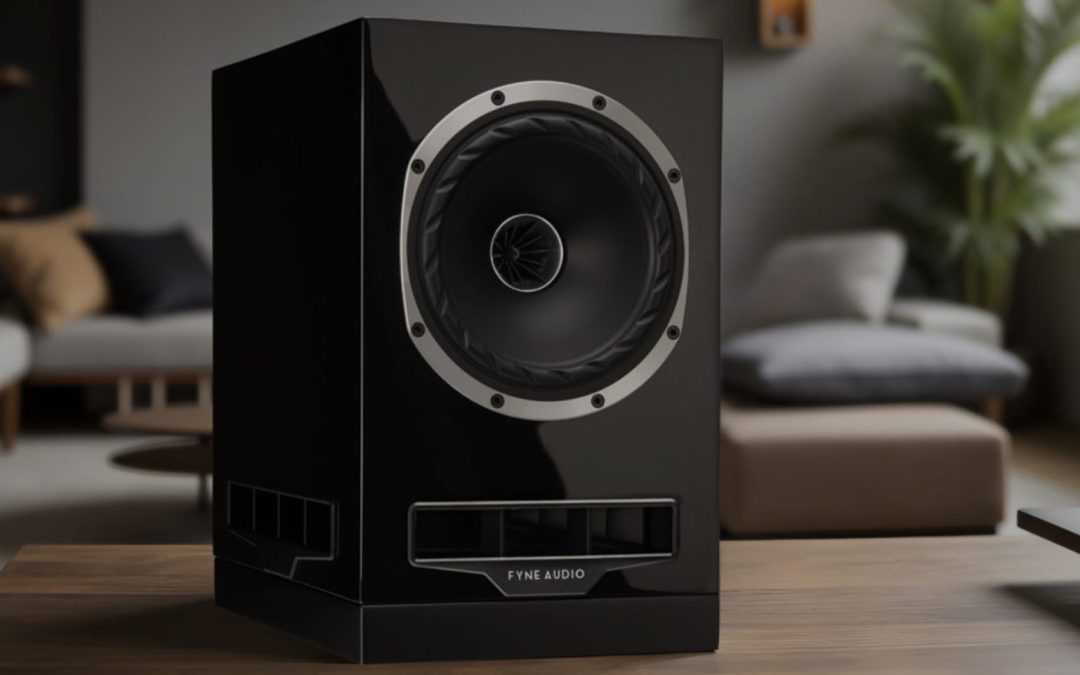
Still featuring the coaxial IsoFlare drivers for which the brand is renowned, the F500S also retains its BassTrax Tractrix bass dispersion system, but with an optimized cabinet and port to reduce resonance and vibration. The crossovers are also upgraded with some of the technologies derived from developments in the F700 series.
Superior to the F500E models, the new F500S are also designed for users who want to use these speakers for hi-fi and home-cinema listening. In addition to the compact F500S version (950 € per pair, no price variation with the F500) and two two-and-a-half-way floorstanding speakers F501S (2 000 € per pair) and F502S (2 800 € per pair), a central or side-mounted F500S LCR model (600 € per unit) will be available like the others from now. They will then be joined by a small compact F5S (700 € per pair).
Already a reference in the moving-magnet (MM) cell category, Nagaoka has set its sights even higher with the MP-700.
At Vumètre, many of us own the MP-120 and the MP-150, the holy grail for any rock fan who likes to keep a taut sound in analog listening. And to test the MM part of the high-end preamplifiers, we also own an MP-500, set against all the cells in its range (at 999 €, so mostly MCs).
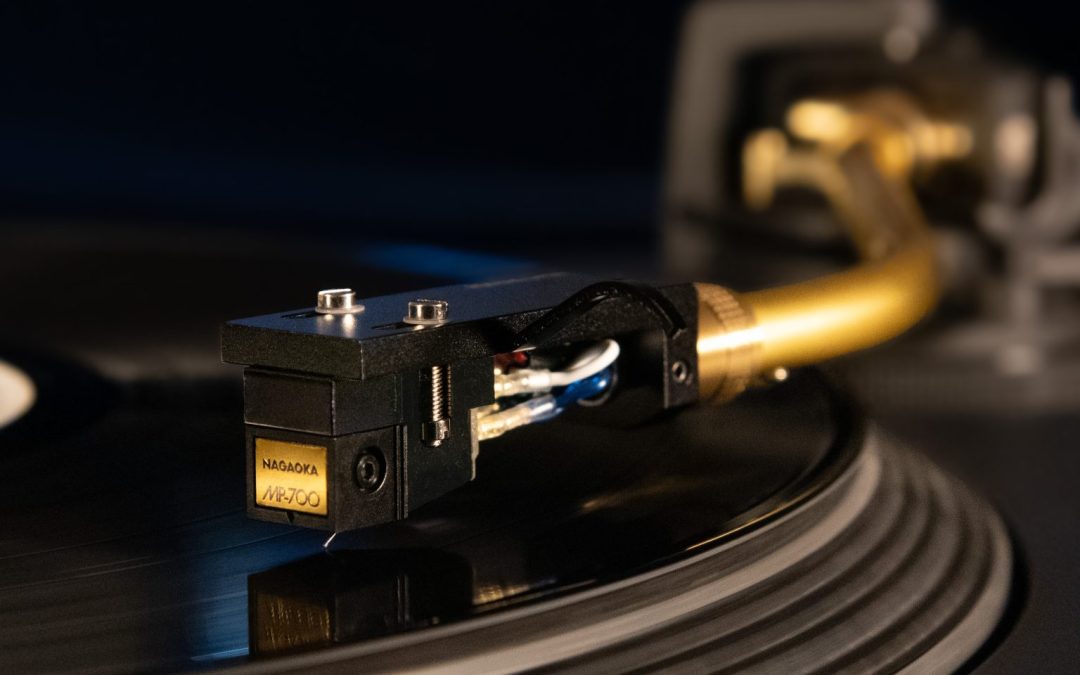
With the MP-700, Nagaoka goes even further than the MP-500 by increasing the use of permalloy circuits, a technology derived from Moving Magnet (MM), which here becomes Moving Permalloy (hence the term “MP”), with a moving part of this material attached directly to the cantilever. The cantilever itself has been redesigned for this new cell, in Boron and combined with a 0.12 x 0.3 mm MicroRidge diamond. A flexible shock absorber on which the cantilever rests enhances vibration control, combined with a suspension wire to maintain precision control.
Housed in a highly rigid Duralumin body with three layers of nickel plating, tin plating and insulating coating, the MP-700 is even less subject to heat variations and external interference than other models in the range. Obviously handcrafted in Japan, this top-of-the-range MM cell is launched this month in Europe at a price of 1 299 €, or directly mounted on a cell holder (MP-700H) at 1 399 €. We cannot wait to listen!
Vincent Brient may be headquartered a few kilometers from Mont-Saint-Michel, but he is clearly not a tourist, given the number of projects and changes Totaldac undergoes every year !
After reworking his DACs to improve performance with the d1-unity range (Tested in VU#56 FR ; Remarkable), the Supélec engineer launched a new range of network transports earlier this year with the d1-streamer-live and sublime, and is now back to CD playback with a d1-CD transport.
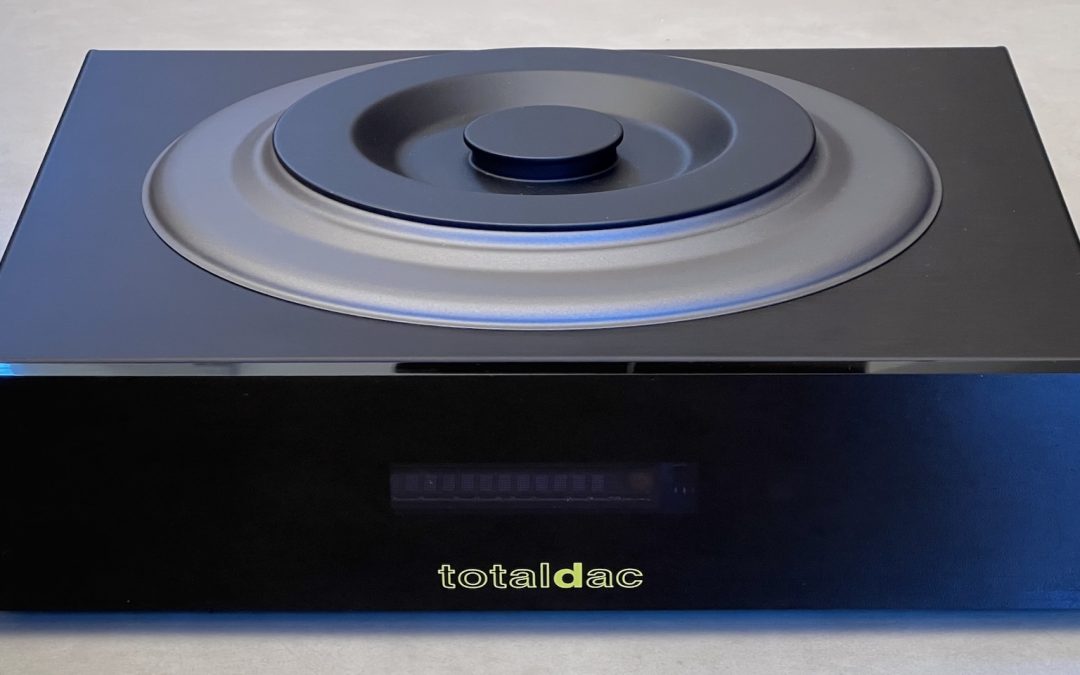
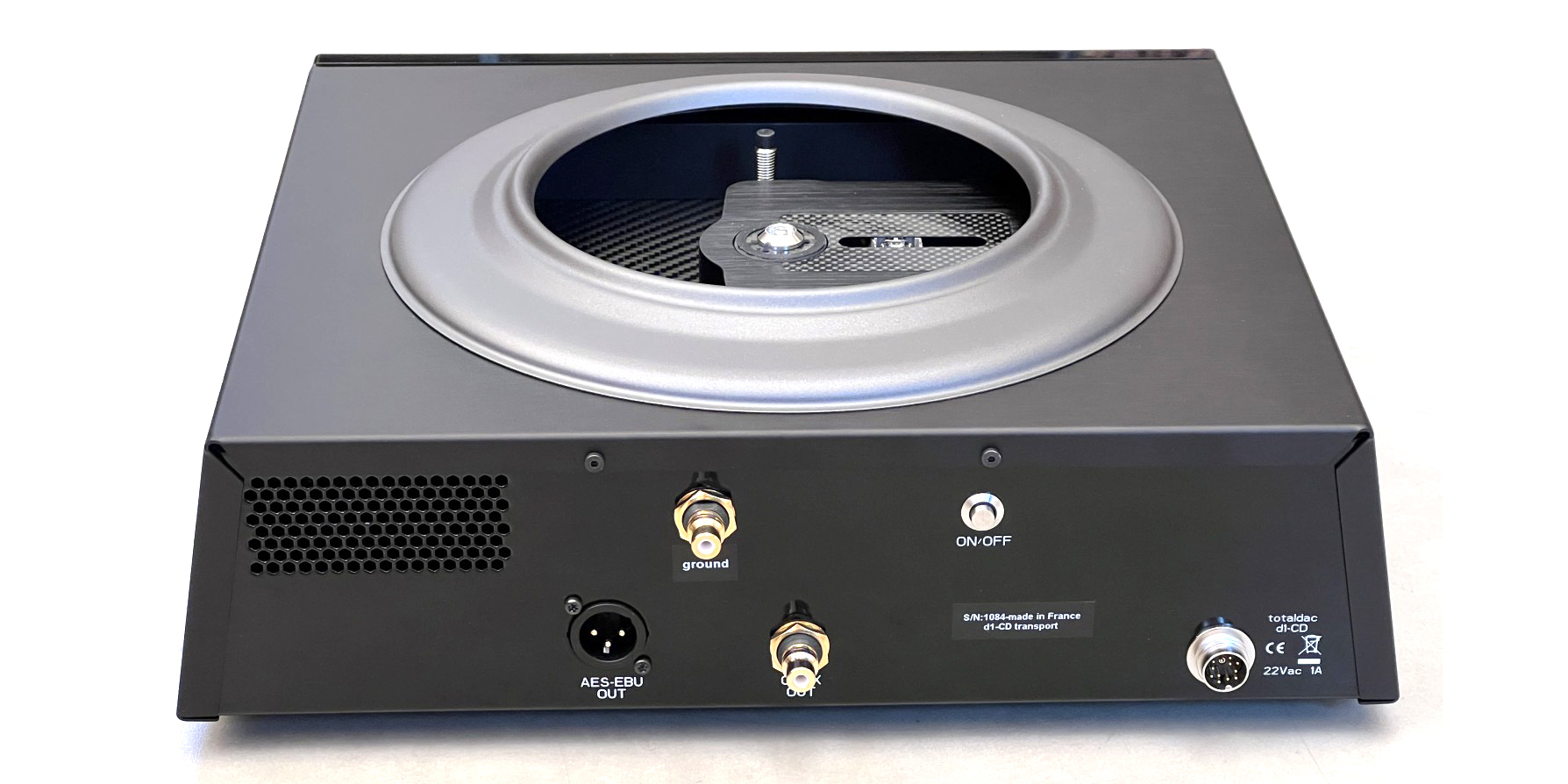
Compared throughout its development to a tape player in order to reproduce the analog sound as closely as possible, the new CD transport uses Totaldac’s well-known frame, in which a massive copper plate is decoupled by three anti-vibration feet below, and internally by four springs to another carbon plate, on which an Austrian PRO-CD8 playback mechanism sits. Integrated from the top, the CD, blocked by a pallet press, can then be left in the open air, or covered by a hood, which obviously limits dust as well as reinforcing the silence of rotation.
Limited to 44.1 kHz in 16 bits, i.e. the sampling rate of a CD, this transport cannot read SACDs, but it gives the signal reliability to the 40th of a femtosecond thanks to its high-precision clock. To connect it to the DAC, coaxial (BNC adaptable) and AES/EBU digital inputs are available, while the Totaldac live-power ultra-low-noise power supply is added as standard, upgradeable with other, even more powerful, from the brand.
This new high-performance Breton player can be tried out directly by contacting the manufacturer on its website, and is priced at 7 500 €.