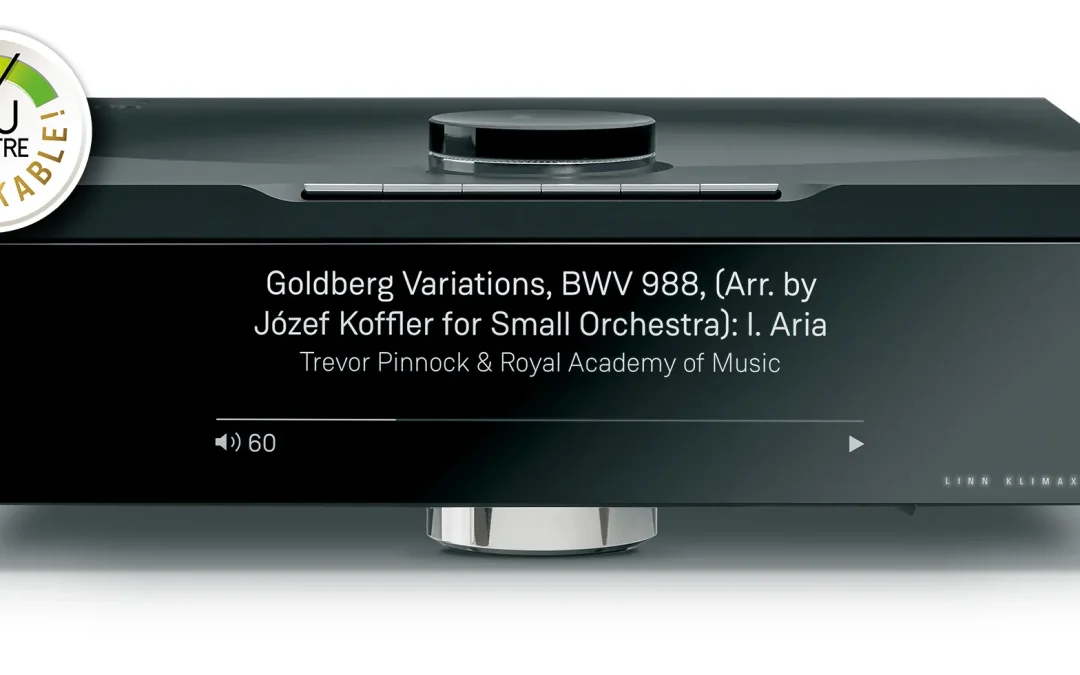
A pioneer in network playback with the Klimax DS, released in 2007, Scottish company Linn, which is now celebrating its 50th anniversary, continues to reinvent itself and, with the latest generation, the LINN Klimax DSM 3, presents one of the most accomplished players in the world. Thanks to its new Organik DAC, now manufactured entirely by Linn on an FPGA architecture linked to an analogue conversion stage using discrete components, the LINN Klimax DSM 3 achieves an almost untouchable level of definition and spatialisation, combined with a quality of timbre that has perhaps never been seen before.
Half a century ago, a Scotsman by the name of Ivor Tiefenbrun created a revolutionary floating turntable in Glasgow: the Sondek LP12 was born. Thirty-five years later, Linn developed the Klimax DS and brought out one of the very first top-of-the-range network players, while Deezer was still in its infancy and Spotify had just appeared. Over the next fifteen years, the brand’s engineers never stopped questioning their processes, and after adding upsampling upstream of the DAC – back in 1997 – and developing it until recently, they felt they had reached the limits of this method and needed to review the entire digital chain again to improve it.
So, under the supervision of senior engineer Phil Budd, they reviewed all the processes to create a new, entirely proprietary digital-to-analogue converter, based on an FPGA board linked to a conversion stage made entirely from discrete components.
Based on proprietary algorithms, the FPGA board is used not only to oversample the digital signal, but also to manage the volume so that the device can be used as a preamplifier. The converter stage then sets about delivering the analogue signal with a new design, thought out to reduce signal paths to a minimum and further limit distortion and noise.
To make the DAC even more user-friendly, it is completely separate from the other stages in the case, which although it has the same appearance as the Selekt DSM (€5,520), uses totally isolated digital and power stages, for a tenfold increase in weight from 7.2 kg for the Selekt DSM to 16.4 kg with the Klimax DSM/3. To perfect the architecture and avoid interference as much as possible, a sealed block was added to integrate the most critical part, the Organik DAC, and separate it from the analogue parts and the clock, the latter revised on the basis of a new oscillator to reduce jitter effects to infinitesimal variables.
Produced on a new CNC machine in which the manufacturer has invested specifically for its latest generation of players, the Klimax DSM 3 offers a shielded enclosure against all interference, with the aim of preserving the purest quality of the digital data and then the analogue signal.
With such an Organik core, the Klimax DSM 3 is capable of decoding streaming files up to 24-bit 384 kHz and audio formats up to DSD256, without going any further for the moment, or taking an interest in the MQA format. Its FPGA architecture allows for regular updates to limit obsolescence, even if the digital card can always be upgraded at a later date, just as previous Klimax units can now be upgraded with the integration of the new DAC, at a considerable cost, but less than the cost of exchanging your old DSM for a new one.
In addition to its display screen with highly refined light grey alphanumeric characters on the front, the LINN Klimax DSM 3 benefits from a plethora of output and input connections on the rear panel, designed on a stand-alone printed circuit board with a dedicated power supply. Not only can you connect the box to Ethernet via an RJ45 cable, but you can also connect it directly to optical Ethernet to link it to fibre, as well as playing audio files via Wi-Fi or Bluetooth if required.
Analogue XLR, RCA and RCA phono inputs are also available for use as a preamp, as are equivalent outputs and USB inputs, so you can turn the Klimax DSM 3 into a real server. Finally, the Klimax DSM/3 can be connected to other Linn components, such as Exakt active loudspeakers, via the two Exakt Link outputs, which can considerably reduce the cost if that’s the only use you’re looking for, since all you have to do is buy the Klimax DMS 3 in its HUB version, which costs half as much (€18,000). Conversely, the most accomplished users will be able to opt for the Klimax DSM 3 AV version, which incorporates no less than four inputs and an additional HDMI output on the rear right-hand side, and therefore a new card, for a price surprisingly equivalent to that of the LINN Klimax DSM 3 version, at €36,000.
The set up
Given the hefty price tag of this musical gem, borrowing the product was out of the question, so we carried out the tests at Audio Synthèse in Paris. So as not to distort our listening, the Linn Klimax DSM 3 was first integrated into a modest high-end system. Then it was combined with components of the same level, i.e. among the best, without ever showing the slightest weakness. At the same time, comparisons with the bottom-of-the-range model from the same brand, the Klimax Katalyst – kept in the catalogue because it cost €14,000 less – or with direct competitors in terms of price, have highlighted the incredible superiority of the LINN Klimax DSM 3.
Listened to at length with Raidho X-2 loudspeakers (€12,900 a pair), the network preamplifier/recorder was then integrated into Raidho C2.2 loudspeakers (€22,500) and then onto the gigantic TD-3. 8 (€88,000), while the entire system was purged, from the mains input via a Nordost Odin 2 cable (€16,695) to an ingenious combination suggested by our on-site concert master, Régis, involving the use in series of two Bonn N8 switches from Silent Angel, both connected to the same brand’s Forester F1 power supply, for tenfold stability of the mains connection.
In such a context, listening could only be perfect, but it proved to be even better than our expectations, and the Klimax DMS 3 was only challenged on numerous files and very different recordings, without ever separating its preamp or network part from the conversion part. It should be added that, in order to make network playback even more stable, it is possible to connect the device directly via an optical Ethernet cable, or fibre throughout the digital chain, which we were unable to try out during our test, as we were already very confident in the purity of the data streamed thanks to the chain of switches mentioned above.
The sound of the LINN Klimax DSM 3
If high-fidelity is a world, the Linn Klimax DSM 3 has opened its doors to take it to another universe, so infinite do its possibilities seem. Listened to immediately after getting to grips with the already splendid Klimax Katalyst, the Klimax DSM 3 gave the impression of shattering all the partitions in the room, leaving only the music free to roam. First tried with jazz singers Diana Krall and Melody Gardot, the network player and its internal Organik DAC seemed to transport these artists into the room, with a presence almost as strong as when we heard them live.
The LINN Klimax DSM 3 was less precise on details such as lip-smacking and breath-holding during the first listening sessions, but seemed to us to be more homogeneous, more lively and much more natural in its transcription, with a quality of timbre rarely, if ever, achieved before. Then, after a few denser tracks, we realised that the less well perceived details and the slight narrowing of the soundstage compared to a DCS Rossini, for example, were due to the fact that our Raidho X-2 speakers simply couldn’t handle the signal any more, given the streamer’s almost limitless information.
Combined with the giant TD-3.8s, the Klimax DSM 3 found no limits and brought an infinitesimal level of detail to the slightest whisper, while maintaining a free and superbly pleasant sound and listening experience. Tested again and again with polyphonically complex works, such as the violent ‘Dies Irae’ from Verdi’s Requiem, chosen for several recordings, our digital jewel extended the soundstage to the limit of its possibilities, with a complexity never heard before at such a level, without ever creating a primary or secondary layering effect, but with the most perfect integration of all the components.
We then experimented with a number of rock groups to delimit the ambitus of the spectrum, and in particular the bass register. Here again, the Klimax DSM 3 showed no limits and enabled us to reproduce with perfect clarity all the basses of the most diverse instruments, always with infinite precision in the slightest string scrape or percussion strike.
Our conclusion
A true magician, the latest-generation Klimax has never lived up so well to its name. Capable of taking the listener to new heights every time they listen to it, it allows them to rediscover each recording by taking it to the limit of its possibilities, without the slightest perceptible limit, as much for the amplitude of the spectrum developed as for the incredible breath and life released from the soundstage. We’d like to call it natural, but we were in the room for Melody Gardot’s live performance in Paris and at La Scala in Milan for Barenboim’s performance of Verdi’s Requiem, and in both cases, the sound quality we experienced was superior with the LINN Klimax DSM 3.
For a product such as this, we have to call it a supernatural success, not because the player is trying to transform the sounds, but because it makes them so precise that you would have had to be in ten places at the same time, and in particular in the conductor’s seat in the Milan hall, to hear the same thing, or stand on stage and stick your ear a few centimetres from Melody Gardot’s lips to be able to discern the same level of detail.
At €36,000, Linn’s new digital flagship costs the price of a nice car, but it’s capable of transporting the listener thousands of miles, without making them leave their living room.
Author: Vincent Guillemin
Technical sheet: LINN Klimax DSM 3
Origin: Scotland, Great Britain
Weight: €36.000
Dimensions: 350 x 126 x 350 mm
Weight: 16.4 kg
Digital inputs & outputs: Ethernet (1000BASE-T RJ45), Optical Ethernet (SFP socket), 2 x Linn Exakt, Toslink, SPDIF, XLR, RCA, RCA phono, USB Type B, wi-fi (802.11ac), Bluetooth, HDMI (on AV model), HDMI ARC/eARC (on AV model)
Analogue outputs:
XLR
RCA phono
HDMI (on AV model)
Audio formats: FLAC, Apple lossless, WAV, DSD (64/128/256), MP3, WMA (except lossless), AIFF, AAC, OGG up to 24-bit 384 kHz
One of the most elite portable headphones available, the Bowers and Wilkins Px8 takes the curves of the Px7 S2 and pushes portable sound performance even further. Extremely comfortable thanks to its leather ear pads, these wireless headphones combine musical quality with all the latest technologies for listening outside the home, from active noise reduction to a control app to best suit individual preferences.
Like many high-fidelity manufacturers today, Bowers and Wilkins is also present in the world of mobile listening, which is important for more and more music lovers, often frustrated by the loss of sound quality when they leave their homes. The British brand entered this segment in 2010 with the P5, and it took another five years to introduce a Bluetooth version (P5 Wireless), which has since been updated several times, most notably with the Px in 2017.
Design
With slightly wider ear pads than previous versions – made of natural leather for the Bowers and Wilkins Px8 compared to fabric on the Px7 S2e – B&W’s best portable headphones retain and improve on the latter’s 40 mm angled carbon cone wide-band drivers. On this version, the magnet and motor as well as the contour have also been revised and optimised, with the aim of increasing sound clarity and precision in particular. The headband is covered in nappa leather over an aluminium frame, a material also used on the ear cups, resulting in a total weight of 320 g, which is in the lower range for portable high-fidelity headphones.
Technology
With its 24-bit DSP and no fewer than six microphones, the Bowers and Wilkins Px8 handles both the details of the music played through its diaphragms and the cancellation of ambient noise thanks to a customised active noise cancellation (ANC) system. Of course, these headphones can also be used for phone calls and video conferences, where the microphones ensure that voices are heard as clearly as possible. At £499, it is priced £200 more than the Px7 S2e, but stands out for its visual and acoustic elegance. It is available in four finishes: black, burgundy (royal burgundy), green (dark forest) and white (tan), and at £799 in a special grey and orange finish in partnership with car manufacturer McLaren.
The set up
Advertised and verified at around 30 hours of battery life, the Bowers and Wilkins Px8 is easily recharged via a USB-C cable, which allows it to continue operating even while charging. When switched on using the button at the top of the right ear, it is recognised by nearby Bluetooth devices. It can be controlled from Android and Apple iOS apps, allowing you to adjust the bass and treble by +/-6 dB, or switch between ANC, classic and transparent modes, which can also be set using the single button on the left earpiece.
Also suitable for streaming, the Bowers & Wilkins Music app allows you to connect directly to certain platforms, including Qobuz, Deezer, Tidal, SoundCloud and NTS. It also allows you to select the device to connect to and shows the battery level of the headphones.
The sound of the Bowers and Wilkins Px8
A true gateway to high fidelity, Bluetooth headphones have improved significantly in recent years, not only in terms of sound quality but also in their external noise cancellation (ANC) systems. At the top of the range and more expensive than the Px7 S2e, the Px8 features a superior membrane that makes it undeniably more refined in terms of tone and offers a wider soundstage.
High-performance, its ANC mode envelops the listener in the sound, even in noisy conditions such as aeroplanes or trains. This noise reduction system is not the most effective on the market, but it is combined with musical quality that is among the best. What’s more, switching between classic, ANC and transparent modes doesn’t significantly alter the sense of presence of the sound, whereas with some competitors, activating ANC can create a slightly disconcerting bubble effect.
Always pleasant, the Px8 stands out first and foremost for the quality of its timbres, particularly the natural mids, which are reminiscent of good hi-fi headphones. The bass is not to be outdone and allows for a versatility of musical styles that will suit almost everyone. For pure electronic music lovers, there may be a lack of firmness in the bass, but this is offset by a smooth listening experience, which, on the other hand, works very well with natural music and variety. The extreme high frequencies are also well contained without being distorted, again with a comfortable, non-aggressive feel that makes these headphones a suitable travel companion for all situations.
Our conclusion
One of the first hi-fi manufacturers to enter the portable headphone market, the brand has continued to improve its models, distinguishing the Bowers and Wilkins Px8 from the Px7 in recent years with added refinement and musicality. While the best of the two is not yet ready to replace a very high-end home headphone, it is suitable for all types of listening thanks to its great versatility, as well as being very effective for enjoying films or series and pleasant in noisy environments thanks to the quality of its noise cancellation system (ANC). We highly recommend it!
Author: Vincent Guillemin
Technical sheet: Bowers and Wilkins Px8
Origin: United Kingdom
Price: €499
Dimensions: 233 x 63 x 189 mm
Weight: 320 g
Type: Closed Bluetooth headphones (ANC)
Battery life: 30 hours
Finishes: Black leather; beige and grey; royal burgundy; dark forest McLaren Edition
Designed and manufactured in the United States, Rogue Audio devices are still relatively unknown in France, despite their excellent musicality and value for money, as demonstrated by the brand’s entry-level integrated amplifier, the Sphinx, now in its third version. With two 12AU7 tubes in the preamp section and Hypex Class D amplification, the smallest Rogue Audio delivers a smooth, warm sound and comfortable power to both speakers and headphones. The icing on the cake is that it now has a phono input that can be adapted to MM and MC cartridges!
Beautifully hand-built in the United States under the direction of engineer Mark O’Brien, the Sphinx v3 introduces a range of three Rogue Audio integrated amplifiers. Less bulky, it uses the same components and hybrid design as the larger Pharaoh II (250 W into 8 ohms), while the Cronus stands out with a trio of 12AX7 double triodes and, above all, amplification on four KT120 pentodes. With its two dual 12AU7 triodes (also referenced as ECC82), the Sphinx v3 can be used as a pure preamplifier or as a headphone amplifier, while its primary function as an integrated amplifier benefits from the power output stage of a Hypex UCD180 card per channel, in class D topology.
The headphone amplifier has its own completely discrete Mosfet output stage, while volume control is handled by a 100 kilo-ohm ALPS 100KAX2 potentiometer, all placed on a printed circuit board made from a significant amount of pure copper. Located at the rear of the unit, the power supply is provided by a large 375 VA toroidal transformer custom-made for Rogue.
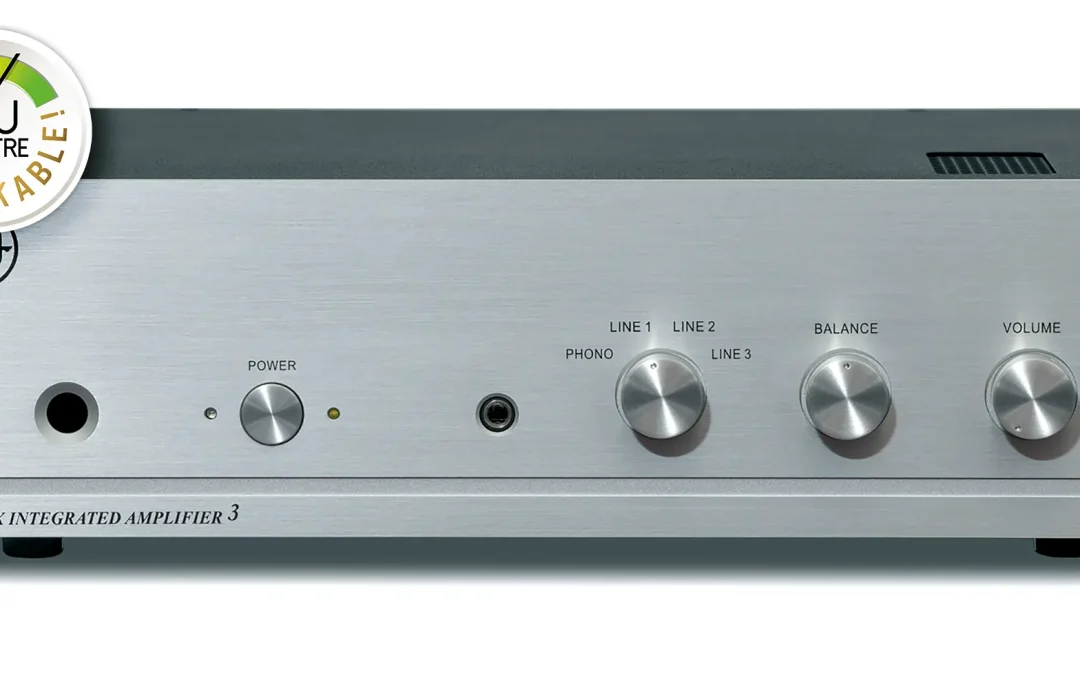
On its machined aluminium front panel, the Sphinx v3 features its raven logo in the top left corner, in white or black depending on the black or silver colour of the model chosen. Below this, a plastic power button is pressed to turn on the tubes once the switch on the rear of the unit has been activated. An orange LED indicates that the Sphinx v3 is in standby mode, while the other LED, which is initially red, indicates that it is warming up and turns blue when the amplifier is operational.
In the centre, a 6.35 mm jack socket allows you to connect headphones, while the right-hand side of the front panel features three plastic knobs, the first for selecting one of the four inputs, the second for balance and the last for volume control. A transparent plastic ‘skeleton’ remote control is supplied as standard, with three buttons for turning the volume up or down or muting it. A metal remote control from the American brand’s higher-end ranges is available as an option.
At the rear, everything is kept simple with four pairs of RCA terminals, three line inputs (the first of which is recommended for CD players) and a phono input, which since version 3 has been used to play both MM and MC cartridges, with a respective gain adjustment of 44 and 60 dB, in addition to RIAA playback with adjustable impedance, provided you unscrew the cover and play around with the pairs of switches according to the instructions. Set at 47 kilo-ohms as standard for moving magnet cartridges, the impedance can be adjusted in seven steps for moving coil cartridges, from 30 ohms to 1 kilo-ohm.
Two pairs of RCA terminals are added at the output, fixed for adding a power amplifier or bi-amplifier; variable for optimal adjustment to a subwoofer. And of course, located on each side and connected by cables to the internal power stages, two pairs of speaker terminals allow for the integration of a pair of fork or banana speakers, with a very high damping factor, announced by the manufacturer as over 1000, which is why feedback-related distortion is so low when listening.
The set-up
With a volume, dimensions and weight that are standard for a high-end amplifier, the Sphinx fits into any environment, provided that you make sure to connect it to RCA sources, as it only has unbalanced inputs. Already powerful, with a very high damping factor, it provides sufficient energy for our demanding Jern 15H speakers and is perfectly at home with more sensitive speakers such as our Closer Ogy or Solen HELios (reviewed in this issue).
A check on EgglestonWorks Emma Evo also confirmed its ability to power larger speakers, especially in the bass, but as the Sphinx v3’s speaker terminals are quite close together and small, we opted for fairly light cables from the Nordost Heimdall and Esprit Célesta ranges, rather than the Lumina from the French manufacturer that we still had on loan. First tested on its line inputs, the Sphinx v3 was then compared on its phono input to our Gold Note PH10. And as this version 3 can now be used with MC cartridges, we were able to listen to it not only on the Nagaoka MP-200 (MM), but also on the Hana ML and Skyanalog P1 MC cartridges.
The sound
As soon as it was switched on and the little red LED turned blue, the Sphinx v3 surprised us with its roundness and warmth. The preamp tubes are not yet fully warmed up, but the Class D power modules already surprise with their flexibility, far from the harsh or overly digital sound that can sometimes be heard with this type of amplification. Here, on the contrary, you would almost think you were dealing with a Class AB with the first watts in Class A, as the sound is musical and open, as well as truly warm.
When compared to a much more expensive amplifier, the smallest of the Rogue Audio integrated amplifiers never suffers in comparison, and while it doesn’t offer quite the same soundstage or precision, it never disappoints in terms of the quality of information reproduction, even when coming from a very precise source. Perfectly positioned in its price range, although more expensive than the previous version, the Sphinx V3 demonstrates real roundness and excellent timbre, with a preference for the midrange.
Even at low volumes, it has no problem providing sufficient energy to our Jern 15H speakers or relatively power-hungry floorstanding speakers, and at very low sound levels, its potentiometer manages to maintain maximum information and offers a very detailed listening experience that remains very flexible when you turn up the volume. However, especially with large symphonic and choral pieces, the soundstage loses some of its clarity, although solo voices are very well placed at the front. At very high volumes, electronic sounds become muddy with modern music, mainly in the upper end of the spectrum.
To test the self-powered headphone output, we not only had to plug in the headphones, but also mute the TV with the remote control so that the output stage to the speakers was switched off and only the preamplifier stage (i.e. volume control and source inputs) remained functional in the integrated amplifier, in addition to the headphone amplifier module. Then the small LED turned red again, and the music came out only from the headphones, slightly less warm and with less timbre than with the speakers, but still with enough power and flexibility to adapt to power-hungry headphones, including our Kennerton Thror orthoplanar headphones.
With the cover open so that the pair of switches can be changed to adjust the gain and impedance according to the cartridges (a step that only needs to be done once if you only have one cartridge, and not at all if you add a turntable with an MM cartridge that is already pre-set), the Sphinx from the brand with the perched raven can sing with the same fullness. With a finesse of reproduction almost equal to our mid-range separate phono preamps, it impresses just as much with an MM cartridge as with an MC cartridge, although the former suits it better, with a roundness that does not seek a raw sound, for example on rock, but a flexibility and listening comfort at all times.
Our conclusion
Our colleagues at Stereophile recommended we listen to this brand when we met them in Warsaw; we thank them for the idea! A little rough around the edges in its American style, without trying to flatter with plastic knobs or a very classic design, the Sphinx V3 is a true musical machine, superb in all its uses, whether amplifying speakers or headphones.
Equally impressive on its phono input, now also available (and configurable to seven impedances) for moving coil cartridges, Rogue Audio’s smallest integrated amplifier deserves to be compared to all the benchmarks in its price range, and even to models twice as expensive, to see if it isn’t already more than enough to provide listening pleasure at all times. And if it lacks power for very large speakers, you can always look to the larger Pharaoh II, or even the manufacturer’s separate amplifier and preamplifier components, which we hope to see more of at many retailers in France and Belgium in the years to come.
Author: Vincent Guillemin
Technical sheet: Rogue Audio Sphinx v3
Origin: United States
Price: €2,500
Dimensions: 431.8 x 127 x 397 mm
Weight: 11.3 kg
Amplification type: Class D; tube preamplification
By taking the N30SA out just after the W20SE, in two chassis and with an even more extreme approach, Aurender has quite simply sought to create the best possible digital transport by challenging the entire architecture applied so far to its music servers. After listening on a very high-end system, during which we were able to verify the qualities of the device both in streaming on a platform and with files stored in its 8 TB internal SSD memory, we compared the N30SA to other players in the Aurender range and can only agree with the South Korean brand: we are indeed in the presence of one of, if not the best network transport in the world.
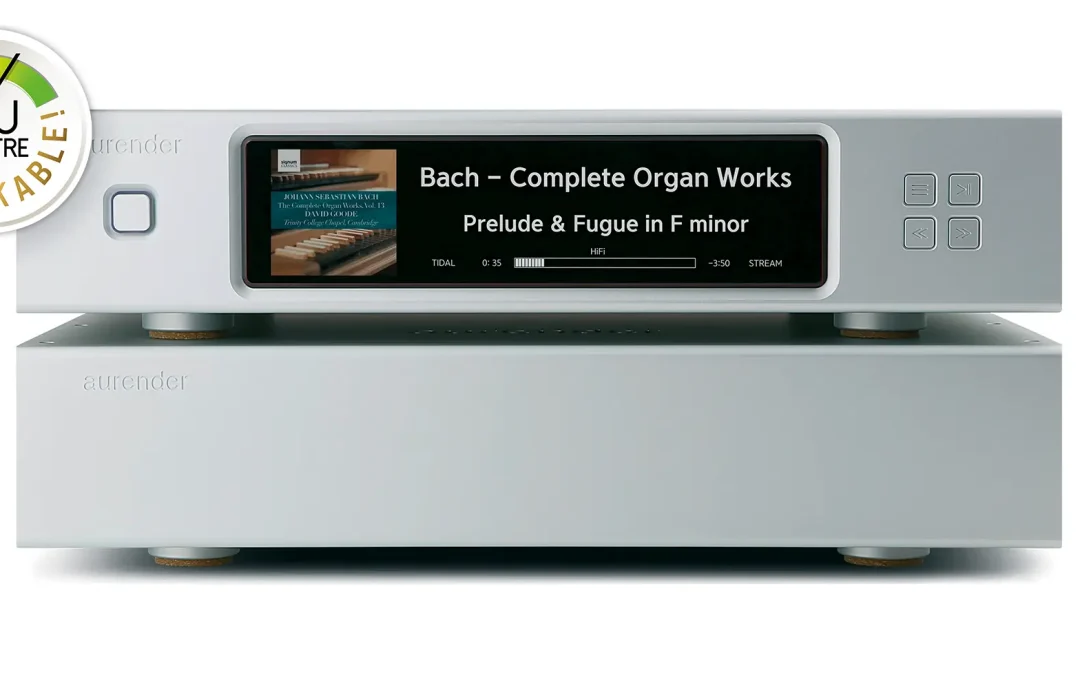
With the SE version of the W20 presented in 2020, it was thought that Aurender had taken current digital network playback technologies as far as possible thanks to an applied revision of the previous model, with the aim of making the new model and its battery to power all audio components even more perfect. However, barely a year later, the N30SA was presented, the result of parallel development and the culmination of ten years of research. This new model was even more cutting edge thanks to a design that was no longer integrated into a single large box, but rather two aluminium boxes, 430 mm wide, 107 mm high and 356 mm deep, both well filled.
This highly innovative two-chassis structure is not a usual separation between a power supply in the first and the audio part in the second, as seen in many manufacturers’ products, sometimes even in their entry-level products. With the N30SA, Aurender has developed a much stronger concept: placing all the disruptive and noise-creating elements in the same case, and leaving the other one as quiet as possible to handle only digital audio data.
So, in the chassis with an 8.8’ IPS LCD screen, which one would expect to be the one delegated to the purely digital part, , on the contrary, all the interference-generating elements are located, including not only the components dedicated to operating the screen, but also the linear power supply based on three large transformers under plastic covers, four imposing capacitors as well as a backup battery and a low-power Intel Quad Core processor, to which are added the 8 TB internal SSD memory and the 480 GB SSD RAM. Also on this chassis, a cavity can be used to add another hard drive to further expand the storage space, in addition to the two USB 3.0 ports for inserting external drives and the double-insulated Ethernet LAN port to filter out as much Internet noise as possible.
Much more understated with its simple aluminium plate on the front, on which anyone would have thought at first glance to find the power supply, the N30SA carries in the second box only a hybrid secondary power supply with a filtering system and current regulation by inductance, intended to further purify the electricity coming from the other box. But above all, it is in this part that the audio card is inserted between shielding plates, created on the basis of an FPGA with one of the most powerful chips on the market, in addition to a reference OXCO MV197 clock.
Integrated into this chassis, the two coaxial outputs and the AES/EBU are separated from each other at critical distances to best insulate them, alongside a BNC coaxial socket designed for an external clock (75 Ω – 10 MHz, 12.8 MHz, 44.1-48 kHz) such as the brand’s MC20 (€32,500), and a USB Audio module that is also shielded. Here too, the latter is not intended for inserting external hard drives as in the other chassis, but to be used as the most data-prolific audio output to connect the DAC.
Protected by an 11 mm aluminium top plate and a bottom plate with four cork-topped feet, the two N30SA chassis are completely stackable and must be connected by two cables of 0.5 m and 1.5 m, as far apart as possible via the sockets at the back of the devices, in order to minimise electromagnetic interference and crosstalk as much as possible. The cable on the left transfers power from the power supply to the audio box, while the second one on the far right transfers digital data.
With this array of weapons, the N30SA is ready to deliver encoded file data in the most perfect way possible, up to 32 bits/384 kHz or DSD512 via USB, and up to PCM 32 bits/192 kHz and DSD64 with coaxial and AES/EBU outputs. One might just regret not finding a fibre Ethernet input for the future, as on the Rose Hifi RS130 or the Linn Klimax DSM/3, but we know that, unlike the young Korean or Chinese brands that want to move fast, the more mature Aurender integrates new Japanese-style technologies, i.e. only when the engineers are completely sure that they fully understand the design, and that the products put on the market are immediately useful.
The set-up
Even if it were possible to receive the N30SA in one of our auditoriums for a few weeks, it wouldn’t make much sense, even on our best test system, as our in situ comparables are not in the same league. So we went to listen to it in one of the most upmarket shops in Paris, Music Hall, which had prepared one of its finest systems for the occasion. Having recently received the Sonus Faber Serafino, already broken in for more than two hundred hours, Martial had simply had the idea of bi-amplifying them by integrating the Accuphase A-300 mono blocks to the midrange and tweeters, in addition to the new A-80 class A stereo block connected to the bass speakers. For the preamplifier, there was nothing other than the best product from the Yokohama manufacturer, the C-3900, and for the digital-to-analogue converter, its best DAC, the DC-1000, not far from a Dave Chord.
With this competition system, one of the finest to be heard in France, we were able to compare the N30SA on its digital inputs and in its results against different conversions, but also to test it against other Aurender players, unfortunately without having the W20 SE to hand, but in comparison with the N200 and especially the N20. Refocusing on the N30SA, we used Tidal and Qobuz files to compare them to those of its internal SSD memory, encoded up to DSD512. To process these files, we only used the proprietary application, knowing that playback can also be done in UPnP/DLNA, so for example with Audirvana.
The sound
During our test of the Børresen X3 in the same auditorium for the previous issue, we could hear the difference between a file played on Tidal and Qobuz, even though they had the same encoding and were normally taken from exactly the same source from the original labels. So it was this first test that we did on the N30SA and while the difference didn’t seem as obvious to us as it did on the N200 two months ago, we still favoured Qobuz after two or three checks, for the superior fluidity of the files played from this platform.
Then, we were able to discover sound of a rare purity from the source, free of any interference and with a superbly black soundstage, for example, allowing us to enjoy the slot machine noises of Pink Floyd’s ‘Money’. With such a system, we could hear absolutely everything at a level far superior to any listening sessions carried out in recent months, so for example the rock recording style of the 1970s, which stands out for the grain and the sound ambience captured by the microphones, or just after that on a Mahler symphony by Bernstein (Sony), the studio atmosphere with a placement of the microphones that leaves more air and concentrates the elements less than in most recent recordings.
Both for the rock singers and with the voices of the jazz singers we adore, we simply had the impression of inviting the artists and seeing them in front of their microphones facing us, with a precision that made us feel as if we were directly participating in the studio recording itself. But if we thought we were at the pinnacle of what we perceived, we were not expecting the result when listening to a file available directly on the N30SA’s SSD memory.
Then the noise was minimised even further to deepen the soundstage a little more, resulting in even better defined and more nuanced elements, an extraordinary quality of harmonics, difficult to find even in a concert hall, for example when we compared Bernstein’s ‘Mambo’ to the one heard the day before at the Radio France auditorium, or Rachmaninov’s Sonata No. 1 by Geniušas to his performance at the Salle Cortot a few weeks earlier, where we were in seventh row in front of the Steinway. Even more than in the hall, the dynamics and harmonics unfold at infinitesimal levels, with an incredible purity of timbre, in this configuration even more in line with the density of a DAC like the DC-1000 than with the clarity of the Dave.
On DSD256 or DSD512 files, we were immersed in the middle of the orchestra or live in the middle of rock bands, only to be transported into the mystique of churches listening to masses by Poulenc or motets by Arvo Pärt, with an even more refined soundstage. In a completely different style, the electronic sounds of Daft Punk’s ‘Get Lucky’ offered an equally impeccable rendering on all registers, in addition to an impression of breathing, without ever over-lighting, but on the contrary remaining on the neutral rendering referring to Aurender.
Although this time we were unable to hear the W20SE (€23,250), whose great finesse we were familiar with, connecting the N20, which is almost half the price (still €13,500), instead of the N30SA did not give the impression of a collapse in overall quality, since it already brings with it many of the aforementioned characteristics. However, the ear quickly discovers that there are no longer quite the same nuances or the same sound openness, inevitably found by reusing the largest music server.
Our conclusion
Although we know that the ultimate has never been reached and that what we hear today, especially in digital terms, will undoubtedly be surpassed in the future, it seems that the N30SA digital network transport has reached a level that is difficult to surpass to date, and for which we have no comparable model in mind, except perhaps the Linn Klimax DSM/3 with converter.
With an almost perfect design thanks to its two-chassis structure, which is unprecedented in the way it separates components, Aurender’s largest transport and music server goes even further than the South Korean brand’s other top-of-the-range models. and while in a system costing less than €70,000 the majority of impressions can be rendered thanks to the excellent N20, the most fortunate listeners in search of the exceptional will inevitably have to turn to the N30SA, which must be connected to the DAC via USB to take full advantage of its qualities, if possible with a maximum of music recorded internally in DSD.
In 2005, Gryphon caused a stir with the launch of its Diablo integrated amplifier, which was surprisingly powerful at 2 x 250 W into 8 ohms, with a filtering capacity of 2 x 58,000μF. Ten years later, the Diablo became the Diablo 300, the value of its new power under 8 ohms, with a complete overhaul of the components based on an overall design that was not called into question. Eight years have passed, and the Diablo 333 has been previewed by us, for a test where the speed of sound that characterises the Danish brand has appeared in an integral way with a real surplus of refinement.
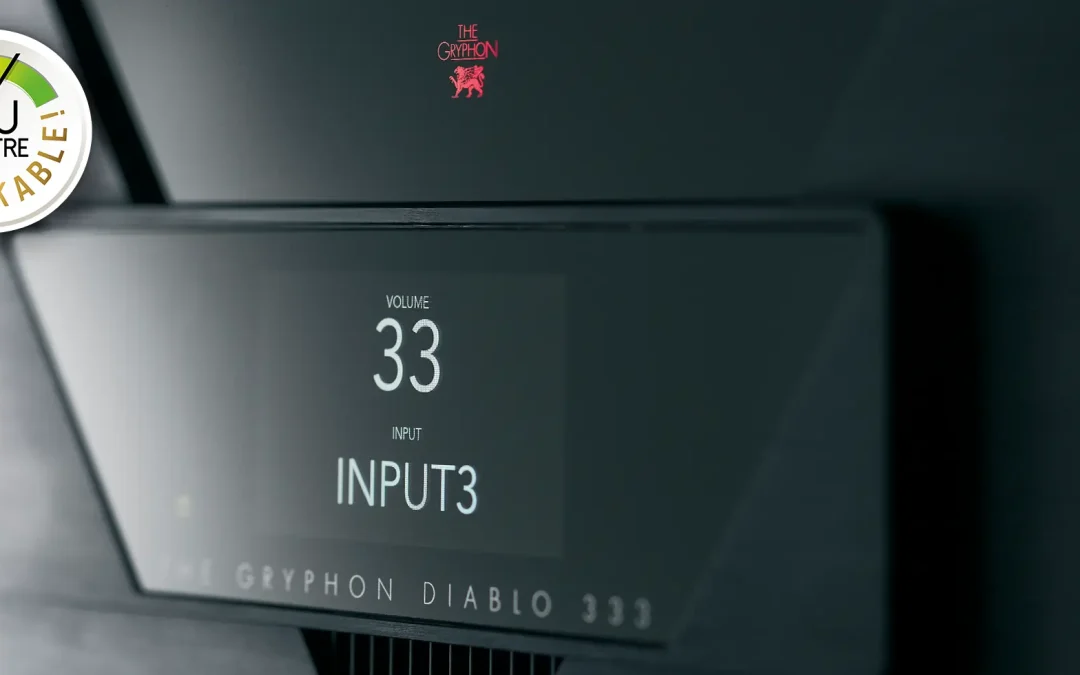
Instantly recognisable, the design of the new Diablo 333 is entirely in line with its two predecessors, the Gryphon, which sprang from the imagination of designer Flemming Rasmussen. On the front, still raised on four pointed trusses, the amplifier maintains the idea of a truncated triangle, but loses the central bar and now integrates all the information and parameters in a touch screen with a diagonal measurement of 11 cm (4.3″) in the centre under the Danish brand’s red logo. Also possible thanks to the new aluminium remote control called Commander – with it too the idea of an aborted triangular shape on the lower part – the modifications concern both the choice of volume and analogue inputs as well as the management of the two optional add-on modules. The first of the two, to be released soon and therefore not available for this test, the DAC3 module (€7,250) will will be integrated into a large upper cavity at the rear of the amplifier, which will allow numerous digital sources to be connected via USB, AES/EBU or Toslink to decode files up to DSD512, thanks to the use of Sabre’s new, very high-performance ESS9039 PRO chip.
Another module, which can also be integrated into a dedicated cavity, the PS3 phono (€5,750) will make it possible to do without an external phono preamplifier, to manage the impedance of MC cartridges from 20 ohms to 1,600 ohms and MM cartridges at 47 kiloohms, with, like the digital-to-analogue converter, a dual mono design and in pure class A.
An ever stronger Diablo
As we have said, this new Diablo 333 with its attractive grey-black anodised finish and impressive side radiators resembles the previous models, but the current facelift also allows it to fit into the new identity of the manufacturer’s highest series, more refined, discovered with the Apex power block and the Commander preamplifier, whose new integrated version incorporates some of the technologies and designs.
Designed by engineer Tom Møller on the electronic side, still fully dual-mono if we take into account that the imposing but unique Holmgren toroidal transformer is itself dual-mono, the Diablo 333 incorporates three imposing polypropylene capacitors on the side panels for each channel, then three others directly added to the central circuit, which, like all the other circuits in the device, is treated in four layers, with significant amounts of copper in each of them.
In total, the filtering capacity now peaks at 2 x 68,000μF, which is 10,000 μF more than the first Diablo. The latest model also offers 83 W more power per channel at 8 ohms than the first, and 33 W more than the Diablo 300, now reaching 333 W at 8 ohms, or 666 W at 4 ohms and 1,100 W at 2 ohms. To achieve this, it uses ten output transistors on each side, in addition to shunt regulators to constantly monitor the quality of the supply voltage. Volume control is achieved by means of balanced relays on 43 levels, controlled by microprocessors, associated with one or two resistors in series per level. This discreet volume control never produced any clicking noise during our tests, as is normally heard with products using relay-resistor technology.
With ultra-limited internal cabling, the amplifier always chooses the shortest possible signal paths, in particular by incorporating the analogue inputs directly on its primary circuit, to be preferred over the two pairs of gold-plated Neutrik XLR sockets, which are otherwise available asymmetrically with a pair of RCA terminal blocks (input 3). Next to it, the brand has also placed a gold-plated phono input (Tape In) and output (Tape Out) pair with Teflon insulation, intended for a rather obsolete function, namely that of recorder return.
A final RCA pair is used to output directly through the preamplifier section, for example to drive another power block or a subwoofer. Two pairs of huge red and black terminal blocks allow a pair of speakers to be integrated without getting the wiring wrong, while a trigger socket and a USB 2.0 for updating the microprocessor complete the diabolical device, from which emerges on a final low part, again with the idea of a cut triangle, the mains socket and a terminal for connecting to the earth.
The set-up
Seen and heard at the Paris Audio Video Show in one of the most convincing rooms of the exhibition, connected to the Gryphon Eos 2 speakers which were recently reviewed in our columns (VUmètre n°47; Remarkable), with the very high-end converter from Ideon Audio as the digital source and the Brinkmann Taurus turntable and a DS Audio cartridge with EMM Labs phono preamp as the analogue source, the Gryphon 333 was subsequently re-verified with other combinations. Impressive in size but still relatively modest compared to other products in the Danish catalogue, it should be noted that this integrated amplifier weighs 50.6 kg and therefore needs to be placed on a high-end hi-fi cabinet capable of supporting its full weight, distributed over its four spiky pods. Fast, although increasingly refined in its rendering, it can be perfectly matched with speakers from the same parts of Europe, starting with the Børresen speakers we are discussing in this issue, while it will have the capacity to bring out the best in the best sources, for which you should not hesitate to choose precise and dense devices in terms of the information transferred.
The sound
Listening to it, it seems obvious that it is indeed a Gryphon, with the same fast and dynamic sound. But if we were used to the punch of previous generations, sometimes almost a little hard, the new Diablo 333 seems to have matured and calmed down. Infernal with its monstrous amplification of 333 W per channel under 8 ohms, it can still power any speaker, but now offers more roundness and less nervousness, to deliver a more refined sound, even more refined when you listen to calm jazz. This sound still comes from the North, in that it is clear while retaining a real elasticity, already available at very low volume, where the notes last a long time before fading, as on Lou Reed’s piano in ‘Vanishing Act’.
In the living room, listening to HughMasekela’s famous ‘Stimela’ on audiophile vinyl and then on a HiRes file showed that, at a comparable price level, an analogue system still wins out a little over the volume of the stage and the naturalness of the timbres compared to digital, well reproduced in this respect by the Gryphon. The bass can go very deep, taut without ever overflowing or hitting, as we remember when listening to the first Diablo (albeit with a less good source). The soundstage is also very wide, the depth more concentrated with the Gryphon speakers, and more extended with the Dali speakers, to the detriment of the hushed character of certain intimate music, but to the advantage of large orchestral masses such as that of Dvorák’s 9th Symphony by Fritz Reiner. The dark stage without the slightest parasitic distortion allows each detail to be seen, as on Eric Clapton’s most famous live album, where the slightest string friction becomes perceptible as if we were glued to his guitar.
Our conclusion
Because it is indeed a Gryphon, the Diablo 333 still offers the high sound speed that has made the Danish manufacturer’s mark, very dynamic and tense. The gain in refinement makes this new amplifier even more versatile than before, with even higher and better contained power, particularly superb when listening to rock and jazz music, or even reggae. As is often the case today, the price has risen accordingly; it has gone from €17,500 to €25,950 for this new generation, without the two optional digital and phono modules. But if you can afford to spend that amount on an audio system, you should compare the musicality of this integrated system with the separate components of the Danish brand in the same range, as well as the competition, to see if this new devil isn’t ready to take us to heaven!