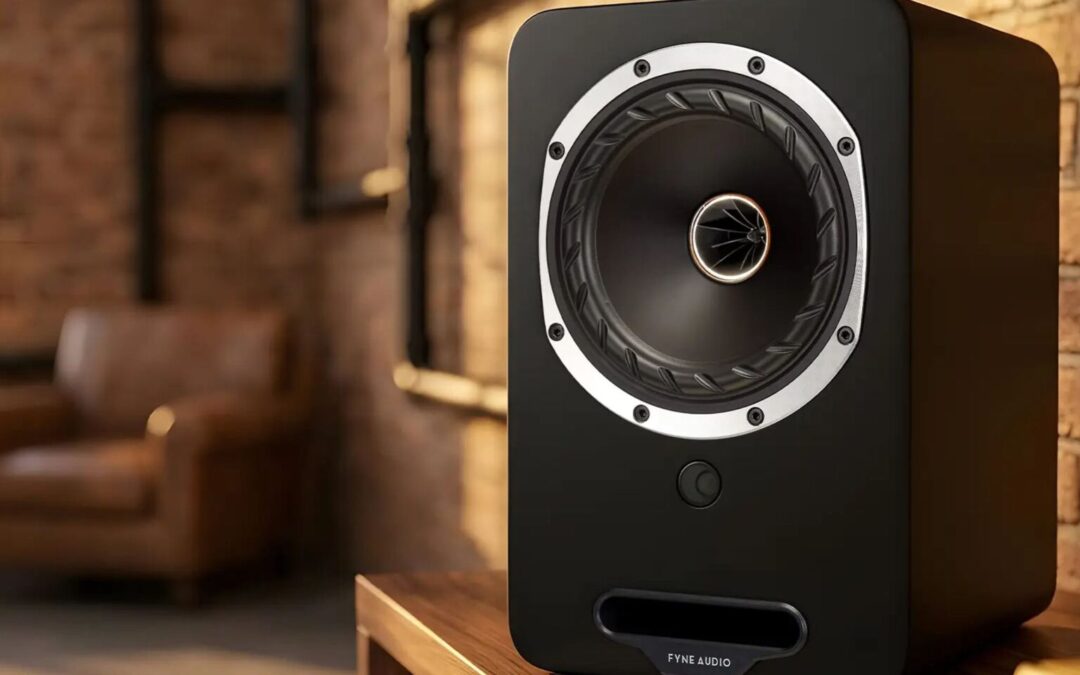
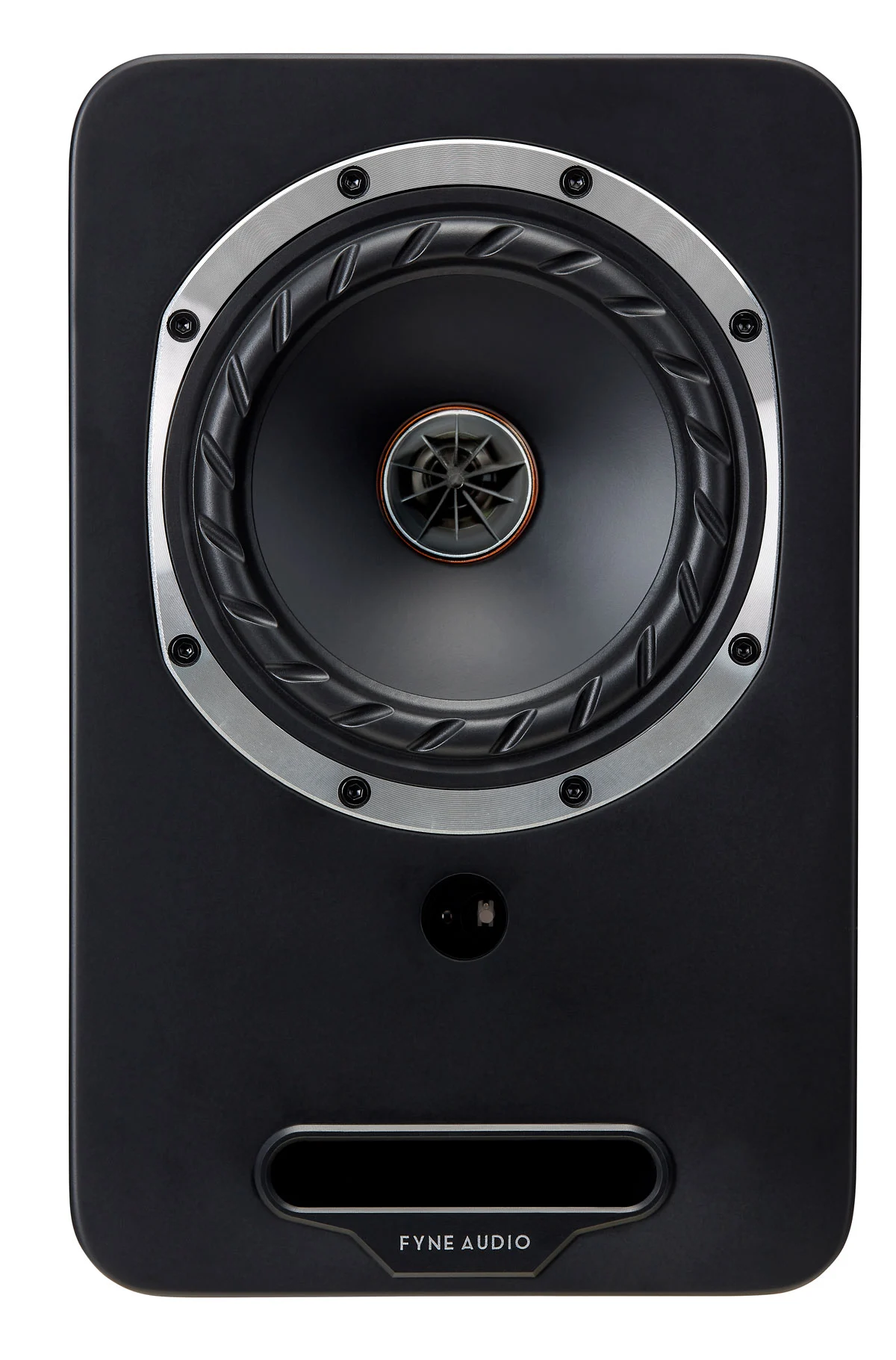
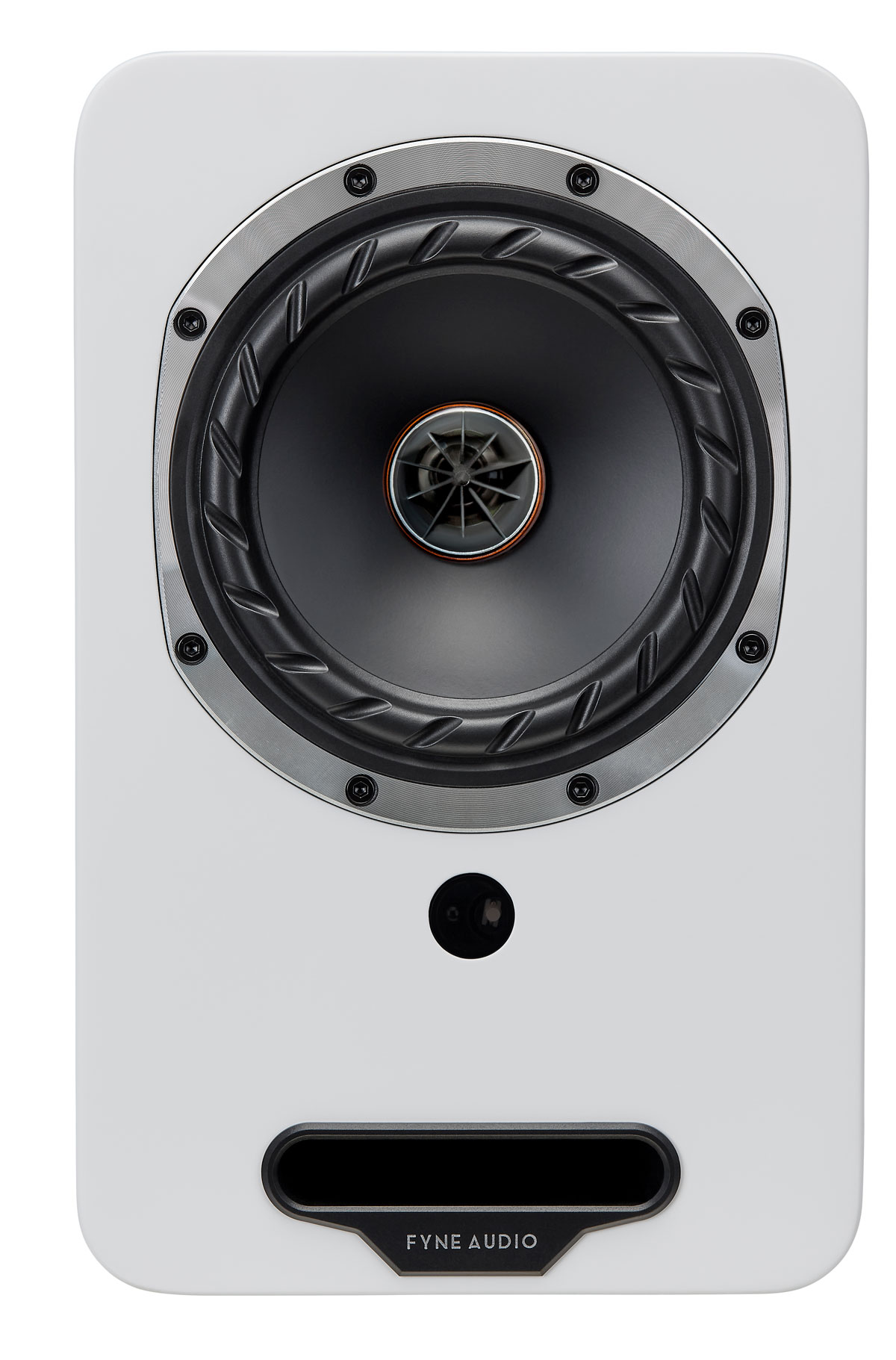
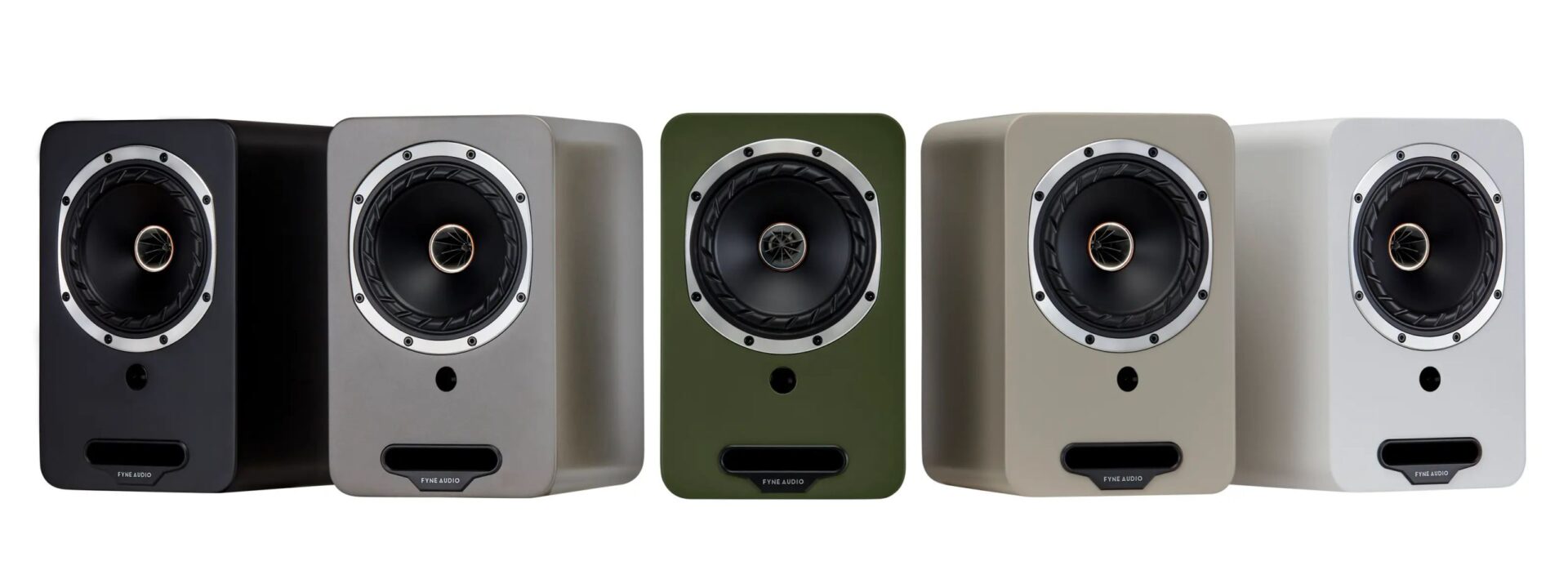
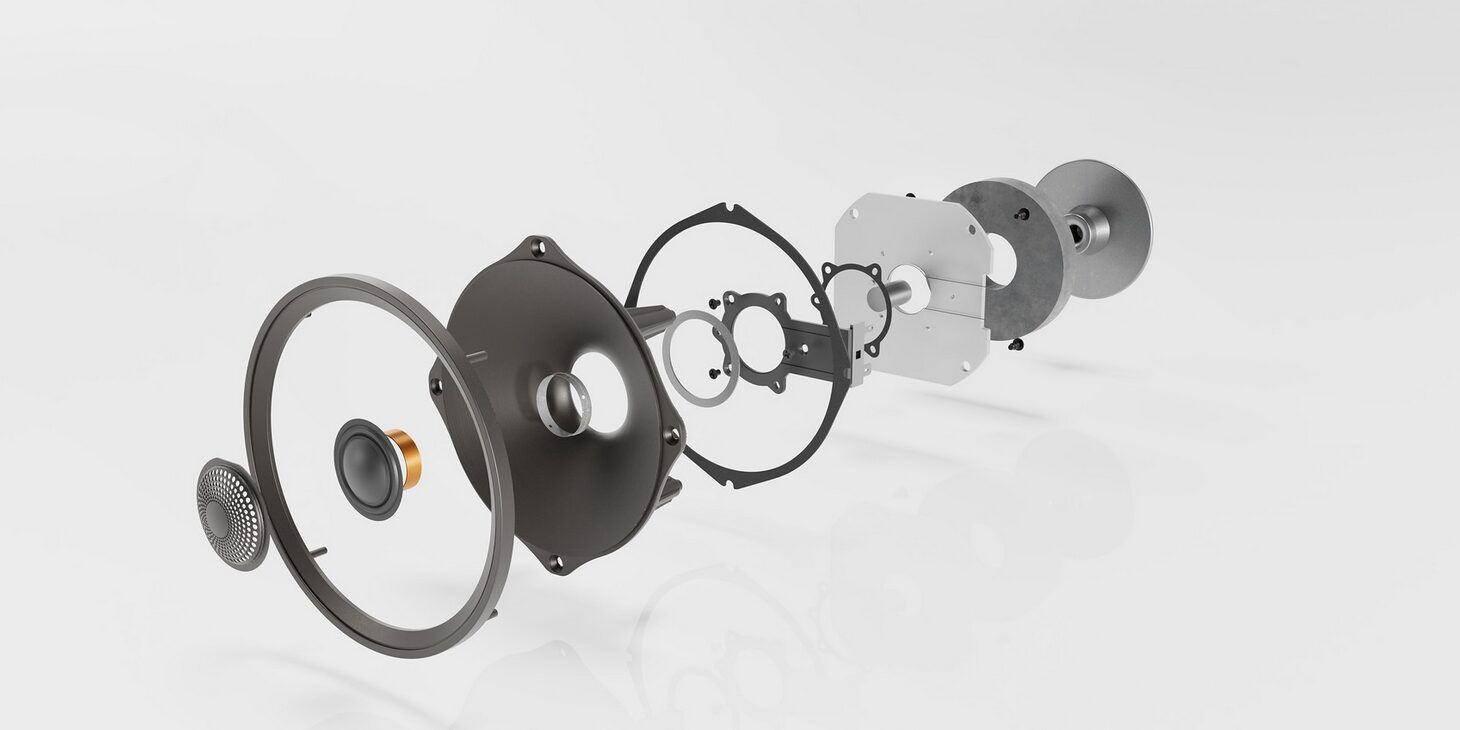
Featuring an IsoFlare coaxial driver similar to that of the F5S, as well as a bass-reflex design, the Cubitt 5 marks Fyne Audio’s entry into the modern era of active speakers.
Named Cubitt in reference to the brand’s headquarters address, No. 1 Cubitt Court, Belgrave Street in Bellshill, North Lanarkshire, the new compact Scottish speaker (260 × 165 × 215 mm -10.2″ x 6.5″ x 8.5″- for the main unit and 223 mm -8.8″- deep for the other) houses a 130 mm (5″) driver and an amplifier capable of delivering up to 240 W in Class D within an MDF cabinet.
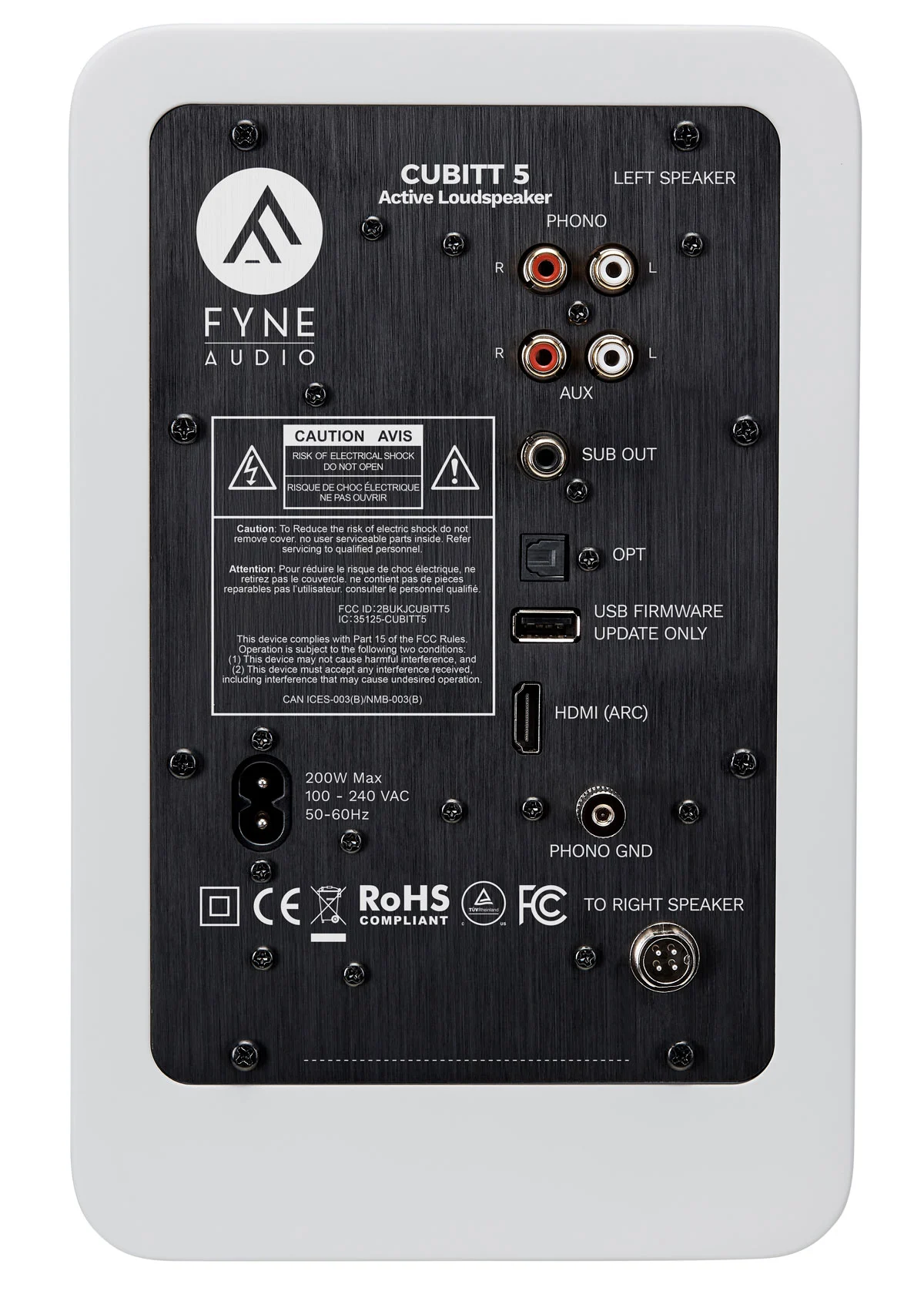
Connected to each other via a cable that also amplifies the secondary speaker—which is not passive, unlike in most competing systems—the Cubitt 5 offers a clever range of connections, including both analogue inputs (1 x RCA & 1 x RCA phono MM) and digital inputs (optical, HDMI eARC). For direct use without an external source, Bluetooth 5.0 is also available, supporting aptX HD and AAC codecs.
To enable usage in both hi-fi and home cinema setups, the Cubitt 5 also features a subwoofer output, whilst the HDMI input allows the volume to be adjusted via the TV screen. One slight drawback is that the USB port is intended solely for firmware updates and does not allow the use of a USB stick or external hard drive. An active filter with DSP allows the frequencies and response of the two speakers to be matched to each other, whilst the DAC supports playback of files up to PCM 96 kHz/24-bit.
Available in five finishes, the Cubitt 5 speakers do not feature bright colours such as red or yellow, opting instead for a more understated look in keeping with Fyne Audio’s style, with colour options including Arctic White, Midnight Black, Olive Green, and two shades of grey (Pearl Titanium and Pebble Grey). As for the price, this places the new speakers in an affordable bracket, with a pair priced at 650 € – almost half the cost of a KEF LSX II LT. We can’t wait to have a listen so we can bring you a web review soon!
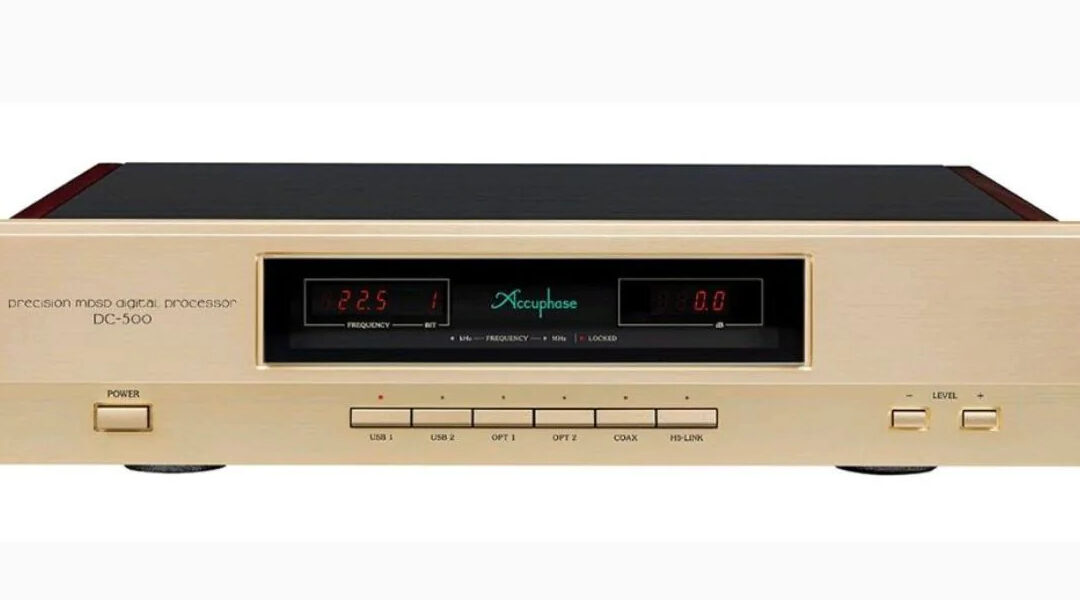
Abandoned with the discontinuation of the DC-37, the middle high-end digital-to-analogue converter segment is being taken over by Accuphase, which previously required the purchase of the high-end DC-1000 DAC (at 21 490 €), a CD player (DP-450) or SACD player (DP-570; DP-770) to benefit from such conversion.
Less ambitious than the DC-1000, the DC-500 presents itself as a scaled-down version of the latter, a fact evidenced by its weight, which has been halved to 15.6 kg – compared to 32.1 kg for the top-of-the-range model. The width and depth of the chassis, in a classic format, are however similar, except for the height, which has been reduced to 11.4 cm – more or less the same as that of the C-57 phono preamp in the range, the only other unit in the range also finished in walnut, albeit only on the sides.
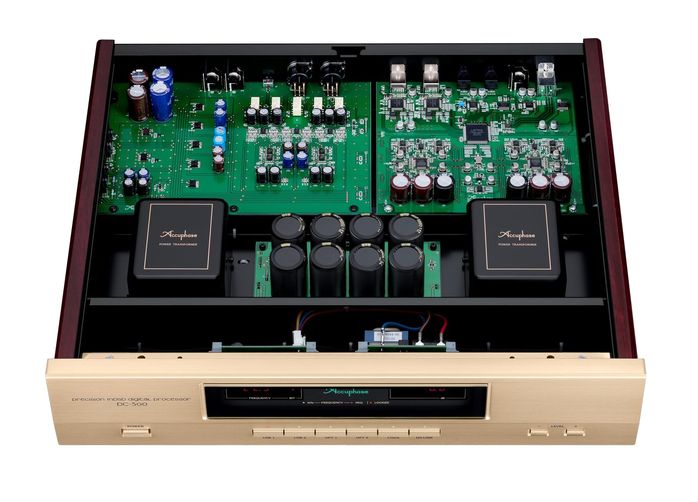
At the heart of the DC-500 lies a perfectly dual-mono and parallel configuration, still featuring the two Sabre ES9028PRO chips from the DP-770 SACD player, which utilize their 8 DACs on each channel (see our review in issue 62, Japan Special). The DAC module broadly adopts the same architecture and the MDSD (Multiple Double Speed DSD) conversion process for DSD. PCM is supported up to 384 kHz/32-bit, all once again monitored by the in-house noise control circuit (ANCC).
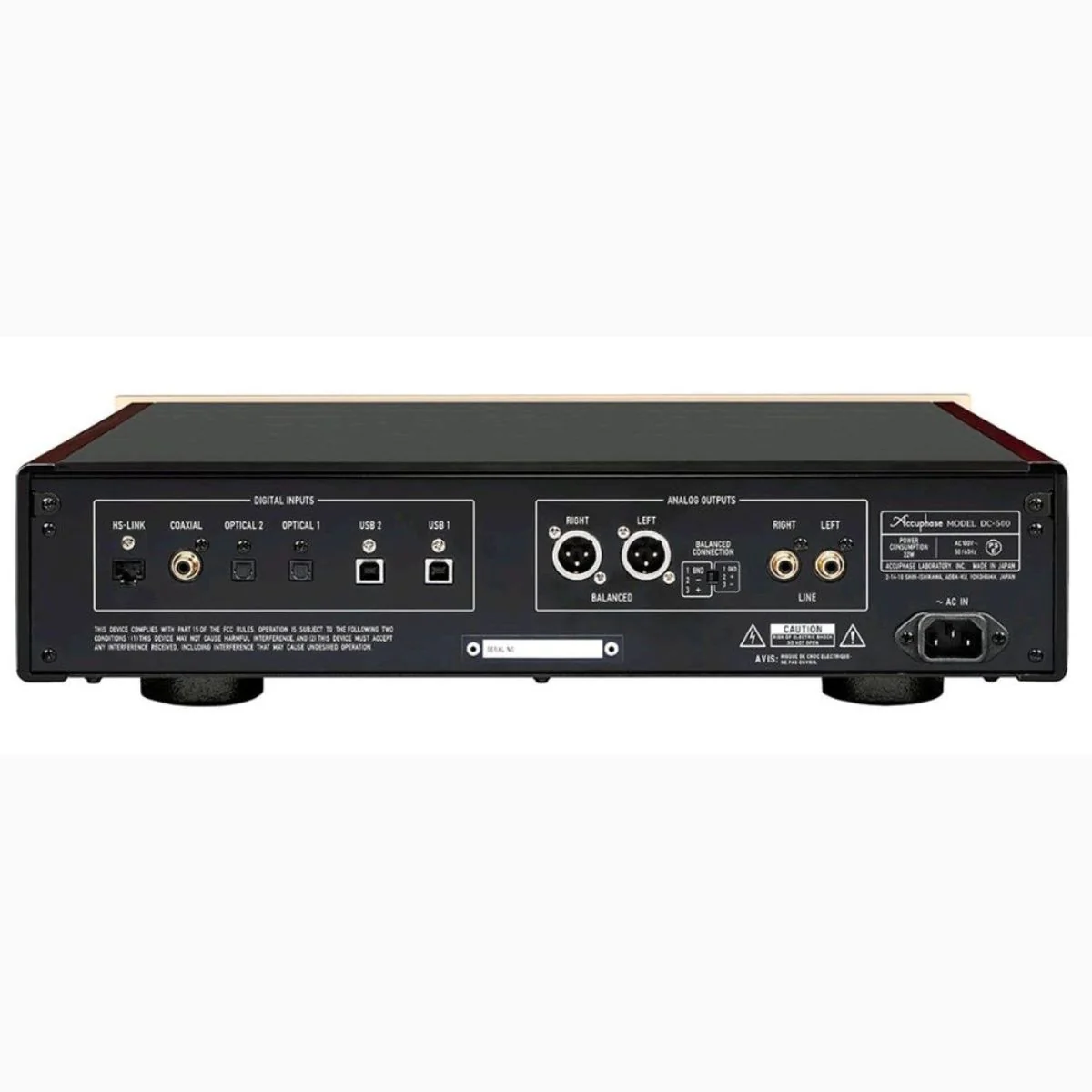
Perfectly separated across two different PCBs, the analogue circuit provides RCA and XLR outputs, whilst the digital circuit offers the proprietary HS-Link connection, a coaxial port, two optical ports and two USB-B (Audio) ports as inputs. Unlike the DG-78, launched around the same time in the middle of the year and based on the same DAC, there is no USB-Data port for connecting a USB stick or a NAS.
Overall, this new DAC is essentially the conversion section of the DP-770 taken out of the main unit, allowing those who do not wish to invest in an SACD player to still enjoy an Accuphase component for this stage of their hi-fi system. What’s more, the fact that the DC-500 is a pure DAC means it can use its two shielded transformers, filtered by eight capacitors totaling 120 000 μF, solely for this stage.
This further enhances the reliability of this section, and we can now look forward to the equivalent with the other half of the DP-770, namely a pure CD transport below the DP-1000.
In terms of price, it’s a dream come true, as the DC-500 is priced at 8 490 € – 2 000 € less than the previous DC-37 – despite a far more modern architecture for digital signal processing.
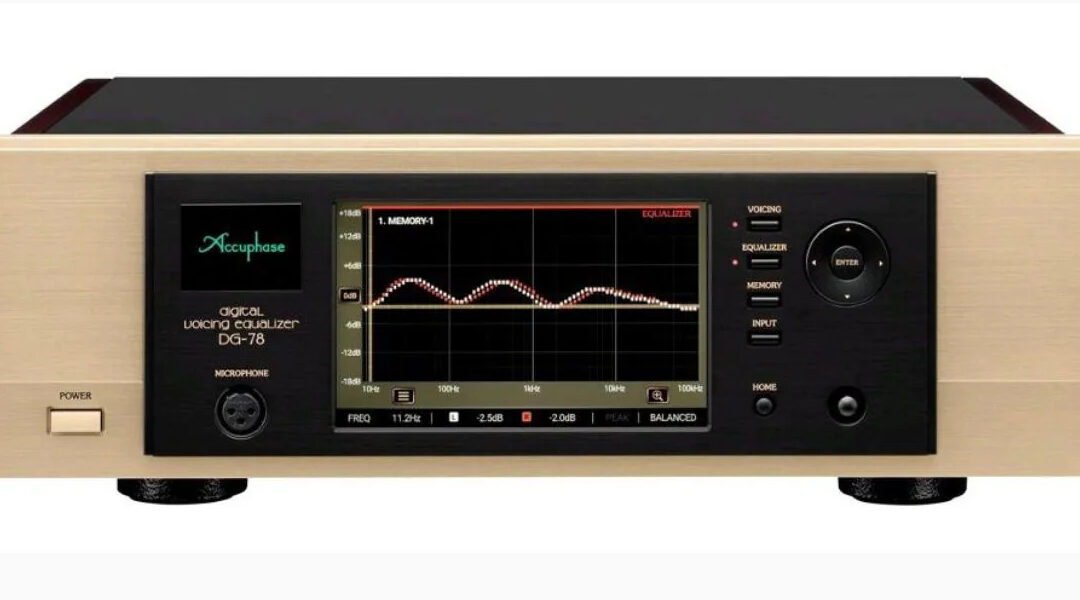
After six years of loyal service, the Accuphase DG-68 is being replaced by the DG-78.
Unveiled alongside the new DC-500 DAC, the new multi-band equalizer continues to offer a solution first introduced by the Japanese manufacturer in 1997 with the DG-28.
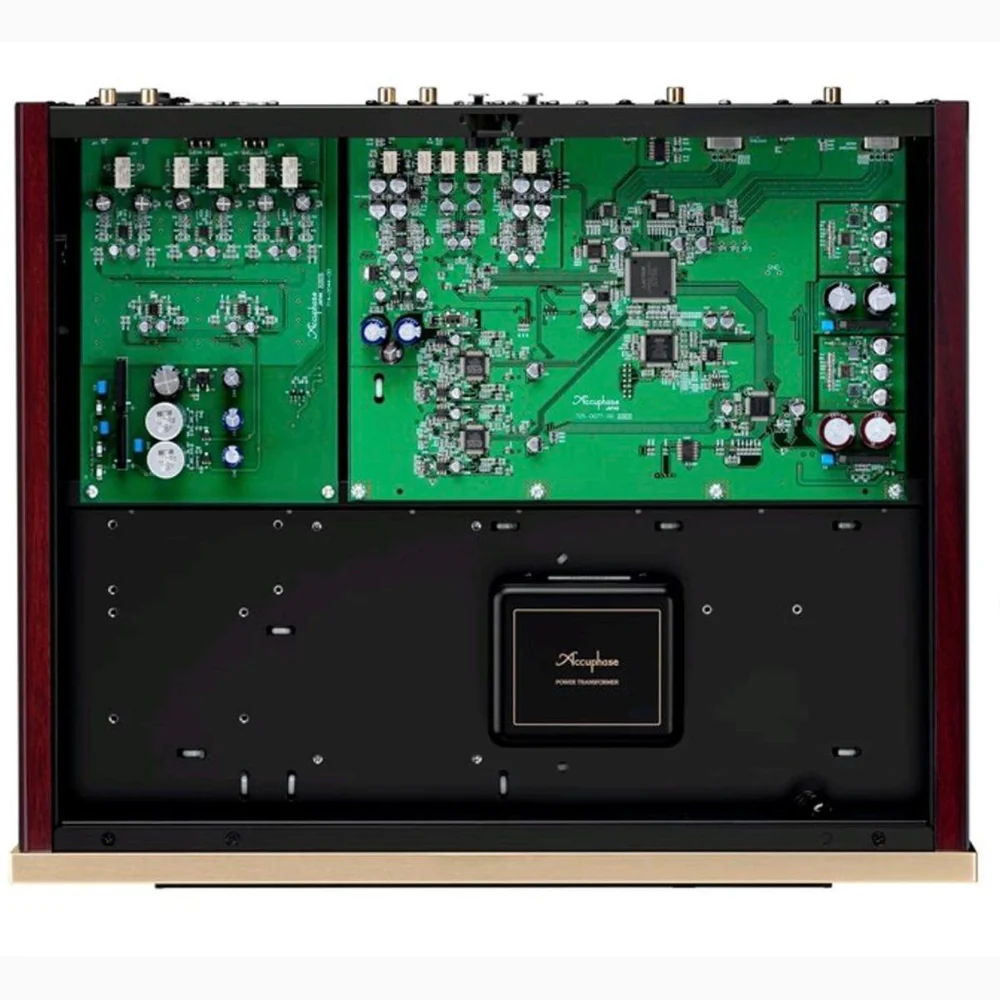
The high-performance DAC is based on the same architecture as that of the DC-500 or the DP-770 SACD player, featuring 8 channels in parallel thanks to two Sabre ES9028PRO chips.
It utilizes the new MDS++ (Multiple Delta Sigma) model to play PCM and DSD files in MDSD (Multiple Double Speed DSD), with an ANCC (Accuphase Noise Cancelling Circuit) noise cancellation module integrated into the circuitry.
Like its predecessors, the DG-78 combines a ‘Voicing’ function to take room parameters into account and adjust the sound ; an ‘Equalizer’ function to equalize frequencies using a graphic visible on the large TFT screen on the front panel, with a spectrum analyzer analogue-to-digital conversion via an AKM AK5578EN chip ; and a DAC function via the aforementioned MDS++ digital-to-analogue conversion module.
The chip handling the microphone signal remains an AKM AK5357, whilst the DSP coordinating all audio frequencies is an Analog Devices SHARC ADSP21565KSWZ10 processor.
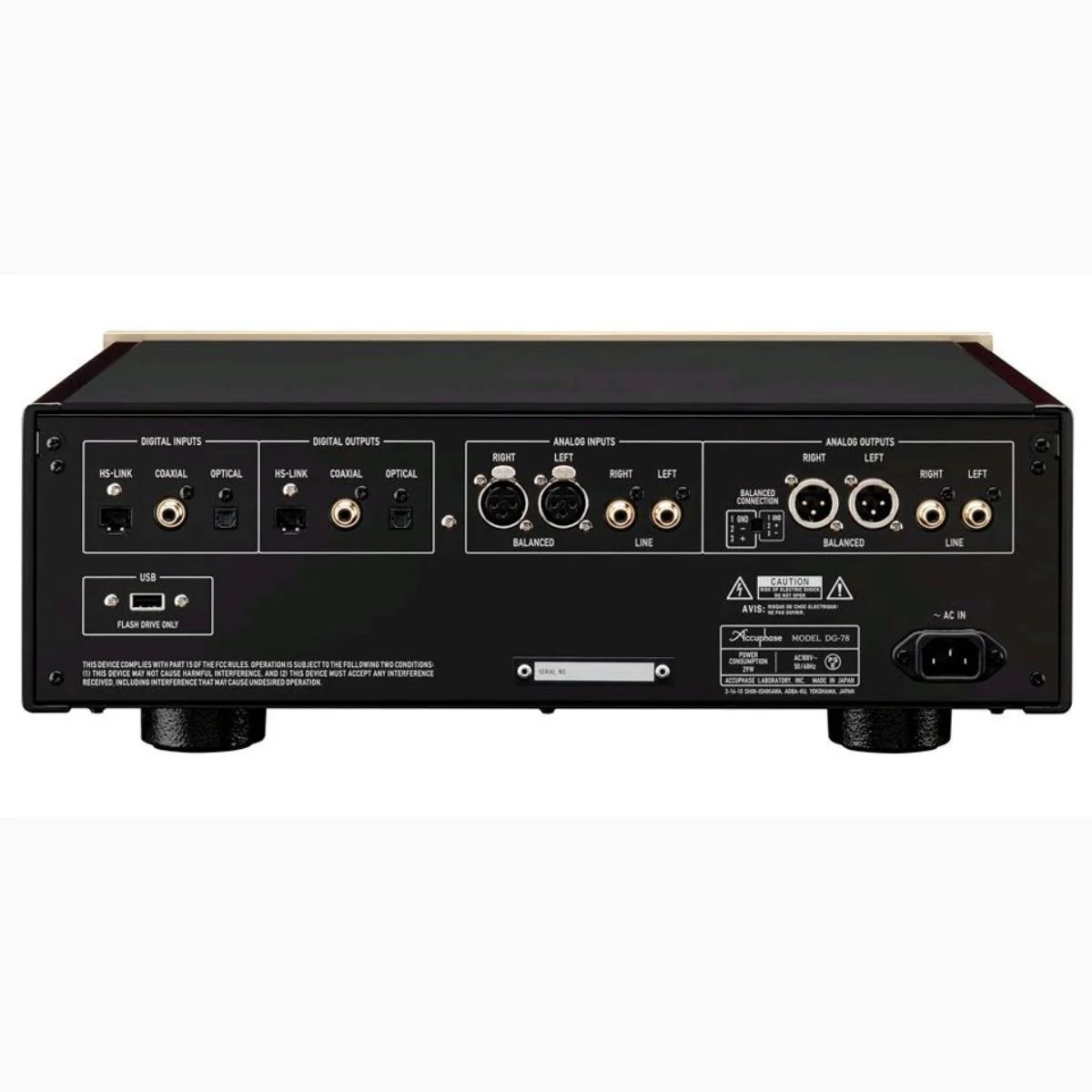
As always with Accuphase, the rear panel reflects the impeccable organization of the interior: on the left are three digital inputs and three outputs (proprietary HS-Link, coaxial, optical, with no USB input other than the USB-B port for connecting a hard drive). In the center are the analogue inputs (XLR & RCA) and on the left the analogue outputs (XLR & RCA), as well as a phase reversal switch for balanced connections.
Although Accuphase has not planned to attend the upcoming Vienna Show in early June, we hope to be able to see and hear the unit there so that we can tell you a little more about it very soon.
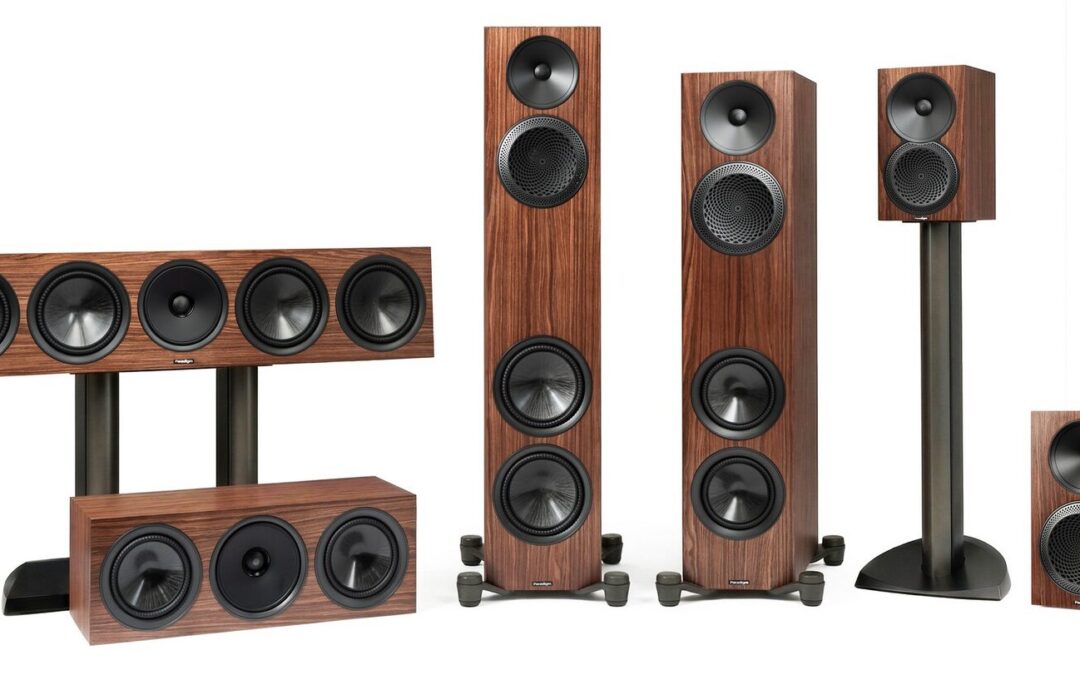
Positioned between the Monitor and Founder series, the Premier series moves to version 2 whilst retaining its six models.
Featuring new proprietary AL-MAC (aluminium-magnesium-ceramic) tweeters, integrated into an OSW (Oblate Spherical Waveguide) waveguide, AL-MAG (aluminium-magnesium) for the midrange and Carbon-X for the bass in the floorstanding models, the new Canadian speakers have been redesigned with a more wood-effect finish than before, yet remain affordably priced.
Versatile enough to suit all types of listening and usage – including home cinema – the range comprises two 3-way floorstanding models, the 720F v2 and 820F, two centre speakers, the 520 LCR v2 (vertically mountable) and 620C v2, and two compact models, the 120B v2 and 220B v2.
Available from June 2026, these speakers all feature MDF cabinets available in a choice of four finishes: piano black, black walnut, natural walnut or satin white.
A regular on our test benches, Meze returns this year not with headphones but with in-ear headphones: the Meze Alba. A model presented as more accessible than its big brother, the Advar, aimed at both novice music lovers and demanding audiophiles looking for affordable, stylish, and high-performance headphones. No small feat. A new gem from the Romanian manufacturer?
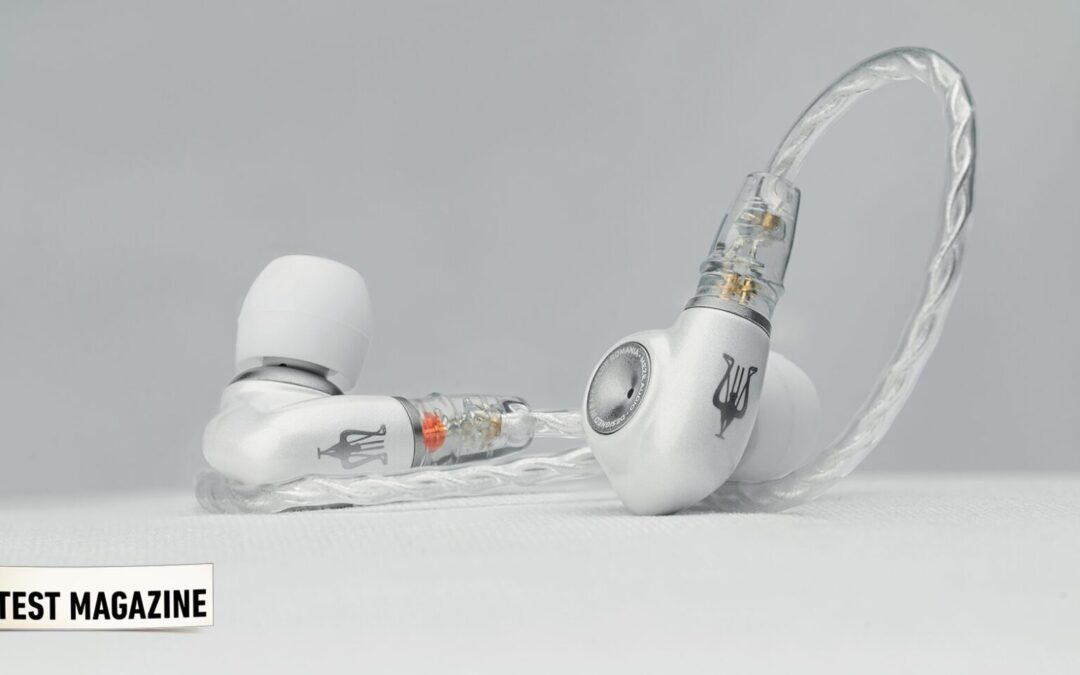
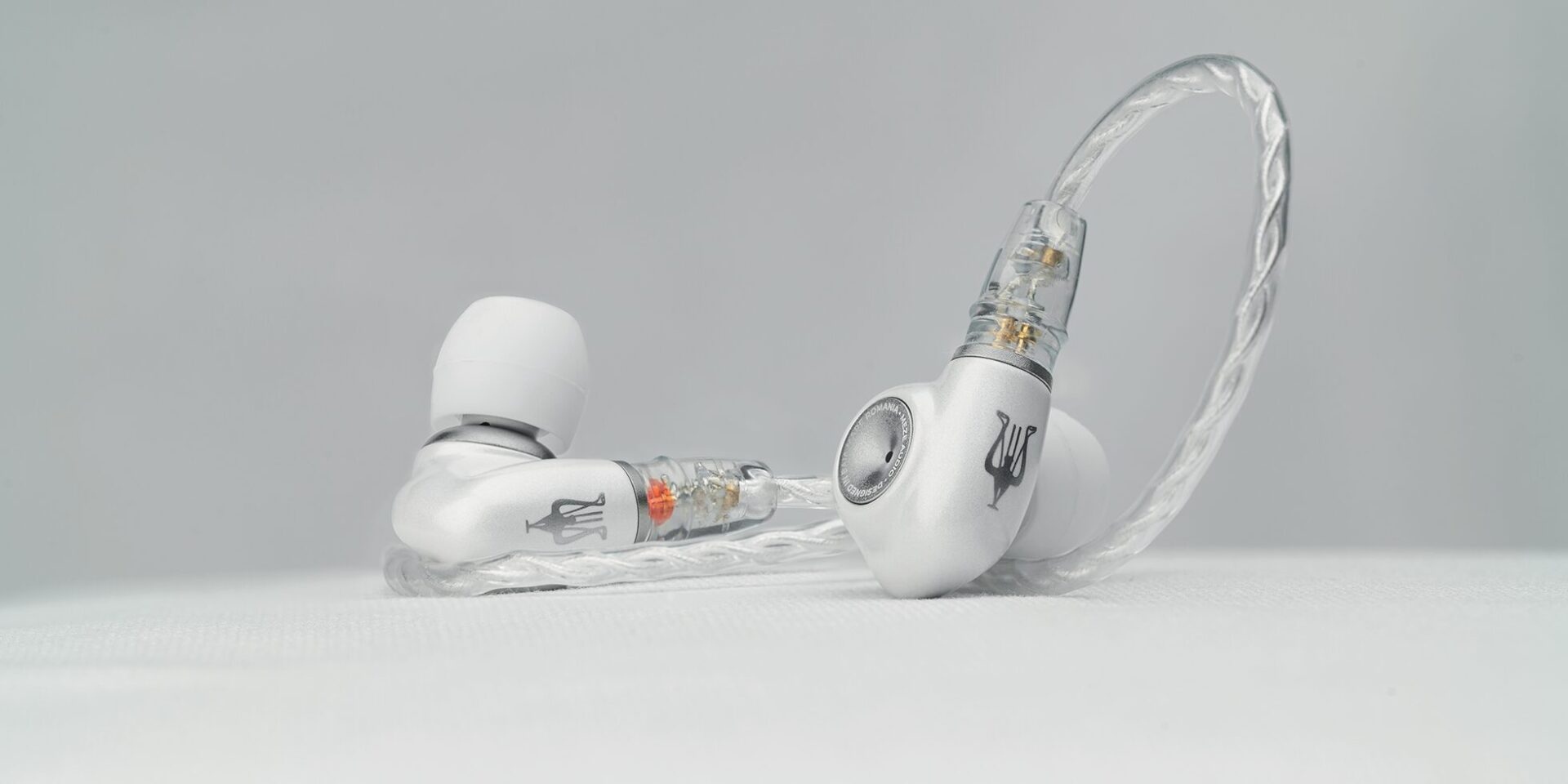
Stunning from every angle, the Alba boasts a curvaceous silhouette, beautifully highlighted by a pearlescent white finish. This livery contrasts sharply with the purplish hues of the Advar, which, we must admit, is not to our displeasure.
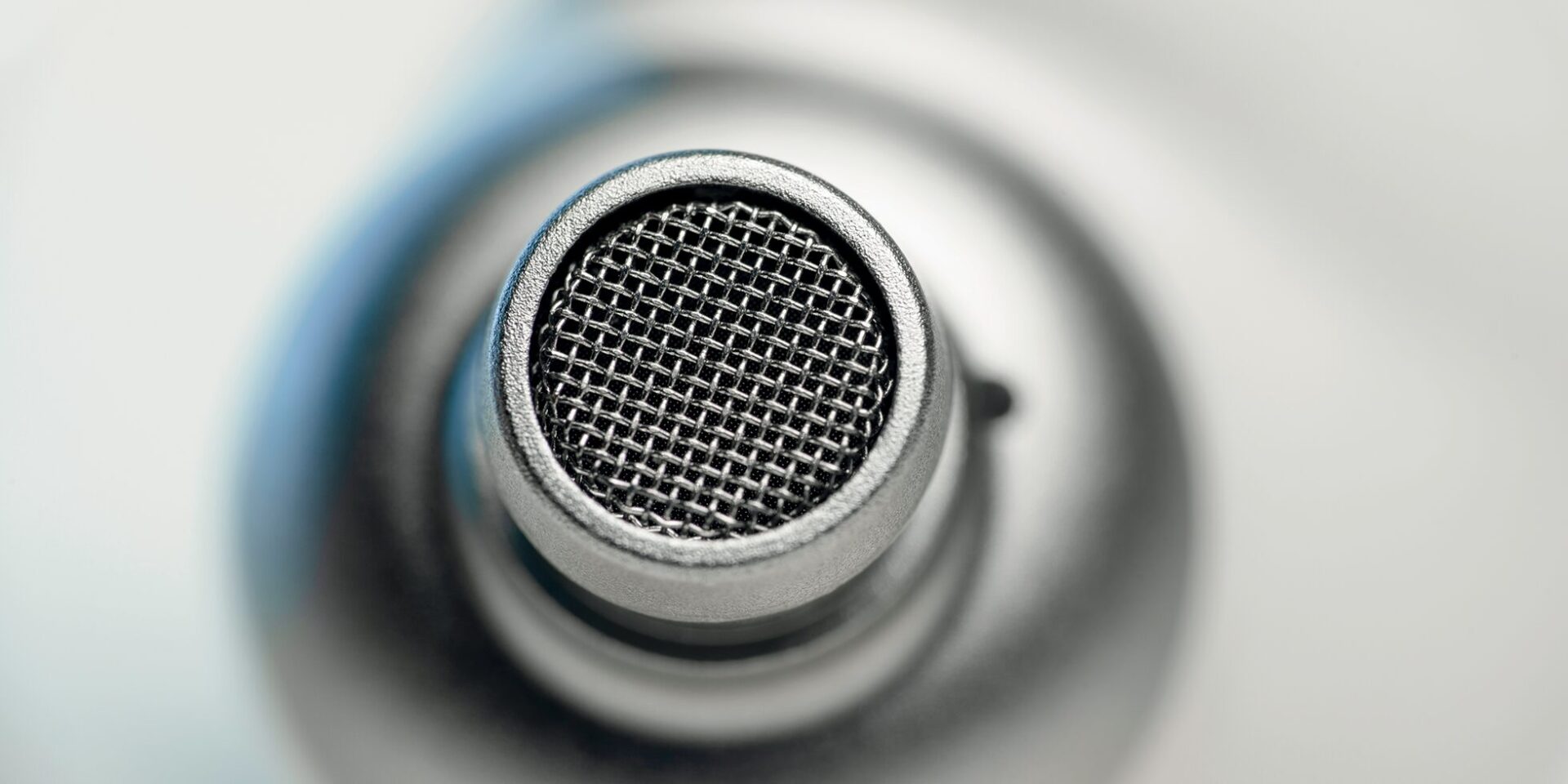
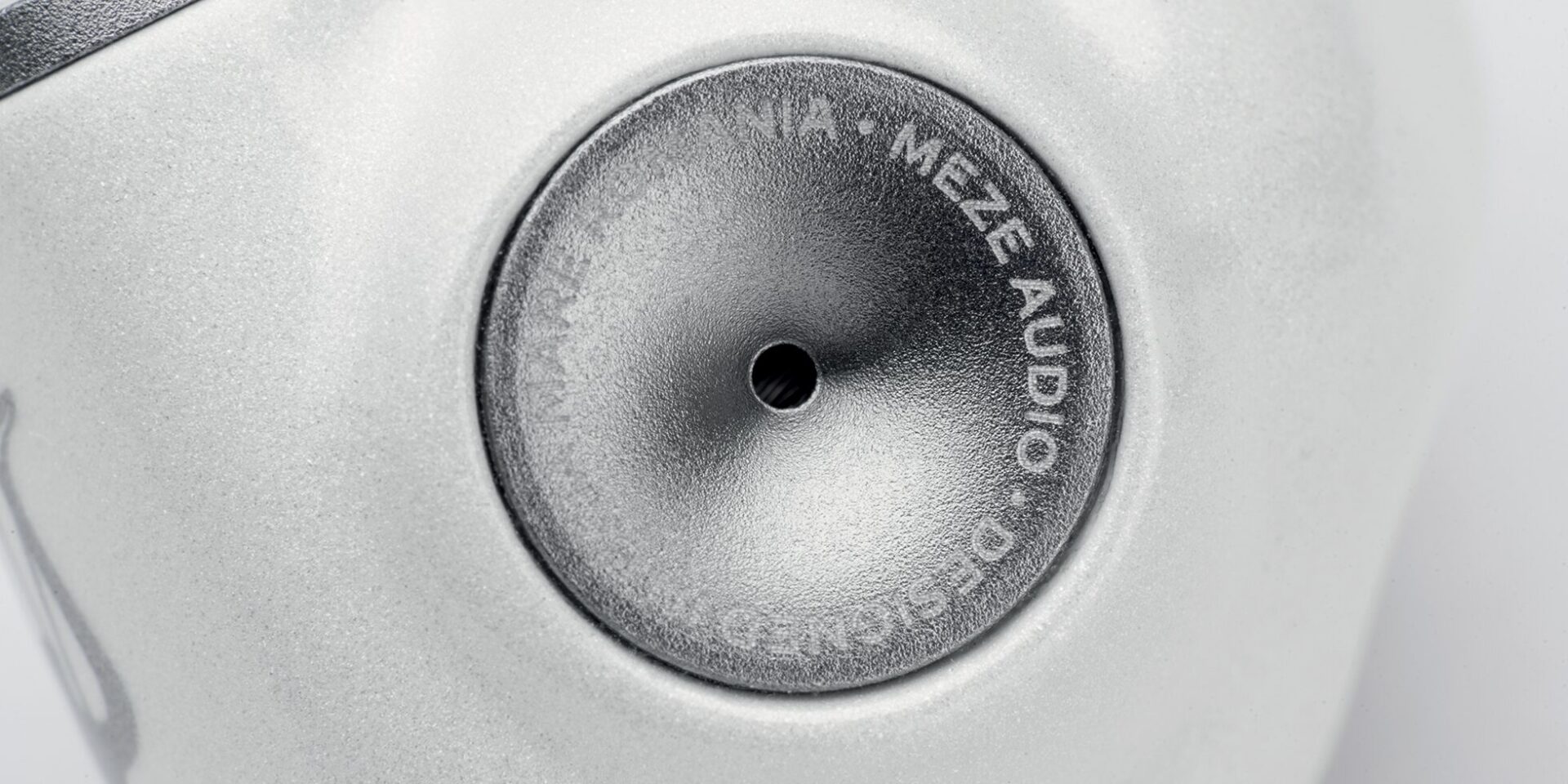
The younger sibling of the Advar, the latest addition makes no secret of its lineage, replicating the latter’s appearance almost exactly: the same undulating shell (an ode to Romania’s archaeological heritage) combining injected metal and CNC machining; the same zinc/aluminum alloy instead of anodized steel, for reasons of budget and lightness; the same decompression vent, a veritable central whirlpool, bearing the brand name and a proud “made/designed in Romania” label.
Nestled beneath this spiral is a brand new dynamic transducer, featuring a large 10.8 mm diaphragm, powered by a strong neodymium magnet. What does this new speaker promise? A naturally engaging sound thanks to its increased sensitivity (109 dB @1 mW/1 kHz) and reduced impedance (32 ohms), perfectly suited to portable sources such as audiophile music players, DAC amplifiers, or even a simple smartphone.
In terms of the frequency spectrum reproduced, the Alba is unsurprisingly less prolific than its big brother, or even the Penta, with a range extending from 15 Hz to 25 kHz. These are more than respectable values, covering almost the entire audible spectrum.
Finally, there are numerous details here and there that demonstrate the almost obsessive meticulousness of Antonio and his team, such as the serial number engraved on the MMCX socket ring, the metal debris guard mounted on the nozzle (also made of metal), and the subtly engraved lyre bird on the back of the ear cups.
COMFORT AND BUNDLE
A world away from the 109 Pro or even the 99 Classics, the Alba is easy to carry around thanks to its ultra-compact size and particularly light weight.
Much more comfortable than the Rai Penta/Solo, these in-ear headphones fit effortlessly into the ear canal, perfectly hugging the tortuous convolutions of the ear for an optimal fit and natural feel.
And while they don’t benefit from the same attention to detail as the Advar, with Meze opting not to include Final Audio’s delightful Type E ear tips, it has to be said that even with the traditional silicone tips, we still get a good deal.
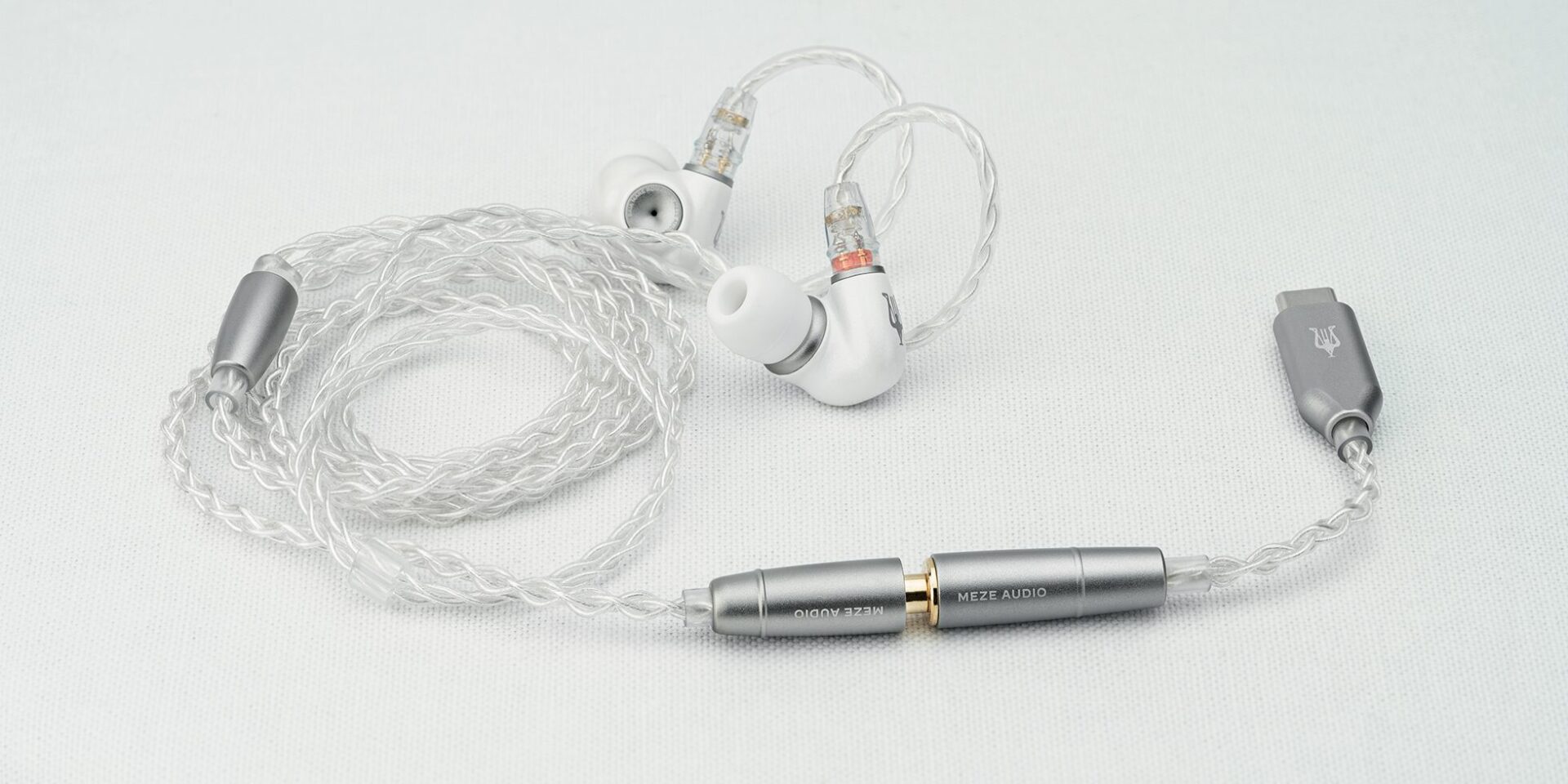
Last but not least, despite its entry-level positioning, the Alba comes with a surprisingly comprehensive bundle: a silver-plated multi-strand twisted copper cable, a white faux leather carrying case and, above all, the brand even offers a USB-C dongle to complement a USB source – a challenge at this level!
The only downside is the choice of a 2-pin connector rather than MMCX for the cable/earphone connection, which is justified by the price, but less mobile and therefore less comfortable. Finally, for the most demanding audiophiles, there is always the option of purchasing a balanced cable and enjoying the benefits offered by TRRS or Pentaconn outputs, available on almost all audiophile music players.
THE SETUP OF THE MEZE ALBA
Particularly sensitive, the Alba doesn’t need much to be happy. However, although a simple smartphone is perfectly capable of powering it, it really comes into its own when paired with an audiophile music player or an amplifier/DAC. This is especially true given its high sensitivity and measured impedance, which make it difficult to prevent background noise, particularly with poorly isolated sources.
And if there’s one area where the Alba doesn’t outperform the Advar, it’s in terms of isolation. And with good reason: with its semi-open design, it’s difficult for our little in-ear headphones to compete with closed models, especially with their metal shell, which is more permeable than silicone models.
THE SOUND OF THE MEZE ALBA
Its overall consistency makes it a true all-rounder. Whether it’s orchestral music, uninhibited dubstep, or vocal jazz, the Alba never falters, even though there is a certain preponderance in the midrange—without ever going overboard.
It retains the presence, power, and above all, confidence of its predecessors. Less rigid and more playful, it remains exemplary in its precision, magnified by the dynamics offered by the new dynamic transducer, surpassing the old Rai Solo in every respect. It effortlessly handles the most violent attacks, rewarding us with an almost abyssal level of bass, without ever detracting from the clarity of the soundstage.
The only slight regret is the lack of articulation in the upper midrange, with certain nuances in our favorite tracks, such as “Birds” by Dominique Fils-Aimé, remaining inaudible, despite the combination of renowned sources such as our monstrous FiiO M17.
This pitfall is quickly overcome when switching to electronic music, with the Alba proving to be a formidable companion, allowing you to discern the softest nuances and the most thunderous impacts at any volume level. Moreover, although the isolation is inferior to a closed model, it is ultimately sufficient to attenuate the cacophony of urban traffic, and we were never tempted to turn up the volume more than was reasonable.
This is the magic of the Alba: its ability to recreate a soundstage worthy of portable headphones, even when connected to a mid-range source such as our FiiO K17. Proof, if any were needed, that the imposing dynamic transducer is not there for show, and whether it’s the electro layers
saturated with Infected Mushroom, the guttural polyphony of Zingara, or simply the guitar riffs of Justice, it’s hard to find fault with the latter.
And while it never quite reaches the mastery of the Advar—fortunately, we might add—it’s hard not to be captivated by the exceptional musicality of the latest addition to the range, supported by fluid transients and a particularly rich soundstage, a true hallmark of Meze.
A fine achievement, highlighted by virtually zero harmonic distortion, enabling gradual increases in volume without noticeable crosstalk or phase inconsistency, even at high volumes. An explosive experience, halfway between open-back headphones and classic in-ear monitors!
OUR CONCLUSION
Yet another example of Romanian manufacturing excellence, the Meze Alba stands out as one of the best in-ear headphones in its category. Superb in both form and function, this mini-Advar is just as musical, benefiting from nearly a decade of experience, without ever surpassing its predecessor—which was never the goal.