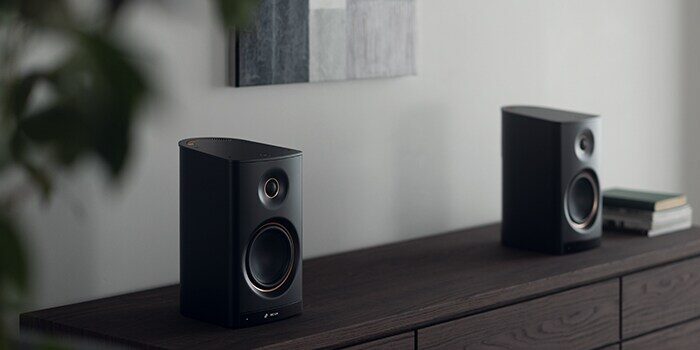
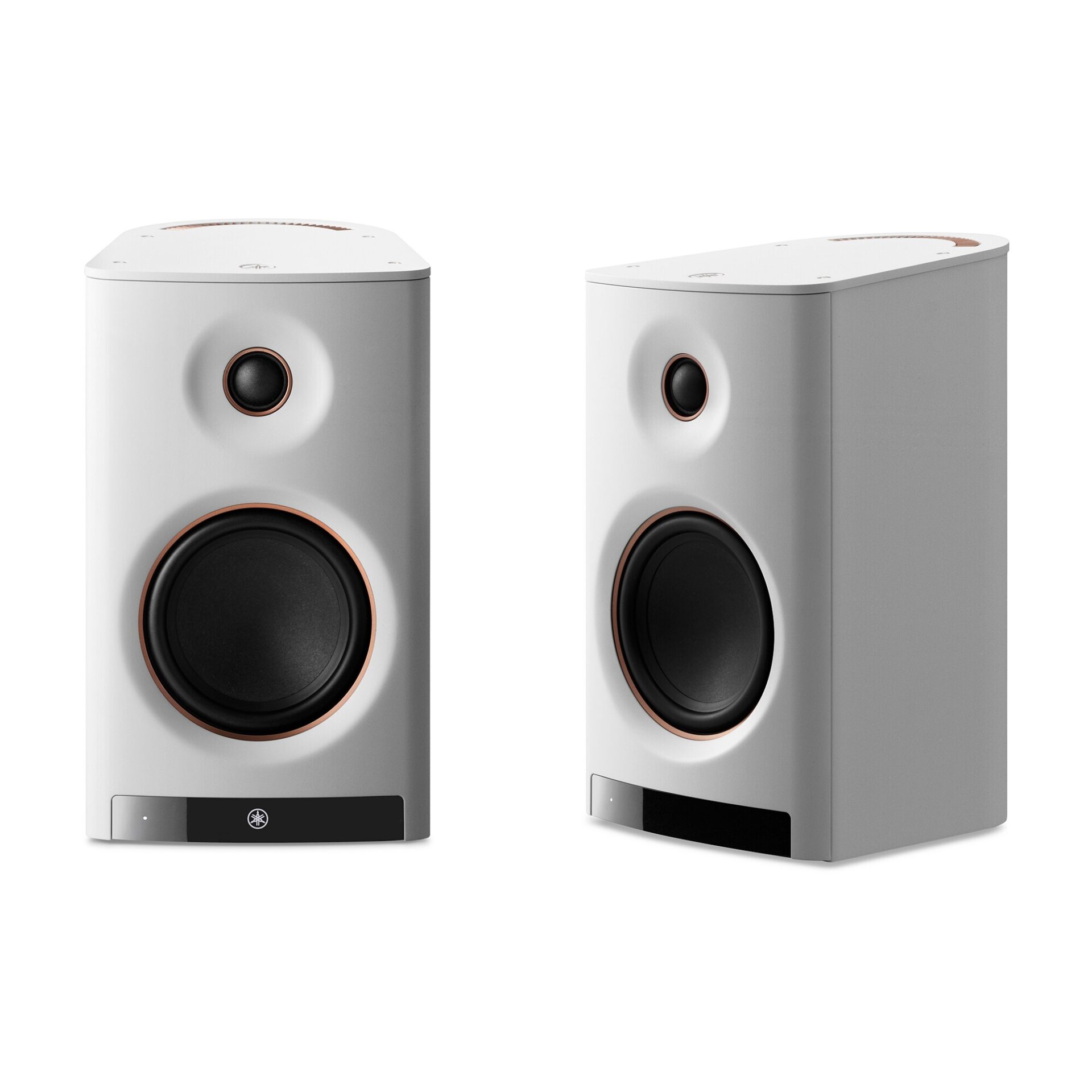
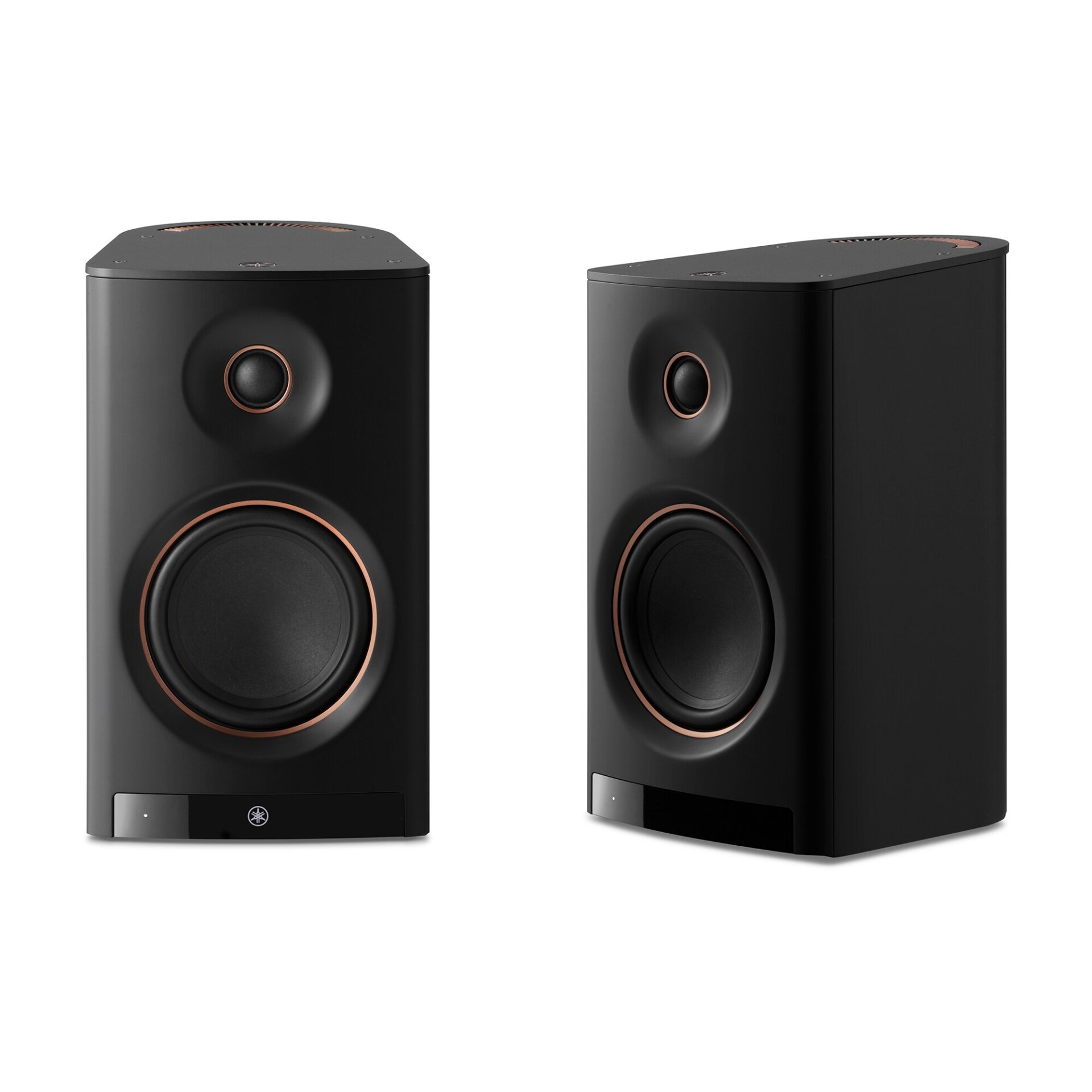
Yamaha is entering the smart hi-fi speaker market with the NX-70A; a product unveiled at a launch event in Vienna, marking the arrival of this promising new addition to the Japanese manufacturer’s range.
Already established in the connected desktop speaker segment with its True X Speaker 1A and the MusicCast 20 and 50, the brand had not yet entered the connected hi-fi speaker segment, where speakers are sold in pairs and feature a design much closer to passive versions, like competing models from Kef or Dynaudio.
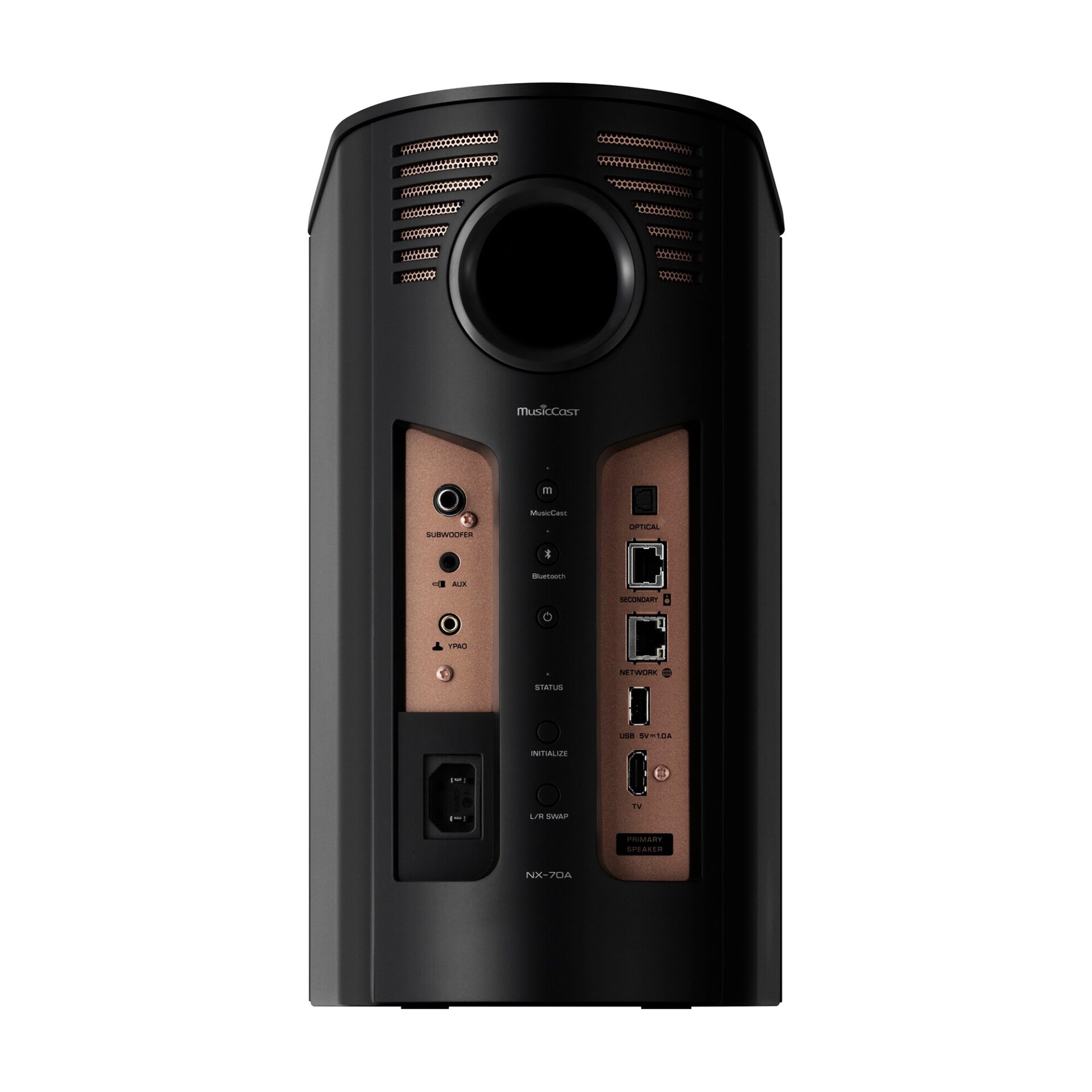
With the NX-70A, Yamaha is therefore entering this category, opting for a setup comprising a master speaker and a second speaker dependent on the first, connected via an Ethernet cable. On the master speaker, an Ethernet port allows connection to the router to ensure a reliable audio link, otherwise available via Wi-Fi. A stereo mini-jack port, a USB-A port, an optical port and an HDMI eARC port allow other sources to be connected.
A YPAO mic port is used to connect a microphone for room calibration and to optimize the balance of the speakers within their environment. And if you wish to add more bass, an RCA subwoofer output is also provided.
Powered by two amplifiers—100 watts (mid-bass) and 60 watts (tweeters)—also housed within the main speaker, the NX-70A features a modern design and, on the passive side, follows a relatively conventional 2-way bass-reflex configuration. The mid-bass is handled by a proprietary Harmonious 13 cm (5-1/4‘) cone driver, whilst the tweeter uses a 3 cm (1-1/4’) Harmonious dome driver, all of which delivers a claimed frequency response of 50 Hz to 35 kHz (when the speakers are connected via a cable) or up to 21 kHz (when used via Wi-Fi).
Compatible with most streaming platforms on the market, these standalone speakers are compact enough to fit easily into any room (189 x 234 x 333 mm) but still weigh 5.7 kg and 5.4 kg respectively. This makes them well worth placing on hi-fi stands where possible, and Yamaha has provided a dedicated SPS-70A model for this purpose.
Available in white or black upon release, the NX-70A is expected to be priced at 3 000 € per pair.
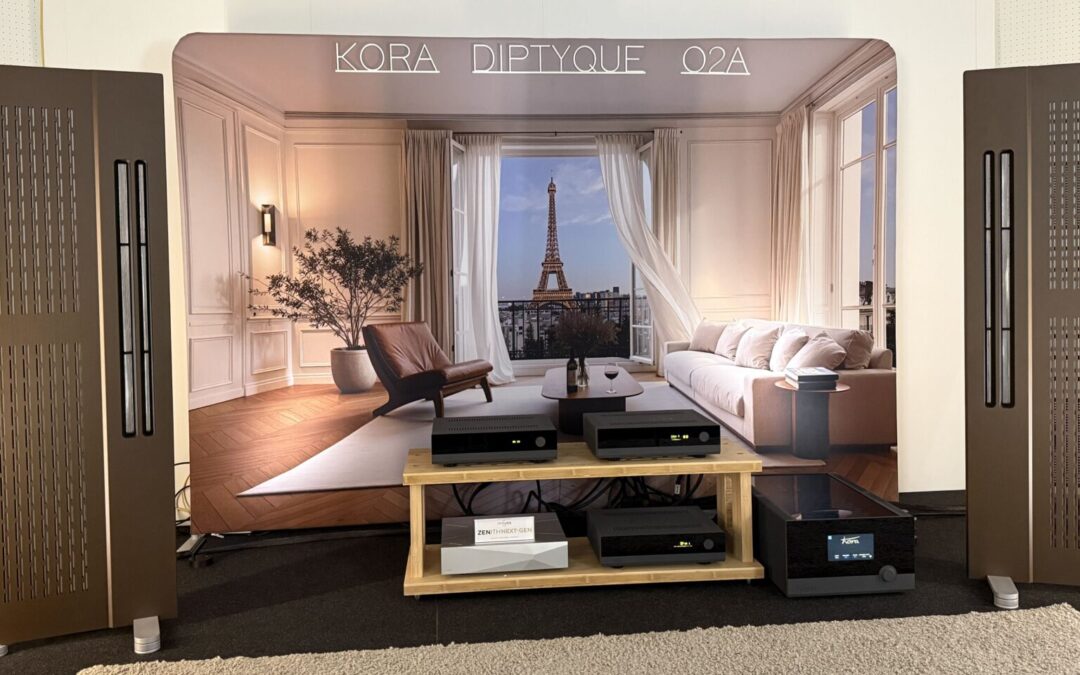
Demonstrated alongside Kora electronics, Diptyque unveiled a new DP170 soundbar at this year’s High End Vienna show.
Standing 10 cm taller than the DP160 MkII – at 170 cm – this new model is in fact much more of a ‘small’ Reference Mk2 than a ‘large’ DP160 MkII, as unlike all other 2-way ‘DP’ models, it features a 3-way design and thus comes closer to the higher-end model, which is a 3.5-way system.
However, its nominal impedance remains at 6 ohms like the DP160, whereas that of the Reference model drops to 4 ohms, whilst the DP170’s sensitivity of 88 dB falls between that of the two models flanking it (87 dB for the DP160 MkII and 89 dB for the Reference MkII respectively).
More reasonable in terms of weight (55 kg each, nonetheless), the DP170 comes close to the bandwidth of the top-of-the-range model with a frequency response of 28 Hz to 40 kHz. At the lower end, this improvement over the other models stems in particular from the fact that the two 3,600 cm² bass-midrange drivers handle only frequencies below 900 Hz, whereas the DP160’s drivers handle those from 1,600 Hz and below.
Featuring a new crossover made from top-of-the-range components, the DP170 continues to use the sandwich structure first seen on the Reference, as well as the PPBM principle for the diaphragms (see our detailed explanations of the DP160 MkII; VU#63). Two further isodynamic ribbon drivers with neodymium magnets allow the midrange (900 Hz–7 kHz) and treble (7–40 kHz) to be handled separately.
Like the other models, these panels are fully customisable, with four leather finishes for the side baffle and 160 RAL colours for the front and rear panels. The new stands introduced last year have been optimised for this version, which also features a new grille structure, enhanced by small perforations thanks to Diptyque’s partnership with the ONERA physics institute, which enabled the membranes to be precisely laser-gridded to identify micro-distortions.
Like all the brand’s other products, the DP170s are manufactured in Montauban using components mostly produced by local subcontractors. Their retail price sits between that of the DP160 MkII and the Reference MkII, at 35 900 €.
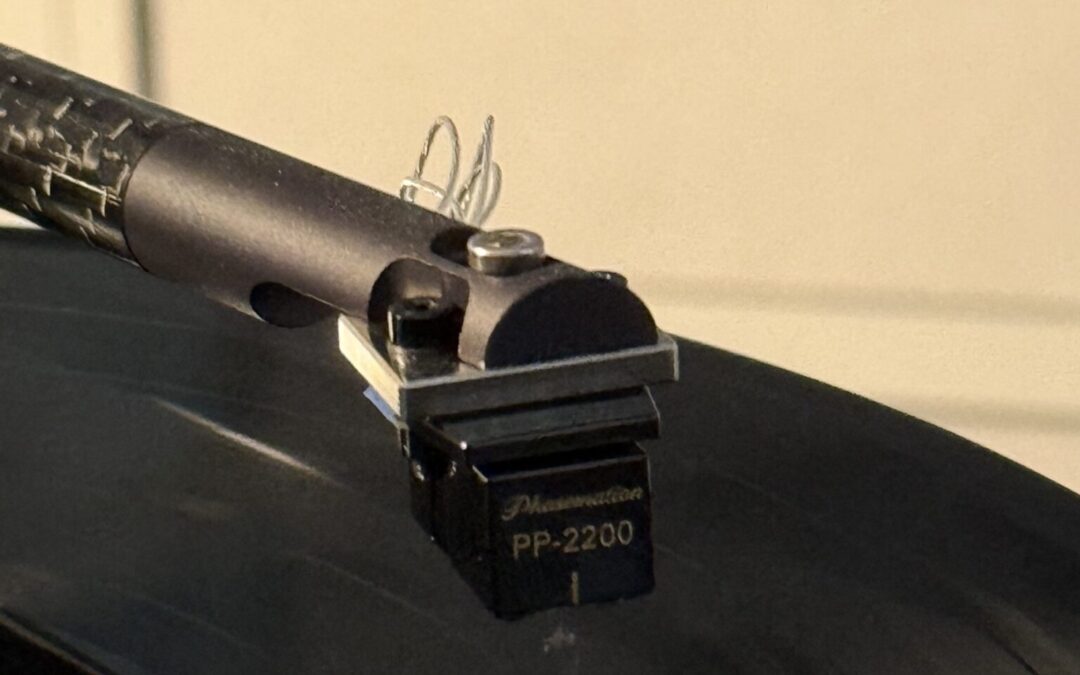
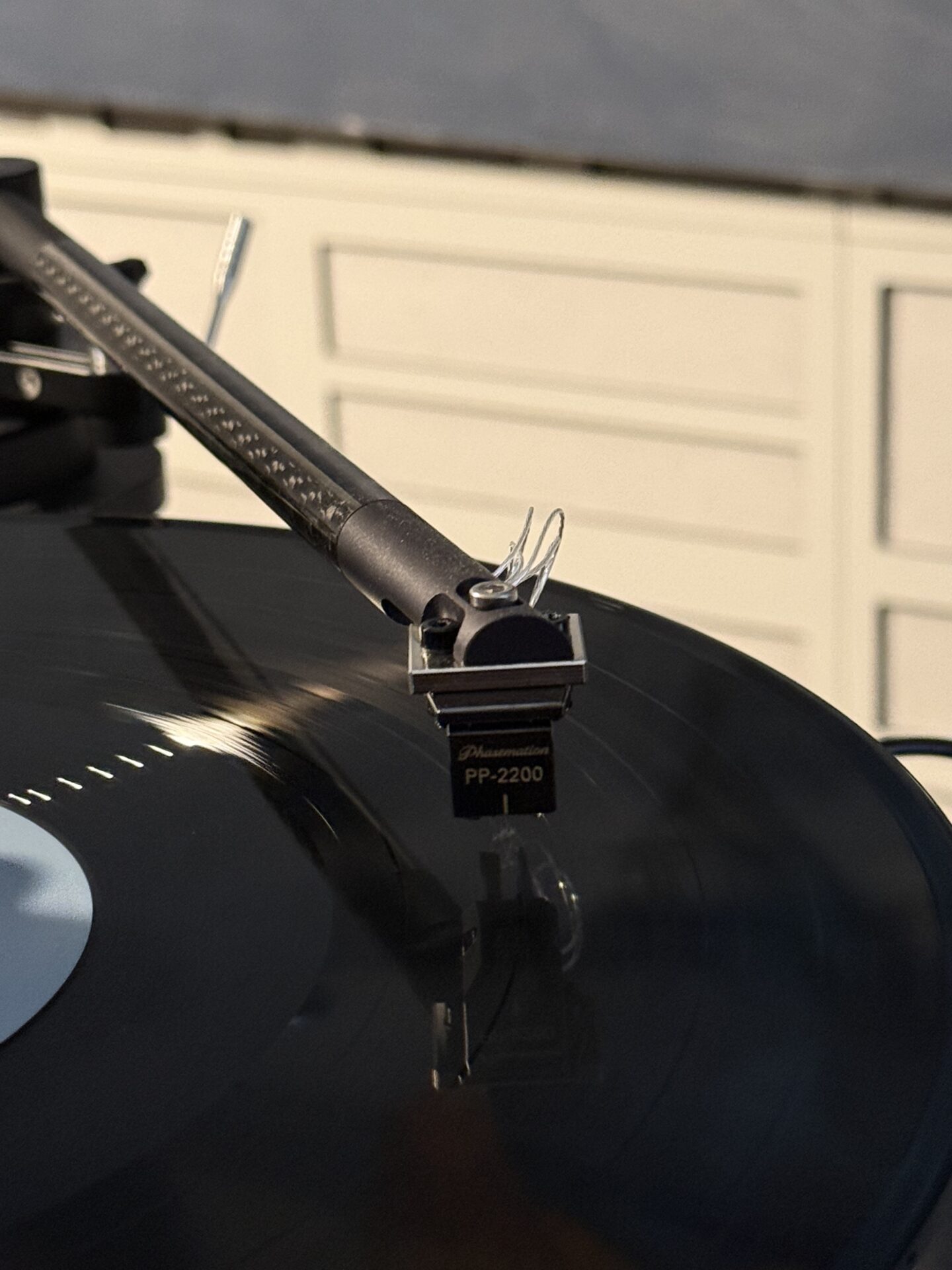
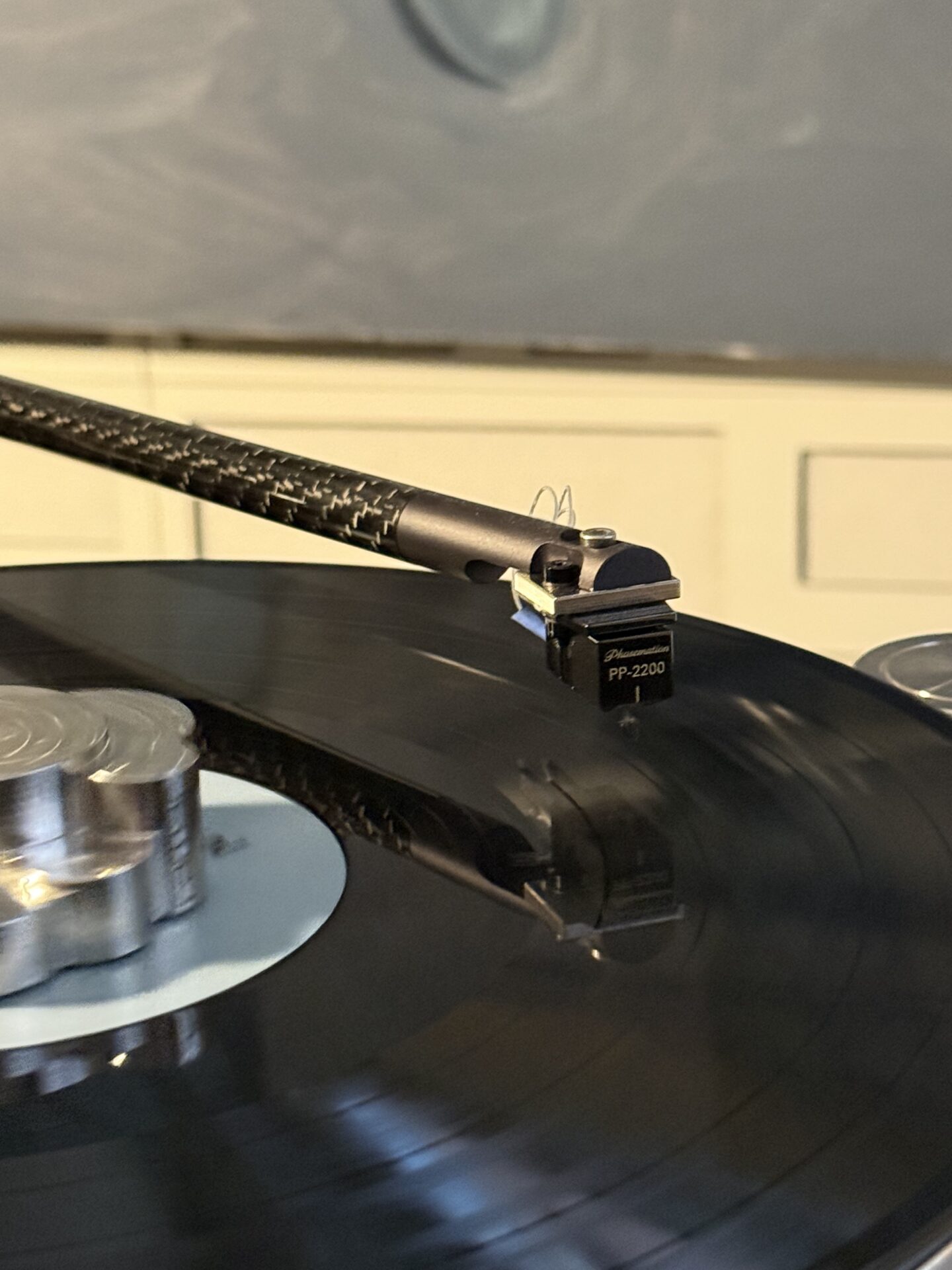
A more advanced version of the PP-2000, the new Phasemation PP-2200 – previewed in Vienna and now available for listening in Paris – is designed to rival today’s leading analogue turntables.
Intended to replace the PP-2000 and initially conceived because that model had become too complex to manufacture, the new Japanese cartridge ultimately goes much further in both substance and form. With a titanium body, it features a completely redesigned magnetic circuit, made of barmanjour, whilst the magnets placed around it to move the coil are made of samarium cobalt.
The shape of the chassis has been redesigned, primarily to further reduce vibrations and improve contact points. The connectors have also been revised, though unfortunately they still lack the small colored rings, which means you have to check each time you connect it (or know by heart) where each pin on the tonearm goes.
The PP-2200 retains a boron cantilever, but pairs it with a new natural diamond line-contact stylus with a 0.03 x 0.003mm curvature. It boasts a nominal impedance of 4 ohms, a compliance of 8μm/mN and a relatively substantial weight of 14.9 g, which is unlikely to be an issue given that such an investment will inevitably be paired with a system capable of accommodating it. Its output level of 0.3 mV also calls for a high-quality phono preamp.
Having already been heard in Vienna and then Paris, this cartridge seems set to shake up the high-end hi-fi scene, such is its flawless fidelity in reproducing the information contained in our wonderful grooves. Official launch in July!
As you know, the major international hi-fi exhibition, the High End Show, is moving from Munich to Vienna in 2026.
With this change, we observed a new dynamic this year, where the loss of familiar landmarks meant many exhibitors had to rethink their approach. Nevertheless, most manufacturers from around the world were well represented, demonstrating a genuine desire to use this show – which is now more significant for the trade section on Thursday and Friday than for meetings with visitors on Saturday and Sunday – as a true showcase.
Faced with such a proliferation of products, we initially thought of putting together a report for you, based like the previous ones on a breakdown by floor and hall, organised according to the exhibition halls. But given the sheer scale of the event and the fact that we spent our four days on site rushing from one place to another, from product launches to interviews, stopped every few metres by a new product or a new brand, we decided to focus this feature solely on the new products.
With already more than 115 pages covering around 60 brands, this photo report cannot be exhaustive, and although we had three staff members on site, we apologise to those we did not see. Nevertheless, it aims to be as comprehensive as possible, covering products from all floors and all exhibition halls, and even concluding with those from the adjacent shows, HiFi Deluxe and Tech Gate.
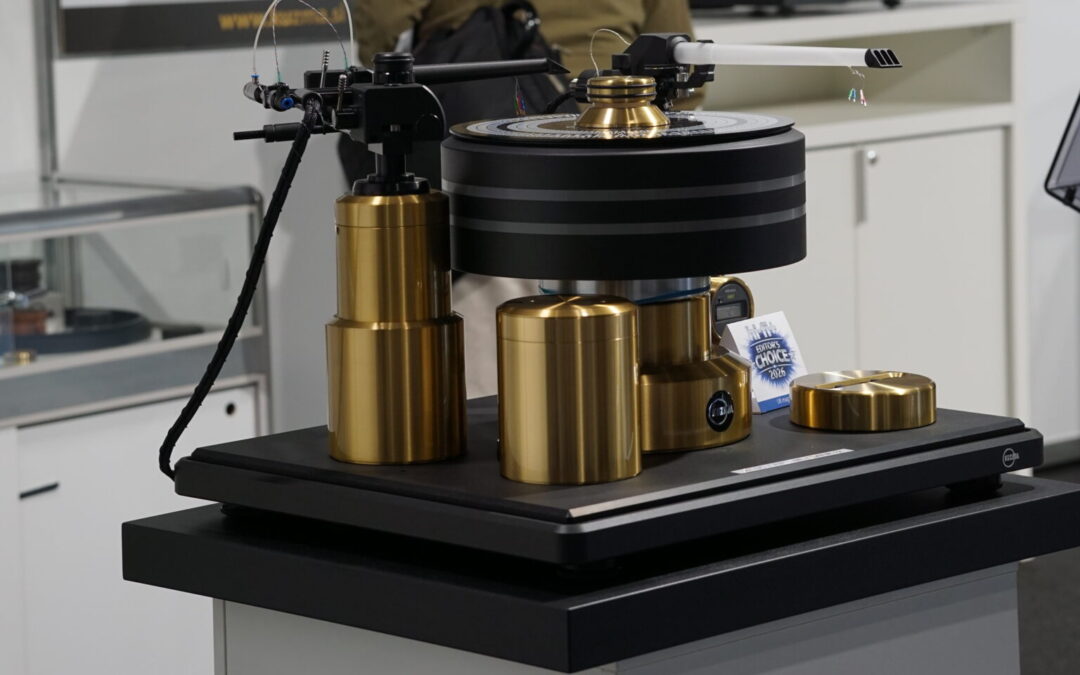
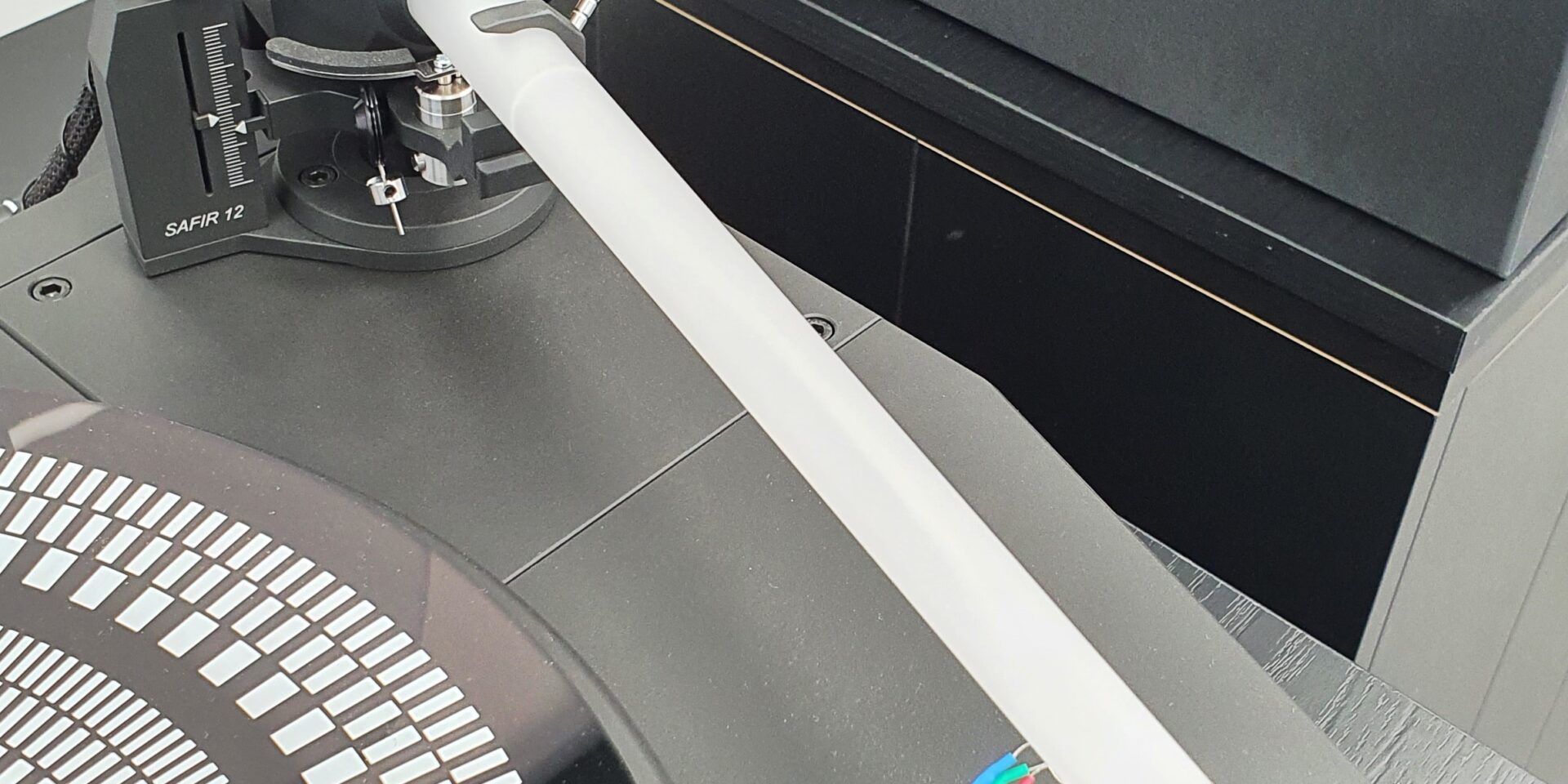
Having launched a Saphir tonearm two years ago based on the tried-and-tested solutions of the 4Point, the company – still led by its founder Franc Kuzma – is now releasing its latest model in a 12-inch (304.8 mm) version.
The heart and soul of the Saphir 12 tonearm lie in its extremely rigid conical sapphire tube – this marks the first time this precious stone, which is highly resistant to all forms of resonance, has been used for this purpose.
As the ultimate product in the range, it outperforms all other tonearm tubes used elsewhere and remains resonance-free up to a frequency of 5 kHz. This quality provides the phono cartridge with a true reference mass, with an effective mass of 60 grams.
For the rest, the bearings on the Safir 12 are identical to those on the Safir 9 tonearm, which are already superior to those on the 4Point. The sapphire tonearm tube is mounted within an assembly of solid aluminium and brass blocks, which provide an extremely inert and mechanically silent support for the tube itself. A two-section brass counterweight, fitted with a locking mechanism, balances the tonearm with precision. The azimuth can be easily adjusted in small increments using an Allen key.
The Safir 12 fits the standard 12-inch Kuzma mounting plinth, but the manufacturer has developed a special VTA tower for it, which forms an integral part of the base. It comes as standard with internal wiring made from a special silver alloy, running uninterrupted from the cartridge pins to the RCA or XLR connectors at the other end.
Weighing in at 1.6 kg, the Kuzma Safir 12 sits at the very top of the manufacturer’s tonearm range, priced at 35 000 €, £32 000 or $43 000.