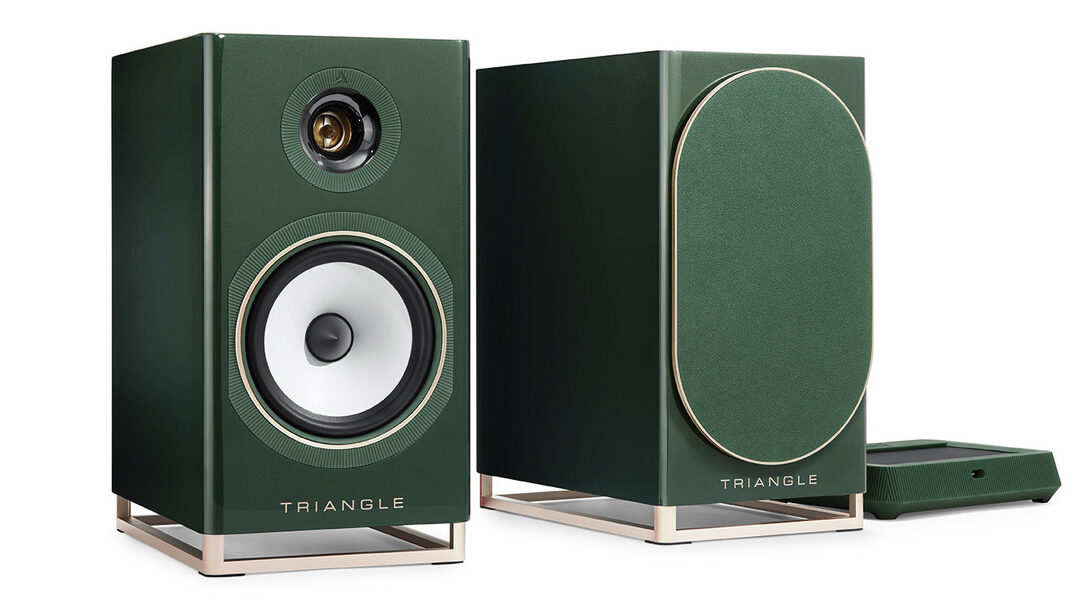
A year and a half after launching the Capella active speaker, Triangle has announced a new model for early 2026, at the same price of 2 499 €. Presented in a new English green finish, the Capella 2 also swaps walnut for oak, in addition to retaining the black (now neutral like white), white, and blue models. And while they have also evolved slightly on the passive side, it is mainly the hub that has been modernized.
New Hub 2.1 The hub is now covered with a rubber coating in the same color as the speaker and can be connected to the network via RJ45, whereas the first version only offered Wi-Fi. Based on a 1.5GHz Cortex A53 Quad-Core processor, this hub lives up to its name, as it still allows you to integrate an analog source via the line input and has three optical inputs, one coaxial input, two USB (data & audio) and one HDMI eArc, in addition to an output for connecting the system to a subwoofer. Compatible with Roon, Qobuz Connect, Chromecast and, of course, UPnP, the Capella 2 hub improves its Bluetooth with a AptX 5.2 chip, compared to 4.2 for the previous model. In addition, the Triangle smartphone app allows for automatic calibration of the speakers to the room, which is easy to set up with a small ZEN microphone supplied with the device.
2-way active speakers In addition to the part connected to the hub using WISA technology, these new speakers are of course active and each feature a 2 x 50-watt Class D amplifier. Thanks to this and a DSP to optimize power according to needs, the Capella 2 can freely express both speakers. The horn tweeter (TZ2530MG) is now based on a new 25 mm magnesium/aluminum alloy dome, while frequencies below 3.6 kHz are handled by a 16.5 cm midrange driver with a natural cellulose pulp cone. The bass also benefits from airflow directed downward by a vertical vent, which also allows the speakers to be placed relatively close to a rear wall. Matching stands in five finishes are available as an option for 279 € per pair, with the speakers themselves remaining at the same price as the first Capella models, namely 2 499 € per pair.
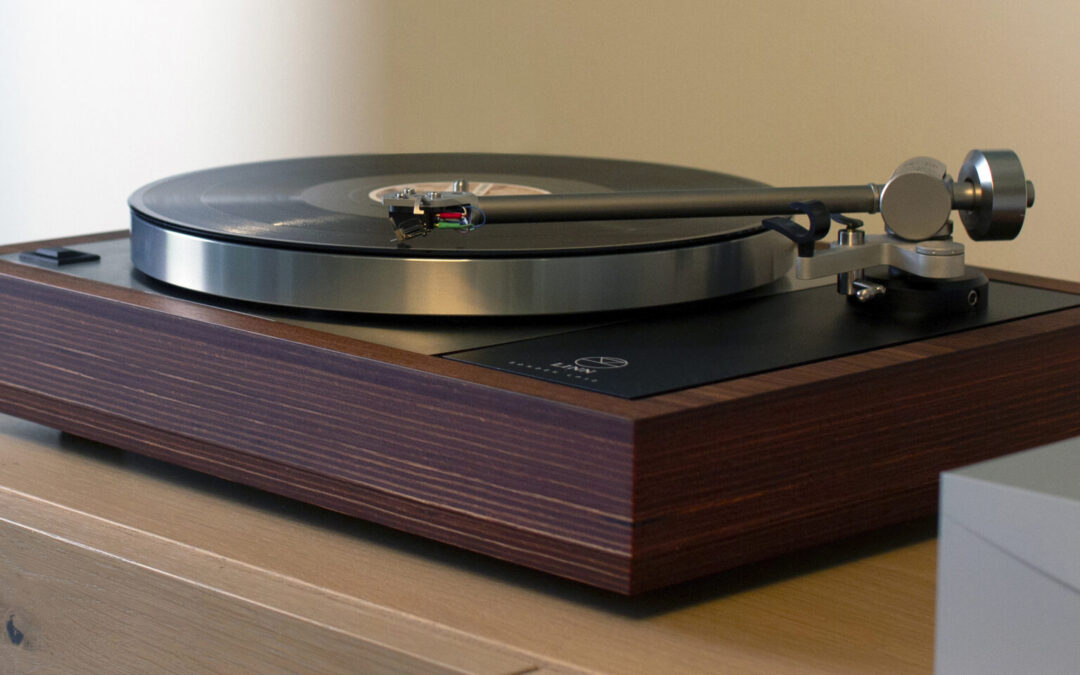
The LP12 from Scottish manufacturer Linn can be upgraded over time and now features a new separate power supply and a new counterweight on the Sondek version, available separately for retrofitting on previous models.
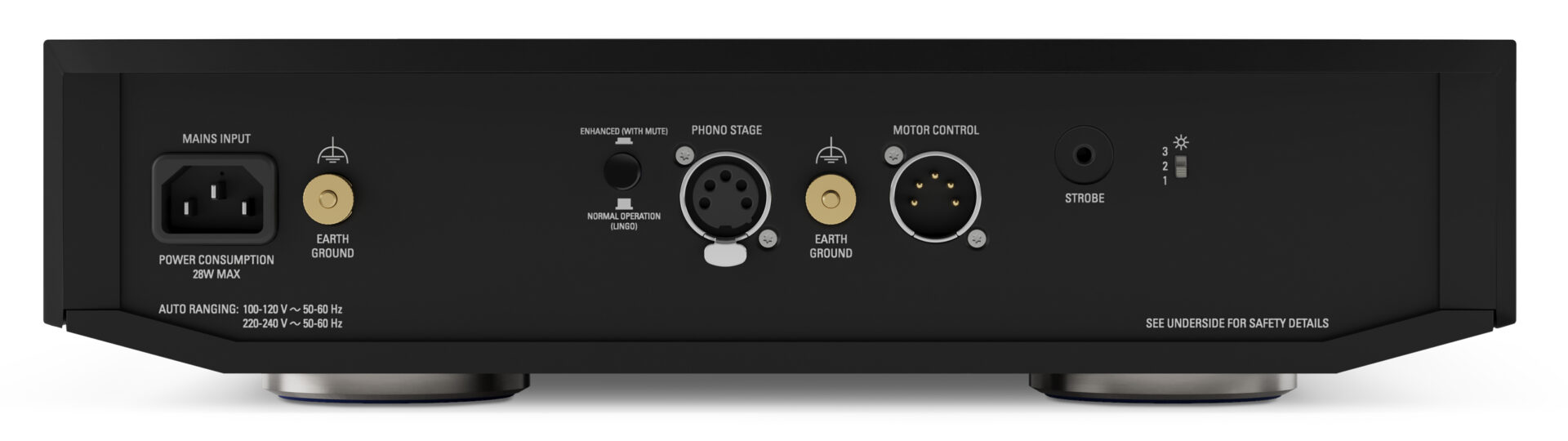
Klimax Radikal With a new digitally controlled motor, the new Klimax Radikal power supply further improves the quality of the turntable’s rotation, bringing it as close as possible to 33.1/3 rpm. Its internal Utopik power supply has two separate rails, so that it can power not only the motor, but also the Urika phono stage on the Sondek LP12 if required. Cushioned behind the front panel, this power supply is encapsulated to prevent any interference with the digital circuits, in a chassis machined from three pieces of solid aluminum, placed on stainless steel feet with rubber reinforcements. Weighing almost 14 kg, this Klimax Radikal case promises even better performance than its predecessor, particularly in terms of finesse and bass response.
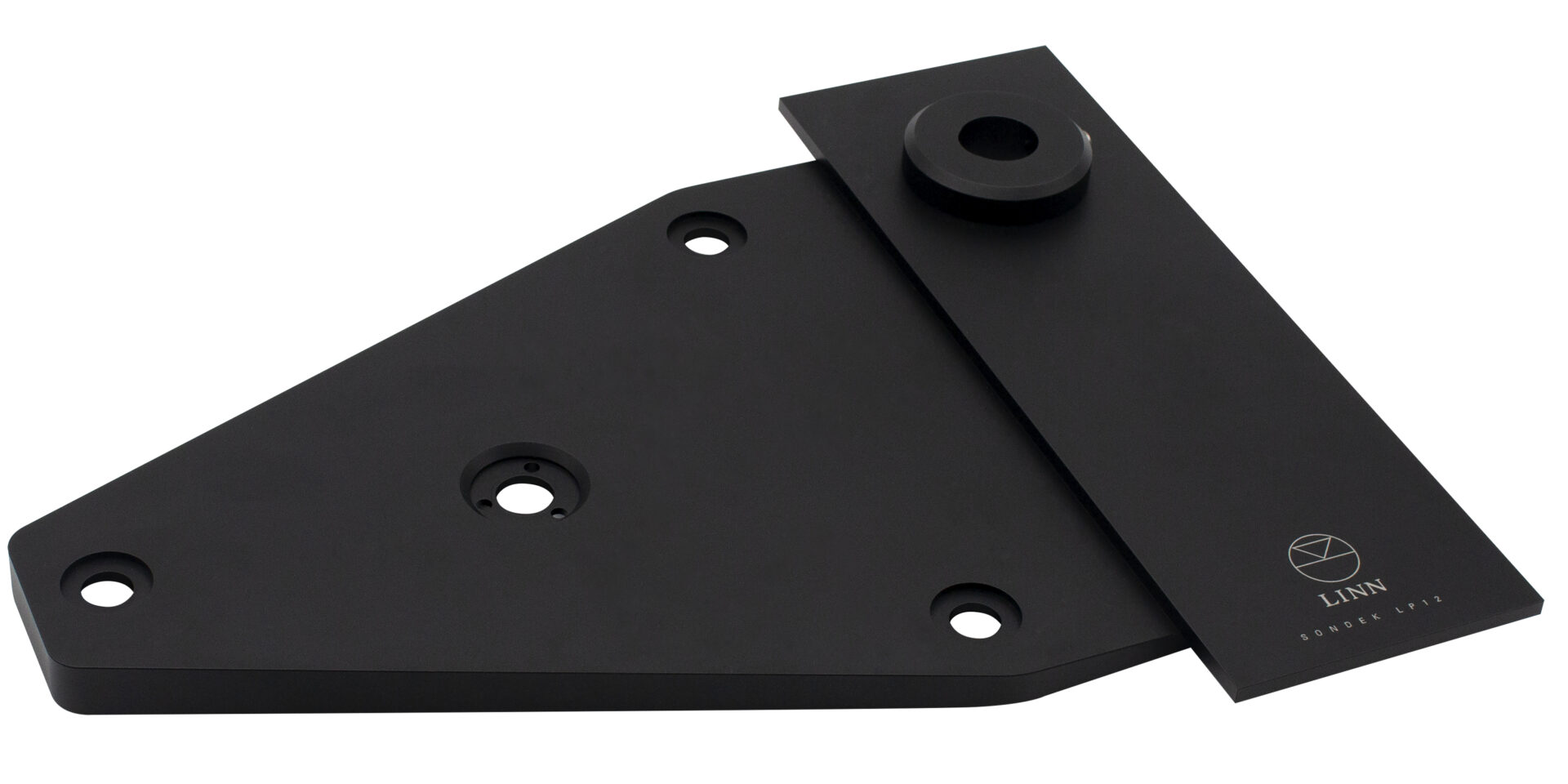
Keel SE Superior in quality to the Majik and the Kore, the Keel sub-chassis already allowed you to upgrade your LP12 without breaking the bank. Now, it has been further improved in terms of resonance behavior and mass distribution. Manufactured using FEA (Finite Element Analysis) technology and precision machinery, the Keel SE is reinforced by a complex structure in the lower part, which makes it 300% stiffer than the previous model. Thanks to this greatly optimized vibration control, the new sub-chassis can dissipate unwanted acoustic energy much more effectively, thereby smoothing the signal delivered by the cartridge. As it was conceived after the Karousel, a particular attention has been paid to the path between the mounting point of this bearing and the tonearm collar. This area between the two elements has been considerably reinforced to ensure that any changes in geometry during playback are minimized, thereby reducing tracking distortion. Thanks to the machining of aluminum in calculated areas under the platter, the Keel SE has a more balanced center of gravity on its suspension. This improves the weight distribution between the springs and reduces inertia. And since we at VUmètre have a Sondek LP12, we will try to tell you more very soon, in order to verify the performance of these new components and let you know which of the two elements to invest in first. And besides, the price may be the deciding factor, since the Keel SE is priced at £4 250 / 5 060 € / $6 215 and the Klimax Radikal at £11 500 / €13 680 / $16 820.
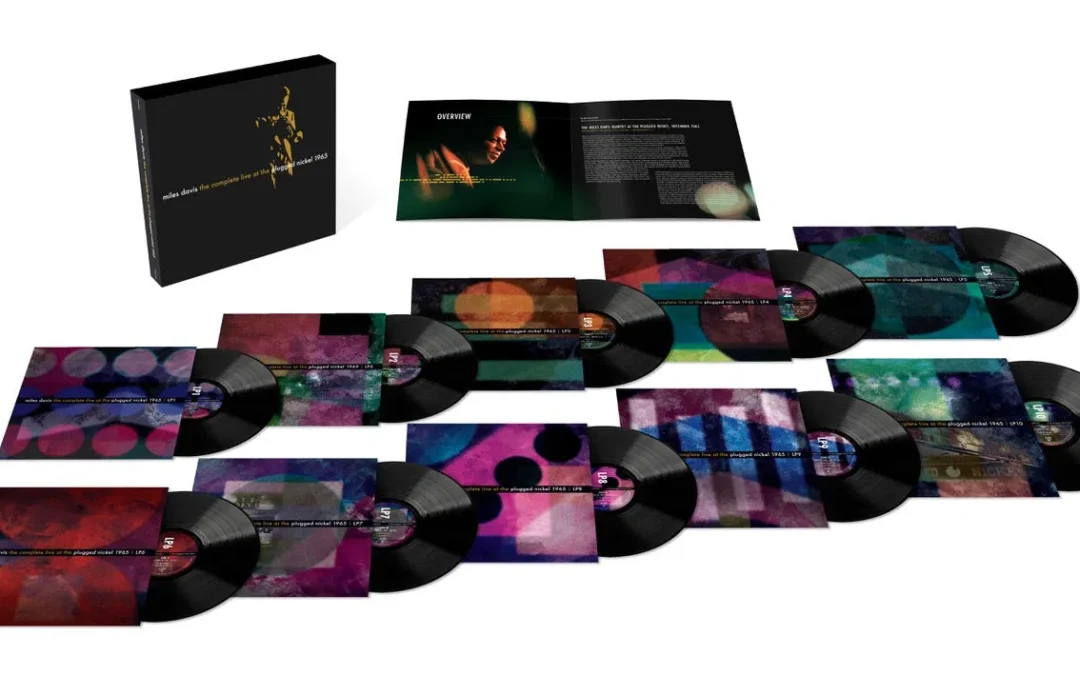
The rush continues for end-of-year vinyl reissues, with some very promising titles, including, without question, the impressive box set Complete Live At The Plugged Nickel 1965 by Miles Davis.
This new 10-LP edition recreates the original set list order of this epic live performance. Most importantly, it corrects the speed issues that had long affected the first three tracks of the original release (“So What,” “Freddie Freeloader,” and “Blue in Green”) due to the slowdown of Columbia’s 3-track recorder motor.
Each disc is presented in a newly designed sleeve, each housed in a gold-leaf box. The box set includes a 44-page book in 30 x 30 cm format with rare photos, new detailed liner notes and commentary on the tracks, as well as Bob Blumenthal’s original essay.
During these sultry evenings, the true incarnation of Davis’s second Quintet, featuring Wayne Shorter, Herbie Hancock, Ron Carter, and Tony Williams, dismantles familiar tunes to create a musical future and find their new identity. Miles’ longtime producer, Teo Macero, captured each of the seven concerts played on December 22 and 23, 1965, only parts of which were released sporadically in the 1970s and 1980s.
It wasn’t until the early 1990s that Legacy (CD) and Mosaic (LP) revealed the entirety of these seven and a half hours of incandescent and revealing music. This complete collection is now available in superior quality with this reissue on 8 CDs or 10 vinyl records, which we ourselves are eagerly awaiting!
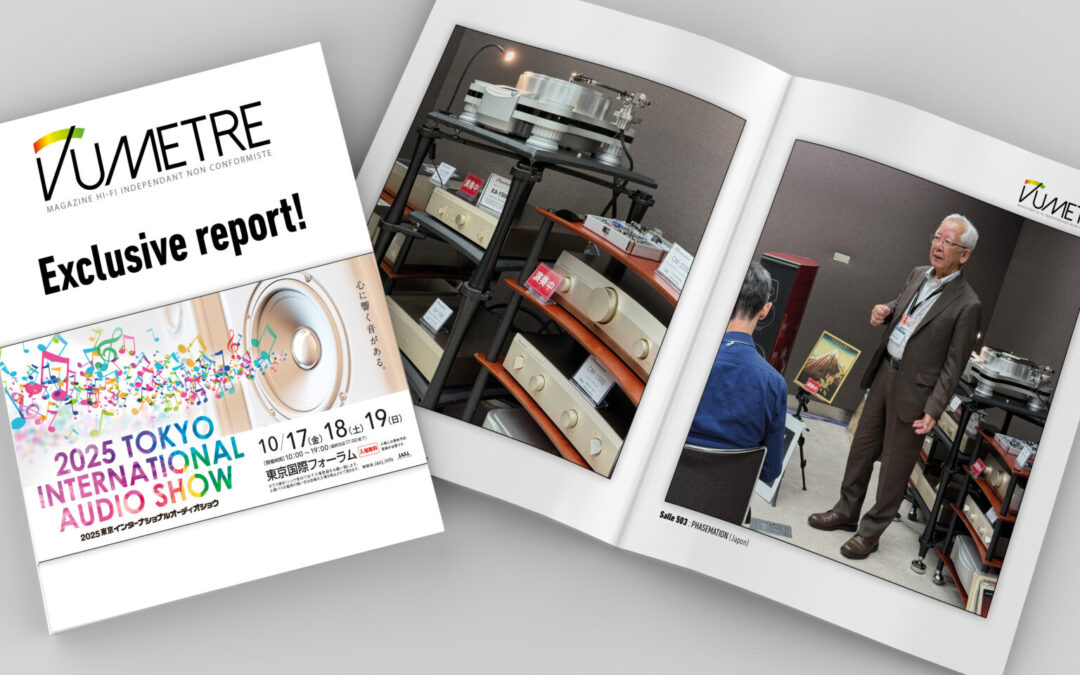
The International Forum from October 17 to 19 was held the Tokyo Audio Video Show 2025. This annual hi-fi gala in Japan provides an opportunity to take the pulse of current innovations and interests among the country’s music lovers. While turntables, CD players, and SACD players are still very much present, digital music, sustained by the sensational arrival of Qobuz, seems to be becoming part of consumers’ habits, attracting manufacturers to create new streamers.
Starting on the 7th floor and working our way down to the 4th, we invite you to follow us to discover the latest products from major Japanese brands such as Accuphase, AirTight, Luxman, Esoteric, TAD, Marantz, Soulnote, Phasemation, and Yamaha, as well as systems from international brands such as DCS, Nagra, McIntosh, Linn, and CH. Precision, Atoll, Chord, Revival, Marten, and YG. Enjoy your visit!
Unveiled in the summer of 2024, the Varèse series topped the British company dCS’s catalog, surpassing the products in the Vivaldi series.
But while the launch featured an impressive Core, which is both a filter, converter, and streaming box with RJ45 and USB digital inputs at the heart of the system, a two-chassis mono digital-to-analog converter based on a new Differential Ring DAC, a Master Clock and a user interface for use with the new Mosaic ACTUS smartphone app or a remote control, this fine collection was missing a CD/SACD transport.
Recently released, we were able to hear it in exceptional conditions in Tokyo, on Hiro C4CS speakers specific to the Dynamic Audio store there (see our Instagram/Facebook video), and we plan to listen to it again soon in France or Switzerland, perhaps to offer you a test review.
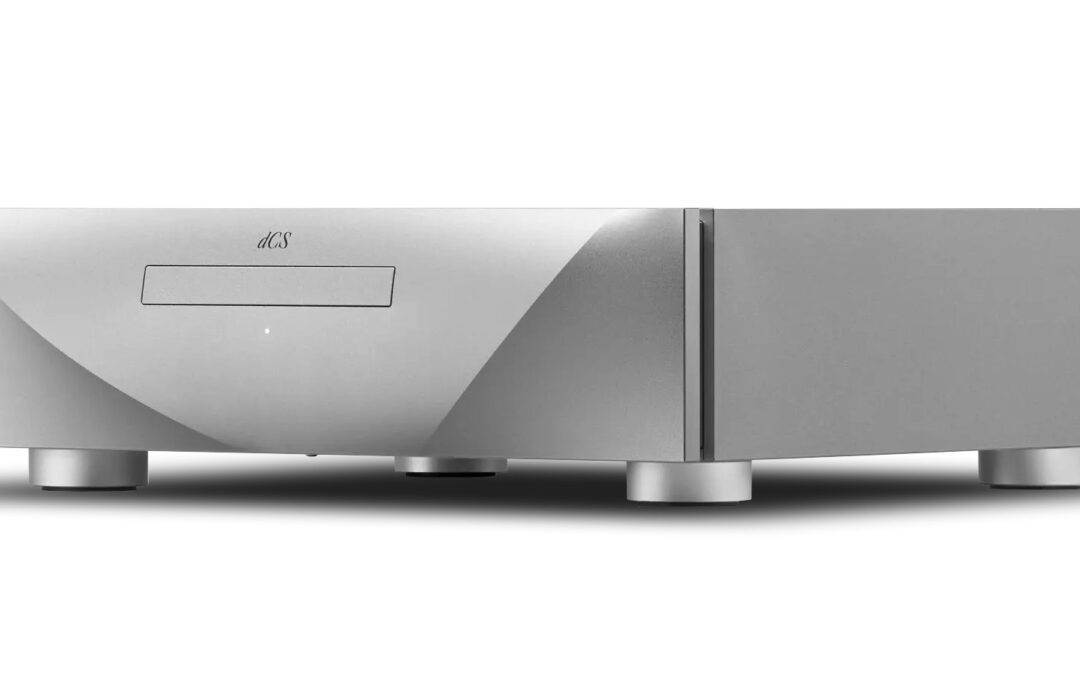
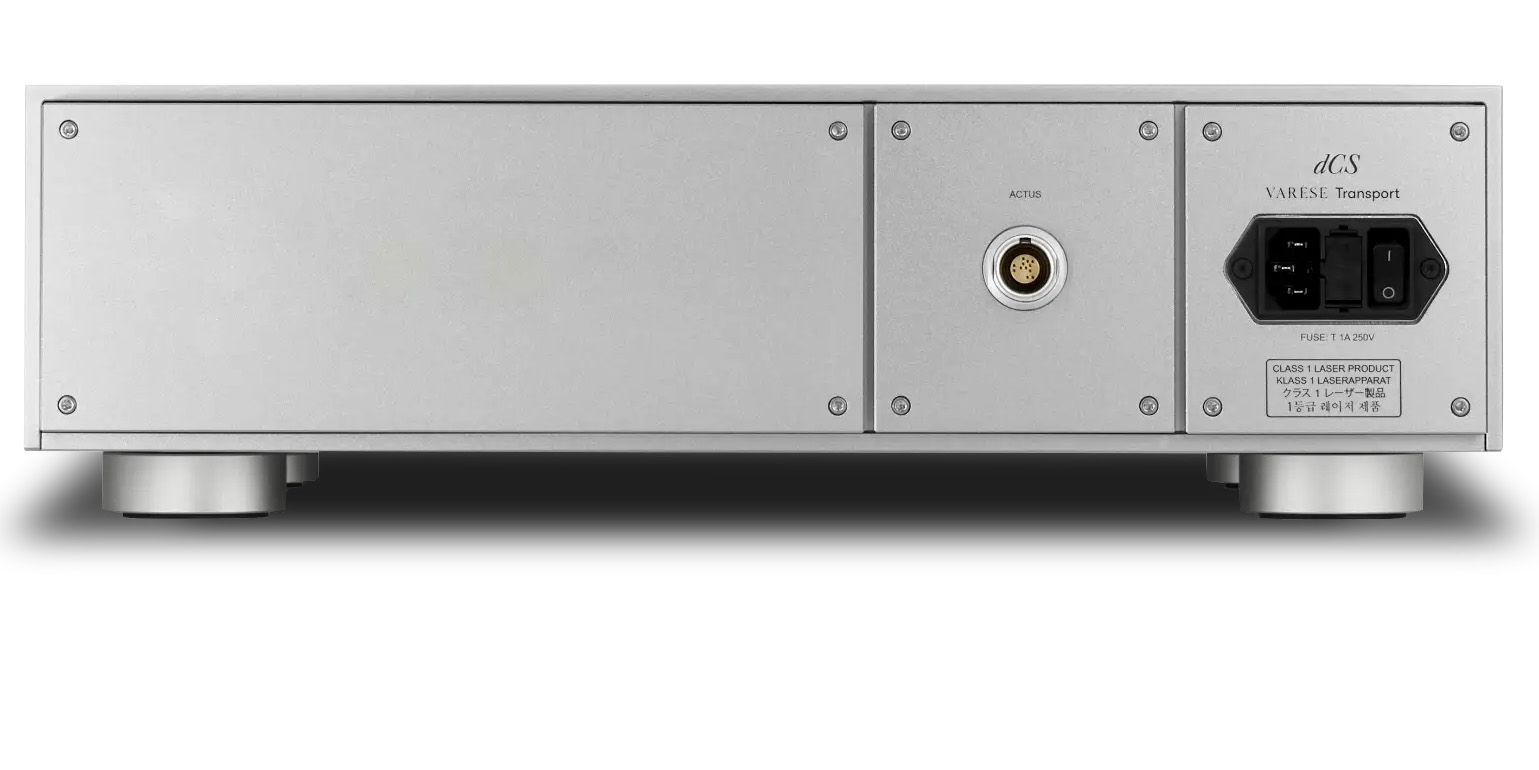
Even purer than a Vivaldi—as we were also able to verify—the Varèse Transport is completely vibration-free, making it undoubtedly one of the finest CD/SACD mechanisms ever created. Connected to the Core via a dCS ACTUS cable, this new transport is designed to work exclusively with the Varèse series, as it has no other inputs or outputs apart from the mains socket, of course.
With its redesigned tray based on Sound United D&M SACD mechanics and a total weight of 20.1 kg due to the extensive use of aerospace-grade aluminum to minimize interference, this new transport is fully configured to optimally play the 44.1 kHz format of CDs and the DSD64 format of SACDs, with the signal then reprocessed by the other Varèse components.
Available since the end of September, the dCS Transport has not yet been priced in euros, but it costs £35 000 in the United Kingdom, to which you must add at least a Core (88 499 €/£75 000), the Mono-Dac (105 999 €/£90 000) and the user interface (£20 000), or even the Master Clock (37 999 €/£32 500). Then you can find yourself alone, as if on a desert island, dreaming for hours on end of perfect music, perhaps while listening to Déserts… of Varèse!