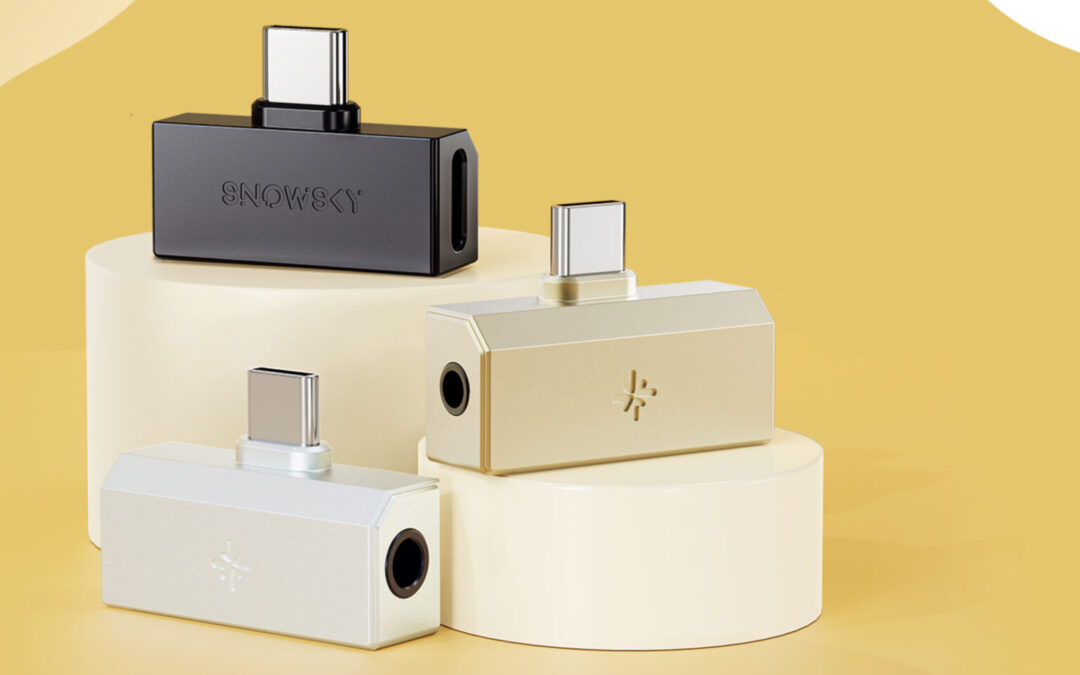
FiiO is now adding the ultra-compact Snowsky TINY to its already extensive range of portable DACs, which includes the MELODY and its wooden case, the larger KA17, and the KA15 with its cassette tape design on the top.
Designed like a T and barely three times the width of a USB-C port (29 x 10 x 22 mm), the TINY is designed to be connected to a smartphone, computer, or even a Nintendo Switch. Capable of supporting PCM files up to 384 kHz and DSD in DSD256, this small DAC headphone amplifier is compatible with iOS, Windows, and Android.
Available in two versions, it charges and connects via USB-C and can be integrated with:
– on version A: another USB-C connection on one side and an unbalanced 3.5 mm jack on the other;
– on version B: a 3.5 mm jack on one side and a balanced 4.4 mm jack on the other.
This small, compact DAC headphone amplifier still boasts a signal-to-noise ratio of 105 dB on its 3.5 mm output (100 dB on the 4.4 mm output) and a total harmonic distortion plus noise (THD+N) of 0.0032%. Its control app allows you to adjust frequencies across 10 bands, as well as gain and several other settings.
Currently only available in US dollars, its price seems unbeatable, as it retails for less than 40$.
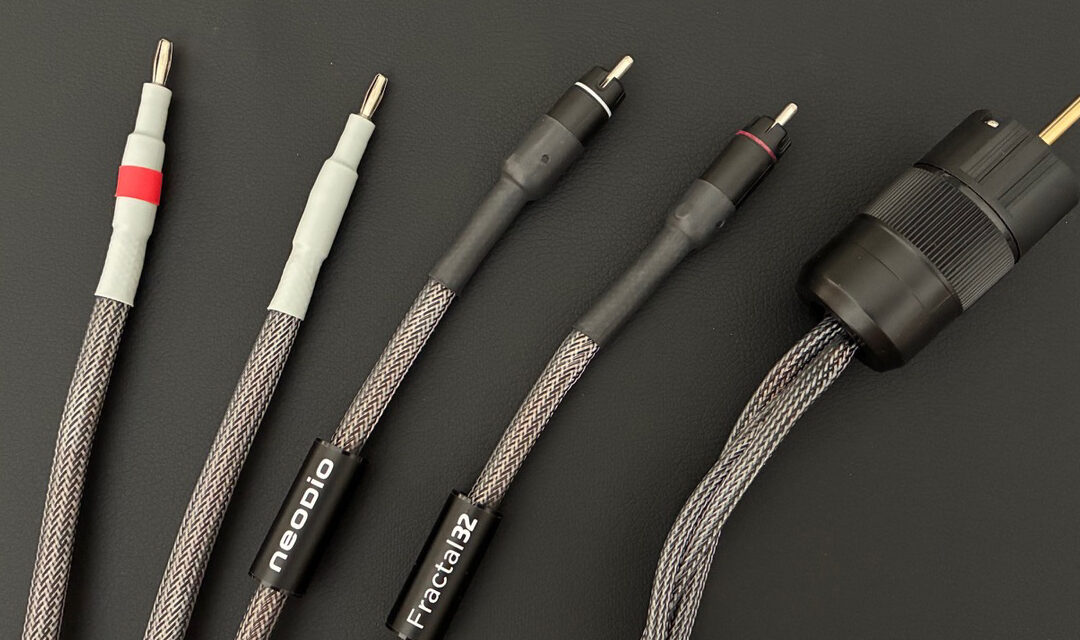
The Fractal 32 line now tops the Neodio cable range.
Having worked on these products for over a year, Stéphane Even had two motivations for this project. On the one hand, he wanted to improve on the Fractal 16; on the other, he wanted to offer a credible alternative to very high-end competing products, while remaining committed to the concept of value for money.
According to the designer, the high performance of Fractal 32 cables means they can be compared to much more expensive products. To achieve this goal, Stéphane Even started with the wire used in the Fractal 16, obtained through an iterative process (hence the name Fractal), to which he added two new materials. To a new conductor, he added an insulator and a vibration damping technique with a piezoelectric component. His research on water molecules for the Neodio B2 obviously fueled this development, which led to many tests before achieving the transparency, sound image, and natural dynamics of these new high-end cables.
Three products are now available: The Fractal 32 P power cord at 1 800 € for 1.8 m; the Fractal 32 I modulation cable at 1 800 € for 1.2 m (equipped as standard with excellent KLE Innovations RCA plugs, but an XLR version is also available); the Fractal 32 L speaker cable at 2 800 € for 2×3 meters with banana plugs or spades. We’ll tell you more as soon as we receive them!
In the storms that have been raging in the world of hi-fi for many years, bad winds alternate with promising new breezes. Take Auralic, founded in 2009 by Xuanqian Wang, whose announcement of his departure at the beginning of this year was not a good sign, especially as it came just before the release of the new flagship product, the Aquila X3. This week, we learned through a press release that the company was ceasing operations immediately, citing an 80% drop in sales in 20251. The reasons given were a price war and music lovers’ supposed interest in much cheaper streaming devices. Despite these explanations, there are several contradictory reports, as some suppliers are said to have excess stock of the brand, while other countries have announced that they have been unable to obtain adequate supplies of certain models for several months. We called two French retailers, who admitted that sales of the brand had been sluggish since the beginning of the year, but not as drastic as the overall decline announced. A note for Auralic device owners: as almost all of them are UPnP, even if the excellent proprietary app were to disappear, most devices will still be usable for many years thanks to third-party apps, starting with Qobuz Connect, for example. Without specifying the amount of its liabilities, the company has announced that it is putting the brand up for sale for $2 million. Let’s hope that we will hear about a takeover in the coming weeks.
MBL
And since we are talking about takeovers, it is precisely a large Chinese luxury consortium, Chow Tai Seng, that has just bought and, at the same time, breathed new life into the German high-end brand MBL International GmbH. With 4,200 employees and 4,700 stores in China, the company is injecting the necessary cash to allow MBL to continue its activities and development for the time being, with around 50 staffs according to our sources. Although most of the buyer group’s stores are not in the hi-fi sector, it should be noted that it also owns United Audio, which already distributes many German brands on the Chinese market. With this good news, MBL, headquartered in Berlin and assembled entirely in Germany, is back on track, with more ambition than ever to conquer the international market! 2
1 « …effective immediately, the company will no longer continue operations due to a significant decline in sales performance. Sales have dropped by 80% this year due to the tariff war, increasing competition from cheaper streaming products and challenging economic conditions worldwide.”
2 « We are convinced that MBL is in excellent hands with MBL International GmbH, backed by Chow Tai Seng. The owner himself is a passionate music lover and a long-standing user of our products. Our location in Berlin, our production in Germany, our team, and our core values remain unchanged,” says Christian Hermeling, CEO of MBL. “Equally important, our strong international distribution network is recognized as one of our greatest strengths and will be further developed under the new ownership. »
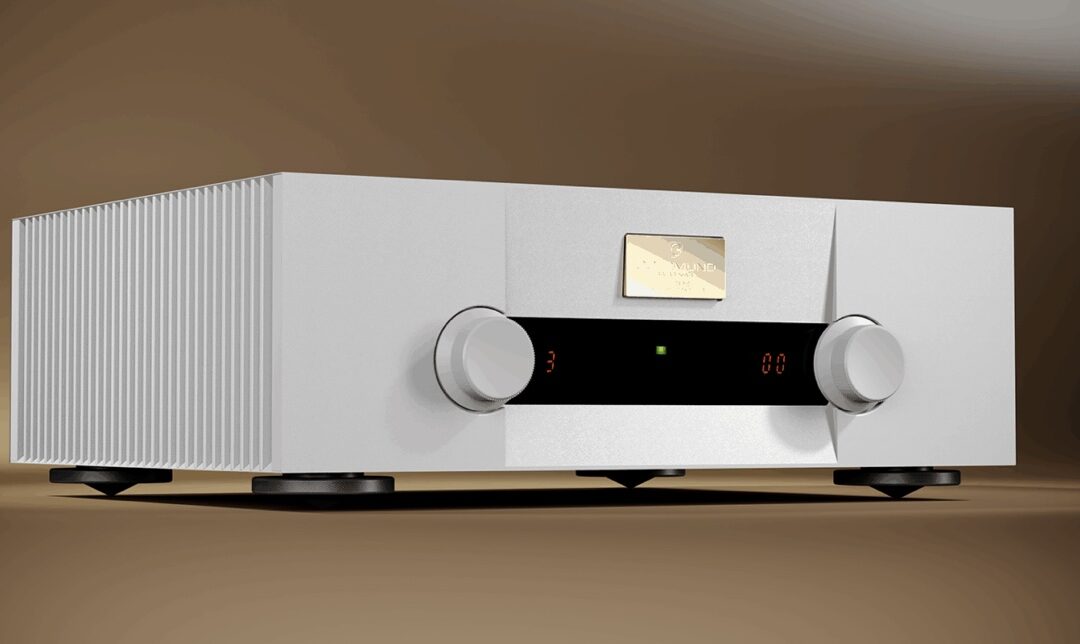
The latest addition to the Goldmund electronics range, the Telos 670 is more compact and affordable than the Telos 690, without compromising on the quality of its components or its musical performance.
With 215 watts per channel into 8 ohms in class AB, this little Swiss amplifier still packs a punch, losing only 35 W compared to its bigger brother. It retains the same solid aluminum chassis, available in gray or black, with discreet heat sinks on the sides. Compared to the larger model, its dimensions are just 0.5 cm shorter in height and 5 cm thinner in depth, with the advantage of making it easier to fit on a small hi-fi furniture.
Identical to the Telos 690, the front panel retains the two large buttons around a central red LED display topped by a gold plate engraved with the brand logo and the name of the device. The rear panel is also identical, with eight inputs, the first three digital (USB Audio, optical, coaxial) and the other five analog (all RCA as standard). For USB, compatibility with Apple and Linux is immediate; it only requires the installation of a driver for use with Microsoft. Thanks to this input, files can be decoded up to sample rates of 384 kHz/32-bit and DSD128 (we will ask the engineers why DSD256 is not supported).
Designed to be as linear and stable as possible, the Telos 670 has very low resonance, intermodulation, and harmonic distortion levels, with the aim of providing the smoothest possible sound reproduction. At 24 000 €, it remains in the realm of Swiss high-fidelity, but is positioned at a third less than the Telos 690, becoming the manufacturer’s new entry point into the amplification market. We look forward to listening to it soon to discover all its merits and tell you more.
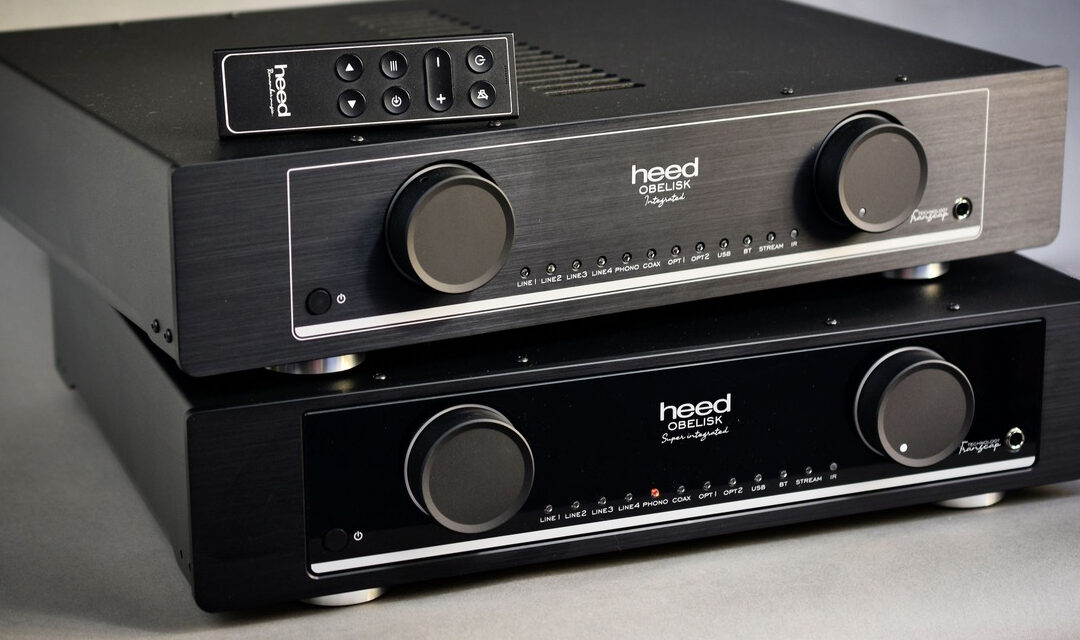
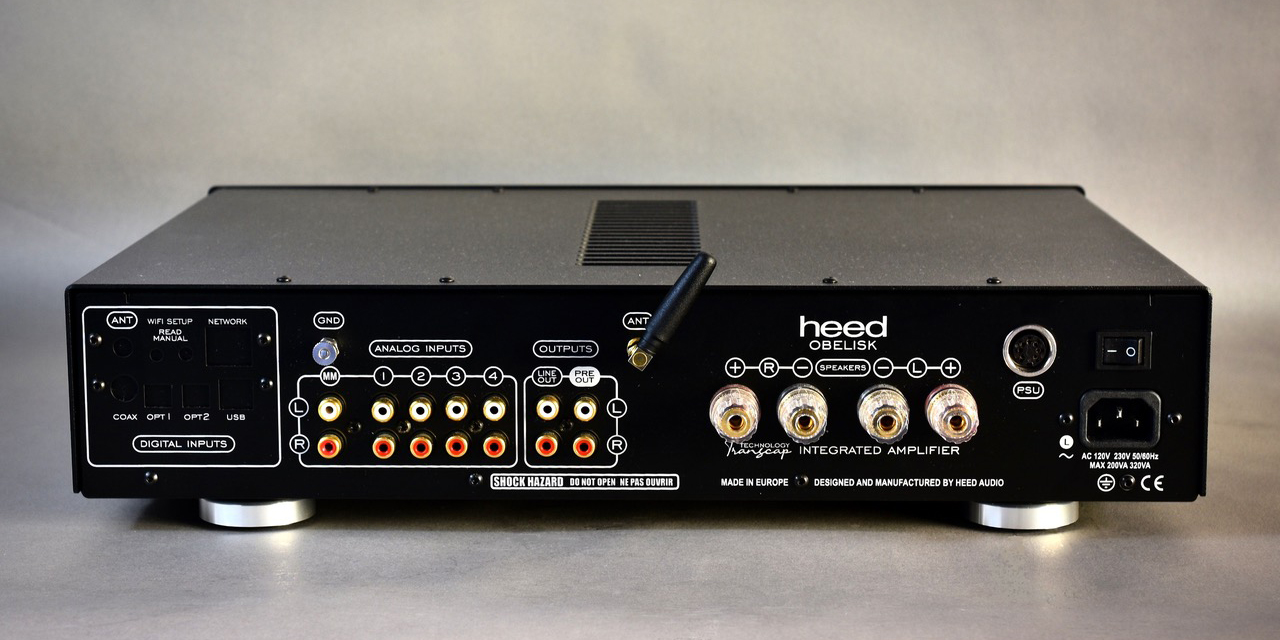
Long faithful to the “shoebox” format, Hungarian manufacturer Heed is now revamping its Obelisk range of electronics by switching to conventional formats.
Now, only the Asterisk and Elixir ranges are still in half-size format, as the two new Obelisk I (Integrated) and SI (Super Integrated) integrated amplifiers join the Lagrange in terms of chassis dimensions – which, incidentally, was discreetly redesigned two years ago as the more musical Lagrange S.
The main reason for this change is the need to integrate more components, as buyers of integrated amplifiers now often want them to also have a DAC or even a streamer. And while these digital options are available in two different packs, Bluetooth and an MM phono input are standard on these new devices.
Another reason for the change is that certain miniature components are now difficult to find or much more expensive than before. So, in order to avoid increasing costs, the Budapest-based manufacturer has opted to increase the size of the case and integrate larger components. In addition, while the small format is particularly popular on the French market, it is a hindrance on others, which already prefer larger and more luxurious chassis in these price ranges.
Thanks to its dimensions, the Integrated can accommodate a more powerful power supply: it is advertised as being as powerful as the old Si3 with separate X2 power supply. Although not yet officially measured, the Integrated should deliver around 2 x 50W, while the Super Integrated, with a more powerful output stage and a larger power supply, is advertised as delivering 2 x 100W into 4 ohms. Its preamp section allows it to integrate four analog sources, and it has a 6.35 mm headphone jack on the front panel. The optional DAC card is based on one of the latest AKM conversion chips, which the brand uses for all its DACs, including the Abacus S, soon to be discontinued (test VU#43; Essential).
The Obelisk I is priced at 2 490 €, plus 500 € for the DAC (with 1 coaxial, 2 optical, and 1 USB) or 1 200 € for the DAC + Streamer version. A separate power supply will also be available in the near future to further enhance the performance of these new powerhouses, which will soon be reviewed in our magazine!