Particularly rich in analogue reissues, 2025 saw the launch of the new Verve Vault and Muse Master Edition series, reissues from the Strata East catalogue, and the excellent Rhino High Fidelity and Rhino Reserve series.
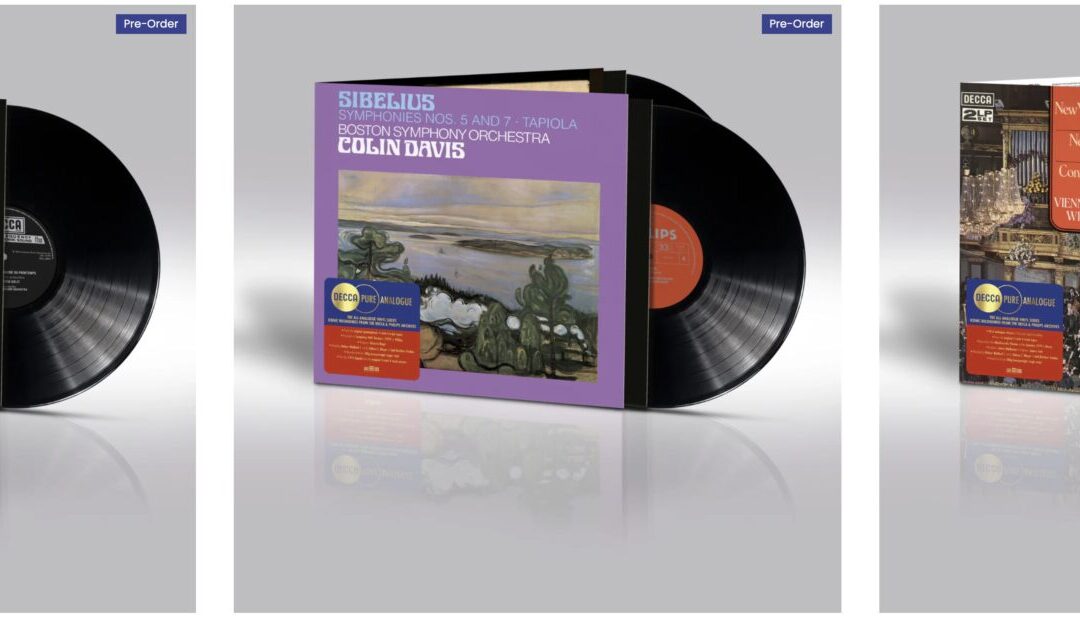
No doubt motivated by the success of the Original Source series from its Deutsche Grammophon catalogue, Universal Music is continuing the adventure by announcing the launch of a series of Decca Pure Analogue vinyl records, featuring iconic recordings from the Decca and Philips catalogues. Like the DG series, it is mastered by Rainer Maillard and cut by Sidney C. Meyer at the famous Emil Berliner Studios, which guarantee that only 100% analogue (AAA) techniques are used and that no additional devices (i.e. no digital processing) are involved in the signal transfer.
Only analogue sources from the original stereo and quadraphonic master tapes are approved, including recently discovered analogue masters from the label’s early digital recordings. The set will be pressed on 180g vinyl at Pallas and presented in deluxe gatefold sleeves in limited, hand-numbered editions. The entire series is supervised by Dominic Fyfe, director of the label, who will also provide historical and technical annotations for these reissues.
With this announcement, Decca is opening new opportunities to showcase its catalogue and that of Philips, thereby satisfying the desires of classical music enthusiasts who are still drawn to analogue listening.
The first Decca Pure Analogue selection will include three titles, available from 16 January:
* Igor Stravinsky’s The Rite of Spring by Sir Georg Solti, recorded in Chicago in 1974, mastered from the original Decca stereo tapes released in two ¼-inch tracks and pressed for the first time at 45 rpm to achieve a wider high-frequency response and best reproduce all the “fury and clarity ” (Chicago Tribune) of the original recording.
* Jean Sibelius’s 5th& 7thSymphonies conducted by Colin Davis, recorded in 1975 for Philips with the Boston Symphony Orchestra, mixed and pressed directly from the original quadraphonic master tapes released in four ½-inch tracks. Spread over two vinyl discs for optimal duration, this recording now also includes the symphonic poem Tapiola, taken from the original multitrack (4-track) master tape.
* The 1979 New Year’s Concert in Vienna, with Willi Boskovsky conducting the Vienna Philharmonic Orchestra, long celebrated as Decca’s first digital recording. Recent research has uncovered a set of previously unreleased ¼-inch 2-track analogue masters, allowing this famous recording to be heard in analogue for the first time.
Following this promising introduction, we will try to get hold of one of the three LPs as soon as possible so that we can tell you about it in issue 63, if possible.26/11/2025
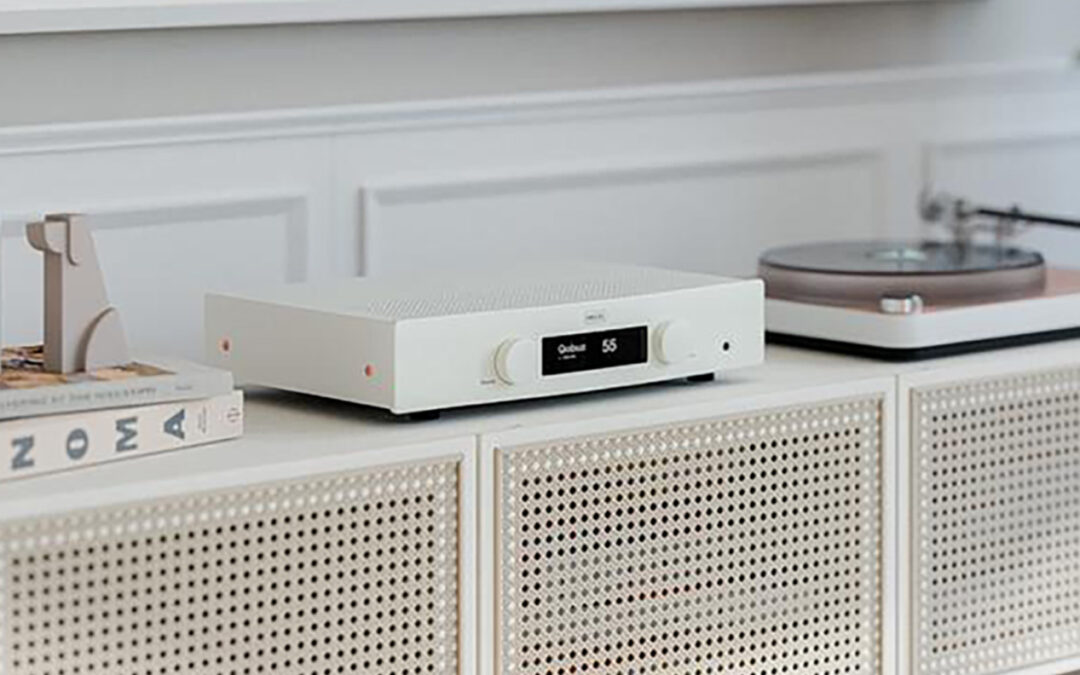
Unveiled in September, the Hegel H150 is now available throughout Europe.
Positioned between the H120 and the H190v, it features the triangular angle seen on the front panels of the Viking CD player (VU57 FR review) and the D50 DAC (VU60 FR review). However, while it retains a width of 43 cm and a height similar to that of the two sources (10 cm), its depth is 45 mm, which is still within the very accommodating standard of 35 cm.
Like all the Norwegian manufacturer’s integrated amplifiers since the first current model (H95), the H150 not only features analogue inputs, but also digital inputs, in this case on a four-layer SynchroDAC technology, directly derived from that of the Viking. Like the H120, it has a pair of RCA inputs and a pair of XLR inputs, in addition to a pair of variable RCA outputs, but it is the first model in the catalogue to also feature a phono (MM) input, which was previously only available from the H190v.
With a nominal power output of 2 x 75 Watts into 8 Ω in class AB, and a phenomenal damping factor of 2 000 thanks to SoundEngine2 technology, the H150 can power even energy-hungry speakers thanks to its impressive power supply, derived from a large, very low-noise toroidal transformer. Compatible with Spotify Connect, Tidal Connect, Qobuz Connect, Apple AirPlay, Google Cast & UPnP, it is still awaiting Roon certification and does not have Wi-Fi or Bluetooth. Thanks to its RJ45 Ethernet connection and numerous digital inputs (1 x S/PDIF; 2 x Optical; 1 x USB-B; 1 x USB-A data), it can play all files up to PCM 192kHz/24-bit.
Available now, the H150 confirms the trend towards making modern integrated amplifiers true all-in-ones. It is available in white or black for 2 990 €.
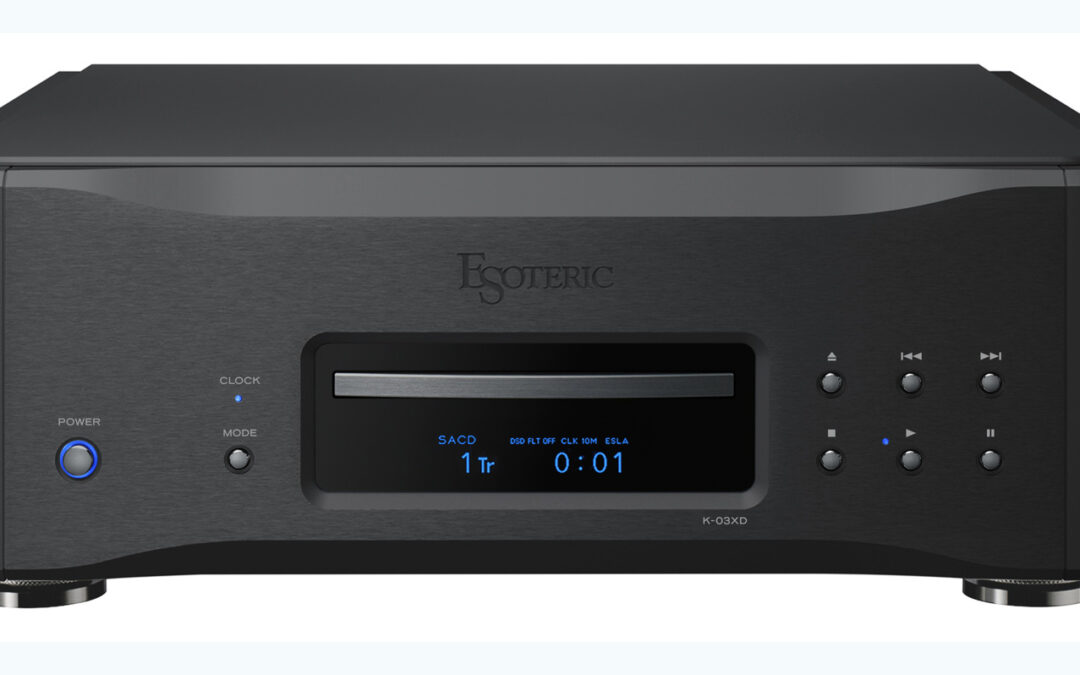
Revised last year in a new SE version, with a Master Sound Discrete DAC redesigned from scratch based on two FPGA chips implemented in dual mono, the K-01XD SE & K-03XD SE CD/SACD players are appearing at the end of this year in a “Black Edition” version limited to 50 units each.
While black versions have always been available occasionally from Esoteric, the Japanese brand has long justified these models with an anniversary, such as a decade to celebrate. More recently, the 05 series, which includes the N-05XD preamplifier-streamer and the K-05XD, has become available in gray or silver as standard, without extending this option to the 03 and 01 series models.
At the end of this year, the K-01XD SE and K-03XD SE are available in black, but in a limited edition. The main reason given by the brand’s teams is that some Americans with McIntosh or Mark Levinson systems would prefer a CD/SACD player with Esoteric’s VRDS-ATLAS mechanism, but are reluctant to invest because they don’t want to spoil their black system with a silver component.
The idea may seem secondary, but this very limited edition will delight users and collectors alike with both sound and image quality. Because while an Esoteric may lose a little of its personality in black, inside, nothing has changed. Both devices maintain some of the most reliable and accurate transport mechanisms on the market (even better on the K-01XD SE with the ATLAS 01, which is 20 mm thick compared to 18 mm on the ATLAS 03). The capacitors still achieve a filtering capacity worthy of the largest mono amplifier blocks, with 26 double-layer super capacitors with a total capacitance of 650,000μF on the K-03XD SE, and almost triple that on the second (71 EDLC; 1,850,000μF)!
Preferably used with their XLR analog outputs, given the perfectly symmetrical structure of the two CD/SACD players, they also have a pair of RCA outputs and two digital outputs, in addition to offering four digital inputs to directly integrate the DAC, notably via a network transport.
With a difference of only a few thousand yen in Japan, the prices of these Black Edition models should remain fairly similar to those of the classic silver versions in Europe, i.e. close to 20 000 € for the K-03XD SE and 29 000 € for the K-01XD SE.
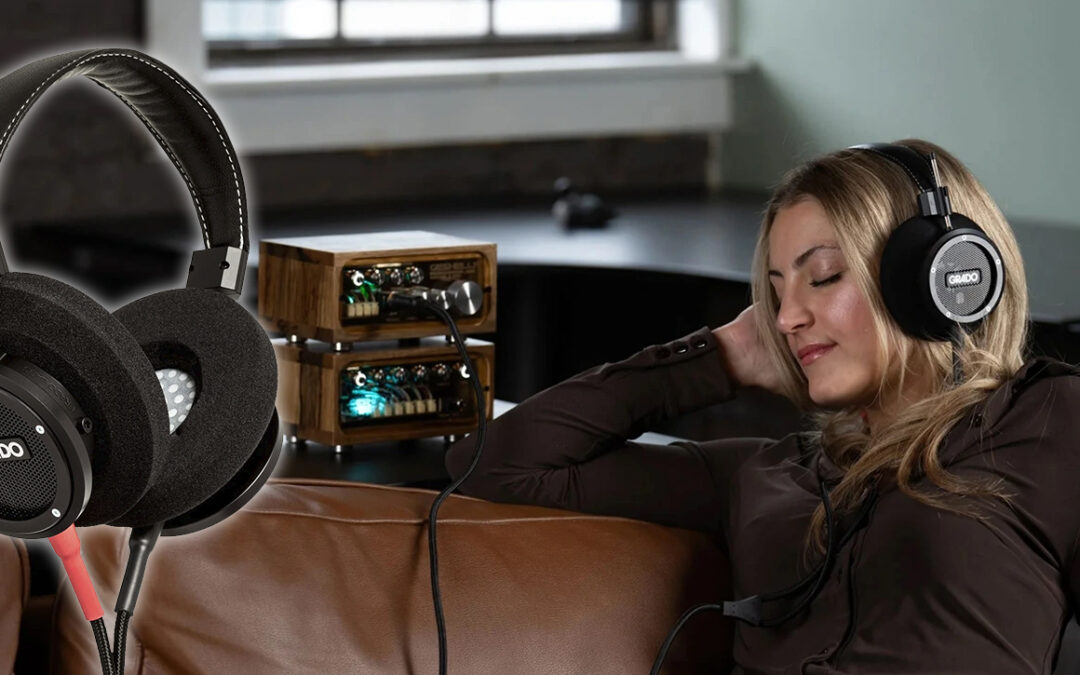
Tested in our issue 60, the Grado Signature HP100SE and S950 are the latest additions to Grado’s headphone catalog. They are now joined by the more affordable S750.
The first to feature the new 50 mm (2 inches) diameter S2 transducers, the S750 combines a composite carbon fiber and paper diaphragm with a lightweight copper-plated aluminum voice coil. Introduced on the HP100SE, the detachable cable system with 4-pin mini-XLR connectors has been retained, but in this version the 6.33 mm jack cable features a lighter and softer Signature Gold braided design. The headphone design allows you to switch to a balanced cable if required.
But if there’s one thing to focus on with this new Grado, it’s the second model of ear pads. Here, the New York brand seems to have listened to the recommendations of its customers and distributors by introducing a new foam design for model B. As we mentioned in our article on the S950, the sound quality became exceptional when the foam pads supplied with the headphones were replaced with leather pads manufactured by ZMF. This is because the B foam pads were too thin and therefore uncomfortable, as well as placing the sound image too close to the ear canal, and the A version (both still included in the packs) was too wide, causing a slight dispersion of the bass. Now, the S750 model comes with B ear pads, which feature foam on the inside of the ear cup to improve comfort, and eight slits to optimize airflow for better sound balance.
Assembled in Brooklyn like the other Signature models, the Grado S750 is more compact and has a smaller headband than the other two models in the series. It is priced at 500 € less than the S950, at 2 000 € (1 695 $), and is available to order from November.
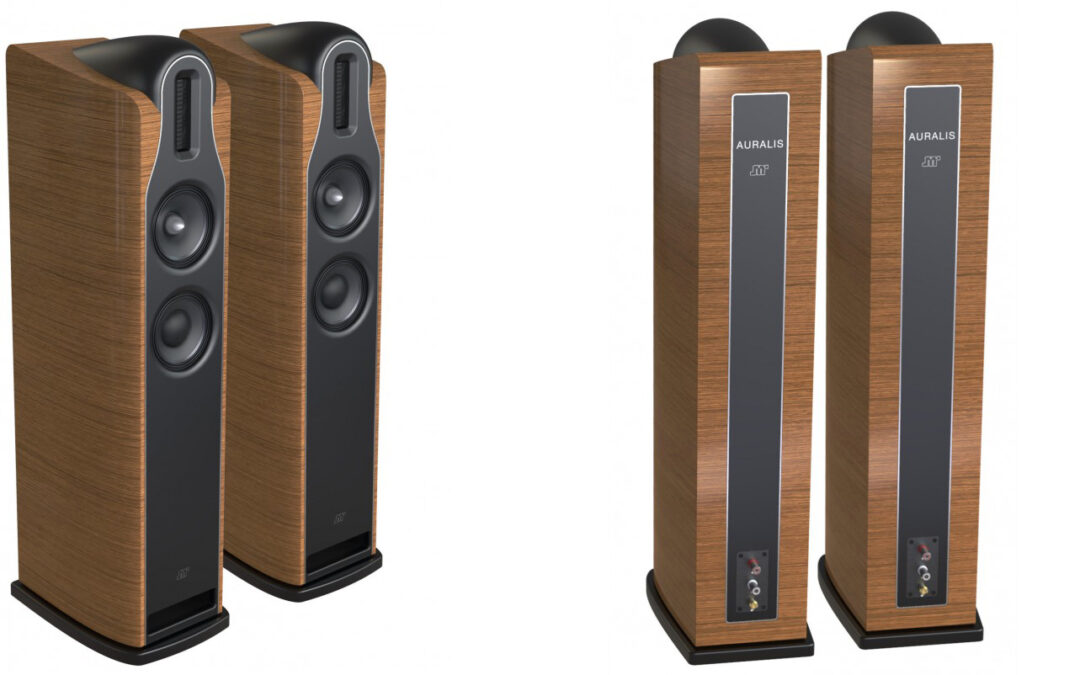
Going even further than the Orfeo Grande, French manufacturer Jean-Marie Reynaud presents a new floorstanding speaker.
Auralis takes its name from a Greek combination of aura, ear (auris) and elevation (alis), with a more modern appearance than the manufacturer’s current floorstanding speakers and a cabinet covered in beautiful wood.
With a 2.5-way design, the Auralis combines an 18 cm (7’’) bass driver with a paper cone treated with seven layers of carbon, with a mid-bass driver also made of paper, but covered with seven layers of carbon and polyetheretherketone, with an aluminum ogive in the center. To energize them, a 38 mm (1.5’’) vented coil is placed behind each membrane. Inherited from the compact Voce Grande, the 120 mm (0.5’’) AST tweeter is based on a pleated diaphragm principle designed to pinch the air between its folds and expel it extremely quickly. It can handle frequencies up to 28 kHz.
The MDF cabinet is covered in Woodscore XO finish with walnut veneer, stained with a polished cognac piano varnish. With a triangular load, this speaker has a nominal impedance of 4 Ω and a sensitivity of 89 dB. It is decoupled from the base by a polymer specifically validated to suppress vibrations. A front-firing port at the bottom allows bass frequencies to be expelled without feedback from the rear wall, down to low frequencies of 35 Hz.
Weighing 45 kg per speaker and measuring 1.15 m in height, the new Auralis remains relatively easy to amplify, with a single pair of terminals on each side at the rear. It is available for pre-order now, with delivery starting in February 2026, at a price of 18 000 €.