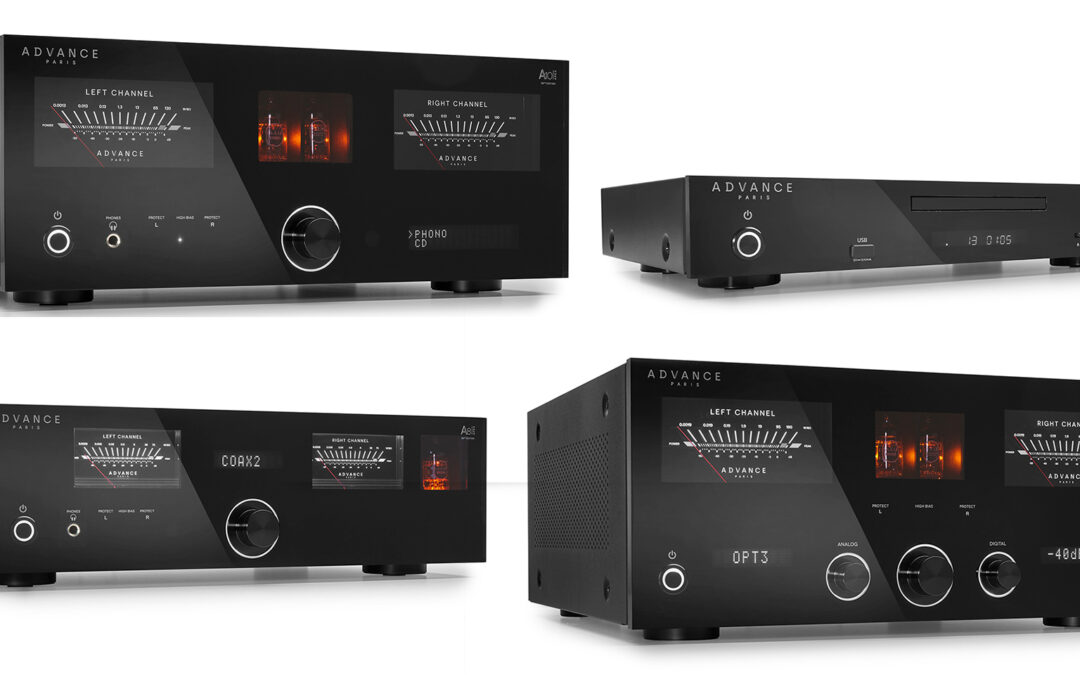
To celebrate its 30th anniversary, the Advance Paris brand is launching a new series called APEX.
Comprising four devices, this series improves on three integrated amplifiers from the Classic range and adds a CD player derived from the X-CD9. All hybrids, APEX amplifiers use a pair of ECC81 double triode preamplifiers, which can be replaced with 12AT7 models if necessary (or if you prefer the sound). The CD player incorporates a pair of Raytheon 5744 NOS tubes.
A8 APEX The smallest in the range, the A8 APEX, like the other two amplifiers, has blue backlit VU meters from the Classic series, which have been changed to black, giving them a classier look. The transistor amplification develops a class AB power of 75 watts under 8 Ω and 110 watts under 4 Ω. On the analog side, two pairs of speaker terminals are joined by a plethora of RCA inputs, including a slightly separated MM (Moving Magnet) phono input on the right side of the rear panel. On the digital side, an ESS9018 DAC can be integrated via optical and coaxial inputs, with an HDMI e-Arc port also available alongside. The A8 APEX is priced at 1 990 € including tax.
A10 APEX More powerful, the A10 APEX uses the same preamp tubes and Sabre DAC chip, but delivers 130 watts into 8 Ω and 198 watts into 4 Ω. A dual subwoofer output is located next to the numerous RCA analog inputs, along with a pair of XLR terminals and, on this model, two sets of HP terminals. The DAC can be integrated via a USB-Audio port, in addition to the optical and coaxial inputs, which are more advanced than on the A8 APEX. The European price is set at 2 490 € including tax.
A12 APEX But if the A10 is not enough for you, the A12 APEX delivers even more power, up to 190 watts into 8 Ω and 292 watts into 4 Ω. With two toroidal transformers for power supply, its analog architecture is perfectly dual-mono, and the digital section is now managed by an ESS9039 DAC chip, Sabre’s most modern. On this model, the phono input supports not only MM cartridges but also MC (moving coil) cartridges. Two pairs of XLR inputs are combined with a pair of balanced pre-outs. The more elite price tag puts the product at 3 490 €, housed in a more massive chassis weighing nearly 20 kilos. All models feature a 6.35 mm headphone jack on the front panel and an A-BTC Bluetooth module.
ACD APEX Further proof that the CD still has a bright future ahead of it in the audiophile world, in addition to integrated amplifiers, this APEX series offers one for a single source. Surprisingly, the conversion chip used is no longer a Sabre but a Wolfson, in this case the WM8761 reference chip. It cannot be integrated directly and is therefore only used to convert digital disc playback; on the other hand, the ACD APEX can be used as a pure transport thanks to two digital outputs, a Toslink optical and an RCA coaxial. Combined with two Raytheon 5744 NOS frequency tubes, this player stands out from the competition and deserves to be tested, especially since its price remains affordable at 890 € including tax.
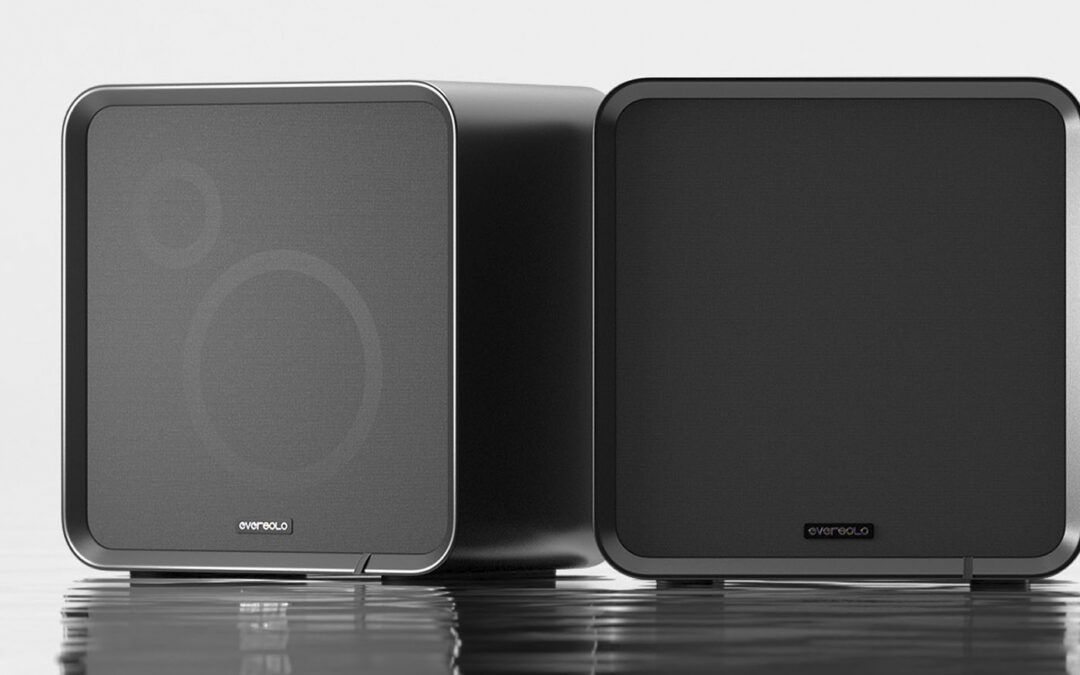
Where we might have expected it to focus on connected speakers to break out of the streamer segment in which it has established itself in less than three years, China’s EverSolo has surprised everyone by first launching a model of passive 2-way speakers.
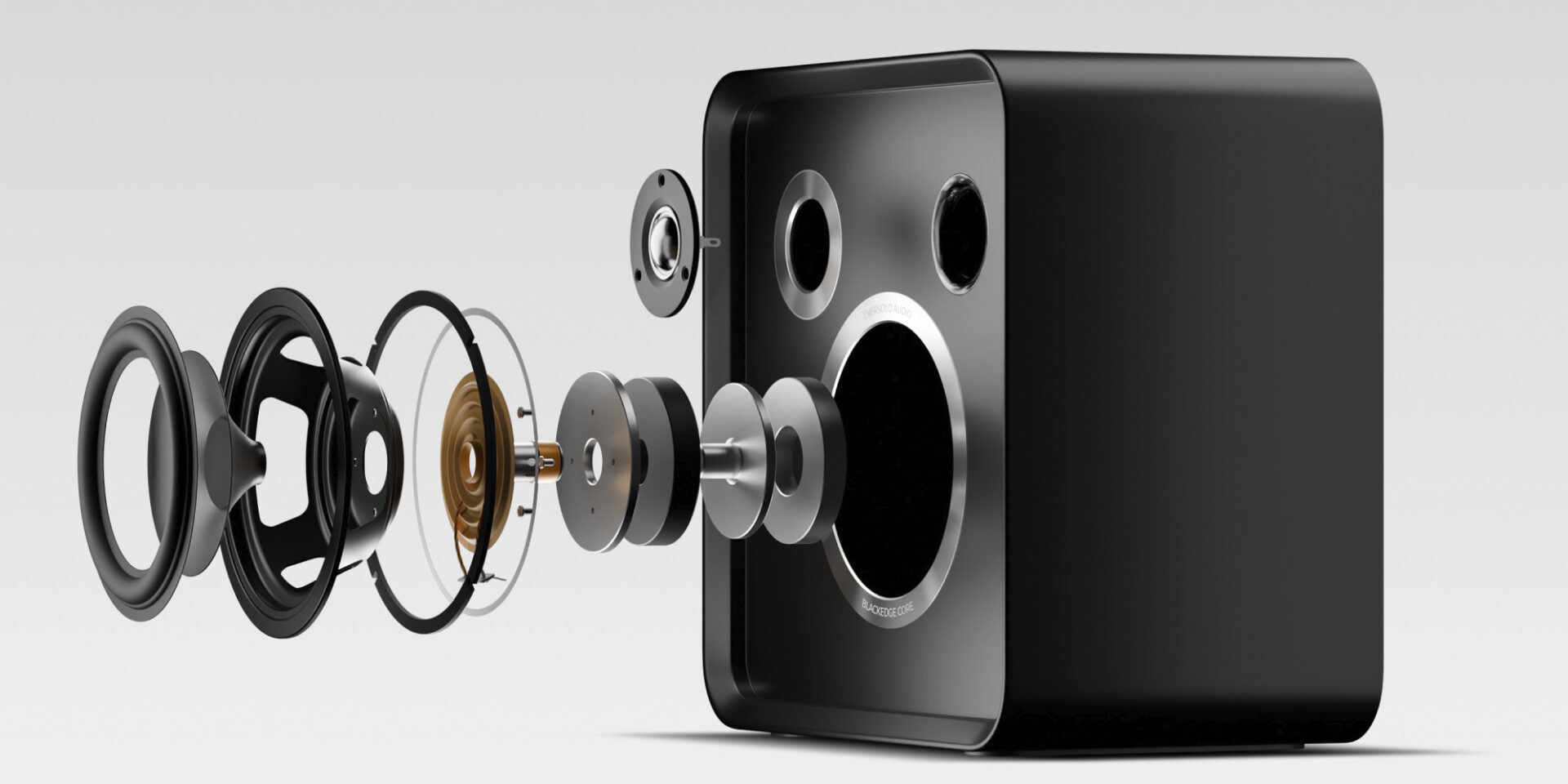
Designed to match the recent Play all-in-one, the SE100 stands out with its cubic shape and square front panel, made to fit perfectly into the Ikea Kallax shelf. Black and sleek in design, these speakers feature a 1’’ (25 mm) silk dome tweeter positioned on the same horizontal line as the front vent.
This innovative geometric design complements the mid-bass driver located below. Measuring 5.25 inches (13.3 mm), it has a paper pulp cone, excited by a Rapid Transient Coil (RTC) technology. If desired, a grille can cover the speakers by fitting directly into the frame, which is made of MDF to dampen vibrations.
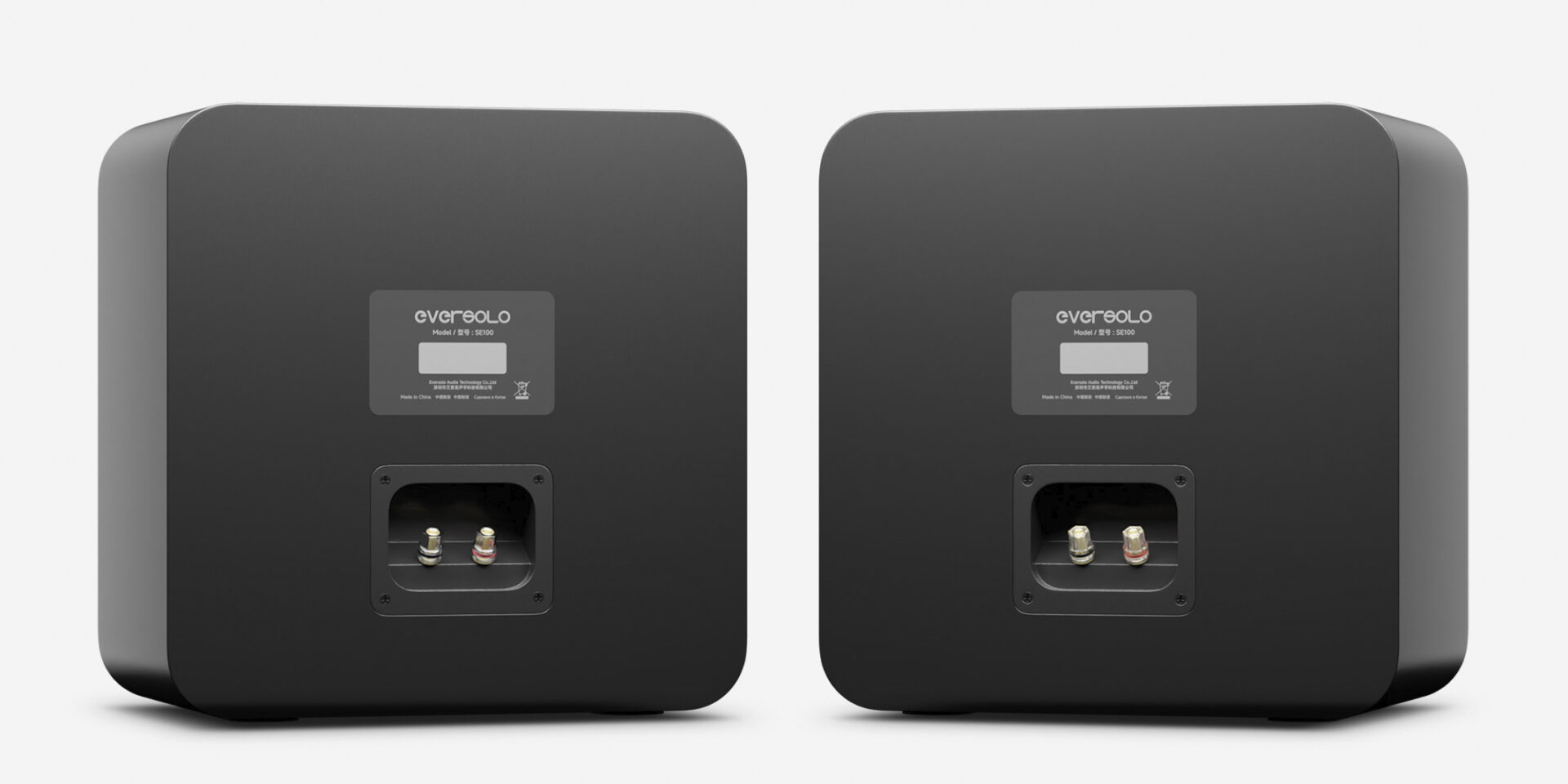
Around a large Bevenbi filter capacitor, the small filter located inside near the vent also incorporates pure copper coils and is designed to process the signal from the rear terminals, which are available with bare cables or banana and spade connectors.
As is customary for the brand, these SE100s are competitively priced compared to the competition, at 499 € including tax per pair in Europe.
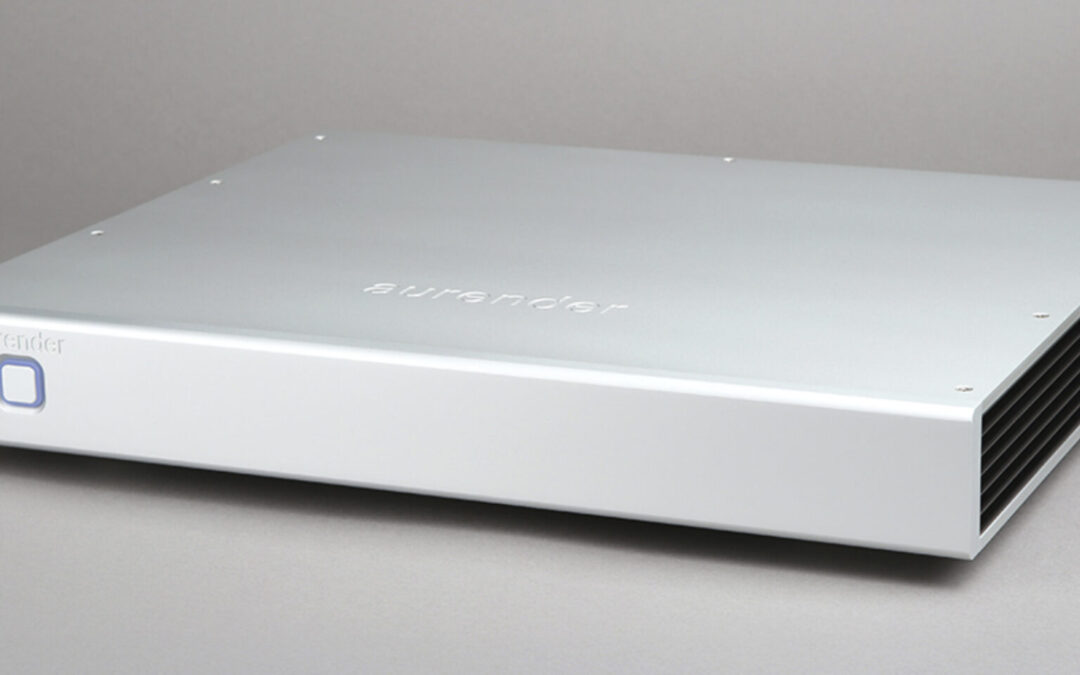
If you are a regular reader, you will know how much we love audiophile switches, so here is your chance to discover the one from Aurender!
Specializing in network servers, i.e., players with internal memory for downloading music files without the need for streaming platforms, the South Korean manufacturer has been showing a new dynamic since last year. First expressed in the new A1000 network player, which is more open than its predecessors and even includes Bluetooth, this new direction is now developing with an extremely important product to integrate into a dematerialized listening system between the player and the box: the Internet switch.
Screenshot
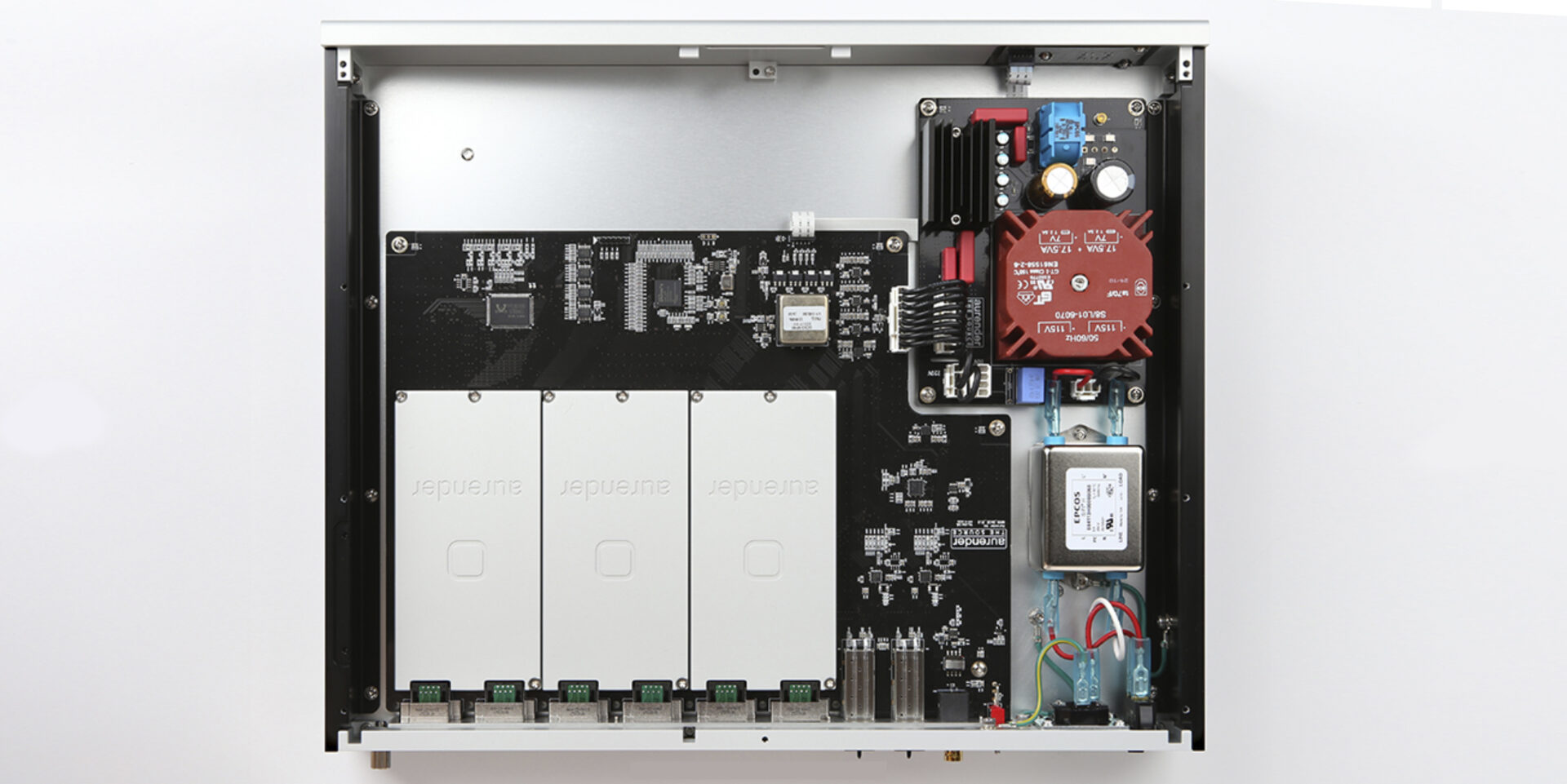
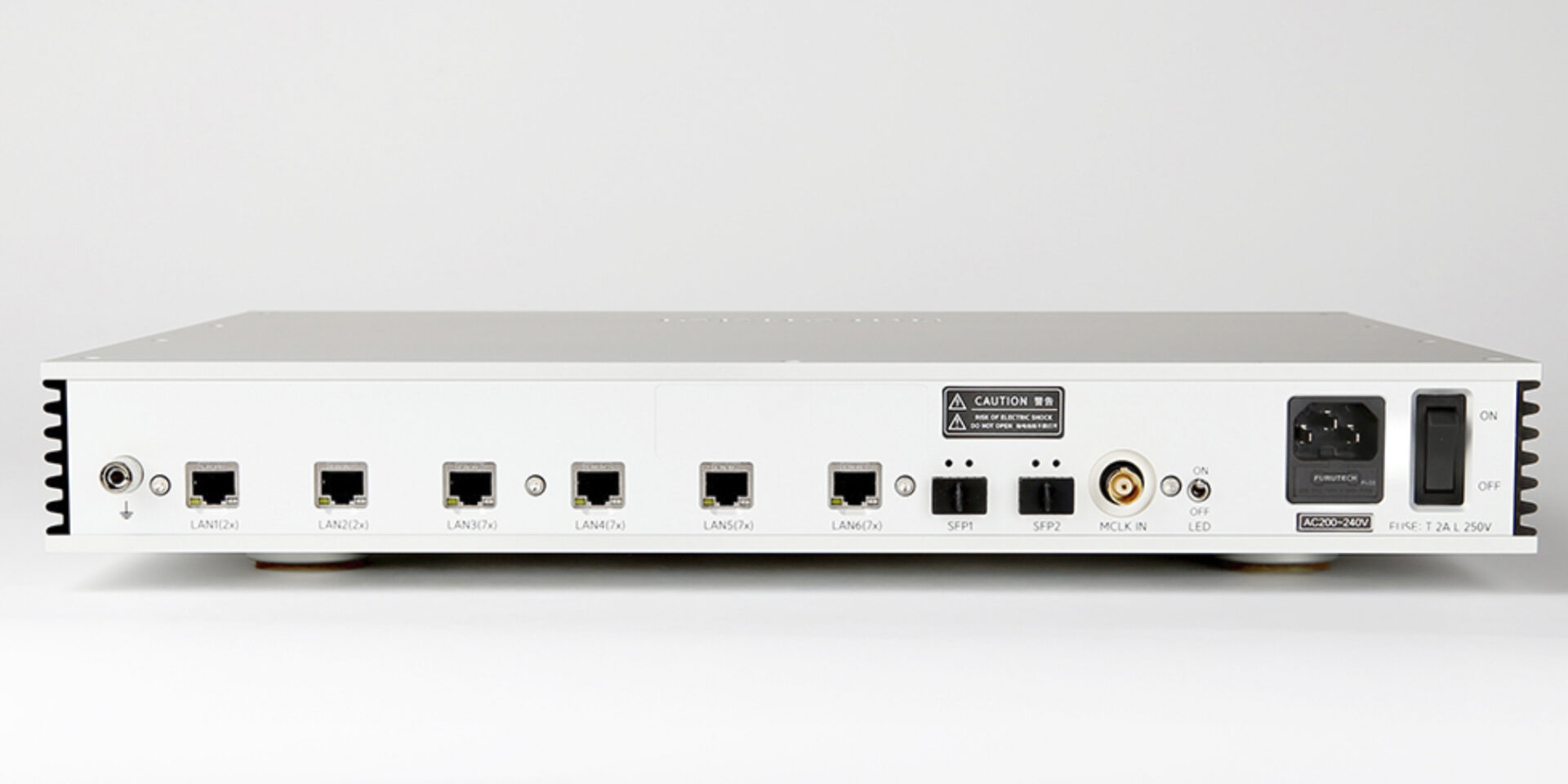
In order to purify data coming from the network, the new NH10 offers six RJ45 (RJ48) ports and two SFP fiber ports, all usable at transfer speeds of 100 or 1000 Mbps. Connected to the box via the first port and then to the network player via the other ports, either RJ45 or fiber, this switch resynchronizes the signal using an OXCO clock with a jitter rate of less than 0.005 ppm. A 10 MHz BNC port can further improve this, with the data also being resynchronized by an FPGA.
Weighing 8 kg, the NH10 provides galvanic isolation to all ports and extremely stable power thanks to audiophile-grade power processing. Its price in Europe is set at 4 290 €.
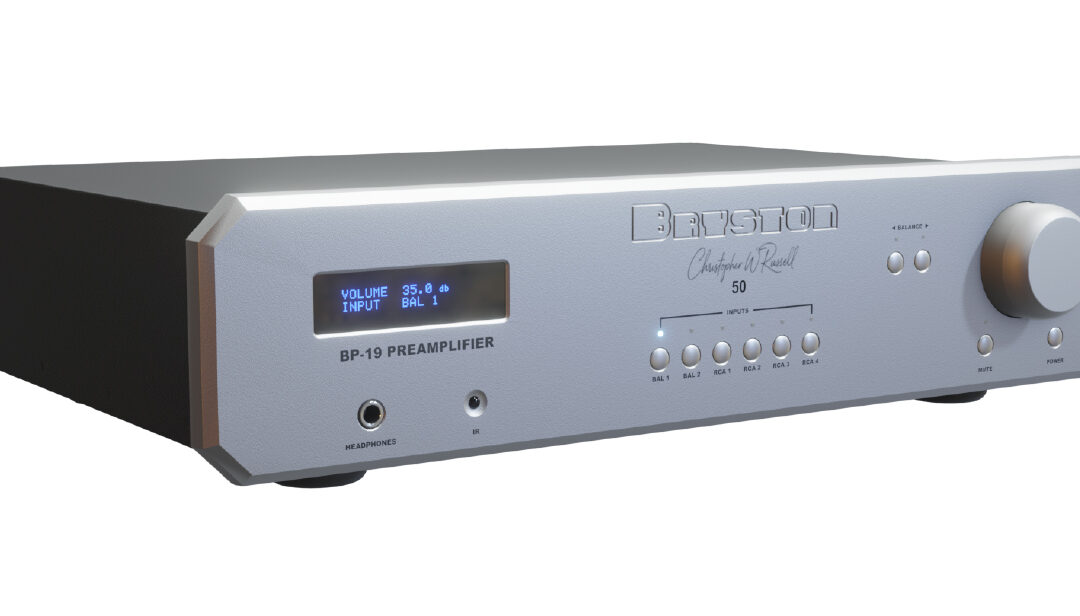
The Canadian brand is already celebrating its 50th anniversary, adding a Christophe W. Russell & 50 serigraph amplifier and preamplifier to its extensive electronics catalog. The 28B mono blocks lose the “3” exponent and switch to an 18″ front panel; they cost 15 400 € per unit and boast the same enormous power ratings of 1,000 W into 8 Ω or 1,800 W into 4 Ω as the standard blocks. The BP-19 has a 19″ front panel and is priced at 5 890 €, with 2 pairs of XLR and 4 pairs of RCA inputs, plus an MM/MC phono option for 1 800 €.
With this new amplifier-preamplifier combination, Bryston highlights its ability to produce high-end products for half a century and gives you the opportunity to make all the speakers on the market sing.
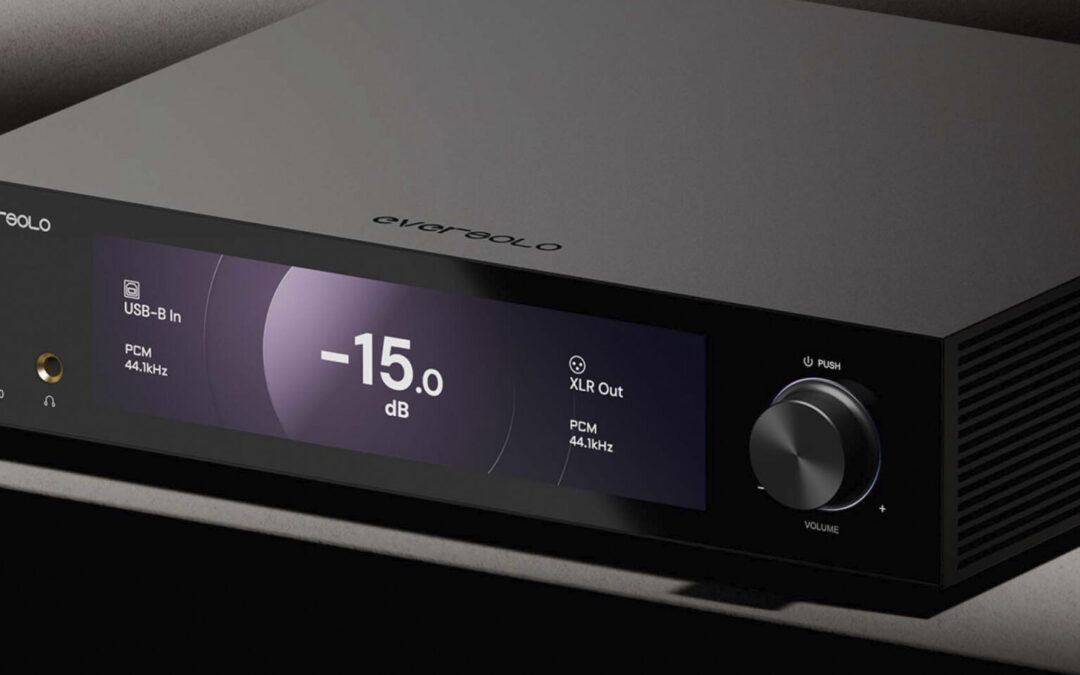
Following on from the DAC Z6 and Z8, EverSolo continues to expand its range of digital-to-analog converters and its 10 series with the DAC Z10.
A true high-end preamp-DAC, this new model once again opts for conversion based on a chip structure that is new to the Chinese brand. Rather than using the best Sabre ES9039PRO chip from the DMP-A10 streamer (Vumètre 57 FR review; Remarkable), the Z10 leans towards a configuration closer to that seen in the Luxsin X9 headphone amplifier, with a pair built around the AK4191 and AKM’s best DAC chip, the AK4499. In this DAC, each channel integrates the pair of chips in a perfectly dual-mono architecture.
As with the DMP-A10, the volume is analog and based on an R2R system, which is also perfectly symmetrical here. Each element is perfectly isolated in the chassis, distributed according to a patented FIA™ (Fully Isolated Architecture) process where the DAC and volume control parts are each on a board placed at a higher level than the main board. In the center, an OXCO temperature-controlled crystal oscillator is combined with PLL (Phase-Locked Loop) technology.
To minimize power-related interference, the power supply is divided into three ultra-low noise (42 µV) shielded toroidal transformers positioned at the front of the device. On the far left, a small amplification module (1 W) allows headphones to be connected via a 6.35 mm output.
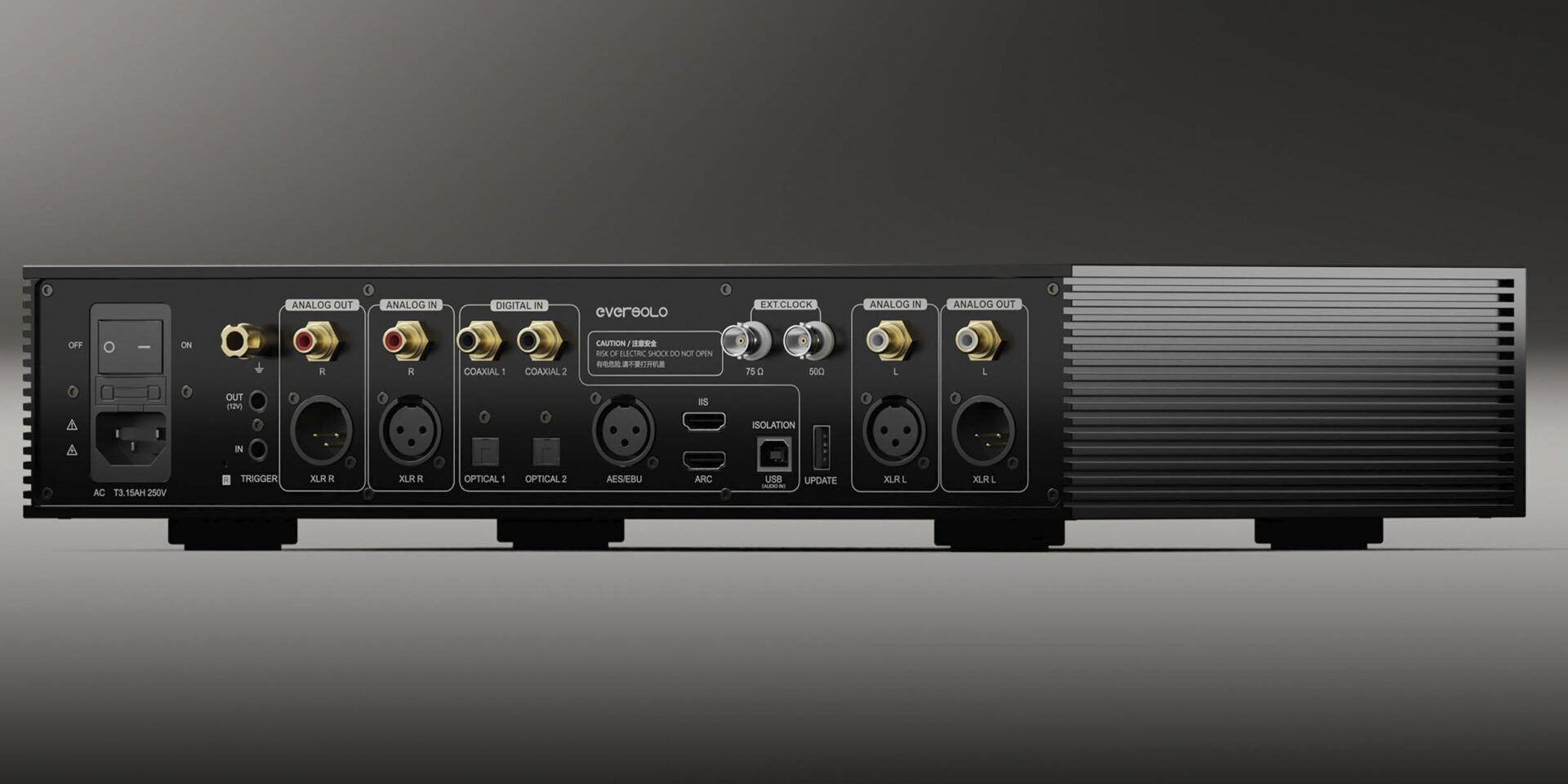
As is usual with EverSolo, a magnificent IPS touchscreen sits in the center of the front panel, here wide of 8.8″ (22.4 cm), next to a volume knob with a backlit outline whose color can be changed. The rear panel also features a plethora of inputs and outputs: analog XLR and RCA; optical digital, S/PDIF, AES, HDMI I2S and eArc, USB Audio, but surprisingly, no USB-C. However, Bluetooth is also included via a Qualcomm QCC5125 chip, and an FPGA chip is used to ensure signal reliability.
And if you think the internal 3.3 V clock running at 10 MHz is not good enough, you can always add external modules via the two 50 Ω and 75 Ω BNC ports, at 10 or 25 MHz. Thanks to all these technologies, files are supported up to DSD512 and PCM 768 kHz/32-bit formats.
Icing on the cake, the European price is set below 2 000 €, at exactly 1 990 € including tax.