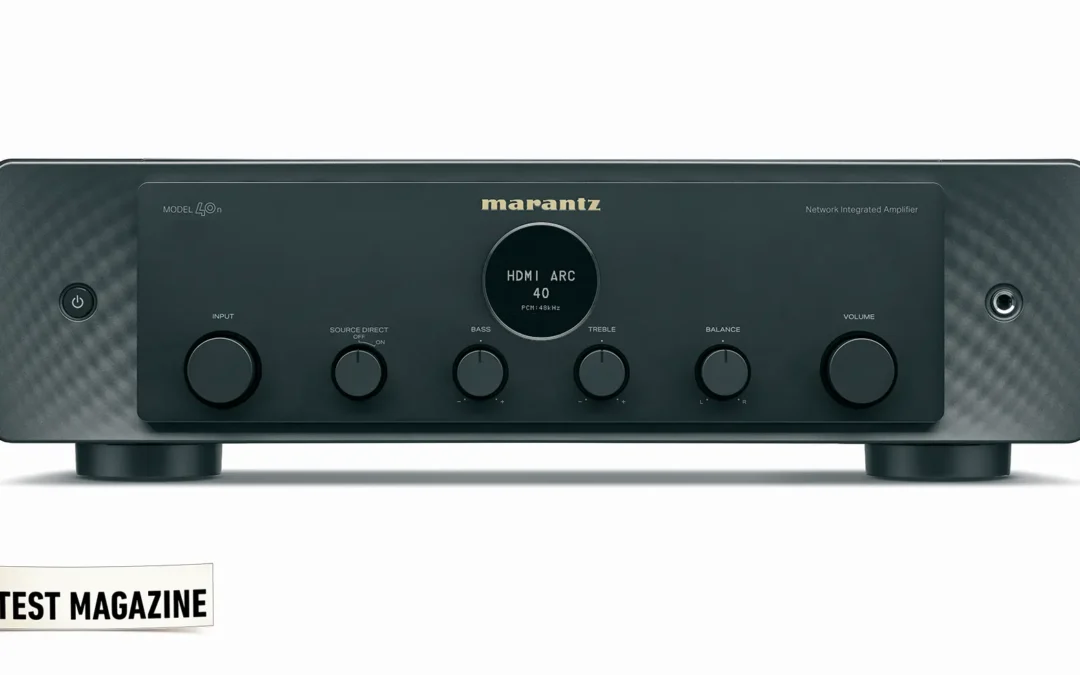
“Our fundamental principle is realistic sound reproduction.” This statement by founder Saul B. Marantz still defines the brand’s philosophy today, as evidenced by this new device, the Marantz Model 40 N, which combines everything the modern music lover could wish for in a single package.
Marantz is one of those manufacturers that can boast a rich history with multicultural roots. And with good reason: although the brand is now based in Kanagawa, Japan, its origins can be traced back to the other side of the Pacific, specifically to the east coast of the United States. The epic story began in New York in 1952, in the apartment of a certain Saul Marantz, who created an astonishing product: the “Consolette.” This hi-fi preamplifier was designed for home use and featured a design that was completely innovative for its time. It marked the advent of the Marantz Audio Company.
The company was acquired by the giant Superscope in 1964, which outsourced production to Standard Radio Corp in Japan in 1966 – itself renamed Marantz Japan in 1975. Then, in 1980, Superscope sold almost all of its Eurasian assets to Philips, which finally bought the North American network in 1992, five years before the death of the eponymous founder.
The beginning of the century marked a new turning point for Marantz, with the Japanese division buying back all of the subsidiaries before merging with Denon and Boston Acoustics in 2002. This acquisition led to Philips’ complete withdrawal in 2008, with D&M (Denon & Marantz) buying out the remaining shares held by the Dutch giant, ending a partnership that had lasted more than 28 years.
Finally, in 2017, the Marantz saga took yet another turn when with the Sound United group setting its sights on D&M Holdings, which would join prestigious brands such as Bower & Wilkins and Classé Audio, marking the departure of the illustrious Ken Ishiwata, who had been with the company for over 40 years—but that’s another story, and we refer you to the 20th edition of your favorite magazine for that.
Suffice to say that we were particularly curious to discover the Model 40n, the quintessence of this half-century-old melting pot, imbued with the style of its native Queens and magnified by Japanese craftsmanship.
Aesthetically, the Model 40n is a resounding success, with Marantz treating us to a neoclassical-style device that retains the brand’s signature codes while adding a touch of modernity.
It has a striking design, carried by its large control panel, which is cleverly illuminated by a set of LEDs discreetly concealed between the panel and the chassis. With a stepped design, the front panel consists of a first plate housing all the controls, itself supported by a second concave wall, enhanced by a most intriguing honeycomb pattern.
At the center of the front panel sits the iconic porthole display—a classic—accompanied by multiple potentiometers for adjusting bass/treble/balance settings, which are flanked on either side by two large controllers dedicated to inputs and volume, respectively.
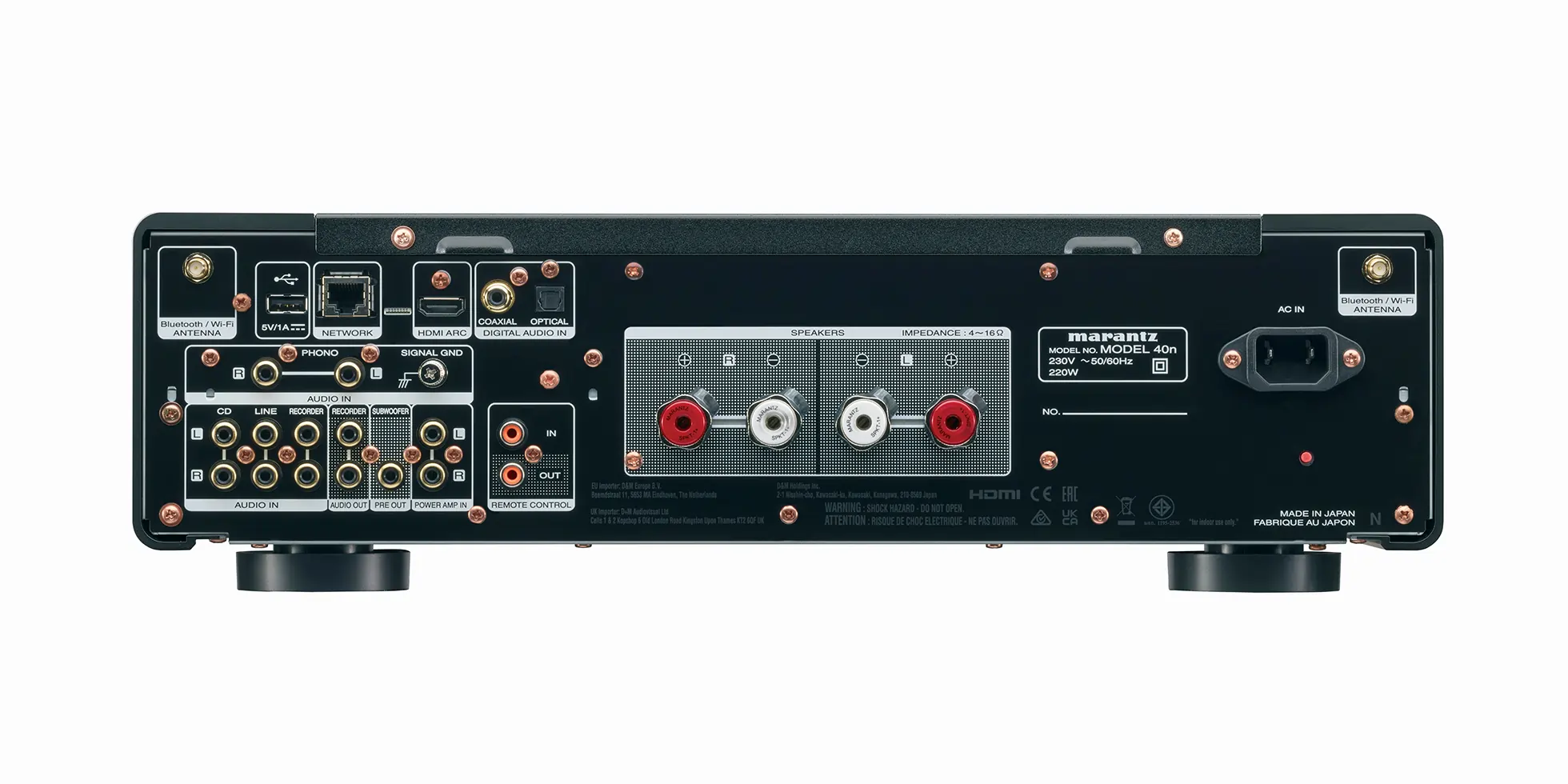
This apparent simplicity almost makes you forget the player’s plethora of connections: dual optical inputs, line/phono input, subwoofer output, complemented by an HDMI-ARC input for connecting to a TV. Added to this are an RJ45 port, a USB port, two Wi-Fi/Bluetooth antennas, and even a set of remote inputs/outputs dedicated to interconnecting with other Marantz models.
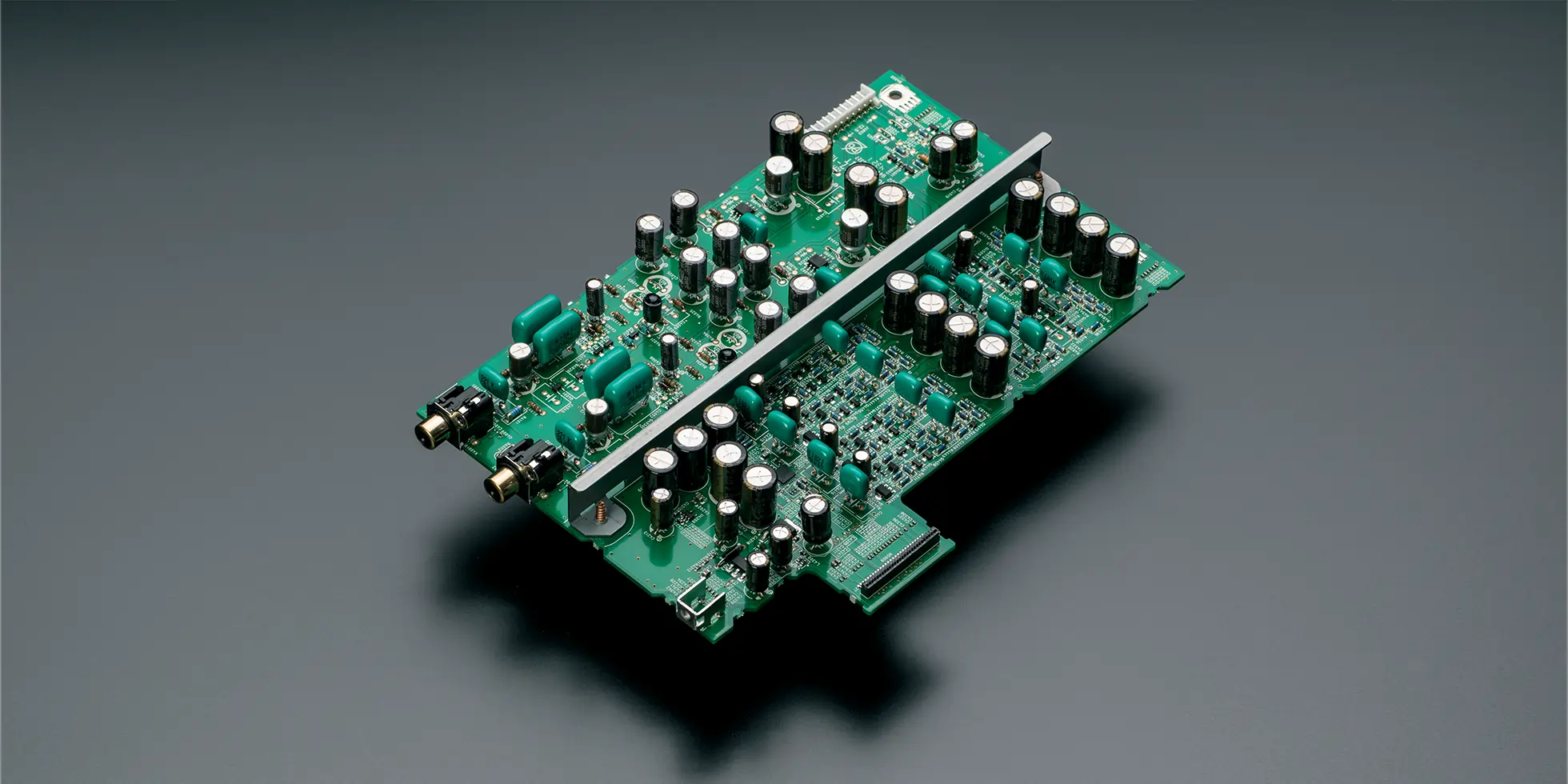
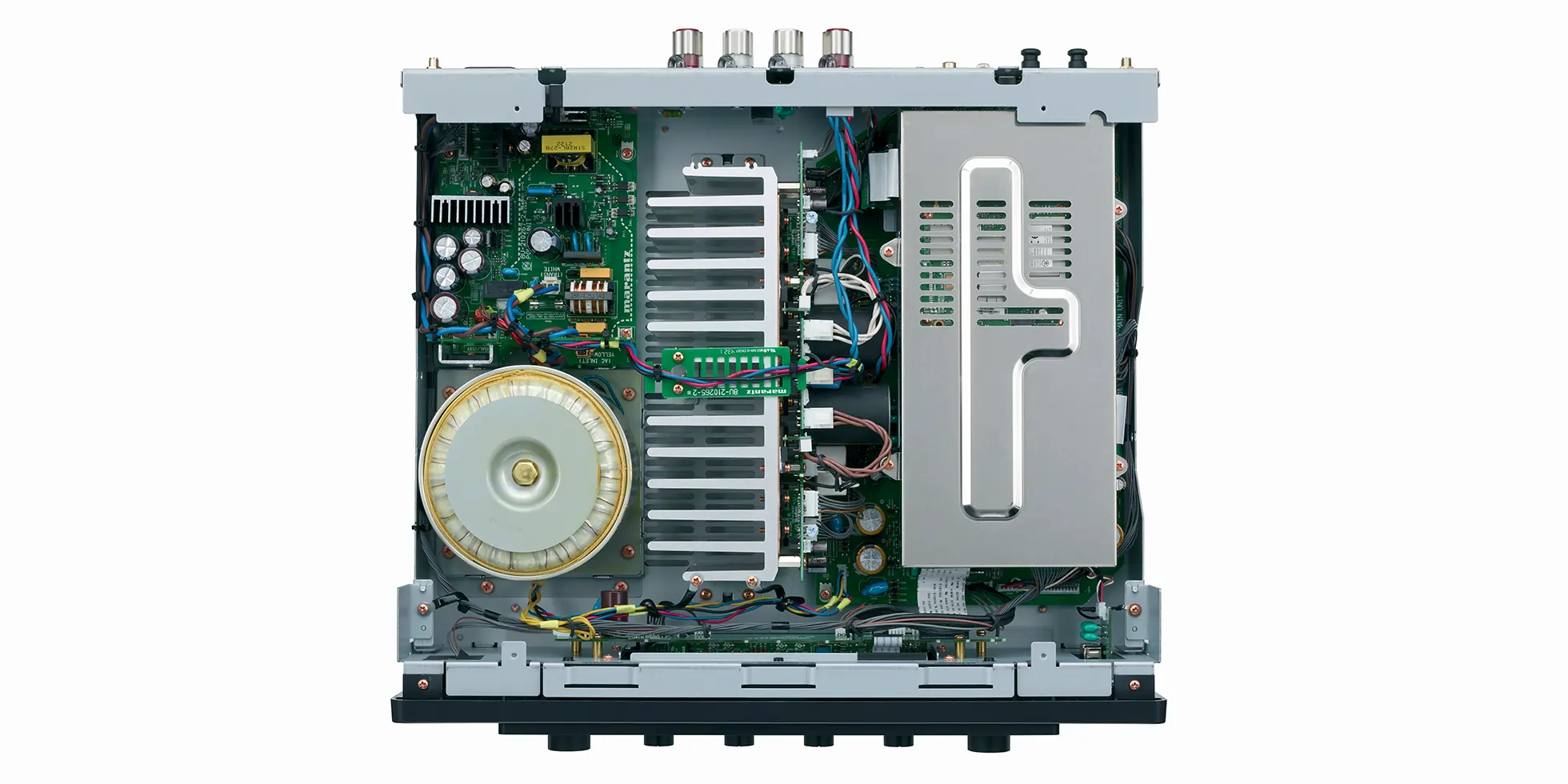
But it is beneath its thick aluminum casing that the Model 40n hides its most impressive features: an internal circuit combining the best of analog technology with the quintessence of digital. Simply called HDAM (Hyper Dynamic Amplifier Module), these modules, introduced on the KI Pearl series, combined with a double-shielded toroidal transformer and a high-capacity power supply, offer exceptionally short response times, ensuring maximum dynamic range in all circumstances.
The result? Impressive figures for an integrated amplifier of this type, with the Marantz delivering 70W per channel into 8 ohms – or 100W into 4 ohms – without ever exceeding 0.02% distortion at full load. The crowning glory of the whole package is the damping factor, the ratio of the amplifier’s internal impedance to the speaker system, which is greater than 100.
This promises precise listening, free from any unnecessary coloration, as the amplifier is capable of absorbing almost all of the energy generated by the cone’s rebound.
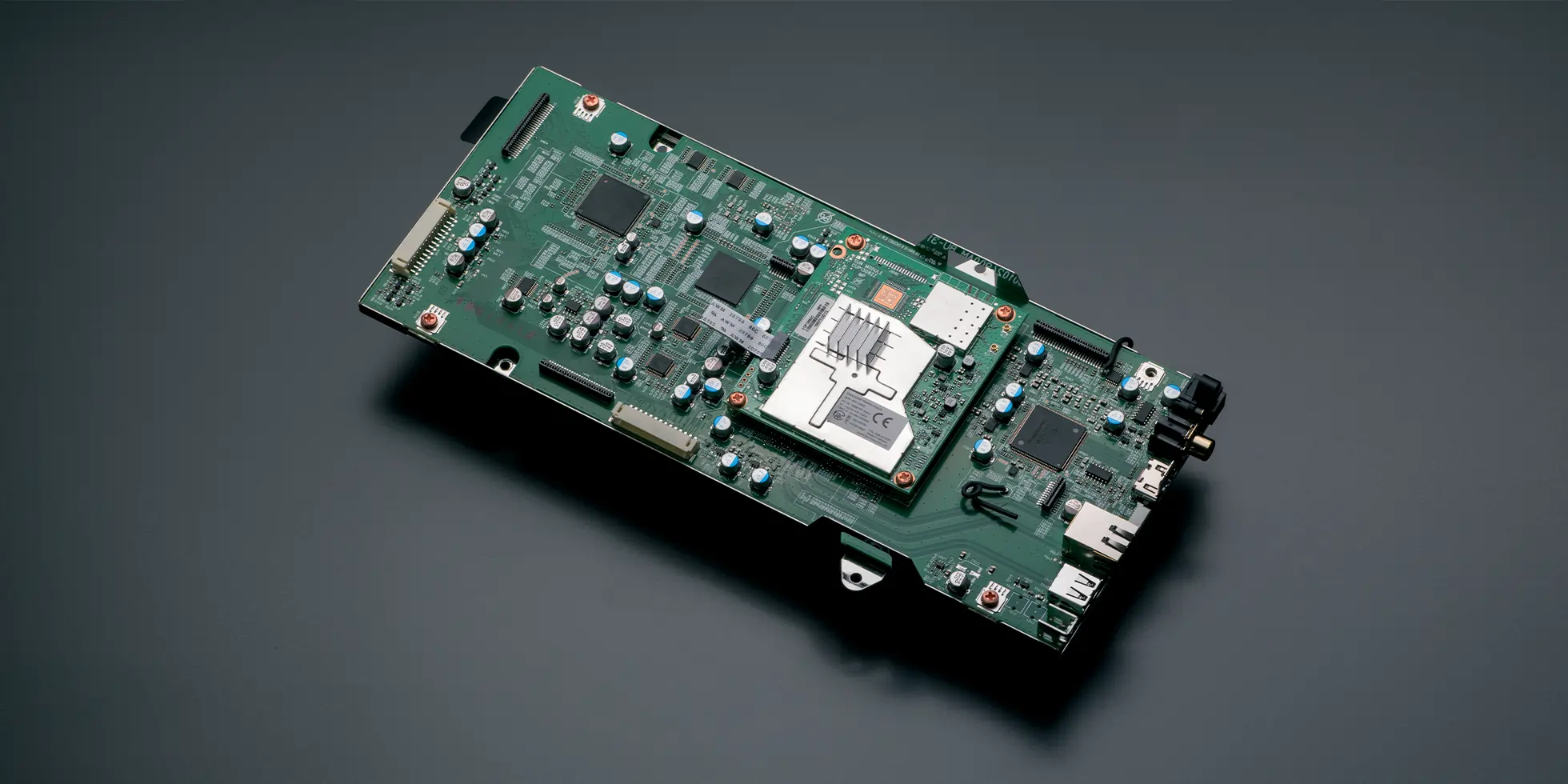
Last but not least, the amplifier also incorporates its own DAC, supplied by ESS-Tech. Part of the Sabre HiFi series, this ES9016K2M chip natively handles very high-resolution streams (both PCM and DSD), ensuring optimal conversion of digital signals, regardless of the selected input. The idea, of course, is to elevate this amplifier to the status of a true nerve center.
THE SETUP OF THE MARANTZ MODEL 40N Whether you’re an expert or a novice, the Marantz Model 40n can be set up in no time. Once it’s out of the box, placed on its designated cabinet, connected to all your sources, and plugged in, it only takes a few minutes to access the spartan but effective home screen.
From here, you have two options:
• Basic use, via the supplied remote control or the front panel input selector, allowing you to switch between all your sources in a flash.
• Advanced use, via the HEOS app, unlocking all the network features, in addition to the most comprehensive sound settings.
From here, everything can be controlled at your fingertips thanks to an app that has benefited from numerous improvements based on user feedback collected over the years. To top it all off, the amplifier supports all available voice assistants (Google Home, Alexa, Siri, and Josh) for complete home automation integration without complex installation.
AirPlay and DNLA compatible, the Marantz can be easily controlled from a smartphone or tablet. It is also compatible with Spotify, Tidal, Deezer, Napster, and SoundCloud, but currently does not support Qobuz, a surprising limitation that will undoubtedly be corrected in a future update. But that’s the only criticism we can level at the Model 40n, which is flawless in every other respect.
Finally, it’s also possible to connect an external preamp, which switches the Model 40n to power amp mode. What more can we say!
THE SOUND OF THE MARANTZ MODEL 40 N
After offering us a very audiophile package (the Model 30), Marantz has now released an “all-in-one” version of its separate components. Of course, you won’t have the convenience of a CD/SACD player, but everything else is there. The manufacturer does not aim to achieve the same level of performance, but the quality is still there.
Indeed, while remaining perfectly in line with the brand’s standards, the Model 40n delivers surprising performance for a reasonable price, considering the device’s many possibilities. And that starts with the reproduction of a broad and robust spectrum. The timbres are undoubtedly rich and provide a substantial foundation for most recordings. The firm, well-structured bass allows the image to unfold in all directions without ever feeling cramped.
The drum machine, like the drums, is percussive and tense, giving the listener a physical yet subtle listening experience. To make each score completely intelligible, the Model 40n never compromises on precision. It does so with conviction and accuracy. On vocal parts as well as on very busy passages from large symphonic formations, the Model 40n knows how to move forward with consistency and firmness, softening the tempo in quiet passages and reinforcing the tension in explosive measures.
In general, the sound is always delivered with just the right energy and a contagious joie de vivre.
OUR CONCLUSION
This compact version of its beautiful separate components has been expertly orchestrated by the Japanese manufacturer, who has intelligently drawn on its range of components and adapted the best elements to offer us a unique machine that can do everything with an obvious sense of musicality. Add to that a very reasonable price and build quality worthy of a high-end machine, and the equation is simply a success.
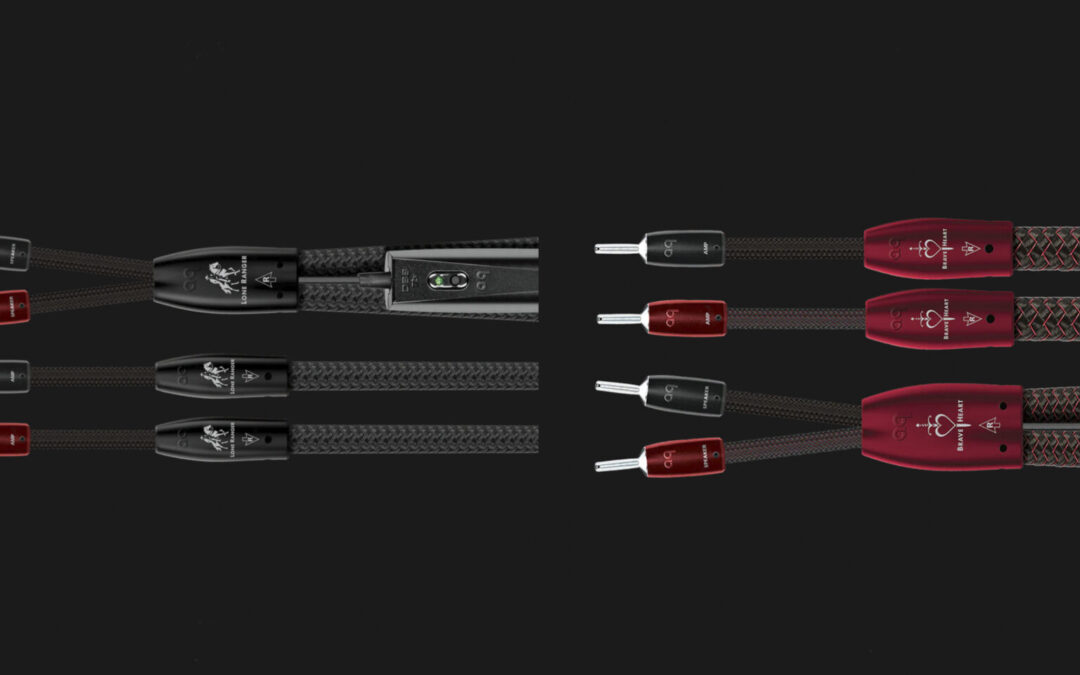
Starting with speaker cables, Audioquest is replacing its Robin Hood series with two new heroes: Lone Ranger and Brave Heart. Both equipped with Zero-Tech technology, these cables positioned below the Mythical Creatures series are available with cold-welded red copper spades or bananas.
Lone Ranger With a lower impedance than the previous cable, the Lone Ranger uses nearly a third more PSC+ (Perfect Surface Copper+) copper. The polypropylene dielectric has been optimized to reduce off-axis distortion, and carbon-filled PVC is combined with a layer of graphene and, to improve the sheath, shielded drainage wires with 4% silver. The PMO (Permanent Molecular Optimization) patent subjects the materials to controlled extreme stresses, in order to maintain the most optimal molecular structure possible throughout the cable’s lifetime. The solidified conductors prevent interaction between the strands. Their controlled direction helps eliminate RF frequency noise, while ZERO-Tech technology eliminates characteristic impedance imbalances between the cable and the connected source and load. As with the best models, a 72V AudioQuest DBS dielectric bias system housed in a box on each cable polarizes the dielectric insulation, further reducing noise by releasing energy at frequencies other than those passing through the cable. This model costs 2 690 € per pair for 2 m and 3 290 € for 3 m.
Brave Heart With a dominant red color rather than black for the Lone Ranger, the Brave Heart features a logo of a heart pierced by a sword, as opposed to a horseman on horseback to represent the other hero. Technically, its design is almost the same, as it was planned for him before being derived for the Lone Ranger, which is about a third cheaper. However, the Brave Heart has a larger diameter and conducts energy better, with a gauge of 3.31 mm² compared to 2.08 mm² for the other model. Given its high-end status and technological advances, it looks set to replace the Thunderbird, leaving only the Firebird and Dragon in the Mythical Creatures series. Proof of the high-end quality of these new models is that both cables can be combined with a third cable designed primarily to handle low frequencies. Called Big Foot, it fits into the same sheath as the Lone Ranger and is only to be used in bi-wiring or bi-amplification, as it does not allow high frequencies to pass through. While the Big Foot is priced the same as the Lone Ranger, at 2 690 € per pair for 2 m and 3 290 € for 3 m, the Brave Heart stands out at 4 349 € for 2 m and 5 649 € for 3 m.
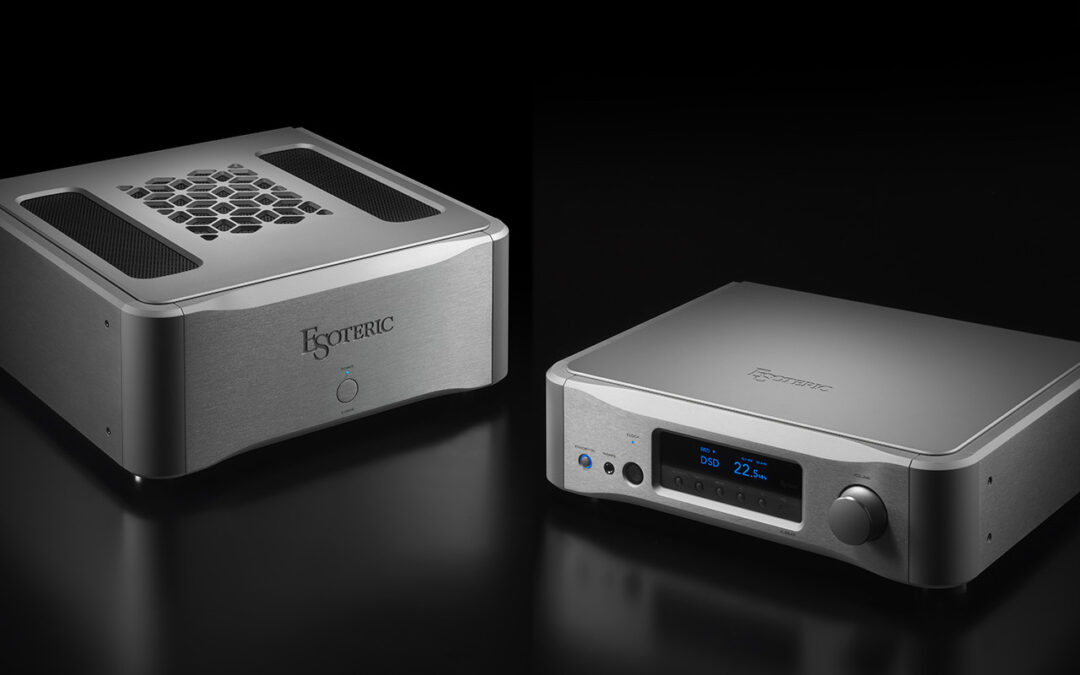
nown for several years with the suffix XS, the preamplifier-DAC of the 05 series from manufacturer Esoteric is changing to become the N-05XE. At the same time, the S-05 power amplifier is taking on the same suffix and becoming the S-05XE.
Esoteric N-05XE
N-05XE Preamplifier-DAC-Streamer
Without yet touching its K-05XD SACD player (test FR VU#53; Remarkable), Japan’s Esoteric is upgrading its smallest network source to give it a very important feature that could make it the brand’s best converter at the moment after the Grandioso N1 streamer.
If you go back to our report on the last Tokyo Show, you will see a photo with the two DAC cards from the old and new Grandioso series streamers. Called G2, this new proprietary FPGA-based DAC has shown us how it adds even more fluidity and clarity to the brand’s flagship streamer. Now, it’s the turn of the N-05XE (before the 01 and 03 series models that recently became XD SE) to integrate a simplified but undoubtedly fairly similar version of this DAC.
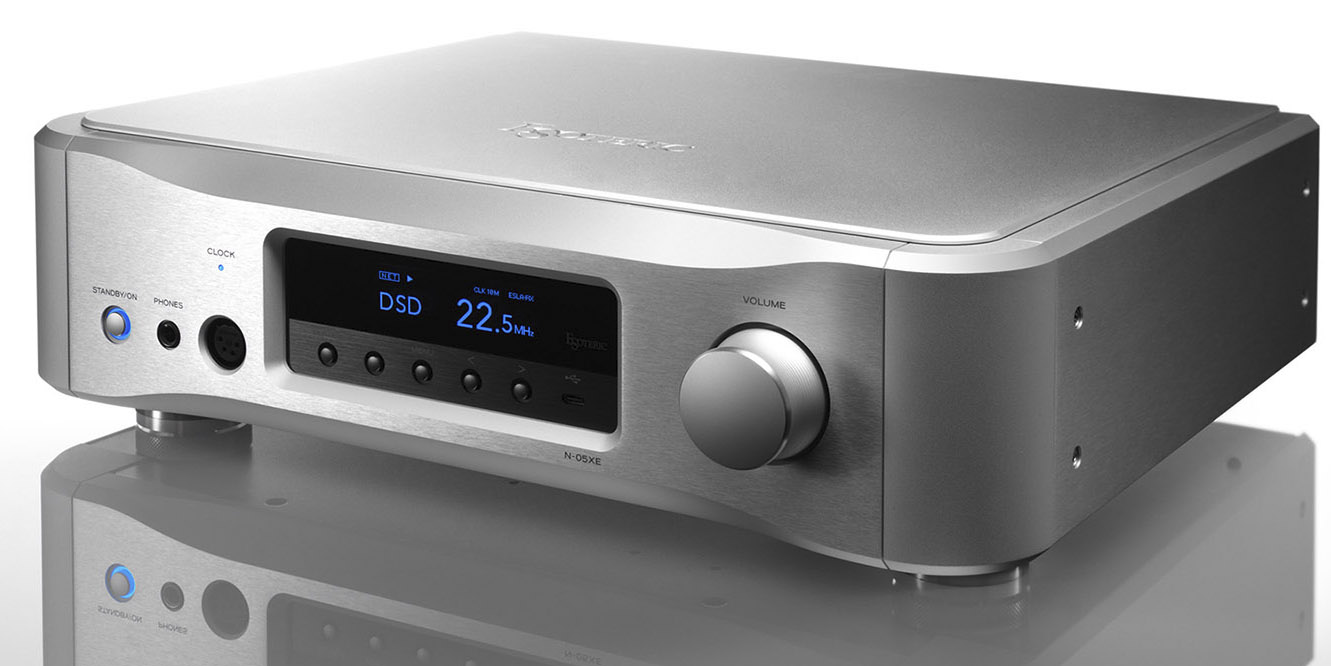
Otherwise, the only change to the front panel is the removal of the USB-B port on the right, replaced by a USB-C port integrated directly into the black section below the OLED screen, with the advantage of making the product more visually appealing. However, the technology has also been redesigned on the streaming module, which is now in its fourth generation and incorporates a new SFP port for direct fiber optic connection. In addition to reduced noise due to improved power and music signal processing, the Master Sound Discrete Clock has also been adapted to the new DAC, resulting in further jitter reduction.
At the same time, the power supplies have been redesigned and the circuits improved to shorten the signal paths. Available in silver or black finishes, like its predecessor, the N-05 XE retains its two headphone jacks and numerous digital inputs, in addition to analog inputs and outputs, most of which are balanced (XLR). It is scheduled for release in spring 2026.
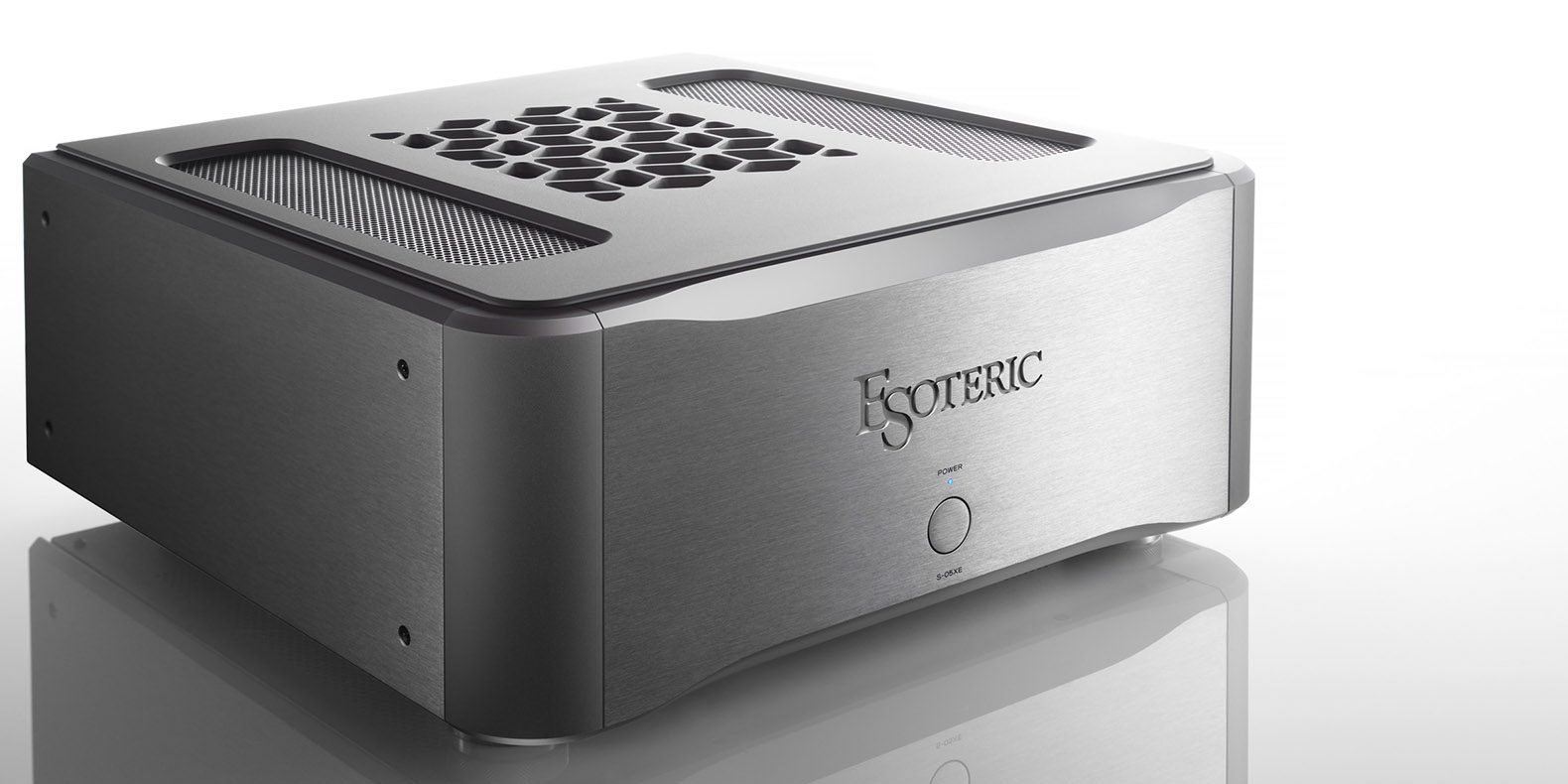
Esoteric S-05XE
S-05XE power amplifier
While it did not yet have a suffix, as its S-05 version was the first, the 05 series power amplifier has also evolved into the S-05XE.
Also integrated into the same chassis as its predecessor, it only sees the design of the top grille become more assertive, with an attractive double honeycomb pattern carved into the machined aluminum cover. A new 1,000 VA toroidal transformer takes care of the power supply, supplemented by a new smoothing circuit, already completely separated between the left and right channels, before filtering still handled by four 10,000 μF capacitors.
Another key difference is that this new version incorporates a buffer circuit on the amplification input stage, which is perfectly symmetrical like the rest of the device. In class A, the S-05XE can deliver up to 30W per channel into 8Ω and 60W into 4Ω. But as the amplifier is not limited by its transistors, it can then operate in class AB up to 2 x 120W if required.
Also available in silver or black, as the 05 series is the only Esoteric series permanently available in both colors, the S-05XE amplifier will be released at the same time as the new N-05XE preamplifier-DAC in early spring to offer its beautiful sound.
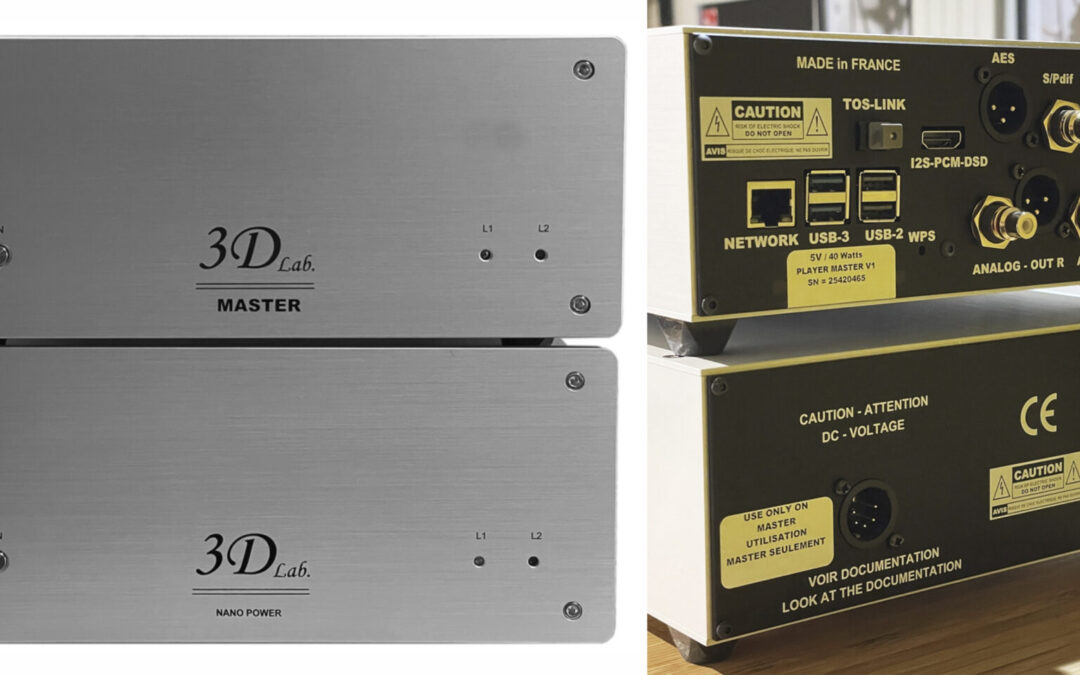
With two chassis, the 3D-Lab Player Nano Master uses a brand new version of the Nano Power 2 power supply (tested in VU46 FR, read here in EN), which is only compatible with the new audio case designed for this model.
Integrated into two identical cases, similar to those of the other Nano models (Sonata, Platinum, Signature), the Master is available in both Transport and Player versions, the latter incorporating a DAC. On both models, the power supply is autonomous and delivers a current that is split into two, one at 5 amps and the other at 2 amps, in order to provide the most ideal power possible to the digital sections and output stages.
To prevent any accidental connection with another device, the cable connecting the power supply to the other unit is a 5-pin female-to-female XLR. Along with the IEC mains socket and a switch, the male connector for the XLR cable is the only visible element on the rear of the power supply.
On the front panel, both boxes have an “ON” button that can only be used on the power supply, and two LEDs, the first “L1” lighting up blue during standard operation. On this second unit, the digital section has been extensively redesigned to combine an ultra-precise clock and an FPGA with enormous computing power, designed to reformat all signals to 768 kHz/32-bit before their analog conversion.
With a claimed jitter rate of just a few picoseconds, the Nano Master incorporates a 1TB internal NVMe drive and can connect to numerous NAS devices or USB sticks via its USB 2 and USB 3 ports. Recommended for digital use with the I2S port to transfer audio files without altering them, it also has an AES/EBU output and a coaxial S/PDIF output. The Player version adds a pair of RCA outputs and a pair of XLR outputs to connect directly to the analog section of a preamp or amplifier.
Currently being tested at VUmètre and already available for listening, the Nano Master can be connected via RJ45 or can integrate an external WiFi module. It is compatible with most existing protocols. It is therefore Roon Ready and natively integrates Audirvāna, Qobuz Connect, and Tidal Connect, and can play PCM files from 44.1 kHz up to 768 kHz.
These 3D-Lab are priced at 6 990 € for the Transport and 7 990 € for the Player.
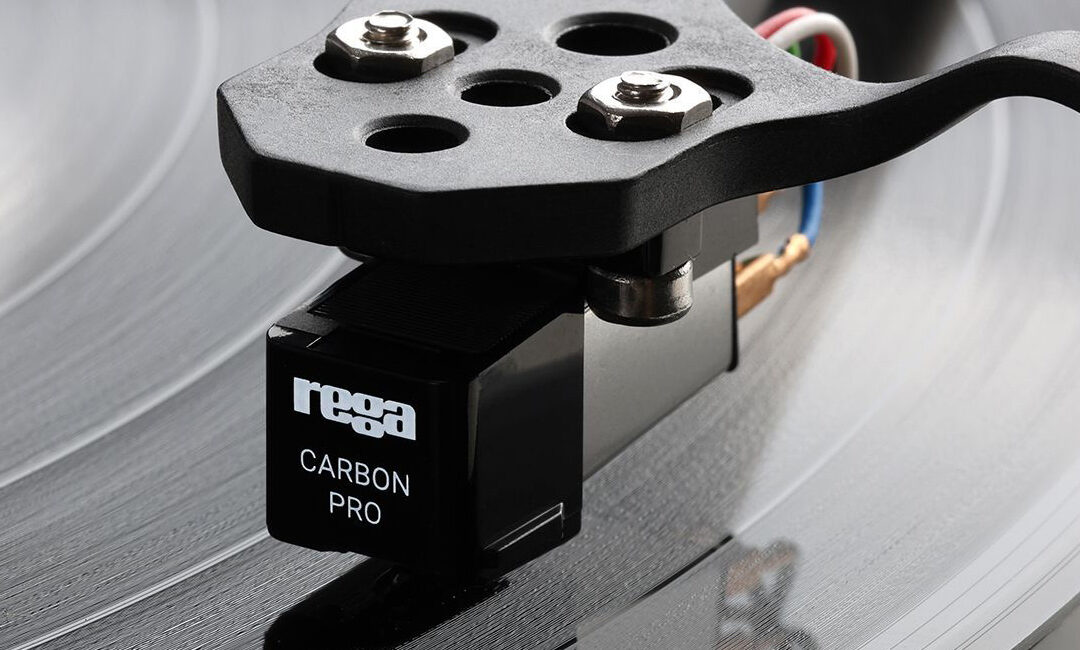
In order to surpass the MM Carbon cartridge without replacing either the chassis or the rest of the turntable, Rega is launching a superior version of the stylus called Carbon Pro.
Originally fitted to the Planar 1, 1 Plus, and 2 turntables, Rega Carbon cartridges feature an easily replaceable Carbon stylus. Available in white or black, this part can now be replaced with a black Carbon Pro version. The only difference is that the tip attached to the carbon cantilever is now elliptical, whereas the original tip has a conical profile.
This replacement, which must be done by detaching the cartridge from the arm to avoid the risk of breaking the tip when removing or reattaching the stylus, is designed to provide greater detail and improve sound dynamics.
The tracking force remains unchanged, between 2 and 3 grams, to be adjusted according to your listening preferences. Slightly more expensive, the Carbon Pro stylus costs 49 €, compared to 30 € for the Carbon. A small additional cost that offers a very simple solution to improve the performance of your Rega turntable.