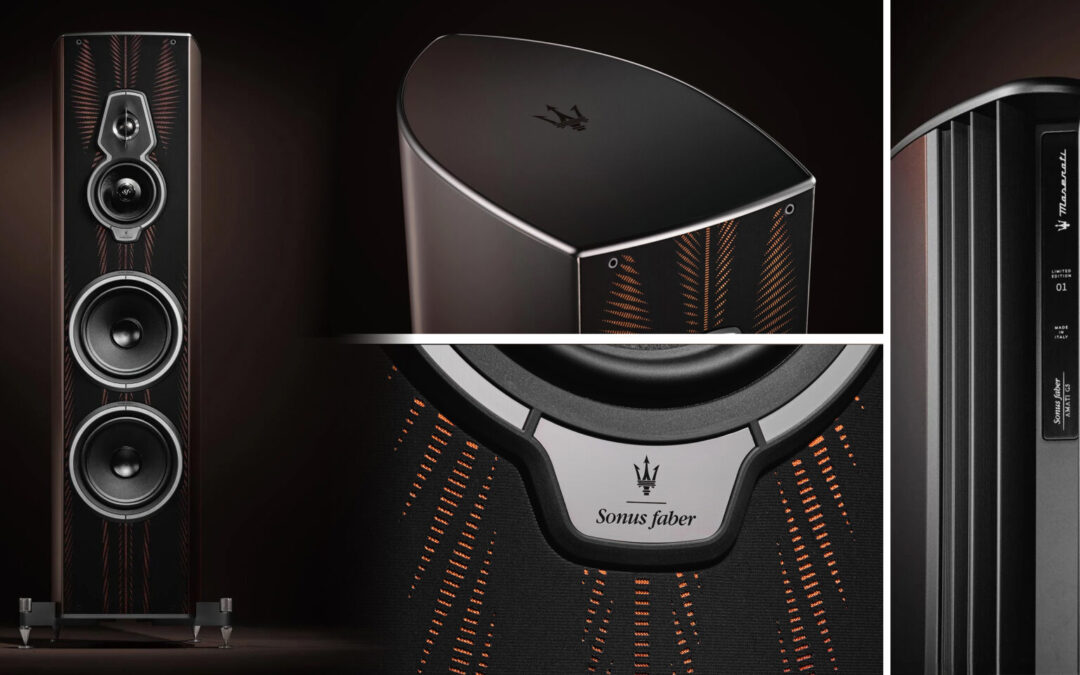
Without hesitation in talking about audiophile luxury today, Cremona-based manufacturer Sonus Faber, owned by McIntosh group, is adding a Maserati Folgore finish to its Amati G5 and an Amati Supreme version to its catalog.
Amati x Maserati Folgore – Limited Edition For this new finish, the Amati Homage G5 takes on the finish featured on the Maserati GranTurismo Folgore, the 1,200 hp electric version of the GranTurismo. To mark this collaboration, this limited edition features the car brand’s trident logo laser-engraved on the top. And while this Amati version still uses aluminum on the top and bottom, the multi-ply wood case has a matte orange-gray finish that is both luxurious and sporty, while the front features the patented Econyl material used by Maserati for the coupe’s seats.
Apart from the design, this limited edition retains the technologies of the Amati G5, so it remains a 3.5-way speaker with a closed midrange and woofers ventilated by “Stealth Ultraflex” technology. The 28 mm soft dome tweeter features a DAD™ arrowhead and is powered by a powerful neodymium magnet. The 15 cm midrange driver also uses neodymium in the magnet ring, while the two 22 cm bass drivers are powered by a dual motor drive system. This limited edition model is priced at 55 000 € in Europe and 60 000 $ in the United States.
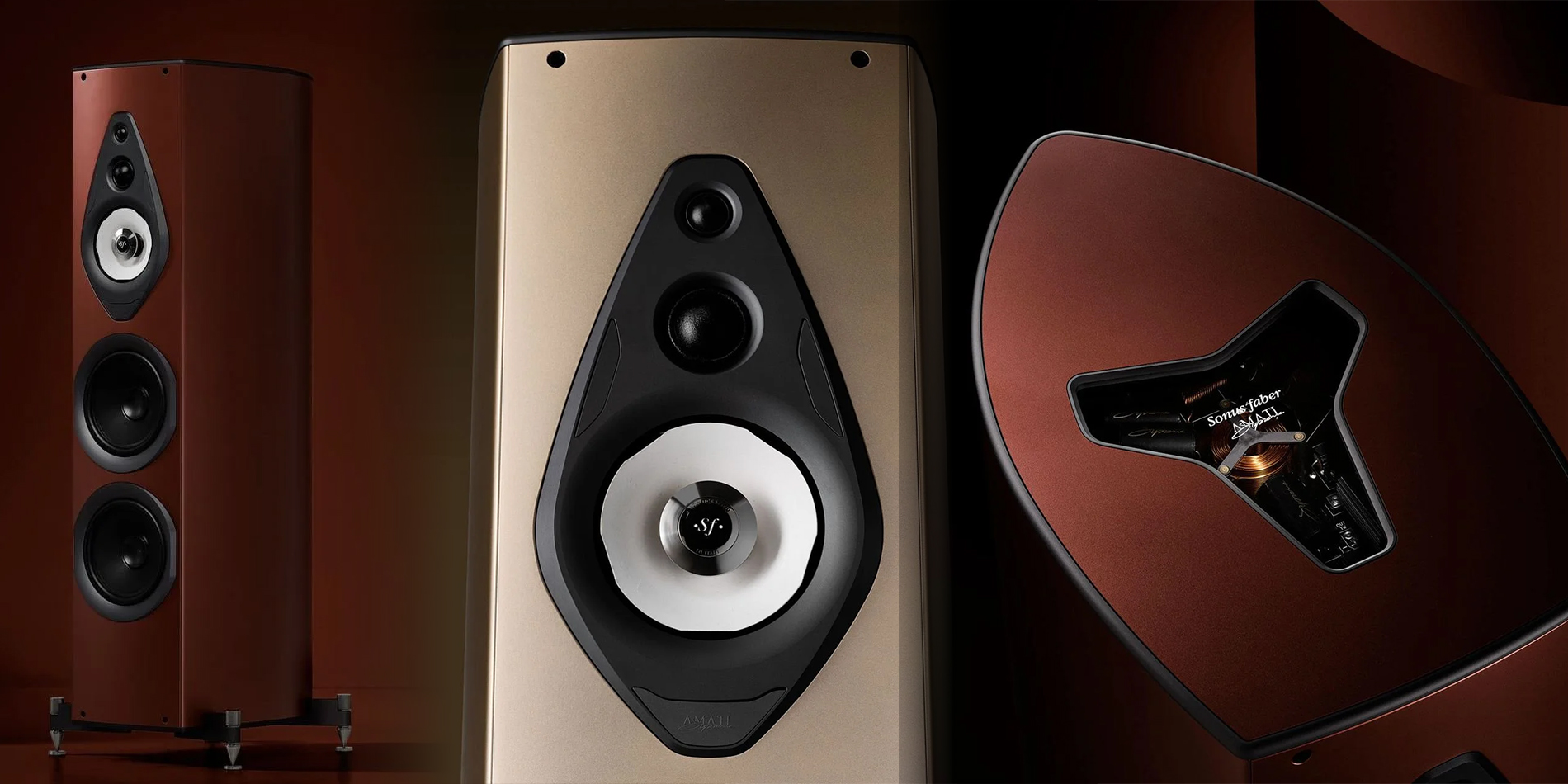
Amati Supreme A new model, the Amati Supreme is a 4.5-way speaker that inherits the “VOS” technology from the Suprema model. Its 38 mm silk dome tweeter is topped by a 20 mm super-tweeter, also made of silk, both powered by powerful neodymium magnets. The midrange is a 16.5 cm driver with a neodymium ring magnet, but like the two 22 cm woofers, it is also driven by a dual motor. With such a setup, the Phase Coherent filters are obviously refined to allow for four crossovers, in addition to being visible through a small transparent cross-shaped window on the top. While the relatively conventional 230 Hz and 300 Hz crossovers allow the two woofers to be slightly differentiated, leaving the midrange to handle frequencies up to 1.8 kHz, the super-tweeter’s 5.6 kHz crossover is less common. Thanks to this latter component, the Amati Supreme delivers a high frequency of up to 40 kHz, compared to 35 kHz for the Amati G5, both capable of going down to 28 Hz. For the finish, if the wood is maintained in the cabinet structure, as well as the lute shape of the enclosure when viewed from above, it is similar to the Maserati edition with aluminum on the outer parts and a matte paint finish—here Sabbia Oro or Terra Rossa—covering the cabinet. The price also contributes to making this Amati even more supreme, at €78,000 or $78,000.
Unveiled in a world premiere at Accuphase’s headquarters in Yokohama, as you may have seen in our widely shared videos on social media, Accuphase’s benchmark line preamplifier becomes the C-3900S.
Like the E-800 and A-48 before it, and soon to be followed by the replacement for the DP-570 SACD player, the letter S appears in the names of all the new models, marking a return to a catalog renewal technique used by the manufacturer in the previous century. As such, these are not just partial improvements, but entirely new devices.
However, Accuphase had already gone so far in its technological perfectionism with the C-3900, that this time, the brand seems to be making just a few improvements with the C-3900S. As we heard when comparing it to the old model, the new one is even purer, thanks in particular to the optimization and changes to certain components on the AAVA dual symmetrical circuit, with feedback control by the ANCC noise cancellation circuit, which has been made even more reliable. As a result, operating noise is reduced by 15% compared to the C-3900, but since the latter was already at 1.07 μV at the -18 dB volume position, the C-3900S reaches an even more infinitesimal level of 0.91 μV.
The overall structure is even more rigid, with a total weight of 25.3 kg, compared to 24.6 kg on the previous model. This is due to the internal panels in a large solid aluminum block to separate each part, as well as the two enormous toroidal transformers, which would not look out of place in a powerful power amplifier, and six filter capacitors of 10,000 μF each per channel, in a fully dual-mono end-to-end architecture.
The control panel, which is still as easy to slide open by pressing the hatch button (removable version only available on the C-2900 preamplifier), has changed very little, offering the same options for managing gain, outputs, left-right balance, and compensation. The front panel also remains very similar to the previous model, although the indicators under the LEDs are more clearly marked as they are now placed under the glass plate rather than inside it.
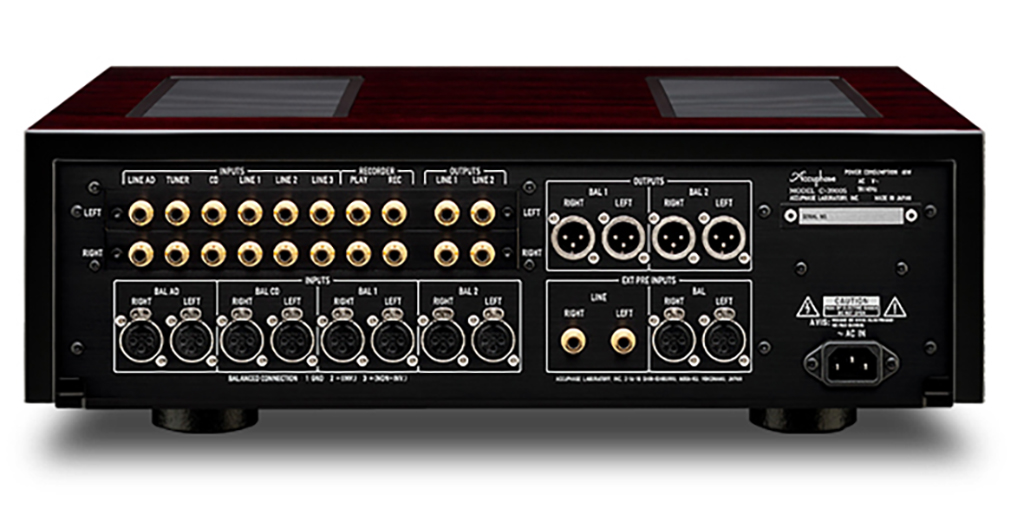
On the rear panel, the plethora of balanced and unbalanced inputs and outputs have only changed in that their circuits have sometimes been improved in terms of internal components, while the wood cabinet retains its two ventilation grilles on the top. Based on what we heard in the Accuphase auditorium, we can confirm that the C-3900S goes even further than the C-3900, without urging you, except for the purists among you, to invest in the new model if you already have the recent one. On the other hand, if you were hesitant to purchase the C-3900, the C-3900S will dispel all your doubts.
After launching the Tecnodec model (review to appear in French VU#62) and presenting a new Apollo phono preamplifier, British company MICHELL shows no signs of slowing down this year. Founded in 1966 by John Michell, Michell Engineering began manufacturing turntables three years later, before designing its own models from 1977 onwards. The Gyrodec appeared in 1982, with subsequent improvements to the power supply, before being joined by the Orbe (1995) and Gyro SE (1999) models. This year, the catalog is undergoing a major change with not only a new Gyro, announced as superior to the current Gyro SE and Gyrodec, but also a lighter version with the new Revolv.
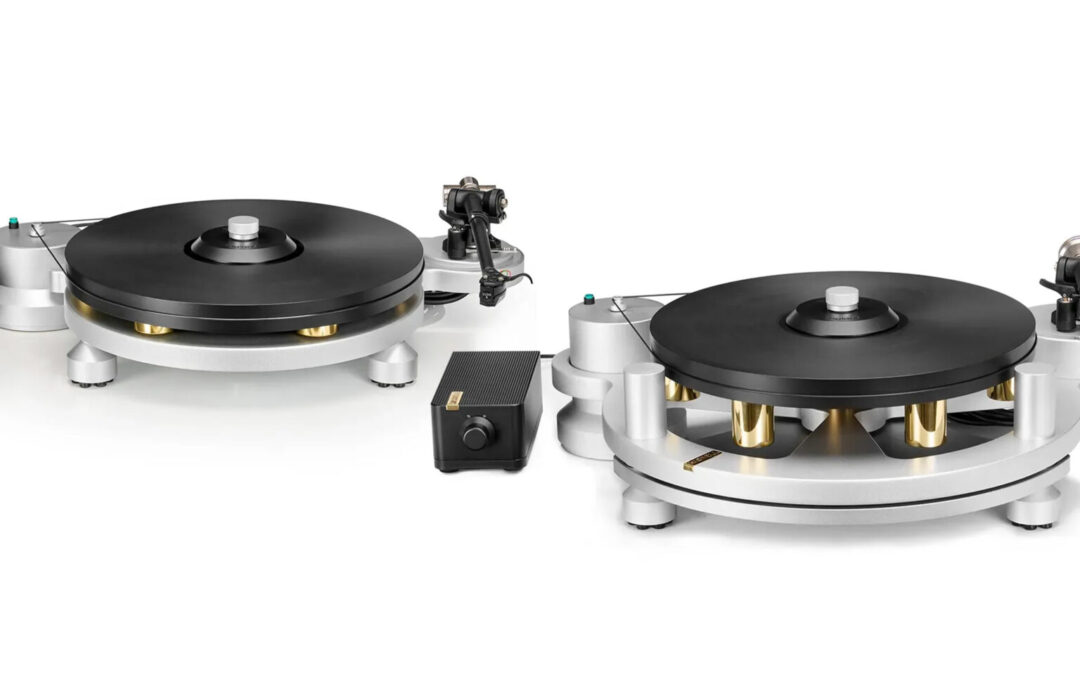
REVOLV Positioned between the Tecnodec and the new Gyro, the chassis of the Revolv is based on the Gyro design. All the components are placed on the same line at the rear, delimited by the end of the platter, whose axis is positioned in the center at the front. On the left is the belt drive system, with no distortion from the motor or power supply, both of which are housed in an external machined aluminum case with electronic speed control. As on the Gyro, the main frame of the Revolv is made of 19 mm thick aerospace-grade aluminum. A second machined aluminum plate is added to the coupling part of the arm. The Sorbothane (a viscoelastic urethane polymer) isolation feet with six damping nodes greatly reduce vibration, as does the Delrin platter with 10 mm brass peripheral weights to improve inertia, all mounted on a reverse single-helix oil bearing. Without the arm or cartridge, the Revolv is priced at 4 990 €, with a dust cover and mat.
GYRO The Gyro chassis has the same rigidity, also with a thickness of 19 mm, but with integrated brass counterweights and a Delrin arm coupling. The suspension with 3.5 kHz frequency and lateral damping have been improved compared to previous models thanks to AI-assisted computer modeling systems. Sorbothane isolation feet support a new aluminum base plate, which replaces the acrylic plate used in the Gyro Se frame. The inverted bearing is now equipped with a double-helix oil pumping system, which doubles the lubrication flow.
Like the Revolv, the Gyro comes with a pressure pad and cover, but lets you choose the arm and cartridge. It is priced at 7 490 €.
Featured in our latest issue, the little KUPID heralds a more modern style from the Danish manufacturer, designed to appeal to younger audiences.
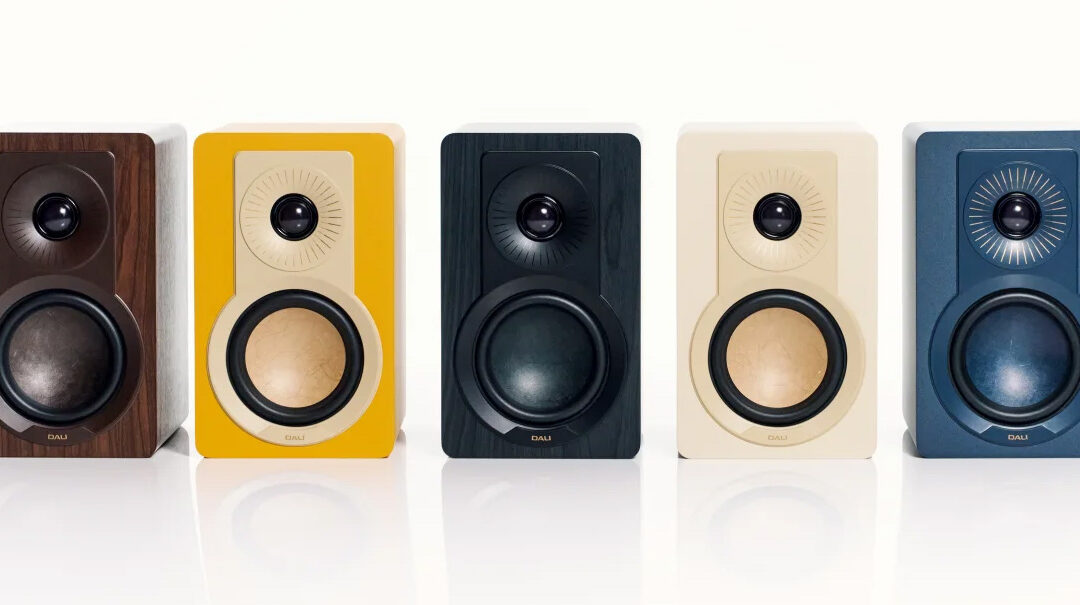
Recognizable by its understated yet colorful design, the new DALI KUPID is also very compact. Measuring 24.5 cm (9.64’’) high, 15 cm (5.91’’) wide, and 19.8 cm 7.80’’) deep, this small passive two-way speaker with rear vent is also designed to be placed close to a wall, as the manual recommends a space of just 2.5 cm (1 inch) to avoid affecting the listening experience.
With a sensitivity of 83 dB and a nominal impedance of 4 Ω, the KUPID combines a small 26 mm (1’’) soft dome tweeter with a 114.3 mm (4.5’’) wood fiber and paper mid-bass driver, both developed by the brand. Thanks to these membranes, the small speaker claims to cover a frequency range from 63 Hz in the bass to over 25 kHz in the treble, with a crossover at 2.1 kHz.
Supplied with two protective grilles for the front, eight small feet for placing them on a piece of furniture or shelf, and two wall brackets, the DALI KUPID speakers weigh 5.8 kg (12.8 lb) together. But to fit in even better with your surroundings, it’s the choice of colors that will really make you fall in love with these beautiful speakers. And with good reason: there are five colors to choose from, ranging from Caramel White to Chilly Blue and Golden Yellow, and for those who prefer a more classic look, two wood finishes: Dark Walnut and Black Ash.
All you have to do is take out your smartphone to order them, at a price of 339 € per pair!
Ultra-high-end series from high-end brand Esoteric, the Grandioso series was launched in 2013 with a focus on separate components to minimize distortion. Its current catalog consists of the S1X stereo or M1X mono power amplifiers, the C1X preamplifier with PS1 external power supply, a G1X clock, and a D1X SE monoblock DAC, to which the P1X SE SACD transport or N1T network transport can be added.
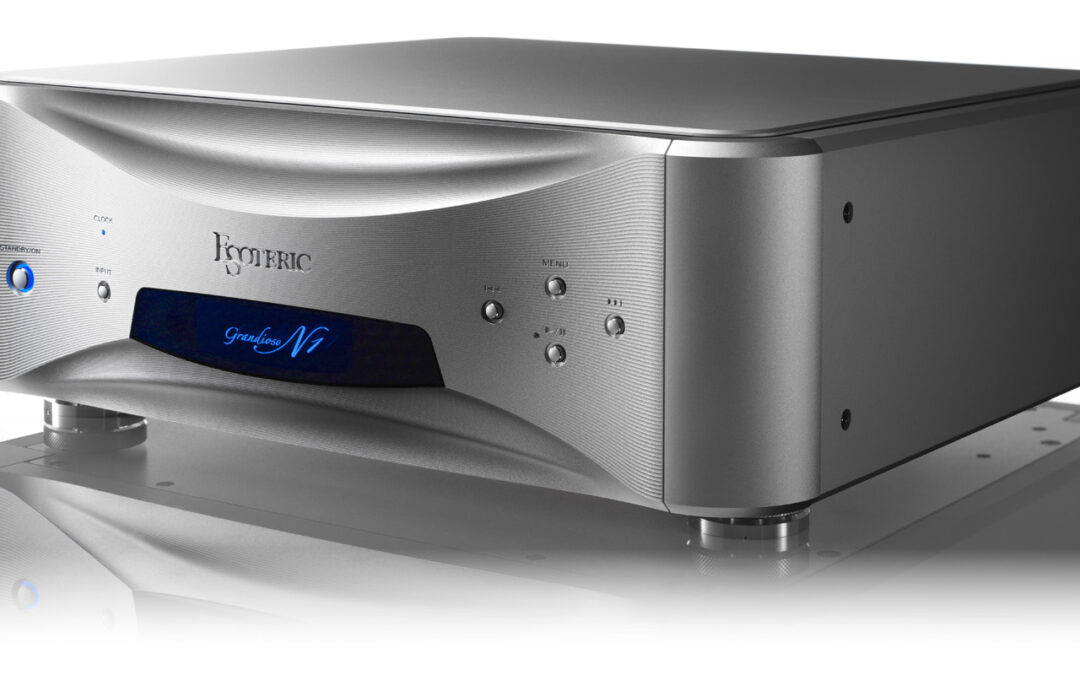
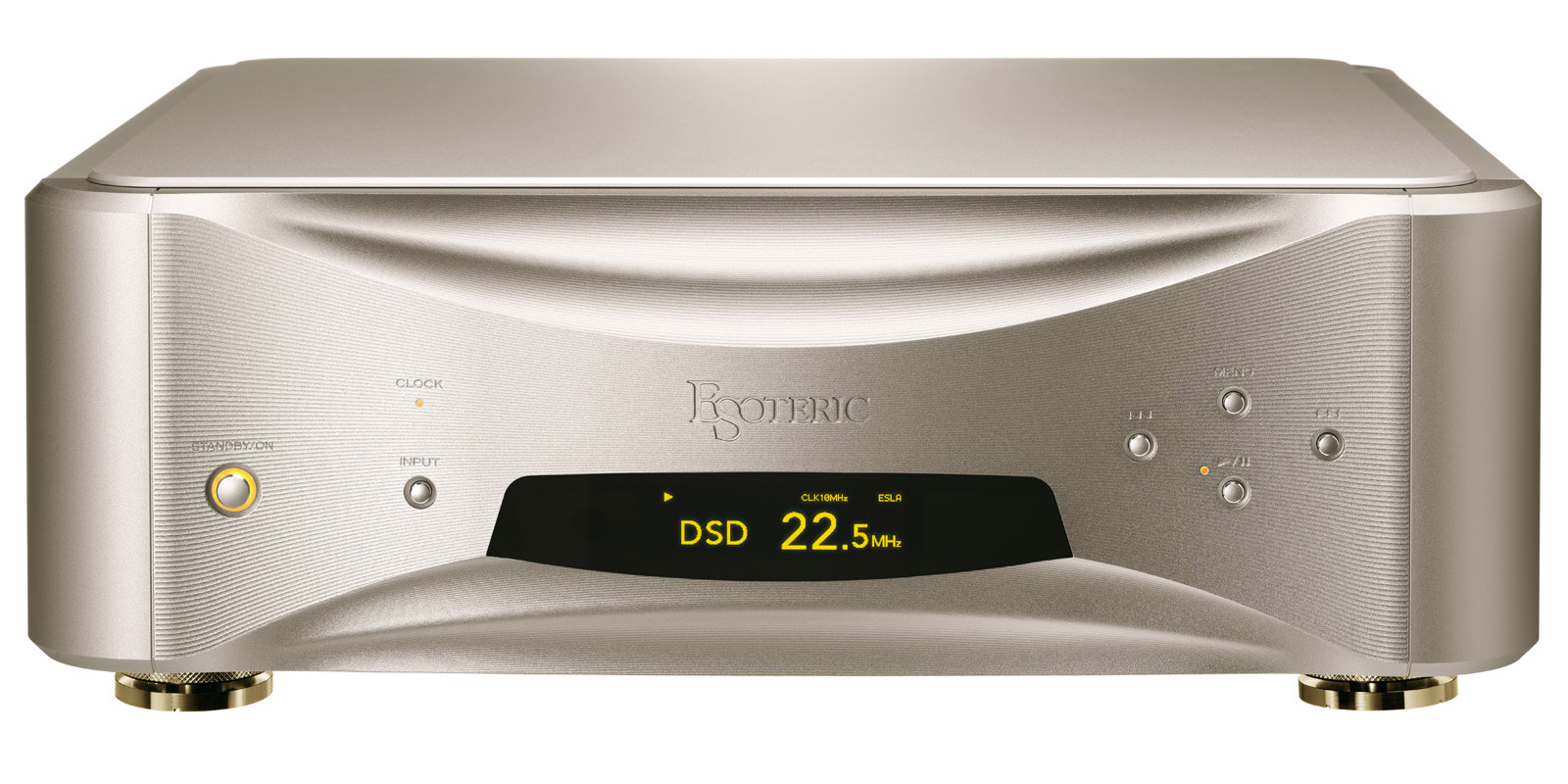
However, to simplify the range a little and limit the number of boxes, the Japanese brand has been offering an SACD player with a built-in converter for several years, recently updated to the K1X SE version. In the same vein, it is now adding an N1 network player, featuring the brand new Master Sound Discrete DAC G2 converter.
An evolution of the Master Sound Discrete DAC launched in 2019, the G2 version uses a new FPGA chip based on multi-level Delta-Sigma digital-to-analog conversion, with modulation capable of reaching 64-bit/512-Fs. With a completely proprietary design, this new dual-mono DAC processes DSD up to 22.5 MHz (DSD512) with algorithms that are completely independent of those designed to support PCM files (up to 768 kHz/32-bit).
Integrated via an RJ45 port, USB-A & USB-C ports, and fiber via an SFP port, the network module is obviously based on the recently introduced N1T, which is based on the Esoteric Network Engine G4 module. Fully dual mono, from large toroidal transformers to the DACs, the N1 has five power supplies, dedicated to each circuit in the device (one per mono DAC, one for the network, one for the FPGA, and one for the digital signal). In order to transfer DSD to other devices from the brand, it also adds a proprietary ES-Link5 pair, in addition to the classic optical, USB audio, AES/EBU, and coaxial digital inputs.
Connectable to an external clock via a 10 MHz BNC port, the N1 already has an optimized internal clock circuit, thanks to the Master Sound Discrete Clock version designed for digital devices. It naturally features a multi-layer chassis and hand-picked discrete components, as well as the insulating feet originally developed for SACD players. Finally, in addition to the usual gray, this new player is available in a new N1 Gold version, currently reserved for Japan (and therefore for 100V voltages).
To find out more, check out our Tokyo Show videos on our Instagram and Facebook accounts starting this Friday!