Behind this convoluted name lies the prolific Michael Paradinas. This artist began playing the piano at the age of six, and was later influenced by pop and new wave music from his homeland through bands like the Beatles, New Order and Depeche Mode. In his teens he played in several bands, and from the ashes of one of them he formed the duo µ-ziq with bassist Francis Naughton. After Naughton’s departure, he remained on his own to continue the adventure. Spotted by Aphex Twin, he was given the opportunity to set up his own label and opened for Björk on the Homogenic tour. Under this pseudonym he has released some fifteen albums.
Although Michael Paradinas’ music has evolved since the 90s, fans of intelligent dance music will not be disoriented by this album, which takes us back to the productions of Aphex Twin or Autechre. That said, as most of the tracks were composed during a tour, the aim of playing them live is never far away. It’s as if Asian Dub Fondation had remixed their music in an ambient way. Supporting the melodies and layers of synthesiser, the omnipresent rhythm is rich, complex and sensual without ever being aggressive. It really is the tour de force of this opus. µ-ziq’s artistic talent is unquestionable, and he has produced a perfectly produced album that, like many of his contemporaries, will delight audiophiles with wide-bandwidth systems. Depending on the track, bass and sub-bass are more or less present, and many frequencies are used to embellish the rhythm. Without ever playing on saturation, the sound remains soft for this kind of music, even when the hi-hat is synthesised. The soundstage, though artificial, is also very appealing.
Life’s pleasures are sometimes due to improbable encounters. Such is the case with this duo, whose name is that of a Russian all-terrain vehicle of legendary rusticity. She, of Armenian origin, lived in Minsk, Belarus, before settling in Tourcoing and becoming a singing teacher in Lille. He is a multi-instrumentalist, primarily a trumpet player with a background in jazz. They both studied at the Lille Conservatoire, but it was in a bar that they met in 2018. During their confinement, they released two videos that were a big hit, particularly with the Armenian community.
This expanded reissue of their debut album is not so much about the six new tracks as the second chance given to this invigoratingly fresh music. The vocals and instrumentation are in keeping with a certain Eastern European tradition, leaning towards orientalism, while remaining open to rhythms and sounds from other horizons. Listening to them will bring the whole world, sharing and good humour into your home. The clear, catchy vocals, percussion and melodies, often on trumpet, call for dancing. The few slower tracks are full of joy.
On stage, the duo transforms into a septet, as the studio versions reveal, being little oases for acoustic instruments, some of which are specific to world music. Their distinctive timbres are a pleasure to enjoy, and the soundstage is as full as it is light, with plenty of air between the instruments, making them easy to identify. Jaklin Baghdasaryan’s voice, which seems closer on the calmer tracks, flies over the compositions with its liveliness. It’s impossible not to get carried away by this music that celebrates encounters and love – a real joy, I tell you!
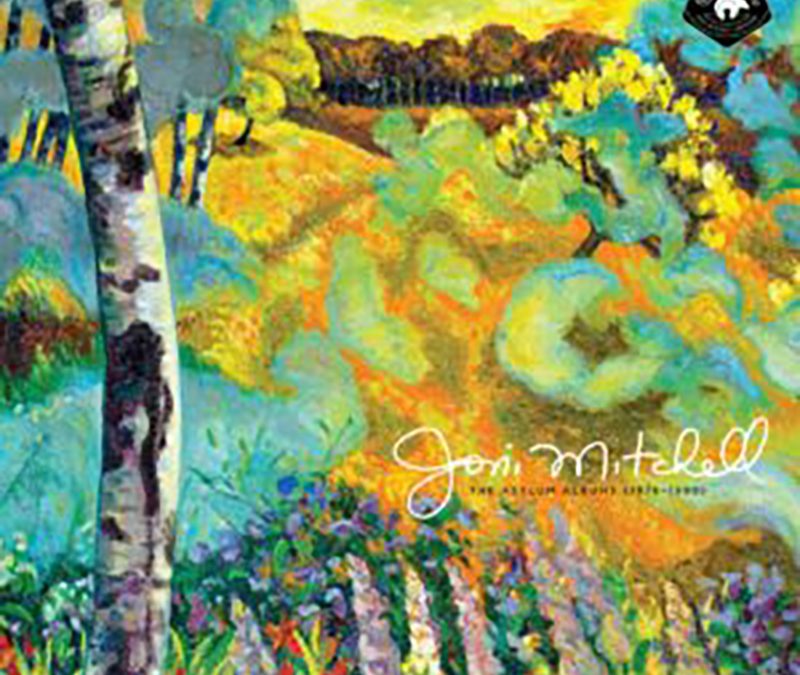
Here’s an artist who needs no introduction. Joni Mitchell learned to play music partly on her own and went to Toronto to try her luck. She married folk singer Chuck Mitchell, whose surname she kept. Her first album came out in 1968 and was produced by David Crosby, who had spotted her singing in a club. She quickly became an icon of folk and counterculture in the 70s. However, she remained permeable to other styles and her music sometimes became adventurous, to the extent that some of her albums confused her fans and had very mixed success at the time of their release.
This boxed set focuses on his most jazz-influenced albums. Considered by many to be a masterpiece far beyond the Canadian’s discography, Hejira strikes a perfect balance between pop, folk and jazz. Don Juan’s Reckless Daughter delves a little deeper into avant garde territory, particularly on the fourth track, which is over a quarter of an hour long and features rhythms derived from traditional music. Mingus is somewhere between a collaboration and a tribute to the legendary bassist who died before the album was released. The live Shadows And Light is a graceful interlude in which the musicians’ inspiration is hard to match.
Although different in style, these albums share the same approach, letting the musicians and instruments express themselves. Given the talent on display, it would have been criminal not to do so. Of course, there’s Joni Mitchell’s guitar and voice, but what about Jaco Pastorius’s bass, Larry Carlton’s guitar or Pat Metheny’s, or Herbie Hancock or Wayne Shorter, to name but a few? Behind the voice, each sound source stands out precisely, the strings vibrate and the percussion asserts itself without anything spilling over. So don’t deny yourself this pleasure, whether you’re alone or with friends and family, turn it up.
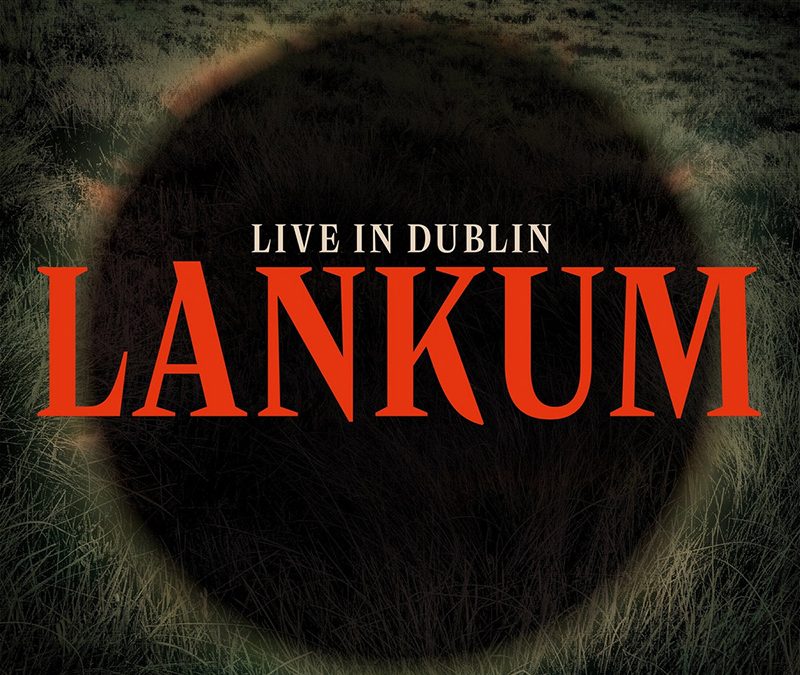
The Lynch brothers first formed the duo Lynched. Their first album, released in 2003, was well received and led to international tours. Their greatest source of inspiration was to be found close to home, in the music of the Dublin pubs. There they met singer and multi-instrumentalist Radie Peat and fiddler Cormac MacDiarmada. As their audience and recognition grew, they decided, to avoid any controversy, to take the name Lankum from a song in the Irish repertoire. After a handful of studio albums, they released their first live album.
Did you say folk? Yes, but Irish folk! That’s not wrong, but it’s too quick a summary of their music because it leaves out the characteristics that have made them a success. On certain passages, the use of sound textures like drone music can evoke Northern Folk bands like Wardruna or Heilung and paradoxically give a more modern side to their compositions or adaptations of famous titles in the folklore of their country. It’s also darker than the image you might have of the atmosphere in Dublin’s bars.
Dublin audiences were both enthusiastic and respectful of their music, which had a strong cultural identity. Never betraying their sources of inspiration, the musicians use the full range of Irish folk instruments: guitars, fiddle, bagpipes, keyboards and percussion. Some of them seem to be tuned a tone lower. These instruments are sometimes augmented by layers of sound that heighten the tension of the tracks. The predominantly male vocals remain central. Without being archetypal, the sound of this record is clearly that of a live recording, with a soundstage that encourages a kind of fade-out between musicians who remain clearly identifiable.
This thirty-something Californian has ticked all the boxes to become a bad boy. His father was in and out of prison and his mother was swamped by odd jobs. Raised by his grandparents, he lost his grandmother when he was 12. So he flirted with delinquency, one of his friends was shot dead and he himself had to move away for several months to get away from the gangs. It was almost by chance that, on the advice of producer Michael Uzowuru, he found salvation in music. His mixtapes and other appearances led to him being signed to the famous Def Jam label, and his debut album in 2015 received rave reviews.
As with his previous productions, Vince Staples offers us modern rap, in the sense that the music owes more to the keyboards and the studio than to the turntables. There are no scratches or looped samples here, but don’t expect any raunchy melodies either. This is a rather downtempo record compared to the rap that the media promote, and it owes as much to hip-hop as to trip-hop. Some passages even create atmospheric ambiences. If we have to compare the artist’s flow to that of well-known rappers, it’s close to that of Snoop Dog, with a good dose of sensuality thrown in.
Like most rap albums, ‘Dark Times’ explores the lower frequencies in particular. That said, it does so with great smoothness and roundness. The studio work creates a fusion between the music and the singer’s warm voice, which is surrounded by a heady cocoon. The soundstage is well exploited, in keeping with the flawless quality of the production, which allows for a few original touches by inserting spoken voices or environmental noise without the unity of the album suffering. Another fine confirmation of Vince Staples’ talent.