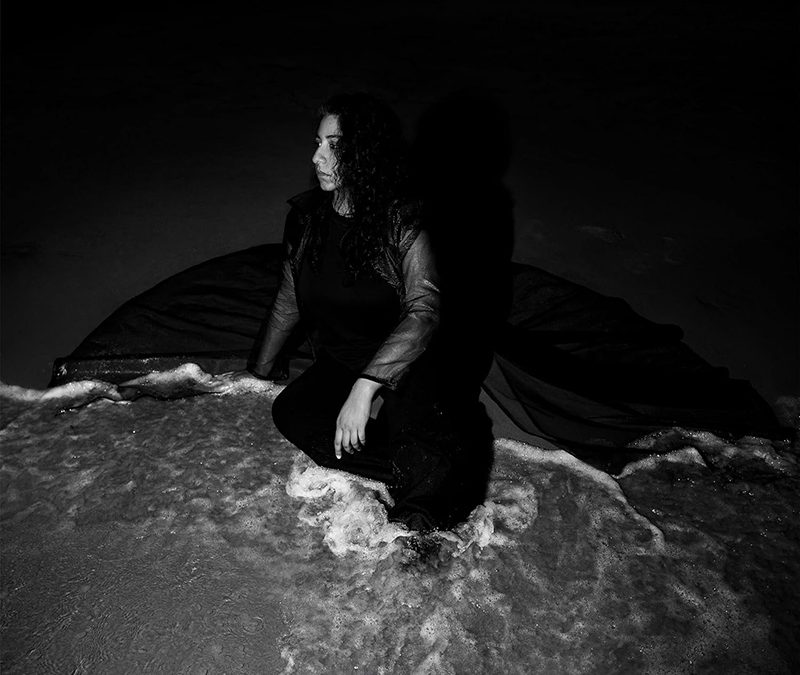
The band is strongly marked by the voice and inspirations of Emily Cross who, already accompanied by Dan Duszynski, to whom she was married, also embodies the Cross Record duo. As well as making music, she works as a death doula for people condemned by illness, or those seeking to make peace with their own finitude. The duo met Jonathan Meiburg from Shearwater on tour and quietly recorded an album under the name Loma, although they were not sure whether they wanted to follow it up. Brian Eno noticed the album and took part in the recording of their second album.
This third album was partly inspired by poems generated by an artificial intelligence trained by Laurie Anderson and her body of writing. On the other hand, the difficulties of reuniting the members of the group who live in England, Texas and Germany have shaped the compositions. You could call it impressionistic pop-folk, like little clouds of musical vapour that melt and evaporate. The calm, drawling voice is backed up by an acoustic guitar whose notes ebb and flow, or an electric guitar whose distortion is used as a support without any aggressive aspect. The drums set a contemplative rhythm.
This is an album that deserves several listens and a good sound level adjustment to appreciate all the subtleties of the resonance of the notes of the different instruments and the intonations of the voice. Piano, wind instruments and recordings of natural sounds, such as birdsong, complement those already mentioned. The drums sometimes seem distant, sometimes more encompassing, without taking over the soundstage. While the music isn’t one of the warmest, the sound of the record isn’t particularly sharp, making it a pleasant listen at any volume level.
British-born Elizabeth Lawrence was introduced to music by her parents, who listened to a lot of it, especially reggae, and she sang in church. Playing guitar and keyboard, she joined a number of bands in her teens before being spotted on the internet by a manager, who helped her sign her first contract. She released her first album in 2012, with a strong acoustic folk bent, and although it met with public and critical acclaim, she quickly broke away from it. In order to have more control over her music, after moving house she will equip herself with a home studio and get involved in production.
Her music has evolved quite markedly between her four albums, and here the British singer reveals a sparkling pop-rock based on a classic set-up to which she adds a touch of originality. The bass on all the tracks, which oscillates between the New Wave of the 80s and 90s and the funk of the 60s and 70s, makes for a particularly visceral record, one that makes you sway and can stick to your mind like chewing gum to a trainer. Her voice, which she can modulate depending on the track, also plays a big part in the seduction of her compositions.
Totally mischievous, Liz Lawrence’s voice wonderfully combines the rebellious and playful side that attaches itself to her songs. Her phrasing seems to play with the rhythm that serves as the backbone of her compositions. The vocals and bass are the elements that immediately capture the listener’s attention, and could almost stand on their own. Then come the drums, drier and more effective, which support the whole, then guitars or keyboards, depending on the track, add to their consistency. Ali Chant’s production effects help drape this opus in a sound befitting an artist as pop as she is fierce.
is trio is made up of Eric D. Johnson, Josh Kaufman and Anaïs Mitchell. These names may mean nothing to the most European of us, but their respective careers are so dense that it’s impossible to just touch on them in a few lines. It’s worth mentioning some of the bands they’re part of or close to: The National, The Shins, Fruit Bats, Muzz. For a lucky few, in 2018 they decided to take a break together at the Eaux Claires Festival in Wisconsin. To our delight, the adventure didn’t stop there and they released albums, including their third LP in 2024.
Like the artists, let’s not beat about the bush: this is Folk with a veneer of Country and Americana. Listening to this record, you’re almost looking for your boots and stetson. That said, the three friends manage to maintain a fine balance, far removed from the dusty, mothball image of the style or some of the over-calibrated, sanitised modern productions made in Nashville. On the contrary, with a high artistic quality, the album features a succession of subtle tracks and others that could have a place in the pop charts, carried by the female and male voices, with different tessituras but timbres that are in perfect harmony.
In keeping with the guitars/bass/drums arrangement, and despite being partially recorded live, the soundstage isn’t the most impressive, but it’s perfectly pitched. With modern production, each instrument is perfectly defined, with the emphasis pleasantly on the guitars and vocals. The notes resonate and flow naturally. The difference in timbre between the various string instruments involved is effortlessly perceptible. A piano, a harmonica or a saxophone can be heard on some tracks.
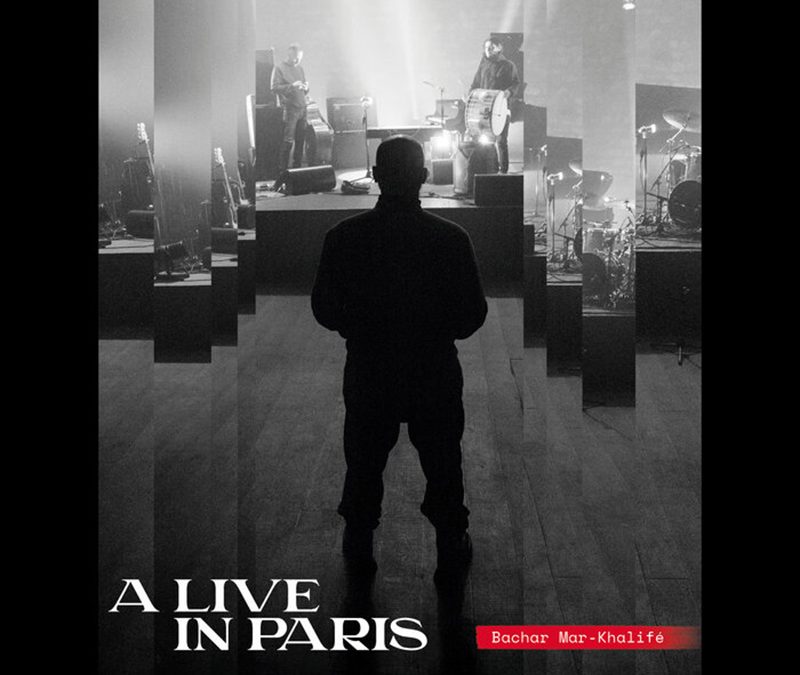
Bachar Mar-Khalifé has music written all over him – how could it be otherwise? His father is one of Lebanon’s most famous oud players, his mother is a singer and poet, and one of his cousins is a cellist. Fleeing the war, his family arrived in France when he was six. Along with his brother, he entered the Conservatoire National de Musique et de Danse de Paris, graduating with a prize in piano. In addition to his family and classical heritage, he became interested in hip-hop and percussion. He has composed almost a dozen film scores, appearing alongside artists such as Bojan Z, Carl Craig and Francesco Tritano, and has released six studio albums.
This album is a recording of the final concerts of 2022, when the artist performed as a trio. As he says himself, what characterises the Franco-Lebanese musician’s music is freedom. Freedom to mix classical and traditional inspiration, freedom to make the piano sound intimate, to play an ostinato or to make it soar with clusters within the same piece, freedom to introduce a rhythm section that knows how to play restraint as well as outburst. In the same way, he plays with his voice, which shifts from a whisper to a fiery lament.
As well as offering a fine selection of studio tracks, the live recordings always bring the added value of perceiving the complicity between the musicians as well as having a more natural sound. This is the case here with this piano, bass and drums trio. The musicians fill out the stage, with the piano and vocals taking centre stage, and the other instruments playing around them. On some tracks, the electronic or traditional sounds further enhance the breadth and dynamics of this magnetic music. It’s a record that’s sure to take you on an intense journey.
Born in Saudi Arabia to Pakistani parents, Arooj Aftab followed her family to Pakistan at the age of 10. There she taught herself to play guitar, and her singing was inspired as much by American singers as by Indian and Pakistani artists. In the early 2000s, she took advantage of the early days of the internet to make a name for herself in her homeland. She later went into exile in the United States, where she graduated from the Berklee College of Music in Boston. In 2010 she moved to New York, where she became close to the jazz scene, began composing film music and released her first album, Bird Under Water, in 2014.
For her fourth album in 10 years, the artist continues to cultivate her particularity within the music scene and her exploration of the porosity between several styles. With night as its main theme, this opus evokes a twilight where time stretches out and notes tick away like seconds. Ranging from traditional to contemporary music, with a folk or jazz base, the tracks develop over the strings of a harp, a guitar arpeggio or the sound of a synthesiser. With her vocals mainly in Urdu and her lengthy phrasing mixed with accents reminiscent of her origins, the singer is sure to captivate you with her warm voice.
The recording has preserved the sensitivity of the acoustic instruments, the notes spreading out and taking their time to fade away. The touch of the many artists present is particularly highlighted on the percussion and double bass, whose resonances can fill the sound space. The harp lingers in the background on many tracks, and wind and string instruments, as well as a few keyboard notes, reinforce the meditative atmosphere created by the captivating, sovereign vocals. The production goes hand in hand with the intimacy of this spellbinding music.