Artist: Model/Actriz Album: Pirouette Label: Dirty Hit Link: https://www.modelactriz.com/ Style: Rock, Hard Rock
To describe the second album of Model/Actriz Pirouette as noise would be too simplistic. Energetic and tense, it ranges from pop to industrial metal, yet manages to remain both approachable and atypical.
This Boston-based band was formed by drummer Ruben Radlauer and guitarist Jack Wetmore. Both have known each other since childhood, their fathers even playing music together a few years earlier. Impressed by a performance by singer Cole Haden, the two men recruited him for the band, before adding bassist Aaron Shapiro. Their concerts earned them a good reputation, but with the confinement, their first album, recorded in 2021, was not released until 2023, although it was well received by critics on Pitchfork and Bandcamp.
While their musical style links them to the noise and punk movements, there are also components borrowed from metal. As a result, the tracks as a whole present a certain radicalism, but never as extreme as those of other famous bands in the aforementioned styles. Far removed from the sometimes violent archetypes, the tracks retain their interest without being too accessible either; they seek to integrate a danceable or electronic dimension and sometimes approach the industrial, recalling tracks by Nine Inch Nails or Marylin Manson. Placed at n°5, the short track “Headlights” acts as an articulation towards a calmer part.
Far from taking saturation as their central model, as other noise bands do, Model/Actriz seem to distance themselves from it. On the contrary, what immediately catches the ear is the metallic sound of the guitar, echoing the synthesizer, which resembles a vibraphone whose bars have been swapped for huge metal ones. The frenetic rhythm is distantly reminiscent of the 80s, but shines through in its tension and dryness. In the midst of this pounding, the vocals take on almost disconcerting pop accents, adding to the ambivalence of the moods created by listening to this atypical rock.
Artist : Mei Semones Album : Animaru Label : Bayonet Records Link : https://www.meisemones.com/ Style : Pop, Folk , Contemporary Jazz
From Brooklyn, Mei Semones delivers a true testament to her love of music, flouting styles by blending Jazz, Pop, Folk, Rock and Brazilian music on her highly personal album Animaru.
It didn’t take more than two EPs for Mei Semones to arouse the curiosity of the music world, an interest fully justified when we listen to her debut album, Animaru. A Japanese-born artist, she now resides in New York and has spent the last two years performing numerous concerts (notably in the U.S.) to promote her music, with the result that she has perfected her technique and gained greater complicity with her band. Following the release of an EP in 2024, the NME named her one of the artists of the year to watch, a status brilliantly confirmed by the album released this year.
What Animaru seems to be proposing is to ask why to settle for one style when the horizon is so vast, and when pleasure can be found everywhere. With voice and guitar at their core, Mei Semones’ compositions leave plenty of room for jazz, studied by the now 24-year-old, who also bears witness to her love of Brazilian music. Only her rock inspiration is more discreet, giving way to a cerebral pop-folk. The tour de force of this music, however, is to appear truly personal, while remaining natural and accessible; with alternating English and Japanese, the vocals reinforce this feeling. In contrast to the instrumental density and research of the compositions, which can sometimes emphasize the virtuosity of the musicians, the recording maintains a precision and clarity that enhances the melodic and rhythmic lines without any effort of concentration or intellectualization. The tonal balance of the record is developed mainly towards the upper midrange and treble by the artist’s voice and guitar, to which are added the strings of the violin. The soundstage may at times seem cramped in relation to the number of instruments, but it is just as capable of occupying the space of the listening room in the most open tracks. In our opinion, Anima is a great achievement.
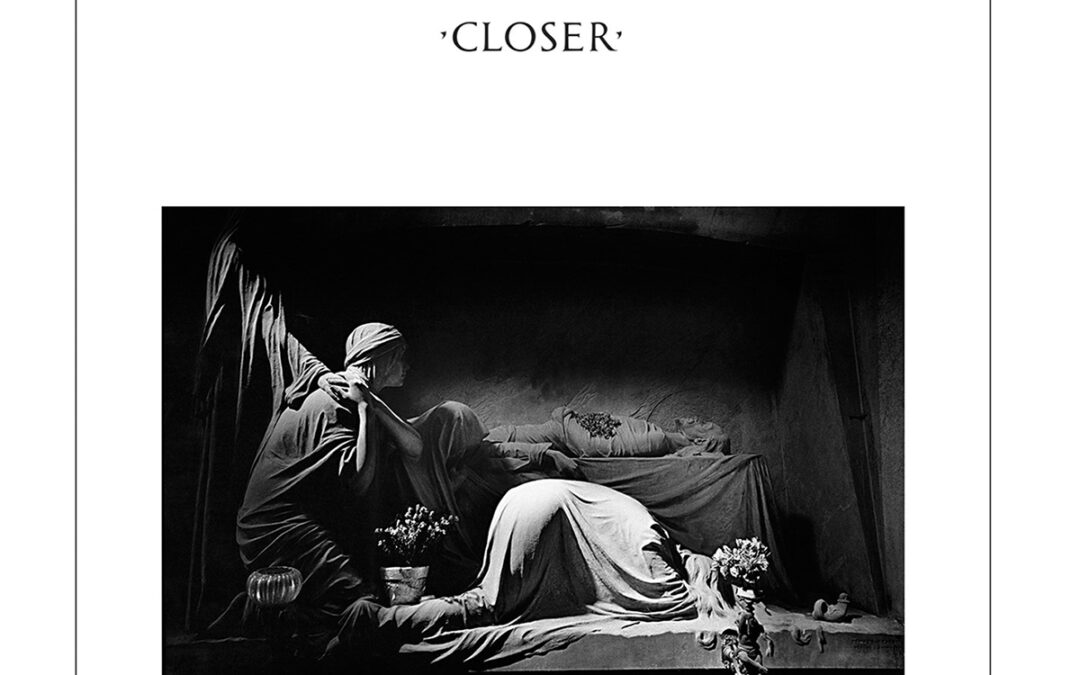
Released just a few months after the death of charismatic singer Ian Curtis, Closer, Joy Division’s second studio album, lays the foundations for the sound of both nascent new wave and gothic rock.
Joy Division is the archetypal band whose career seems to have been stricken by the weight of a curse, but which despite, or partly thanks to, the relentlessness of fate, managed to become a cult and strongly influence music. Influenced themselves by the performances of the Sex Pitols, Bernard Sumner, Peter Hook and Terry Mason decided to form a band, recruiting Ian Curtis through a classified ad. They subsequently changed drummers and names several times, before finally opting for Joy Division in 1976. The name, derived from a German term for the party that organized the sexual exploitation of female inmates in concentration camps, combined with the iconography of their first EP, led to suspicions of Nazi sympathies, which were always denied by the band members. Although he was the last member to join the band, Ian Curtis became a pillar of the band, with his unhappy lyrics, his sepulchral interpretation and his involvement on stage, where he lived every rhythm and every word. Suffering from epilepsy, he would sometimes have seizures on stage, and faced with his invasive psychic pain, as well as his difficulty in managing his notoriety, he took his own life when he was only 23, just a few months before the release of Closer. In forty-three songs and one hundred and twenty concerts, Joy Division succeeded in creating a legend and strongly influencing the music of the time, some facets of which can be perceived in the film Control, adapted from the book by Deborah Curtis, Ian’s wife.
Marked by punk, their style is really forged when they slow down the tempo, thus sticking to Ian Curtis’ particular phrasing. Another peculiarity is that Peter Hook’s bass carries the melodies, while guitarist Bernard Sumner opts for a more rhythmic style, while the drummer seems to follow his acolytes. Along with other bands from the same period, they were instrumental in the transition from punk to new wave. They are also considered to have had a strong influence on the gothic movement through the dark ambience of their music. What’s more, viewed in hindsight from the angle of their singer’s suicide, the lyrics take on the weight of a premonitory dimension in the expression of his existential suffering. Their influences include German rock from the same period, as well as older American bands such as The Velvet Underground, The Stooges and The Doors, and contemporary artists such as Siouxsie And The Banshees, who inspired their unusual use of guitar and bass.
Young producer Martin Hannett is no stranger to shaping the band’s distinctive sound. His meticulous attention to detail introduces delays and echoes, particularly on the drums. The ambience is cold, heavy and tense, with a surgical edge, but a dark, sticky post-apocalyptic surgery. For Joy Division, there’s a future after punk, but that doesn’t mean there’s hope. Nevertheless, beyond the legend, Joy Division’s two studio albums are considered indispensable. On this reissue, multiple compilations and live albums have been added, and while they do contain their share of nuggets, their purchase on physical support may be questionable, as they generate repetition and ultimately remain primarily of historical interest, except to band afficionados.
Already a household name in her native Quebec, Lou-Adriane Cassidy takes the world by surprise with the release of her second album, Triste Animal, in 2025, full of visceral, acoustic pop that veers between folk and rock.
The 27-year-old hails from the province of Quebec, and the world of music is no stranger to her, as her mother is a well-known singer, her aunt a cellist, and her father a professor of music at Laval University, one of Canada’s leading universities. In 2016, she took part in the La Voix talent show and other competitions before releasing her own music. Her debut album, released three years later at the age of 22, earned her critical and public acclaim beyond the borders of the country of her birth. In 2025, the release of Triste Animal completes the diptych it forms with the album Journal d’un Loup-Garou, released in January.
Sung as the first entirely in French, Triste Animal differs slightly from its predecessor, adopting a Pop style close to Folk that, while still catchy, is more immediate. The artist refocuses on acoustic instruments and is less concerned with adding sounds or studio effects, that could sometimes seem raunchy. As a result, the tracks are less focused on the quest for popularity, but are able to touch the listener in a different way and arouse emotions, with intimate lyrics, albeit less personal than those of Journal d’un Loup-Garou.
Lou-Adriane Cassidy’s long years of choral singing are evident in the many female voices, which support the artist on harmonies, where choirs or canons dot the record. Without going so far as to give the impression of having been recorded in concert, the choice to limit the number of takes and studio intervention leaves the listener free to feel the musical momentum that binds the musicians together, and their complicity. Keeping a hint of warmth in the overall rendering, the timbres of the instruments can be appreciated within a soundstage that is well laid out, if not exuberant.
Artist : Laura Marling Album : Patterns In Repeat (Deluxe) Label : Chrysalis Records Lien : https://www.lauramarling.com/ Style : Folk
By adding a live recording to the Deluxe version of the album Patterns In Repeat, Laura Marling offers us transcended versions of her gentle, intimate folk, which gain a seductive breadth.
If having too many choices can destabilize children and adults alike, Laura Beatrice Marling has experienced the opposite. With a session musician father who owned his own studio and a music teacher mother, she was bound to embrace a musical career. She was introduced to music by playing folk guitar, but has mastered many other instruments, and will say herself that she knew how to sing before she knew how to speak. Her references include Neil Young, whose opening acts she supported in her youth, and Joni Mitchell. Her debut album was released in 2018 when she was just 18.
The Deluxe version of Patterns In Repeat, released less than a year ago, now includes a live recording of a concert at Manchester’s Albert Hall. The compositions on this album show just how deeply Laura Marling is steeped in music: for her, it’s not an artistic pursuit, but a way of being, of presenting herself to the world. Voice and guitar complement each other with confounding naturalness, the simplicity blending with the gentleness of the singer’s words, as she tells us what it was like for her to become a mother. A few strings and backing vocals remain sufficiently distant to underline the ethereal, almost floating quality of her lullabies.
Having two versions of the same tracks on the same disc allows us to compare two very different acoustics. Thus, the relative confinement of the studio will be much more obvious when compared to the live recording, which undeniably brings more emphasis and fills the soundstage differently, especially with large column speakers. In this context, the musicians’ playing shows greater fluidity, as if they had gained a freedom and spontaneity that they lacked in the studio. However, this is not apparent from listening to the first part alone, where, without knowing the live performance, the studio recording already sounds beautifully coherent.