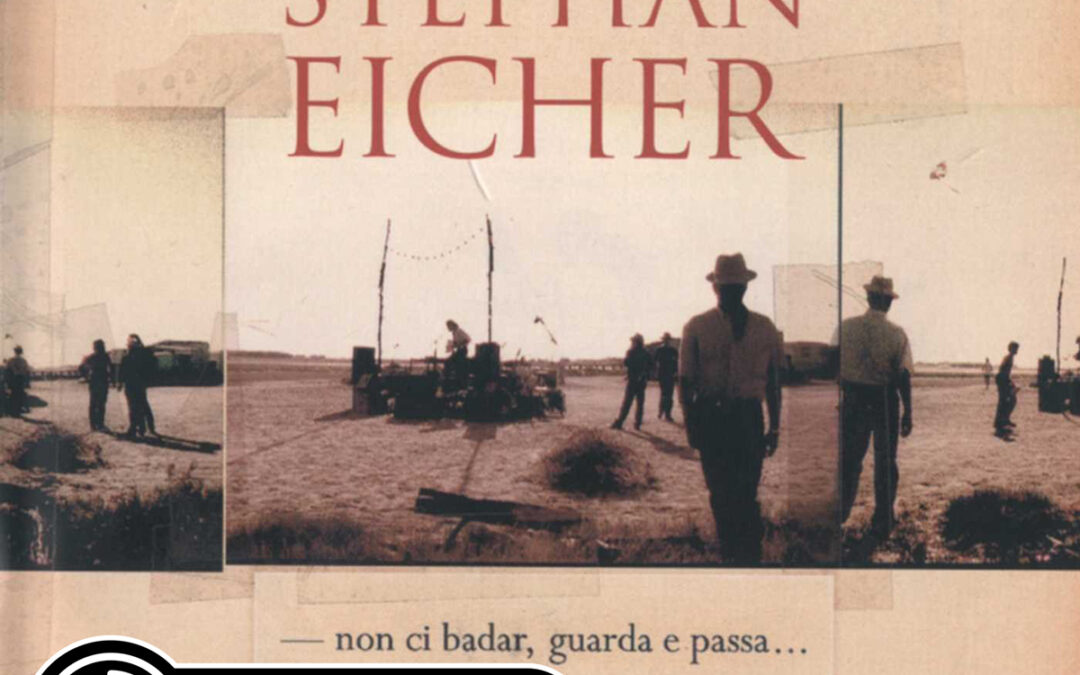
Artist: Stephan Eicher Album: Non Ci Badar, Guarda E Passa… Label: Universal Music Division Barclay Link: https://www.youtube.com/watch?v=SqCshM4TBQQ Style: French chanson
Like his two brothers, the Swiss artist was introduced to music by his father, an amateur jazz violinist. He cut his teeth in various bands, including one of his brothers’, Grauzone, which enjoyed fleeting success thanks to a single that sold several hundred thousand copies. He began his career playing electronic instruments associated with the emerging New Wave movement, but the young Stephan Eicher took his relative lack of success as a personal affront and put all his energy into gaining popularity. He then introduced more acoustic instruments into his music, even using some old ones, such as the hurdy-gurdy and the cimbalom. It was around the same time that he met the writer Philippe Djian on the set of Rapido, Antoine de Caunes’ television show. A friendship developed between the two men, leading the novelist to write most of the lyrics for the multilingual singer’s best songs in French.
The year 1989 was a real turning point for Stephan Eicher’s music, with the album My Place selling over two million copies. The following album, Engelberg, exceeded all expectations, partly thanks to the track “Déjeuner En Paix”, which seemed unbeatable at the top of the Top 50. Released in 1993, Carcassonne was of at least the same high quality, although less successful. Such success led to busy tours, as evidenced by Non Ci Badar, Guarda E Passa…, the artist’s first live recording. However, the Swiss artist did not follow the crowd, far from it: his album consists of two discs, the first of which captures what a concert on this tour must have been like, with a captivated audience and the musicians playing with appropriate emphasis, performing the songs the audience wanted to hear. The second disc features unexpected versions of the same songs, recorded in impromptu locations, often played without an audience and off the cuff, offering a different vision of the artist, imbued with the magic of the moment.
Already on the first disc, tracks alternate between those where, carried away by the energy of the rock musicians, you want to sing along, and others where there is more sensitivity and emotion, helped by Philippe Djian’s lyrics, a mixture of poetry and almost adolescent feelings. The second album takes us into something almost unprecedented, bringing us closer to the lives of musicians on tour, with the impression of sharing their moments of fantasy and latent tension. This feeling is further reinforced by the video that accompanies the album’s release but is unfortunately not available in the digital version.
Far from what an audiophile expects when listening to an album, the production takes a different approach, using an atypical sound recording technique that seeks neither clarity nor precision, but rather to create a sense of closeness to the musicians, something that can sometimes be lacking in overly polished albums, where everything is often too perfect. Non Ci Badar, Guarda E Passa… is, on the contrary, an album that overflows with love and life.
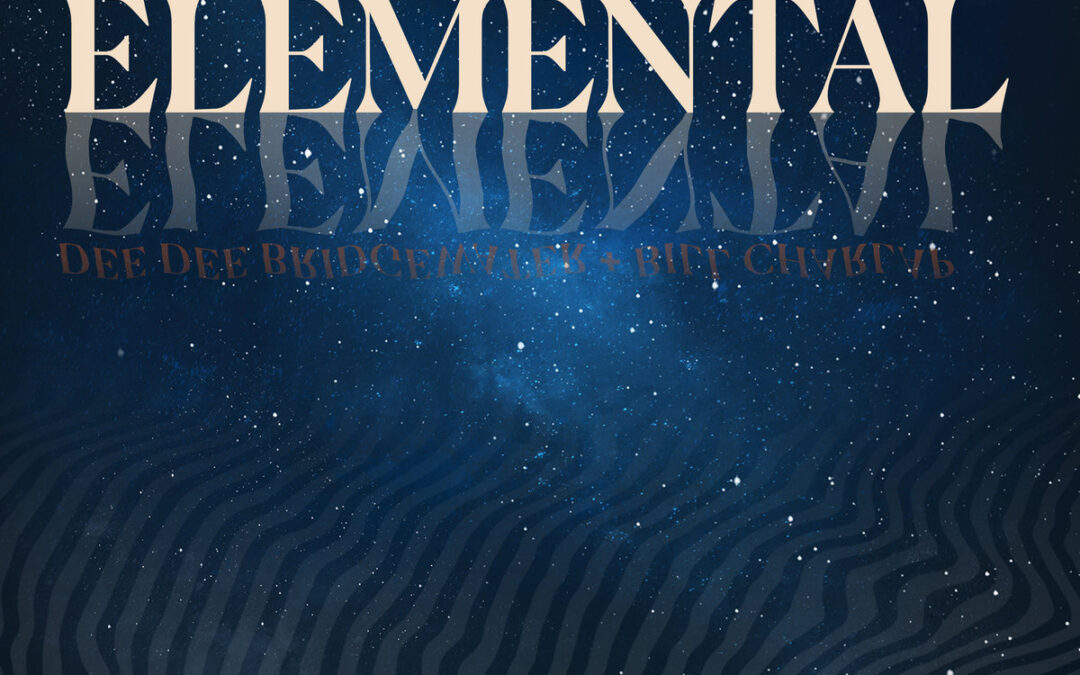
Artist: Dee Dee Bridgewater, Bill Charlap Album: Elemental Label: Mack Avenue Records Link: www.deedeebridgewater.com Style: Jazz
It is impossible to go into detail about Dee Dee Bridgewater’s career, as it began more than 50 years ago, at the turn of the 1960s and 1970s. The daughter of a jazz trumpeter, she sang with Sonny Rollins, Dizzy Gillespie, and Max Roach before embarking on a rich discography as a lead artist. She has won numerous awards and is involved in teaching and humanitarian work. Bill Charlap also comes from a family of musicians. He began learning classical piano at the age of three, but it was jazz that inspired him, particularly that of the 1940s to 1960s. After performing together in concert, the two artists continued their adventure on record.
Everything has already been said about Dee Dee Bridgewater, an outstanding vocalist with a love of improvisation and impeccable technical mastery. She is accompanied by an equally talented pianist, and their mutual respect and complicity are palpable on this album. The piano knows how to make subtle, adventurous deviations without stealing the spotlight from the imperial voice. It is a joy to follow these flights of fancy, where technique allows the artist to literally have fun with her vocal possibilities. On the other hand, if overused, these vocal games may tire those who are resistant to any form of scat.
A Dee Dee Bridgewater album must pay tribute to such a voice, which is the case here. The sound is beautifully defined, while maintaining a silky treble on the highest notes of the piano. The dynamics of the inflections of the voice and the hammer strikes are realistic and always pleasant. The sibilants are discreet, allowing you to listen at a high volume without feeling any discomfort, even when listening to the little jokes. When the piano is more solitary, it is a pleasure to scrutinize the sometimes subtle and sometimes more assertive touch of Bill Charlap, who also knows how to work wonders.
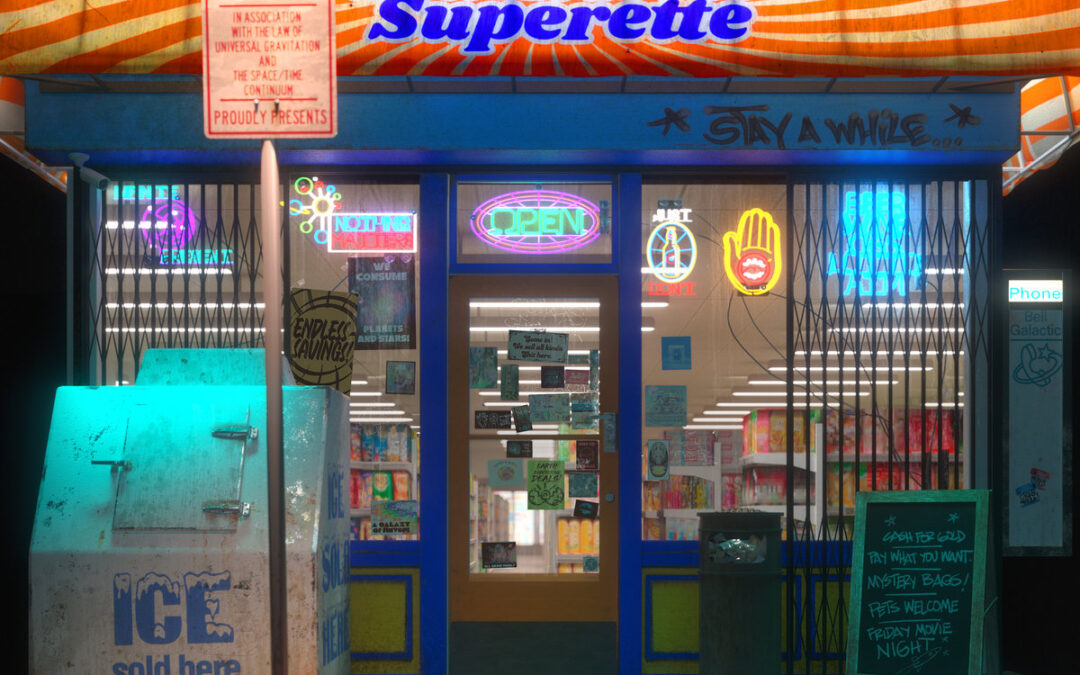
Album: Black Hole Superette Label: Rhymesayers Link: https://aesoprock.com Style: Rap, Hip Hop
There is no connection between this New York rapper and the cosmetics brand Aēsop, except for a love of refined and hyper-referenced architecture, in the latter’s boutiques and in the former’s best compositions. During his childhood and adolescence, Matthias Bavitz listened to old-school rap by Public Enemy and Run DMC as well as rock by Ministry and Fugazi. He was also an avid reader and lover of words, which led him to be considered the rapper with the most diverse vocabulary in his lyrics. His first self-produced album was released in 1997.
An artist with a vast musical culture, his productions are exclusively in the world of hip hop. His music is very similar to that of the rap pioneers he knows by heart. There is little use of electronics and no saccharine choruses or catchy backing vocals. Instead, a significant number of sampled or original sounds are linked to jazz or funk. With this in mind, the result is tracks that are reminiscent of De La Soul’s early albums, fortunately without the unnecessary chatter, but with a monotonous flow in exactly the same spirit.
The album Black Hole Superette may be old-school in style, but scratches and other sounds indicating the use of vinyl records as sources remain rare. Unlike modern productions, the bandwidth is not overused in the lower end of the spectrum, avoiding any sense of aggression and favoring a warm midrange with a tranquil atmosphere. A few discreet backing vocals reinforce this soft sound, and while the vocabulary used is extensive, so too is the number of instruments that appear throughout the album, which keeps the listener from growing weary.
Artist: The Sick Man Of Europe Album: The Sick Man Of Europe Label: The Leaf Label Link: https://thesickmanofeurope.net/ Style: Pop-Rock, Electronic
Apart from a few videos of live performances, where we see that the trio performs without a drummer, there is little information about The Sick Man Of Europe. This stance is fully embraced by the band members, allowing the music to speak for itself. When asked which musicians inspire them to write their songs, they tend to mention the state of the world, the tensions shaking societies, and technology creeping into human relationships without being truly understood. It’s quite a program, which ultimately results in music with many references.
The first notes take us straight back to the turn of the 70s and 80s, when the nihilistic momentum of punk was slowly transforming into a dark new wave under the weight of a brutal society. Other influences can be felt, such as minimalism and Krautrock from the same period. The dark atmospheres and the singer’s deep, gravelly voice are reminiscent of Bauhaus or Joy Division (see the recently released Closer), and they even manage to create an even darker and more tense sound, which is no mean feat.
In keeping with the standards of the genre, the bass is prominent on many tracks, often playing an important role in both the rhythms and melodies, accompanied in this area by the guitar. The rest of the rhythm section is shared between drums and drum machines or synthesizers, with a presence of strange machine-generated rhythms that really evoke the spirit of early New Wave albums. The production, marked by a coldness that is as sought-after as it is achieved, manages to hold these artificial components together with the more traditional instruments in a coherent way.
Artist: Leikeli47 Album: Lei Keli ft. 47 / For Promotional Use Only Label: Acrylic – Hardcover Link: https://leikeli47.bandcamp.com/album/lei-keli-ft-47-for-promotional-use-only Style: Rap, Hip-Hop
Leikeli47 talks about a shy child when she recalls her childhood, but she quickly decided to pursue a career in rap. As a teenager, she listened to N.E.R.D., Lauryn Hill, and the hugely popular Michael Jackson, and spent her time creating rhythms with whatever she could find. Her career really took off in 2010 with the release of mixtapes. The selection of one of her tracks for the launch playlist of the streaming platform Tidal gave her great exposure. After three EPs, she released her first album in 2017. When she appears in public, she remains masked so that listeners can focus on her music and will only reveal her face in 2024 with the video for the first single from this new album.
With lyrics imbued with feminism, advocating a takeover of power and the affirmation of women, particularly black women, Leikeli47 lets her firm or languid voice flow over the rare ballads. The instrumentation of her rap remains Hip-Hop-oriented but is based on electronica and draws inspiration from both House and Dancehall. There are also links to modern Latin and Caribbean music scenes and the Ballroom movement, which is based in New York, where the artist currently lives. While a few samples are easily recognizable, they are far from central to this music, which can sometimes seem experimental compared to the current rap scene, much to the artist’s credit!
Lei Keli ft. 47 / For Promotional Use Only is rich in machine-created rhythms, and its sound, sometimes a little surgical, often displays clarity and definition to match. While it may pose a problem for fans of older music and even older rap, it will delight those who love engaging bass lines with the possibility of turning up the volume without compromise, without anything overflowing. In addition, Leikeli47’s vocals are varied, avoiding monotony with constantly modulated flows.