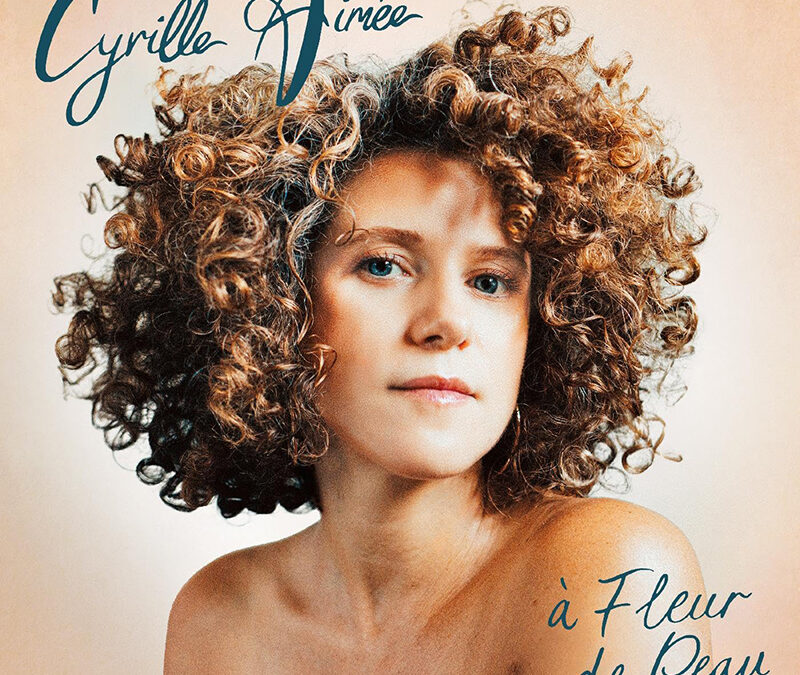
Of French and Dominican origin, singer Cyrille Aimée grew up in Django Reinhardt’s village, where music is very important. It was there that she was introduced to gypsy jazz and, of course, vocal jazz, with the likes of Ella Fitzgerald and Nancy Wilson in her sights. After making a name for herself in various competitions and releasing a number of albums, she went into exile in New York, New Orleans and finally Costa Rica, where she lives when she’s not travelling the world giving concerts. Her latest album is her most personal, as she wrote the lyrics and composed the music for most of the tracks, with the help of Jake Sherman. Sung for the most part in Spanish or English, she serves up a cool jazz sound in which everything seems easy and deceptively simple. The production gives an impression of electro-tropicalism reminiscent of Bebel Gilberto. What emerges is a great subtlety and lightness at every moment. The perfect soundtrack for a quiet evening in front of your stereo.
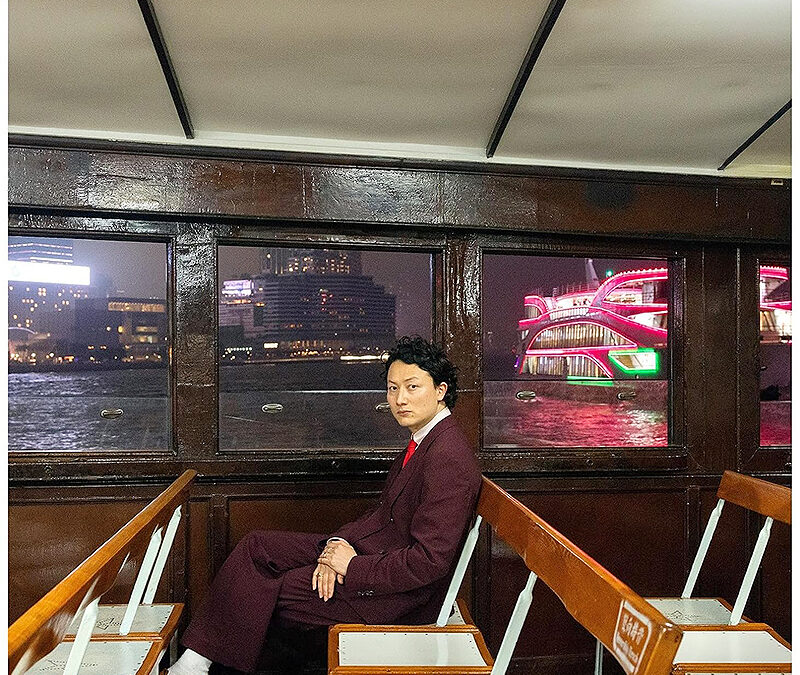
This is his first release, but this musician, born of a Belgian father and a Hong Kong mother, is no complete unknown. He worked with Charlotte Adigéry on the album Topical Dancer. When his mother died in 2008, he felt the need to reconnect with her culture, and this emotional odyssey was to be seminal for this record. Capturing sounds and ideas from the streets of Hong Kong, it’s somewhere between dance and ambient. Neither minimalist nor pop, it’s a bit as if Kraftwerk, instead of taking the motorway, were inviting us to wander around in an automated underground train. There’s a very urban feel to it, and at the same time a certain robotic coldness reminiscent of Autechre. You can tell that the artist has enjoyed playing with the possibilities offered by the studio, as electronic music lends itself to experimentation. The sounds picked up in the streets with a mobile phone are perfectly integrated into the compositions, without the ‘do-it-yourself’ aspect making itself felt too much. Depending on the track, the sounds will expand the soundstage to a greater or lesser extent.
This Saharan singer was born and spent her early years in a refugee camp on the Algerian border. The ups and downs of geopolitics prevented her from meeting her father. At a young age she discovered music as a form of entertainment, but also as a means of expression and communication. After gaining recognition, she toured Europe and then settled in Spain. The granddaughter of a well-known poet, she uses her voice to convey messages, although a more universal dimension has given way to the militancy of the early days. Musically, even if a cross-fertilisation can be detected on close listening, this is the traditional African music that has contributed so much to the blues, with a tinge of the Arabo-Andalusian corpus of Mediterranean music. The mix highlights the voice and the guitars, alternately acoustic and electric. The latter are reminiscent of the music of Tinariwen. The result is clear, with a focus on the top end of the spectrum and the modulation of the voice.
The productions of Brazilian pianist Amaro Freitas have been quickly acclaimed by the critics. Like his country, built on the mixing and blending of people and cultures, his music is steeped in multiple influences and genres, taking on a flavour that’s both distinctive and, let’s face it, addictive. While he admits to admiring Art Tatum and Thelonious Monk, he goes far beyond the codes of these jazz icons, mixing in many styles of Brazilian and South American folklore. He even goes so far as to approach the contemporary music of John Cage, while retaining the warmth and feeling of Latin music – a tour de force. Marked by his stay in the Amazon basin, the sound on this album is luxuriant, moving like a river or dense like a storm, recalling the ambience of Gato Barbieri’s ‘Third World’. The rather unacademic piano, sometimes prepared, is played percussively, striking clusters of notes in the middle of an Afro-Latin-inspired rhythm section. 2024 has only just begun, but surrounded by musicians who transcend his compositions and his inspiration, the pianist delivers an album that can already be counted among the year’s great records.
This American band was formed in 2006 after its members had played in a number of student bands. They released their first album in 2008. It wasn’t until 2014, with the release of Seasons from their fourth album, Singles, that they found success with their synthesiser-based pop and relentless dance beats. Each album release has been accompanied by a tour of fervent performances, adding to their popularity. Despite its title, their latest album doesn’t particularly call for contemplation, with lively songs bursting with melody and above all driven by the voice of Samuel T. Herring, whose distinctive vocals do much to seduce the group. He has now reached a greater level of maturity and expressiveness, bringing the band closer to a kind of supercharged Tindersticks or Lambchop, who have abandoned melancholy to bring you back into the light with their infectious lyricism.