Real name Roberto Carlos Lange, born in South Florida of Ecuadorian parents. He released his first album under the name Helado Negro in 2009 on Asthmatic Kitty, Sufjan Stevens’ label. Although he has picked up a few awards, his popularity is hardly commensurate with his artistic talent. On the other hand, it has to be said that his music is not designed to electrify crowds; on the contrary, it has a diaphanous, intimate beauty. For his ninth studio album, he has not changed the recipe, using synthesizers and loops to dress up a structure often composed on acoustic guitar or keyboard. His sophisticated folk seems to owe as much to psychedelia as to tropicalism. His influences are wide-ranging, blending together to produce a kind of musical UFO that is all too rare in the world’s output. It’s almost like a hidden treasure from the 70s, and at times reminiscent of something Robert Wyatt might have recorded. A record that deserves several listens to appreciate all its twists and turns.
The Swede behind this sunnier-sounding name played the piano as a child, later taking up the guitar, forming a band at university and winning a prize from the Swedish Copyright Society before going solo. All in all, a classic career, not unlike the pop of her first album, released in 2005. However, her recordings reveal more personal themes that are to become central to her music. His anguish and grief became recurrent themes, leading to darker sounds. On her seventh album, almost as incongruous as the cover, her cold, ghostly voice wanders through desolate, misty landscapes. Its author speaks of a subterranean world where the dead are always near. It is nonetheless captivating, at times reminiscent of the music of Archive, or other Nordic singers such as Stina Nordestam or Agnes Obel. The final track, ‘Light at the End of the Tunnel’, brings a touch of hope and ends this cathartic journey into darkness.
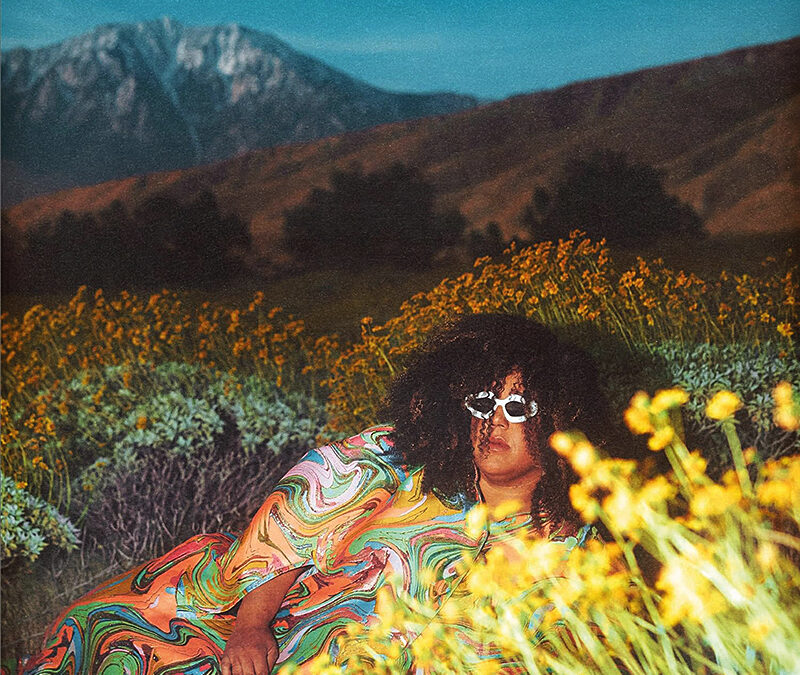
This singer and guitarist first made a name for herself around 2010 with Alabama Shakes. The band she founded with Zak Cockrell on bass, whose style is based on energetic blues-rock, sprinkled with beautiful ballads, marked above all by the singer’s charisma and warm, powerful voice. On her solo albums, of which this is the second, she has broadened her influences, dipping into funk, soul and jazz. She continues along the path opened up by her first solo album, but in a more radical vein, abandoning the easy pop side for an album that is both more uncompromising and more interesting. She explores more styles, of course, but also the possibilities of her voice. Here we hear a track that sounds like something out of the Prince archives, there an intonation reminiscent of Nina Simone, and then a jazzier passage, all bound together by a sound that comes close to contemporary urban music. It’s with talent and subtlety that the young woman mixes the styles and eras of black American music, always with the same infectious pleasure.
The name of this group comes from Louis Delgrès, a republican and anti-slavery man who preferred to die with his companions rather than surrender to the Napoleonic troops who had come to re-establish slavery in Guadeloupe. Needless to say, you’ll find some lyrics with political connotations, but also some more universal stuff. The vocals are split between French and Creole, with a hint of English. From the outset, the trio has played Creole blues with guitar, drums and, partly as a distinctive feature, a sousaphone for bass. Far less rough and bluesy than their first album, ‘Mo Jodi’, their third to date is both more subtle and more open to multiple influences. Some of the tracks are very pop, with a greater emphasis on melody, and there are even some ballads featuring Pascal Danae’s voice. What hasn’t changed is the band’s ability to write real anthems, as in the case of the title track, whose lyrics are unfortunately relevant to all eras.
Joseph Donald Mascis is no less than one of the two founders of the famous grunge band Dinosaur Jr, active since the mid-80s. Alongside his activities with the band, he regularly releases solo albums. For the contrast between Dinosaur Jr’s electrified sound and his much more acoustic solo productions, but above all for his talent, he is often compared to Neil Young. His latest album still has a pop-folk feel to it, with the acoustic guitar omnipresent, but the sound has been fleshed out to bring it closer to what he does in a band, with the addition of drums and piano on some tracks, and above all an electric guitar with its heartfelt interventions and well-measured distortion. His voice is always tinged with tenderness, even restrained sadness, capable of creating emotion. With this successful album, an important artist of the 90s offers us a bridge between two facets of his career. Depending on your sensibilities, you’ll be able to continue listening to one or the other with equal pleasure.