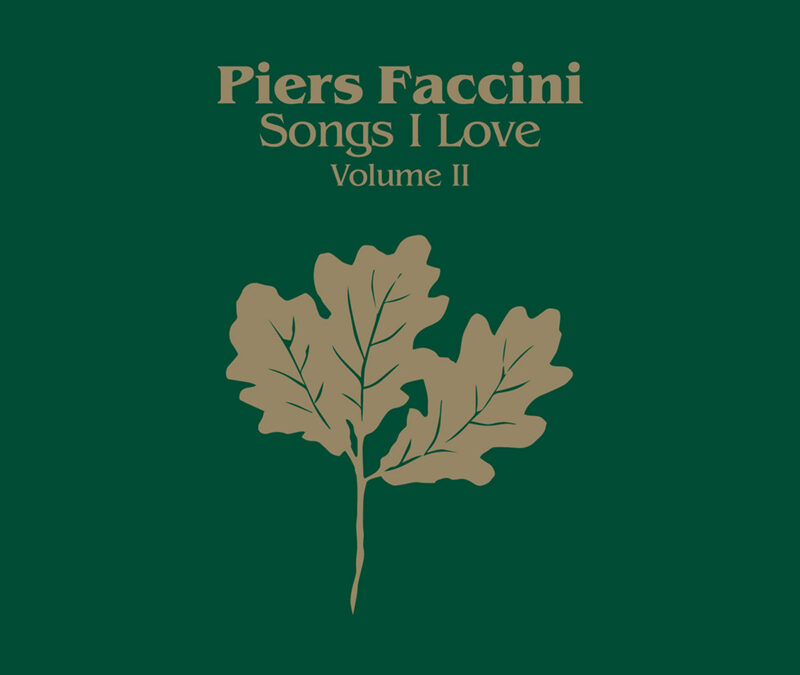
Anglo-Italian-born Piers Faccini came to music almost by chance. After art school, he initially set his sights on painting, with which he earned a living, and saw music as a hobby. The trend began to reverse in 1997, when he performed in public with the group Charley Malowe. In 2001, he launched his solo career. He is often compared to Leonard Cohen and sometimes Nick Drake, with a much more diverse instrumentation and subtle arrangements than the latter. His much broader influences have a lot to do with it. He takes us on a journey through time and place. Most of the songs are sung in English, but other languages can be heard, depending on his inspirations. For his second collection of covers, while there are titles by English and American artists, there are also traditional songs, and we can move from Africa to Italy or even 18th-century Ireland. A soothing, inspired album of “world folk”
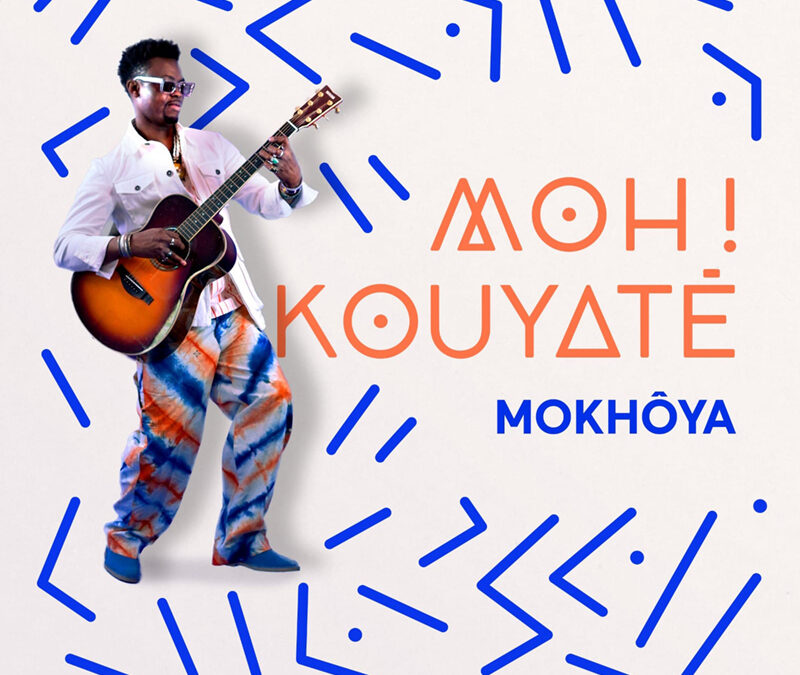
Born into a family of Guinean Griot, this singer and guitarist from Conakry was, appropriately enough, immersed in music from an early age. He first learned to play the balafon before devoting himself to string instruments, encouraged by his father and especially his grandmother, who also insisted on the importance of singing. Thanks to his musical experiences, he has enriched his traditional heritage with other influences such as blues and afro-jazz, as well as pop, rock and folk. For his third album, he opts for an acoustic sound, with Sedoufi Kouyaté’s kora, Olivier Koundouno’s cello and Camille Passeri’s trumpet. Even if the technical mastery is obvious, we’re much more on the side of sensitivity than virtuosity. Similarly, while this album cannot deny its African origins, it could almost be closer to an album by Nick Drake or Leonard Cohen than one by Toumani Diabaté, with whom Moh Kouyaté shares the Mandinka culture. Much more than an introduction to African music, this is a beautiful album that sings of humanity.
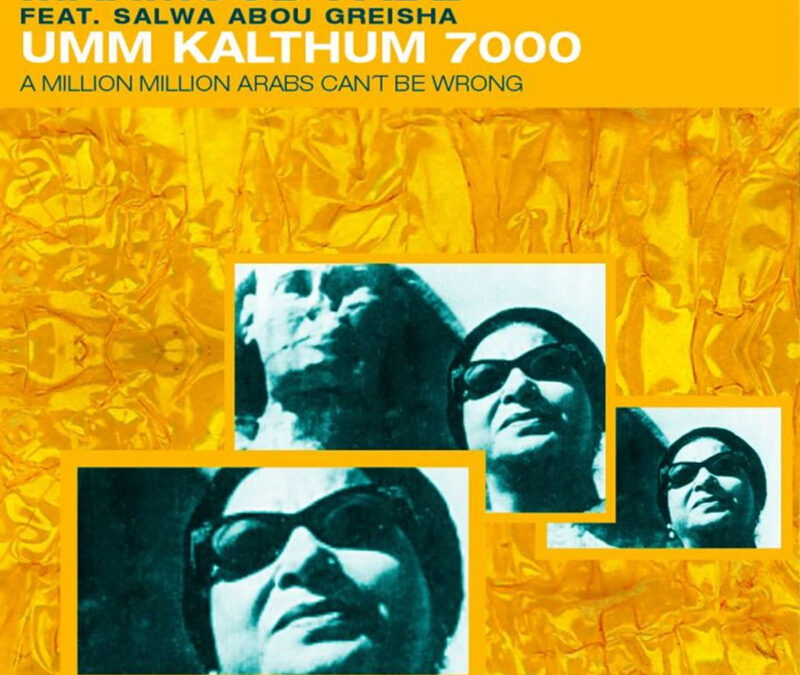
For those who don’t know her, the Egyptian Umm Kalthum (or Oum Kalsoum) was perhaps the most popular singer in the Arab world from the 1930s onwards, equalled in fame almost only by the Iranian Fairuz. Her life could be the subject of a biopic: she learned to sing by listening to the lessons her father gave her older brother, she performed disguised as a boy and left her village for Cairo, where she met people who inspired her to transcend her art. Paying tribute to her is both commonplace and delicate. Mahmoud Fadl, respecting a traditional orchestration, succeeds in the most beautiful way. The Nubian-born percussionist surrounds himself with an Egyptian string ensemble, and Salwa Abou Greisha takes on the heavy task of singing. Which she does with great mastery. The result is a step away from the hermeticism of some of the Diva’s recordings, making these classics more accessible to an unsuspecting public. An album that will awaken your digger spirit.
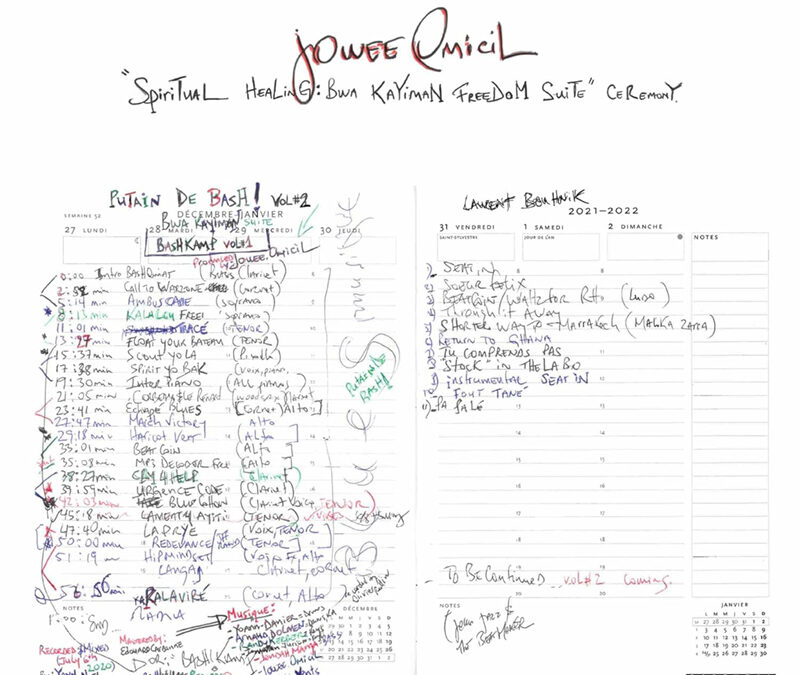
Jowee Omicil was born in Montreal of Haitian parents, and soon joined his father’s church band. By the age of 15, he had mastered the saxophone and a number of wind instruments. After his studies at Boston’s Berklee College Of Music, he went on to play and record with some of the biggest names in jazz and pop. These include Marcus Miller, Pharoah Sanders, Ibrahim Maalouf, Tony Allen, Roy Hargrove and Wyclef Jean. Author of a dozen albums as a leader, for his latest opus he brings together a combo with links to “Creolité”, for a tribute to the night of “Bois Caïman”, the first revolutionary act against slavery in Haiti. The group delivers an hour-long improvisation, divided into 21 tracks. The introduction has the resonance of ethnic music, with timbre taking precedence over melody, but the atmosphere soon becomes denser, evoking a little Sun Ra and a lot Ornette Coleman, one of Jowee’s mentors. A multi-influenced free jazz record that could have been recorded in the 60s. It breaks free of both geographical and temporal boundaries.
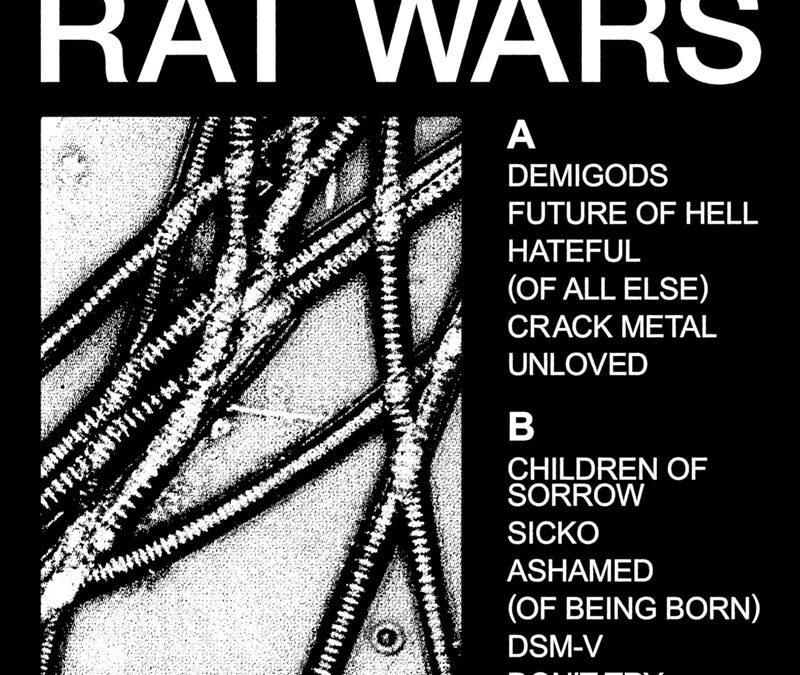
This band from California made their name by playing many free concerts from the moment they formed in 2005. Following the release of their first full-length album, they went on to support Nine Inch Nails on their 2008 tour. Finally, the production of video game soundtracks has enabled the foursome to reach a wider audience. On their albums, they alternate electro-pop-inspired tracks with a slightly noisy sound, with much heavier metal-sounding tracks. This deliberate choice may have resulted in albums that didn’t sufficiently showcase their best compositions. On their fifth and latest album, there’s a greater sense of unity, the synth is still present and the singer’s voice is still smooth (a little too smooth?), but we hear a fairly successful blend of early Marilyn Manson, Rammstein and Porcupine Tree. Set against a backdrop of industrial stadium music, it’s easy to imagine what it might sound like live.