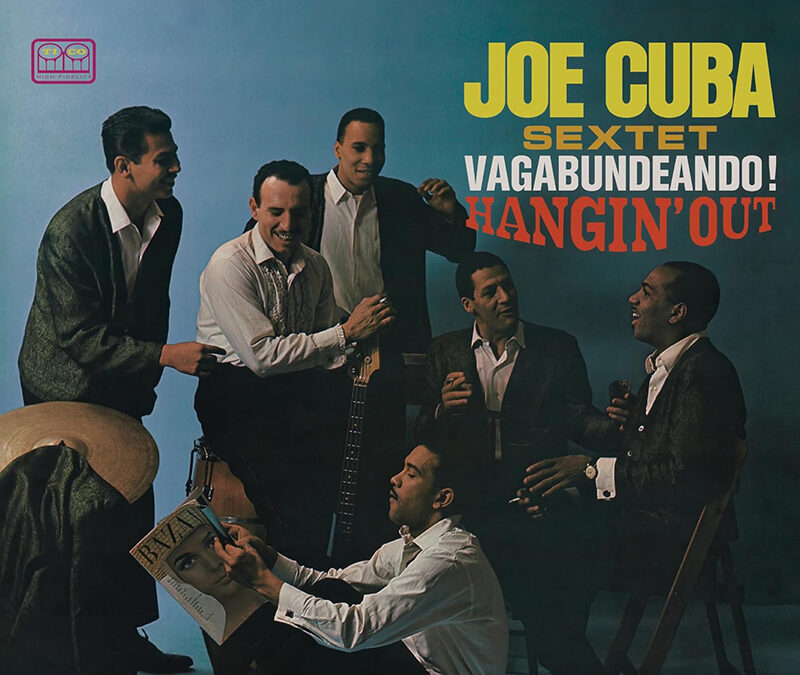
Gilberto Calderòn was born in New York in 1931 to Puerto Rican parents. He grew up in Spanish Harlem and taught himself to play the congas. At the age of 19 he met Tito Puente at a Puente concert. It was from this meeting that a friendship was born, and above all Gilberto decided to take charge of the band in which he played. During a performance in New York their agent changed the name of the group, without informing them, to Joe Cuba Sextet. From then on, he played under this name. He died in 2009, having released some thirty albums as leader.
Joe Cuba is regarded as the father of Latin Boogaloo, a genre that was very much in vogue in the 60s, blending Afro-American and South American influences such as Manbo. Thanks to the inclusion of English lyrics on some tracks, the popularity of the style spread far beyond the immigrant community. The sextet produced some highly successful tracks in the mid-60s and masterfully negotiated the Salsa turn of the 70s. This reissue features an album from 1963, when they were already a big hit with a Latin American audience, but just before their exposure in the charts.
The abundance and diversity of the percussion is particularly well served by the 24 bit 192 kHz remastering, with a wide, well-defined soundstage and increased dynamics. Some tracks, by choosing to place all the vocals on the right-hand side, are better suited to listening through loudspeakers, as the sensation in headphones can be disconcerting. Without being too pronounced, the sound is a reminder that when the tracks were recorded, everything was done in analogue, and that for this record it was done in the studio. A journey through time and space that will make you want to dance.
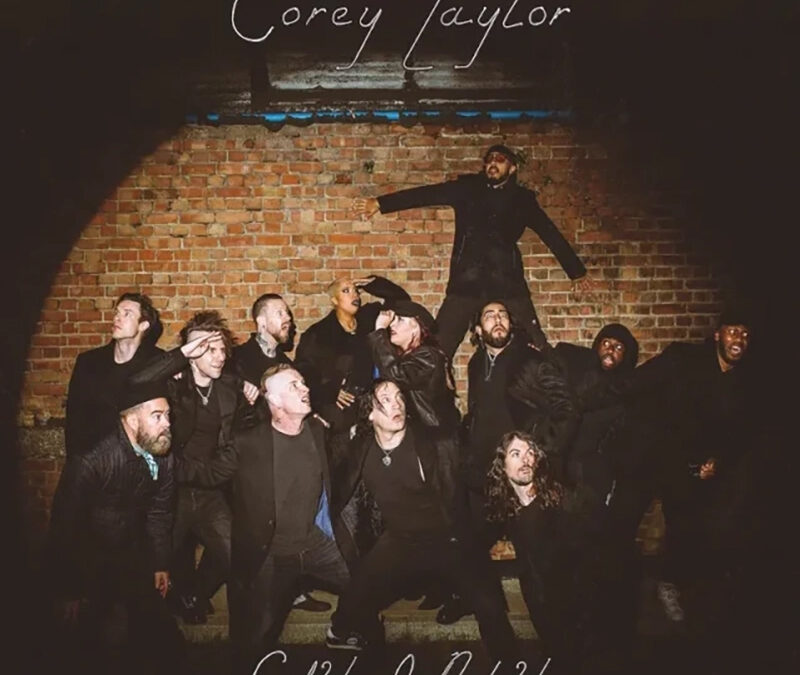
It’s tricky to occupy space for an artist whose album you presented just a few months ago. On the other hand, when you’re excited about an album, you have to put it forward. That’s the case with this one. For those who don’t know Corey Taylor (and who haven’t read the review of his previous album on this site), he is the singer and one of the main members of the famous Nu Metal band Slipknot, which emerged in the mid-90s. He was also one of the founders of Stone Sour, his list of collaborations is extensive and he began releasing solo albums in 2020.
This record is more of a compilation than a proper album, featuring studio outtakes and covers. As with his other solo albums, Corey took a step away from the metal of his bands to mix in some effective power pop, moving from one genre to another with no limits and, above all, with disconcerting ease. Although Corey’s stylistic palette is less wide-ranging and less adventurous, one is reminded of Mike Patton. Among the covers are a good number of references expected from a metal singer, like Led Zeppelin or Alice Cooper, but also some more surprising ones like Echo & The Bunnymen.
This digital version of a vinyl album released for Record Store Day brings together tracks from various sessions, the sound not varying as much as the style from one track to the next because Corey Taylor retains control of a good number of instruments and part of the production. His superb vocal skills and the guitars are enhanced by a serious, sometimes authoritative rhythm section. The bass can be funkier on certain tracks. There’s even a live track with electro-acoustic guitar that’s full of emotion. Surely one of the most interesting metal artists of the moment.
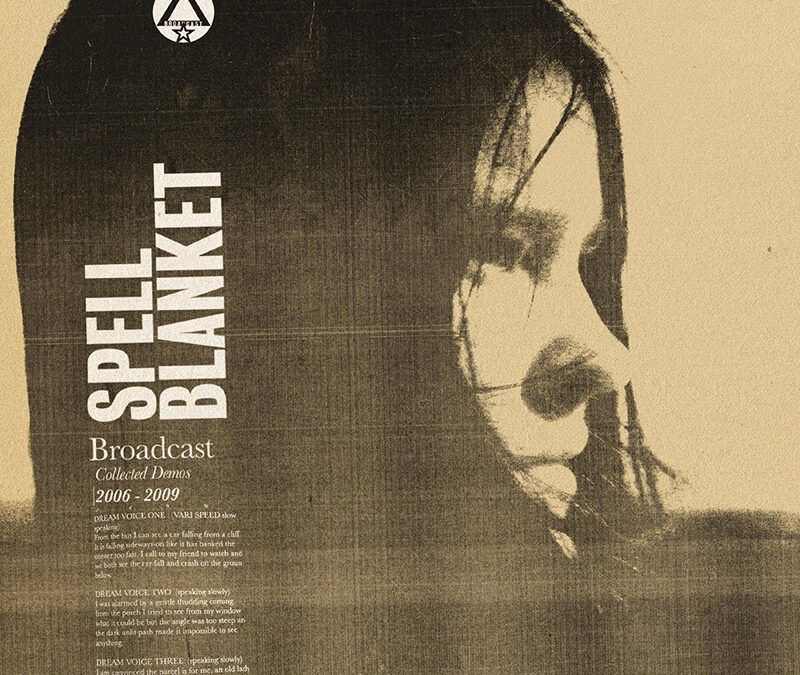
Broadcast are an English duo who formed in the mid-90s. Soon after meeting in a club, they released a single, an EP and recorded a Peel Session. Spotted by the demanding Warp label, in 1997 they released their first compilation based on their EP and two singles. Their style was psychedelic, pop-laden electronica, with a leaning towards contemporary music and field recording, using samples sometimes taken from everyday life. Their career came to an end following the untimely death of singer and multi-instrumentalist Trish Keenan.
The material on the record we’re talking about today comes from Trish Keenan’s impressive archive collection, and more specifically from recordings on 4-track cassettes or MiniDiscs. Because of the disparity of the titles, the style can change from one track to the next, moving from Lo-Fi folk to a voice reminiscent of sacred chant, sometimes reinforcing the collage aspect of little sonic haikus. What emerges from this sequence of miniatures is the incredible inspiration of this artist, who often needs only a few notes to accompany her voice to create a moment of great beauty, sometimes reminiscent of Linda Perhacs.
As you can imagine, you won’t be able to show off your system to your friends with an album like this. As far as the recording is concerned, certain tracks bring out the sibilants and tonics and the stereo, although used, is not really brought out to its best advantage. That said, the raw guitar and keyboard sounds have their charm and are perfectly suited to intimate solo listening. This way of listening goes just as well with multi-track vocal work which, while not the equal of the big studios, will appeal to many music lovers.
In his grandparents’ village, this Cameroonian from a large family was introduced to a life in harmony with nature, as well as to the music, dance and traditional culture of his native Bassa ethnic group. As a schoolboy, he founded the group The Jazz Crew, which met with some success in Cameron. Then came Macase, with whom he achieved international fame, but left after the second album to embark on a solo career. “Mádibá Ni Mbondi” is the expanded version of his fifth album, released just over a year ago, and if anything, these four tracks add to its value.
The Cameroonian’s music really stands apart, it’s as if dreamy folk had met ambient electronica, and every second, dominated by the artist’s clear voice, exudes Africa. The whole thing is set to a rhythm that has the fluidity of a calmly flowing river, because the subject of the record is water, its importance to life, and what man does with it. Despite the heavy theme, everything is gentle and subtle. However, the tracks carry an intensity that will overwhelm you if you listen carefully. A listen they richly deserve in view of their beauty.
Although this album has elements of traditional music in the background, it is very much oriented towards the use of electronics and the studio, but this device is at the service of great sensitivity and highlights in turn aerial brass instruments, an ethereal keyboard, the arpeggios of a guitar or a delicate kalimba. All guided by a silky voice, often multiplied. These elements are surrounded by less easily grasped sounds that support the whole and play an important part in creating the particularity and appeal of this refined music.
Born blind, Brittany Davis doesn’t play music, she lives it. It’s her means of expression. She says it herself: sound is her way of seeing the world. After a promising EP in 2022 and a concert at the Transmusicales in Rennes (her first outside the United States), her debut album was eagerly awaited, and it doesn’t disappoint. No one plays music in his family, yet they’ve been influenced by most black American music, and that comes through on his album. Gil Scott-Heron’s Spoken Word, James Brown’s funk, soul and gospel can all be heard on this album. The unity of the whole is ensured by an orientation close to Hip-Hop. The aforementioned styles are enhanced by a sound that is round and warm without sounding dated. The modern, urban production has given many tracks the air of mainstream anthems, although they are more interesting. What’s more, it allows the artist to alternate the narration with the vocals without there being any breaks.