ifi AUDIO NEO STREAM

ifi AUDIO NEO STREAM

Following the success of the Neo iDSD, iFi has now treated us to a network variation simply called ifi Audio Neo Stream. This all-in-one device is as comprehensive as it is connected, incorporating almost all of the technologies developed by the brand, and is presented as THE cornerstone of any good system.

Founded in 2012, iFi Audio is a subsidiary of the legendary Abbingdon Music Research (AMR) group, known and recognized for its high-end Hi-Fi systems. As a younger brand, it targets a clientele of enthusiasts who may be less wealthy but are just as demanding.

While AMR focuses on “classic” home electronics, iFi Audio primarily targets modern audiophiles looking for compact, high-performance solutions that are equally suited to portable and stationary use.

And, from their first appearance at the HKTDC in Hong Kong, the Micro iCan and iDAC, respectively a headphone amplifier and DAC amplifier, caused a sensation: elegant, powerful, and affordable, they naturally rose to the top of the rankings for the best models of their kind, quickly propelling iFi into the spotlight.

This success has never wavered, so much so that the iFi catalog now includes not just two models, but around fifty. From high-end DAC/amp systems, with the Pro iDSD series, to iPurifier power conditioners and, of course, portable DACs, led by the GO blu and Go Bar.

It’s a huge catalog, spread across several levels, topped by the Pro range and recently completed by the Neo series, which is more accessible but just as powerful, like the model we’re looking at today, the Neo Stream.

A mix of the Pro iDSD and Neo iDSD, it takes its inspiration from the former for its network functions and from the latter for its iconic design, retaining many of the features that made its predecessors so appealing, right down to the LCD screen. An ultra-complete network player with a meticulous finish, advertised as a device “designed by enthusiasts, for enthusiasts,” we couldn’t wait to try it out!

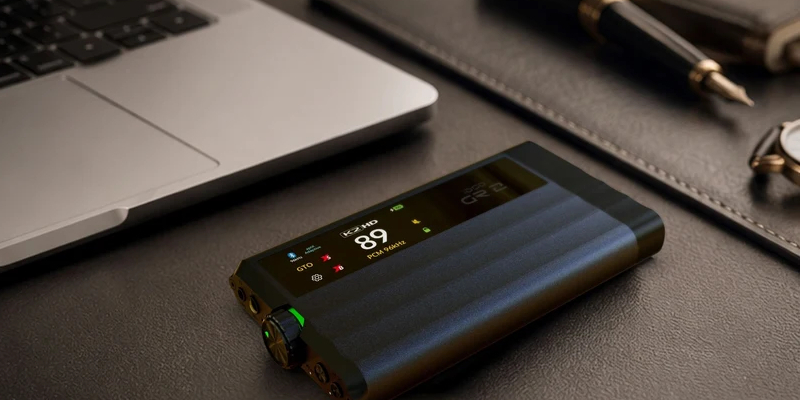
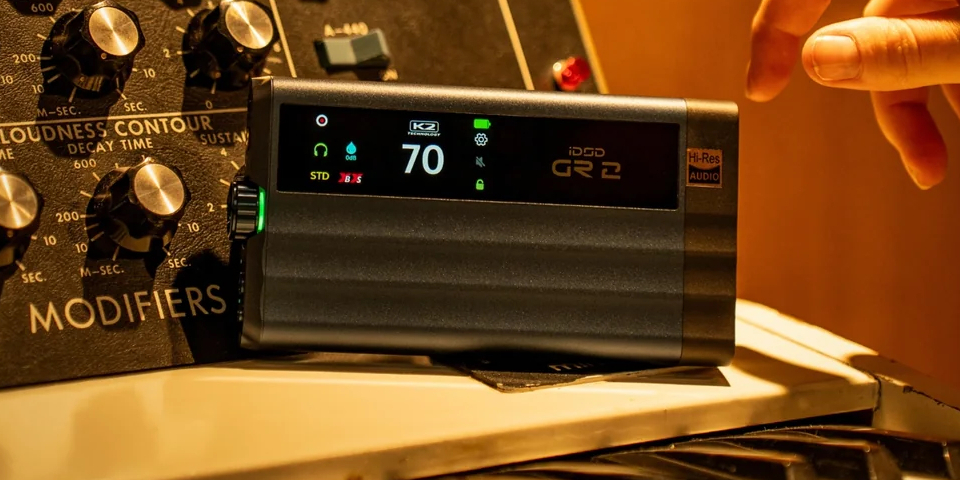
Visually similar to the Neo iDSD, if not identical, the Neo Stream bears a clear resemblance to its predecessor, which is not to our displeasure, quite the contrary. Resolutely modern in style, it plays the sobriety and elegance card, reducing the controls to the bare minimum, preferring to replace the usual profusion of buttons with a multifunction control wheel.

A happy choice, supported by a control window with enhanced capabilities, which also benefits from welcome improvements, although it is not touch-sensitive. And while its size remains modest compared to Rose’s Korean players, the excellent central click wheel, notched and perfectly calibrated, guarantees effective handling: with just a few clicks, the Neo Stream switches between sources, completely freeing you from the need for a phone or remote control.

ifi audio neo stream hifi network player rear view of the chassis

A perfectly balanced monochromatic design, enhanced by a CNC-machined monobloc chassis for a futuristic yet discreet look. So much so that it almost makes you forget its plethora of connectors, which are standard for a product of this brand: optical/coaxial jacks, unbalanced and balanced line outputs, dedicated and filtered USB ports. The Neo Stream even features an AES/EBU XLR output, in addition to an HDMI connector providing i2s support – quite a feat.

And if that weren’t enough, the Neo Stream goes so far as to offer no less than four different network inputs. Not content with supporting the unbeatable RJ45 port, the player also features an M12 port, usually reserved for automation professionals, as well as a mysterious connector called “Optical SC.”

This unique system sits between the Neo Stream and the router, multiplexing all incoming network streams into a single optical signal, which is regenerated, reclocked, and rebalanced to ensure supra-optimal transmission quality. This unique feature fits perfectly with iFi’s ideology of always being on the lookout for the slightest interference—whether physical, electrical, magnetic, or even digital.

Taking this leitmotif to the extreme, iFi has equipped its player with a complete suite of proprietary protections:

ANC II for USB ports, iPurifier for SPDIF outputs, SilentLine circuitry for the display, and even TI Low-ESR + Taiyo Yuden capacitors for the power supply stage. Even the classic DC transformer has been replaced by iPower X, a stabilized DC power supply known and recognized for the purity of its signal.

ifi audio neo stream hifi network player front view of the chassis, with the screen on the left and the big knob in the center

Finally, to complete an already idyllic picture, iFi has equipped its circuit with very high-end components. The ARM processor, the true brain of the device, has increased speed and memory, processing up to 12 times more signals per second, combined with an XMOS chip that has also been boosted for optimized DSD, PCM, and MQA stream decoding.

Downstream, we find the unbeatable Burr-Brown DAC from Texas Instruments. It is itself associated with two in-house GMT-compatible clocks. There are also a string of TDK ceramic capacitors, low-emission muRata modules and other Panasonic E-CPU chips, usually reserved for ultra-high-end models. The icing on the cake is that the Neo Stream even has a dedicated power controller, combined with a second module dedicated solely to RJ45/M12/SC inputs. What more could you want?

THE SETUP OF THE IFI AUDIO NEO STREAM

The iFi Neo Stream is very comprehensive, yet easy to use. Once connected to the power supply via the dedicated power supply—which can be substituted—comes the most important step: the network connection.

There are four options available, from the classic Wi-Fi network to the more surprising M12 port, not to mention the ever-reliable RJ45 and, above all, the famous optical connector! To take advantage of the latter, iFi provides a USB-powered box with an Ethernet port input and a fiber optic patch cord output.

And while the wireless connection requires you to go to a specific page to connect the player to the local network, this is not the case with the RJ45/M12/SC inputs, where a simple connection to the router will give you access to all your favorite sources.

Once this is done, you have two options: enjoy the built-in DAC and connect your amplifier or speakers via the RCA or 4.4 mm Pentaconn outputs; or connect a higher-end DAC via the numerous digital outputs. Note that for the most demanding users, iFi recommends the USB and HDMI outputs, which are the only ones capable of outputting a 32-bit/768 kHz signal.

Last but not least, the player features no less than four different phase settings, including the famous GTO (Gibbs Transient Optimized), specifically calibrated to suit the source used: Tidal Masters, Qobuz, Spotify, DLNA, or even NAA for access to a dedicated local server.

For ultimate convenience, the streamer offers hardware volume control, which is more refined and precise than that usually found on the source, as well as full compatibility with Roon, THE leader in local audio/network interfaces. The main question remains: what about sound performance?

cinematic shot of the ifi audio neo stream hifi network player against a dark background

THE SOUND OF THE IFI AUDIO NEO STREAM

Once connected to our usual test system—a Cayin DAC + amplifier combo—via the XLR AES EBU port, we listened to the Neo Stream for the first time using Qobuz, our favorite French HD audio streaming platform. And it’s clear that right from the start, the Neo Stream quickly took pole position.

In fact, the Neo displays a rare transparency, providing the Cayin DAC with an extremely solid foundation, allowing the AKM chips to really shine. Less high-end than an Aurender player, more compact than a Rose, and more accessible than Innuos, the little iFi nevertheless holds its own, even going toe-to-toe with its competitors.

This openness is confirmed with each listen, as the synergy of the XMOS ARM chips, combined with the circuit topology, produces a result of absolute purity, relegating our traditional Chromecast Audio, so practical but now far surpassed, to the background. Even when connected optically, Google’s device delivers a raw digital stream, making it impossible for it to achieve the level of separation and natural precision offered by the Neo Stream.

And for good reason: when connected via Toslink, the conclusion is clear:

the iFi streamer holds its own, even teasing the upper echelons of the Aurender with the same balanced sound, less warm than the iDSD Nano/Micro, more in tune with the new PRO series.

Similarly, it is interesting to note the surprising and real contribution of the OptiBox when used as a digital transport. Compared to the “classic” RJ45, the optical connection seems to free up the upper end of the spectrum, with more chiseled highs, a wider soundstage, and better grounding in the vocals.

This is mainly audible in streamer/DAC mode, connected via the iFi’s line outputs, which further enhances the level of a converter that has nothing left to prove. Already used in almost all of the brand’s DACs, the Burr-Brown chip reproduces every nuance and every sigh without exaggeration, imposing an almost military precision on its midrange, whether it’s a dedicated amplifier or a pair of active speakers—in our case, the KEF LS50 Wireless.

So, whether paired with our iHA-6 or our KEFs, it’s impossible to remain unmoved by this DAC, which magnifies the finest details as well as the worst pitfalls. But it’s in the silences that the little block is most deafening: even at (very) high volume, it’s impossible to discern the slightest noise or breath.

This fidelity quickly separates the wheat from the chaff, bringing back to life gems such as Dominique Fils Aimé’s “Birds” and Bela Fleck and the Fleckstones’ “Flight of the Cosmic Hippo.” Everything that has made iFi’s creations so successful is here: chiseled highs, tight bass, and perfectly defined mids, all highlighted by a soundstage of simply astonishing width. A delightful acoustic mastery, accessible at any time, enhanced by an increasingly comprehensive streaming offering, with our Qobuz and Tidal playlists playing one after the other on Roon, engulfed by the Neo Stream.

And for the most discerning, it will even be possible to play with the filters, which act directly on the signal interpolation. Personally, we stuck to BitPerfect mode, which is the most transparent, but we also recommend trying GTO (Gibbs Transient Optimized) mode, which, to our surprise, performs better on Roon than on Qobuz/Tidal.

It’s a subtle but real difference, which is more noticeable on the electro tracks we love, which are fuller and more dynamic in this particular mode, with a much more powerful overall sound, it has to be said.

Our most memorable moment? The introduction to “She Don’t Know” by Melody Gardot, enhanced by the iFi Neo Stream + iDAC6 + iHA6 + Audeze LCD-X combo, which plunges us into the heart of the streets of New York, where the horns of yellow taxis echo off the walls of the buildings. A real shock!

ifi audio neo stream hifi network player

OUR CONCLUSION

The iFi Neo Stream is simply explosive! Not content with competing for the coveted title of best network player on the market at this price point—and easily rivaling many much more expensive models—this marvel of integration simply blew us away. A true gem of sound, excelling in all areas, both in form and substance, the player delivers a signal of absolute transparency accessible with a single click.

Author(s): Haja Randrianarison

Technical Sheet: ifi Audio Neo Stream

  • Origin: China
  • Price: €1,299
  • Dimensions: 214 x 151 x 41 mm
  • Weight: 1 kg
  • Converters: Texas Instruments Burr-Brown
  • Supported formats
  • PCM up to 32-bit/768 kHz/DSD up to
  • DSD 512/MQA Full decoder
  • Network functions: Roon/AirPlay/Spotify Connect/Tial Connect/DNLA/UPnP/NAA operation/Stream-iFi
  • THD/SNR: <0.0025% @ 0 dBFS/< -106 dB @ 0 dBFS
  • Output impedance: Balanced <74 ohms/unbalanced <37 ohms
  • Output voltage: 4 V RMS (4.4 mm)/2 V RMS (RCA)
  • Frequency response: 20 Hz – 45 kHz (-3 dB)
  • Power supply: DC 9 V/2.0 A, 12 V/1.8 A, 15V /1.2 A* (center pin +)
  • Analog outputs: RCA/4.4 mm Pentaconn
  • Digital outputs: Toslink/Coaxial/XLR AES/EBU/HDMI i2S/USB
  • Digital inputs: RJ45/Optical SC/M12/USB

You might be interested: LINN Klimax DSM 3: The most accomplished player of the brand

Bristol 2026: AOS MC phono preamplifier and Planar 6 RS

Bristol 2026: AOS MC phono preamplifier and Planar 6 RS

At the Rega stand at the Bristol Hi-Fi Show 2026, visitors could not only listen to the new AOS MC phono preamplifier, designed exclusively for moving coil cartridges, but also get a sneak preview of the new Planar 6 RS Edition.

PLANAR 6 RS
Like the recent Planar 3, the Planar 6 now has a superior version, the Planar 6 RS. This time, it has a different tonearm, replacing the RB330 used on the Planar 3, 3 RS, and 6 with the RB880 from the Planar 8. This allows the Planar 6 RS to accommodate a better cartridge, in this case the Nd9 MM offered as part of a package, or of course the Ania Pro or even the Apheta 3 MC. The Tancast 8 turntable structure features a metallic plinth and, for the moment, this model is only available in gray with a brushed aluminum finish. Already separate on the Planar 6, the power supply remains dedicated to the NEO PSU Mk2, which is also found on the Planar 8.

The last major difference is that the motor has been improved with a CNC-machined construction to offer a dual-drive pulley, relayed by a double EBLT reference belt. Once again, the price is currently only known in the United Kingdom, at £2 000 with the Nd9 MM cartridge (£695), which is the price of a classic Planar 6 with Ania Pro MC cartridge, or £554 less than a Planar 8 with the new Nd9. The choice is yours!

AOS MC
Derived from the Aura phono preamplifier, the AOS MC sits above the Fono MC, featuring two fully analog amplification stages controlled by a “servo” that compensates for variations in ambient temperature and operating conditions. The first stage uses low-noise FETs configured in pairs in a parallel structure to deliver the signal symmetrically. The second stage features a symmetrical class A differential amplifier with a common-base driver stage; it is also used as an active amplifier in the low-frequency section of the RIAA equalization stage.

Still using switches on the rear panel rather than a knob, which would make things easier, the input impedance can be changed to four levels, from 70 Ω to 400 Ω, and the capacitance to 1 000 or 4 300 pF. The gain can also be adjusted to 63 or 69 dB, which is always useful with very low-level cartridges. The price, currently only in pounds, is £1 500. An AOS MM is announced for the future.

27/02/2026

Impulse & Craft: releases in the first quarter of 2026

Impulse & Craft: releases in the first quarter of 2026

New releases from Impulse

Impulse recently announced the next two titles in its Verve Vault series, to be released in March. After eight previously released titles, including Antonio Carlos Jobim’s sublime The Composer Of Desafinado, Plays, the label will release Elevation (1974) by legendary saxophonist Pharoah Sanders, in which he expands his vision of spiritual jazz in an album recorded during two concerts and a studio session that strikes a balance between ecstatic expression and concentrated interaction between the musicians.

The other release is Gábor Szabó’s Spellbinder (1966), which introduced the Hungarian guitarist to a wider American audience with a hypnotic blend of powerful grooves and modal jazz, Eastern European folk influences, and pop textures typical of the 1960s. Both vinyl records are already available for pre-order.

New releases from Craft

Craft Recordings continues to add to its famous Jazz Dispensary series with the release of a post-bop classic, Joe Henderson’s cult album Tetragon. Mastered from analog tapes, this is the album on which Henderson continued to develop his sound in the field of post-bop before venturing into spiritual jazz. He is accompanied by a world-class ensemble including Ron Carter, Jack DeJohnette, Kenny Barron, Louis Hayes, and Don Friedman. Needless to say, we can’t wait to hear these gems on our turntables.

26/02/2026

Hand washing with the Humminguru EZ Washer

Hand washing with the Humminguru EZ Washer

Humminguru, which has been making a name for itself in recent years with its affordable ultrasonic vinyl cleaning machines, is now making cleaning even more affordable, provided you do everything yourself.

The EZ Washer consists of a tray that you fill with demineralized water and, ideally, a vinyl cleaning solution such as the brand’s EZ bottle. Then, simply clamp the vinyl between the two plastic parts of the clamp supplied with the machine, onto which a small orange handle fits.

Goat hair brushes are integrated into the machine. Once the clamp is around the vinyl, simply insert it into the top of the machine and turn it about ten times in each direction by hand. You can then remove the clamp and place your vinyl record on a drying rack with small rods, topped with little rubber penguins that came with the Humminguru Nova (VU#56 FR; We Keep).

It should also be noted that the clamp protects the entire inside of the records, including their labels, with rubber, and can handle all vinyl records with a thickness of 1 to 3 mm, which is most of them.

More tedious than an automatic machine, especially if you’ve added the fountain that came out at the end of last year (The Toy; VU#63 FR; We Keep), the EZ Washer has the big advantage of offering you an ergonomic and economical solution for washing your black discs, as it retails for 129 €.

26/02/2026

LUXMAN LMC5

LUXMAN LMC5

After introducing audiophile-quality cartridges with globally recognized performance more than forty years ago, Luxman has finally announced a new addition to its lineup. Named the Luxman LMC5, this cartridge is the result of two years of research. True to the Luxman spirit, it aims to be one of the most exceptional products on the market and to take over from the famous LMC1 and LMC2 cartridges, which appeared on the market in 1981 and 1982 respectively.

luxman lmc5 closeup views

Jeff Sigmund, president of Luxman America, does not hesitate to declare:

“Our LMC5 cartridge is designed to satisfy the most demanding music listeners by offering them unparalleled purity of reproduction. It is the careful and uncompromising choice of materials, the creation of multiple prototypes, and the use of extensive listening tests that have enabled us to achieve this result. We are therefore committed to excellence. The resulting listening quality must be tested to be fully appreciated.”

Like the vast majority of high-quality cartridges, the LM5 is based on a moving coil (MC) architecture. The coils are made of 30-micrometer diameter enameled urethane wire. This is the thinnest wire of this type currently available on the market. They are wound symmetrically for optimal channel separation and bathed in an intense magnetic field generated by a cross-mounted iron core combined with a powerful BH20 samarium-cobalt magnet.

Finally, the stylus is based on a Shibata diamond stylus. It should be noted that this moving assembly, which forms the heart of the LMC5 and gives it its character, has a very low mass. This unique feature allows it to deliver a particularly wide frequency response in the extreme high frequencies, with tests carried out by Luxman confirming a frequency response of up to 3 kHz, which is remarkable for a phono cartridge.

luxman lmc5 view from under

THE SOUND OF THE LUXMAN LMC5

At Luxman, the concept of listening comfort is paramount, and to be perfectly honest, this is a reassurance and excellent news for us. We have never been disappointed by the tonal balance of this manufacturer’s products. Its beautiful phono cartridge offers a listening experience that is entirely in line with the company’s philosophy. Here, finesse, subtlety, and tranquility take precedence.

To paraphrase Baudelaire, the LMC5 brings you luxury, calm, and pleasure… Luxury, first and foremost, because this cartridge’s harmonic palette is extremely rich, with dense bass, beautifully structured midrange, and very fine, pure, unadorned treble. Calm, because the LMC5 admirably masters dynamics and knows how to alternate between strong and soft moments without any lag or inertia.

Pleasure, finally, because its melodic tracking is so elegant that it allows you to follow the most complex pieces with a wonderful feeling of simplicity. Add to this the fact that the LMC5 is just as comfortable with acoustic music as it is with a 1960s jazz trio or an opera, and you’ll understand that it is not in the least restrictive.

luxman lmc5 view in use

OUR CONCLUSION

Until now, we had only limited experience with Luxman’s purely analog components. It was therefore with immense satisfaction that we were able to thoroughly test this cartridge, which we warmly recommend. At its price point, it is a truly interesting alternative to the big brands already well established in this highly competitive market. Above all, try it out at your favorite dealer; you are likely to make a discovery that is as obvious in terms of sound intensity as it is in musical authenticity.

Author(s): Pierre Fontaine

Technical Sheet: Luxman LMC5

  • Origin: Japan
  • Price: €2,190
  • Dimensions: 17 x 18.3 x 21.3 mm (without terminals)
  • Weight: 8.5 g
  • Internal impedance: 4.7 Ω (1 kHz)
  • Recommended stylus pressure: 2.1 to 2.3 g (2.2 g standard)
  • Output voltage: 0.4 mV (1 kHz and 3.54 cm/sec.)
  • Frequency response: 10 Hz to 3 kHz
  • Channel separation/balance: 28 dB (1 kHz)
  • Recommended load resistance: 40 Ω or more
  • Recommended load resistance with step-up transformer: 2.5 to 10 Ω
  • Dynamic compliance: 8 x 10⁻⁶ cm/dyne (100 Hz)
  • Stylus/needle shape: Diamond needle/SHIBATA
  • Vertical tracking angle: 25°
  • Magnet: Samarium-cobalt BH20 magnet
  • Coil: 30 μm UEW

You might be interested: Rega adds a Carbon Pro stylus to its Carbon cartridge