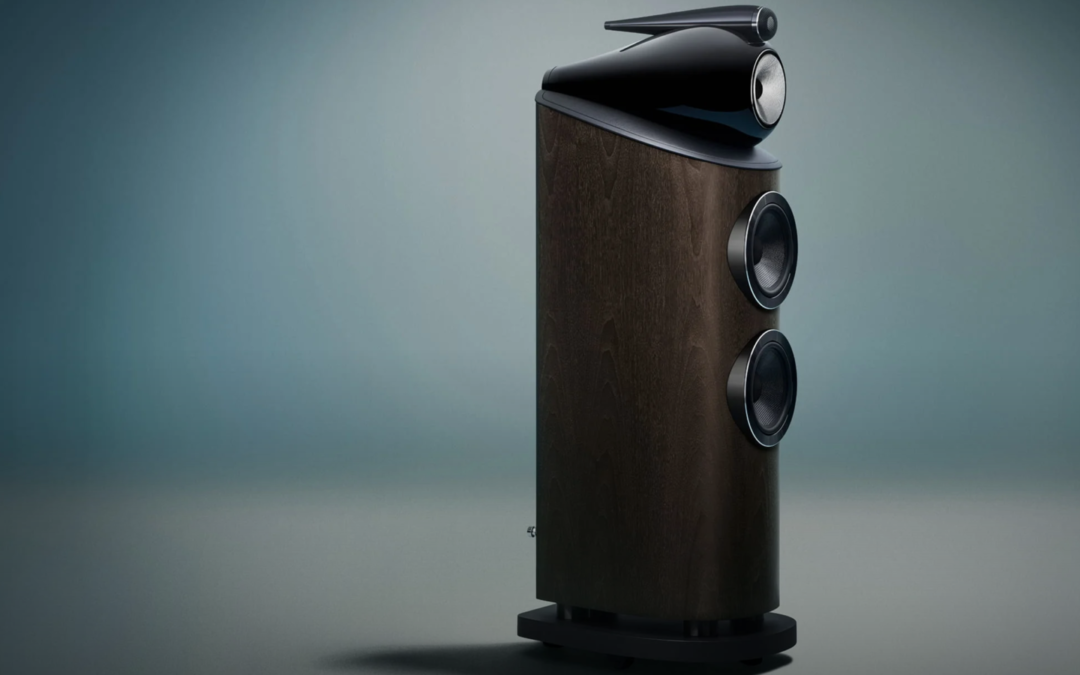
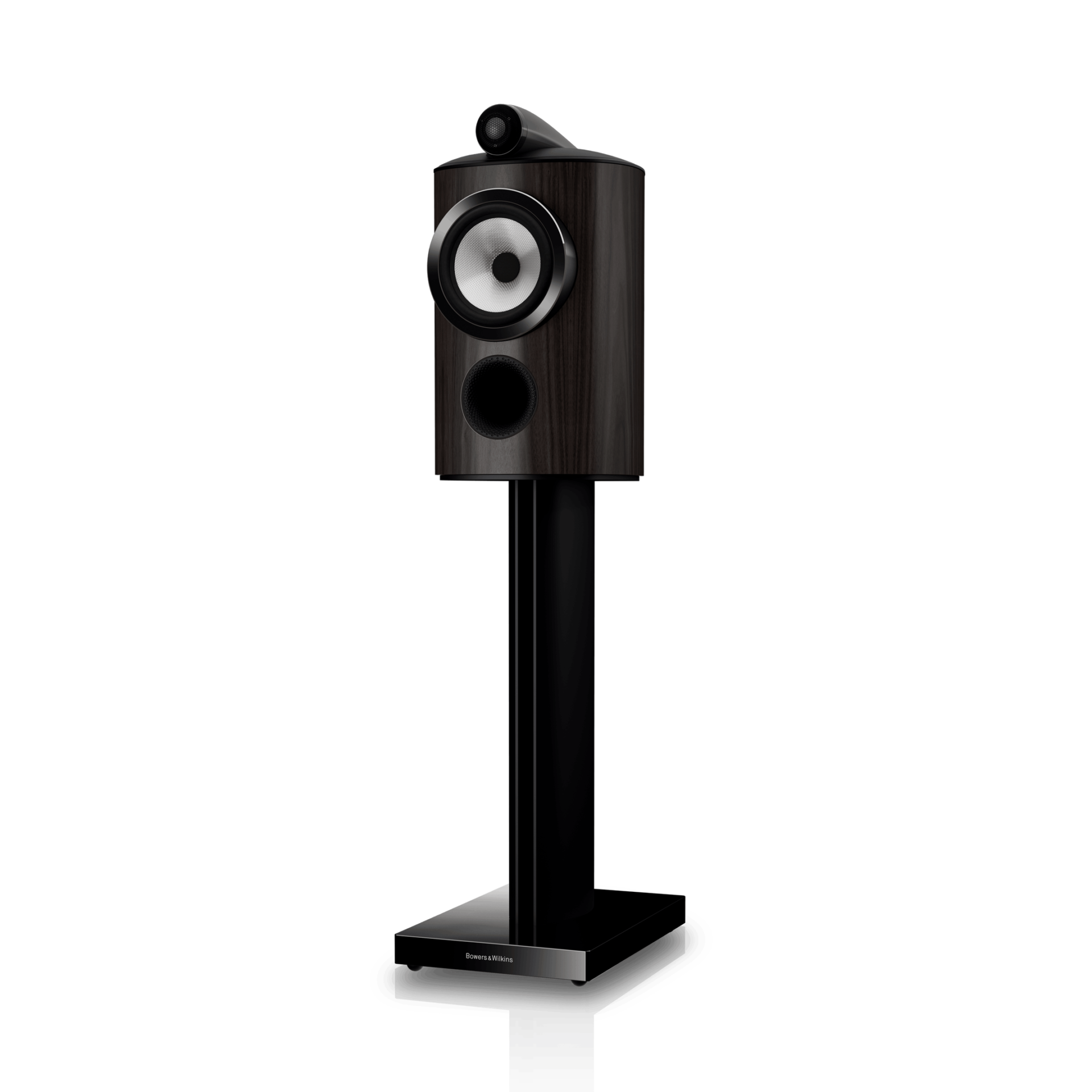
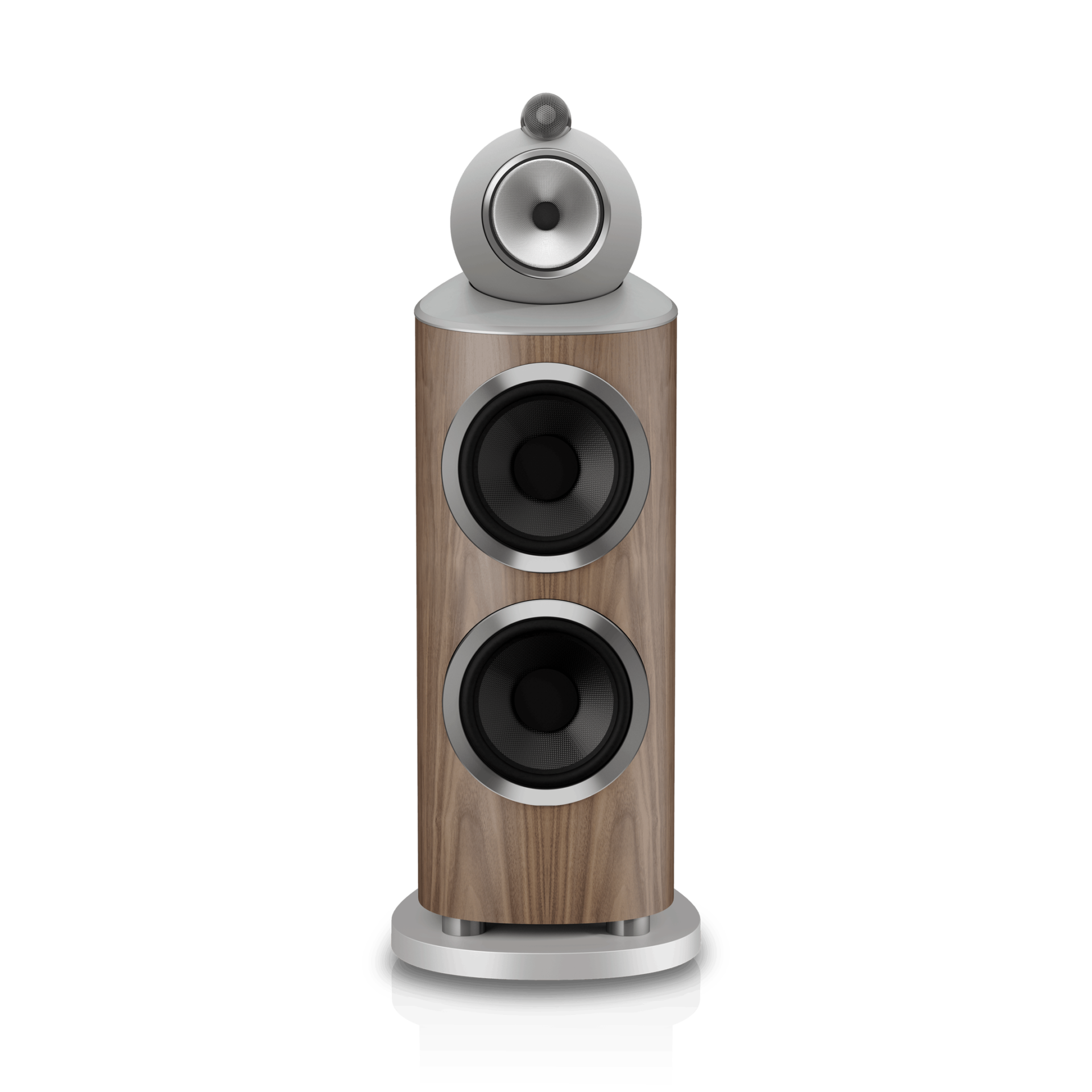
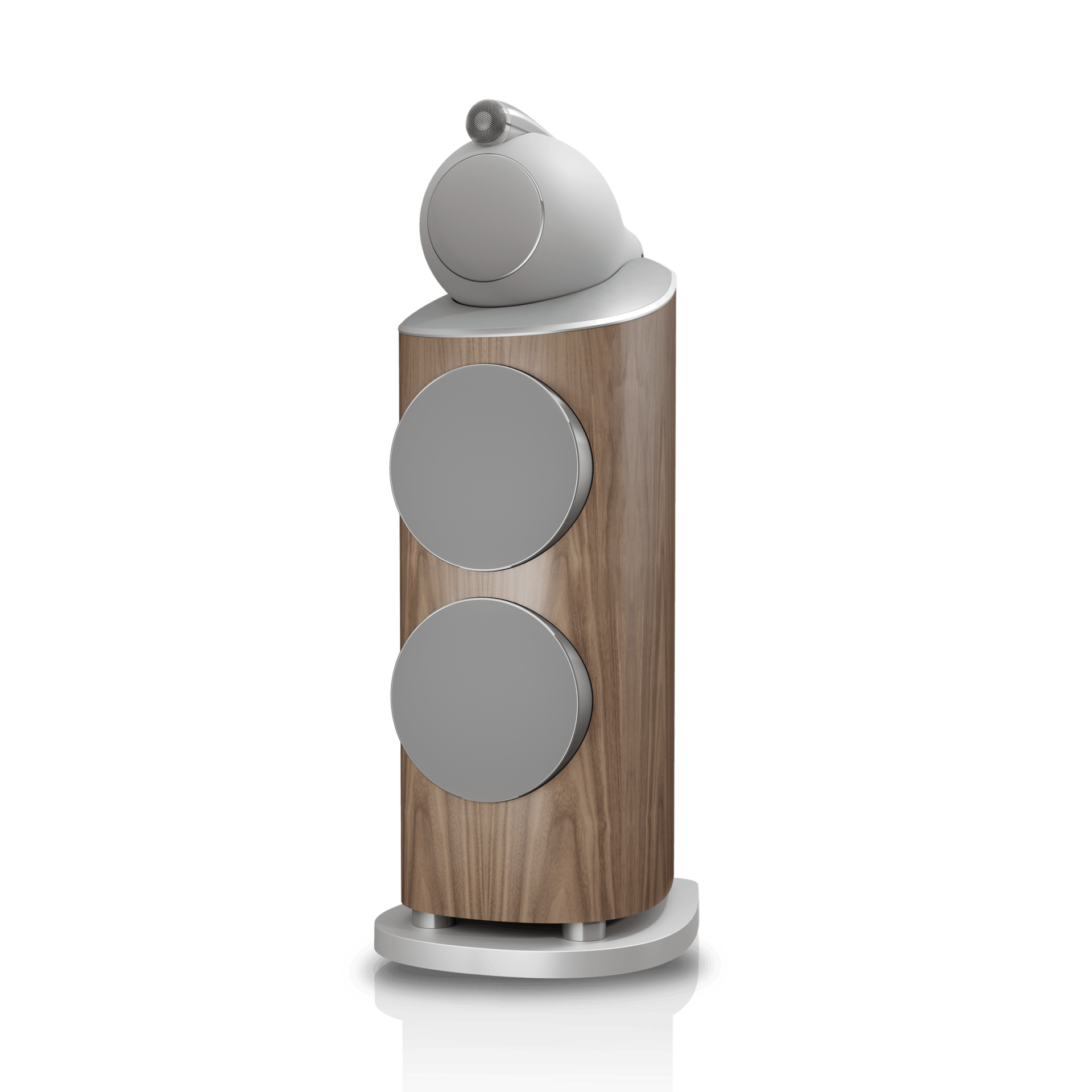
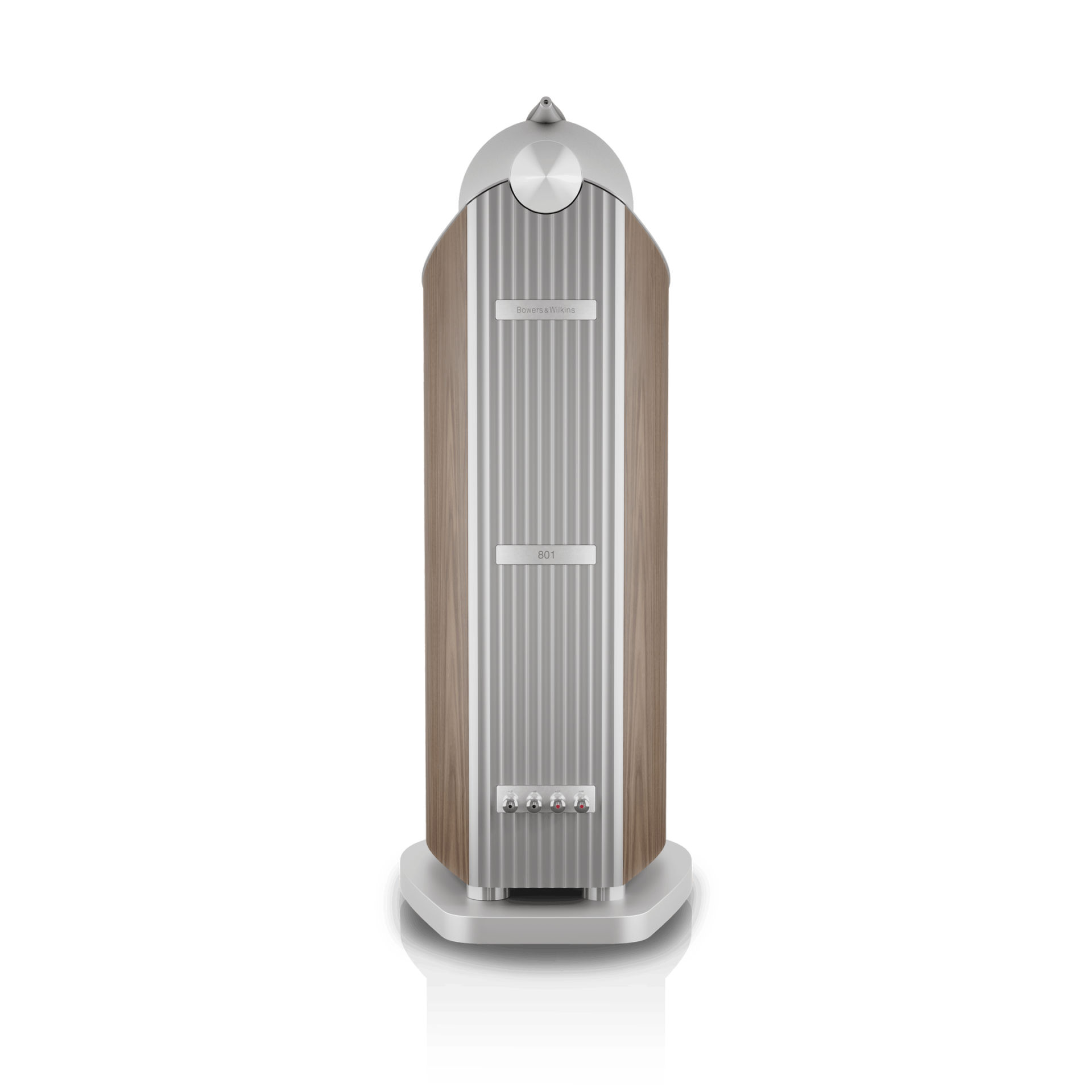
The British manufacturer has recently set to work upgrading its 800 Series speakers from D4 to D5.
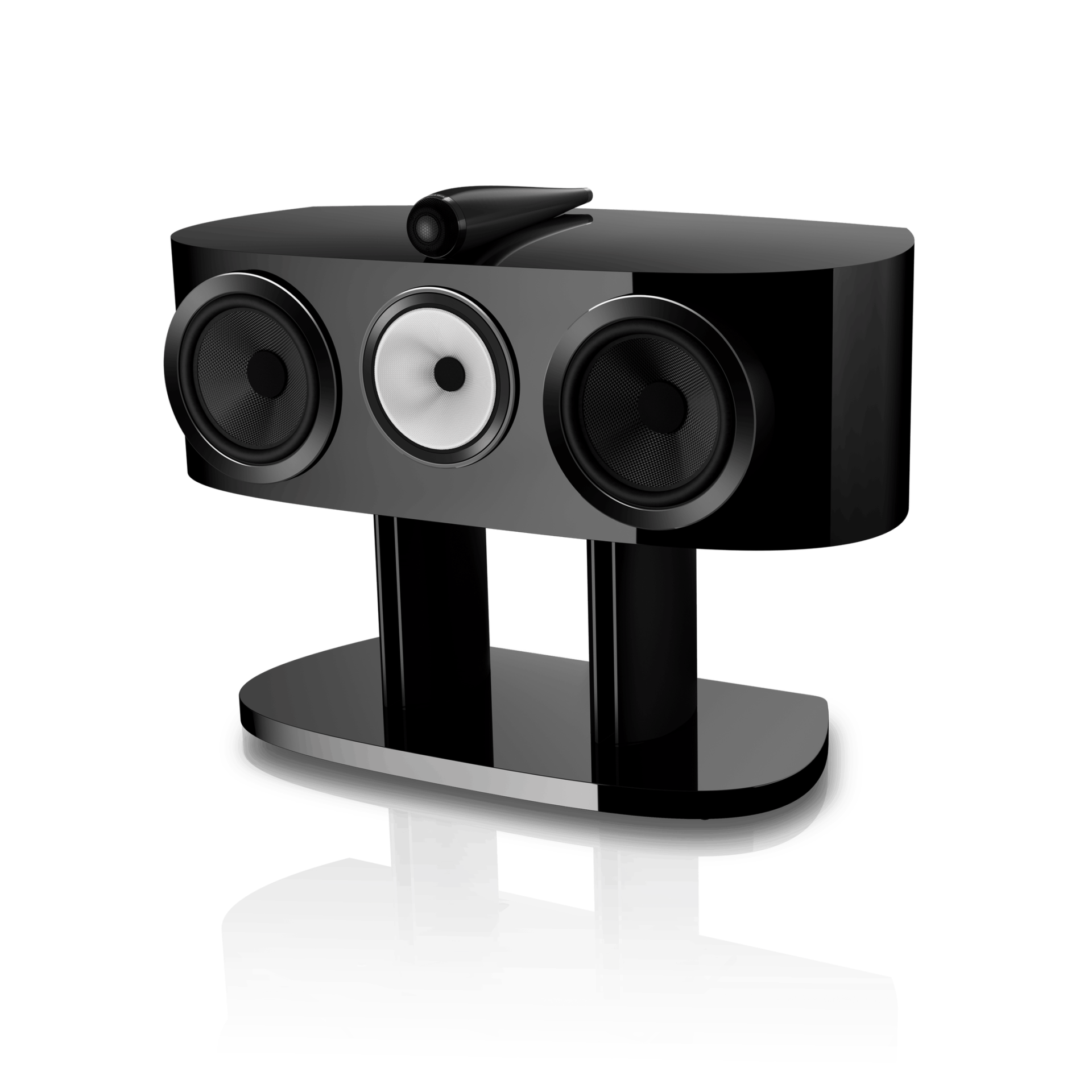
This 5th generation of diamond-dome tweeter speakers still consists of seven models, ranging from the compact 805 D5 to the four floorstanding models—the 804 D5, 803 D5, 802 D5, and of course the 801 D5, as well as the two center channels, the HTM81 D5 and HTM82 D5.
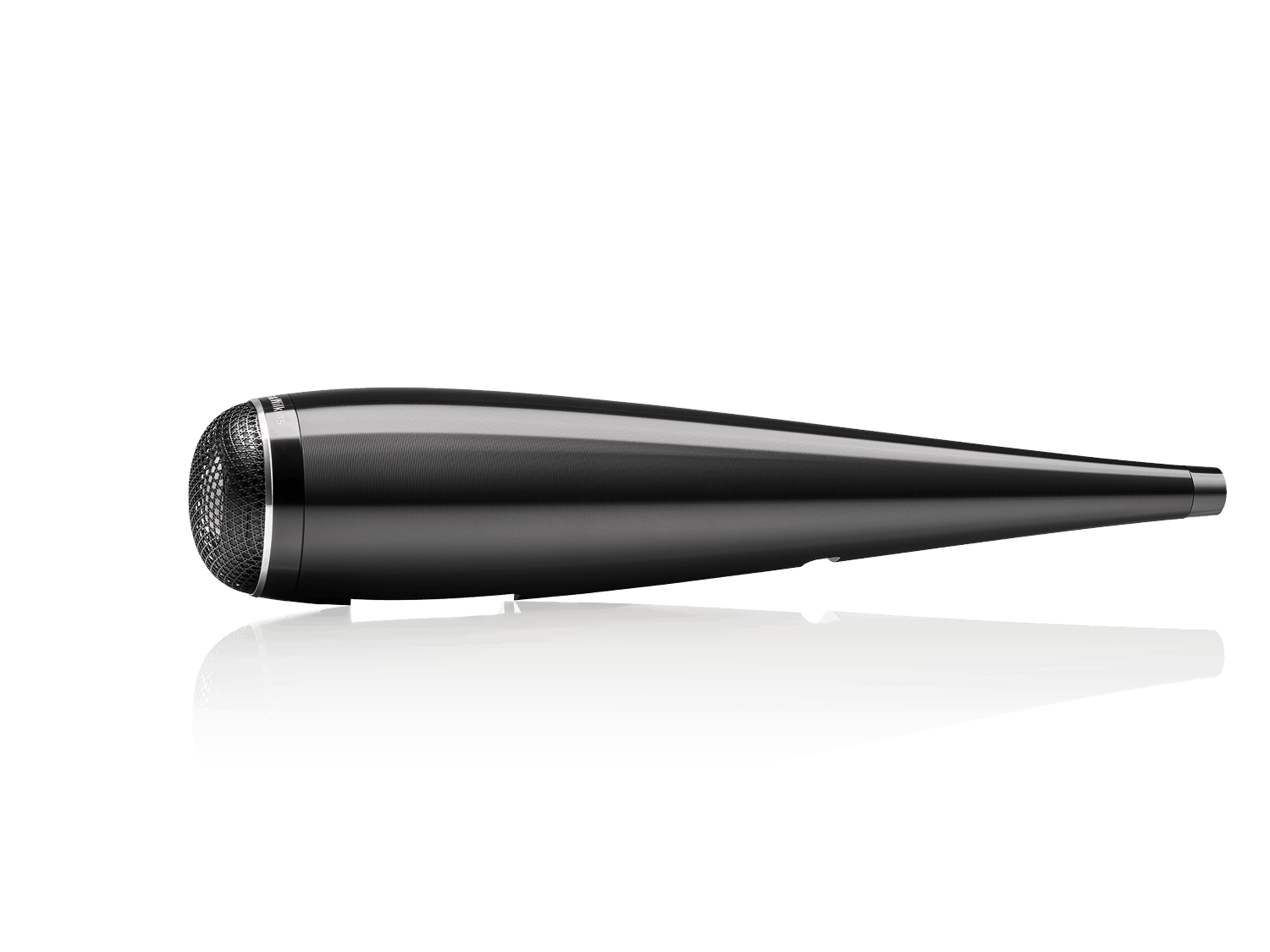
On all models, the “Solid-Body tweeter on-top” technology uses a 25 mm (1-inch) diamond tweeter that, to the naked eye, appears similar to that of the previous generation. But on this new version, its tube, mounted on the “Turbine” head, features a unique design that allows it to move vertically when touched, adapting to the movements created by and around the diaphragm.
The midrange driver uses a 150 mm (6”) diameter Continuum™ FST cone on the 801 D5, 802 D5, and on the HTM82 D5 center channel speaker. The other models use a 130-mm (5-inch) version, except for the compact 2-way 805 D5, which combines midrange and bass in a single 165-mm driver. In the floorstanding and center channel models, the bass is handled by Aerofoil™ drivers ranging from 180 mm (7“) to 250 mm (10”).
For the cabinet, the reinforced Space Frame structure is combined with a Matrix™ design, the upper section of which is reinforced by an aluminum plate featuring a damping ring. From what Andy Kerr told us in Vienna last June, the crossovers and many components have been redesigned based on the Signature versions of the 800 D4 series. And while there are still four finish options, red has been replaced by a black walnut veneer, available in addition to light walnut, white, or black.
To match or even surpass the performance of previous “Signature” versions, these classic D5 models are inevitably about 20% more expensive than their D4 counterparts. In Europe, prices start at 10 000 € for the HTM82 D5 center speaker, ranging from 12 000 € for the 805 D5 and the HTM81 D5 center speaker to 50 000 € for the 801 D5.
Could this be the price of emotion? We’ll let you know as soon as we receive a pair to listen to!
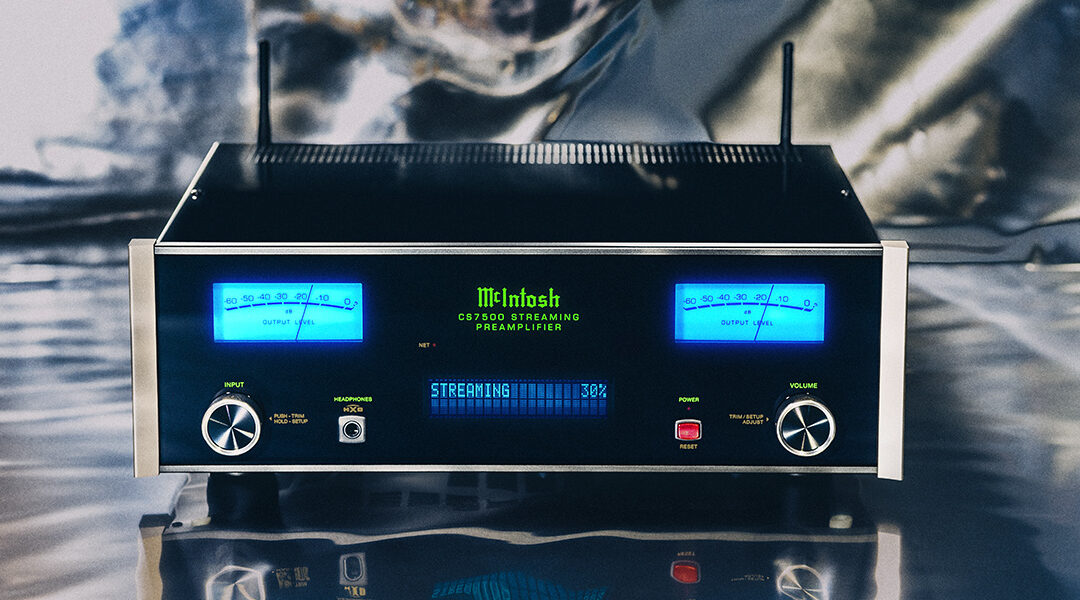
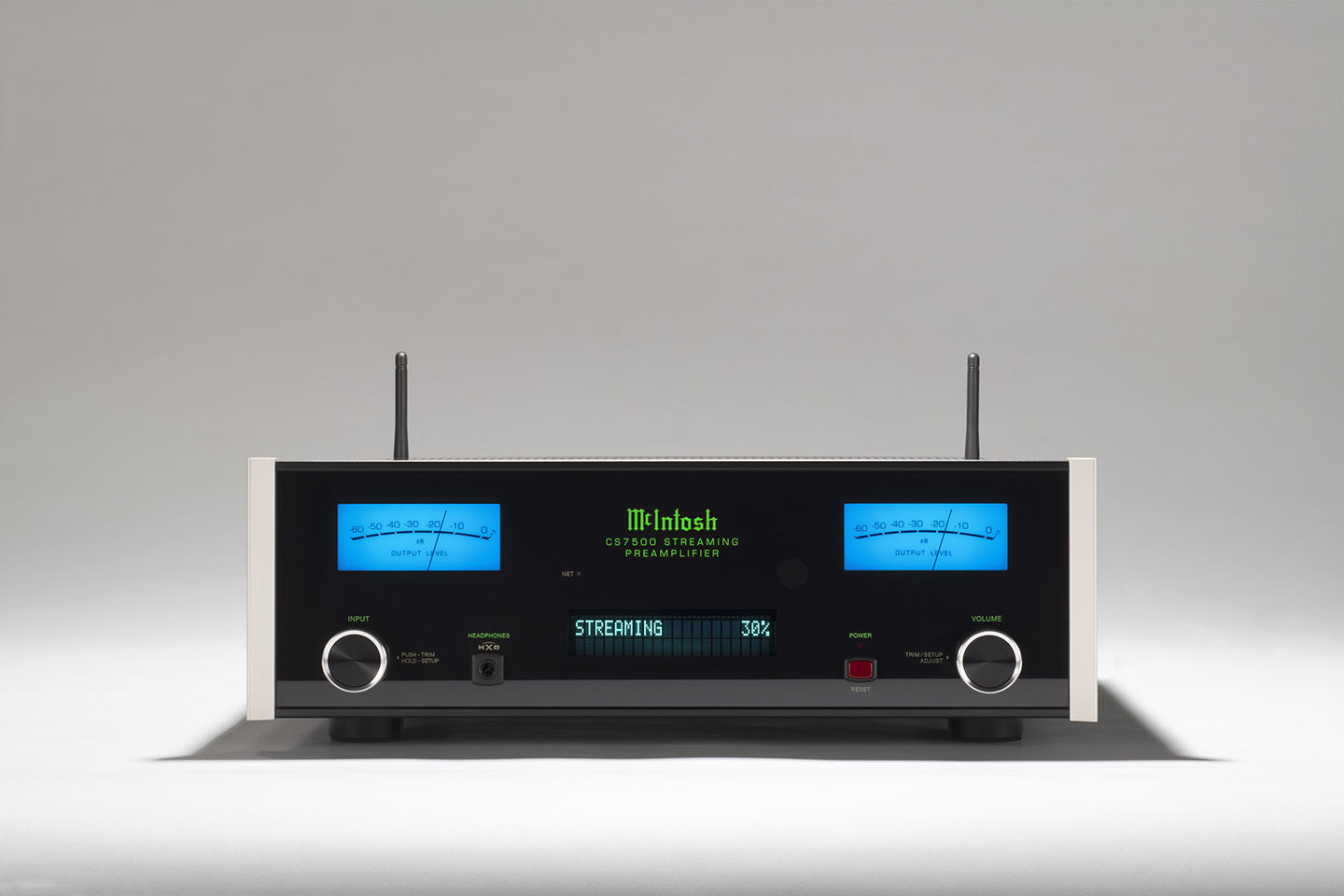
The launch momentum shows no signs of slowing down at McIntosh. Following the new MA2375 tube integrated amplifier (previewed in VUmètre No. 67 FR) and the MX124 13.4-channel audio-video processor, the American brand has announced the new CS7500 preamp-streamer.
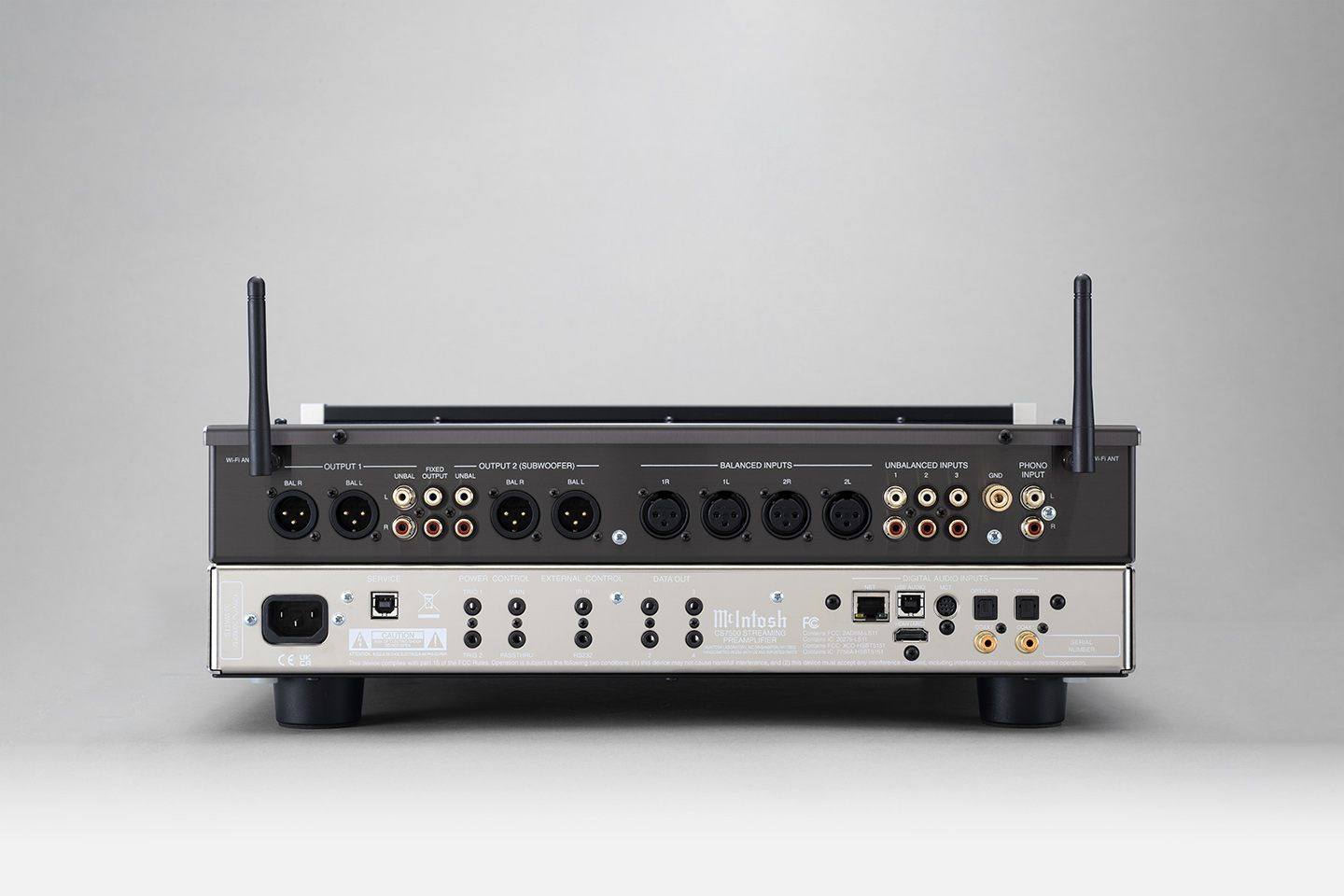
With no fewer than 13 inputs, including 6 analog ones, the preamp section combines the stability of analog with the modernity of digital. The rear panel features 2 pairs of XLR connectors and 4 pairs of RCA jacks, including a phono input (configurable for MM and MC). To connect a dual-mono DAC comprising 4 chips, each with 8 channels, you can choose between the proprietary MCT input, a USB audio port, an HDMI eARC port, 2 coaxial RCA inputs, and 2 optical inputs.
For streaming, an RJ45 Ethernet port is located right next to the other digital inputs. Wi-Fi is also available via a small antenna that can be mounted on the upper rear of the chassis, and Bluetooth AptX HD via a second antenna on the opposite side; the unit is also Roon Ready and supports all current protocols and platforms.
Finished in polished stainless steel and brushed black titanium, this McIntosh CS7500, which can output signal via XLR and RCA terminals (with variable or fixed volume, as well as to subwoofers), looks every bit like a true McIntosh and perfectly embodies its aesthetic. It features two blue VU meters -despite the absence of an amplifier stage- knobs on the front panel for managing inputs and volume, and a blue monochrome LED display beneath the green-backlit logos and labels.
Available now, the new CS7500 preamp-streamer comes with a remote control and is priced at $12 500 (exc. tax) or 16 000 € (inc. tax).
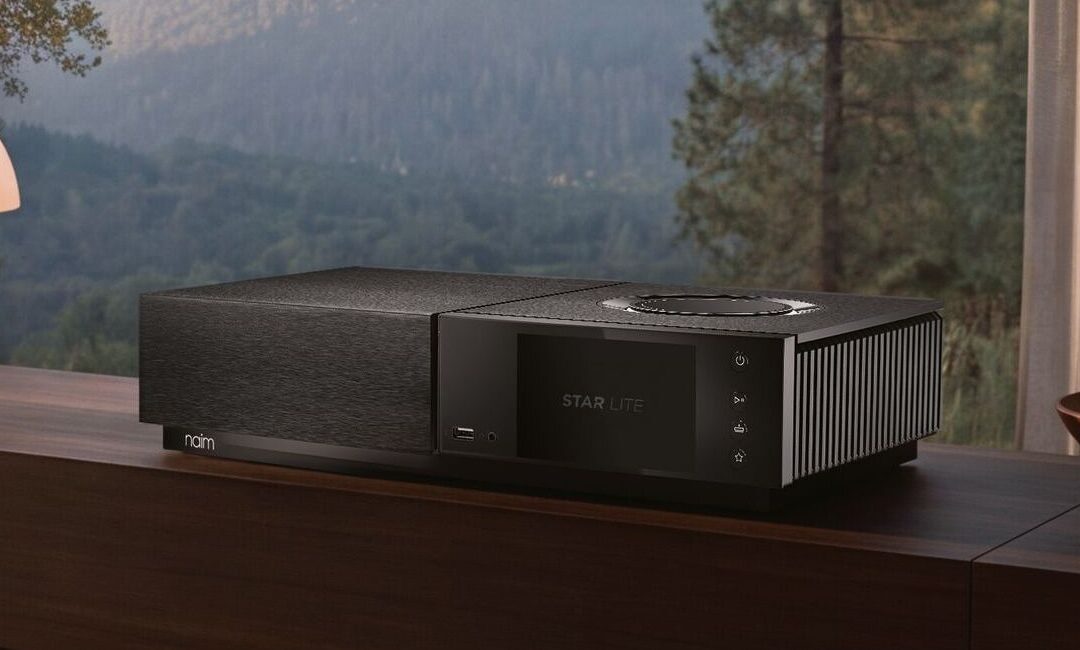
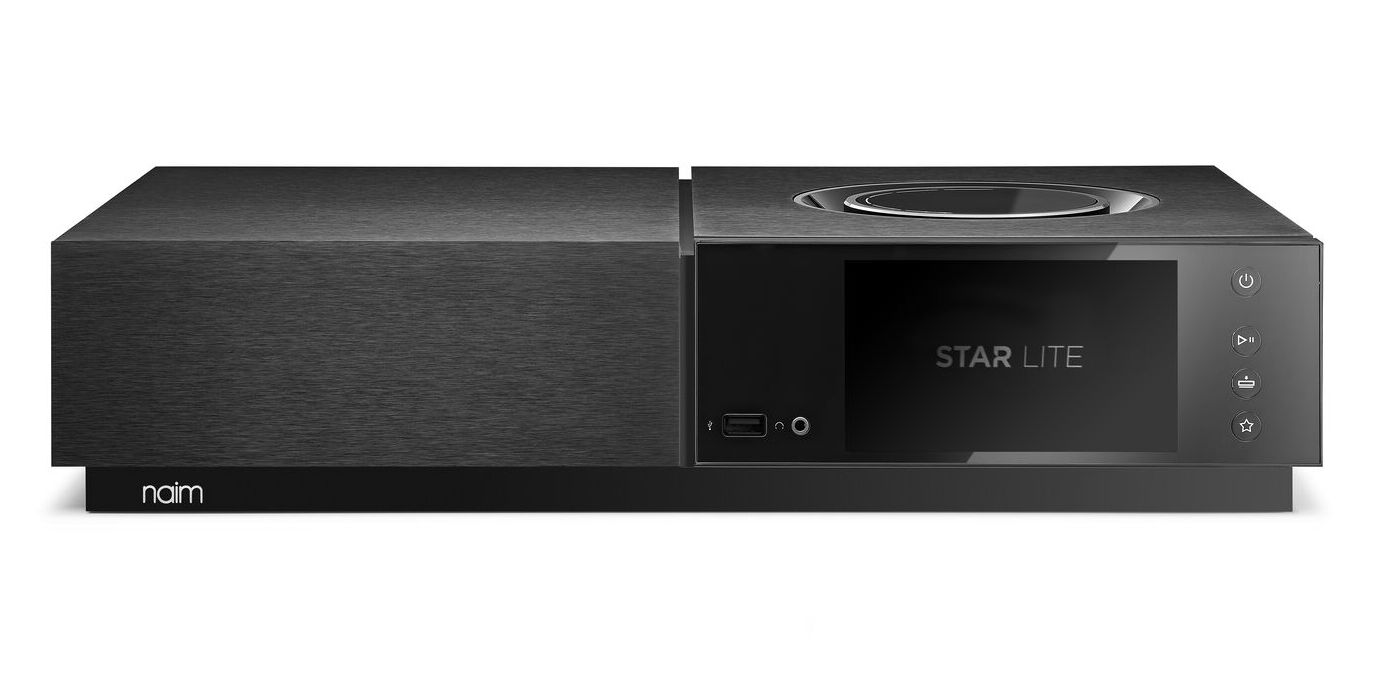
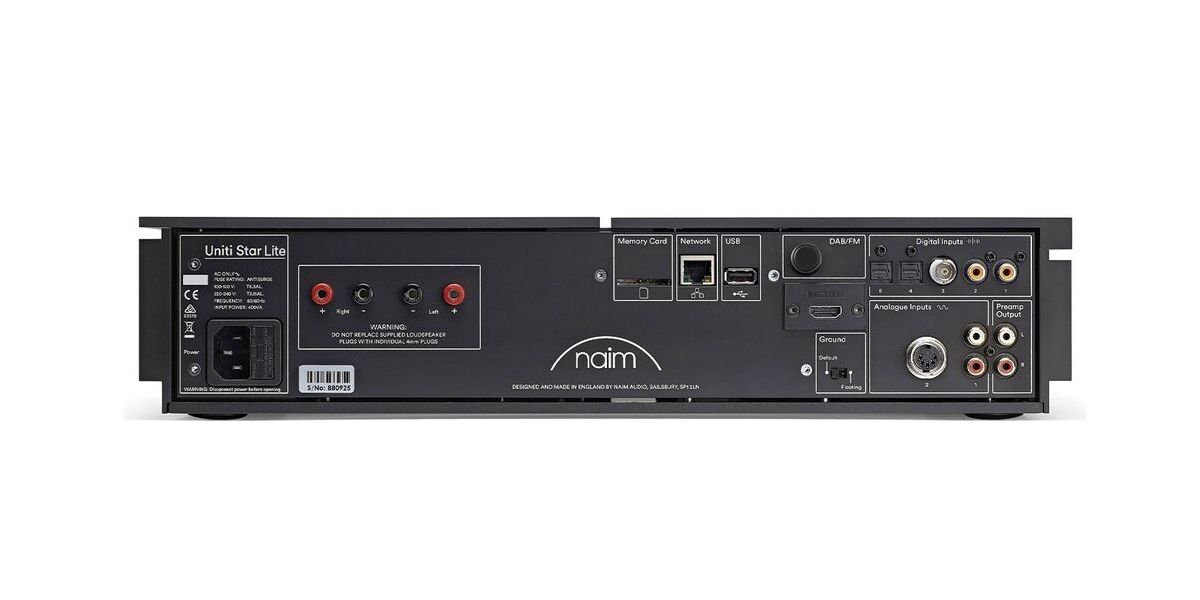
Housed in a chassis similar to the Uniti Nova’s, the Uniti Star Lite incorporates much of the same technology, but at a lower price.
Overall, this new model retains the Uniti Nova’s amplifier-streamer functions, as well as the 5-inch LCD screen on the front panel and the large dial on top. Its power output is reduced by just 10 W, to 70 W per channel into 8 ohms. In terms of analog inputs, it also loses one 5-pin DIN and one pair of RCA jacks (though it retains one of each), while it loses its 4-pin DIN output, retaining only one pair of RCA jacks and a 3.5 mm headphone jack.
On the digital side, the DAC remains fully integrated via two optical ports, one coaxial RCA port, one BNC port, one HDMI eARC port, and two USB-A ports. It also serves as the streaming module, capable of playing all Internet radio formats, since the Uniti Star Light no longer includes the DAB/FM module found in the Uniti Nova.
Supported audio formats include PCM up to 384 kHz/24-bit and DSD128 for streaming, and up to 192 kHz/24-bit otherwise. The device is compatible with most current ‘connect’ platforms and modules, in addition to featuring its own management app, Bluetooth aptX Adaptive, and Roon Ready functionality.
As mentioned at the beginning of this article, its price is more affordable than that of the Nova (4 999 €), coming in at 3 999 €/£ 3 199. This allows you to enjoy a nearly identical device, with only slightly fewer features, but for 20% less.
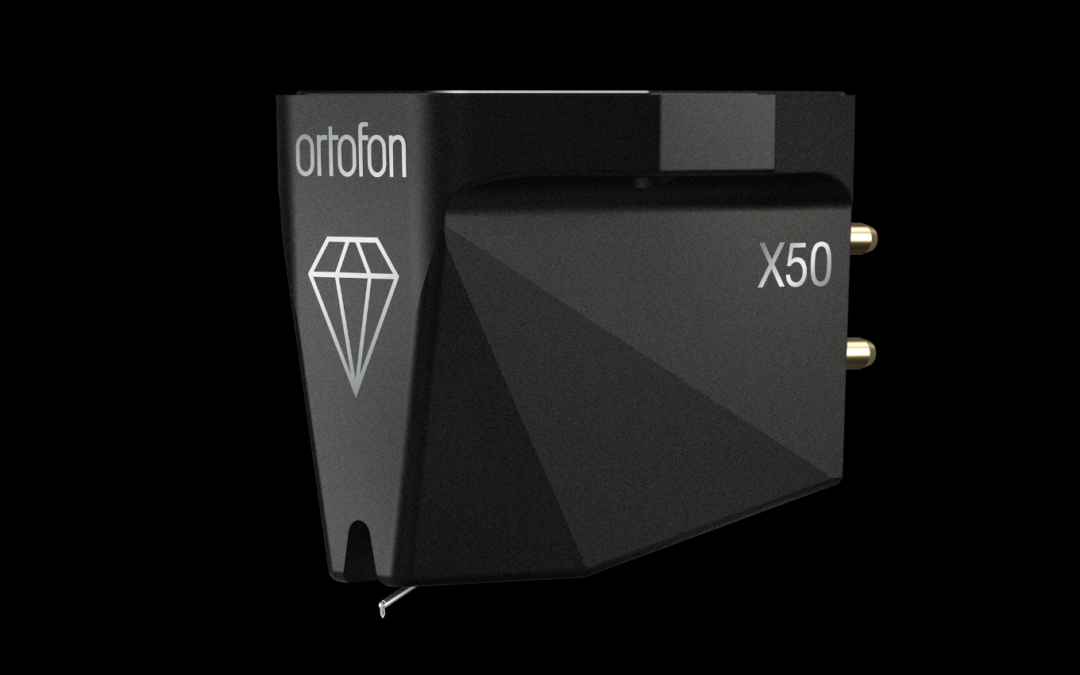
Unveiled at the Vienna show, though somewhat overshadowed by the new flagship MC Vertex, the MC X50 rounds out the top end of the X Series by adopting the diamond image previously seen on the more ambitious MC Diamond.
In 2025, Ortofon demonstrated its dynamism by replacing its Quintet moving-coil cartridge series with a new MC X series. Of these four models, numbered in increments of 10 from 10 to 40, we immediately tested the mid-range model (X20) and the most promising one (X40; VU#63 FR, On Garde), which has now been surpassed by the new X50.
While this newcomer is on par with the others thanks to its silver-wire cross-shaped voice coil—integrated into rubber dampers on an internal stainless-steel frame with a honeycomb structure—and the series’ innovative magnet system, the X50 features the boron cantilever previously available only on the X40. But it replaces its Nude Shibata diamond with a superior Nude Micro Ridge profile diamond stylus, which ensures even better contact with the groove.
In measurements, the MC X50 thus achieves 2 dB better channel separation (28 dB at 1 kHz) compared to the MC X40, with a compliance of 14 μm/mN—1 μm/mN less than the X40. Of course, these materials and specifications come at a price 50% higher, at 1 499 €. We’ll let you know as soon as possible whether this price is justified by the music!
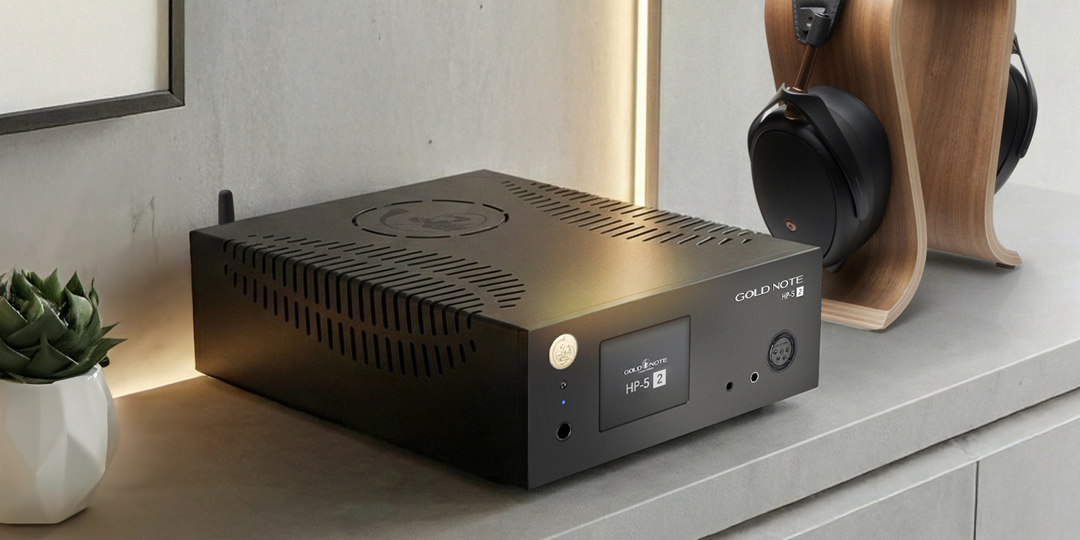
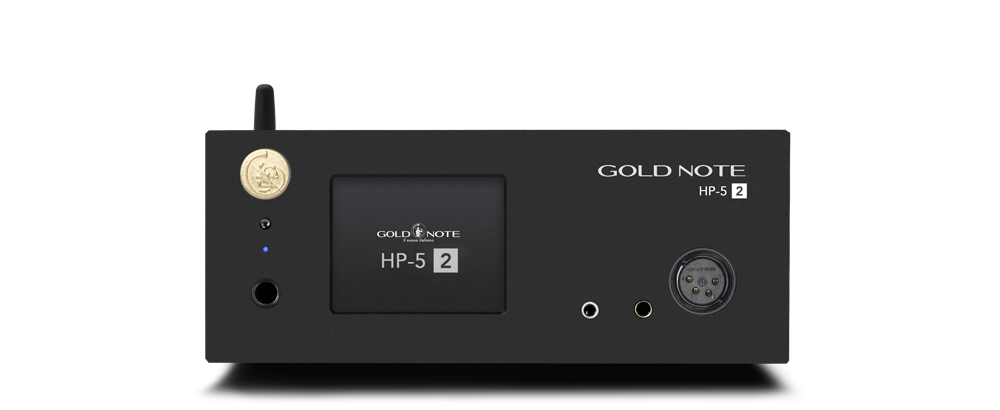
Not to be confused with the PH5.2 phono preamp, the new headphone amplifier from the same series is the HP-5.2. It is part of the entry-level series from Italian manufacturer Gold Note and features the same compact anodized aluminum chassis.
While it’s derived from the HP-10 released in late 2024, the HP-5.2 does away with the front-panel control dial so that, like most devices in the 5.2 series, everything can be controlled via its front-panel color touchscreen. Thanks to this feature, as well as a very handy remote control included with the unit—a rare accessory for headphone amplifiers—you can configure your headphone listening experience using Crossfeed (to enhance the soundstage), the Harman function (to optimize EQ), Superflat (to linearize the high end of the spectrum), and Damping Factor (to adjust the damping factor).
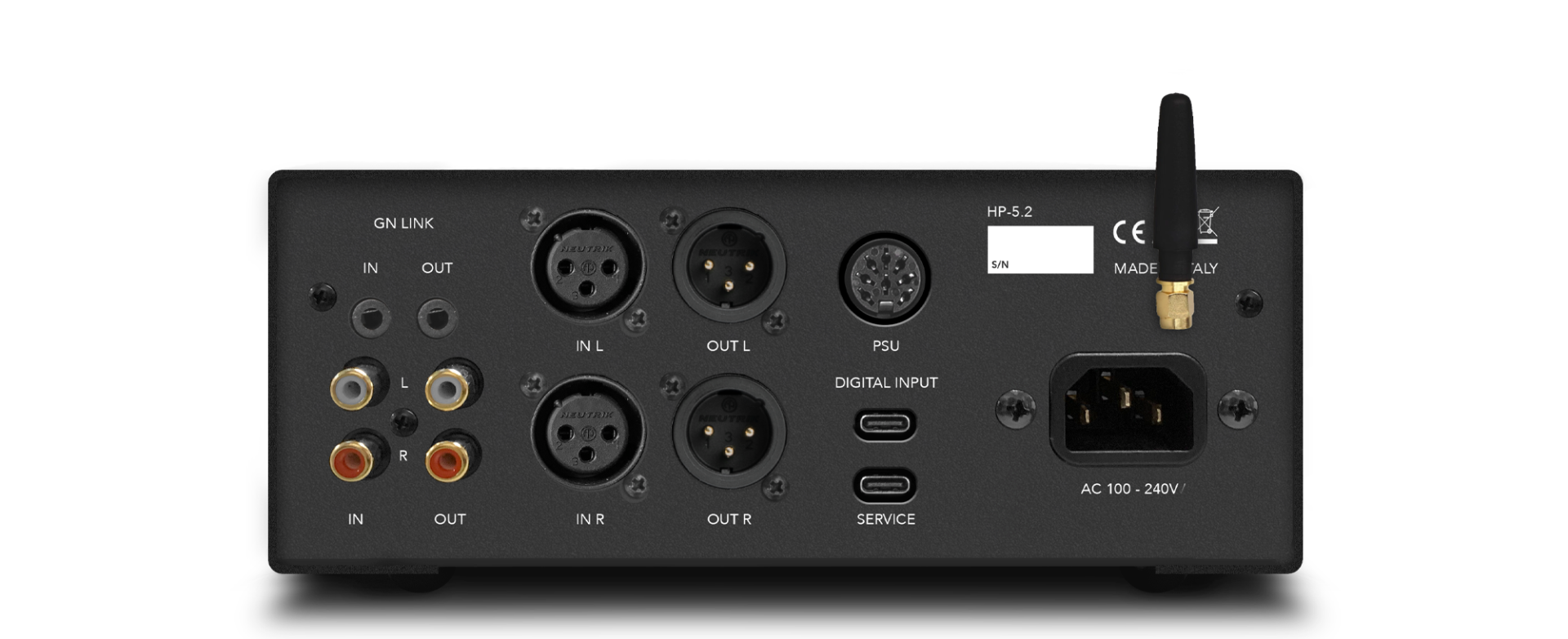
On the output side, the HP-5.2 proudly offers four options for connecting headphones via its unbalanced 3.5 mm and 6.35 mm ports or its balanced 4.4 mm and 4-pin XLR ports. In addition, this headphone amplifier can also function as a preamp by sending the signal to a power amplifier and speakers (ByPass mode) via two pairs of analog RCA and XLR connectors on the back panel.
Equally inclusive in terms of inputs, the HP-5.2 offers a pair of RCA ports and an XLR port for analog connections, as well as a USB-C input (with a second port reserved solely for updates) converted by a Sabre DAC chip. AptX Bluetooth rounds out this unit, which can be further upgraded in terms of power via a PSU port, allowing for the addition of the Gold Note PSX-5.2 external power supply (699 €).
Available only in black, like all other components in the 5.2 series, the HP-5.2 retails for 950 €.