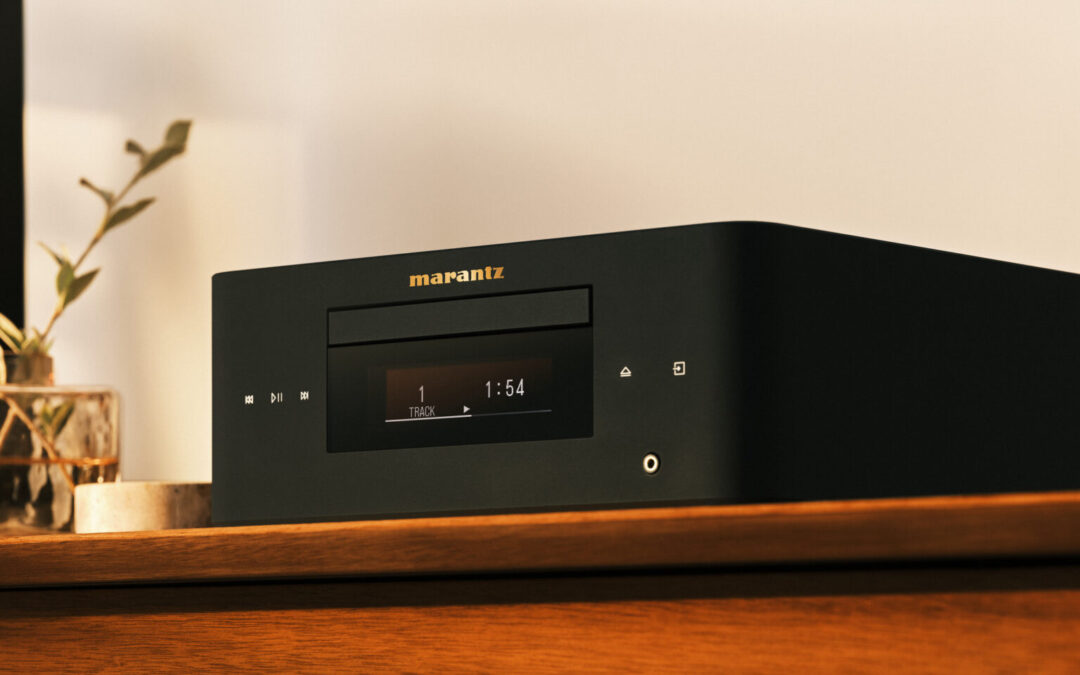
In today’s hi-fi market, requests are diverse and still call for devices with CD players, even when they need to be compact and include all modern streaming options.
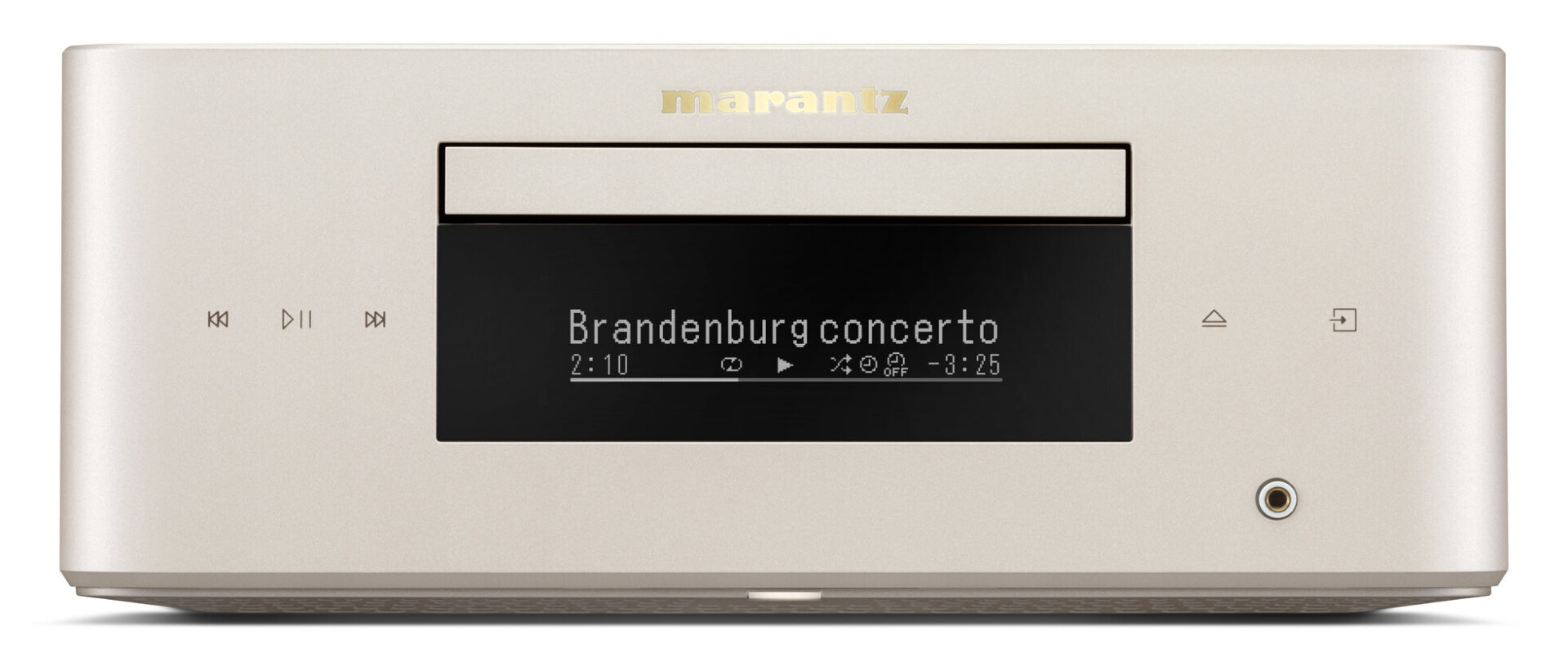
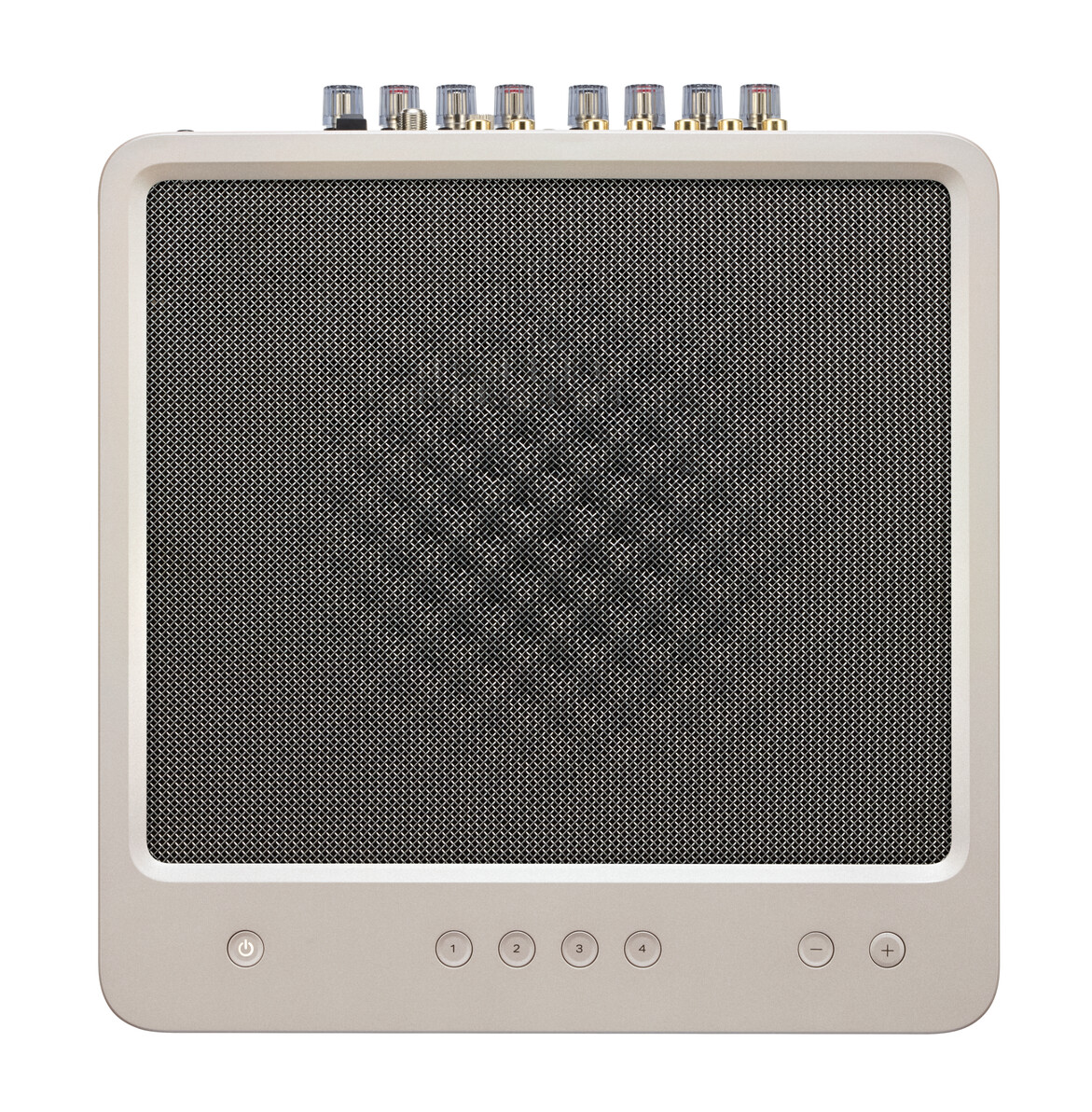
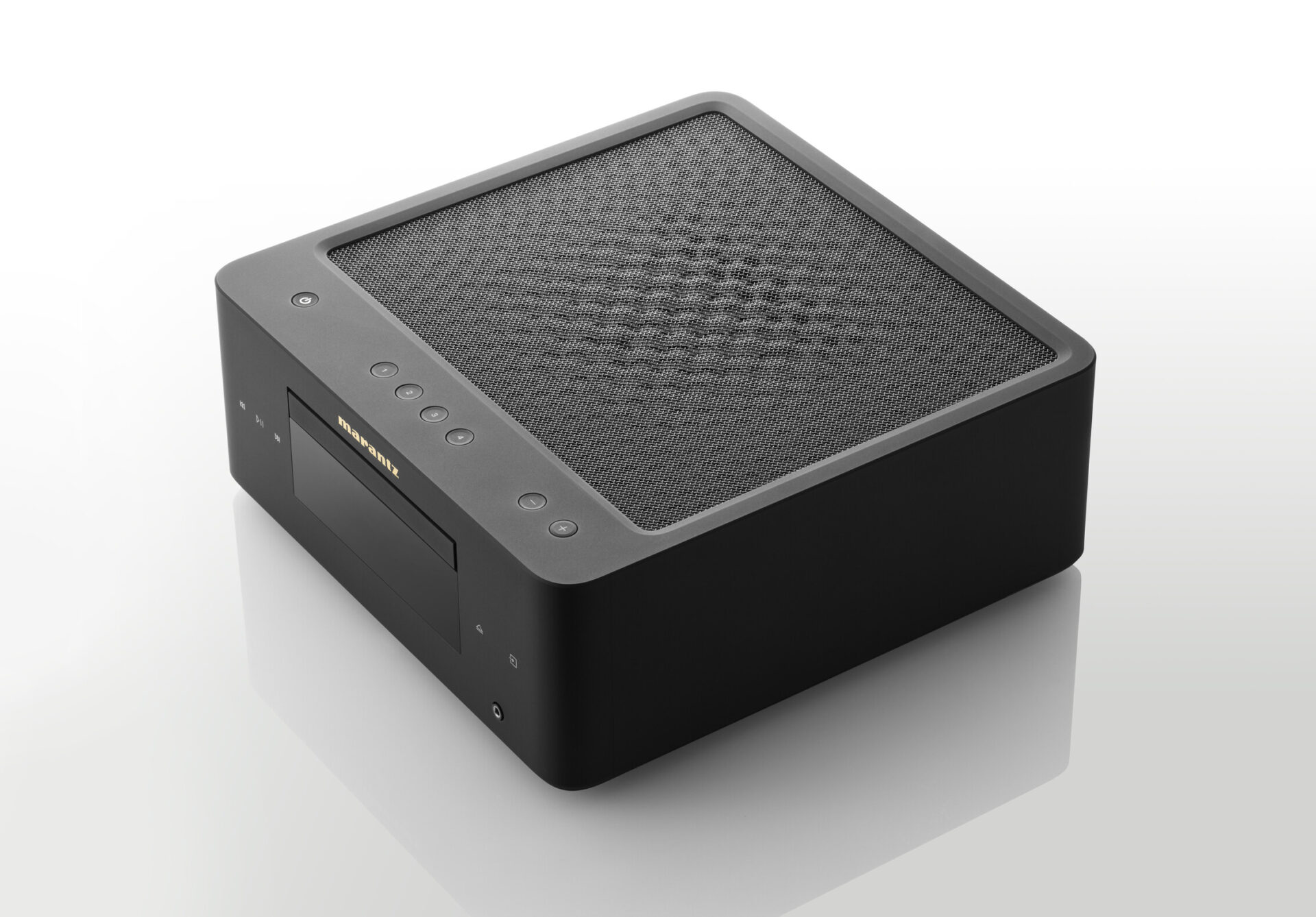
It is precisely for this type of use that Marantz is now responding with the new MCR 60n DAB. Although the unit measures 28 x 30.3 x 11.1 cm and weighs 4.2 kg –and looks like a small square box when viewed from above– this all-in-one system is actually extremely feature-rich.
For starters, there’s the front-panel CD player, which can still come in handy at times –especially when the internet goes down! But there’s more: the group’s patented Heos platform (compatible with Bowers & Wilkins, Denon, etc.), which we’ll discuss in more detail very soon in our upcoming review of the Denon Home speakers, enables multiroom playback with all other devices connected to the same network, as well as equalization and room correction via the Diract software.
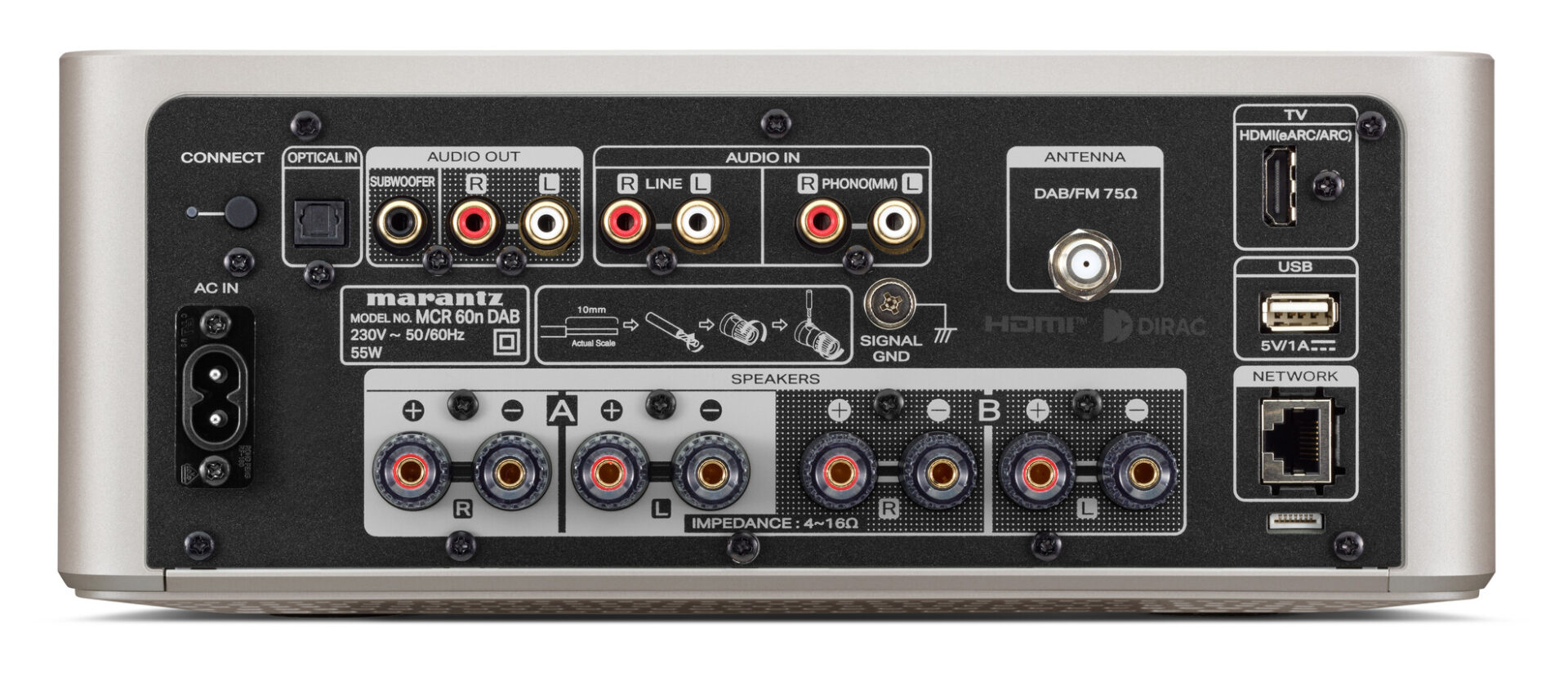
On the other hand, the Bluetooth is here, even if it’s not aptX, while Roon Ready compatibility allows you to use this high-end solution, with file playback supporting up to PCM 384 kHz/32-bit and DSD256 (11.2 MHz). All Connect services are also available, as is Deezer, Stopify Connect, etc.
On the analog side, the FM tuner also supports DAB and DAB+, and a phono input lets you connect a turntable with an MM cartridge. Another pair of RCA inputs lets you connect a second source, as well as a TV via the HDMI eARC digital input, or a USB flash drive.
As we have mentioned, this little 60n DAB is very feature-rich, and that covers its amplification capabilities, since it features not just one pair of speaker terminals, but two, allowing you to connect four speakers using cables with banana plugs or even spade connectors –a relatively rare feature on this type of product. The rated power output is 2 x 65 watts at 6 or 4 ohms, or 4 x 33 watts at 4 ohms, and a subwoofer output is also available.
Unveiled very recently, this new Marantz 60n DAB will be available starting September 15, in black or champagne gold finishes, priced at 900 € including tax.
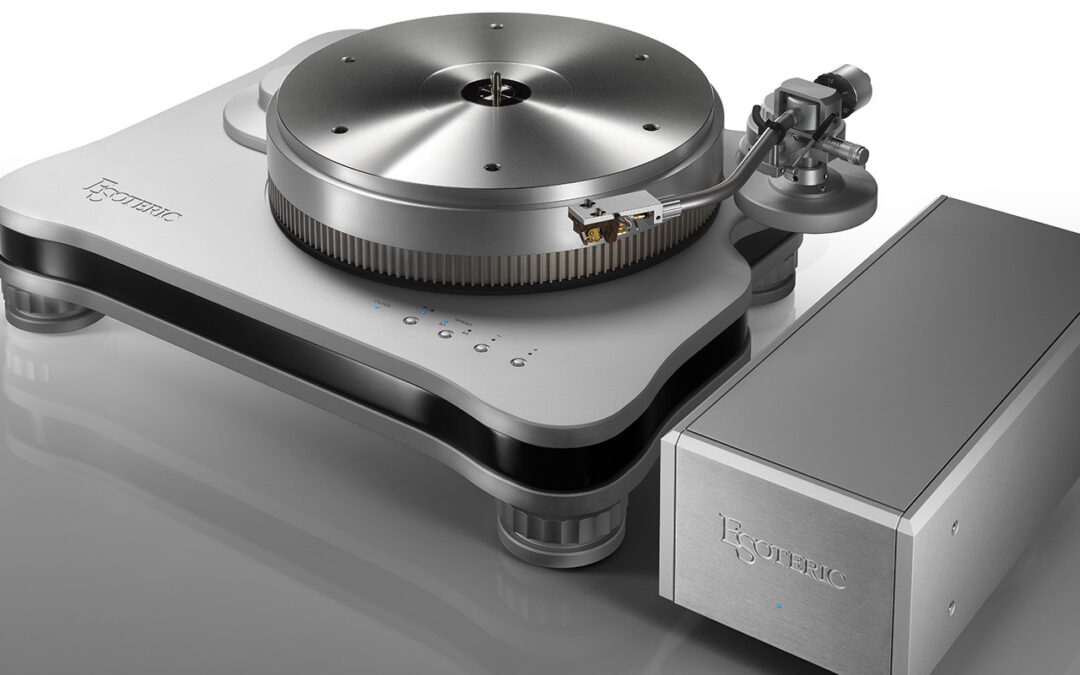
The specialist in CD and SACD mechanics Esoteric surprised the audiophile community in 2022 by introducing the Grandioso T1 turntable. This year, it’s back at it with a more affordable but high-end model, the T-01, which may be even more refined.
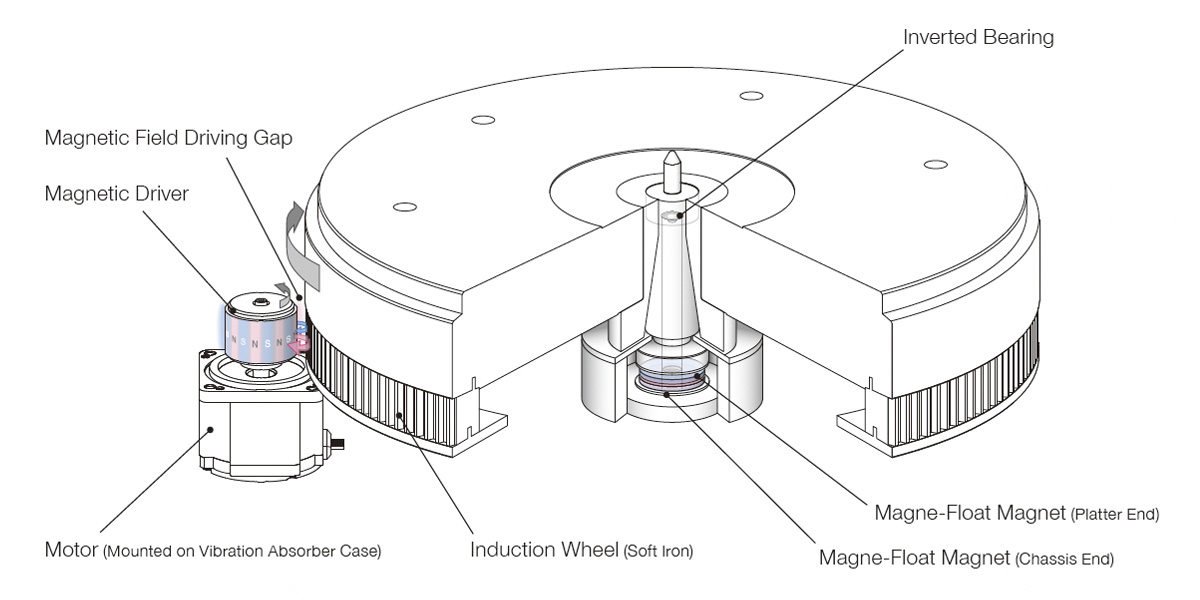
Although the chassis has a more conventional appearance, it nonetheless features a triple-layer base consisting of a thick wooden plate with a piano-lacquered edge, encased within an aluminum sandwich. The patented Esoteric MagneDrive System employs the same principle as the T1, with motion generated contactlessly by magnetic fields between a magnetic motor and an iron induction wheel. The total weight of this chassis and mechanism is 22 kg.
On top of this is a 13-kg platter CNC-machined from a solid block of aluminum, with a surface that is hand-polished to ensure a mirror-like finish and perfect levelness. It is mounted on a dual-floating-magnet spindle. Its rotation is completely silent and features a specified variation of less than 0.06%, ensured by a proprietary 10 MHz Master Sound Discrete Clock circuit, for speeds of 33 or 45 revolutions per minute (78 rpm option not included).
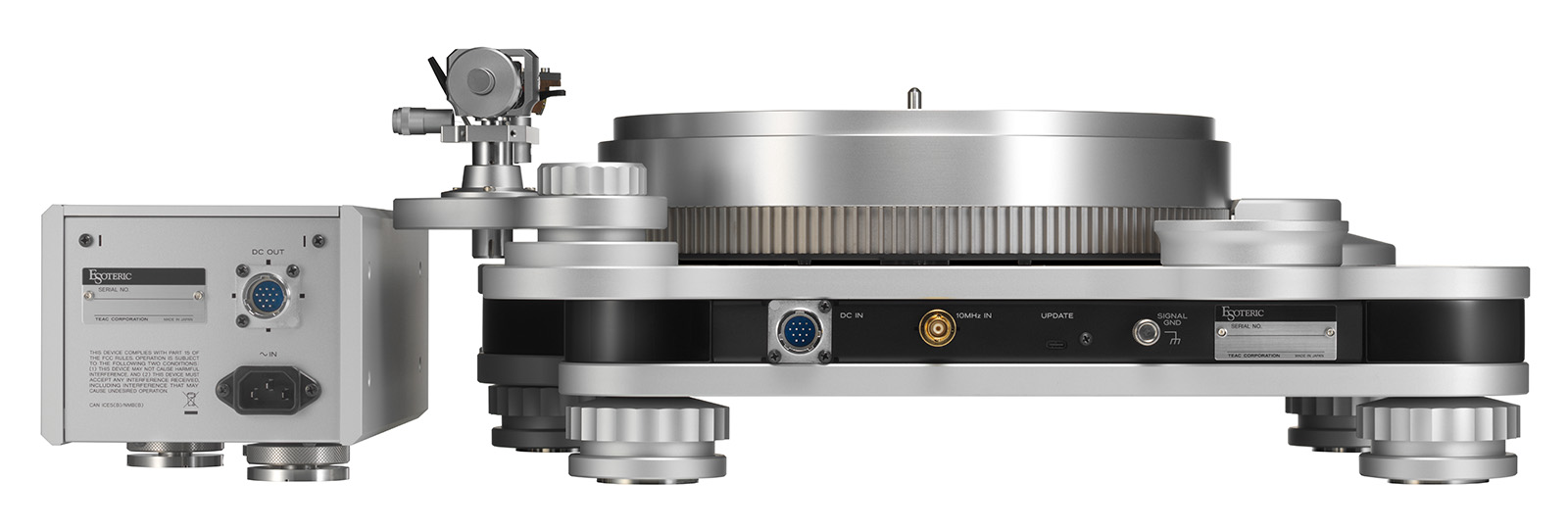
To minimize interference as much as possible, the 7 kg power supply is completely separated from the chassis and decoupled from the floor—as is Esoteric’s custom—resting on just three feet, all positioned on different lines both lengthwise and widthwise.
As for the tonearm, it is a brand-new TA-9S model derived from the TA-9D found on the T1. Its 12-inch (309 mm) length is reduced to an effective length of 9 inches (232 mm) relative to the platter. Its static-balance design relies on high-precision gimbal bearings for smooth movement. It connects to the phono preamp via a 5-pin DIN cable, which is apparently not included.
Just announced, the T-01 comes without cartridge, with tonearm at a price of 48 000 €, and without (T-01 AL) at 45 000 €.
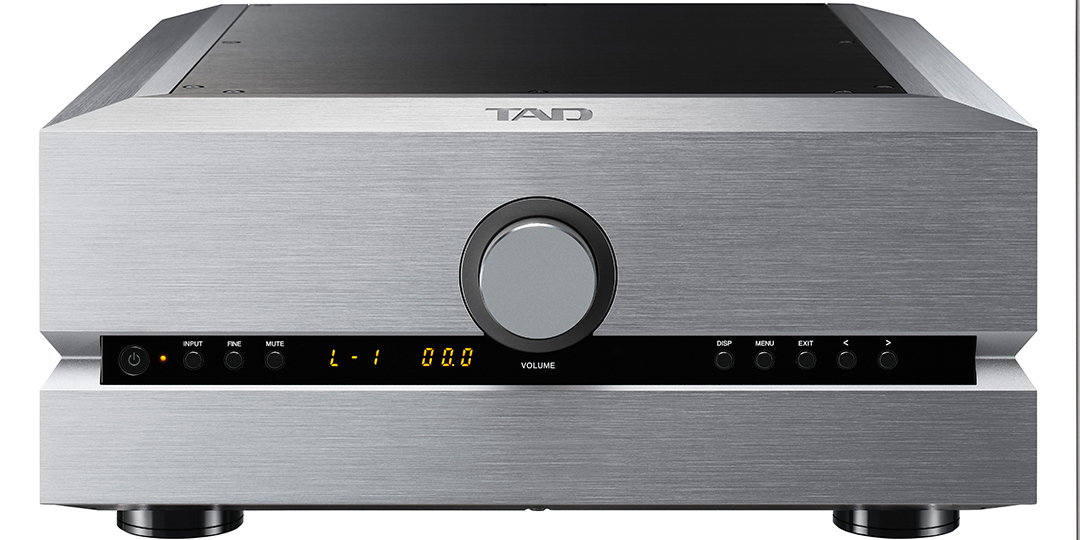
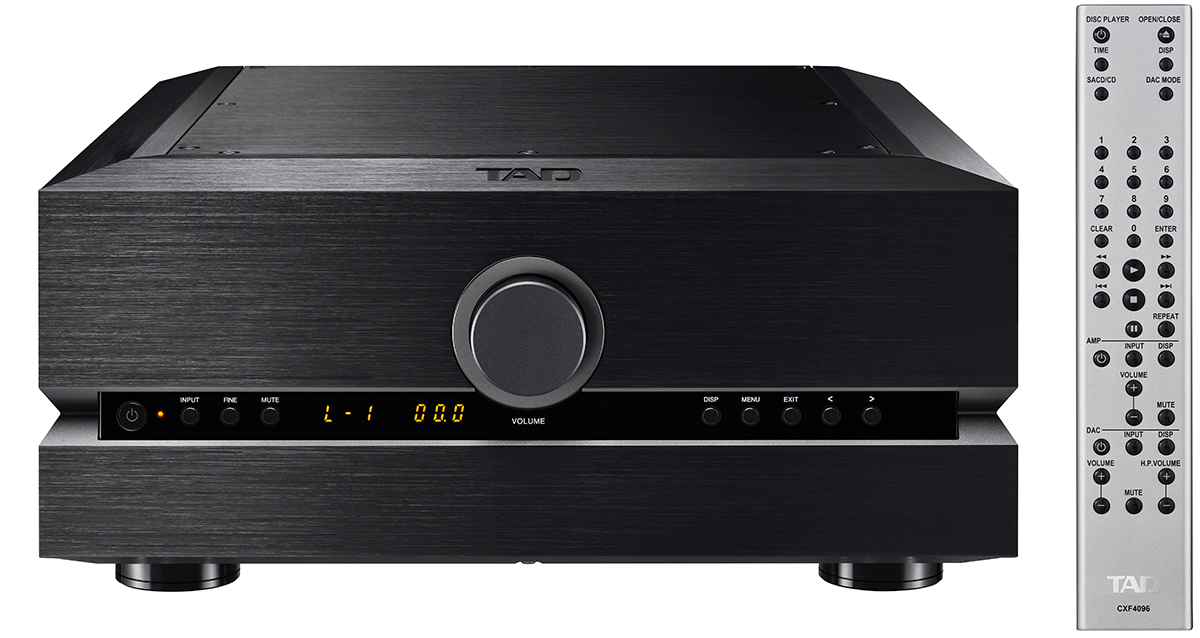
While in the mid-range of the hi-fi market, the question of removing the DAC from certain integrated amplifiers remains –as seen recently with Hegel’s purely analog version (A200) of its new H200– in the ultra-high-end segment, the opposite approach is being considered, as demonstrated today by TAD Labs with the TAD-A1000D.
It took until 2025 for the renowned Japanese brand to dare to launch its very first integrated amplifier, the TAD-A1000, incorporated into the Evolution series. Now, it offers a version with DAC, that remains fully balanced from the power supply stage all the way through to the digital-to-analog conversion stage.
This derivative of the A1000 still delivers 250 W into 4 Ω –though the power output into 8 Ω isn’t specified– and is compatible with all speakers rated between 4 and 16 Ω. It still weighs 29 kilograms. Its analog preamp stage has lost just one pair of balanced XLR inputs out of the four, leaving three, in addition to two pairs of RCA inputs. The flat amplifier located at this stage incorporates a high-performance monostable current-feedback amplifier, originally developed for the Reference series preamplifiers.
The DAC, meanwhile, is a derivative of the one found in the Reference series TAD-D700 CD/SACD player. It is equipped with the same ultra-precise quartz clock (UPCG), whose oscillator features an SC-cut crystal, which reduces phase noise, minimizes temperature drift during oscillation, and prevents thermal shocks to ensure perfectly smooth operation. The proprietary asynchronous USB transfer circuit is designed to minimize delays in the FPGA network’s operation. It supports files with sampling rates up to 11.2 MHz (DSD256) and 384 kHz in PCM. AES, coaxial RCA, and optical ports are also included.
Like the analog version, this new TAD-A1000D is available in silver (TAD-A1000D-S) or black (TAD-A1000D-K) and comes standard with a silver aluminum remote control. Its European price will be announced before its scheduled mid-November release, but it will inevitably be slightly higher than that of the analog version, which is priced at 25 990 €.
After having attracted many audio engineers in recent years, Gallium nitride (GaN-FET) transistor technology could be the long-awaited breakthrough that propels Class D amplifiers into the ranks of music lovers’ favorites.
Following the launch of a brand like Ixycore in Vienna, it’s now Thrax’s turn -best known for its tube amplifiers- to incorporate GaN transistors into its new model. To start, the company is offering two compact units with chassis similar in size and design to those of the recent Janus preamplifiers and Cotys phono preamp.
Called D-Mono, these two power amplifiers -each delivering 200 W into 4 ohms-combine transistors that are 10 times faster than the silicon transistors found in traditional Class D amplifiers with a 400 W PFC power supply. Through this PFC (Power Factor Correction) technology, the power supply can precisely adjust its power output and thus its power consumption to the devices’ energy needs, resulting in efficiency gains of up to 40% compared to a conventional power supply.
Thanks to its speed, the D-mono prioritizes a consistently fast signal over strong negative feedback, in order to remain as fluid as possible and deliver a level of dynamics that has been very difficult to achieve until now, whether with standard Class D circuits or Class AB circuits. And since Rumen Artarski is a tube enthusiast, he also set out to ensure that his mono blocks sound very natural and possess great soundstage depth. To achieve this, he pushed the switching frequency to a very high level (800 kHz), well beyond the audible range, to minimize switching artifacts and produce the purest sound possible.
The price of the D-Mono is similar to that of the other two models in the lineup, more precisely 9 600 € per pair.
After 16 years of excellent and very loyal service, the Hana EL has been modified to join the SL in the MkII generation.
Available in both the entry-level MC EL version and the high-end MC EH version, the new MkII chassis features several enhancements derived from the development of the M, S, and Umami series. The body remains recognizable by its green color, but its design has been updated with a mass-dyed elastomer coating, which now incorporates like the larger models a brass top plate.
On both versions, the elliptical diamond is still mounted on an aluminum cantilever, and the magnets are still made of Alnico. However, a cryogenic treatment has been added for the voice coil and pins.
With a weight increased from 5 g to 8.6 g, the EH MkII and EL MkII offer 25 dB channel separation and a frequency response of 15 Hz to 25 kHz. However, while the output level of the high-output cartridge remains at 2 mV -with an output impedance matched to an MM phono preamp (i.e. 47 kΩ)- the other drops to 0.4 mV with an internal impedance of 8 Ω, offering the option to set MC phono preamps starting at 80 Ω, rather than 400 Ω as in the first version.
The price is the same for both versions; it is now 549 €.