HFSA-01 is a hybrid pre-main amplifier utilizing the advantages of both vacuum tube and semiconductor. The tube EL84 delivers 14W + 14W power output. The model is equipped with bass and treble controls. The input stage has a built-in phono equalizer for MM-type cartridges, along with 3-channels of RCA unbalanced input terminals.
The output vacuum tube EL84, a pentode equivalent to 6BQ5, is operated in push- pull configuration delivering extremely low distortion and excellent frequency characteristics with ultra- linear connections. The driver for EL84 is a well- known Texas Instruments OPA604A, a high precision audio Op-Amp. Aurorasound developed a perfect phase inverter circuit with OPA604A to drive the push-pull operation in the most ideal way. The tone-control section employs a CR-type for easy adjustments to achieve more rich bass and comfortable treble to meet listeners’ sound taste even with small-size speakers. The phono equalizer uses Linear Technology’s semiconductor to achieve an excellent S/N characteristic with NF-type circuit configuration. The power supply section is completely isolated between the vacuum tube and semiconductor to completely eliminating any interferences regardless of volume level and frequency range. The rectifier is of the super low noise Rohm’s silicon carbide diode. The output transformer and power supply transformer are custom designed by Aurorasound, and manufactured by a Japanese company. This model employs carefully selected high-quality capacitors and resisters, as well. In addition, it has a headphone output. HFSA-01 is designed with orthodox configuration, however, it fulfills the basic requirements such as sound quality and overall performance for a wide range source from high-resolution digital to analogue records that any generation and age demands. The front panel is ornamented with Mahogany wood on both sides to enhance the retro accepts speakers with 4 Ω to 8 Ω appearance producing a rather atmosphere for more enjoyable audio life.
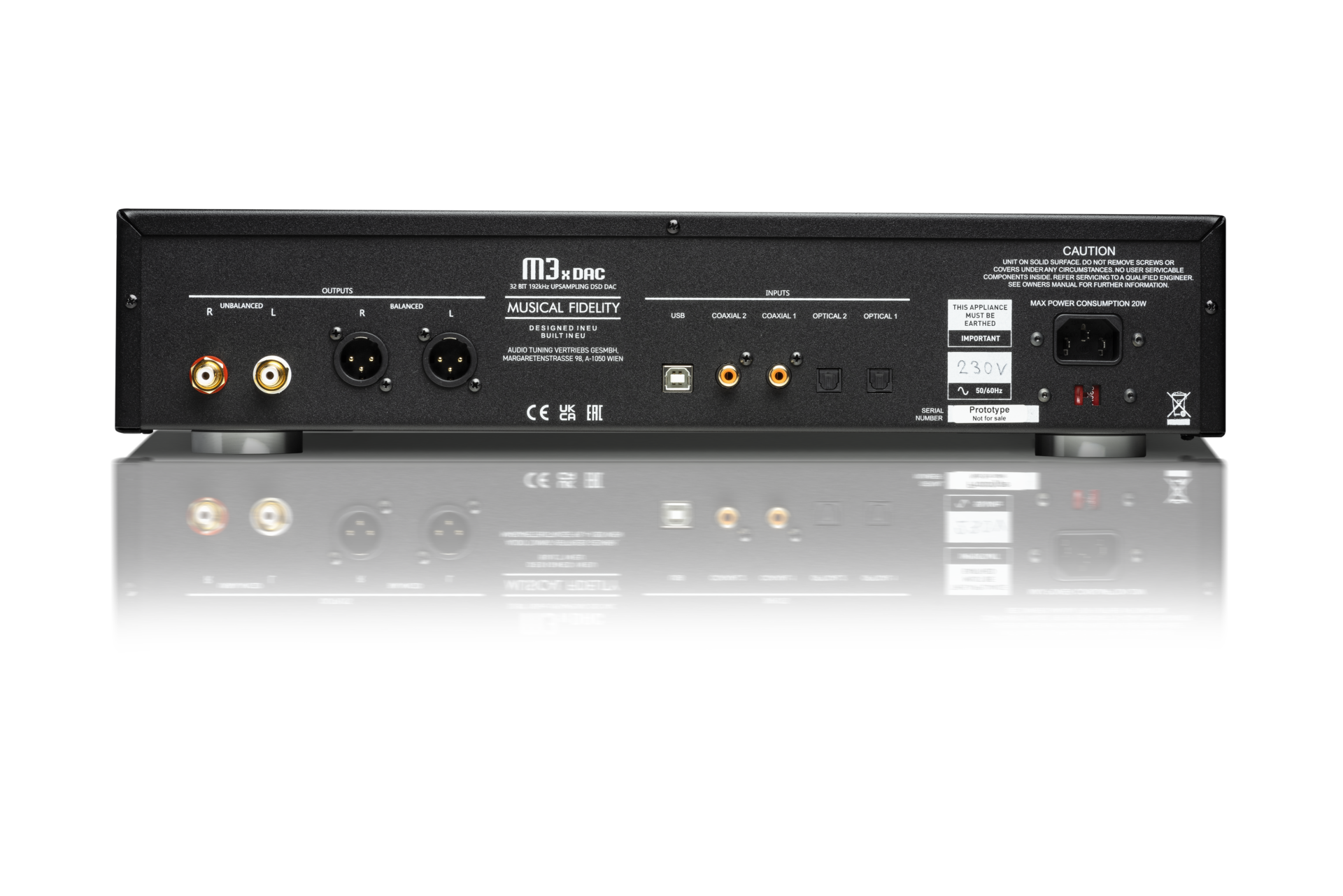
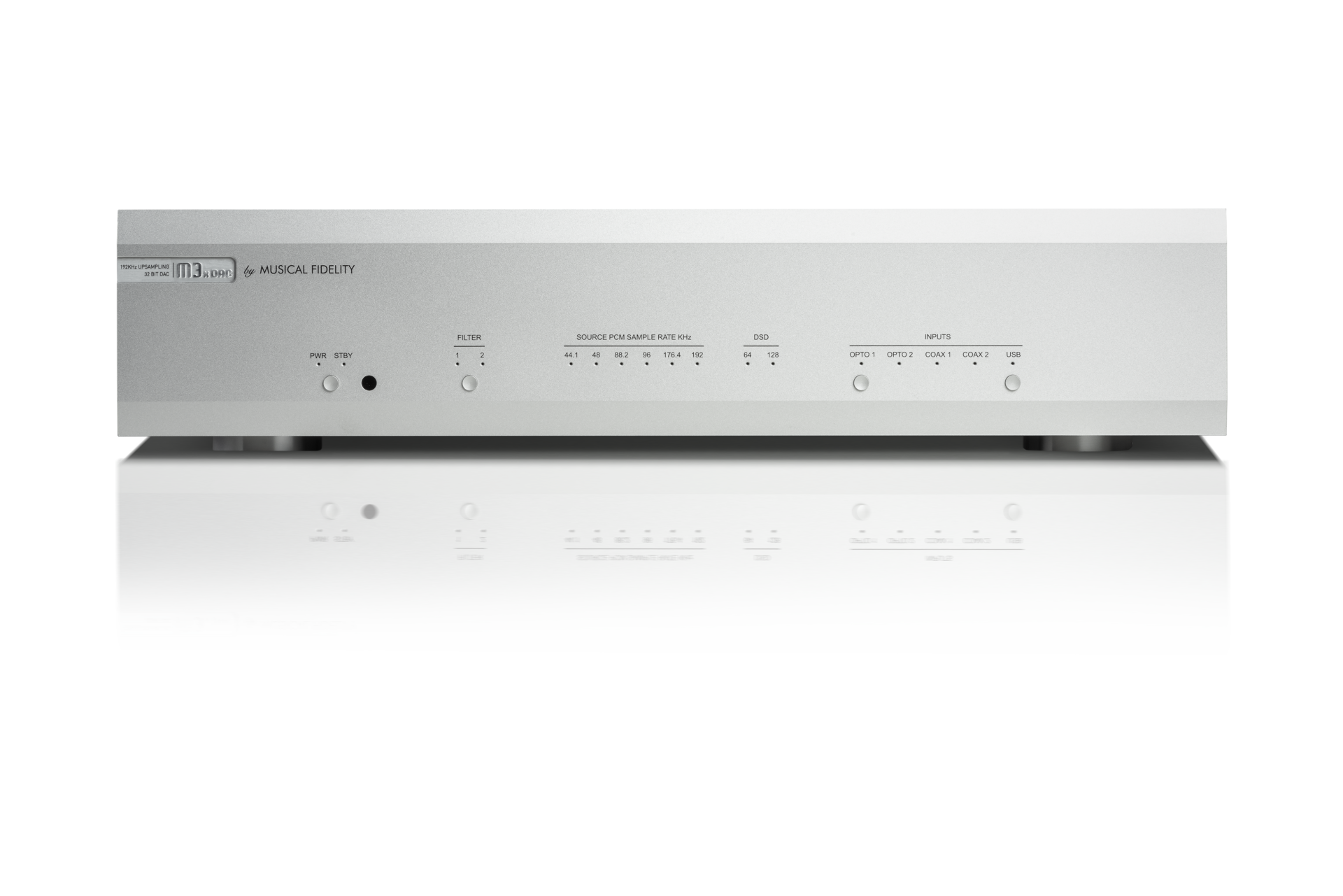
The M3x DAC is the new entry in affordable high-end DACs. With its technical prowess, superb technical performance, careful PCB design in Musical Fidelity tradition, meticulous power supply layout and excellent build quality, the new M3x DAC offers a truly outstanding offering modern high-end DAC design.
Technical Talk The M3x DAC employs an upsampling DAC design with the SRC4392, a high-end sample rate converter from Burr Brown, tasked to re-clock all PCM signals and convert them into 24 bits and 192 kHz. Up-sampling done in this sophisticated and clean implementation allows us to reach the lowest distortion levels and maintain and elevate your digital music playback. The PCM1795 DAC handles PCM rates of up to 24 bits and 192kHz and native and DoP DSD of up to DSD256. DSD files are not up-sampled, but played in their original format.The single ended RCA and balanced XLR outputs each have their own output buffer. Both output stages deliver superior audio quality, exhibit very low noise, large output voltage swing and high current drive. The excellent gain bandwidth and very fast slew rate produce exceptionally low distortion.
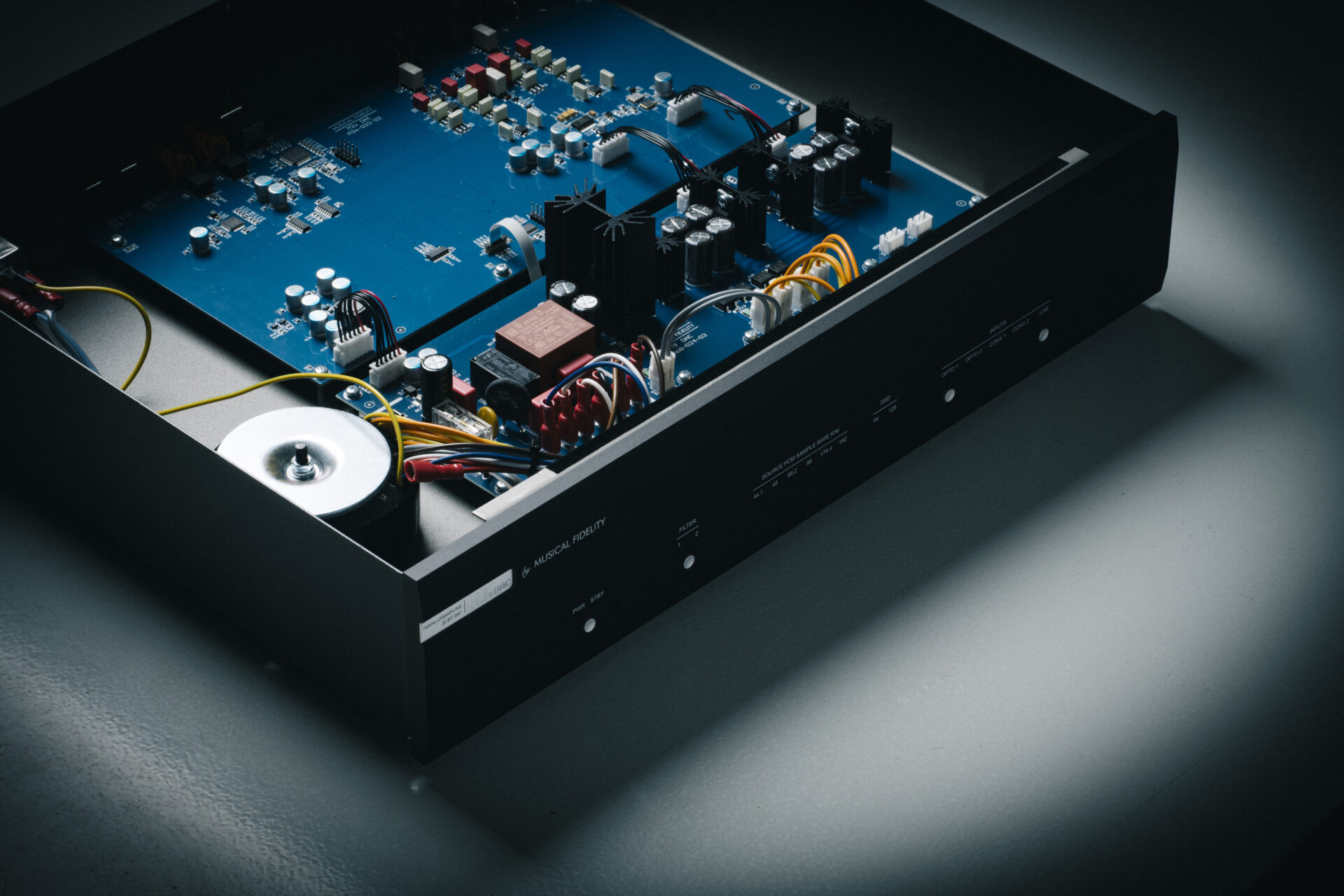
Super Silent Power Transformer The M3x DAC displays our continued development of our Super Silent Power Transformers. In-dustrial grade power sockets with EMI filter and DC blocker stop interferences and eliminate transformer hum. The toroidal transformer with low core saturation is ideal for audio applications and especially perfect for digital audio due to its extremely low electromagnetic radiation.
Correct PCB Design & Layout Digital to analogue converters, compared to analogue amplifiers, present their own design challanges. They work in different domains, have their own requirements and need to be trea-ted as such. Power requirements are unique and solutions designed for amplifiers will not show similar results when paired with digital circuitry. We have always held circuit board design and layout up to the highest of standards at Musical Fidelity. We are not believers of flashy board design just for the sake of looks. The design & layout need to be custom-tailored to each application, measure well AND sound as envisioned. Only then have we done our job. At this point, we have given the listener a palpable sense of the re-cording venue that places the performers in a real-time holographic space in their own homes.
Mechanically Sound Paying close attention to every aspect of the M3x DAC, we get a tremendous performer. The mechanical construction is uncompromisingly rigid and solid in typical Musical Fidality tradition. The front panel is milled from an extruded aluminium profile. Together with the heavy steel case this protects the internals against outer electromagnetic fields, and in the same way, the rest of your HiFi gear against electromagnetic fields generated by the M3x DAC.
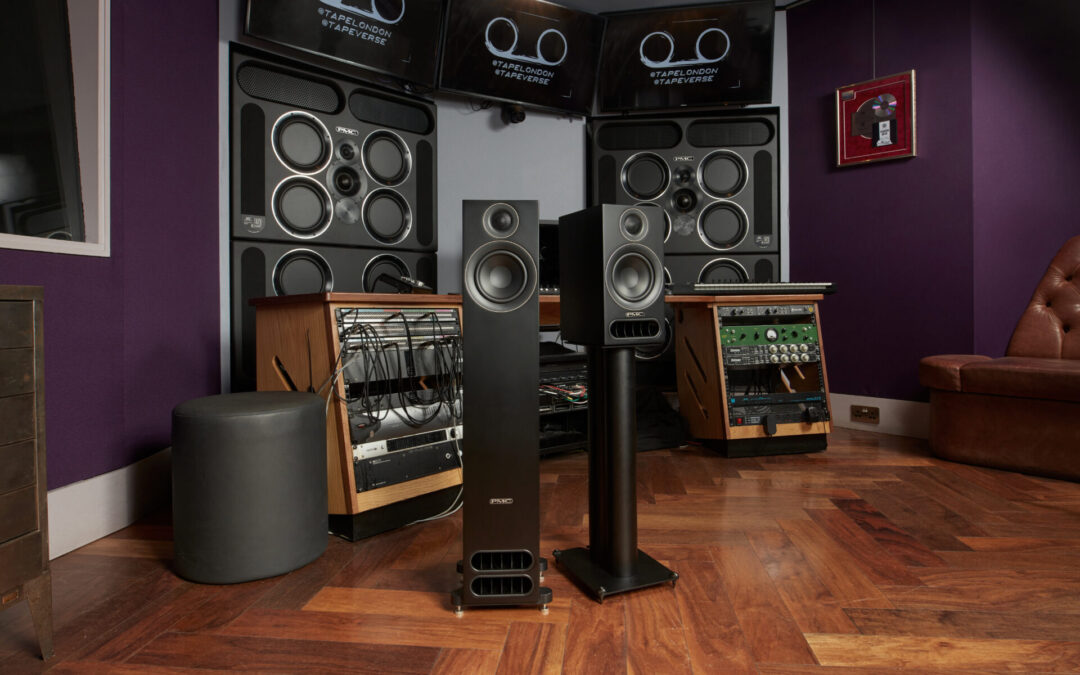
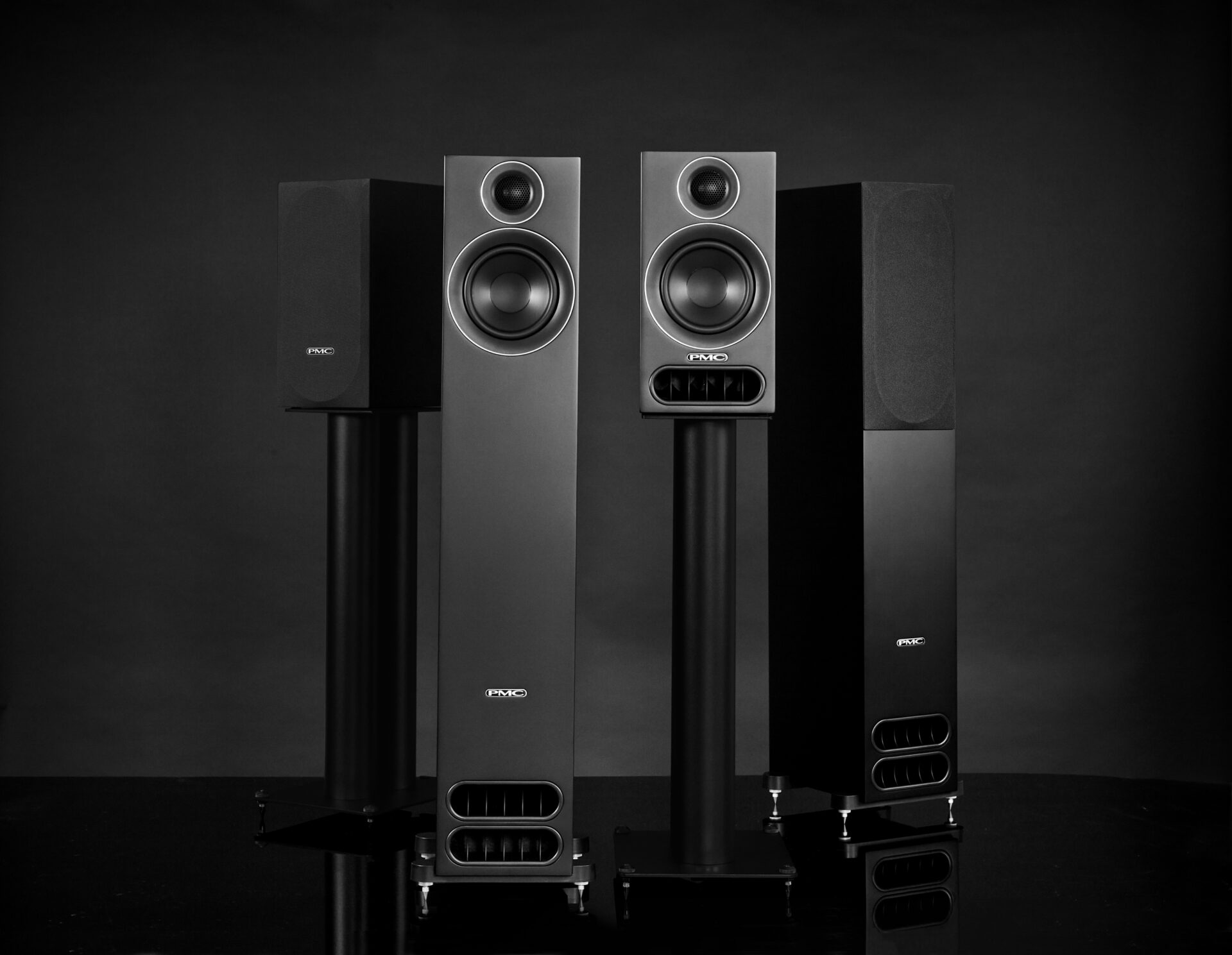
PMC is introducing prodigy1 and 5, a duo of loudspeakers that take the very essence of everything that makes PMC the speakers of choice for the world’s leading music makers and most discerning audiophiles and presents it to a much wider audience.
The pair of two-way speakers includes the compact prodigy1, a standmount design and the floorstanding prodigy5, both featuring a 27mm tweeter and 130mm bass driver.
The prodigy models are born out of the 30 plus years of research, development, measurement and listening that has gone into the creation of speakers that get as close as is possible to what is being played and recorded.
“prodigy can trace its lineage back to the PMC QB1 flagship studio monitors,” says Oliver Thomas, commercial director and head of design. “Not only is there a stylistic resemblance, but many of the technologies that were developed for QB1, such as Laminair, have been trickled down into prodigy, so users really can ‘bring the studio home’ when using these new models.”
prodigy1 is a compact standmount speaker, ideal for small and medium size rooms, that delivers the richly dynamic and full sound that is expected of a PMC. Both drive units are professionally proven, with the bass unit featuring in the PMC ci series, which have become the reference for Dolby Atmos music mixing around the world. The soft dome tweeter is a development from the PMC result6 studio monitors, giving the prodigy1 a genuine studio heritage, reinforcing PMC’s ‘from studio to home’ philosophy.
prodigy5 is a floorstanding speaker that is compact enough to take up no more space than bookshelf speakers on stands and delivers a sound that can fill any room. In common with the prodigy1, its performance is characteristic of PMC’s studio monitors and is packed with the familiar traits of a wide dispersion high frequency response, a very wide ‘sweet-spot’ and exceptional detail.
Both models feature the Advanced Transmission Line (ATL™) bass loading found in all PMC speakers. The ATL uses the energy that the bass unit generates in the most intelligent and efficient way to produce a far deeper, tighter and powerful bass than would otherwise be possible from a cabinet of this size and, additionally, through absorption of unwanted frequencies, creates a much clearer midrange.
Complementing the ATL is Laminair. This aerodynamically designed vent at the end of the line controls the air as it exits by dramatically reducing resistance, which increases efficiency and eliminates airflow noise. The result is a bass response with precise timing and an excellent dynamic range.
The long throw, natural fibre bass drive unit works hand-in-hand with the ATL as a coherent unit. It is fitted with an inverted dust-cap to reduce unwanted high-frequency reflections and the high-power voice coil and magnet assembly deliver unprecedented output levels for such compact speakers.
In keeping with PMC’s strict quality control procedures, the drive units are measured and listened to prior to assembly. Every completed speaker is measured and then listened to alongside the reference model before being signed off by its assembler before packing.
Reflecting on the journey that PMC has taken get to prodigy, Jeff Willcocks, CEO says, “A quest for sonic transparency and neutrality has always been our driving force and passion. And that is the reason why our speakers are used at every stage of the music making process. Composers, artists, producers, mastering engineers, and music lovers choose to use PMC.
“With these new loudspeakers, we have taken our knowledge, learnt over the past 30 plus years, and distilled it down into a duo of speakers that make the PMC performance available to many more people. It is one of the most significant product launches we have made, arguably second only to the launch of the fenestria, which pushed our design work to the current limits and led to technology being trickled down into these designs. I am very proud of what our team has created here, and I know we are going to win over a lot of music fans.”
The prodigy series is available in a Silk Black finish, with black fabric grilles available as an option.
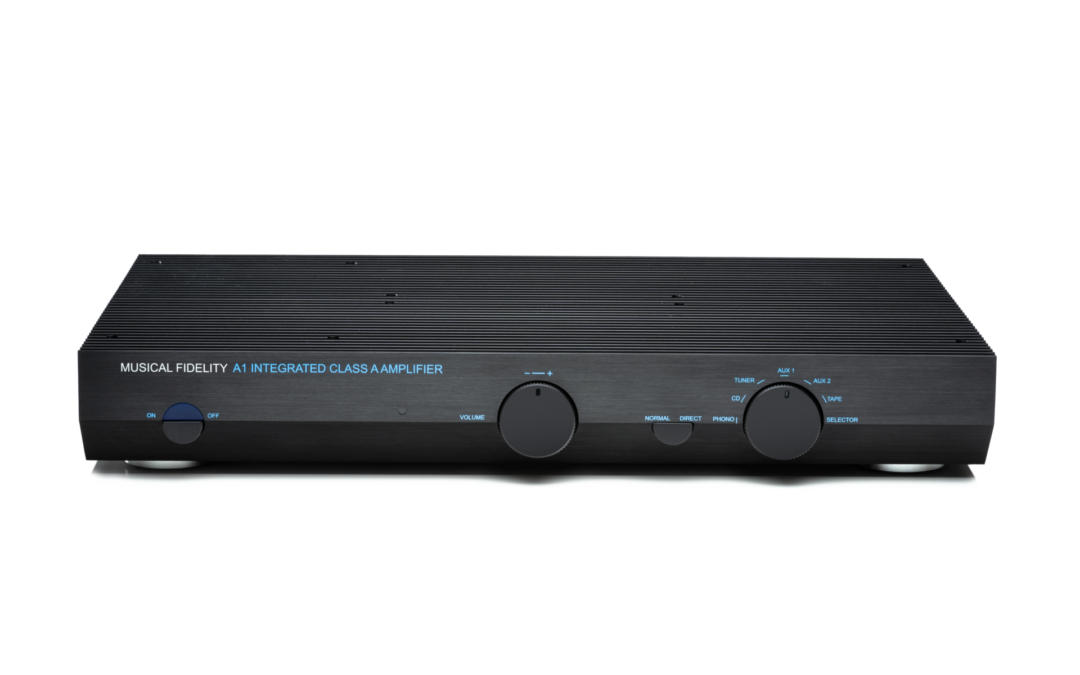
Musical Fidelity brings back one of the most iconic hi-fi integrated amplifiers of all time.
When you think of design icons, what comes to mind are cars like the Porsche 911, the Ray-Ban Wayfarer glasses or the Bialetti espresso pot.
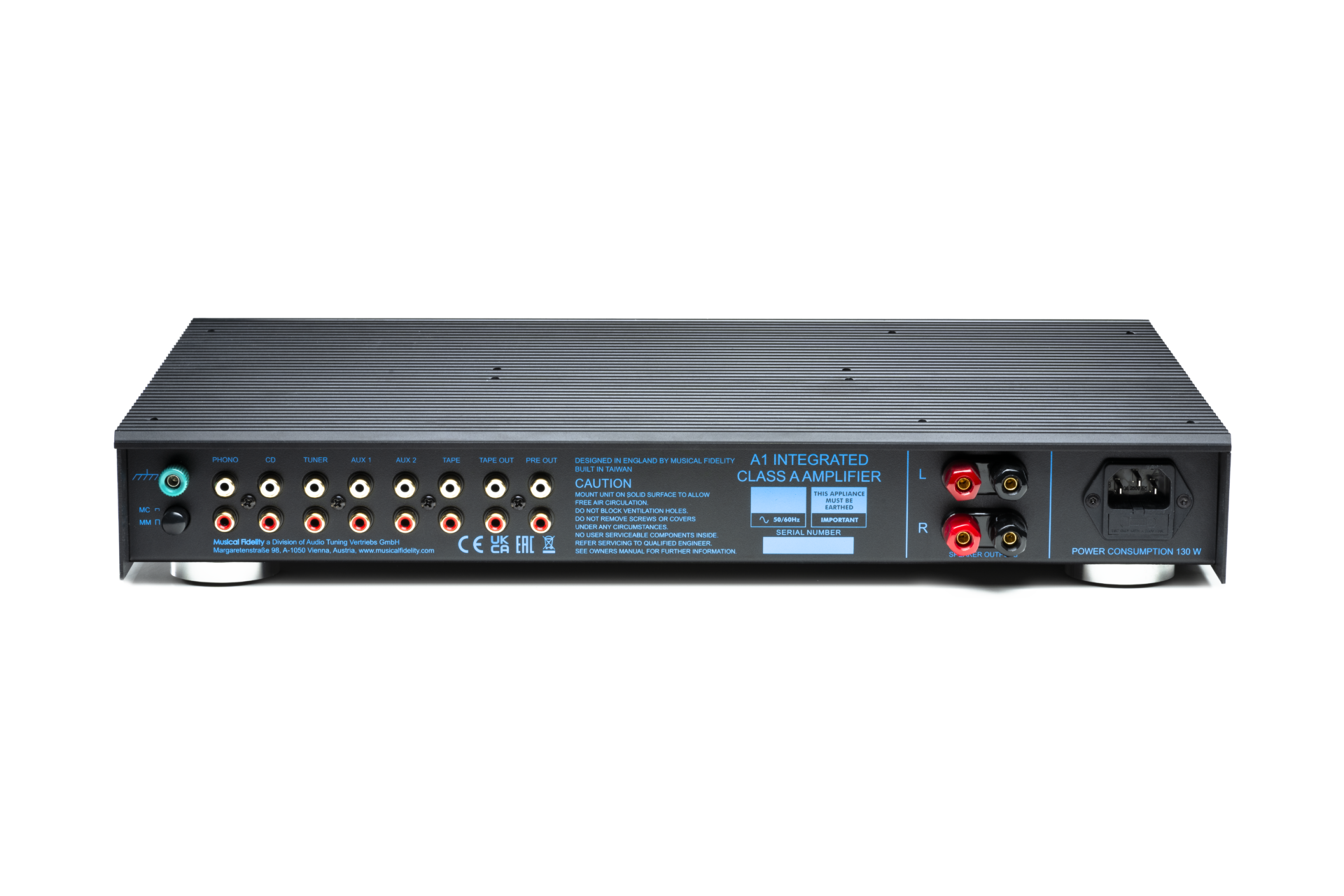
In hi-fi, the Musical Fidelity A1 has become one of the most classic designs – inside and out. First released back in the 90s, it quickly made waves for being an absolute beast when it came down to driving some of the most difficult speakers of that time, even though it was actually a rather low powered integrated amplifier. But: it was all done in pure Class A with excellent and expertly laid out discrete symmetrical circuitry topology and using only high- est quality components. The A1 showed people that there was more to amplifiers than just high power.
Based on its huge success, the A1 has gone through multi- ple reissues amd new versions over the years.
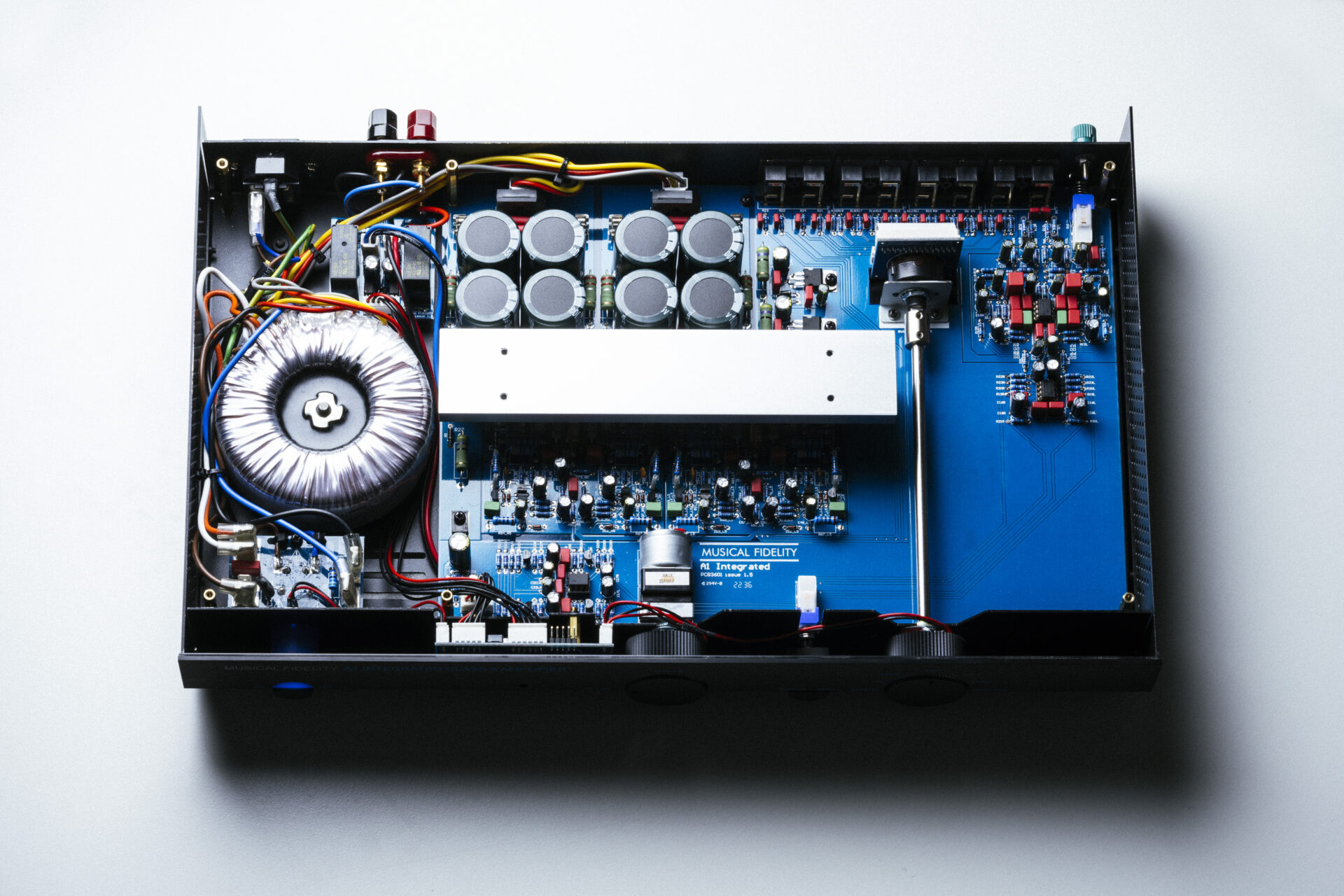
Now for 2023, for the first time since its initial release we have actually kept all specifications, the appearance and circuits of the 1990’s rendition for those who missed out the first time. With an updated transformer, power supplies and modern low noise components we’ve revitalized the formula and are proud to reintroduce the fresh original – three decades later.
Discrete symmetrical topology for unique sound and dynamics
25W Pure Class A power @ 8 Ohm
Planar Audio transistors with 25A maximum output
Dynamic class A, if class A standing current is exceeded, it will automatically allow more. It therefore “slides” (NOT “switches”) smoothly into class B style operation, temporarily allowing the further current draw needed
Output stage therefore drives difficult speakers with no problems
Updated transformer from shared (1988 original) to more efficient “dual mono split rail” windings
Fully independent left and right power supplies for better power handling and stereo imaging
Each power amplifier now has double supply capacity resulting in reduced ripple and noise and improved performance
Transformer noise and heat dissipation reduced due to better efficiency and updated components
Filtered main supplies for better regulation and reduced switch on surge
Gain block before volume control totally by passable using “direct” switch (-10dB)
High quality and updated ALPS RK series potentiometer as volume control
Low noise TL071 JFET preamplifier circuitry, same as original (1988) design
Fully smoothed and regulated supplies for lowest noise possible
Discrete current-mode input stage for low- est noise amplification of MC as well as MM cartridges
Low noise current to voltage converter for further amplification and RIAA equalisation
Automatic input impedance matching (1K nominal) for MC selected along with with increased gain
Original (1988) A1 appearance and circuits with modern improvements
Remote control added for volume control
Modern updated low noise components
The A1 is available for an MSRP of 1.599€ (incl. VAT).
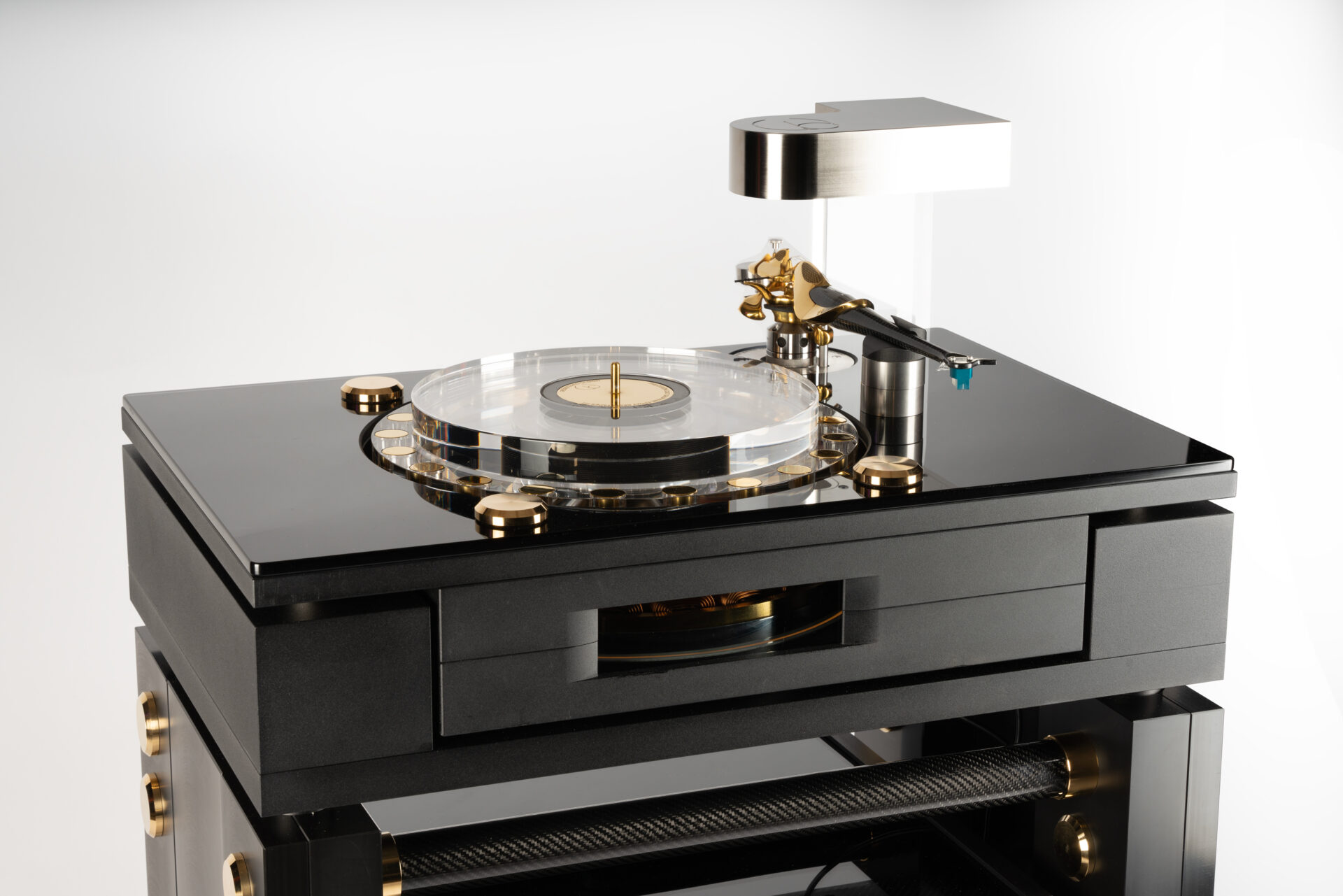
The whole new Wilson Benesch GMT Turntable System is a very very high end product including the GMT deck, Graviton tonearm and Tesselate cartridge.
The GMT System Turntable · The GMT System features a new drive system called the Omega Drive. The Omega Drive is a novel, proprietary, three-phase Synchronous motor that has been developed from the ground up by the Wilson Benesch GMT Consortium. The Omega Drive is a patent applied for design. · Stage One Step Up Transformer, with two separate transformers for each channel with Teflon dielectric silver Litz wiring and an amorphous core transformers. The transformers are shielded by Mu metal and have a dedicated ground. · The GMT System has been developed with a holistic approach whereby the turntable and all sub systems have been optimised to create a unified system developed by Wilson Benesch. · In addition to the Omega Drive, Wilson Benesch has developed the Alpha Isolation System, Piezo Remote VTA System, the Graviton Tonearm systems and the Tessellate cartridge Systems. · The Alpha Isolation System has been developed in collaboration with a leading optical measurement system isolation company. The Alpha Isolation System is a microprocessor controlled pneumatic system that isolates the GMT System from vibration. Fully autonomous, operating with micro-meter precision, providing isolation to 1.7Hz. · Both the GMT System Turntable and the Alpha Isolation System are fully compatible with the Wilson Benesch R1 System Rack. Together the system forms a highly optimised complete analogue replay system. · The Piezo Remote VTA System is the world’s first remotely adjustable VTA System. Fully controllable from the listening position using the Wilson Benesch GMT System App, allowing unprecedented and repeatable accuracy of 1 nanometer.
Graviton Tonearms · Two new tonearms have been developed through collaboration with the Advanced Manufacturing Research Centre (AMRC) in Sheffield, England. Along with supporting work completed by the FEMTO Institute in Besancon, France as part under the SSUCHY Project. · The Tessellate Ti Armwand offers a higher mass armwand design when integrated with the Piezo Remote VTA System. Complete with a tapered, helically wound single piece Carbon Fibre / Graphene / Rohacell armtube. · The Tesselate Al Armwand offers a lower mass armwand design when integrated with the Pizeo Remote VTA System. Complete with a tapered, helically wound single piece Carbon Fibre / Graphene / Rohacell armtube. · Both the Ti – Titanium and Al – Aluminium Armwands are comprised of additively manufactured counterbalance structures with highly optimised novel internal geometry that includes latticed as well as provides particle damping. The architecture is near ideal Geometry and features zero material redundancy in pursuit of maximum specific stiffness. These additively manufactured structures are formed by sintering titanium with multiple lasers to create a complex three-dimensional structure using state-of-the-art manufacturing technology. As such, when combined with the Piezo Remote VTA System, the Tesselate Ti and Al Armwands are the most advanced tonearms ever conceived and developed.
Tesselate Cartridges · The Tesselate Cartridge systems have been developed by Wilson Benesch. It features a custom designed OEM generator, with a novel hybrid UD carbon fibre enhanced cantilever design that has been precisely optimised to match the Graviton Ti Armwand. · Both the Ti – Titanium and Al – Aluminium Cartridges are comprised of additively manufactured cartridge shell and fin structures. Just like the armwand counterbalance structures, the Cartridges features latticed architecture and delivers benchmark performance in terms of specific stiffness.
R1 System Rack · A modular rack system design to provide optimal conditions for the operation of state-of-the-art digital and analogue audio equipment. · Designed to provide level, stable and precise platform for optimal operation of installed components. · to transmit energy away from highly sensitive components and subsequently absorb this energy within the racking system · to isolate components from energy generated by loudspeakers in the listening space, transferred though the structure of the racking from the ground · to isolate each component from energy generated by other audio equipment installed on the racking system
GMT Control App · Allows remote control stop and start of the GMT System Turntable. · Allows 33/44/78 speed setting, plus customisable speed control. · Displays speed lock on the app display. · Allows Arwand lift and lower. · Allows remotely controlled precision VTA Adjustments with repeatable accuracy to 1nm. · Allows saved preset for VTA Settings The Wilson Benesch GMT System The GMT System Turntable frames current technologies and redefines a new era in analogue design. Imagine manually adjusting the VTA on a tonearm from the position of the turntable, whilst trying to hear the nuanced differences. Now envisage the future, being able to make the same adjustments remotely from your listening position to 1 nanometre accuracy. This level of accuracy has been simply impossible with all Prior art. The GMT System Turntable defines a new era in turntable design. It creates a new dialogue between the vinyl enthusiast and their replay system, changing the user’s experience of analogue replay forever and setting a new standard within the high-fidelity high-end audio market.