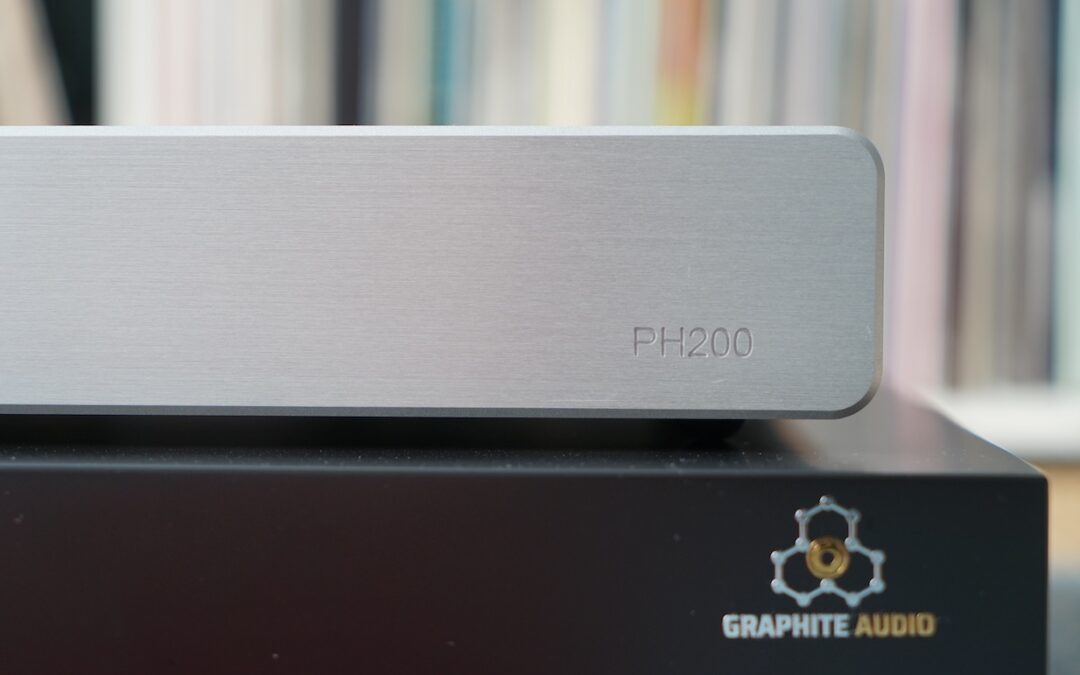
If you want to enhance the beauty of a high-fidelity system, try the Graphite Audio isolation platform Classic 100. It could well become the secret weapon in your audiophile arsenal…
Founded in Poland in 2020, Graphite Audio is not the result of an ingenious do-it-yourself project, but of almost three years of fundamental research into the vibratory behaviour of equipment. The creator’s credo is to help develop the most natural sound possible. As an experienced audiophile himself, he was able to test a large number of solutions. He very quickly realised that hyper-rigid materials were not at all suited to his specifications. He therefore banned any metal, steel, ceramic or glass parts, because of their tendency to colour certain frequencies. On the contrary, he realised that it was important to use materials capable of natural damping in this type of device. After a long series of in-depth tests on a multitude of available materials, he found that adding graphite to a single polymer provided the most natural material for his accessories. We had already had the opportunity to test the IC 35 Premium cones with very positive results. So we naturally asked Graphiste Audio to lend us its new isolation platform.
As its name suggests, the Classic 100 is 100 mm thick. Our test model arrived covered in an attractive satin matt black lacquer. The structure itself is made up of a succession of very thin layers of wood glued together. There are 140 of them! This top-quality plywood is very expensive, but has the distinctive feature of being dense, inert, damped and rigid all at the same time, all qualities sought after to give the full measure of the most demanding audio equipment. Under the platform, 4 adjustable conical feet made of Graphite Audio polymer ensure perfect horizontality. They are combined with cups made of the same materials. The special design of the feet and bases allows the platform to micro-roll. The platform is available in a variety of finishes. If required, the size of the platform can be customised and made to measure.
In use
Although initially designed to be placed on the floor, the Graphite Audio isolation platform can also be placed on a rack or shelf, provided there is sufficient space and load capacity available. For our part, we obtained excellent operating conditions on our Centaure L. We tested the isolation platform with turntables, DACs, CD players, servers and amplifiers. You just need to make sure that your rack is strong enough to support the 15 kg of the platform in addition to your equipment.
The sound
Of course, you may be sceptical about a lot of very (too?) expensive devices to improve the sound performance of your hi-fi installation. But here, all you have to do is place a piece of equipment you know very well on this platform to realise that something special is happening. What strikes you straight away is the sense of calm and contemplation. It’s as if we’ve lowered the residual noise threshold of the installation. Everything is more serene, more composed. The silences are more deeply felt. As a result, the level of dramatic intensity of the reproduction is increased. And, of course, the dynamic behaviour is affected, with acceleration that’s more forthright but also smoother. Generally speaking, the sound is smoother and more fluid. It would seem that this platform also has repercussions on the quality of the sound architecture, with a wider, more evenly distributed soundstage and much more distinct backgrounds. Sharpness in the sense of depth is greatly improved.
Our conclusion
Given the size and price of this accessory, the question inevitably arises as to whether we recommend it. The answer is more subtle than that, because it’s all a question of proportion! The more ambitious and high-performance your installation, the more obvious the contribution of this platform will be. As you will have realised, we recommend the Graphite Audio tablet mainly for fine hi-fi systems where a substantial investment has already been made. In this context, the tablet will enhance the performance of a fine source or amplifier. We should point out that we obtained the best results with tube electronics, probably because Graphite Audio allows us to perfectly control the microphonic effect of the tubes. If you add to that a very wide range of finishes, each more elegant than the last, you have before you the ideal accessory for combining elegance and performance. An interesting alternative to consider if you want to push the performance of your high-end equipment to the limit.
Specifications
Origin: Poland Price: from 3569 € (Classic 100) Standard dimensions (including feet): 495 x 465 x 100 mm (+/- 3 mm) Feet: 4 – regulated (+/- 4 mm) + Bases Weight: 14.5 kgs Maximum load : 220 kgs
Waterfall upgrades all its models to XT versions and rolls out a range starting with the Niagara.
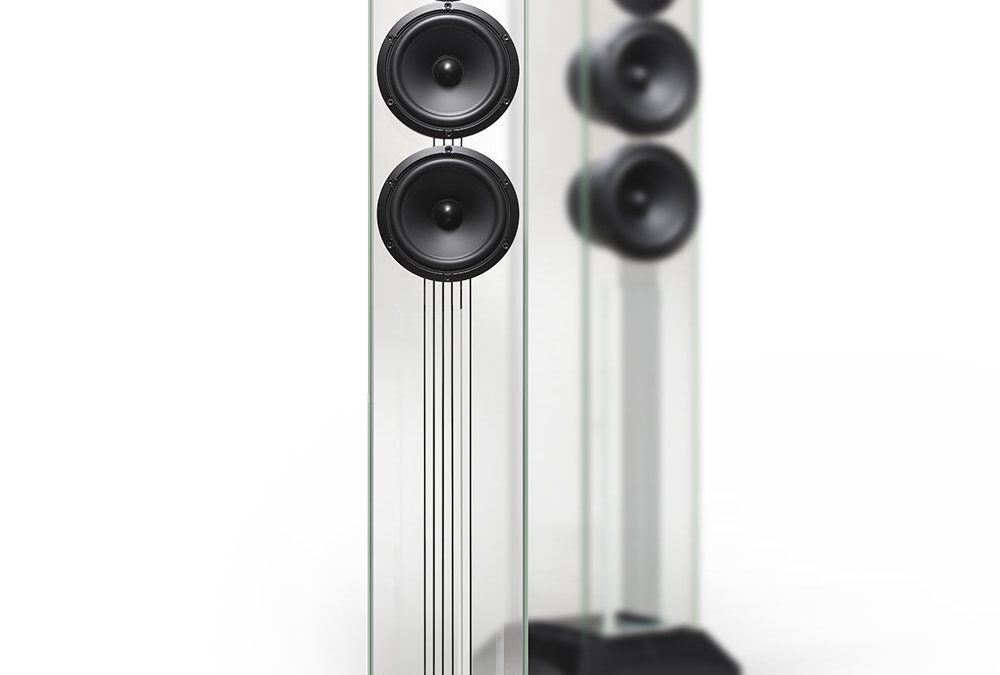
Ill-regarded in the high-fidelity world because its glass loudspeakers have a superb design, which leads many to believe that its products are not, however, of great audiophile quality, French manufacturer Waterfall innovates at the start of this year by presenting at the Barcelona Show its new Jetstream technology, now integrated into five new models, whose names are concluded by the qualifier XT.
With an aluminum turbine blade structure around the bass-midrange drivers, again supplied by French manufacturer Atohm, Waterfall has considerably improved these speakers by incorporating a patent-coded “X-Technology”, which focuses in particular on better concentrating the mid-bass waves. The Iguasçu Evo and Victoria Evo thus become respectively Iguasçu XT and Victoria XT, while the Niagara, taller and clearly recognizable by its separate tweeter in a separate glass block, gives way to three new models. Named Niagara XT-1, XT-2 & XT-3, these high-end speakers still use platinum glass, but also Nappa leather and solid aluminum for the base and around the tweeter port. Maintained in glass on the XT-3, the tweeter is now integrated into a magnificent polished wood cabinet on the XT-1 and XT-2.
Available from March for the Iguasçu XT and Victoria XT, and more likely from April to May for the Niagara XT models, these speakers will be sold in Europe from €3 500 per pair. More ultimate, the Niagara models will start at €15 000 a pair, with a host of finishes and customizations worthy of a true audiophile luxury object. All that remains now is to look forward to presenting you with one of these loudspeakers in a full review, hopefully in the May issue!
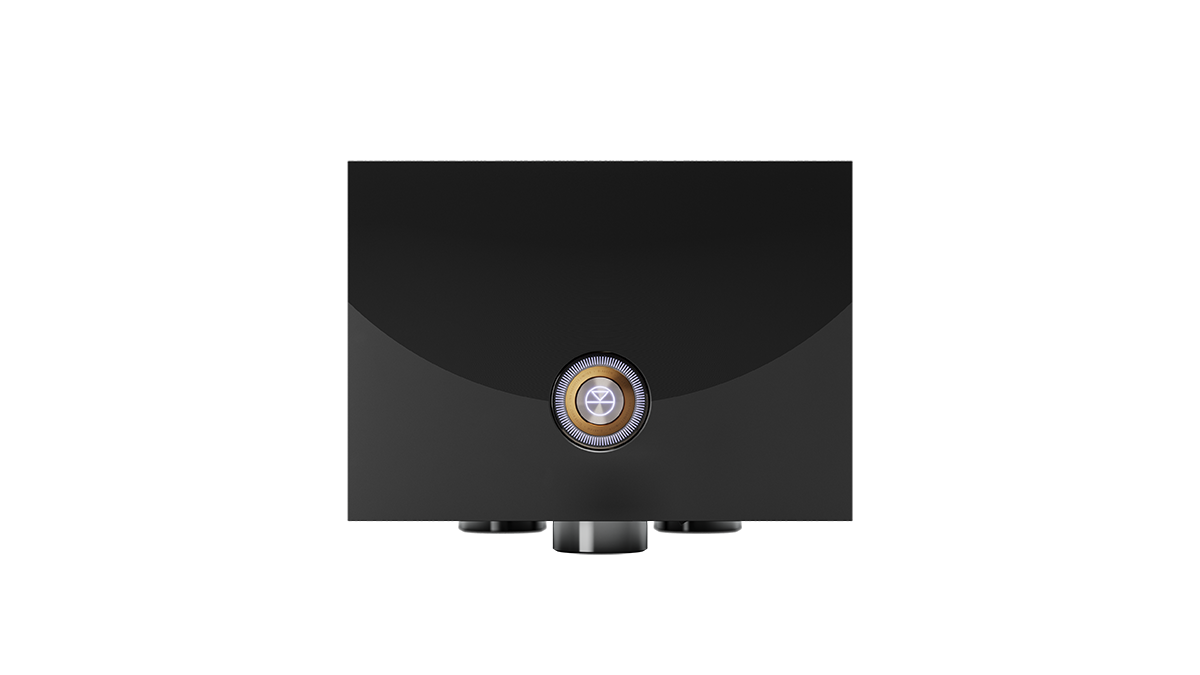
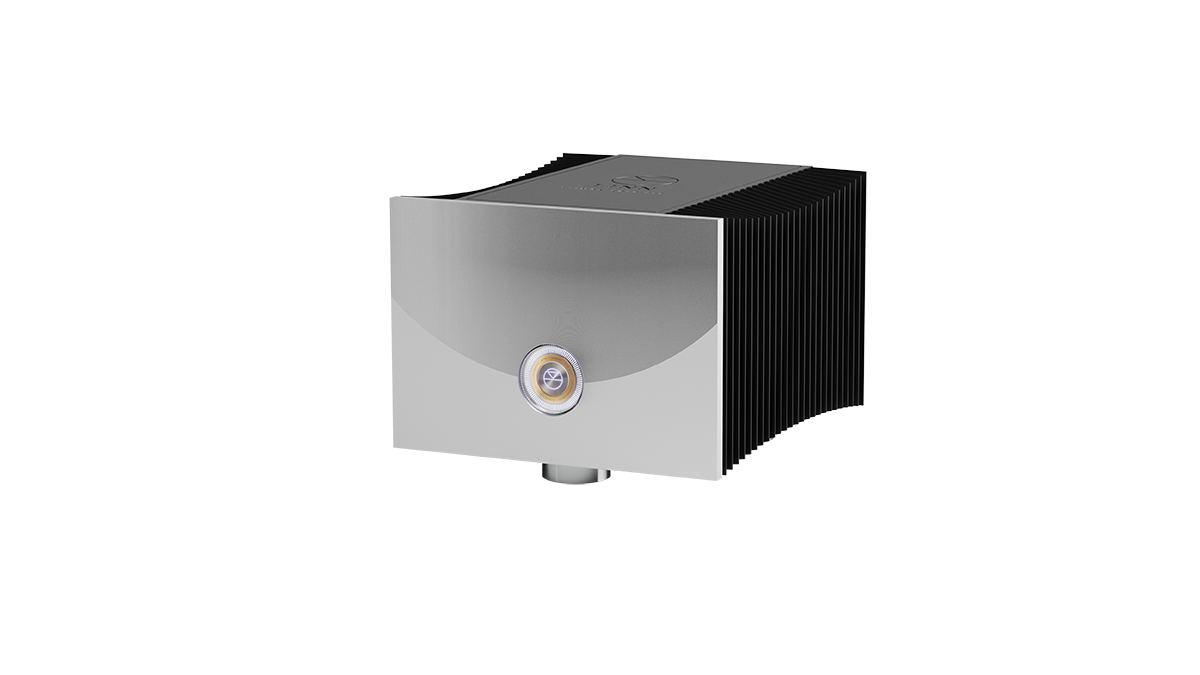
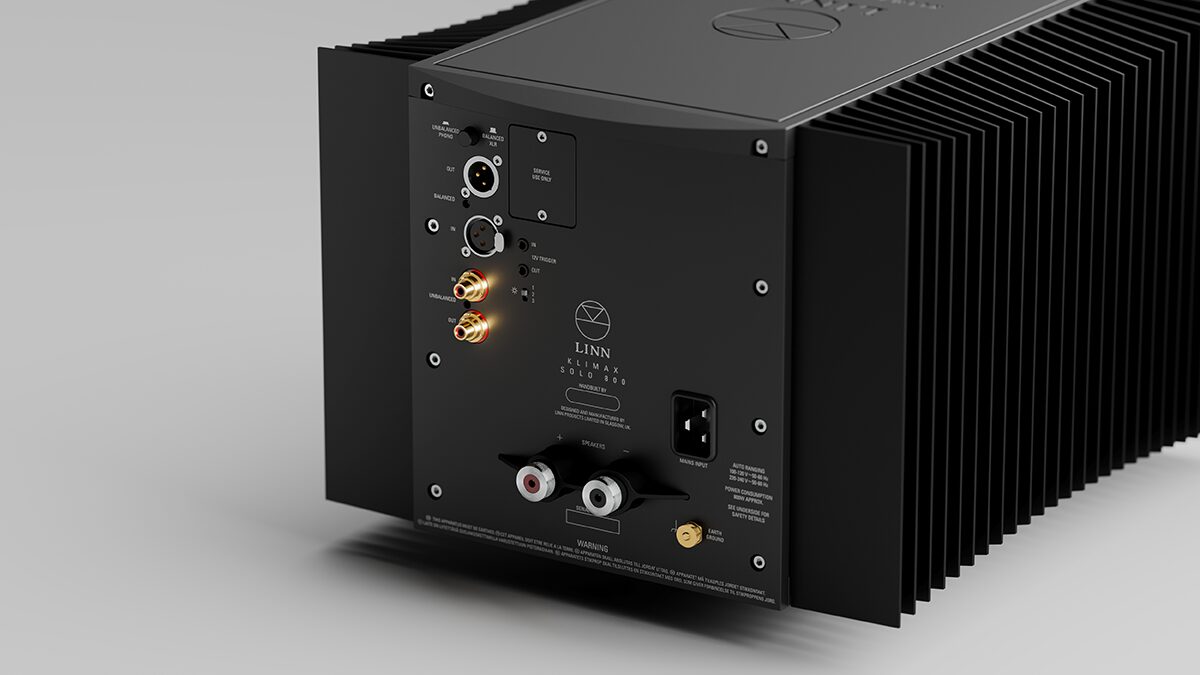
Linn announces the global launch of their reference mono power amplifier, Klimax Solo 800. It is a large, passively cooled amp; the first of its kind from Linn.
With Klimax Solo 800, Linn has created a superior-performance amplifier which can drive any given speaker optimally – even those that present difficult loads – under any conditions. To achieve this, their electronic engineers returned to first principles with the goal of achieving ultimate ‘consistency’ and ‘accuracy’ – because consistency and accuracy are critical to pure, power amp performance. Solo 800 features novel and original Linn technologies which combine to produce staggeringly low distortion measurements, with superb signal-to-noise ratio, and incredible efficiency. It delivers exceptional clarity right up to 800W into 4Ω, and 1.2kW into 2Ω. The all-new Solo 800 is a whole new category of mono amplifier from Linn; it measurably outperforms its larger rivals.
Gilad Tiefenbrun, Linn’s CEO, said: “As this is our first foray into the high-power, passively cooled amplifier category, we’re acutely aware that we have to outperform some strong, established incumbents. The challenge was to apply our unique expertise in both analogue and digital electronics engineering to set a new standard in audio amplification. The resulting distortion and noise measurements are lower than anything the industry has seen. Solo 800 drives even the most demanding loudspeakers more assuredly than its competitor amplifiers. We’re confident that customers will hear the difference.”
Adaptive Bias Control Klimax Solo is a Class AB amplifier and, as such, it requires a ‘sweet spot’ bias current to minimise transistor crossover distortion. In a conventional Class AB amplifier, biascurrent is usually set once only, by an engineer with a potentiometer, at the point of building the product. However, due to variations in individual transistors, changing temperatures during use, and age of the components, this bias current can, and does, drift quite far from ideal over the lifespan of the amplifier. To circumvent this challenge in Solo 800, Linn has developed their original Adaptive Bias Control technology (debuted in Linn’s 2023 flagship 360 Exakt Integrated loudspeaker). Linn establishes the optimum bias current dynamically and in real-time by measuring, sampling and digitising the current supplied to the transistors. This data is passed to an FPGA, which calculates the bias corresponding to these measured current levels, and implements a digital control loop to hold this measured bias point at its ideal for each individual transistor. Using this method, Linn’s Solo 800 ensures the optimum bias is applied and persistently adjusted to be ideal – at any temperature, regardless of volume or demanding dynamic changes in the source material – for the duration of the product’s lifespan. With Adaptive Bias Control, Linn has conclusively solved the traditional problems inherent to Class AB amplifier design.
Efficiency. Accuracy. Consistency. Solo 800 as a whole is the epitome of efficient, consistent, and accurate circuitry design. Linn’s unique combination of digital and analogue expertise has allowed them to optimise and linearise every internal stage of the amplifier to produce exceedingly high performance consistently in all conditions. Linn has employed novel techniques to drive distortion down as much as possible, through dynamic monitoring and error correcting in real-time via multiple digital and analogue feedback loops deployed throughout the amp. The phenomenal analogue output stage of Solo 800 uses only the best transistors available. Linn combines eight pairs of them, in parallel, to ensure linearity right up to and beyond the amplifier’s impressive rating. Solo 800 incorporates sixteen transistors for upper and lower devices – with their combined total producing the purest, ultra-linear signal for the loudspeakers which follow. This array of top-performing output devices results in the the amp’s output impedance being divided by eight, giving Solo 800 the ability to drive large speakers which present difficult loads, right across the audio band, and with no tail-off in performance as the volume is turned up.In fact, the louder it goes, the more astonishingly controlled it is, ensuring you get only the best from your loudspeakers.
Roon presents an even more powerful Nucleus: The Nucleus Titan
Announced at the CES 2024 but still not present on the brand’s official website (except on its blog), the Nucleus Titan is designed to further improve the results of file playback via Roon software. While Roon has been trying for years to establish itself in as many audiophile network players (Roon Ready) as possible, the brand now also allows third-party brands to offer true Roon servers (Roon Core), thus replacing a Nucleus, that can be done for example by the Silent Angel Rhein Z1 described in our Vumètre 49 (English Vumetre #7).
Dedicated to further enhancing the Roon experience and playback stability of files read from internal memory or streamed from the Tidal, Qobuz or Spotify platforms, the Titan is claimed to offer 36% more processor performance than the Nucleus Plus, while consuming 37% less power and increasing RAM playback speed by 80%. It also benefits from the latest SSD enhancements, with a choice of 0TB, 2TB, 4TB or 8TB, while connectivity gains two USB-C ports, in addition to the two USB-A and two HDMI ports already present on the Nucleus Plus (the classic Nucleus has only one HDMI).
Of course, all these improvements, in addition to a machined aluminum chassis and a choice of metal, wood or stone (composite) finishes, come at a price: while the Roon Nucleus starts at $1,459 and the Nucleus Plus at $2,559, the Nucleus Titan is priced at $3,699, to which we recommend to add at least 2TB of optional storage to benefit from the greater reliability of playback on internal memory, rather than streaming.
McIntosh commemorates its creation in 1949 with a 75th Anniversary series and new monophonic power module
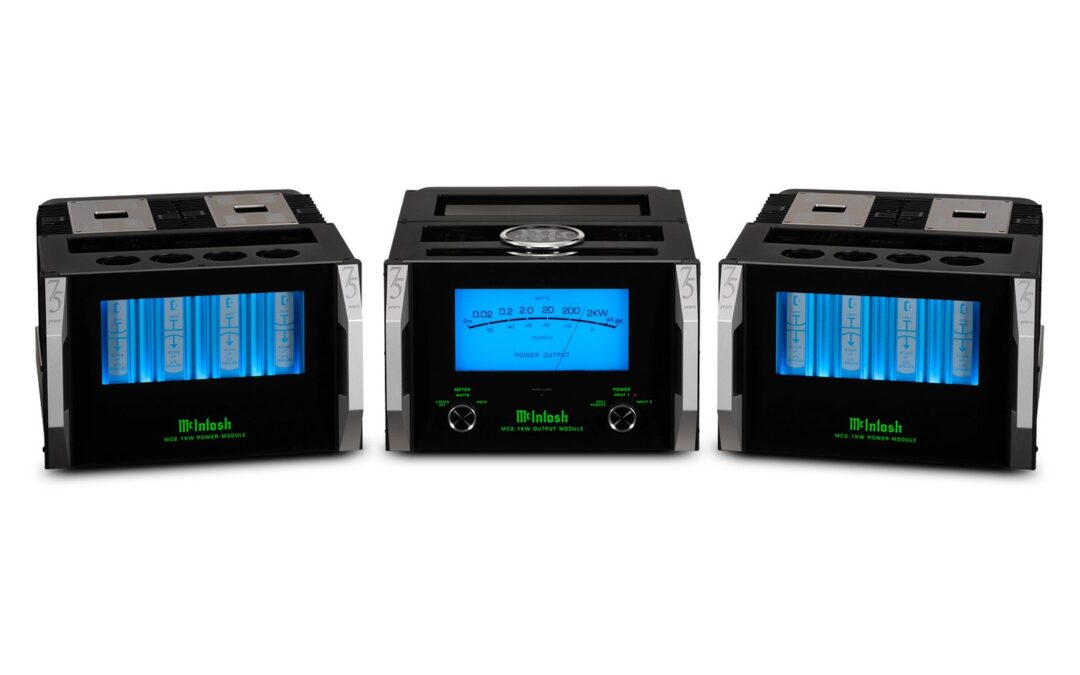
Just a few days after the presentation of Sonus Faber’s Suprema, McIntosh introduces an Anniversary Series featuring a monoblock amplifier system composed by three chassis, ideal for use with some of the world’s most extreme loudspeakers, including the manufacturer’s XRT2.1K. Already launched in the last two years, the MCD12000 SACD/CD player, MA12000 hybrid integrated amplifier, C12000 preamplifier and MC1.25KW mono power unit all take on the “75th Anniversary” emblem, thanks to the addition of a circular logo on the top of the unit, featuring a monogram with Mc, 75 and 1949 intertwined, in addition to the notion of “75th” on the top of the handles.
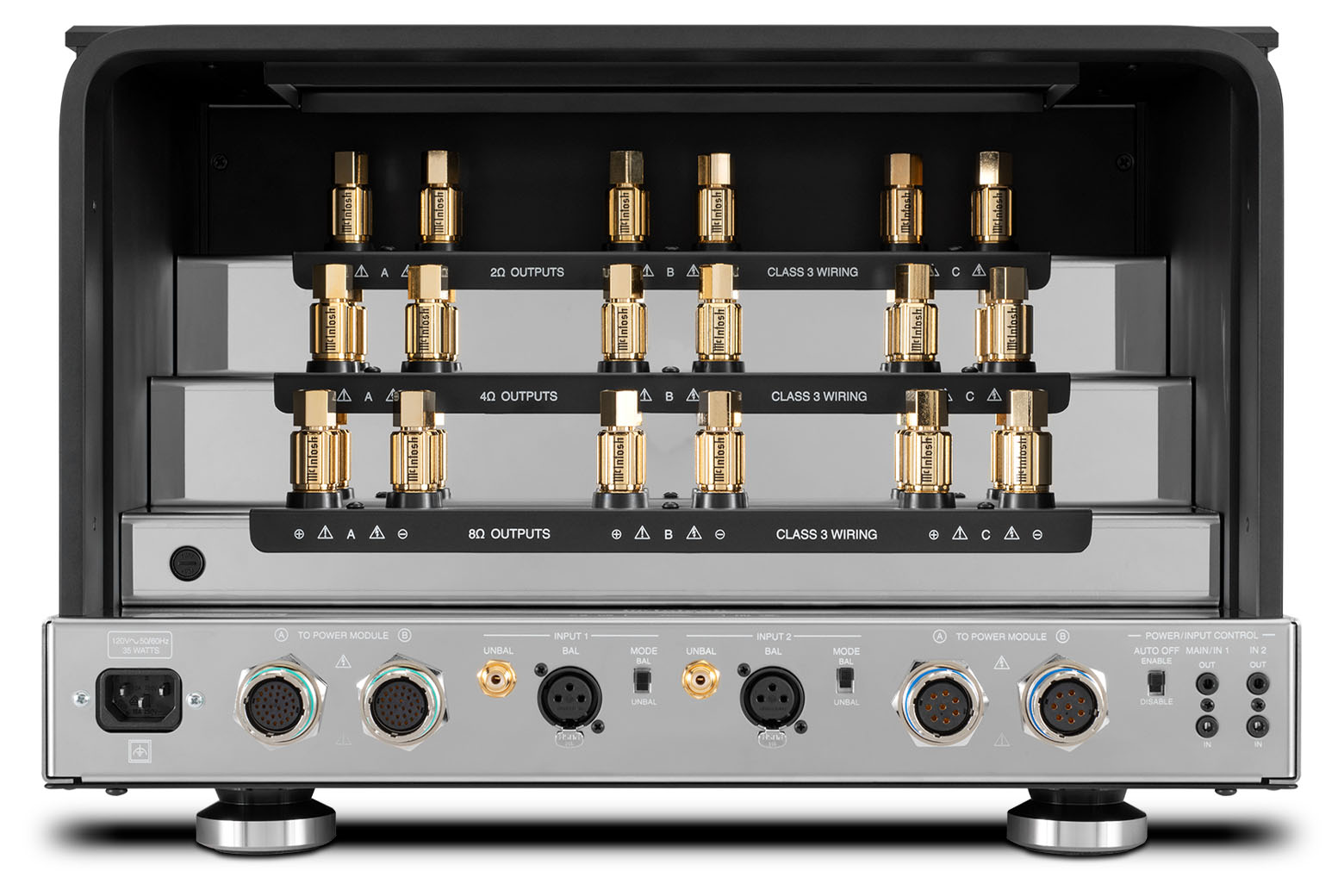
And to take things a step further, the American brand, easily identifiable thanks to its blue vumeters, is presenting a limited series of 75 pairs of MC2.1KW monoblocs, whose power peaks at 2000W. In three chassis, the output module of this model is based on the style of the 1200W MC1.25KW with a massive vumeter in front, but must now be combined with two power blocs of the same format, each delivering 1000W. At the rear of the first unit, three stages of three pairs of terminal blocks allow, for the chosen channel, to amplify a loudspeaker in class AB with double push-pull mounting on impedances of 2Ω, 4Ω or 8Ω, connecting it with one, two or three pairs of cables. The other two blocks have only one current input and one input and output for connection to the aforementioned module. Weighing in at a minimum of 54kg (120lb) each, for a total of around 181kg (400lb) when all three are grouped together, i.e. over 362kg (800lb) for a pair of MC2.1KW, this system enters the top of the most excessive ultra-high-fidelity products, all this at a price of $50,000 or €65,000 per set of three modules, i.e. $100,000 or €130,000 per pair.