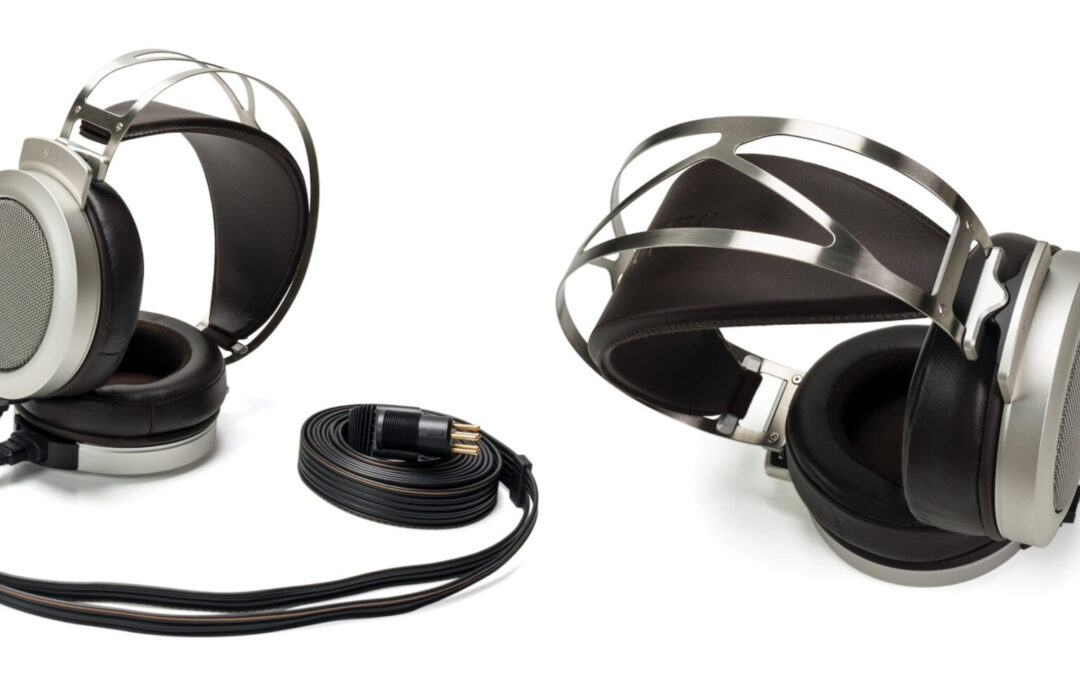
Between the best-selling SR-L700 Mk2 (1 750 € / $1 649) with rectangular ear cups and the SR-009S (5 395 € / $4 545) with more conventional round ear cups, there was recently a large gap in the Japanese headphone manufacturer’s range. This gap has now been filled with the arrival of the SR-007S.
With a design similar to that of the SR-009S, Stax has taken inspiration from the first SR-007 from 1998 for the new SR-700S, incorporating the latest electrostatic technologies, including a new diaphragm and fixed electrodes. Based on the manufacturer’s most advanced model -the SR-X9000- the structure has been completely redesigned to drastically reduce resonance, notably with a new headband, while the lambskin ear pads improve comfort and optimize wave absorption and therefore sound diffraction.
Supplied with a detachable 2.5 m OFC copper cable, the SR-007S weighs 430 g, but these open-back headphones offer a very wide frequency range, covering 6 Hz to 41 kHz. Manufactured in Japan, they will be released in Europe on August 30 at a price of 3 150 € ($2 390).
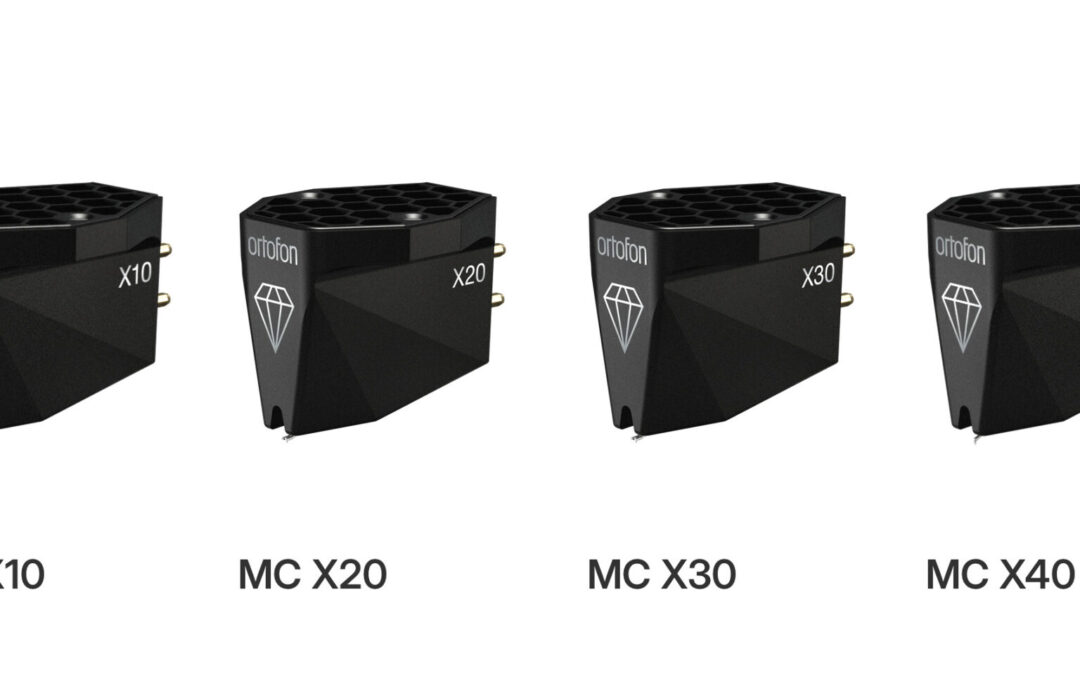
Ortofon surprises with the launch of a new series comprising four moving coil cartridges.
Called MC X, this series is priced in the same range as the Danish manufacturer’s Quintet series, starting with the MC X10 just below the Quintet Red ($349) and ending with the MC X40, which is equivalent to the Quintet Black ($999).
Integrated into a chassis reminiscent of a diamond shape, which is also drawn on the front, the four MC cartridges are black and differ only in their number, inscribed on the side. Inside, they incorporate the same elements but differ from the Quintet series in that they feature a new silver wire cross coil, integrated with rubber dampers on an internal stainless-steel frame with a honeycomb structure, to which a vapor deposition surface treatment has been applied. To excite the coil, a new magnet system with a monobloc pole cylinder integrated into a rear magnetic yoke has been developed.
The MC X10 (299 €) leads the way with an aluminum cantilever and elliptical stylus, which changes to a nude elliptical stylus on the MC X20 (499 €) and a nude fine-line stylus on the MC X30 (699 €). The MC X40 (999 €) goes further by incorporating a nude Shibata stylus and a boron cantilever. Each model weighs 8.6 g and has an internal impedance of 6 ohms, requiring a recommended phono preamp load impedance of just over 50 ohms, so obviously requiring devices capable of reading low-level MC cartridges. We cannot wait to hear them!
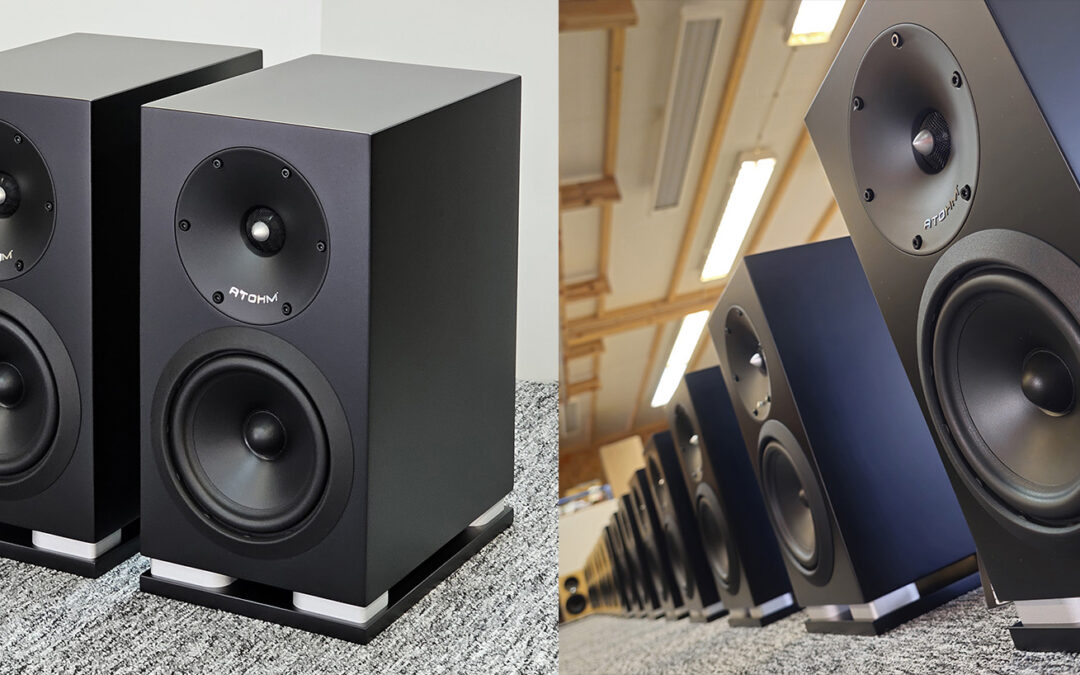
A highlight of the 2024 Munich trade show and one of the most popular products of the 2025 edition, the Sirocco showcases the expertise of French manufacturer Atohm and its creator Thierry Comte.
New satin black finish Equally exciting, the compact 1.24 (test VU#57) and the 2.24 floorstanding speaker (test VU#60) both received a Remarkable rating, in both cases unanimously from the editorial team. But while they were originally available in walnut or light oak finishes, these two speakers are now also available in satin black, which joins the existing satin white.
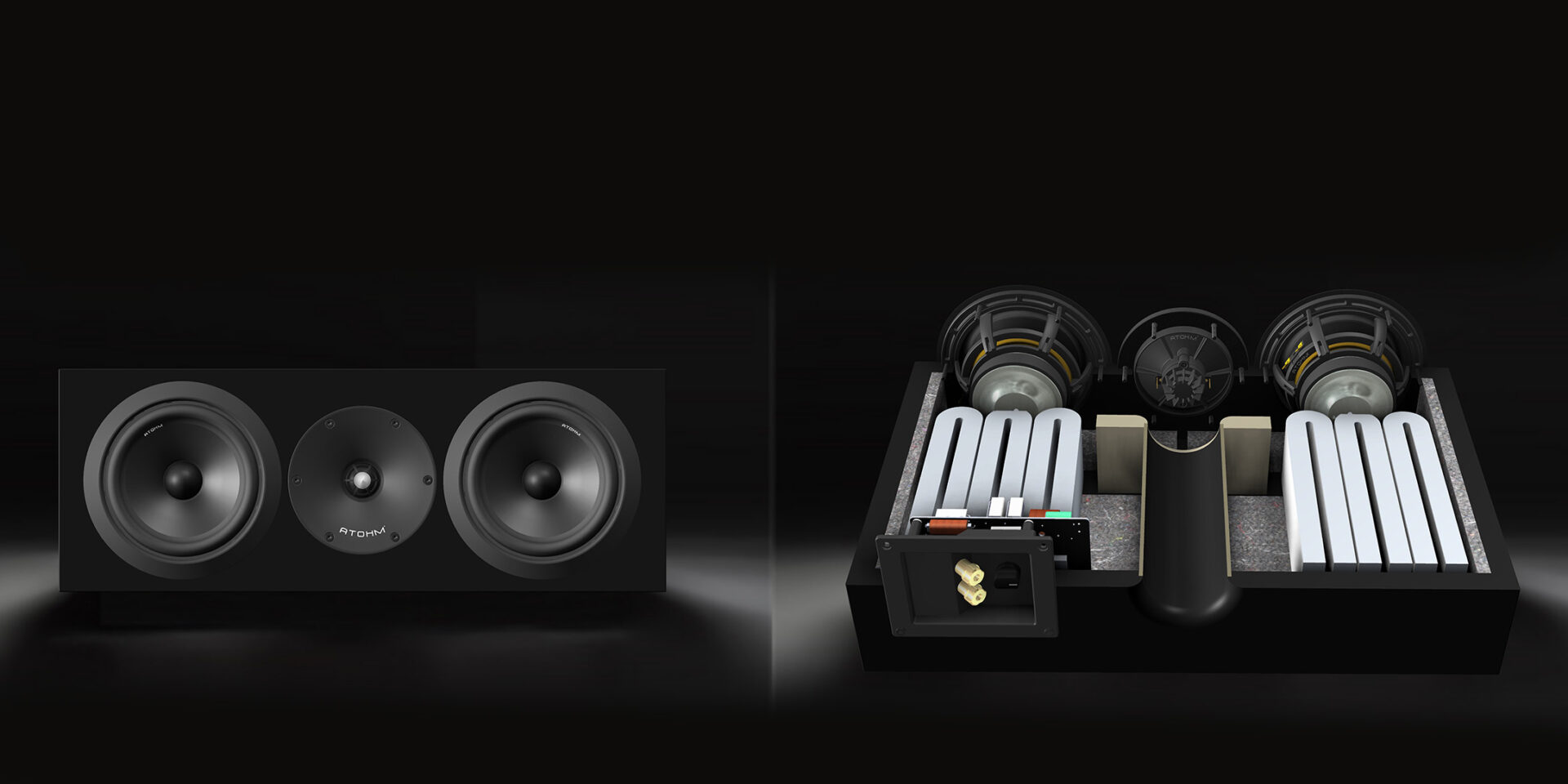
Center speaker prototype Currently consisting of only two models, the Sirocco series is likely to expand rapidly, as the Franche-Comté-based manufacturer has just teased a prototype center model on its Facebook account. Currently planned as a two-way speaker, it features two mid-bass drivers and a central tweeter, with a rear-facing port.
We plan to return to the manufacturer’s headquarters in September, and we will tell you more then!
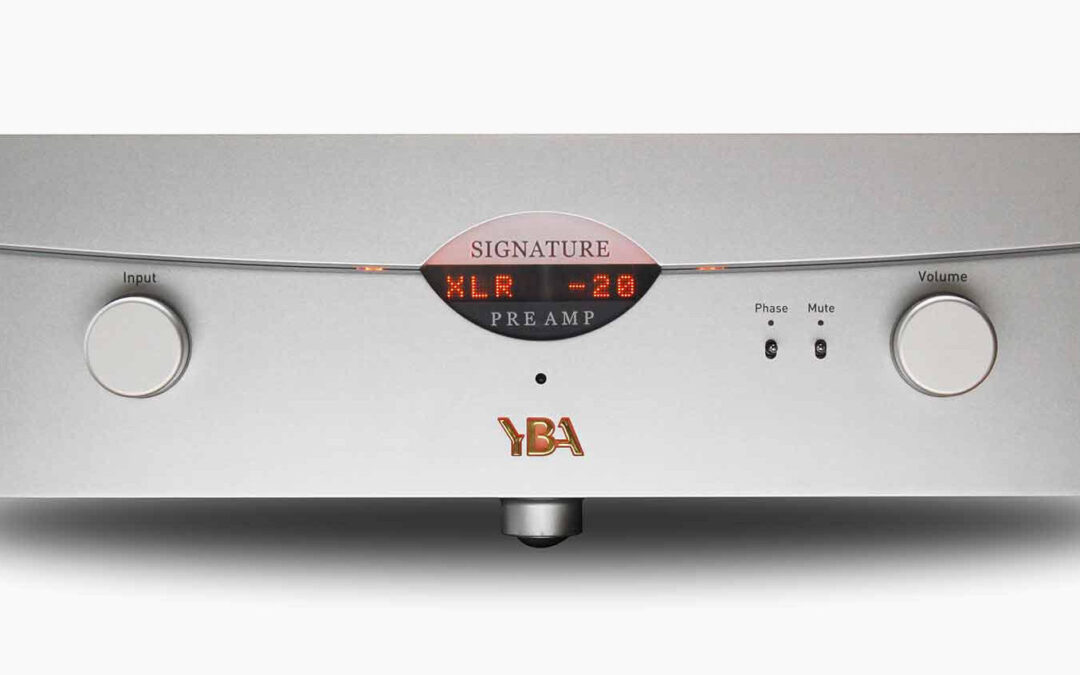
Some products in this line have not been released this year, but this series gives us the opportunity to highlight French electronics manufacturer YBA.
Defined by its minimalist light gray chassis and high-end design, the Signature series is the brand’s latest offering, still under the leadership of its creator Yves Bernard André. Superior to the Passion series, it now consists of four products:
– a power amplifier delivering 2 x 200 W into 8 Ω or 2 x 400 W into 4 Ω (with a substantial 1000VA power supply);
– a pair of mono blocks with the same power on each channel;
– a preamplifier with 7 analog inputs (5 unbalanced RCA; 1 XLR; 1 RCA phono), three analog outputs (2 XRL & 1 RCA) and three digital inputs (1 x coaxial; 1 x optical; 1 x USB Audio) capable of handling 32-bit/768 kHz PCM and DSD512 files;
– a top-loading CD player with dual-mono design, with the option of transport output via a coaxial digital output.
Unlike other inferior products from the manufacturer which feature radiators on the sides, these very pure electronics are all quite heavy, with the CD player weighing in at no less than 30.5 kg and each amplifier weighing 42.5 kg. The prices reflect the quality, at 16 500 € for the CD player, 17 500 € for the preamplifier, 20 500 € for the stereo amplifier and 37 000 € for the pair of mono power amplifiers.27/07/2025
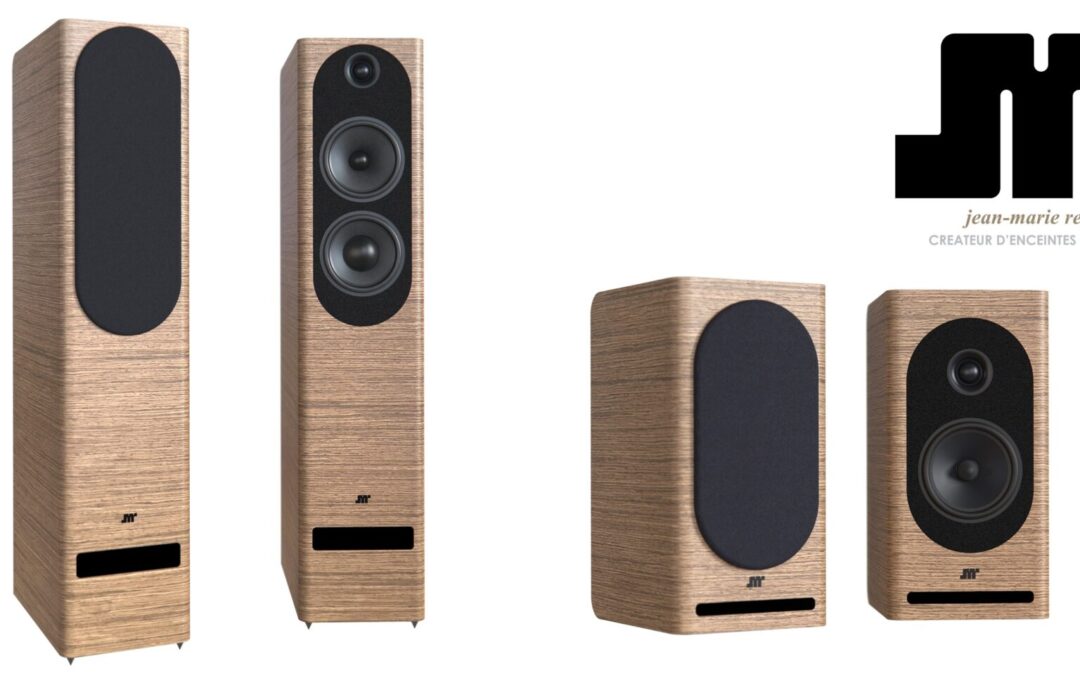
Well known for many years, the “small” Lucia and Lunna speakers from French manufacturer Jean-Marie Reynaud have been upgraded to MkII versions.
In both cases, the bookshelf and floorstanding speakers retain their overall architecture, but many of their components have been modernized, starting with the drivers.
Lucia MkII Integrated into a new 19 mm thick MDF cabinet, the Lucia MkII’s 13 cm diameter mid-bass driver is designed with a treated paper cone and a soft rubber center cone, integrated into a more rigid aluminum basket and energized by a 25 mm coil on a ventilated aluminum basket, with a double magnet. The 25 mm textile dome tweeter with neodymium magnet is installed in a small tuned chamber. A 2-way passive filter with symmetrical 12 dB/octave slopes and a crossover frequency of 3500 Hz, as well as pure copper internal wiring, ensure that everything works together perfectly.
Lunna MkII The speaker uses the same new features, but in a 2.5-way configuration with two long-fiber paper cone mid-bass drivers, powered by 30 mm voice coils with a magnet that incorporates a copper ring to reduce distortion. Its bandwidth gains 20 Hz in the bass compared to the Lucia’s membrane, as it is measured by the manufacturer up to 40 Hz, compared to 60 Hz for the smaller model, while the speaker’s sensitivity is much more flexible, at 89/91 dB compared to 86 dB for the Lucia MkII.
In addition to the satin black finish, a satin black Woodscore version is available for both models, with the smaller Lucia MkII also available in pearl white. And the good news is that the prices remain affordable, with the Lucia MkII priced at 850 € and the Lunna MkII at 1 990 €.