The word of jazz has just lost one of its last giants.
Sonny Rollins passed away on Monday 25 May 2026 at the age of 95, at his home in Woodstock. With him, the final living chapter of a golden age has ended, leaving the world of music bereft of a sound that was almost believed to be immortal, such was the artist’s dedication to playing until he could play no more.
The man known as the Saxophone Colossus, born in Harlem in 1930, helped redefine the history of modern jazz through his unique and daring approach to improvisation, but also through his ability to constantly reinvent himself, developing a rich, deeply expressive and instantly recognizable sound.
From the very start, Rollins rubbed shoulders and worked with the greats: Charlie Parker, Miles Davis, and the pianist Thelonious Monk, who took him under his wing. And, of course, his great friend and rival for decades, John Coltrane. Driven by the fierce fervor of the era, his early years were also marked by a heroin addiction, which he managed to overcome for good after two stints in prison. Following his recovery, he recorded his first masterpiece, Saxophone Colossus, which features “St Thomas”, his most famous composition.
What made Rollins great, beyond that authentic, biting, almost incandescent sound, was his obsessive perfectionism, coupled with a chronic dissatisfaction, which drove him, whilst at the height of his fame, to give it all up and go and play alone, at night, facing the wind, on the Williamsburg Bridge in New York. It was there, between the rumble of the subway and the incessant lapping of the East River, that he forged his legend and his comeback masterpiece, The Bridge.
Rollins’ music was a ceaseless torrent of ideas, a masterclass in thematic improvisation where he could dissect a Broadway melody just as he might a traditional calypso (St. Thomas), only to reconstruct them as he saw fit. Even rock music bowed down before him: it is his solo, as warm as it is melancholic, that can be heard on the legendary “Waiting on a Friend” by the Rolling Stones, released in 1981 on the album Tattoo You.
Forced into retirement in 2014 due to respiratory problems, the man with the beard and white hair had nevertheless never ceased his quest for balance of body and mind, turning to yoga and spirituality. More than just a musician, Sonny Rollins had become one of the last witnesses to the golden age of jazz, and whilst his breath has finally ceased, the timeless echo of his saxophone continues to resonate in our ears thanks to his hundreds of recordings, both live and in the studio.
To celebrate the memory of this giant of 20th-century music, we present our selection of his essential albums, to be listened to without moderation so you can appreciate the full extent of this singular genius’s talent.
Saxophone Colossus: His first masterpiece, which cemented his reputation and earned him his nickname. Recorded in a single session with a dream rhythm section (Tommy Flanagan on piano, Doug Watkins on double bass and Max Roach on drums), this record is hard bop perfection from start to finish, a timeless jazz classic.
Way Out West: Recorded in California, Rollins took a mad gamble with this album by doing away with the piano. Accompanied by Ray Brown (double bass) and Shelly Manne (drums), he weaves a unique space of freedom with his instrument, constantly pushing the harmonic possibilities that present themselves to him.
Freedom Suite: Once again in a trio with Max Roach and Oscar Pettiford, Rollins delivers one of the very first jazz records committed to the civil rights of African Americans. The legendary A-side is a nearly 20-minute suite, undulating and passionate, with an absolutely formidable sonic power.
The Bridge: In 1959, Rollins decided to withdraw from the world and rebuild himself. For two years, he practised for hours on end, alone on the Williamsburg Bridge in New York. The Bridge is the fruit of this spiritual and musical retreat, showcasing a more mature, more refined style, yet one that remains as sharp and formidable as ever.
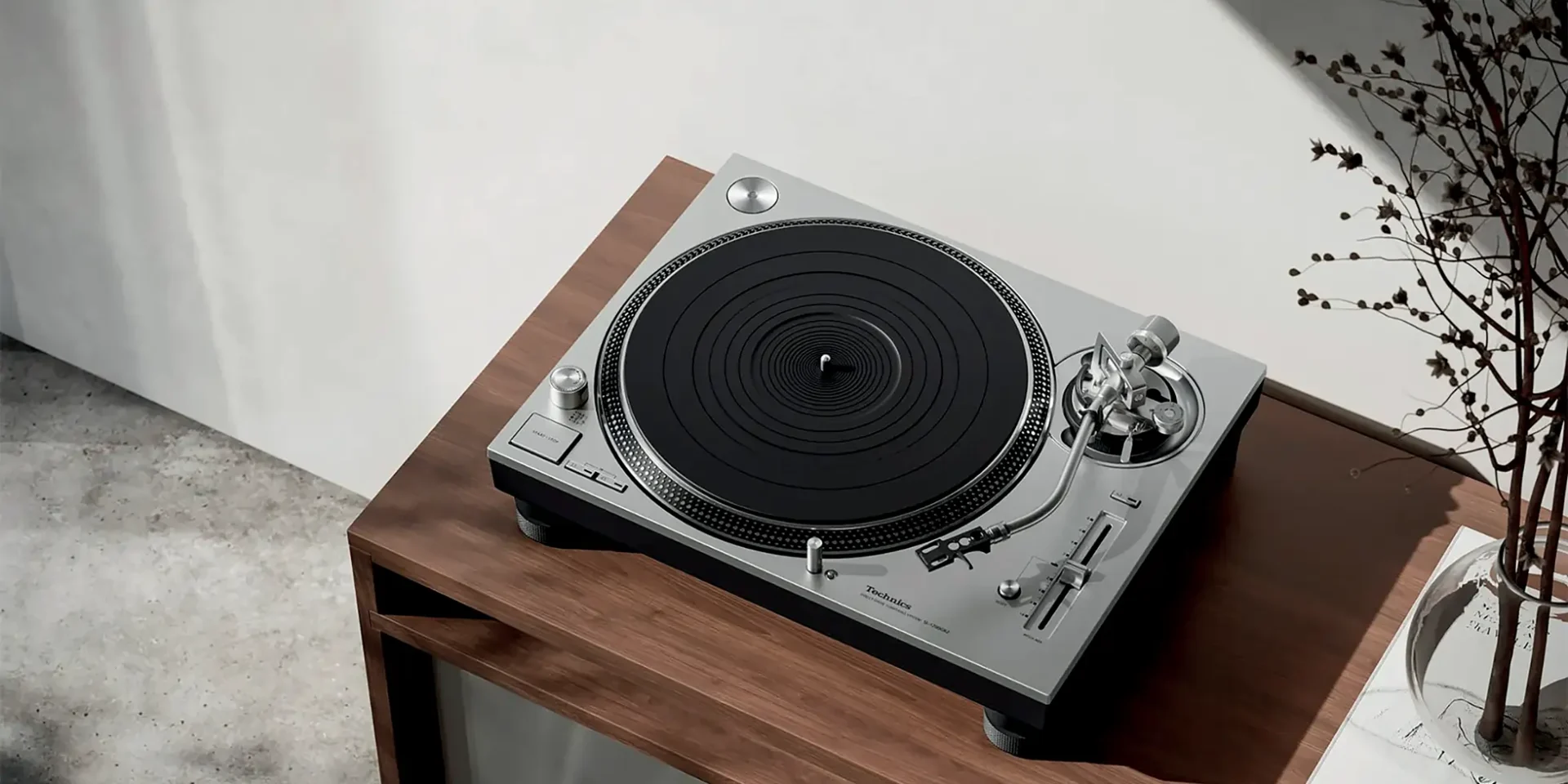
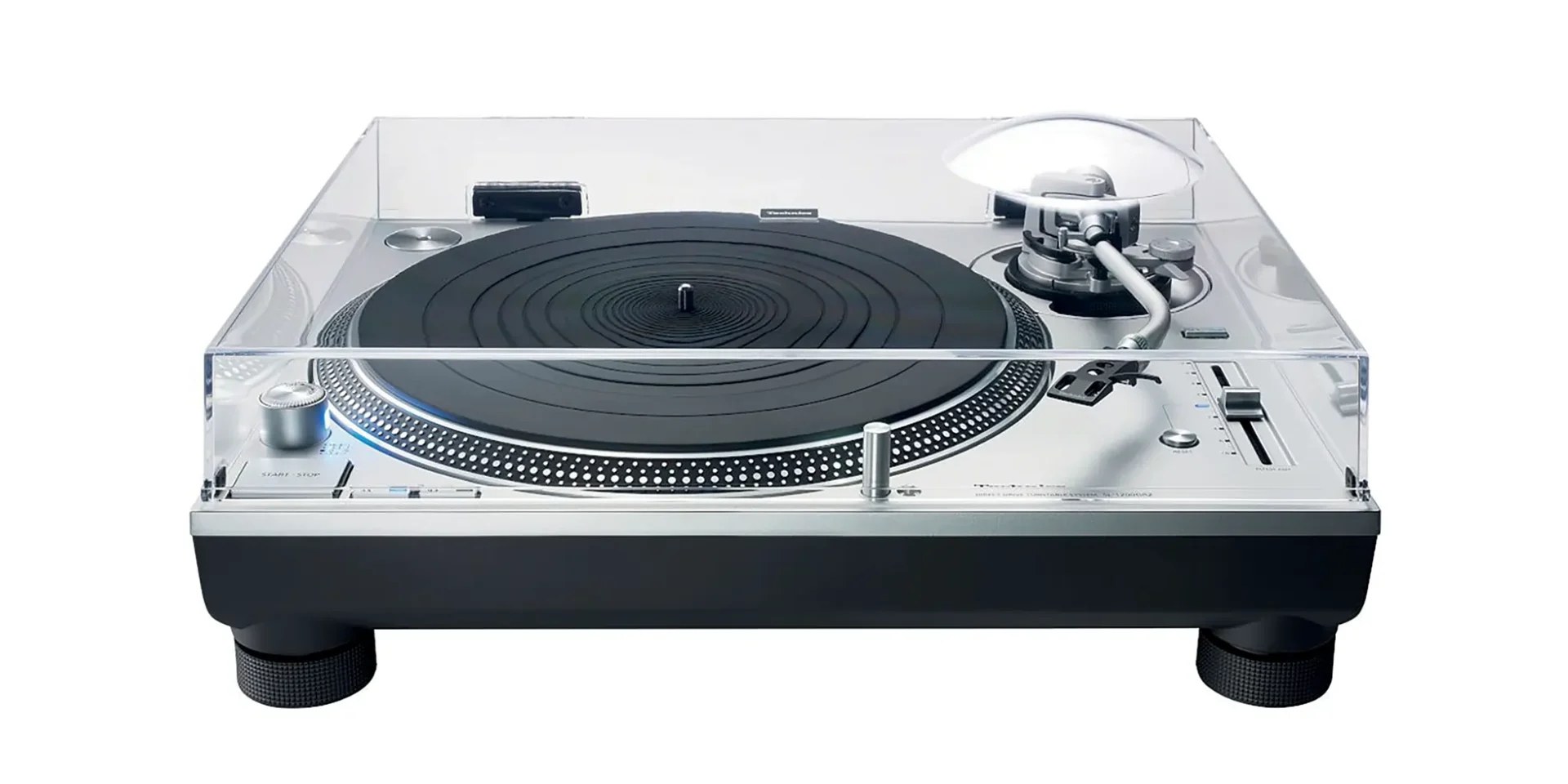
A democratic version of the SL-1200 G, retaining its iconic visual style, the new Technics SL-1200 GR2 turntable maintains the same audiophile approach by continuing the Japanese company’s pursuit of innovation and continuous improvement in technology, starting with the all-new speed controller, combined with the famous direct drive for which the brand remains one of the global benchmarks.
In the early 1970s, Technics revolutionized the turntable industry with the SL-1200 and the world’s first direct drive system. Manufactured by Matsushita for the Japanese company in 1972, this iconic turntable became a huge global success, not only for audiophiles, but also as a benchmark in the professional world, particularly among DJs.
Each new generation of this range has brought its own set of improvements, pushing the performance of direct-drive turntables even further: the new Technics SL-1200 GR2 is the latest addition to the family.
AN ICONIC DESIGN
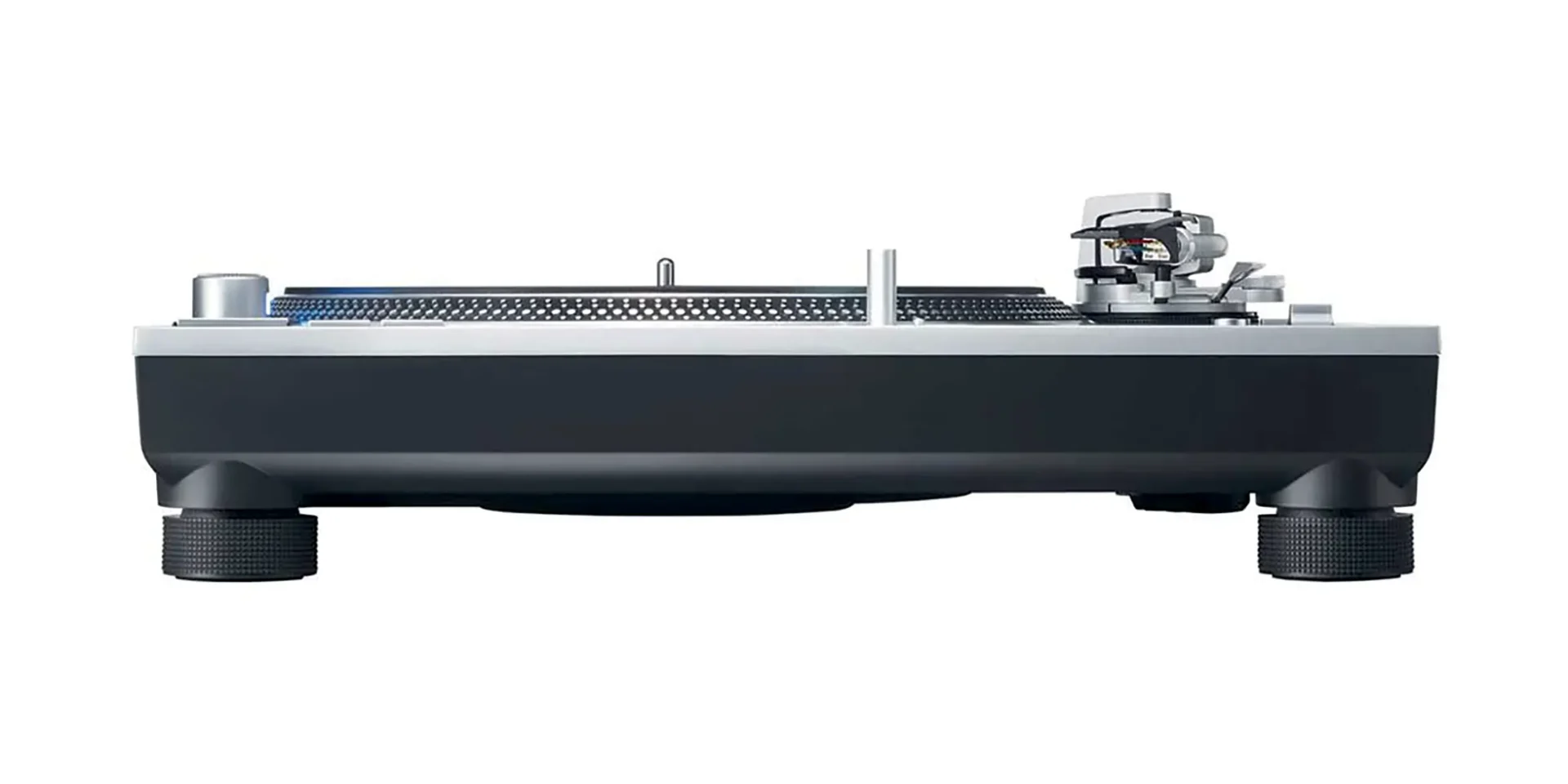
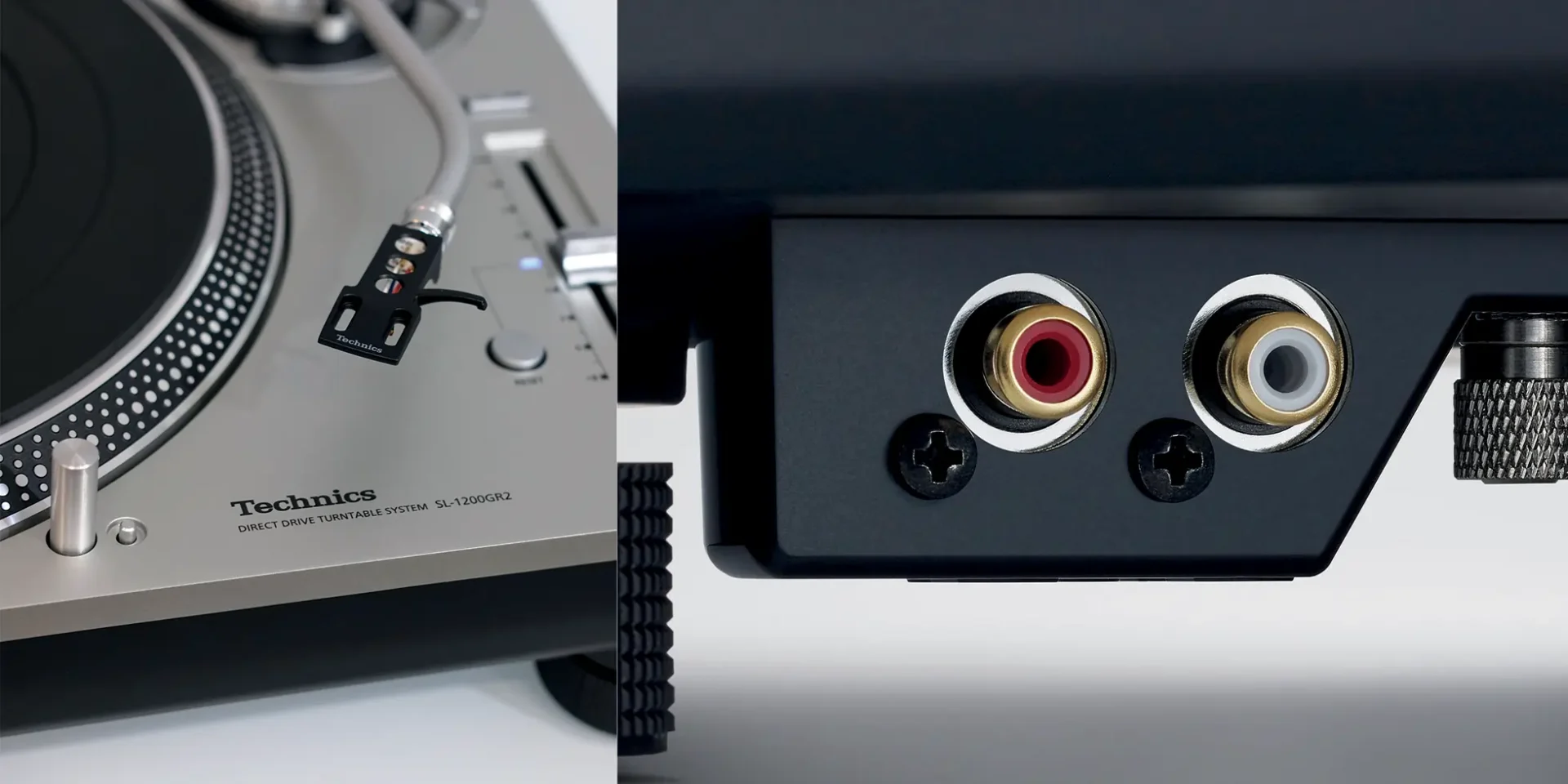
The Technics SL-1200 GR2 uses the chassis of its big sister, the SL-1200 G, but is thinner and more simplified, made from a single-layer molded structure. The design is both elegant and carefully refined, with classic curves that retain its recognizable look. Particularly robust at 11.5 kg, the Technics SL-1200 GR2 features a double-layer design with a lower chassis made of welded die-cast aluminum and a BMC (Bulk Molding Compound) body.
This elegant and stable combination produces high resistance, resting on four anti-vibration silicone-cushioned feet, which ensure perfect balance of the turntable and excellent isolation from the support.
The platter is made of die-cast aluminum to provide maximum rigidity and thus limit resonance and vibration. To increase inertia, the shape of the die-cast aluminum part has been optimized using 3D simulation. Weighing 2.5 kg, the Technics SL-1200 GR2’s platter is heavier than that of the lower models in the range (1.8 kg on the SL-1200 MK7).
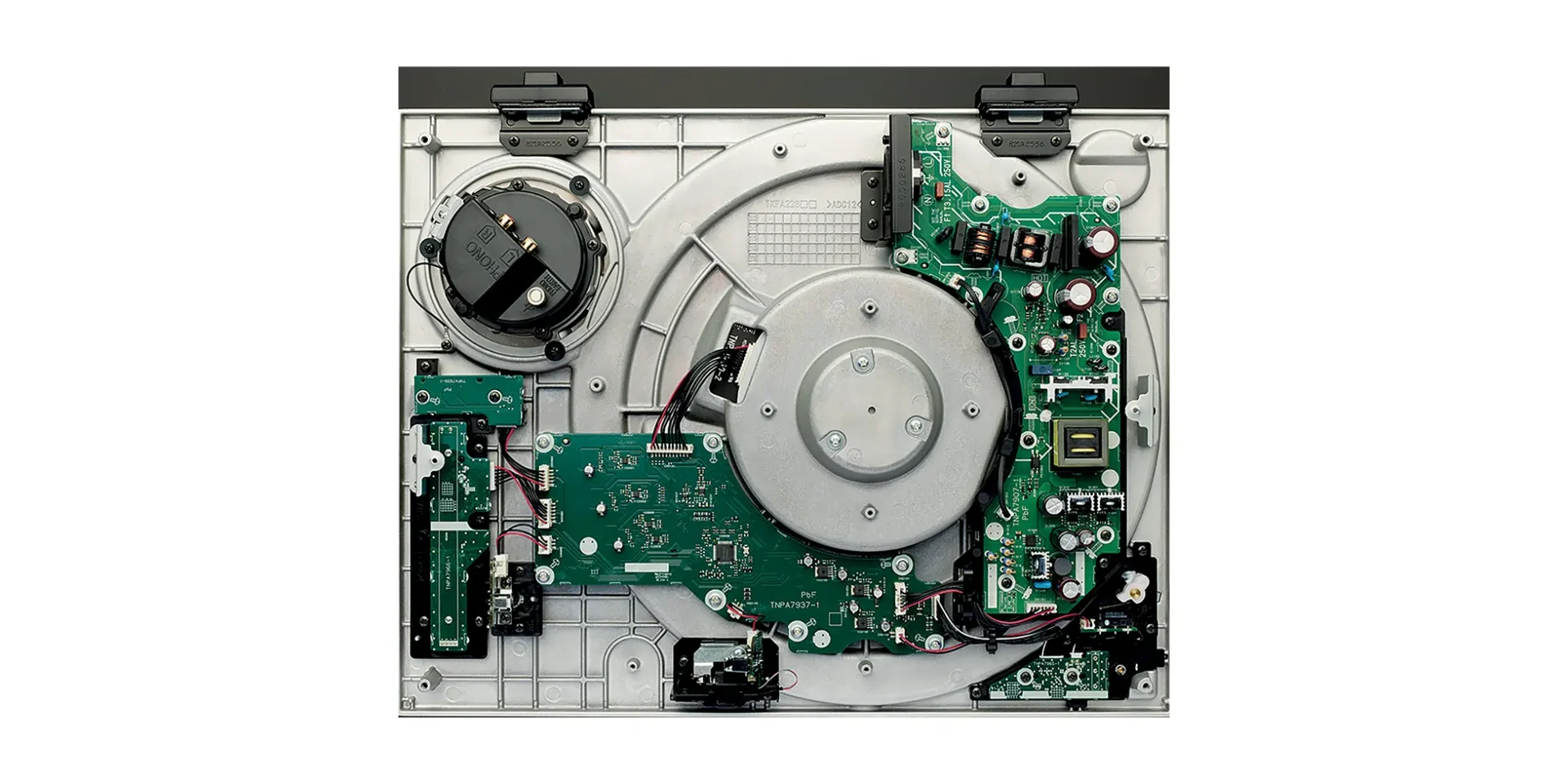
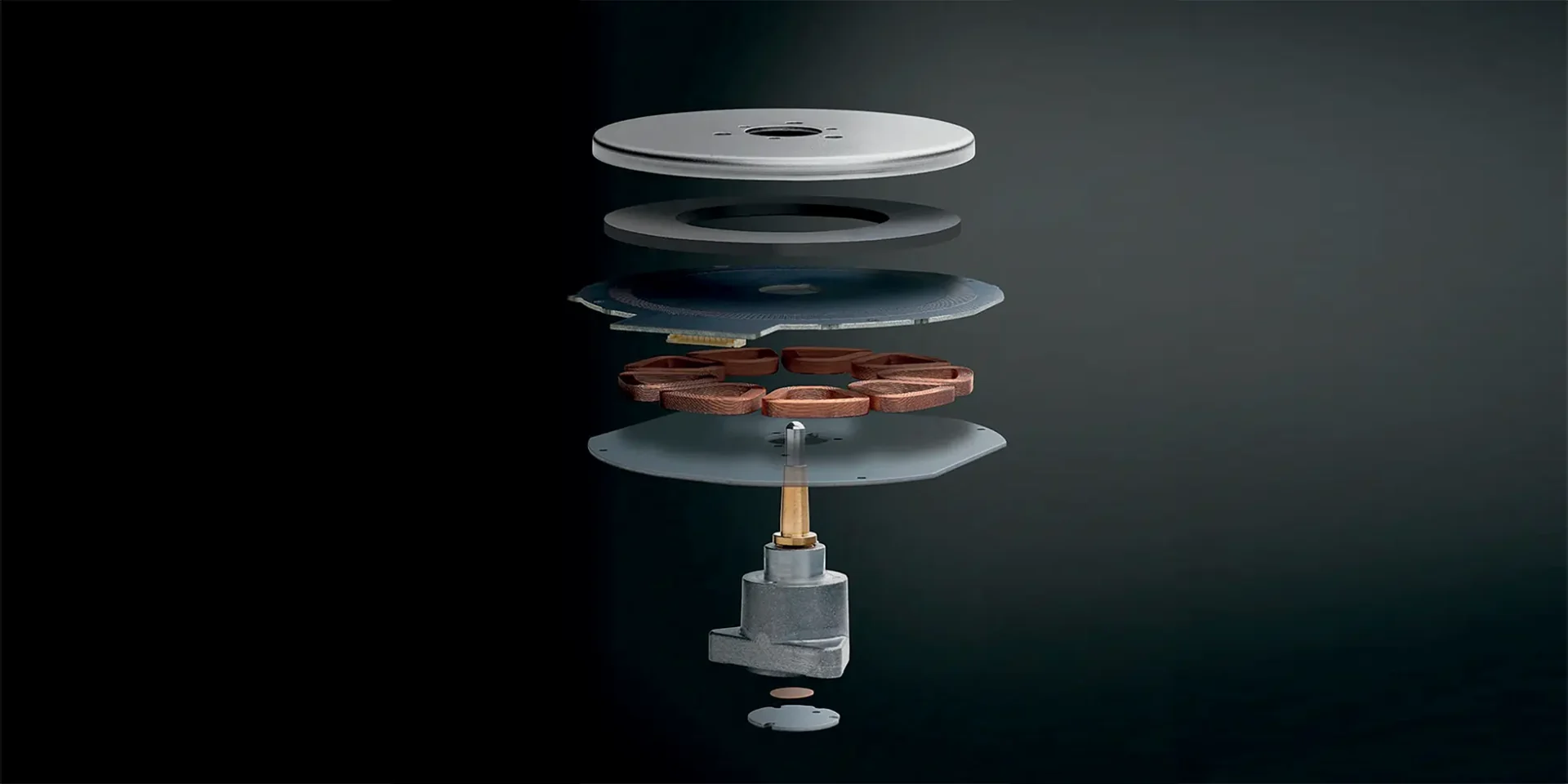
For direct drive, a magnetic field induced by coils drives the platter, which contains several magnets. The platter is not attached to the turntable. This system is designed primarily to prevent motor wear when the platter is completely stopped, greatly improving the longevity and long-term reliability of rotation. The underside of the platter also has reinforcement ribs, which further improve rigidity and damping.
The SL-1200 also features the famous traditional S-shaped tonearm machined from aluminum with a removable cartridge holder, with its gimbal pivot and high-precision bearings, as on the SL-1200G model. This arm follows the rotation of the disc with excellent regularity and offers high playback accuracy. An auxiliary weight is provided to make the turntable compatible with all cartridges weighing between 5 and 17 g.
CORELESS MOTOR AND JENO TECHNOLOGY
The motor in this new mount has been completely redesigned to further improve its performance. A real innovation, the direct drive system is powered by a coreless motor directly inherited from the Technics SL-1200 G, which gives it high precision and reduces vibrations at low speeds.
The motor control signal is generated by a PWM (Pulse Width Modulation) signal created by Δ∑ (Delta Sigma) Modulation, a high-precision 1-bit digital-to-analog conversion method that is part of the signal path in Technics’ fully digital amplifiers. This approach, called Δ∑-Drive (Delta Sigma Drive), produces a perfect sine wave and dramatically reduces motor vibration.
This has a significant impact, particularly in the frequency range where motor vibration overlaps with the natural resonance of the tonearm and cartridge combination. As a result, rotational tracking accuracy is significantly improved, with variations of less than 0.01%. The result is an astonishingly accurate signal with a very low noise floor of -78 dB. Of course, Technics offers pitch control, allowing the rotation speed to be adjusted from -8% to +8%, a feature that is not very useful for classical music lovers, but essential for DJs.
SILENT POWER SUPPLY
In addition to the motor control, the general power supply has also been engineered.
The new multi-stage silent power supply in the SL-1200 GR2/SL-1210 GR2 is a combination of a low-noise high-speed power supply operating at over 100 kHz and a noise cancellation circuit inherited from the SL-1000R reference turntable, which eliminates residual noise by injecting the phase-reversed current of the actual noise. This method achieves a very low noise floor, resulting in an exceptional signal-to-noise ratio and improved overall signal performance.
THE SETUP OF THE TECHNICS SL1200 GR2
Due to its considerable weight and in order to allow it to perform to its full potential, the Technics SL-1200 GR2 should be placed on a rigid and stable support. As Technics does not supply a cartridge with its turntable, we opted for the Nagaoka MP-150 (MM) and the equally sublime Hana EL (MC), which we felt was a relevant choice for gauging the performance of this mid-range turntable and its tonearm, as well as being entirely in line with its price point.
In the same vein, we chose a preamplifier in the $1,000 range, even though this Technics, when connected to an MM cartridge, will already perform very well with a preamp such as the Graham SLEE ($199) or the Musical Fidelity LX2-LPS ($320). For our part, the Vertere Phono-1 MKII was the natural choice, its energy coupled with its taut musicality making it a prime candidate.
THE SOUND OF THE TECHNICS SL1200 GR2
As soon as the Nagaoka is placed on the groove, the combination of the Vertere and the Technics expresses itself effortlessly in a musical soundscape full of energy. The whole is particularly well-balanced, with clear dynamics and a very marked tempo, without the reproduction being analytical.
The Technics SL-1200 GR2 is extraordinarily quiet and without any audible trace of wobble, with clear and nuanced note attacks and no resonance effect from the tonearm-chassis combination. When listening to Daft Punk’s Random Access Memories, the Technics SL-1200 GR2 and Nagaoka are first-rate performers, with unquestionable accuracy of tone and warm timbres, bringing out the dazzling rhythmic attacks of the drum parts and the precision of the musicians’ playing. The soundstage develops with breadth and precision, with meticulous lateralization.
The bass is deep, tight, articulate, and fast, the treble is precise and smooth, and the midrange is present and beautifully neutral. While the Nagaoka effortlessly displays its mastery, switching to the Hana EL unlocks even more of the turntable’s sonic performance, with less obvious dynamics but adding a finesse that is in its genes. The sound reproduction is even more agile and detailed, with even more power and substance. The bass gains greater depth, relayed by an even more impressive attack and very natural support.
Listening to Pink Floyd’s Dark Side of the Moon is particularly revealing, with the tonal and harmonic richness of the record, as well as its formidable dynamics, seeming to literally leap out of the speakers. Although it seems obvious that the Technics SL-1200 GR2 could accommodate an even more powerful cartridge, these combinations are already perfectly convincing, with the choice between MM and MC depending mainly on the style of music you listen to most.
CONCLUSION
A remarkable evolution of the legendary SL-1200 series, priced at €1,990, the Technics SL-1200 GR2 remains highly competitive in terms of performance and outperforms most mid-range and even higher-end models. An engineering marvel, it is a concentrate of musicality just waiting to be fully expressed. With superb audiophile sound quality, robust construction, completely silent operation, and great ease of use, this turntable will appeal to both analog music lovers and professionals alike. Thanks to it, the instinctive pleasure of listening never wanes, giving you the irrepressible urge to play one record after another.
Now that the tidal wave of Taylor Swift’s new album has passed (over a million vinyl records sold), pressing plants have been able to get back to work to prepare for the end-of-year rush.
Sony Music was the first to announce a 5 LP/Blu-Ray box set and comprehensive booklet of Jimi Hendrix’s second album, Axis Bold As Love, containing the landmark 1967 album in stereo, mono, and Dolby Atmos, as well as 40 alternative bonus tracks recorded in the studio and live (including 28 previously unreleased tracks). The LPs include the original stereo and mono mixes mastered by Bernie Grundman from the master tapes, as well as the previously unreleased tracks. The Blu-Ray features the new immersive Dolby Atmos mix of the album created by Eddie Kramer – the Experience’s original sound engineer – and Chandler Harrod. It’s fair to say that the label has gone all out for this reissue. It should also be noted that the album will be released in both mono and stereo by Analogue Productions in 45 RPM UHQR in the first half of 2026.
Also at Sony Music, the celebration of the 50th anniversary of Pink Floyd’s album Wish You Were Here led to the release on 12 December of a new box set entitled Wish You Were Here (50th Anniversary), available in a three-vinyl version, two CDs, or a deluxe box set with Blu-ray. This box set contains a new Dolby Atmos mix of the album, nine studio rarities including a new stereo mix of all nine parts of ‘Shine On You Crazy Diamond’ played back-to-back, as well as a complete concert recorded on 26 April 1975 at the Los Angeles Sports Arena by renowned bootlegger Mike Millard. It also includes a book filled with previously unseen photos, a comic book-style tour program and a poster from the Knebworth concert. Enough to satisfy even the most die-hard fans!
Finally, also on 12 December, but this time on Mack Avenue Records, the campaign to reissue the Strata East catalogue continued with four new titles that are particularly sought after by collectors. These include the genius of Cecil McBee with his legendary Mutima, a sublime spiritual jazz epic with strong avant-garde influences, as well as Marchin’ on! by The Heath Brothers, supported by Stanley Cowell, and Music Inc. by Charles Tolliver & Stanley Cowell. As with previous reissues, Kevin Gray is once again responsible for mastering the analogue master tapes, all pressed at the excellent RTI factory.
Newcomer to the hi-fi market, German brand Luphonic Labs offers a range of turntables that stand out for their original design and ease of use, combined with meticulous, rigorous manufacturing in pursuit of great musicality. Presented at High End Munich in 2022, these turntables caught our attention and piqued our curiosity, until we were finally able to test the H2 model in this issue, equipped with the cartridge with which it is available as a package, the Audio Technica VM760SLC.Let’s discover the Luphonic H2.
Founded a few weeks before the pandemic by Thomas Luh in Linden, not far from Frankfurt am Main, Luphonic Labs currently offers a range comprising the H1 turntable (less than €2,500) and the H2 in a version without a cartridge (€3,540), or pre-configured with the Audio Technica VM760SLC MM cartridge (€4,190) on the Luphonic K2 tonearm. An even higher-end model called the R3 has already been announced for early 2024, which returns to a more conventional design to incorporate a 12″ tonearm, allowing the German company to reach a wider range of listeners.
INNOVATIVE DESIGN
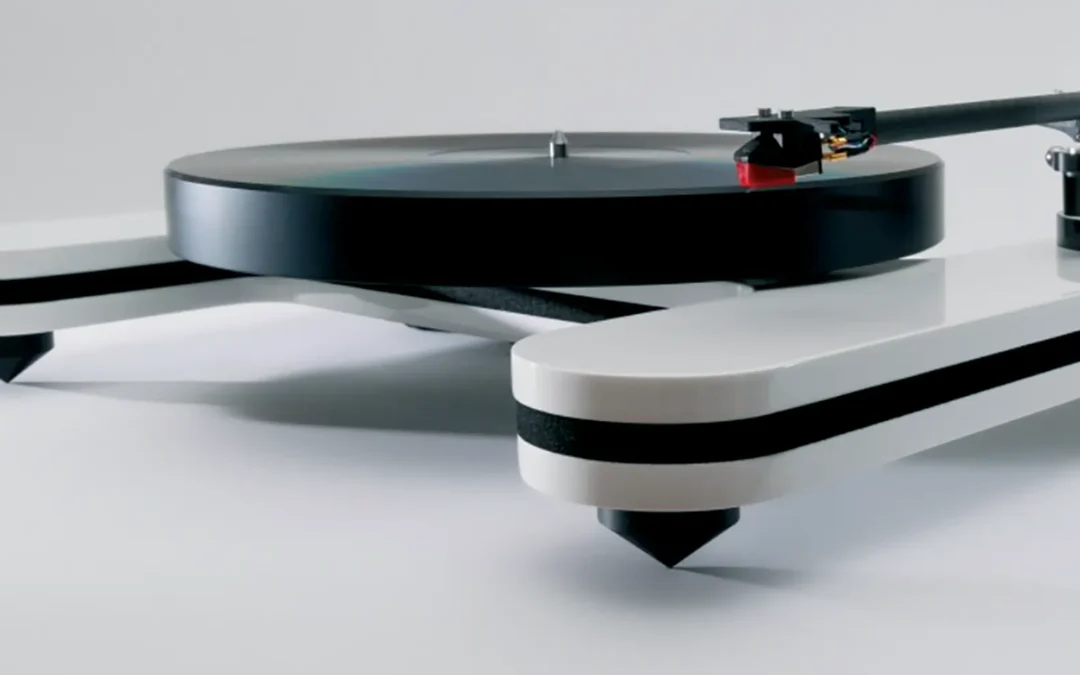
Luphonic’s H2 model with belt drive and gimbal suspension tonearm stands out and immediately impresses with its original design. To avoid annoying sound influences from the motor or impact noises, a specific H-shaped sandwich construction has been validated, with a layer of damping foam inserted in the centre to counteract vibrations.
The chassis is made of a solid surface material, which has low resonance due to its high density and physical structure. The highly polished surface is achieved through a complex process involving seven grinding and polishing passes, which impresses with its pleasant feel and refined aesthetics.
At each corner is a height-adjustable conical foot, with the motor and pulley on the left, the bearing in the centre of the horizontal strut, and the arm on the far right above the strut, which houses the RCA sockets and ground connection.
The unusual shape of the turntable was chosen to minimise interference with the tonearm. And while its drive mechanism is similar to that of the H1, the black platter itself is made of mineral material with a height ranging from 18 mm to 24 mm, while its weight has been increased by 0.7 kg to 1.9 kg on the H2.
DIGITALLY CONTROLLED MOTOR
The low-vibration synchronous motor is powered by precise sine and cosine waves via microprocessor-controlled electronics, enabling smooth operation and accurate speeds. Before delivery, the control is precisely adapted to each motor installed, which is decoupled from the turntable and the tone arm so that no mechanical influence interferes with the musical information.
Truly original and quite playful, the H2 operates without buttons or switches, but with a two-colour magnetic puck, which, depending on which side is placed on the turntable, adjusts the motor speed to 33 or 45 rpm. The rotation speed is then displayed in large red digits, and if you want to stop playback, simply move the disc away from the designated area or remove it. This has the advantage of being simple to use and avoiding mechanical wear, but it does present a significant risk, since if you lose the disc, nothing will turn!
ADAPTED TONEBAR AND CARTRIDGE
Designed to fit the H2, the Luphonic Labs K2 tonebar features a classic gimbal suspension derived from high-quality precision ball bearings. At the end of the carbon tube is a special plastic headshell produced using an additive manufacturing process, which combines low weight and high rigidity. The tonearm can be easily adjusted in height and azimuth.
The counterweight is made of stainless steel, as is the anti-skating weight. The anti-skating force can be adjusted within a range of 0.21 g to 0.43 g, ideal for almost all cartridges on the market, although the brand has selected the Audio Technica VM760SLC moving magnet cartridge, one of the best MM cartridges from the Japanese brand, for its pack.
Instead of using a single large magnet, it consists of two V-shaped magnets and a Special Line Contact diamond on an aluminium cantilever, ensuring better channel separation and a wider frequency response. It should also be noted that a shielding plate has been inserted between the two coils to reduce crosstalk between the left and right channels.
INSTALLING THE LUPHONIC H2
Each component is packaged separately in the box, but assembling the H2 is intuitive and straightforward. On the chassis, place the stainless steel spindle in the bearing housing, which contains a ceramic ball, install the aluminium sub-platter on the spindle and adjust the flat belt. Once the platter is installed, all that remains is to adjust the tracking force with a scale by correctly positioning the counterweight, then adjust the anti-skating if necessary.
For our tests, the turntable was paired with Vertere Phono-1 and Lehmann Black Cube SE II SV preamps, in addition to being counter-tested on Nagaoka MP-150, after being listened to for more than thirty hours on the Audio Technica cartridge included in the pack.
THE SOUND OF THE LUPHONIC H2
From the very first listen, the H2 immediately asserts itself as a turntable that seems to fade into the background in favour of the music. As soon as the arm is integrated into the groove, it develops a smooth, high-quality midrange with beautiful fluidity, which excels at reproducing voices, whether delicate or more demanding. Enhanced by tight bass, particularly when paired with the Vertere preamplifier, the music flows smoothly with beautiful depth, almost liquid, with delicate yet finely chiselled timbres, particularly in the treble, which is never overly bright. The resulting sound image is natural, with great substance and clarity.
Magnificent in combination with the AT VM760SLC cartridge, the Luphonic H2 expresses itself in a wide and deep soundstage where everything is well defined, with a fairly neutral tonal balance, avoiding any excessive colouration in the reproduction of the low-mid range, just as it never shows any imprecision when it descends into the bass, a sign of particularly careful control of resonances thanks to a perfectly studied design.
Whatever record you put on the turntable, the musicality is astonishing, with a consistent ability to deliver a dynamic and precise listening experience, energetic on electric rock or pop guitar attacks, with even more punch when choosing the Nagaoka MP-150, compared to a more subdued sound during the melodic flights of certain jazz instrumentalists when returning to the Audio Technica, which also knows how to deliver extra sensuality to the best soul voices.
OUR CONCLUSION
With its highly original design and excellent quality thanks to its German manufacturing and assembly, the Luphonic Labs H2 turntable stands out by delivering on all its promises to enter the current analogue market, despite its relatively high manufacturing and retail costs. Behind the deceptive simplicity of the H design lies a particularly serious and well-thought-out design and manufacture, far from a simple image effect, as confirmed above all by the sound reproduction during our long hours of testing.
In perfect combination with Audio Technica’s VM760SLC cartridge, the H2 offers crystal-clear listening, purified of any superficial tonal colouration, resulting in an airy melodic expression and a richly textured sound image. This modern turntable will appeal to discerning music lovers who want to enjoy its high musical performance as well as its original ergonomics and style.
Author: Nicolas Chestier
TECHNICAL SHEET: LUPHONIC H2
Origin: Germany
Price:
€3,540 (without cartridge)
€4,190 (with AT VM760SLC cartridge)
Dimensions: 440 x 140 x 360 mm
Weight: 4.9 kg
Motor: Synchronous, microprocessor-controlled
Speeds: 33 1/3 and 45 rpm, electronically selectable
Speed accuracy: 0.04% WRMS DIN
Chassis:
Solid surface material in sandwich design
Height-adjustable feet
Height-adjustable feet
Turntable
Solid surface material, height: 24 mm
Weight: 1.9 kg
Tonearm: Luphonic K2 with carbon radial ball bearings
Since its appearance on the audio market in 1995, Lehmann Audio’s Black Cube phono preamp has become a must-have for all music lovers with a passion for analogue sound. Astonishing in its sonic performance, the Black Cube was widely acclaimed and received rave reviews that contributed to its reputation and success. After an improved version called Black Cube SE in 2006 and then Lehmann Black Cube SE 2, this year Lehmann Audio is offering an even better version, tested to our great delight: the Black Cube SE 2 Sven Väth. This increasingly sophisticated edition, accompanied by exclusive goodies, is set to become a new benchmark in its range.
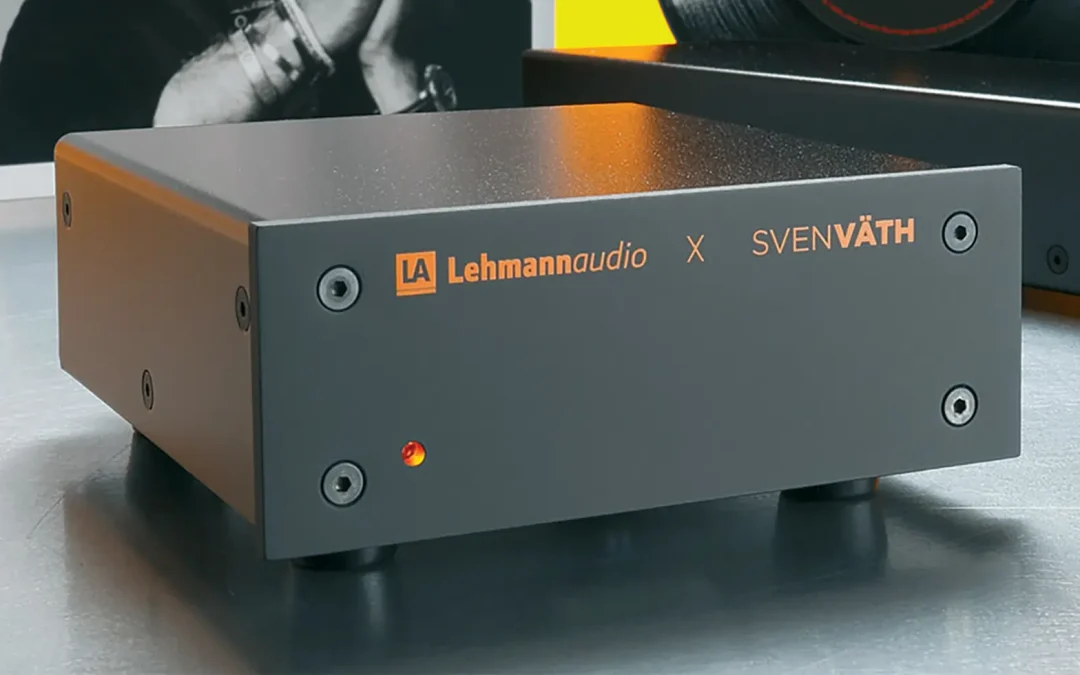
When you open the little cardboard box, the renewed design of the Black Cube SE 2 is immediately striking. Featuring a sober but elegant brushed metal front panel, it is available in silver, black or chrome finish, with the Sven Väth model standing out for its matt black colour and striking orange logo and LED. The preamplifier’s main casing and that of its remote power supply are made from a special non-magnetic aluminium alloy, which has received an anti-resonance treatment to keep microphonic effects to a minimum.
Based on the SE audio circuit of the Black Cube, the Lehmann Black Cube SE 2 has been upgraded with more powerful connectors using RCA terminals with gold-plated contacts. A bass roll-off filter offers 16 setting curves for optimised and precise adjustments (between 7 Hz and 90 Hz), and the external PWX power supply is linked with a shielded power cable and Neutrik XLR connectors with four gold-plated pins, all to take the sonic performance of the Black Cube series to a new level.
Oversized for its function, the power supply is housed in a large case that houses a 30 VA toroidal transformer, with the special feature of having an earthed winding, which effectively isolates the primary winding from the secondary winding. Four MKT chemical capacitors with polypropylene foil, complemented by a regulation circuit and high-precision metal-film resistors, ensure perfect filtering and guarantee a stable voltage.
The exclusive Sven Väth version, meanwhile, is fitted with even better Mundorf capacitors, ensuring even better, clearer and more realistic transient reproduction.
As with all the models in the Black Cube series, the electronic circuit has a structure of input stages identical to those used in the microphone preamplifiers of professional consoles, with the aim of guaranteeing the quality of signal reproduction. The equalisation and RIAA curve correction section is entirely passive and ultra-precise between two linear gain levels, for excellent channel balance and impeccable transient response. To ensure compatibility with all cartridges on the market, whether MM or MC, the gain and impedance selections are completely separate, with the gain configurable at 36, 46, 56 and 66 dB, while the input impedance can be validated at 47 kilo-ohms, 1 kilo-ohm, or 100 ohms.
There’s also an extra slot for immediate action if you want to add resistors to adapt and optimise your set-up with the Black Cube SE 2. German DJ Sven Väth’s version comes in a signed photo and 45rpm vinyl.
The set up
As soon as it comes out of its rather conventional box, which reminds us that the Sven Väth Black Cube SE 2 remains a non-superfluous hi-fi product, the little Lehmann easily finds its place in our systems, despite its imposing power supply.
One thing is surprising, however: it doesn’t have an on/off switch! For our tests, the preamp was connected to two configurations: firstly, coupled to a Cyrus HD One, Atohm GT1 bookshelf speakers and Esprit Beta RCA interconnect cables, with a Clearaudio concept MM turntable as the source; secondly, we tested its moving coil capabilities with an MC Hana EL cell on a Kuzma turntable, connected to the Accuphase E600 amp and Jern 15H speakers, all wired with Esprit Aura.
For listening, our first choice was John Coltrane’s Blue Train (Tone Poet/UNI), the 50th anniversary edition of Marvin Gaye’s What’s Going On (UNI/US version) and the splendid reissue by Analogue Productions of The Doors’ L.A. Woman. Sven Väth’s Black Cube SE 2 was then used for several weeks on the first system described, where it demonstrated its great abilities as an everyday companion.
The sound of the Lehmann Black Cube SE 2
From the very first bars of Blue Train, the Sven Väth Black Cube SE 2 produces a deep, formidably defined soundstage that is perfectly perceptible. It demonstrates its extraordinary ability to clarify and separate the different instruments, with remarkable transparency and a reproduction of the more complex sound passages that is quite astonishing for this price range.
The timbres are shimmering and fluid, and the music is more than surprisingly articulate, revealing the various musical nuances with ease and finesse.
On What’s Going On, the Cube is also up to the task. When Marvin Gaye’s multiple vocal tracks respond to each other, and the melodious carpet of instruments intermingles, the preamp displays impressive control and articulation of the bass and midrange, with a rather incredible opening up of the soundstage. The presence of the musicians is felt with precision, the dynamics are ideally distributed, and the different musical colours are articulated in striking ways.
And when the storm of the Doors’ “Riders On The Storm” erupts, the Black Cube finishes its demonstration in the most beautiful way, imposing an intense, supple and deep reproduction, full of dynamics and subtlety. The placement of the multiple instruments is revealed with accuracy and precision, the rhythmic pattern takes flight and Jim Morrison’s voice explodes in all its roughness and vulnerability, giving us an absolutely unforgettable experience.
Our conclusion
After several weeks in its company, the Lehmann Black Cube SE 2, Sven Väth’s version, delivers on all its promises and more. Capable of powerful, relaxed reproduction, it also knows how to be graceful and highly defined, particularly in its control of bass and midrange, which is quite impressive and rather unusual at this price.
It is capable of demonstrating rigour and power in the passages that require it, while also showing finesse and nuance in the more subtle and delicate movements. The addition of an external power supply is an undeniable quality bonus, but all the criteria combine to make this an exceptional product when compared with even more expensive rivals. This little black box will delight the most demanding of music lovers. A real favourite.