Artist: Jehnny Beth Album: You Heartbreaker, You Label: Jehnny Beth Link: https://www.jehnnybeth.com/ Style: Rock, Hard Rock, Metal
Camille Berthomier was born in Poitiers (France) into a family where art played an important role. Her father, a theatre director, passed on his interest in theatre and cinema to her, and she has appeared as an actress in a dozen feature films and in the series Hostage. But music was not left behind, as she started playing the piano at the age of eight and, influenced by rock and punk during her teenage years, she made a name for herself in several bands, including the duo John & Jehn and the band Savage. She has also participated in prestigious collaborations with bands such as Idles, Tindersticks, The XX and Rone.
For You Heartbreaker, You, her second solo album, she further emphasizes a rock sound that is clearly harder, which can at least be likened to hard rock or even second-generation nu metal. On most of the tracks, there are also obvious influences from industrial rock, reminiscent of the work of artists such as Marilyn Manson and Trent Reznor of Nine Inch Nails. This is particularly evident on the single ‘No Good For People’, where we hear music full of rage, violence and tension, a veritable electric shock carried by devastating guitar riffs.
A mixture of instrumental textures obtained through hardcore playing and industrial sounds, the sound of this album is as raw and rough as it gets. The treatment of the vocals, which are sung exclusively in English, gives them a compressed feel – far from what audiophiles might expect – but above all a rich, catchy texture that fits perfectly with the devastating style of the rock anthems that make up this hard-hitting album. The lulls in the opening bars of a few tracks are only there to prepare for the explosion that follows, so there’s no risk of boredom when you put this record on your turntable.
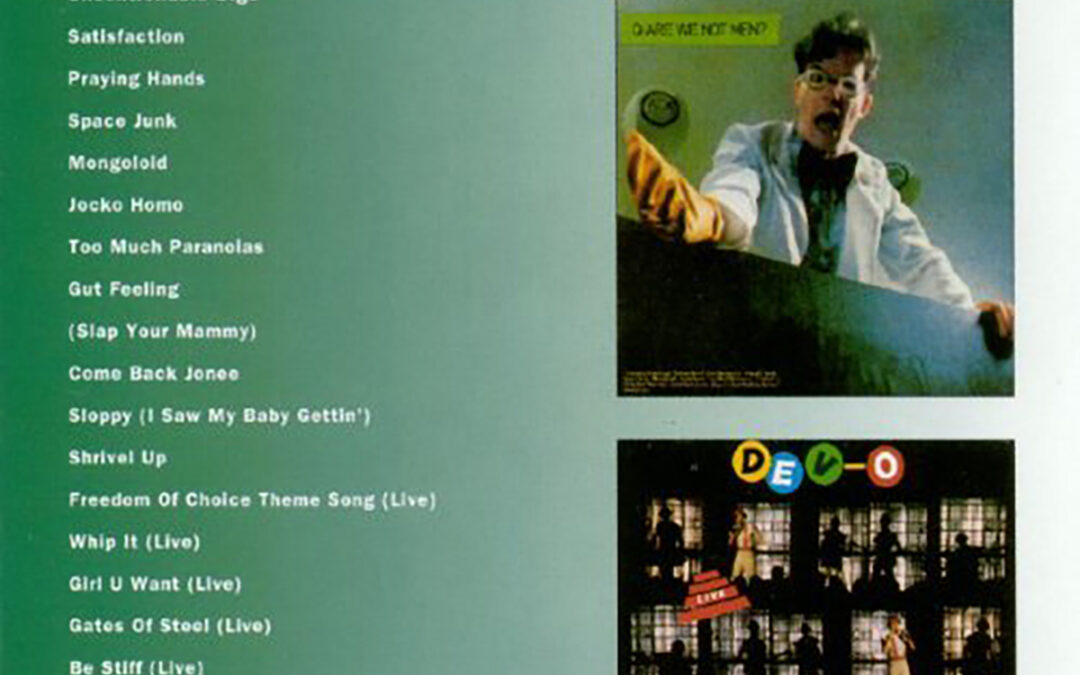
Artist: Devo Album: Q: Are We Not Men? A: We Are Devo / Devo Live Label: Virgin Records Link: https://clubdevo.com/ Style: Pop/Rock
Like many bands working in the pop rock style, Devo was formed when a group of students attending the same university got together. In this case, it was Kent State University in Ohio, the very same university where Nixon sent in the National Guard to suppress a student demonstration, leading to the military opening fire on 4 May 1970. Nine students were wounded and four were killed. Music lovers know that this tragic event inspired a song by Neil Young, but fewer people associate it with the political awareness of the members of Devo. The latter, who were art students, initially used drawing and painting to express their ideas. With the help of a teacher’s advice, they conceptualized the principle of D-Evolution, a kind of programmed decline of modern societies.
It was not until 1972 that these artists really began to use music as a means of expression. If you listen to them objectively, their style, with lyrics that are often misunderstood, can easily make them seem like entertainers who only retain the anti-conformist side of Dadaism. However, as mentioned above, their message is much deeper and more sophisticated, as you can see clearly in a recent documentary available on Netflix. Returning to the box set, it includes Devo’s first album (1978), plus a live recording made a few years later. Using instruments that they have greatly modified themselves, the musicians incorporate choruses that are chanted and repeated like slogans to atypical, frenetic and bouncy rhythms. The bass, which also retains its originality, can be likened to funk, while the energetic guitar shares quirky melodies with the interventions of a dissonant synthesizer. Many of their tracks are perfect for getting stuck in your head and following you around all day, like their version of ‘Satisfaction’, approved by Mick Jagger himself.
Largely due to their excessive originality, but also because of their love/hate relationship with the commercial machine surrounding music and the specialized media – MTV in particular, which nevertheless reveled in these pioneers of the music video in its early days – Devo’s success was short-lived. The interest they received therefore never matched their talent and originality. On the most defined systems, the sound recording of the first album lags behind more audiophile productions. Listening with headphones, particularly Sennheiser HD 800S headphones, clearly reveals this aspect, whereas entry-level headphones tend to smooth out the slightly muffled sounds. However, this sound is not perceived as a limitation to the listening experience and is in keeping with the offbeat style of the music, which is very catchy. Here, the live performance is more expansive and dynamic, returning to higher production standards, this time with a noticeable difference and therefore greater enjoyment if the listening system is of high quality.
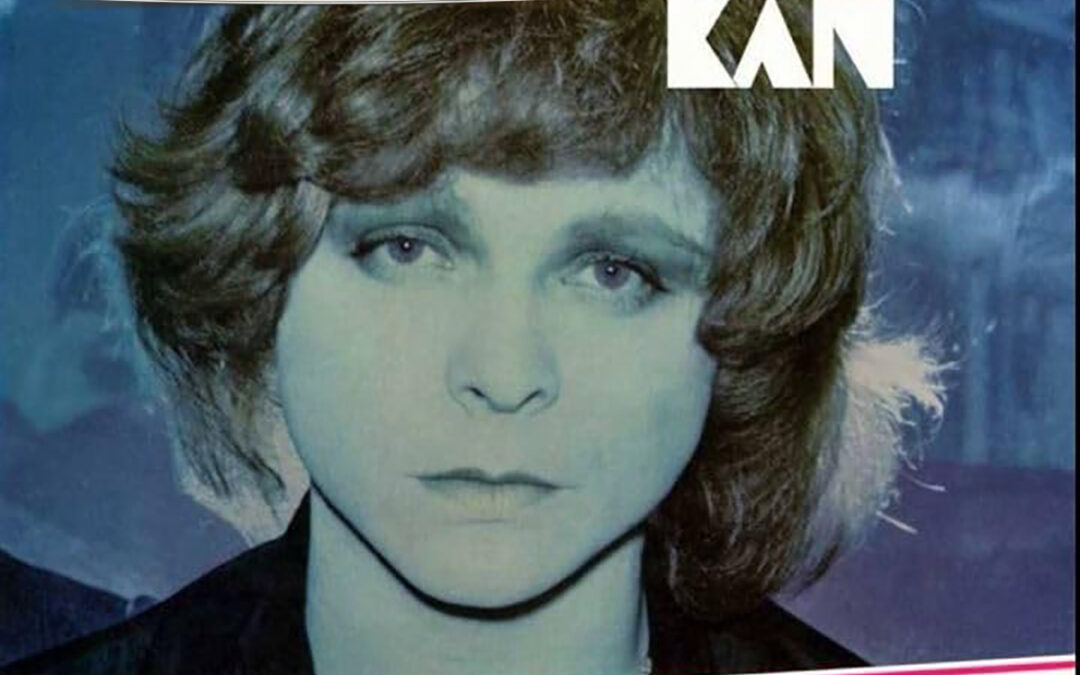
Artist: Alain Kan Album: Heureusement En France, On Ne Se Drogue Pas Label: Disques Motors Link: https://www.youtube.com/watch?v=sZsA-cCWPXU&list=RDsZsA-cCWPXU&start_radio=1 Style: French chanson, rock
Alain Michel Zisa is a French artist who is almost as cult as he is unknown. Too ahead of his time for some, too marginal for others, he speaks openly about his homosexuality and drug use, which at the time led to him being simply censored by the media system. Adding to his legend, he literally disappeared in 1990 after being seen for the last time on a subway platform; he was declared dead ten years later without anyone ever being able to explain what had happened to him.
Having never known his father, he took his stepfather’s name and became Christophe’s brother-in-law when Christophe married his half-sister Véronique. He began his career in the early 1960s with a few singles and maxi singles, covers of Anglo-Saxon hits in a pop style, which did not have much impact. On Dani’s advice, he joined the Alcarzar revue, playing an androgynous character named Amédée Jr. There, he met established artists such as Serge Gainsbourg and Barbara. During this period, one of his songs was censored for the first time: “Mon p’tit photographe,” written for Dani.
Gradually, his “cabaret song” style evolved into a glam rock sound heavily inspired by the British pop of the time, particularly David Bowie, whom he claims to have spent a few days with during a trip to England and whose songs he often covered. His first album, Et Gary Cooper s’éloigna dans le désert… (And Gary Cooper Walked Away Into the Desert…), was released in 1975 and featured former Magma member Laurent Thibault. The album had little impact, being too far removed from mainstream pop and too subversive in its lyrics. Alain Kan nevertheless repeated the experiment the following year with Heureusement En France, On Ne Se Drogue Pas, which remained in the same glam spirit but with longer tracks, incorporating hints of psychedelic sounds or at least leaving more room for the possibilities offered by the studio, as in the music of Jacques Higelin during the same period. In fact, it is Jacques Higelin who comes to mind when listening to the track “Dracula.” Alain Kan demonstrates his great interpretive abilities, moving from harmonious, light singing to a voice full of anger or an almost unreal way of speaking when he covers Édith Piaf’s “Les Blouses Blanches.” Although not necessarily intended for a wide audience, the tracks with lyrics focused on illicit substances earned the record censorship, resulting in very limited distribution. For the next album, he took a step closer to the emerging punk movement and, whether out of pure naivety or deliberate provocation, the artist went even further in his excesses. Wanting to mock it, he included excerpts from a speech by Adolf Hitler. Of course, the censors were unforgiving: the record was pulped.
Today, his first three albums—mentioned in this review—can be listened to on streaming sites for the Motors label, and Heureusement En France, On Ne Se Drogue Pas is relatively easy to find on vinyl. We can therefore immerse ourselves in a time of transition, alongside a wholehearted and inspired artist, a figure of the French underground, close to Daniel Darc and Fred Chichin of Les Rita Mitsouko.
Artist: Swans Album: Birthing Label: Mute Link: https://mute.com/artists/swans/ Style: Rock, Alternative & Indie
A band that has undergone many iterations, with regular breaks and changes in line-up, Swans remains led by guitarist and singer Michael Gira. Initially close to Thurston Moore from Sonic Youth, the band has changed style while retaining a heavy and dark foundation. Far from being a softie, the singer even regularly displayed violence towards his concert audiences in the early years, and despite a significant aura within the indie rock community, the band’s commercial success remained limited, to the point of causing problems with the MCA label and pushing the artists to develop a business model that financed the recording of studio albums through the sale of live records or other projects.
Now firmly established in a slow-tempo industrial sound, the Swans of 2025 plunge us into twilight, almost post-apocalyptic atmospheres in which there is little room for proto-melodies. On long tracks, which bring the album to almost two hours in length, Michael Gira chants morbid and violent lyrics, somewhere between screams and incantations, against a backdrop of distorted and saturated guitars, spread out over a carpet of percussion that seems to come from distant horizons. Despite everything, the original high standards that have always dominated the band’s destiny are still present in this dark new opus.
Even if the atmospheres are marked and heavy, they are not the result of an impenetrable amalgam. The elements that make them up remain clearly legible. First and foremost, the vocals reveal all their intonations and are sometimes accompanied by backing vocals. The guitar demonstrates a beautiful variety of tones, with a few acoustic parts always inserted into a light maelstrom of sounds. Finally, the percussion plays a central role in the sense of mass that emerges when listening to Birthing.
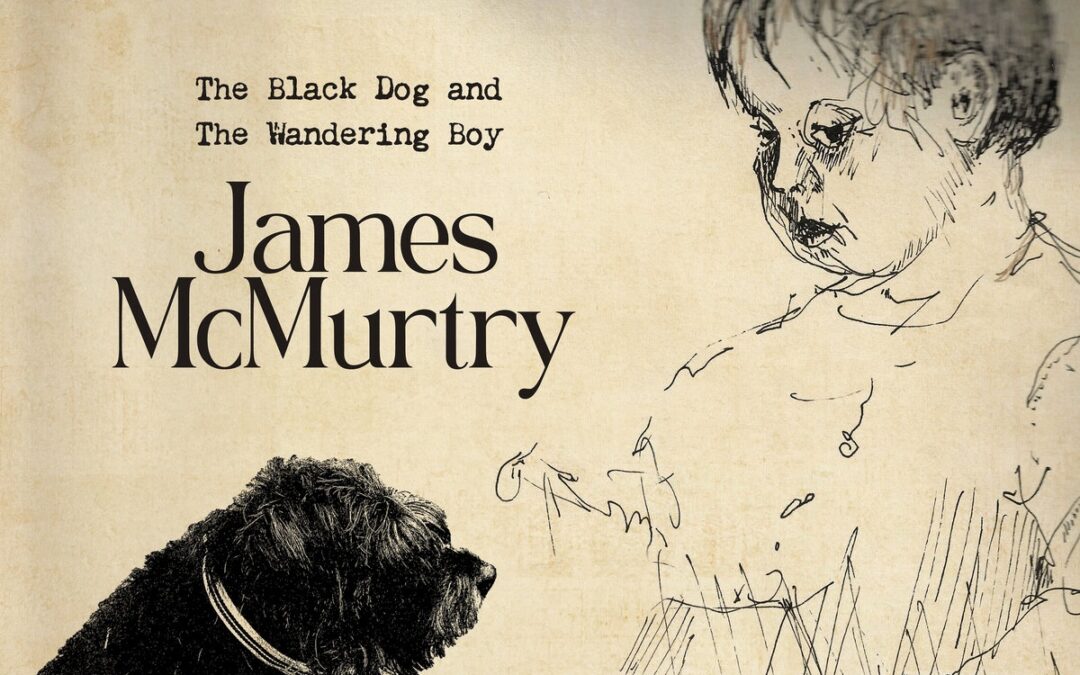
Artist: James McMurtry Album: The Black Dog And The Wandering Boy Label: New West Records, LLC Link: www.jamesmcmurtry.com Style: Country, Folk, Rock
James McMurtry was born and spent his early years in Texas before following his parents to Virginia. He received his first guitar at the age of seven from his father, writer Larry McMurtry, and began playing his songs in public while a student at the University of Arizona. He then moved to San Antonio, where he worked odd jobs and pursued his musical activities before winning a folk music contest and meeting John Mellencamp, who would produce his first album, Too Long in the Wasteland, in 1989. Known for his carefully crafted lyrics, he paints an uncompromising portrait of America through songs that are like little stories.
Less politically charged than his early albums, The Black Dog And The Wandering Boy focuses on the artist’s father and the dementia that affected him in the last years of his life. James McMurtry delivers authentic Southern Americana, starting with Jon Dee Graham’s “Laredo,” a rock tune that would have fit right in with ZZ Top’s early recordings. The rest of the album veers toward a more country-folk sound, still electric and mid-tempo, tailor-made for his haunting voice, with the ghost of Johnny Cash seeming to hover over the last part of the record. All this makes for a particularly enjoyable album for lovers of traditional music from the southern United States.
Vocals and plucked guitars or banjos are at the heart of the musical arrangement, without overwhelming the rest of the accompaniment. The rhythm never forces the pace, perfectly matching the singer-narrator’s quiet diction. Harmonica, cello, and electronic organ enrich the harmonies and melodies with great skill. The production envelops the sound with a hint of warmth that leans toward a softness devoid of any aggression, which suits the acoustic instruments elegantly. In correlation, the sibilants of the voice will be noticeable on the most defined systems.