Artist: José González Album: Against The Dying Of The Light Label: City Slang Link: https://jose-gonzalez.com/ Genre: Pop, Folk
The José González we are talking about here is, of course, the musician, born in 1978 to Argentine political refugee parents in Sweden. He took his first musical steps in several hardcore punk bands, though he also sang in a choir and quickly traded his electric guitar for an acoustic one, which better suited his influences, notably the Cuban Silvio Rodríguez. He released his debut album in 2003, and the growing importance of his musical commitments led him to abandon a PhD in biochemistry. He then collaborated with numerous groups, and his music was initially used as much for advertising as for film and video games.
Through the lyrics of his fifth studio album, Against The Dying Of The Light, José González almost asks us what remains today of the Age of Enlightenment. In any case, he prompts us to question the ways of thinking that are becoming commonplace in the Western world. To do so, he arms himself with his reassuring voice and his guitar, from which he quietly plucks the notes. This album strikes a balance between light and shadow, offering a folk sound that could just as easily draw inspiration from Bert Jansch, Leonard Cohen, or Simon & Garfunkel—though it lacks the vocal harmonies of the latter duo, even if the studio setting occasionally helps alleviate the artist’s solitude.
A few ethereal percussion sounds and claps in the background, resonances from the guitar’s body that fill the soundstage beyond the speakers, and a voice that is always soothing; this is the setup that highlights the Swedish guitarist’s talent. The instrument has volume, and the sound unfolds to better envelop us. The strings are indeed nylon and the guitar is made of wood, which comes across with perfect naturalness on a high-quality system or high-performance speakers. No excess is needed to draw us into listening to Against The Dying Of The Light, which knows how to combine a definition pleasing to audiophiles with a warmth made for long listening sessions by music lovers.
Artist: The Beths Album: Straight Line Was A Lie Label: Anti – Epitaph Link: https://www.thebeths.com/ Style: Pop, Pop/Rock, Alternative & Indie
The Beths is a New Zealand quartet led by Elizabeth Stokes, who sings, writes all the lyrics and composes most of the band’s songs. She is accompanied by Jonathan Pearce on guitar, Benjamin Sinclair on bass (they also provide backing vocals), and Tristan Deck on drums. In retrospect, their rise has been fairly rapid, as they have attracted public and critical interest since their first album was released in 2018. Their reputation has been reinforced by regular international tours. Straight Line Was A Lie is their fourth studio album to date.
In writing this album, the singer moves away from lyrics centered on romantic love and the relative success that can accompany it. She delivers much more intimate yet universal lyrics, relating to her doubts and, above all, her physical and mental health. The strength of this music lies in its ability to maintain a communicative joy and brightness despite its deeper themes. As on previous albums, the choruses are particularly catchy, and the melodies have the lightness and immediate freshness of pop songs that you want to listen to again and again without question.
As on previous albums, the band demonstrates its expertise in vocal and instrumental harmonies. As always, Elizabeth Stokes’ vibrant voice remains the most memorable, but it is when she is backed by the backing vocals, as in ‘Til My Heart Stops’, that she is most moving. The sound of the electric guitar rarely strays from its clear tone; it can sometimes take on an extra layer of saturation to present a livelier face. The rhythm section follows the same pattern, with an effective snare drum taking the lead on ‘Take’, the catchiest track on the album.
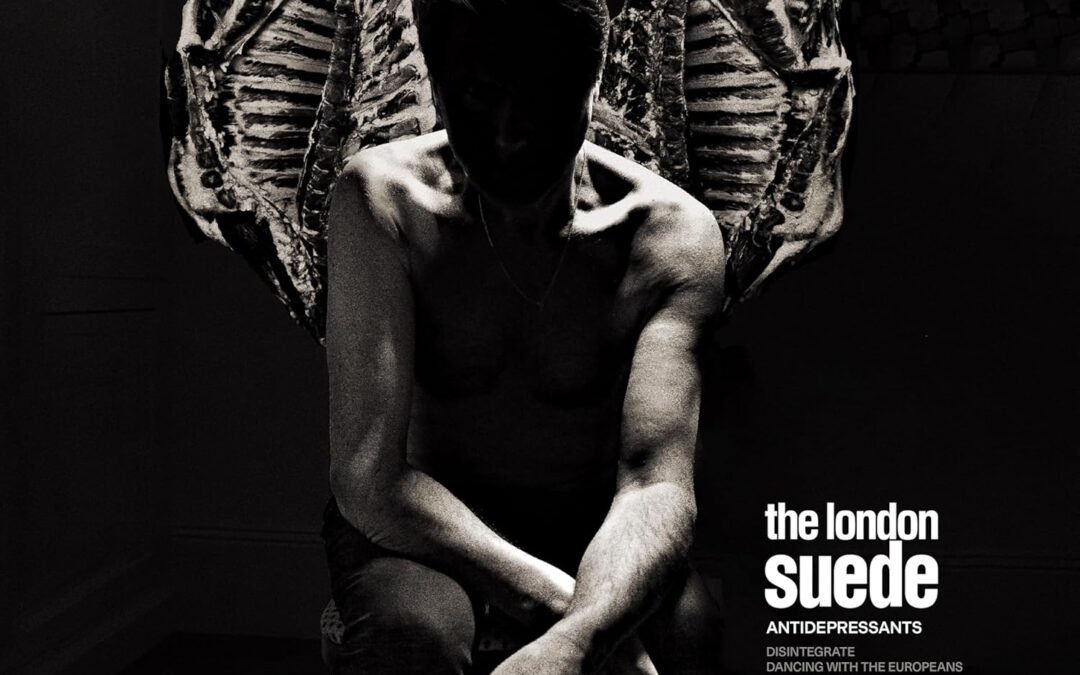
Between sparkling new bands and unexpected reunions, Britpop is definitely on a roll right now! And in the latter category, if there’s one band we weren’t expecting anything from in 2025, it was Suede! And yet, that hasn’t stopped them from releasing one of the best albums of the autumn. The band formed in the late 1980s and, even before releasing their first single, found themselves on the front page of Melody Maker. They followed this up with a debut album that reached number one in the UK charts, then a non-linear career with several years of inconsistency between success and separation.
In better shape than ever, Brett Anderson’s band is back with an album still inspired by the music of David Bowie and The Smiths. The musical foundations, a mix of finely crafted melodies and invigorating energy, which made Suede’s reputation both on stage and on record, are still there, but today there are a few more insistent touches from other styles such as New Wave and Goth, music that also influenced England. This stylistic openness is skillfully negotiated by the musicians, who combine their personalities with delightful efficiency.
The band’s characteristic sound texture, made up of stringy, clear guitars, which, as we said, evokes The Smiths, but with a little more rock, is still present and will delight long-time fans as well as new converts to shoegaze. On Antidepressants, Brett Anderson’s voice, although it has matured, retains its distinctive quality, the singer having adapted it to both energetic flights of fancy and more subtle tracks such as ‘Broken Music For Broken People’ and ‘Trance State’. Inevitably, with musicians of this calibre, the music is served up with impeccable production that leaves nothing to chance and allows you to enjoy it even on a very good sound system, especially if you can turn up the volume!
Artist: Phil Collins Album: No Jacket Required Label: Rhino Atlantic Link: https://philcollins.com/ Style: Pop
With his mother working in a theatre agency, the young Phil Collins had his first experiences as an actor at the age of twelve. However, his only aspiration was to make music, and although he started playing the drums at the age of five, he quickly became interested in the bass and guitar. After a few experiences in bands, he joined Genesis in 1970 as a drummer and took on a central role after Peter Gabriel left. Despite its public success, this version of the band never achieved unanimous critical acclaim, nor did the artist’s solo career, despite many die-hard fans in both cases.
Phil Collins’ third solo album, No Jacket Required, like the two previous albums, was a hit on FM radio stations around the world with the singles ‘Sussudio’ and “One More Night “. It would be his best-selling album, but once again, critics were divided, finding this mix of funk and commercial pop, to which he added syrupy ballads, lacking in inspiration. Some saw it as a substitute for Prince and, let’s face it, with the benefit of hindsight, this album does not avoid the pitfalls attributed to popular music of the 1980s. However, listening to this record is still interesting, beyond the nostalgia it may evoke.
Electronic drums, keyboards and a strong studio presence – all the hallmarks of the 1980s are there. It’s a far cry from the refined tones associated with warm, organic music. On the other hand, the sound isn’t completely cold either, and the dynamics and energy are unusually prominent, particularly on ‘Only You Know And I Know’. Despite its simple production, this record manages to avoid being too clinical and will appeal primarily to those with a detailed mid-high range system, or even a hi-fi temperament.
Artist: John Maus Album: Later Than You Think Label: Young Link: https://johnma.us/ Style: Pop, Electronic
A professor of philosophy and Doctor of political science, John Maus only became truly interested in music in his early teens, swept up by the Nirvana craze. He played in a few punk bands while creating music on a computer, but above all, he studied composition at the California Institute of the Arts. He therefore has a deep knowledge of classical music, particularly medieval and baroque music. It was his encounter with Ariel Pink that confirmed his desire to create music with a strong pop orientation. Marked by his commitment and emotional expression, his live performances forged his reputation. But it wasn’t until his third album in 2011 that critics began to favor him.
With his elastic bass, love of vintage synthesizers and baritone voice, John Maus transports us directly to the New Wave and Gothic spirit of the 1980s. His songs also reveal an interest in liturgical chants, reinforcing the Gothic feel. This penchant is fully embraced in the closing track of the album, ‘Adorabo’. The approach, while dark, remains danceable in the style of Joy Division. His lyrics are reflections on what our society inspires in him, but also marked by the loss of his brother in 2018, inviting us to free ourselves through an ever-present spirituality.
At the beginning of his career, John Maus made a name for himself with lo-fi production, fortunately for audiophiles, an aspect that is much less prominent today. The strong presence of deep vocals and mellow bass favors the low-mid range, which nevertheless remains clear enough to be easily discernible, especially with speakers that have good bass quality. With synthesizers sprinkling little melodies throughout, the sound is a blend of 80s/90s tones and a fresher, more modern production, which further reinforces the importance of counterpoint in pop compositions.