Artist: The Sick Man Of Europe Album: The Sick Man Of Europe Label: The Leaf Label Link: https://thesickmanofeurope.net/ Style: Pop-Rock, Electronic
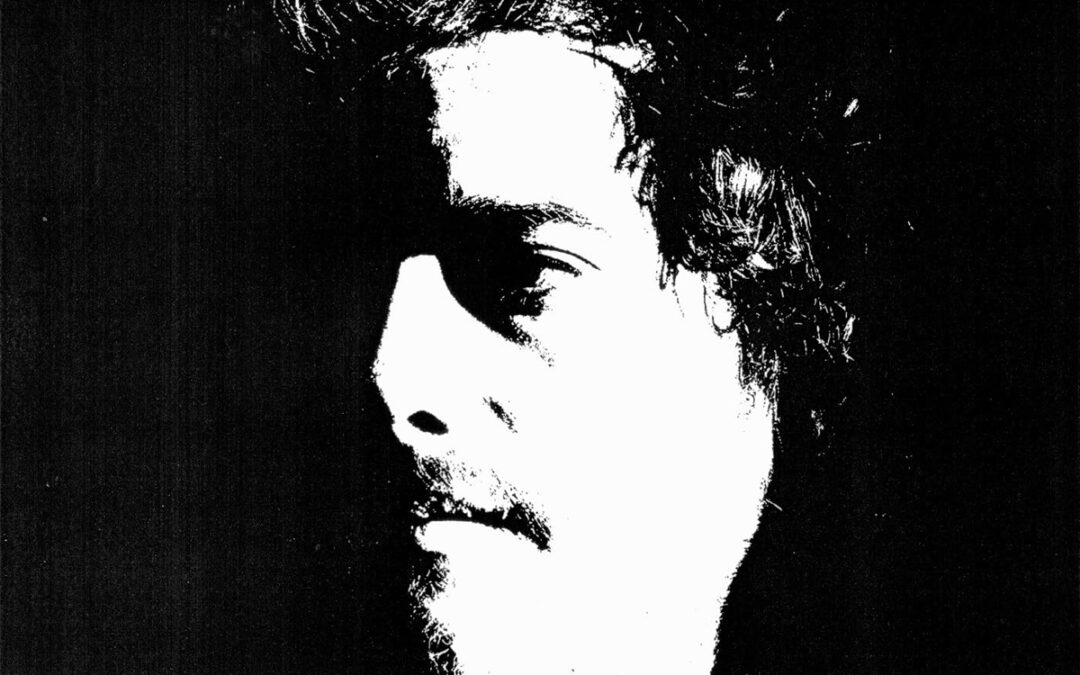
Apart from a few videos of live performances, where we see that the trio performs without a drummer, there is little information about The Sick Man Of Europe. This stance is fully embraced by the band members, allowing the music to speak for itself. When asked which musicians inspire them to write their songs, they tend to mention the state of the world, the tensions shaking societies, and technology creeping into human relationships without being truly understood. It’s quite a program, which ultimately results in music with many references.
The first notes take us straight back to the turn of the 70s and 80s, when the nihilistic momentum of punk was slowly transforming into a dark new wave under the weight of a brutal society. Other influences can be felt, such as minimalism and Krautrock from the same period. The dark atmospheres and the singer’s deep, gravelly voice are reminiscent of Bauhaus or Joy Division (see the recently released Closer), and they even manage to create an even darker and more tense sound, which is no mean feat.
In keeping with the standards of the genre, the bass is prominent on many tracks, often playing an important role in both the rhythms and melodies, accompanied in this area by the guitar. The rest of the rhythm section is shared between drums and drum machines or synthesizers, with a presence of strange machine-generated rhythms that really evoke the spirit of early New Wave albums. The production, marked by a coldness that is as sought-after as it is achieved, manages to hold these artificial components together with the more traditional instruments in a coherent way.
Artist: King Gizzard & The Lizard Wizard Album: Phantom Island Label: KGLW Link: kinggizzardandthelizardwizard.com Style: Pop/Rock, Alternative & Indie
This Australian band started out in 2010 and released their first album in 2012. Since then, they have produced a discography whose profusion is matched only by its eclecticism. Between studio albums, concerts and compilations, they now have more than fifty LPs to their name. While maintaining an eye on progressive and psychedelic music, the artists move from jazz to rock, electro to heavy metal, folk to soul, all with great artistic success. This variation in styles, while not necessarily comfortable for the listener, makes them one of the most interesting bands of recent years.
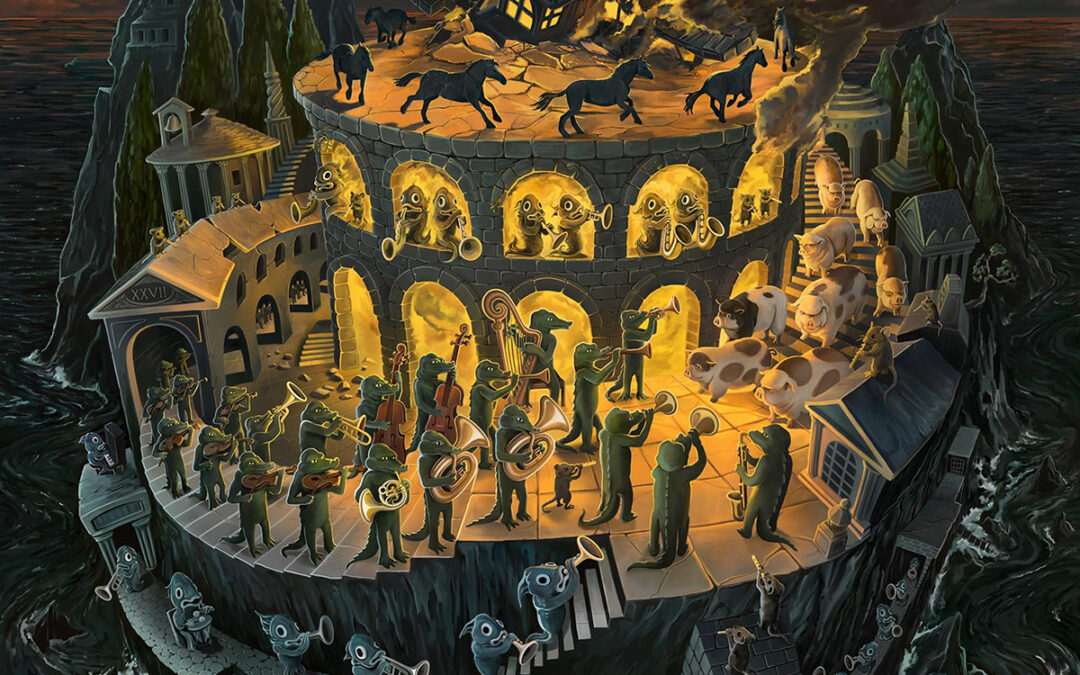
Illustrated with a cover reminiscent of the work of M. C. Escher, Phantom Island is their first real foray into symphonic music. The tracks on this album have been rearranged by Chad Kelly, conductor and friend of Stu Mackenzie, the band’s leader. The first two tracks follow in the footsteps of the previous album with a profusion of sound, a touch of psychedelia and almost funk-like brass reminiscent of Frank Zappa. After a ballad with bucolic accents, the rest of the album moves towards pop-rock and even folk, strongly tinged with a psychedelia that cannot deny its kinship with 1970s pop culture.
The combo had already accustomed us to their generous interweaving of instrumental lines. For this album, they have taken it a step further by adding a string and wind section. Still analog in essence, a dense sound is combined with additional resonances compared to the rest of the band’s output. However, despite fewer improvisational compositions, regular listeners won’t be thrown off, as the album retains the creative momentum characteristic of its artists. Acoustic instruments are rarely overshadowed by electric ones, and the lead vocals never take precedence over the accompaniment.
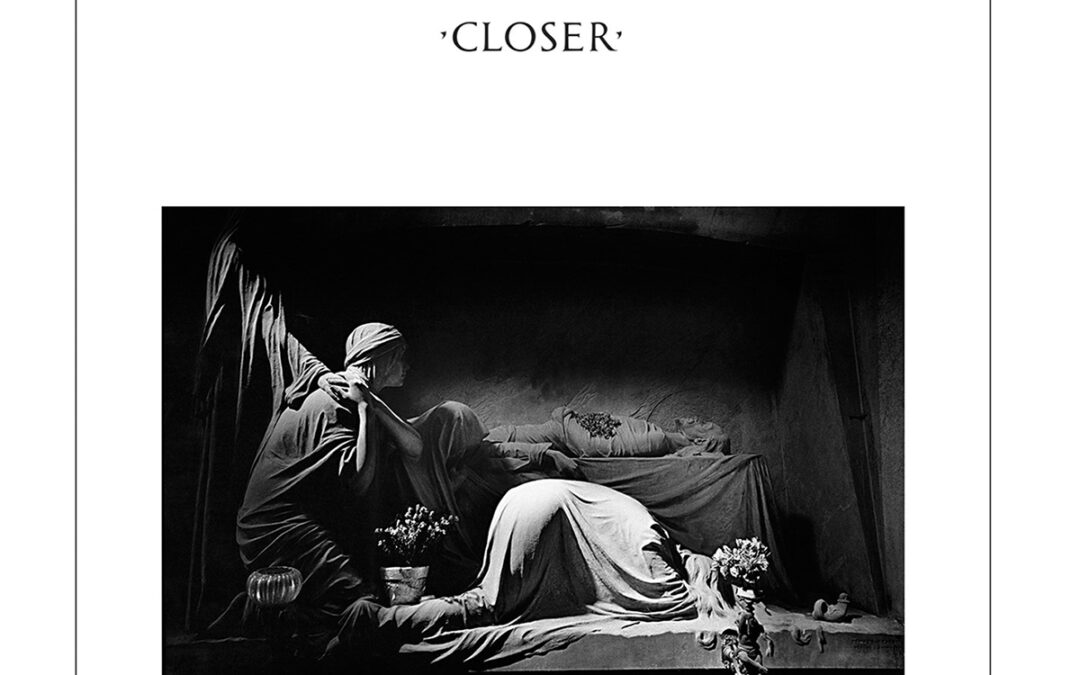
Released just a few months after the death of charismatic singer Ian Curtis, Closer, Joy Division’s second studio album, lays the foundations for the sound of both nascent new wave and gothic rock.
Joy Division is the archetypal band whose career seems to have been stricken by the weight of a curse, but which despite, or partly thanks to, the relentlessness of fate, managed to become a cult and strongly influence music. Influenced themselves by the performances of the Sex Pitols, Bernard Sumner, Peter Hook and Terry Mason decided to form a band, recruiting Ian Curtis through a classified ad. They subsequently changed drummers and names several times, before finally opting for Joy Division in 1976. The name, derived from a German term for the party that organized the sexual exploitation of female inmates in concentration camps, combined with the iconography of their first EP, led to suspicions of Nazi sympathies, which were always denied by the band members. Although he was the last member to join the band, Ian Curtis became a pillar of the band, with his unhappy lyrics, his sepulchral interpretation and his involvement on stage, where he lived every rhythm and every word. Suffering from epilepsy, he would sometimes have seizures on stage, and faced with his invasive psychic pain, as well as his difficulty in managing his notoriety, he took his own life when he was only 23, just a few months before the release of Closer. In forty-three songs and one hundred and twenty concerts, Joy Division succeeded in creating a legend and strongly influencing the music of the time, some facets of which can be perceived in the film Control, adapted from the book by Deborah Curtis, Ian’s wife.
Marked by punk, their style is really forged when they slow down the tempo, thus sticking to Ian Curtis’ particular phrasing. Another peculiarity is that Peter Hook’s bass carries the melodies, while guitarist Bernard Sumner opts for a more rhythmic style, while the drummer seems to follow his acolytes. Along with other bands from the same period, they were instrumental in the transition from punk to new wave. They are also considered to have had a strong influence on the gothic movement through the dark ambience of their music. What’s more, viewed in hindsight from the angle of their singer’s suicide, the lyrics take on the weight of a premonitory dimension in the expression of his existential suffering. Their influences include German rock from the same period, as well as older American bands such as The Velvet Underground, The Stooges and The Doors, and contemporary artists such as Siouxsie And The Banshees, who inspired their unusual use of guitar and bass.
Young producer Martin Hannett is no stranger to shaping the band’s distinctive sound. His meticulous attention to detail introduces delays and echoes, particularly on the drums. The ambience is cold, heavy and tense, with a surgical edge, but a dark, sticky post-apocalyptic surgery. For Joy Division, there’s a future after punk, but that doesn’t mean there’s hope. Nevertheless, beyond the legend, Joy Division’s two studio albums are considered indispensable. On this reissue, multiple compilations and live albums have been added, and while they do contain their share of nuggets, their purchase on physical support may be questionable, as they generate repetition and ultimately remain primarily of historical interest, except to band afficionados.
Artist : Kadavar Album : I just Want To Be A Sound Label : Clouds Hill Link : https://www.kadavar.com/ Style : Pop/Rock
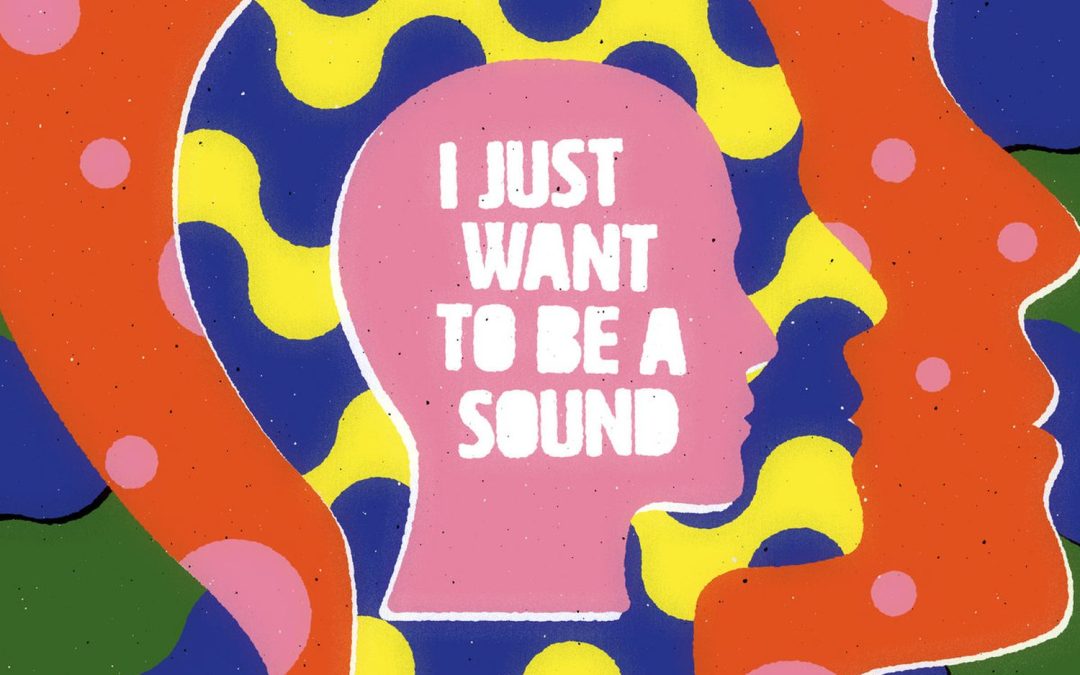
Little by little, German band Kadavar is moving away from its 70s-era hard rock base to add a healthy dose of power pop to its new album, I Just Want To Be A Sound.
The beginnings of German band Kadavar date back to 2010, when drummer Christoph Bartelt and guitarist Philipp Lippitz – who will leave the band in 2013 to be replaced by Simon Bouteloup on bass – started playing together; they were soon joined by bassist and singer Christoph Lindemann. Two self-released titles followed, and two albums enabled the musicians to make a name for themselves in their home country, where their proximity to the band Wolfmother also enabled them to tour and record. From their third album in 2015, they acquire a new international dimension.
Is this due to the arrival of a fourth member to the band, or is it due to the several-year break between the previous album and this one? The fact is, the Berliners have perceptibly moved away from their eternal retro Hard Rock style that came from Black Sabbath or Hawkwind, to add a lightness and insouciance that seems to come from 90s Power Pop, even evoking The Hives on a few passages. The result is a blend of invigorating, joyful energy and more weightless moments, rooted in the psychedelia of the 70s, but still very luminous.
The sound reflects the style, highlighting different facets depending on the track. The more pop-oriented passages are characterized by a clarity and definition that make them highly legible. When hard rock takes over, the sound becomes heavier, with saturated textures. So, there is an fluctuation and mix between groove-filled tension and a lighter, more up-to-the-minute sound. Tracks with long, psychedelic swerves have the greatest impact in terms of soundstage widening and use of dynamics.
Artist : Ezra Furman Album : Goodbye Small Head Label : Bella Union Link : https://ezrafurman.com/ Style : Pop/Rock, Rock, Alternatif & Indie
After igniting the Sex Education soundtrack over four seasons, Erza Furman returns with Goodbye Small Head, a tenth pop rock album full of emotion and confessed fragility.
Chicago-born Erza Furman came out of the closet four years ago, and in the space of a dozen albums, initially with the band The Harpoons, she has become an important figure in the queer community. This success stems in part from the themes addressed in her songs, around questions of identity, and the impact that mental disorders on people she may have encounter in her family, but also quite simply from the quality of her compositions. She has gained even greater notoriety since composing the soundtrack for the aforementioned Netflix series.
Erza Furman’s records combine the energy of her early punk days with a lyricism driven by string arrangements, that lend a warm flamboyance and extra intensity to her songs. Her voice, sometimes androgynous, sometimes rougher, is always full of emotion, reminiscent of PJ Harvey or Brett Anderson from Suede’s early days. The compositions are personal and varied, and show great inspiration throughout. They know how to maintain interest for the attentive listener, while keeping a unity that never confuses when changing tracks.
Erza Furman doesn’t seem to ask herself any questions when crafting her songs. Violins can be played alongside or after samples or drum machines, without fear of appearing overdone. The only thing that counts is the expression of emotion; far from formatted compositions, it’s easy to take pleasure in letting yourself be carried into the artist’s world. If, on the other hand, you choose to concentrate, you’ll be just as delighted by the sonic discoveries that give these tracks their distinctive character.