Artist: Feu ! Chatterton Album: Labyrinthe Label: Universal Music Link:http://feuchatterton.fr/ Style: French chanson
Feu! Chatterton’s career path is fairly classic: three members of the band meet at school, their first songs are released on internet, they play support slots and win various awards. However, when you live in France, it seems unlikely that you haven’t heard one of their songs or heard about them in the media. This is due to the well-deserved success of their previous album, Palais d’Argile, released in 2021, which was of unusual magnitude. But such critical and public acclaim can also weigh on artists’ creativity. Perhaps this is why it took them four years to deliver their new studio album, Labyrinthe.
Feu! Chatterton’s music centers around Arthur Teboul’s lyrics and distinctive interpretation. His recognizable voice and phrasing invite comparison with the great names of French chanson. Instrumentation-wise, the band has taken a much more modern direction, with rock infiltrated by hints of psychedelia and, on this album more than on previous ones, electronic elements that sometimes take the lead. This emphasis is evident on the track ‘Labyrinthe’, which shares its name with the album. While this change may be disconcerting, it would be a shame not to continue the adventure offered by this record, which combines maturity and lyricism.
The vocals and their controlled flights of fancy are the band’s trademark. This is still the case here, with a clear and detailed mid-range. The accompaniment is subtle, laying down a heady carpet for Arthur Teboul on ‘À Cause ou Grâce’, and, in general, the balance between electronic sounds and the pop/rock approach is joyfully successful. The production creates a stable and structured soundstage, the width of which varies depending on the track, adding interest to testing your system on this criterion. It is also pleasant to differentiate the timbres of the synthesizers and other drum machines from those of the acoustic instruments.
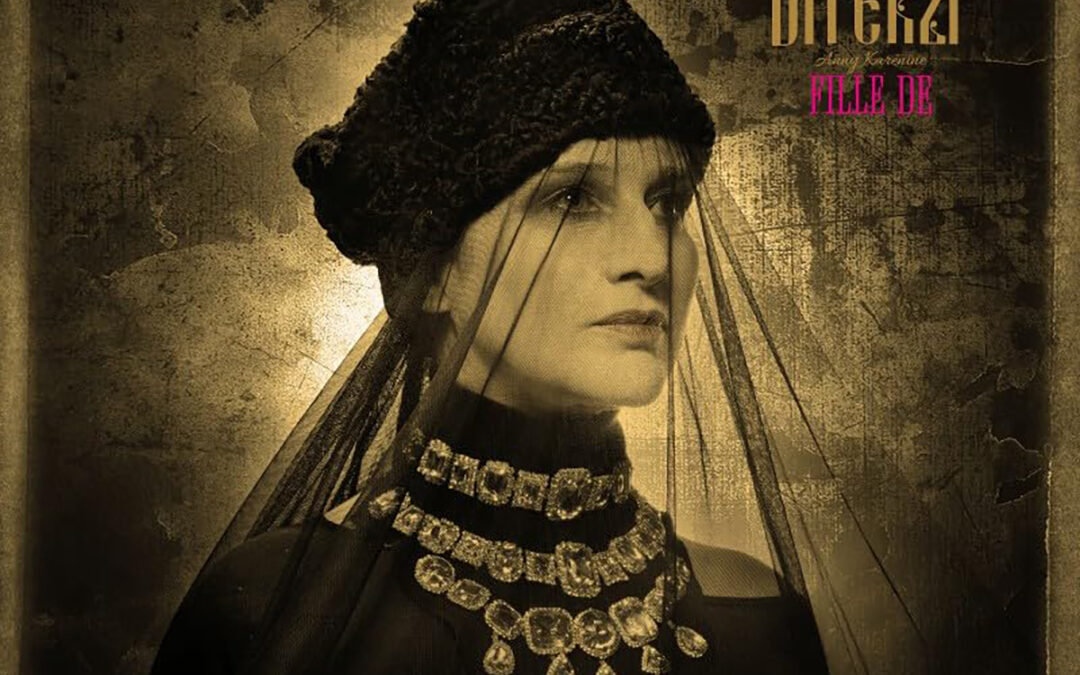
Artist: Claire Diterzi Album: Fille De Label: Je Garde Le Chien Link: https://jegardelechien.fr/ Style: French chanson
Claire Touzi Dit Terzi, while still in high school, began to evolve within the bands of the city of Tours. She made a name for herself in Forguette Mi Note, with whom she recorded two albums, then founded the band Dit Terzi with Sylvestre Perrusson and Erick Pigeard. The three of them laid the foundations for her musical style with an eponymous album released in 2000. But it was as a solo artist that she met with great critical acclaim, through her proximity to the world of theatre and by placing great importance on the staging of her artistic creations. Notably, she set a show by Philippe Decouflé to music and received the “Grand Prix du Disque” from the Académie Charles Cros for her 2006 album.
The album Fille De is the soundtrack to Claire Diterzi’s new show. The latter is inspired by Tolstoy’s novel Anna Karenina; she wraps her feminist ode in delicate constructions made of electronic music and French pop, letting her voice twirl between rebellious accents and fragility. To give her music its full character, she adds an oriental inspiration, which is more present in the few passages where the male choir echoes – in form only – the songs of the Orthodox Church. An atypical artist, Claire Diterzi enchants us once again with her world full of references and lightness.
If there is one adjective to describe this music, it is ‘delicate’. In Fille De, delicacy is everywhere, in the singer’s voice, in the restraint of the electronic sounds, in the touch of the guitar or bass strings. The soundscape unfolds gently, without rushing, particularly when the small electronic noises of “L’épouse inépousée” appear, or the tinkling at the end of the album, or when the choir’s voices bring the warmth of their acoustic textures. The production manages to maintain a link between the organic sounds of the voices and acoustic instruments and the starker sounds of the machines, allowing the listener to better immerse themselves in the artist’s intimate world.
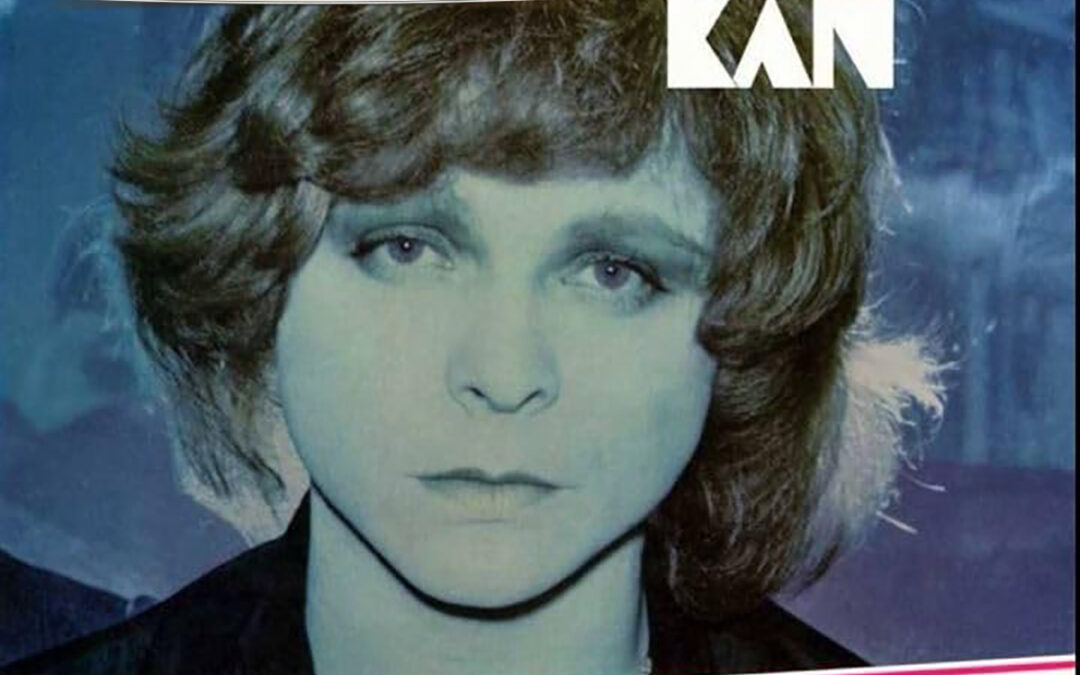
Artist: Alain Kan Album: Heureusement En France, On Ne Se Drogue Pas Label: Disques Motors Link: https://www.youtube.com/watch?v=sZsA-cCWPXU&list=RDsZsA-cCWPXU&start_radio=1 Style: French chanson, rock
Alain Michel Zisa is a French artist who is almost as cult as he is unknown. Too ahead of his time for some, too marginal for others, he speaks openly about his homosexuality and drug use, which at the time led to him being simply censored by the media system. Adding to his legend, he literally disappeared in 1990 after being seen for the last time on a subway platform; he was declared dead ten years later without anyone ever being able to explain what had happened to him.
Having never known his father, he took his stepfather’s name and became Christophe’s brother-in-law when Christophe married his half-sister Véronique. He began his career in the early 1960s with a few singles and maxi singles, covers of Anglo-Saxon hits in a pop style, which did not have much impact. On Dani’s advice, he joined the Alcarzar revue, playing an androgynous character named Amédée Jr. There, he met established artists such as Serge Gainsbourg and Barbara. During this period, one of his songs was censored for the first time: “Mon p’tit photographe,” written for Dani.
Gradually, his “cabaret song” style evolved into a glam rock sound heavily inspired by the British pop of the time, particularly David Bowie, whom he claims to have spent a few days with during a trip to England and whose songs he often covered. His first album, Et Gary Cooper s’éloigna dans le désert… (And Gary Cooper Walked Away Into the Desert…), was released in 1975 and featured former Magma member Laurent Thibault. The album had little impact, being too far removed from mainstream pop and too subversive in its lyrics. Alain Kan nevertheless repeated the experiment the following year with Heureusement En France, On Ne Se Drogue Pas, which remained in the same glam spirit but with longer tracks, incorporating hints of psychedelic sounds or at least leaving more room for the possibilities offered by the studio, as in the music of Jacques Higelin during the same period. In fact, it is Jacques Higelin who comes to mind when listening to the track “Dracula.” Alain Kan demonstrates his great interpretive abilities, moving from harmonious, light singing to a voice full of anger or an almost unreal way of speaking when he covers Édith Piaf’s “Les Blouses Blanches.” Although not necessarily intended for a wide audience, the tracks with lyrics focused on illicit substances earned the record censorship, resulting in very limited distribution. For the next album, he took a step closer to the emerging punk movement and, whether out of pure naivety or deliberate provocation, the artist went even further in his excesses. Wanting to mock it, he included excerpts from a speech by Adolf Hitler. Of course, the censors were unforgiving: the record was pulped.
Today, his first three albums—mentioned in this review—can be listened to on streaming sites for the Motors label, and Heureusement En France, On Ne Se Drogue Pas is relatively easy to find on vinyl. We can therefore immerse ourselves in a time of transition, alongside a wholehearted and inspired artist, a figure of the French underground, close to Daniel Darc and Fred Chichin of Les Rita Mitsouko.