Artist: Vincent Peirani Album: Living Being IV (Time Reflections) Label: ACT Link: https://vincent-peirani.com/ Style: Contemporary Jazz
Encouraged by his musician father, Vincent Peirani took up the accordion and enrolled at the Nice Conservatory, where he studied classical clarinet. He won numerous prizes and classical music competitions with both his clarinet and his accordion. At the age of 20, he immersed himself in jazz and received instruction from Daniel Humair and Ricardo Del Fra, among others. His career in this style has been no less brilliant than in the previous ones, and alongside numerous publications under his own name, he has collaborated extensively in jazz, French chanson and world music, with Youn Sun Nah, Stromae and Richard Bona, to name but the most high-profile.
Signed to the ACT label since 2013, Vincent Peirani uses his accordion not to define his music, but as a means of travelling between styles. The fact that he performs as part of a quintet on this album allows him to multiply the facets of the tracks, reflecting the artist’s influences. In the track ‘LL’ (a tribute to Lionel Loueke), we move from free jazz to progressive rock. This is followed by ‘Physical Attraction’, whose groove looks towards Jamaica, then ‘Better Days’, where classical and folk meet, and finally the very pop ‘Bremain Suite’, which borrows the themes of its musical digressions from Queen, Portishead and the Beatles.
Once again, ACT treats us to an album that is perfectly produced in terms of both sound recording and mastering. The great clarity is accompanied by a softness that avoids any coldness or over-definition and pays perfect homage to the acoustic instruments. Unlike many accordionists’ albums, the accordion, although very present, does not overwhelm the other musicians. What we hear is a quintet, with each member playing a part in the compositions and the sound colour of the album. Here, the drums are mellow yet percussive, and the saxophone avoids any excessive brilliance, always maintaining a warm sound.
Maruja’s beginnings date back to 2014, when Harry Wilkinson and Matt Buonaccorsi, then still in high school, began making music together. But their sound and style would only take on the trappings of their current productions when they evolved into a quartet, with the arrival of drummer Jacob Haynes and saxophonist Joe Carroll. Largely self-taught, they draw their instrumental mastery from relentless improvisation and having scoured the independent scene. Although they hail from Manchester, they are also close to the new and vibrant London jazz scene.
If Nu Metal refers to the fusion of metal and hip-hop, with Maruja, we could talk about Nu Hardcore or Nu Jazz Rock. Indeed, from the incandescent ‘Bloodsport’, the first track of Pain To Power, the saxophone adds to the punk energy of the guitars, mixed with phrasing reminiscent of aggressive rap, with the rhythm allowing only a few rare moments of calm. Other tracks, on the contrary, display atmospheric and ethereal moods with more hypnotic rhythms and a less aggressive saxophone, while maintaining a healthy dose of non-conformism as their focal point. To convince yourself, listen to the first few minutes of ‘Born To Die’ and the slow crescendo that culminates in a noisy eruption.
Perfectly in keeping with the band’s style, the sound of this album is particularly dense, while avoiding being too compact or rough, largely thanks to the saxophone, which softens the wall created by the guitars and percussion. There is an alternation of passages presenting real bursts of energy, where the impact and dynamics of the sound compete for the foreground with acoustic drones, with moments that allow the listener to better appreciate the timbres of the instruments and follow their progression within floating atmospheres, as in the variations of the track ‘Reconcile’ that closes the album.
Artist: L’Antidote Album: L’Antidote Label: Ponderosa Music Records Link: https://lantidote.eu/ Style: Contemporary Jazz
A student in Tirana and then in Italy, Albanian cellist Redi Hasa offers a style ranging from traditional Albanian and Italian music to modern jazz. Influenced by the traditional music inherited from his family, Lebanese pianist Rami Khalifé trained classically and has been involved in contemporary projects close to electronic music. As for Iranian percussionist Bijan Chemirani, he comes from a long line of musicians and has mastered his country’s traditional repertoire, although he is mainly involved in numerous international projects.
Abandoned in 2020 due to the pandemic, the L’Antidote project developed naturally in the following years and stems from a genuine encounter, a place full of gentleness where listening and sharing reign supreme. Each musician brings their artistic background to a joint creation. The structure of the compositions is strongly marked by improvisation and inspiration, while being dominated by contemporary jazz, exuding a Mediterranean heritage that is particularly present on the track ‘Rosée’. The melodic lines take their time to develop and the timbres of the instruments to blend together, with only the tracks ‘Dates, Figs And Nuts’ and “Na Na Na ” take on a livelier rhythm.
An acoustic universe, L’Antidote is adorned with a sound marked by clarity and definition. Fortunately, this highlighting of the instruments is not accompanied by any coldness. The soft vibration of the notes and the particular grain of the percussion, while restrained, are a flavor to be savored when listening to the album. Struck and bowed strings are perfectly differentiated and evolve in the same movement, each musical line complementing the other naturally. The track ‘Desert Plant’ immerses us in a sonic invitation to contemplation, where we are carried away by this enchanting flow.
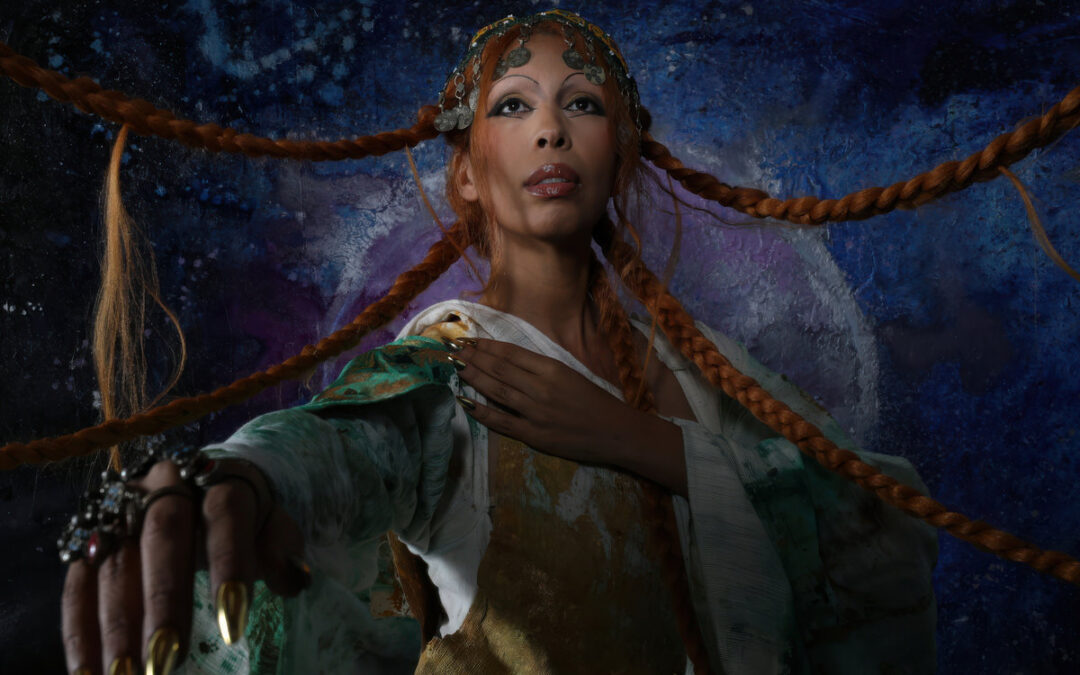
Artist: Ami Taf Ra Album: The Prophet And The Madman Label: Brainfeeder Link: https://amitafra.com/ Style: Contemporary Jazz
American artist Ami Taf Ra is part of the spiritual jazz scene based in Los Angeles. In her first album, The Prophet And The Madman, her North African roots are particularly evident in her musical interpretations of the writings of Lebanese poet Khalil Gibran. Among the many guests featured on these tracks is her regular collaborator, saxophonist and ensemble director Kamasi Washington. A musician who seems to be everywhere, given his presence on so many recent albums, he honors a jazz that builds the future while remaining conscious of its rich past.
Apart from a few passages that show a subtle simplicity, The Prophet And The Madman is a dense album, a rich tapestry woven with instrumental lace, where the arrangements combine richness and an airy style. While a few Arabic accents can sometimes be heard, such as in the drawn-out chant of “Khalil,” it is above all the legacy of spiritual jazz that blends with free jazz. In the middle of the album, numerous inspirations from African-American culture, such as funk and gospel, seem to inhabit the rhythms and vocals. In fact, it’s easy to imagine certain tracks being part of the soundtrack of a film in the vein of Shaft or Trouble Man.
Richness and luxuriance are the words that best characterize the music of The Prophet And The Madman. From “How I Became A Madman,” the first real track on the album, we know what to expect: a multitude of rhythms and percussion, a multitude of sounds and instruments. All the musical lines intertwine and stand out according to the musical convolutions. The voice, quite high-pitched, seems to both fly over and guide all these vibrations in motion. Saxophone, electric guitar, and piano arrive quietly before blending into a texture that is never muddled, where everything remains clear in music that is as lucid as it is complex.
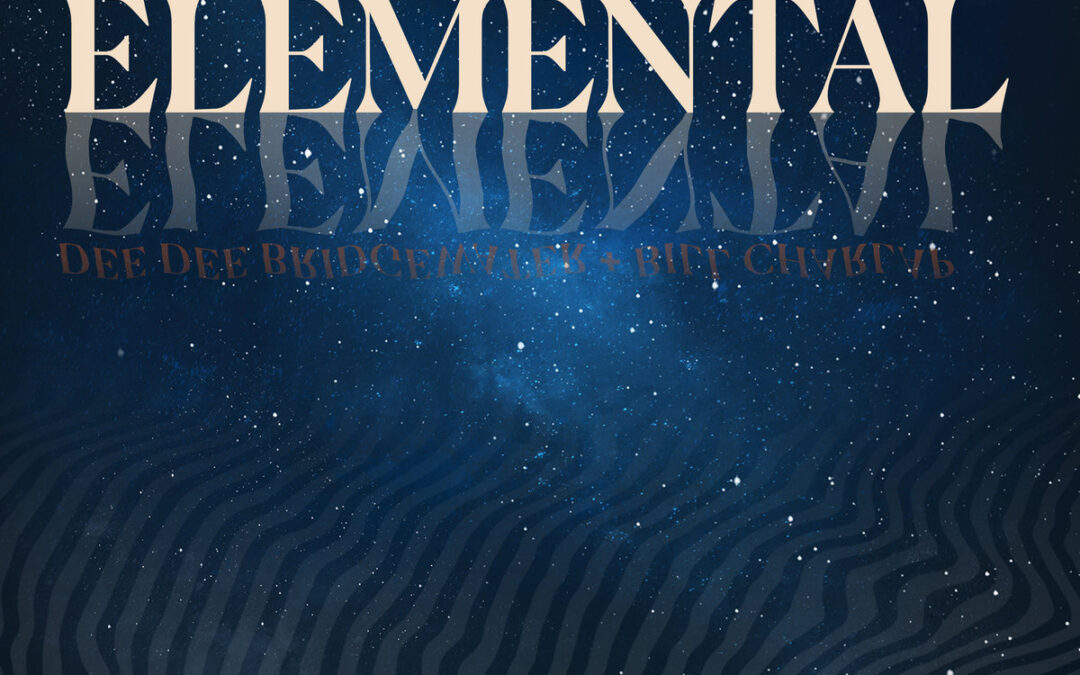
Artist: Dee Dee Bridgewater, Bill Charlap Album: Elemental Label: Mack Avenue Records Link: www.deedeebridgewater.com Style: Jazz
It is impossible to go into detail about Dee Dee Bridgewater’s career, as it began more than 50 years ago, at the turn of the 1960s and 1970s. The daughter of a jazz trumpeter, she sang with Sonny Rollins, Dizzy Gillespie, and Max Roach before embarking on a rich discography as a lead artist. She has won numerous awards and is involved in teaching and humanitarian work. Bill Charlap also comes from a family of musicians. He began learning classical piano at the age of three, but it was jazz that inspired him, particularly that of the 1940s to 1960s. After performing together in concert, the two artists continued their adventure on record.
Everything has already been said about Dee Dee Bridgewater, an outstanding vocalist with a love of improvisation and impeccable technical mastery. She is accompanied by an equally talented pianist, and their mutual respect and complicity are palpable on this album. The piano knows how to make subtle, adventurous deviations without stealing the spotlight from the imperial voice. It is a joy to follow these flights of fancy, where technique allows the artist to literally have fun with her vocal possibilities. On the other hand, if overused, these vocal games may tire those who are resistant to any form of scat.
A Dee Dee Bridgewater album must pay tribute to such a voice, which is the case here. The sound is beautifully defined, while maintaining a silky treble on the highest notes of the piano. The dynamics of the inflections of the voice and the hammer strikes are realistic and always pleasant. The sibilants are discreet, allowing you to listen at a high volume without feeling any discomfort, even when listening to the little jokes. When the piano is more solitary, it is a pleasure to scrutinize the sometimes subtle and sometimes more assertive touch of Bill Charlap, who also knows how to work wonders.