Officially scheduled for release at the end of the year, the IN800 is already making an appearance in a pre-production version at the High-End show in Vienna.
The new flagship of the lineup, the IN800 integrated amplifier—which adopts the term “Evolution” to align with the rest of the lineup—simply doubles the amplification stages of the IN400 Evolution, with 16 MOSFET transistors per channel and power output more than doubled, rising from 2 x 160 W to 2 x 350 W at 8 ohms (and 2 x 550 W at 4 Ω).
Although there are now four toroidal transformers—the largest of which is a mechanically decoupled 1,200 VA unit—and the chassis is made of 2 mm steel with a 12 mm micro-blasted and anodized aluminum front panel, the weight remains a modest 27 kilograms (compared to 19.5 kg for the IN400), as does the height at 147 mm, with the rest of the chassis retaining conventional dimensions (443 x 440 mm)—convenient for fitting neatly into hi-fi cabinets.
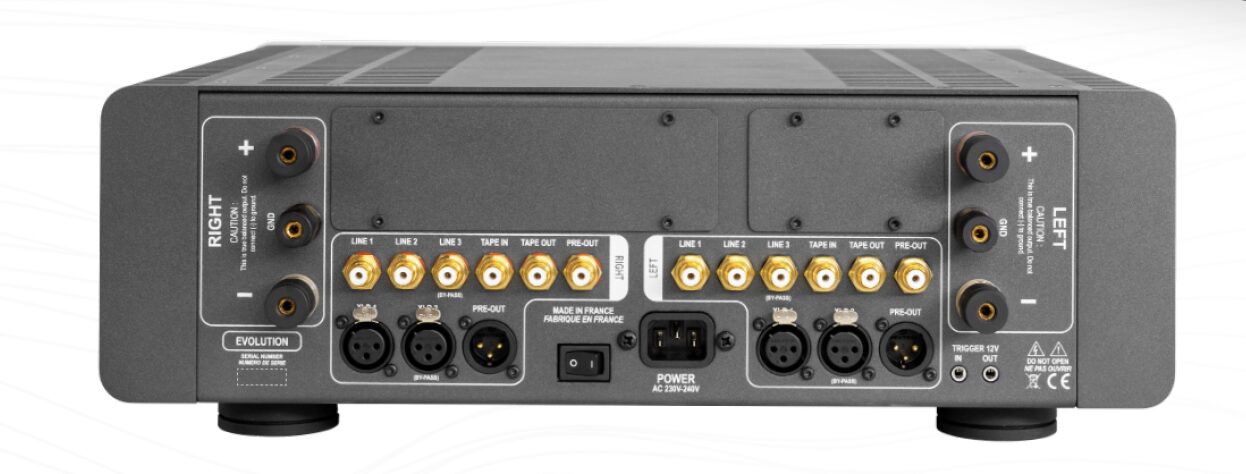
Purely analog, the IN800 Evolution offers two XLR inputs and three RCA inputs, plus an RCA tape input/output. Added to this is the ability to configure a bypass for one of the inputs, as well as a pair of XLR outputs and another RCA output to send the signal to other amplifiers or subwoofers if needed. The rear panel also features two removable plates for adding the new phono modules (P800 & P820) and a brand-new DAC card (DA800).
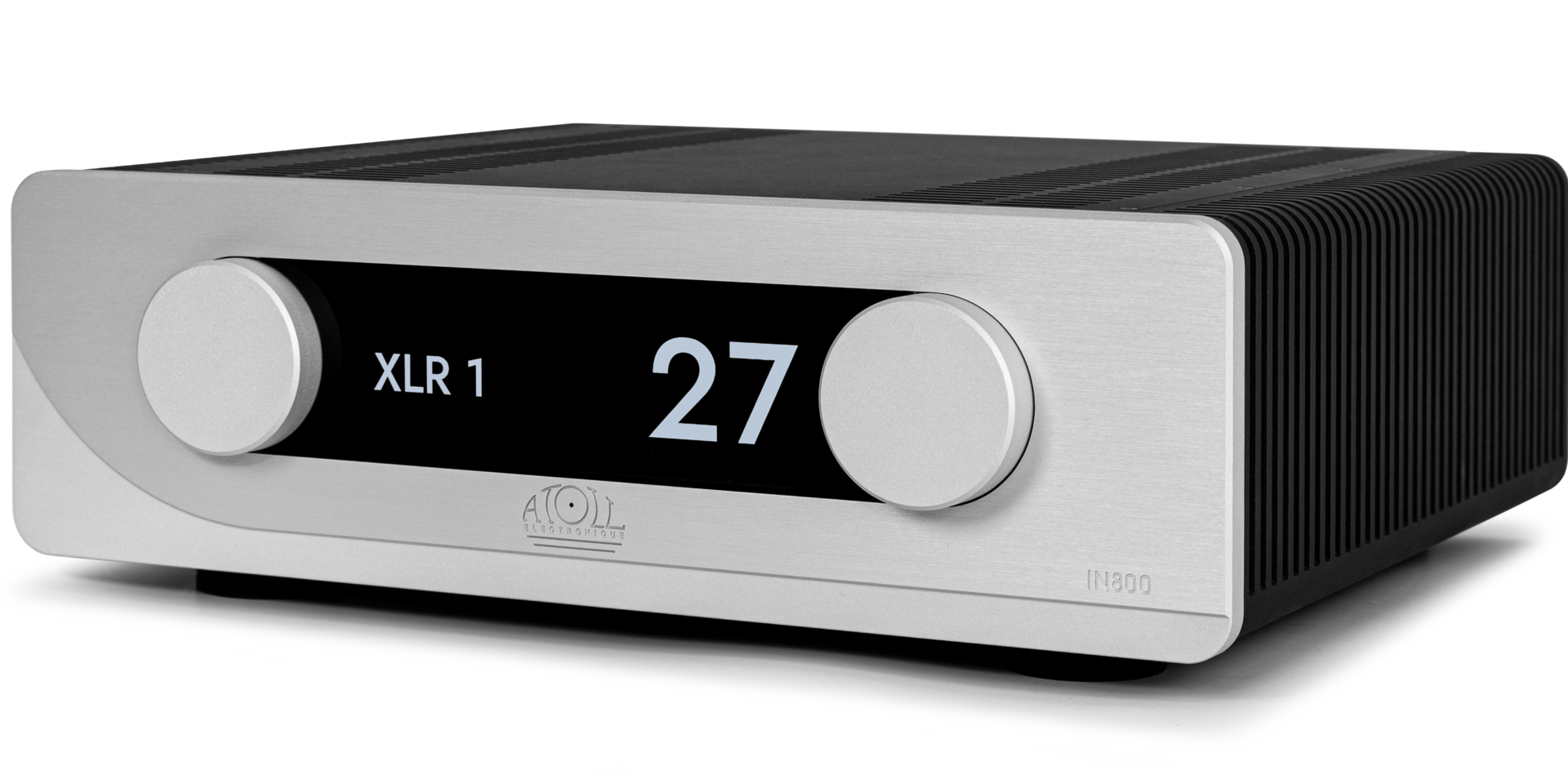
We will return to testing in the second half of the year to examine the pure dual-mono architecture, the Darlington transistor driver stages, and the dual-channel MUSE attenuator with common-emitter resistors; for now, we will just note that this new French integrated amplifier features a high-resolution TFT display (480 x 1270) on the front panel, positioned between two understated control knobs (volume and settings).
You will also have to be patient a little longer to find out the final price of this new IN800 Evolution, but feel free to check out our Instagram and Facebook accounts today to learn a bit more about it and see some more photos!